
Introduction to the Health Protection Agency and its

- Slides: 32
Introduction to the Health Protection Agency and its Role in Chemical Incident Response Andy Mc. Parland Centre for Radiation, Chemical and Environmental Hazards 8 th November 2012
Introduction Part 1. Overview of the HPA and CRCE • Background and Structure of HPA CRCE • Functions of CRCE Part 2. Chemical Incident Response • Acute Incidents • Chronic Environmental Public Health Concerns • HPA Resources
Part 1. Overview of HPA CRCE
Health Protection Agency • Independent non-departmental government body, created from existing organisations on 1 st April 2003 • HPA Act 2004: • “Protect the community (or any part of the community) against infectious diseases and other dangers to health” • Civil Contingencies Act 2004: • Category One responder • Provide expert support and advice: • Infectious disease, radiation, chemicals, poisons, emergency response • 24 hour service
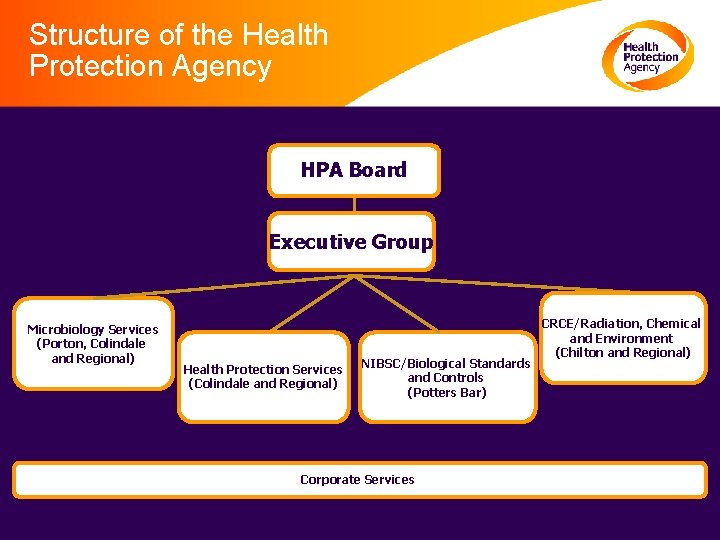
Structure of the Health Protection Agency HPA Board Executive Group Microbiology Services (Porton, Colindale and Regional) Health Protection Services (Colindale and Regional) NIBSC/Biological Standards and Controls (Potters Bar) Corporate Services CRCE/Radiation, Chemical and Environment (Chilton and Regional)
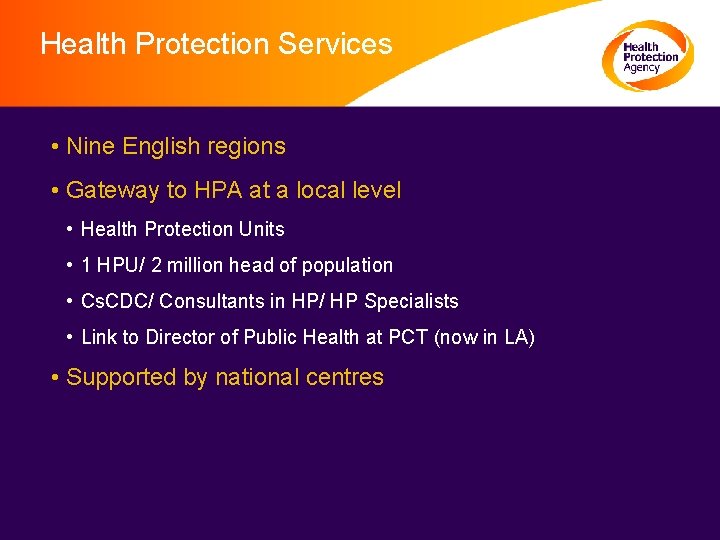
Health Protection Services • Nine English regions • Gateway to HPA at a local level • Health Protection Units • 1 HPU/ 2 million head of population • Cs. CDC/ Consultants in HP/ HP Specialists • Link to Director of Public Health at PCT (now in LA) • Supported by national centres
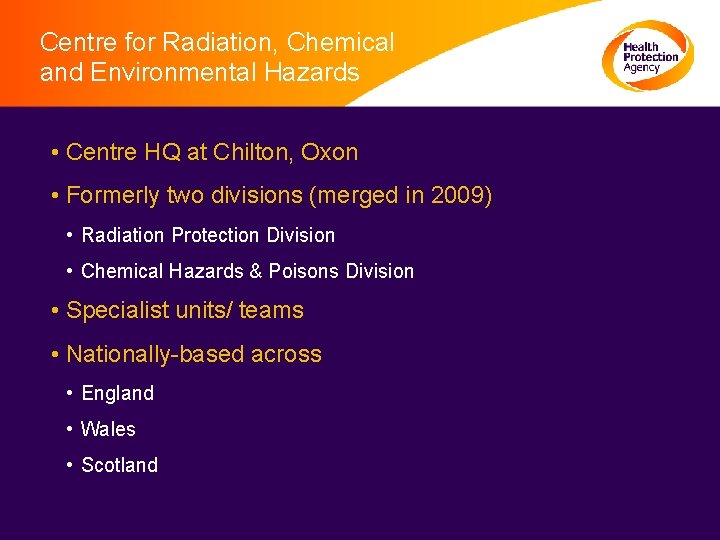
Centre for Radiation, Chemical and Environmental Hazards • Centre HQ at Chilton, Oxon • Formerly two divisions (merged in 2009) • Radiation Protection Division • Chemical Hazards & Poisons Division • Specialist units/ teams • Nationally-based across • England • Wales • Scotland
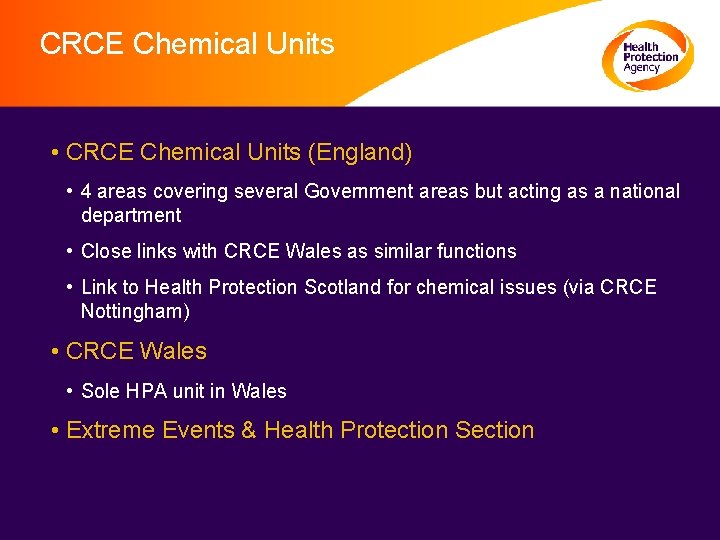
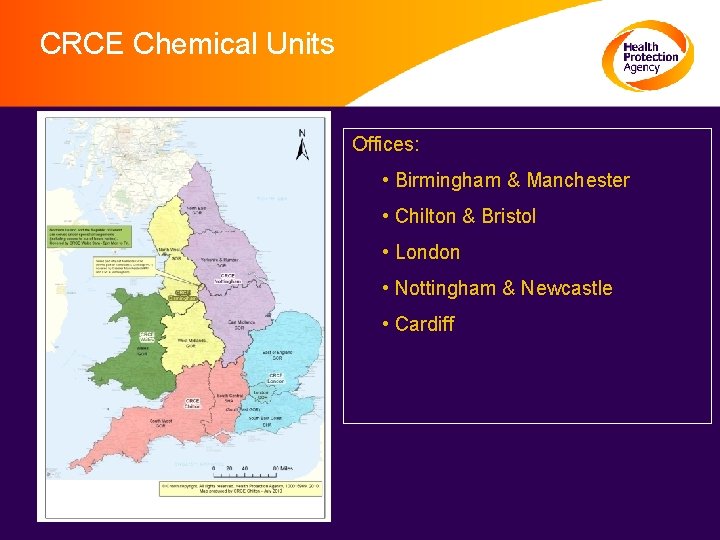
CRCE Chemical Units • CRCE Chemical Units (England) • 4 areas covering several Government areas but acting as a national department • Close links with CRCE Wales as similar functions • Link to Health Protection Scotland for chemical issues (via CRCE Nottingham) • CRCE Wales • Sole HPA unit in Wales • Extreme Events & Health Protection Section
CRCE Chemical Units Offices: • Birmingham & Manchester • Chilton & Bristol • London • Nottingham & Newcastle • Cardiff
CRCE Chemical Units – main functions (1) • Emergency response • Local • National • Emergency preparedness • Planning • Exercising • Chronic cases • E. g. Contaminated land, cluster investigation, private water supplies
CRCE Chemical Units – main functions (2) • Consultations • Environmental Permitting (EP) • Planning applications • National consultations (IPC, NSIP) • Applied research and development • Improving the evidence base • European projects • Advice • Position statements • Chemical Research Reports
The Future • Public Health White Paper • Public Health England • Transition 1 st April 2013
Part 2. Chemical Incident Response
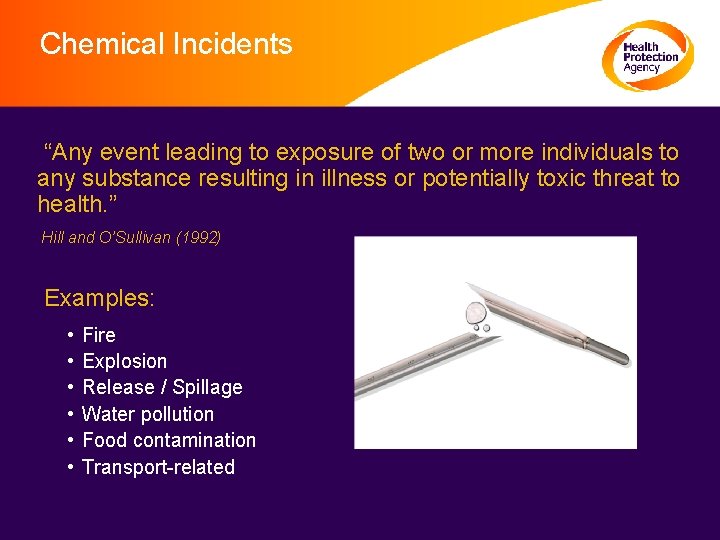
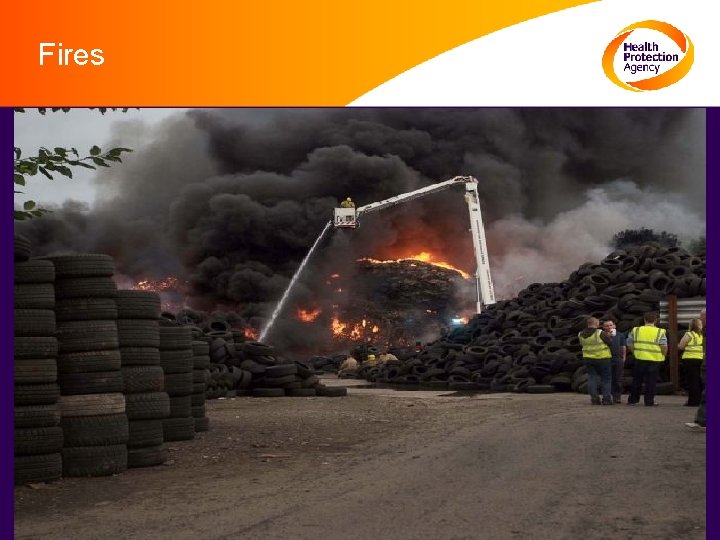
Chemical Incidents “Any event leading to exposure of two or more individuals to any substance resulting in illness or potentially toxic threat to health. ” Hill and O’Sullivan (1992) Examples: • • • Fire Explosion Release / Spillage Water pollution Food contamination Transport-related
HPA Role in Chemical Incidents • Undertake assessment of public health risk • Provision of advice and support to first line responders • PCTs and Directors of Public Health • other agencies (e. g. local authorities, NHS, emergency responders etc) • the public • Clinical Treatment Advice via National Poisons Information Service (NPIS) – through TOXBASE website and 24 hour phone number http: //www. hpa. org. uk/Products. Services/Chemicals. Poisons/Poisons. Infor mation. Service/National. Poisons. Information. Service/
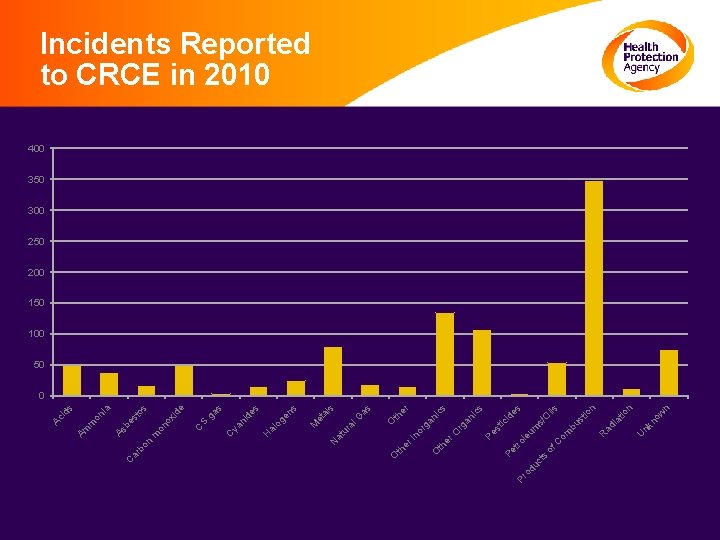
n w n n at io no nk U ad i R ils io O st bu s s es id ic um s/ le tro f C om o ts uc od Pr Pe Pe st ic ic an rg O er th O or ga n In er th O as al s l G ra at u N et M s ge n de s s de ga ni al o ia s to s ox i S C ya C H be s on n m bo ar C As m on Am id Ac Incidents Reported to CRCE in 2010 400 350 300 250 200 150 100 50 0
Chemical Incidents – Who Responds? • Blue light services deal with the initial incident. • A&Es deal with casualties. • Public health aspects are dealt with by the HPA & PCT. The HPA is a Category 1 Responder under the Civil Contingencies Act 2004. • NHS Direct, GPs, PCTs deal with queries regarding individuals’ health. • Other stakeholders likely to be involved: Local Authority, Environment Agency, Food Standards Agency, Health and Safety Executive, Met. Office, Media.
Fires
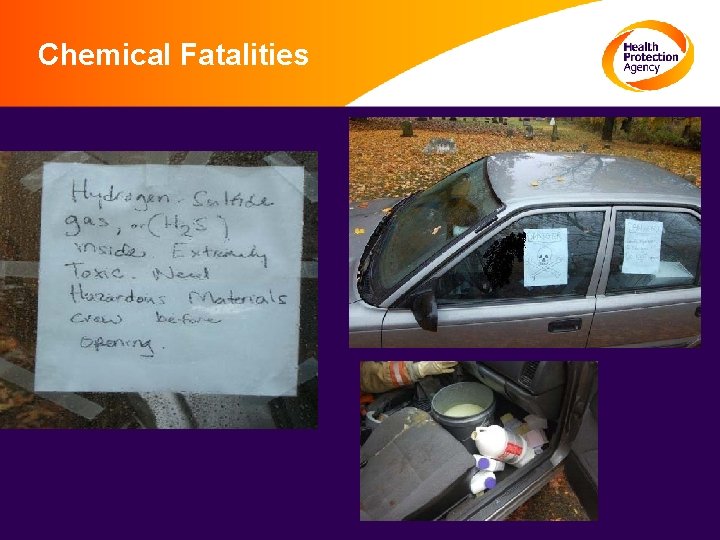
Chemical Fatalities
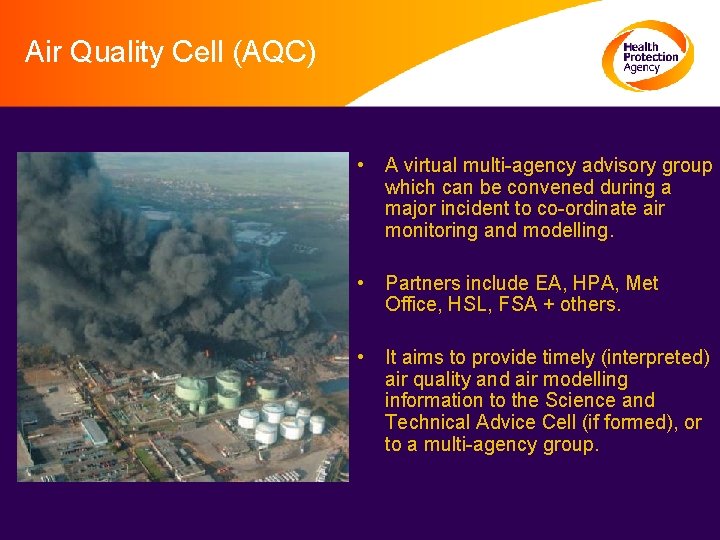
Air Quality Cell (AQC) • A virtual multi-agency advisory group which can be convened during a major incident to co-ordinate air monitoring and modelling. • Partners include EA, HPA, Met Office, HSL, FSA + others. • It aims to provide timely (interpreted) air quality and air modelling information to the Science and Technical Advice Cell (if formed), or to a multi-agency group.
Chronic Environmental Public Health Concerns Advice and support is also given with respect to chronic incidents. Example areas of support to local authorities: • • • Contamination of private drinking water supplies Health concerns from industrial emissions Contaminated school play areas/allotments Health implications of nuisance dust Fuel spillages affecting residential properties Alleged cancer clusters near industrial premises
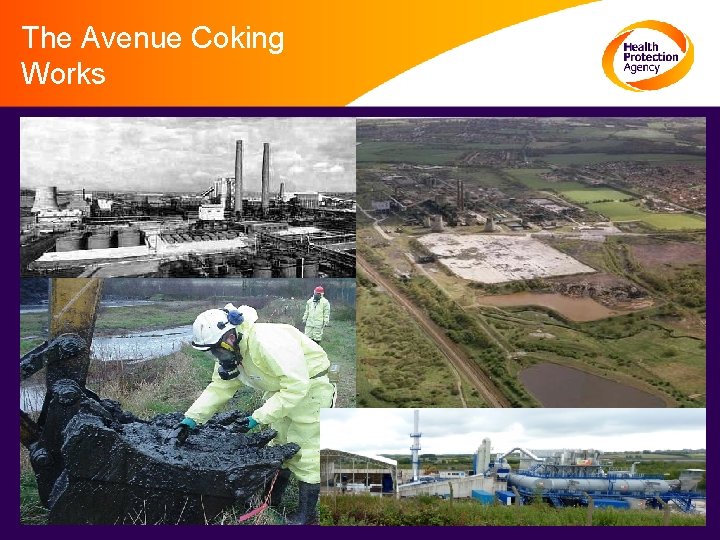
The Avenue Coking Works Former Avenue Coking Works, Chesterfield.
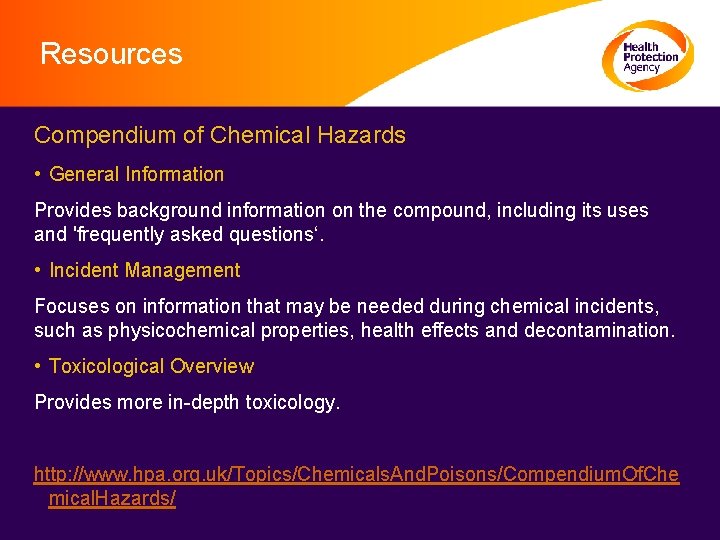
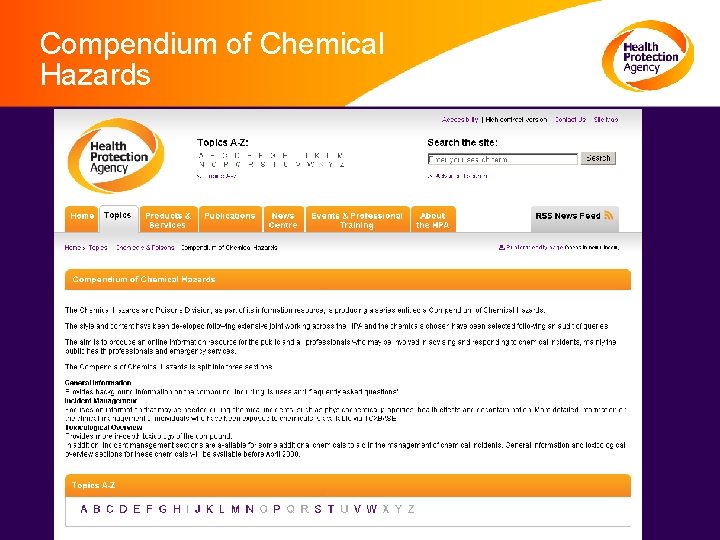
Resources Compendium of Chemical Hazards • General Information Provides background information on the compound, including its uses and 'frequently asked questions‘. • Incident Management Focuses on information that may be needed during chemical incidents, such as physicochemical properties, health effects and decontamination. • Toxicological Overview Provides more in-depth toxicology. http: //www. hpa. org. uk/Topics/Chemicals. And. Poisons/Compendium. Of. Che mical. Hazards/
Compendium of Chemical Hazards
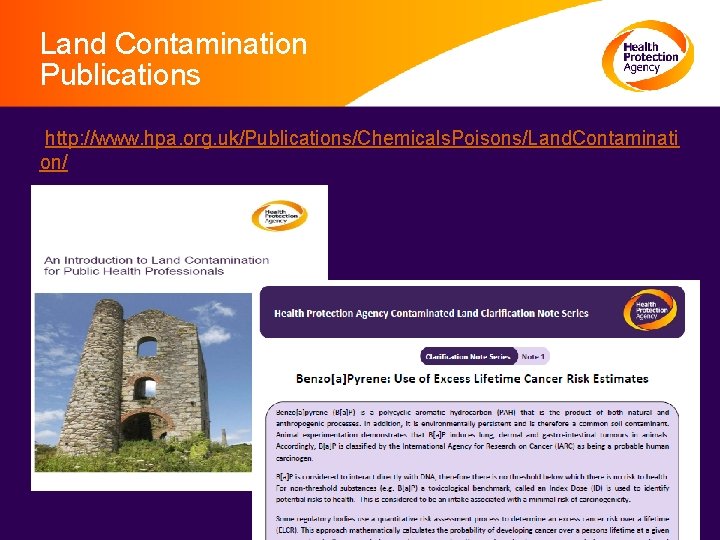
Land Contamination Publications http: //www. hpa. org. uk/Publications/Chemicals. Poisons/Land. Contaminati on/
Checklists for Chemical Incident Management • Acute incidents, e. g. chemical spills • Non domestic fires • Water incidents • Sheltering or evacuation decisions • Land contamination • Flooding incidents http: //www. hpa. org. uk/HPA/Products. Services/Chemicals. Poisons/Chemical. Risk. Assessme nt/1158313435104/
Factsheets for the Public • Carbon Monoxide • Mercury • Lead Incidents • Chemicals in toys • Petroleum products incidents • Odour http: //www. hpa. org. uk/HPA/Products. Services/Chemicals. Poisons/Chemical. Risk. Assess ment/1158313435037/
Internal Action Cards & Guidance • Bioaerosols from composting sites http: //hpanet/webc/HPAnet. File/HPAnet_C/1309970043516 • Carbon monoxide action card http: //hpanet/webc/HPAnet. File/HPAnet_C/1257260480033 • Elevated concentrations of nitrate and nitrite in drinking water http: //hpanet/webc/HPAnet. File/HPAnet_C/1249542993340 • Lead action card http: //www. hpa. org. uk/web/HPAweb. File/HPAweb_C/1274092896741 • Asbestos Toolkit – Responding to fires involving asbestos http: //hpanet/webc/HPAnet. File/HPAnet_C/1207639082232
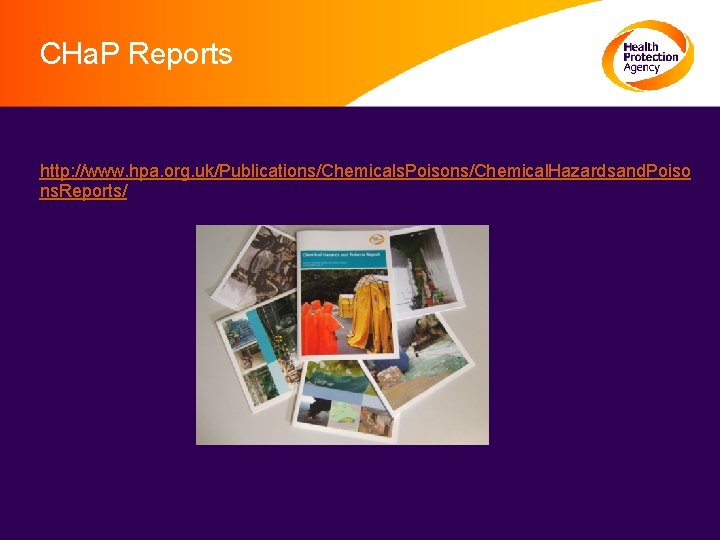
CHa. P Reports http: //www. hpa. org. uk/Publications/Chemicals. Poisons/Chemical. Hazardsand. Poiso ns. Reports/ • Incident response – lessons learned & guidance • Emergency planning and preparedness • Training
HPA Chemical Research Reports • HPA CHa. PD 001: Review of Environmental Chemicals and Neurotoxicity: Focus on Neurological Diseases • HPA CHa. PD 002: Review of Chemical Toxicity to the Reproductive System, with Particular Reference to Developmental Toxicity • HPA CHa. PD 003: The Public Health Significance of Asbestos Exposures from Large Scale Fires • HPA CHa. PD 004: A Toxicological Review of the Products of Combustion http: //www. hpa. org. uk/Publications/Chemicals. Poisons/Chemical. Research. Reports/
Position Documents • Health Impacts of Operating Landfill Sites http: //www. hpa. org. uk/News. Centre/National. Press. Releases/2011 Press. Releases/110728 Landfill norisk/ • Intensive Farming http: //www. hpa. org. uk/web/HPAweb. File/HPAweb_C/1194947378905 • Health Impacts of emissions to air from municipal waste incinerators http: //www. hpa. org. uk/web/HPAweb. File/HPAweb_C/1266228112244
Any Questions? Andy Mc. Parland CRCE (Nottingham) Email: Andy. Mc. Parland@hpa. org. uk T: 0844 225 4524 E: