
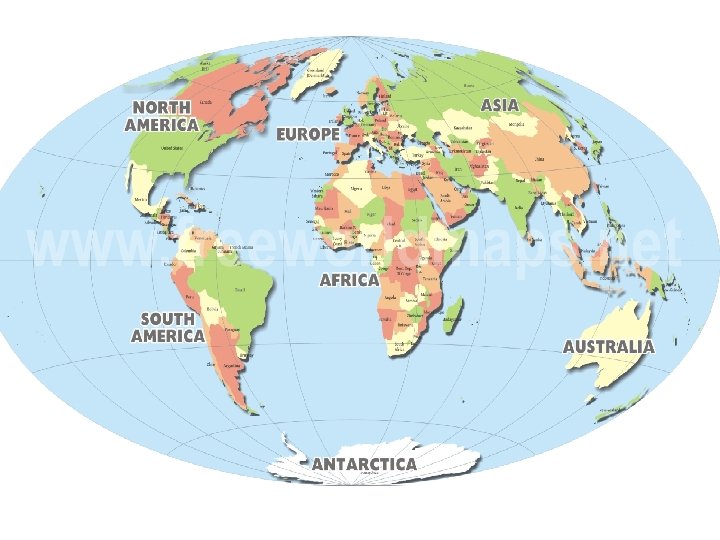
Introduction to the Earths Oceans ARCTIC PACIFIC ATLANTIC
- Slides: 15
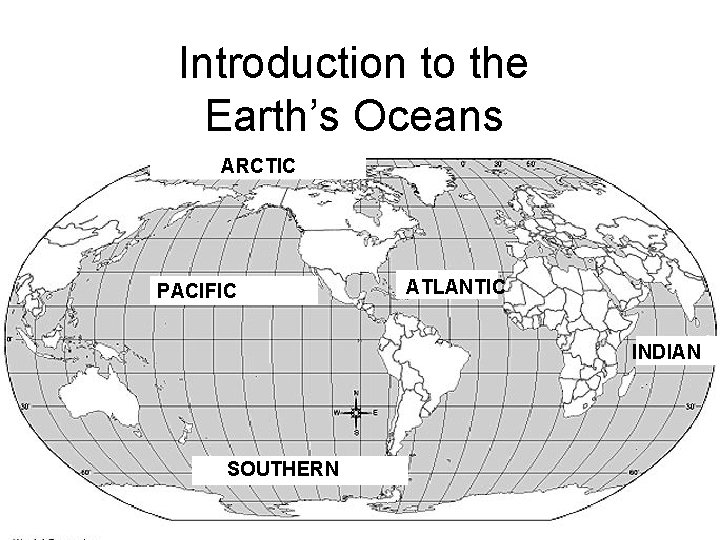
Introduction to the Earth’s Oceans ARCTIC PACIFIC ATLANTIC INDIAN SOUTHERN
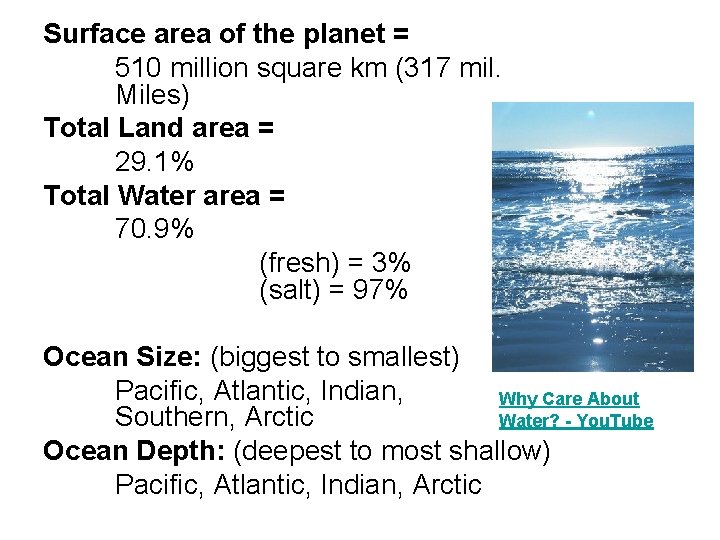
Surface area of the planet = 510 million square km (317 mil. Miles) Total Land area = 29. 1% Total Water area = 70. 9% (fresh) = 3% (salt) = 97% Ocean Size: (biggest to smallest) Pacific, Atlantic, Indian, Why Care About Southern, Arctic Water? - You. Tube Ocean Depth: (deepest to most shallow) Pacific, Atlantic, Indian, Arctic
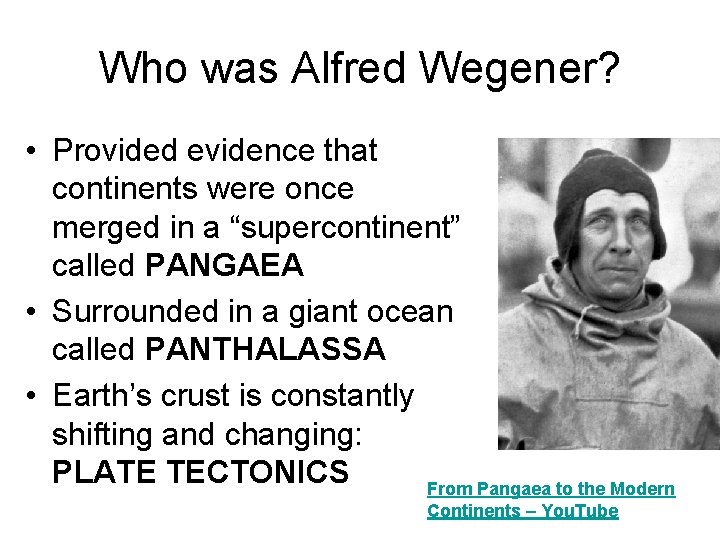
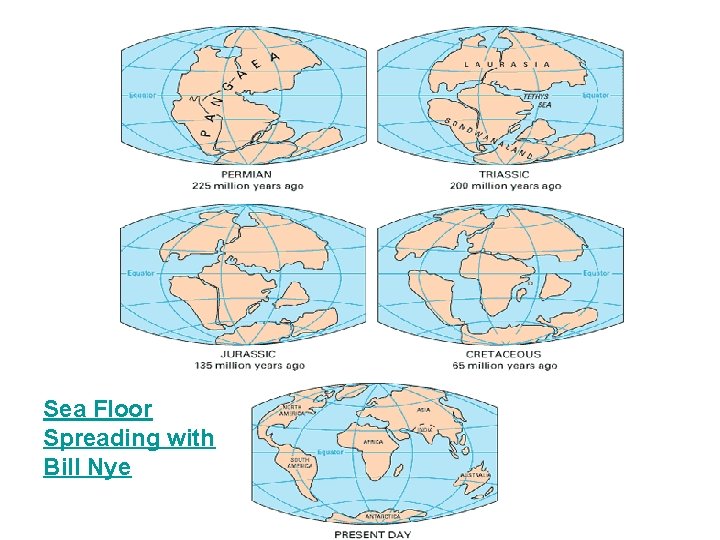
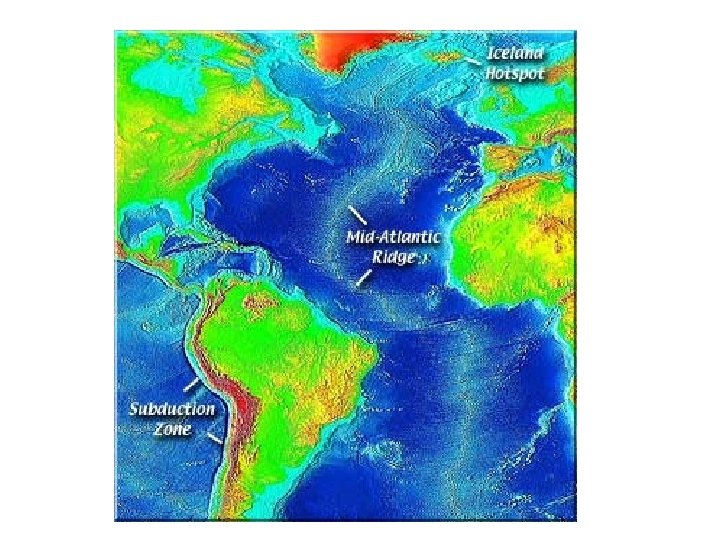
Who was Alfred Wegener? • Provided evidence that continents were once merged in a “supercontinent” called PANGAEA • Surrounded in a giant ocean called PANTHALASSA • Earth’s crust is constantly shifting and changing: PLATE TECTONICS From Pangaea to the Modern Continents – You. Tube
Sea Floor Spreading with Bill Nye
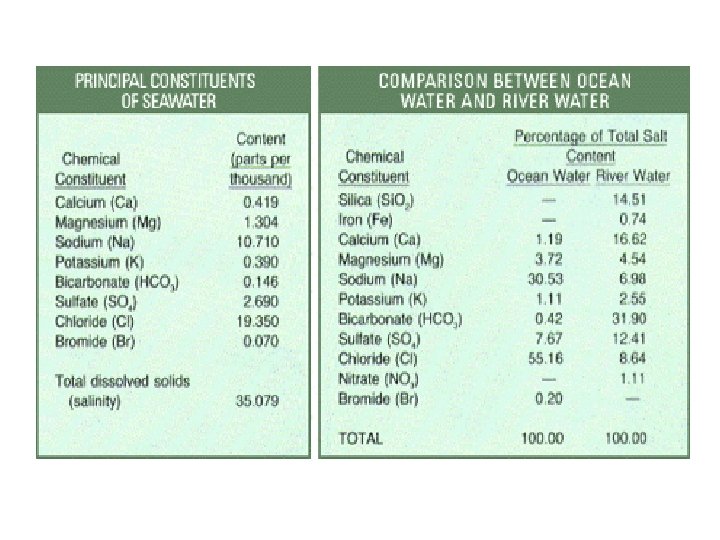
Seawater: What is it composed of? • Dissolved solids from weathering rocks / erosion • Chemicals released from underwater & above ground volcanoes or decay of marine organisms • 85% of the solids are Sodium and Chloride (salt)
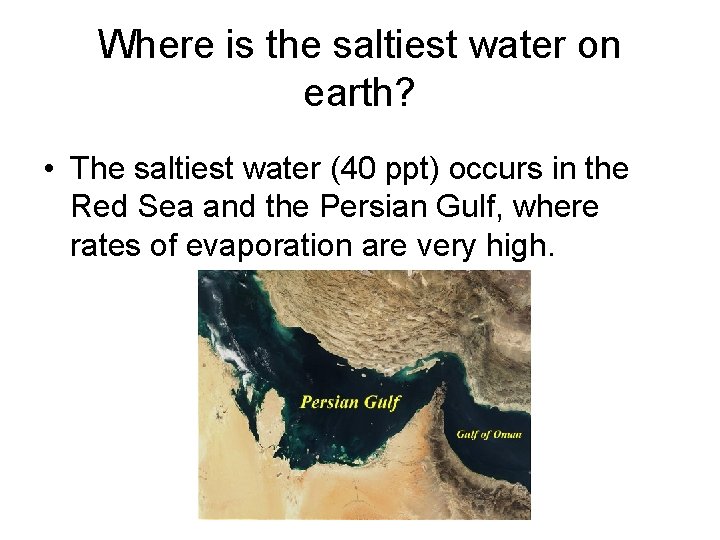
Where is the saltiest water on earth? • The saltiest water (40 ppt) occurs in the Red Sea and the Persian Gulf, where rates of evaporation are very high.
Why is earth called a water planet? • Because it is composed of more water than any other planet What is marine science? • The study of life existing in oceans, streams, rivers, lakes, ponds and seas
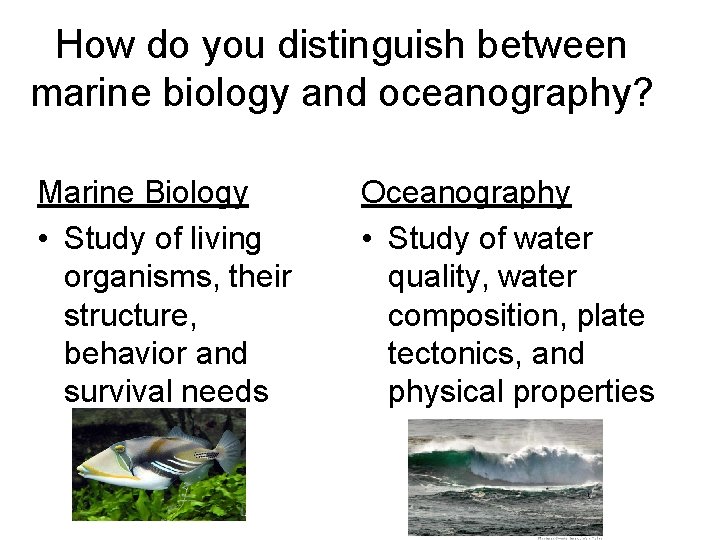
How do you distinguish between marine biology and oceanography? Marine Biology • Study of living organisms, their structure, behavior and survival needs Oceanography • Study of water quality, water composition, plate tectonics, and physical properties
NASA | Earth Science Week: Salt of the Earth - You. Tube Questions: 1) Which ocean is the most salty? 2) Where does water sink on the globe? 3) What will happen to salinity as earth warms?
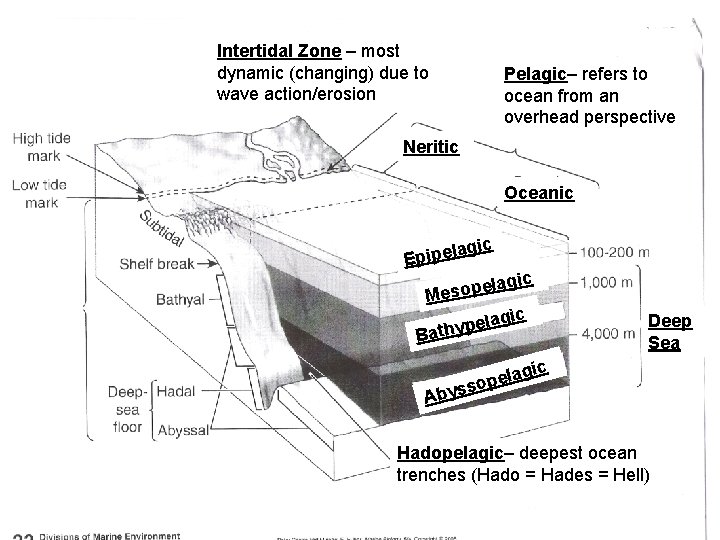
Intertidal Zone – most dynamic (changing) due to wave action/erosion Pelagic– refers to ocean from an overhead perspective Neritic Oceanic gic la Epipe elagic p o s e M agic l e p y Bath Aby Deep Sea gic ela ssop Hadopelagic– deepest ocean trenches (Hado = Hades = Hell)
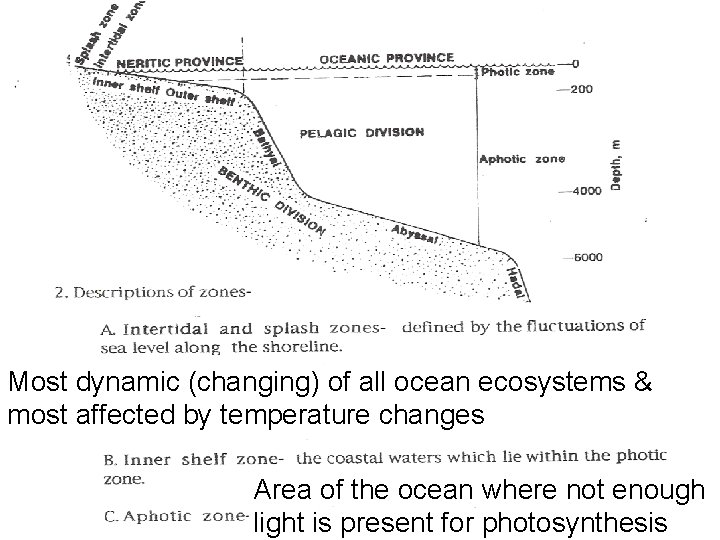
Most dynamic (changing) of all ocean ecosystems & most affected by temperature changes Area of the ocean where not enough light is present for photosynthesis
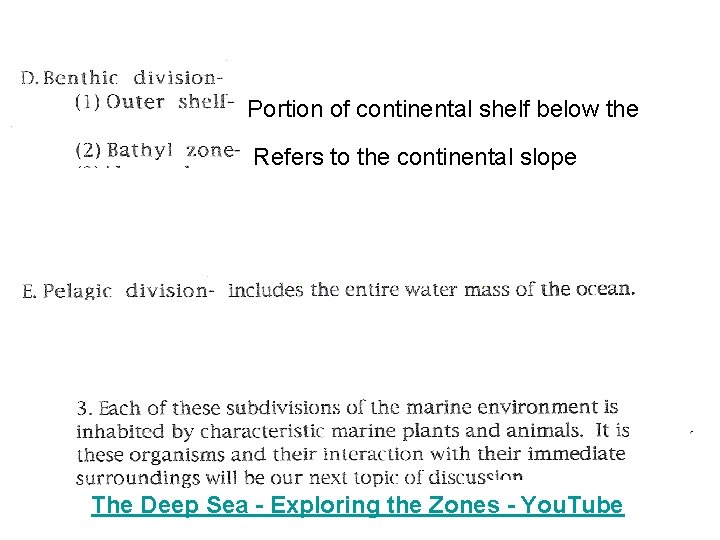
Portion of continental shelf below the photic Referszone to the continental slope Between 3000 and 6000 meters Primarily below 6000 meters Water lying over the continental shelf Water that overlies the deep ocean The Deep Sea - Exploring the Zones - You. Tube