
Introduction to the Diverging Diamond Interchange Alaska DOT
- Slides: 24
Introduction to the Diverging Diamond Interchange Alaska DOT Quarterly Design Meeting Anchorage, AK March 30, 2010 Steve Speth, P. E. , PTOE Professional Associate HDR Engineering
Presentation Purpose § § § Background / History Site Choice Considerations Traffic Operations Design Safety
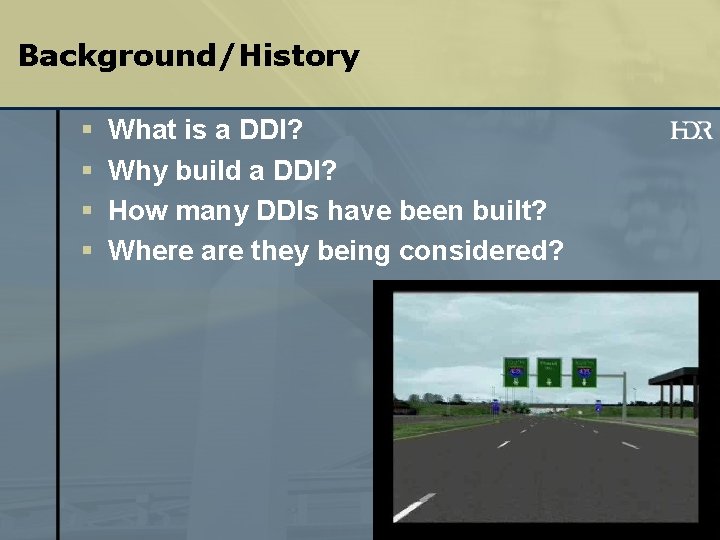
Background/History § § What is a DDI? Why build a DDI? How many DDIs have been built? Where are they being considered?
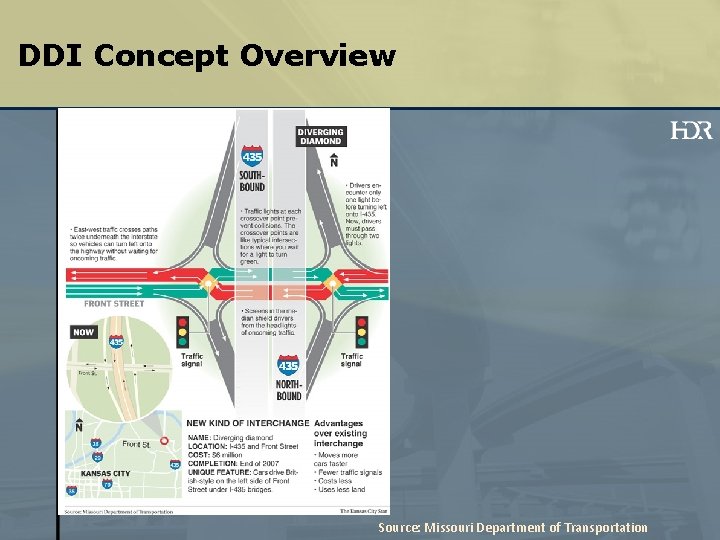
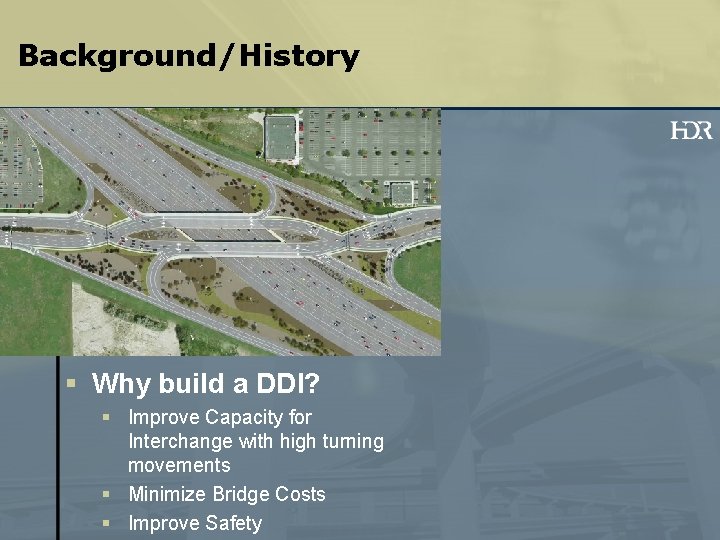
DDI Concept Overview Source: Missouri Department of Transportation
Background/History § Why build a DDI? § Improve Capacity for Interchange with high turning movements § Minimize Bridge Costs § Improve Safety
Background/History § § What is a DDI? Why build a DDI? How many DDIs have been built? Where are they being considered?
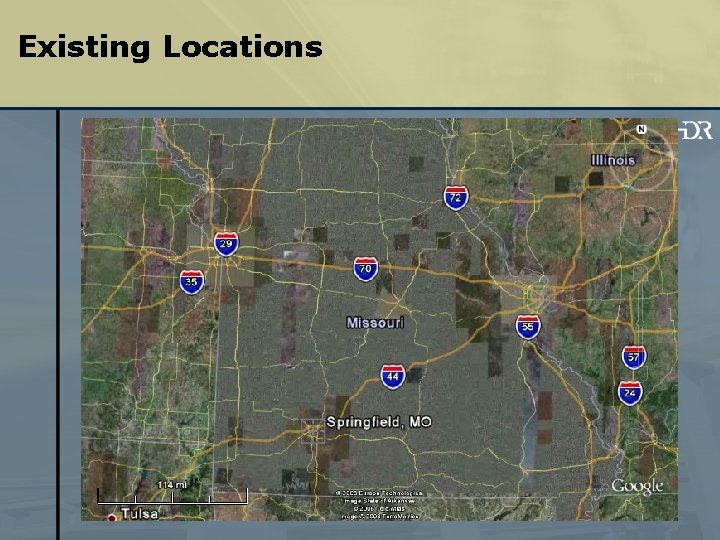
Existing Locations
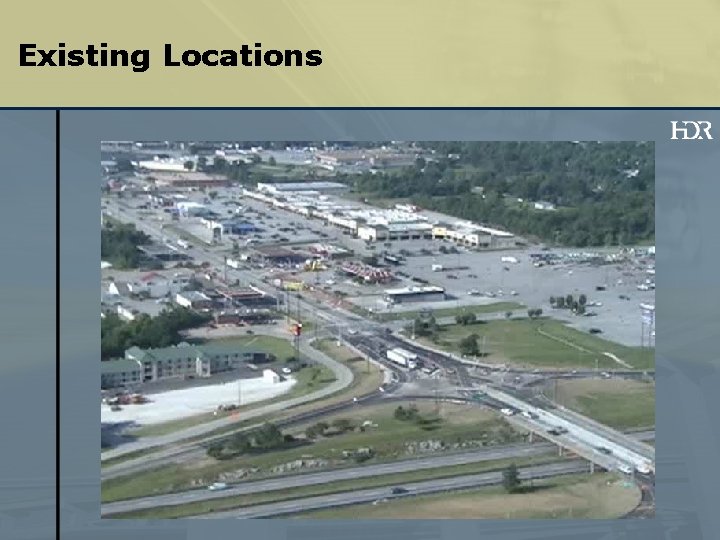
Existing Locations
Proposed DDI Locations § § § § § Missouri – 7+ locations Illinois – 2 locations Kentucky – 5 locations Utah – 7+ locations New Mexico – 2+ locations California – 1 location Oregon – 1 location Ohio – 2+ locations Florida, New York, North Carolina, Nebraska, Tennessee, Wyoming,
Site Choice Considerations § The DDI is not the perfect solution for every situation § Things to consider: § § § Mainline and crossroad alignment Bridge Height Restrictions Right-of way constraints Access control Nearby signals Traffic volumes – High Through Volume on cross-street
Traffic Operations § Must be analyzed with Simulation (VISSIM) § Delay is decreased dramatically (generally >50% decrease) § When doing conceptual studies of interchange types, the capacity of 5 lane DDI has been comparable to an 8 lane Diamond or SPUI § The higher the turning traffic, the more dramatic the benefit for the DDI – we have had studies where a 4 lane DDI has outperformed an 8 lane Diamond
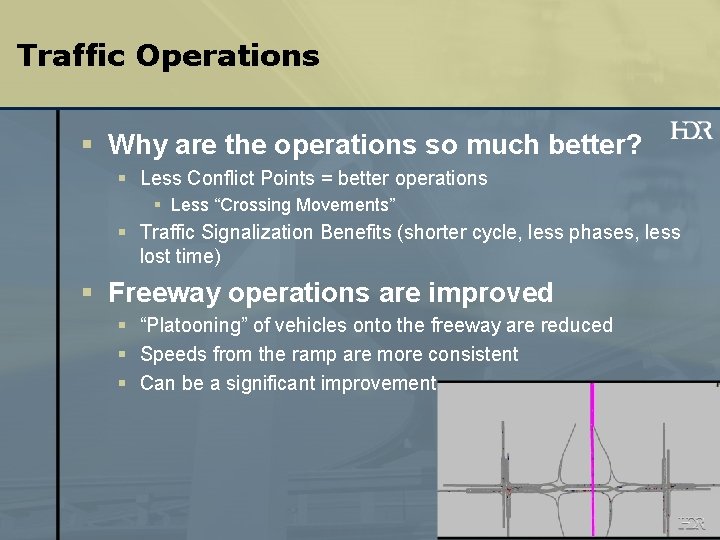
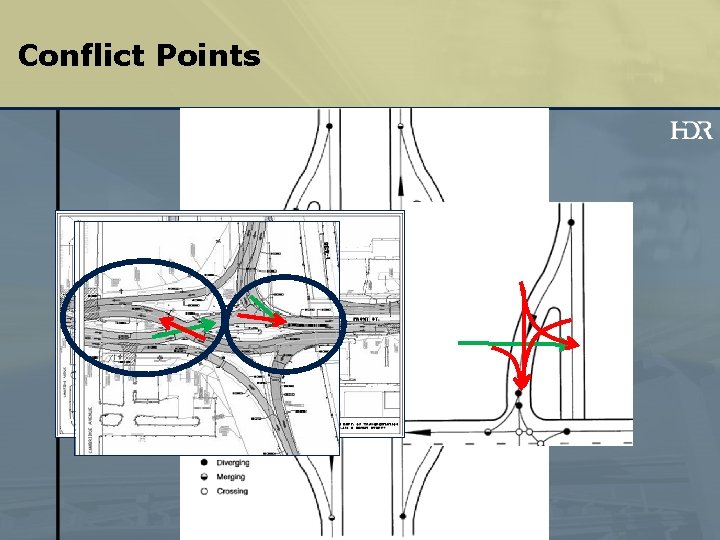
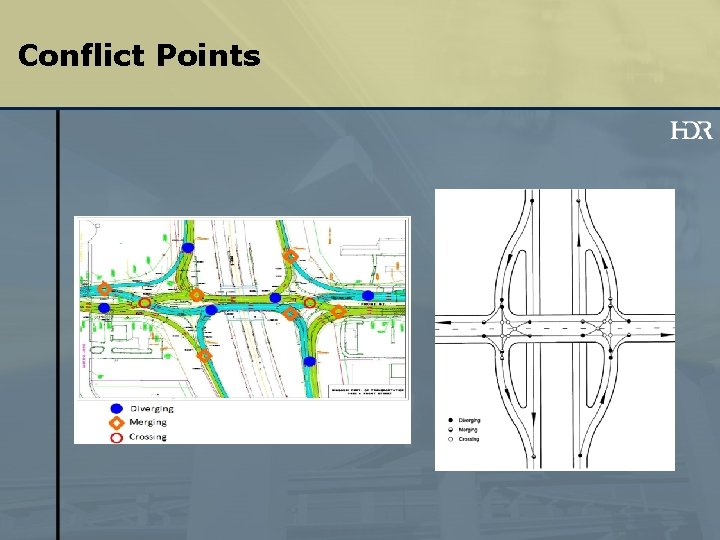
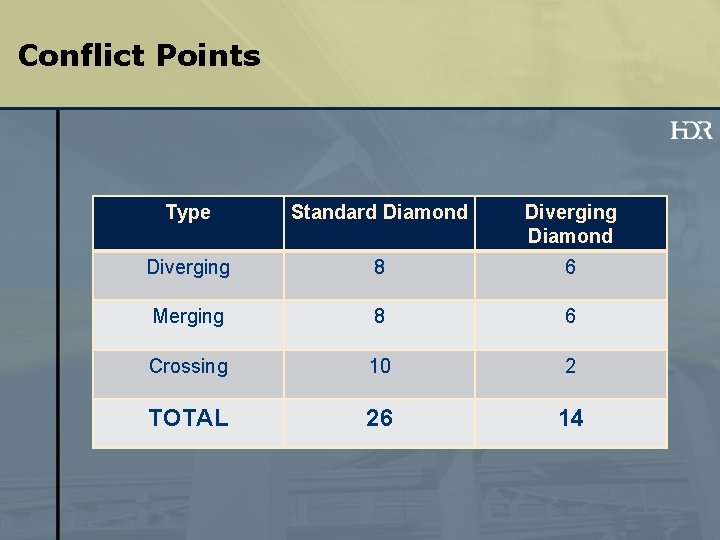
Traffic Operations § Why are the operations so much better? § Less Conflict Points = better operations § Less “Crossing Movements” § Traffic Signalization Benefits (shorter cycle, less phases, less lost time) § Freeway operations are improved § “Platooning” of vehicles onto the freeway are reduced § Speeds from the ramp are more consistent § Can be a significant improvement
Design Considerations § § § § Profiles and Grade Separation Crossing Intersection Angle Crossroad to Freeway Intersection Angle Ramp Terminal Separation Distance Right-of-Way Access Control Design Vehicle/Lane widths
Design Considerations § § Design Speed and Reverse Curvature Signing and Striping Glare Screening Bicycle and Pedestrian Treatments
Design § Are there design standards for DDIs? § What is the design speed of the reverse curves on the crossroad through movement? § What is the optimum intersection angle of the crossing through movements? § Are there standards for signing and striping?
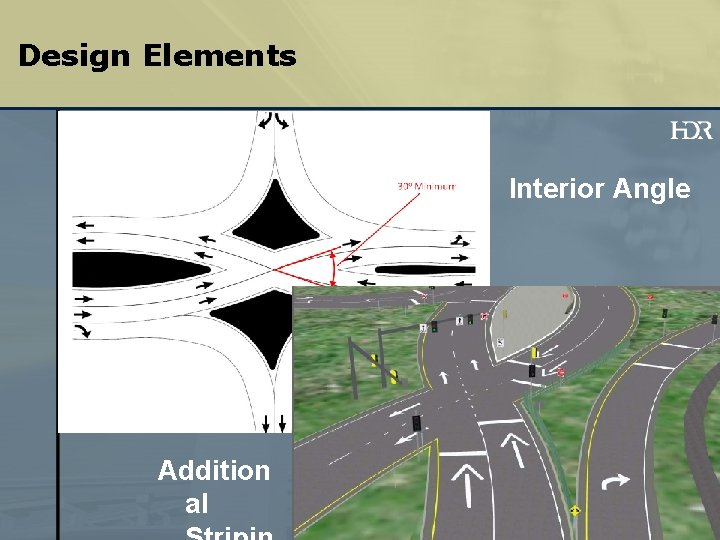
Design Elements Interior Angle Addition al
Safety § Is the DDI safer or is it a safety risk? § Can bicycles and pedestrians safely traverse a DDI?
Conflict Points
Conflict Points
Conflict Points Type Standard Diamond Diverging 8 6 Merging 8 6 Crossing 10 2 TOTAL 26 14
Safety § Is the DDI safer or is it a safety risk? § Can bicycles and pedestrians safely traverse a DDI?
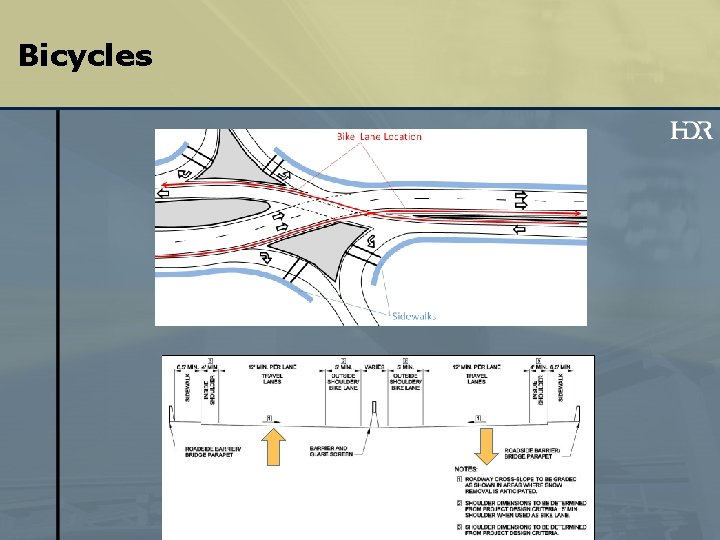
Bicycles
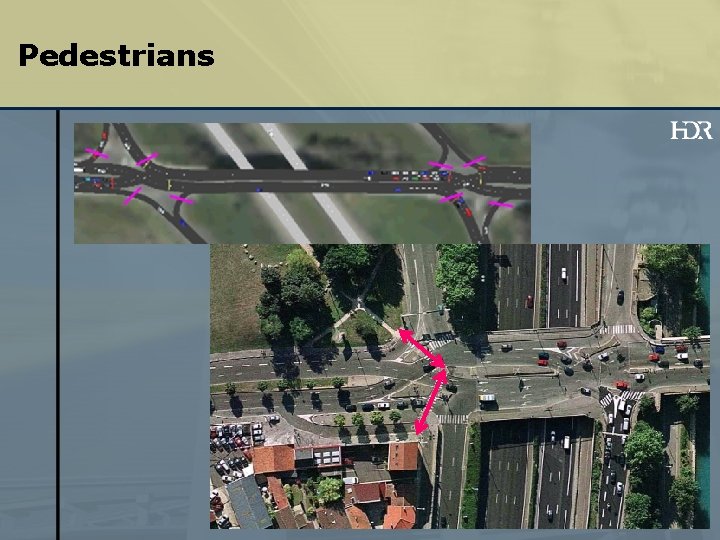
Pedestrians
Contact Information Steve Speth, P. E. , PTOE Professional Associate HDR Engineering 24954 Highway 395 South Canyon City, OR 97820 steve. speth@hdrinc. com