
Introduction to the Disability Discrimination Act 1995 presenter
Introduction to the Disability Discrimination Act 1995 presenter: Ciaran Trainor, Equality Commission date: 28 September 2020
Disabled People in Northern Ireland % of NI population with limited day-to-day activities: limited a lot = 11. 9% limited a little = 8. 8% Total = 20. 7% % of NI population aged 16 -64 years (working age) with limited day-to-day activities: limited a lot = 9. 55% limited a little = 7. 35% Total = 16. 9% Source: Census 2011 Key Statistics Summary Report www. nisra. gov. uk/archive/census/2011/results/key-statistics/summary-report. pdf
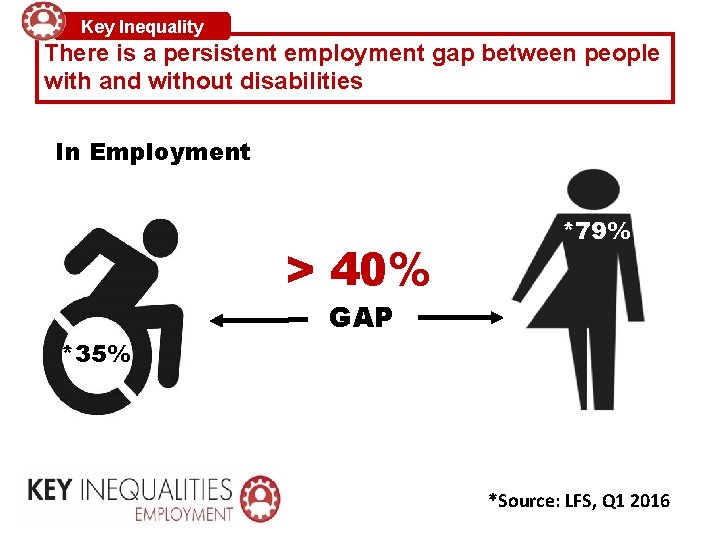
Key Inequality There is a persistent employment gap between people with and without disabilities In Employment > 40% *35% *79% GAP *Source: LFS, Q 1 2016
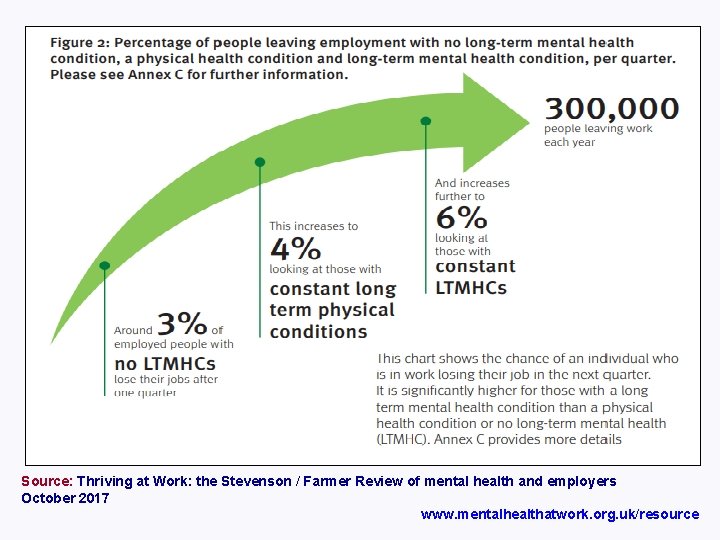
Source: Thriving at Work: the Stevenson / Farmer Review of mental health and employers October 2017 www. mentalhealthatwork. org. uk/resource
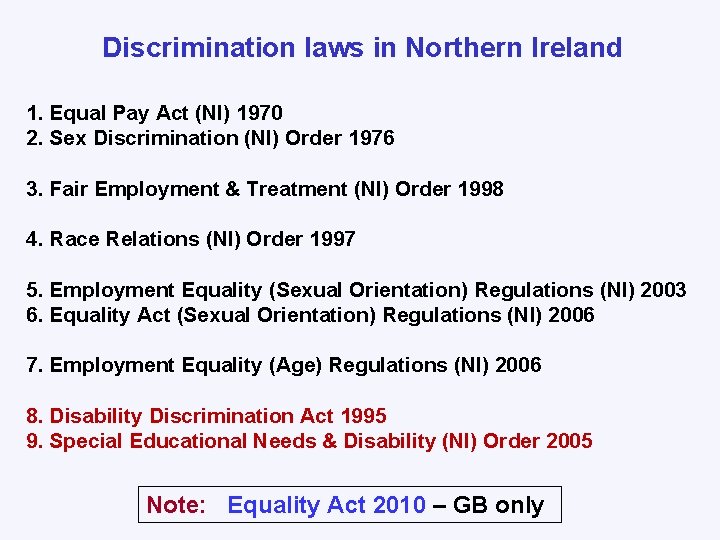
Discrimination laws in Northern Ireland 1. Equal Pay Act (NI) 1970 2. Sex Discrimination (NI) Order 1976 3. Fair Employment & Treatment (NI) Order 1998 4. Race Relations (NI) Order 1997 5. Employment Equality (Sexual Orientation) Regulations (NI) 2003 6. Equality Act (Sexual Orientation) Regulations (NI) 2006 7. Employment Equality (Age) Regulations (NI) 2006 8. Disability Discrimination Act 1995 9. Special Educational Needs & Disability (NI) Order 2005 Note: Equality Act 2010 – GB only
WHO IS DISABLED ?
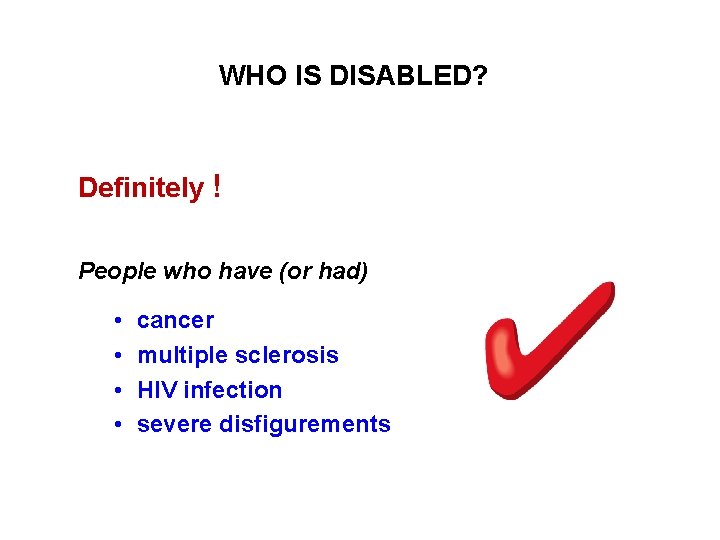
WHO IS DISABLED? Definitely ! People who have (or had) • • cancer multiple sclerosis HIV infection severe disfigurements
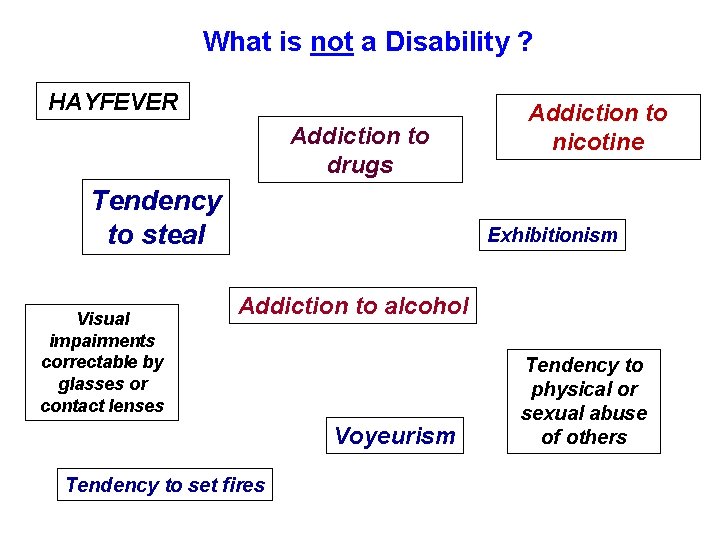
What is not a Disability ? HAYFEVER Addiction to drugs Tendency to steal Visual impairments correctable by glasses or contact lenses Addiction to nicotine Exhibitionism Addiction to alcohol Voyeurism Tendency to set fires Tendency to physical or sexual abuse of others
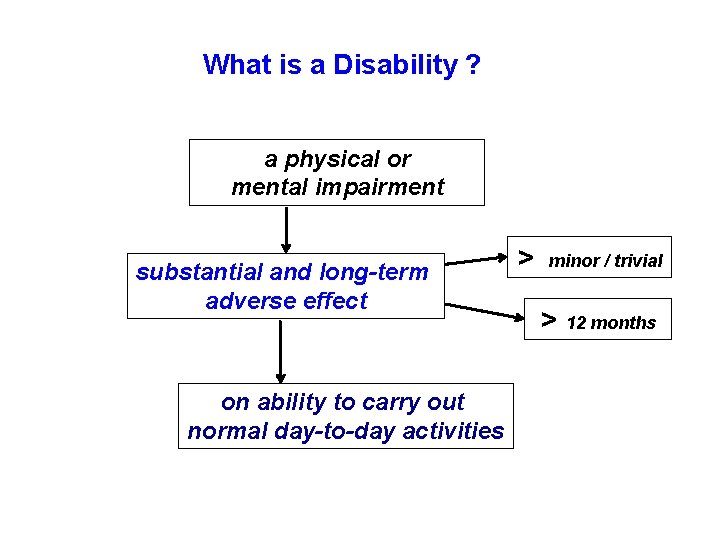
What is a Disability ? a physical or mental impairment substantial and long-term adverse effect on ability to carry out normal day-to-day activities > minor / trivial > 12 months
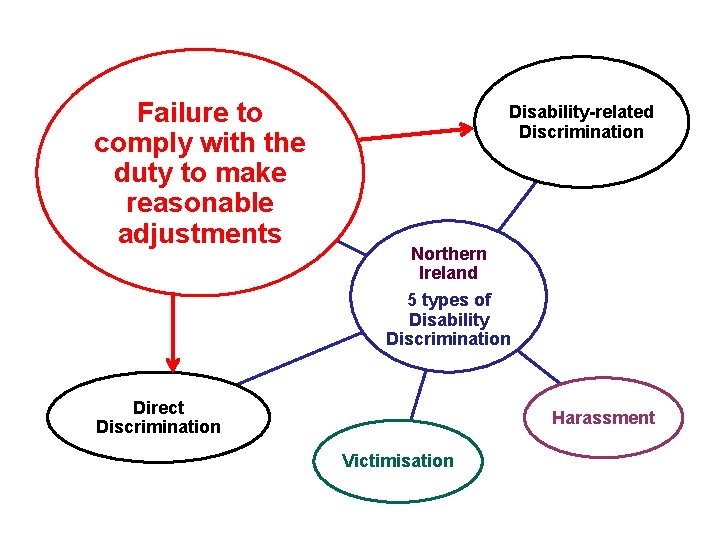
Failure to comply with the duty to make reasonable adjustments Disability-related Discrimination Northern Ireland 5 types of Disability Discrimination Direct Discrimination Harassment Victimisation
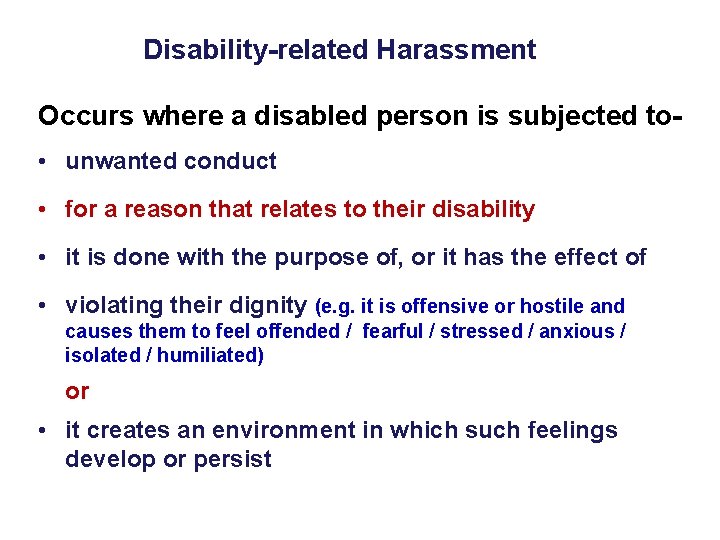
Disability-related Harassment Occurs where a disabled person is subjected to • unwanted conduct • for a reason that relates to their disability • it is done with the purpose of, or it has the effect of • violating their dignity (e. g. it is offensive or hostile and causes them to feel offended / fearful / stressed / anxious / isolated / humiliated) or • it creates an environment in which such feelings develop or persist
![Stuckey –v- Daido Industrial Bearings [2008] • Employee with severe dyslexia • It severely](http://slidetodoc.com/presentation_image_h/2938dedc26c23dac66b4d6e1376f570b/image-13.jpg "Stuckey –v- Daido Industrial Bearings [2008] • Employee with severe dyslexia • It severely")
Stuckey –v- Daido Industrial Bearings [2008] • Employee with severe dyslexia • It severely affected his abilities to read, write and to process and understand oral and written information • Factory environment • Subjected to constant taunts and name-calling: “stupid” “thick” “numpty”
![Bickerstaff –v- Butcher [2015] Northern Ireland Industrial Tribunal • tribunal concluded that a claimant's](http://slidetodoc.com/presentation_image_h/2938dedc26c23dac66b4d6e1376f570b/image-14.jpg "Bickerstaff –v- Butcher [2015] Northern Ireland Industrial Tribunal • tribunal concluded that a claimant's")
Bickerstaff –v- Butcher [2015] Northern Ireland Industrial Tribunal • tribunal concluded that a claimant's morbid obesity amounted to a disability, taking into account the resulting impairments such as mobility problems and sleep apnoea • upheld compliant of disability-related harassment • "foul and abusive language was used by a co-worker against the claimant in relation to his weight“ • co-worker had said the claimant was "so fat" that "he could hardly walk", and "wouldn't feel a knife being stuck into him".
![Gardner -v- West Yorkshire Police [2014] • Police Constable – disabled due to anxiety](http://slidetodoc.com/presentation_image_h/2938dedc26c23dac66b4d6e1376f570b/image-15.jpg "Gardner -v- West Yorkshire Police [2014] • Police Constable – disabled due to anxiety")
Gardner -v- West Yorkshire Police [2014] • Police Constable – disabled due to anxiety • attended a return-to-work interview with his Sergeant after a 6 weeks absence to illness • the Sergeant noted that the man’s absence was because he “went a bit doolally” • he also made a reference to the film One Flew Over the Cuckoo’s Nest • these caused the man to feel uncomfortable and awkward as he perceived them to be derogatory about his illness • an employment tribunal ruled that this amounted to disability -related harassment
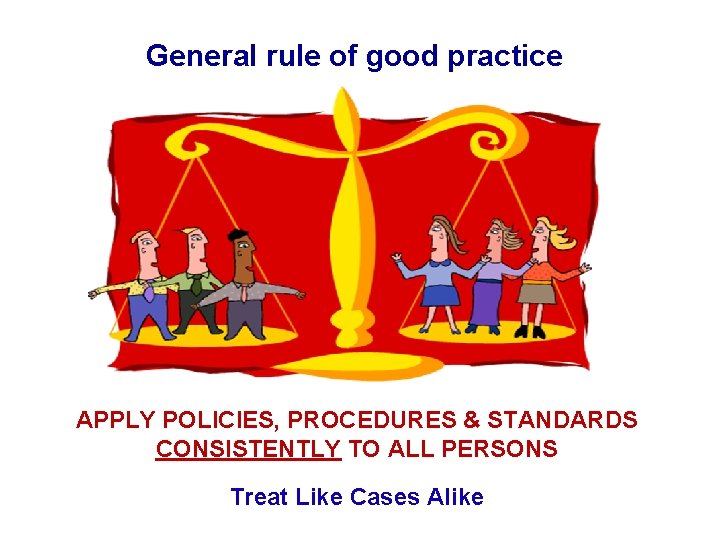
General rule of good practice APPLY POLICIES, PROCEDURES & STANDARDS CONSISTENTLY TO ALL PERSONS Treat Like Cases Alike
www. equalityni. org/Pregnancy. Maternity
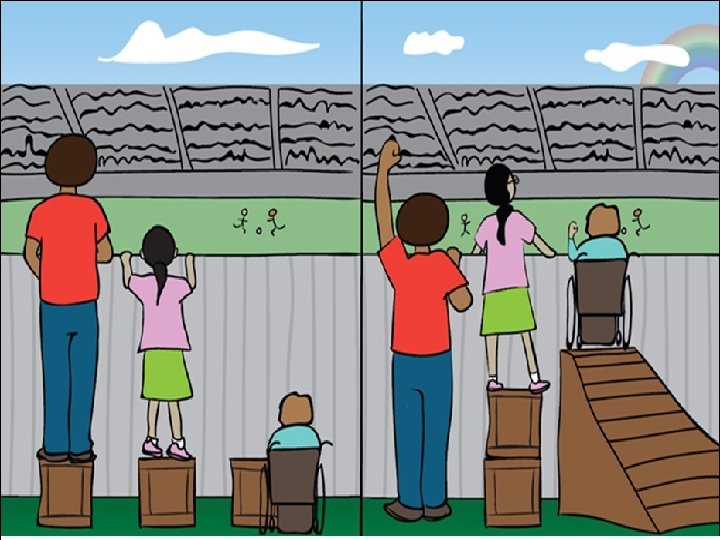
Knowledge of Disability To trigger the reasonable adjustment duty, it is necessary to show that the employer knew that the job applicant or employee is disabled and suffering the alleged disadvantage. ________________________ Knowledge may be- • actual • constructive / imputed • where the employer may not actually know but can be deemed to know because he had sufficient information from which he could reasonably have concluded that the employee is disabled and suffering a disadvantage
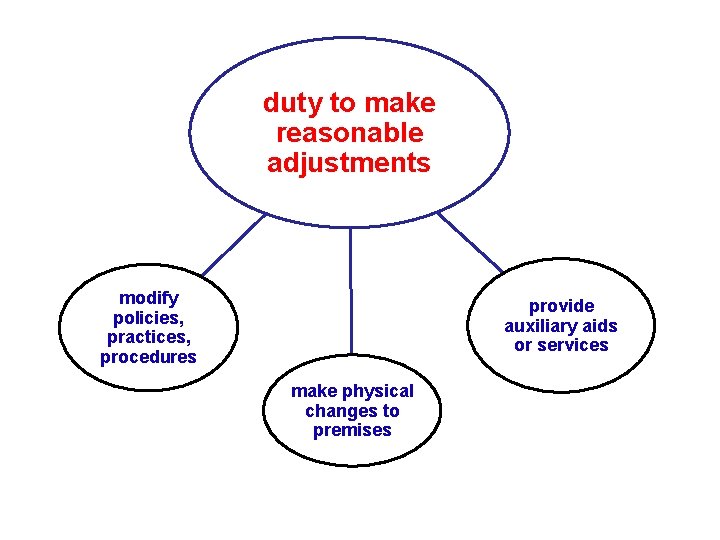
duty to make reasonable adjustments modify policies, practices, procedures provide auxiliary aids or services make physical changes to premises
adjustments to policies / practices / procedures • allocating some of his/her duties to another person • transferring him/her to an existing vacancy • changing the place of work or training • allowing him/her time off to receive medical treatment, assessment or rehabilitation • modifying procedures for testing or assessment • altering the hours of work or training • providing training or mentoring to the disabled person or any other person • proving supervision or other support
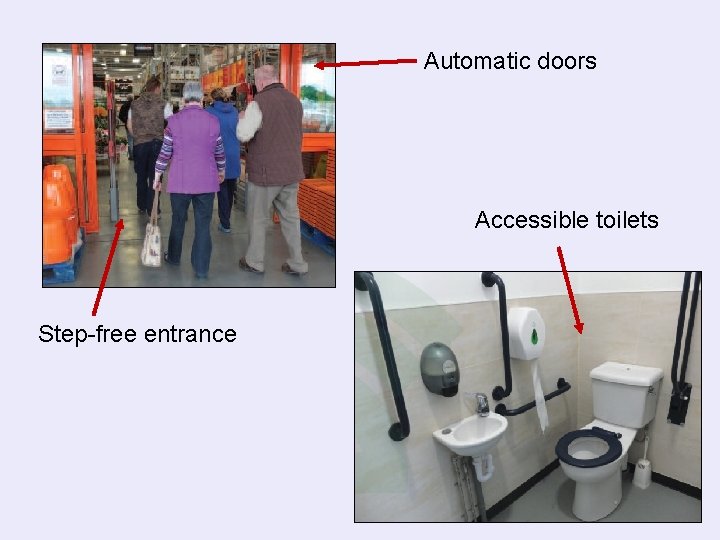
Automatic doors Accessible toilets Step-free entrance
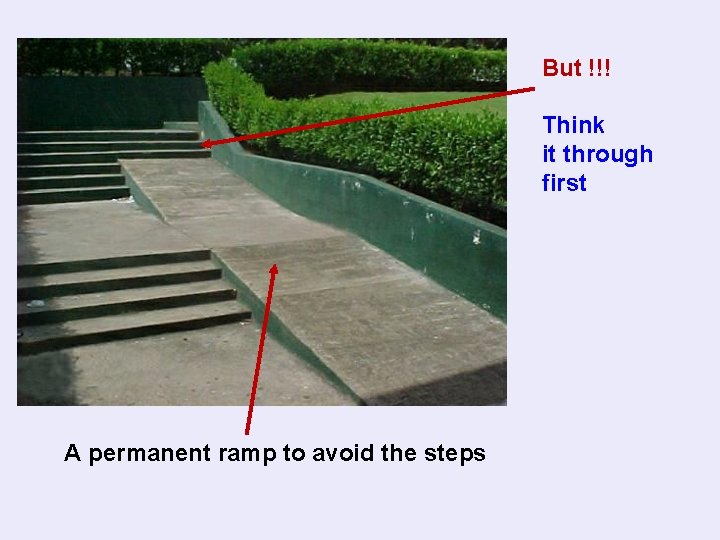
But !!! Think it through first A permanent ramp to avoid the steps

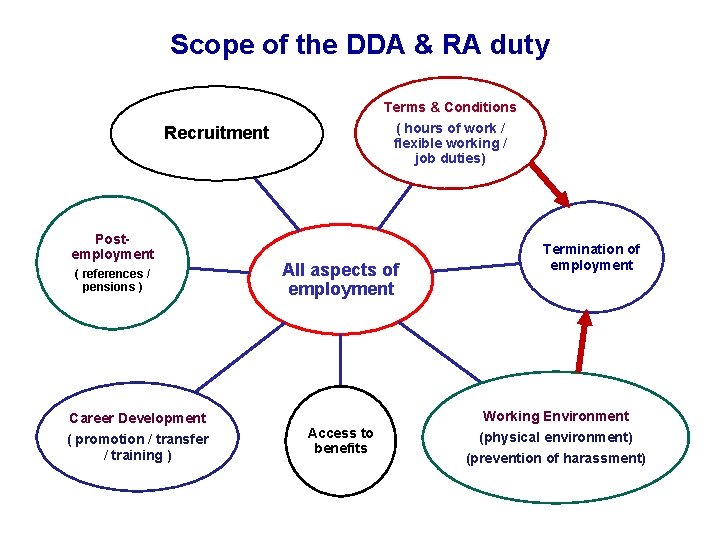
Scope of the DDA & RA duty Terms & Conditions ( hours of work / flexible working / job duties) Recruitment Postemployment ( references / pensions ) Career Development ( promotion / transfer / training ) All aspects of employment Termination of employment Working Environment Access to benefits (physical environment) (prevention of harassment)
![Nottingham County Council –v- Meikle [2004] • Teacher with visual impairment: needed some adjustments](http://slidetodoc.com/presentation_image_h/2938dedc26c23dac66b4d6e1376f570b/image-26.jpg "Nottingham County Council –v- Meikle [2004] • Teacher with visual impairment: needed some adjustments")
Nottingham County Council –v- Meikle [2004] • Teacher with visual impairment: needed some adjustments to help her avoid eye strain: documents in larger font sizes, rest breaks. • Employer failed to make these. As a result of those failures, she sometimes needed to take occasional sick absences. These prompted a misinformed manager to suspend her by mistake. • Absent on sick leave while her lawyers tried to settle this dispute – but after 100 days her full-pay was reduced to half-pay. • Argued that her disability-related absences should be discounted for the purposes of calculating her entitlements – that she should have received full-pay throughout • English Court of Appeal agreed
![City of York Council –v- Grosset [2018] • Teacher (Head of English dept) with](http://slidetodoc.com/presentation_image_h/2938dedc26c23dac66b4d6e1376f570b/image-27.jpg "City of York Council –v- Grosset [2018] • Teacher (Head of English dept) with")
City of York Council –v- Grosset [2018] • Teacher (Head of English dept) with cystic fibrosis: needed adjustments to help reduce his workload and work-related stress. Employer initially made these, but later a new principal removed them, not believing that they were needed • As a result of those failures, his workload and his stress levels increased significantly. As a result of that, he committed an act of gross misconduct – he showed an 18 -rated film to a class of 15 year olds [the horror movie “Halloween”] • He was dismissed and sued for disability discrimination and unfair dismissal and won! English Court of Appeal upheld that finding. “A particularly strong factor underlying the [finding that the dismissal was unjustified] was [the] unchallenged assessment that if [the relevant reasonable adjustments had been made], he would not have been subjected to the same level of stress…and it would have been “unlikely in the extreme” that the incident of the film would have occurred. ”
Employer should not penalise an employee for his own failure to comply with the Reasonable Adjustment Duty • where the employee’s behaviour (absences or poor performance) are attributable to the employer’s failure to make reasonable adjustments • the employer should be very slow and careful about • taking disciplinary action, or • subjecting the employee to any other detriment • e. g. reducing sick pay
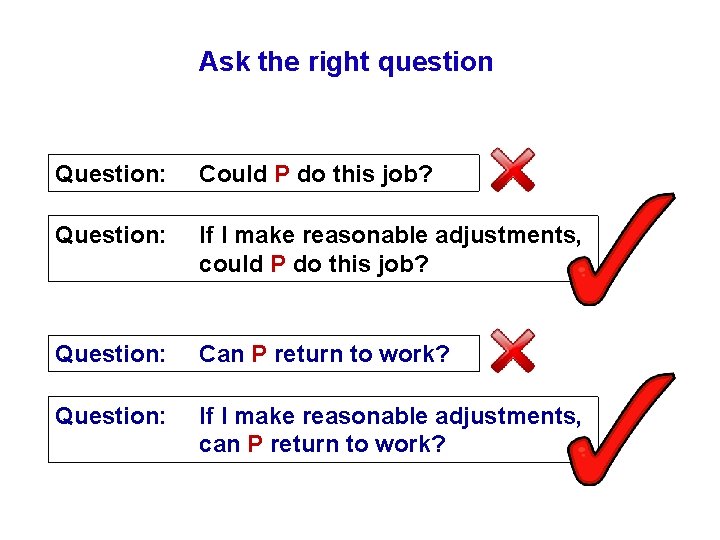
Ask the right question Question: Could P do this job? Question: If I make reasonable adjustments, could P do this job? Question: Can P return to work? Question: If I make reasonable adjustments, can P return to work?
When are adjustments reasonable ?
Assessing reasonableness – criteria • the effectiveness of the step in preventing the disadvantage • the practicality of the step • the financial/other costs required, and the extent of any disruption it may cause • the extent of the employer’s financial and other resources • the availability of financial or other help
Assessing reasonableness – criteria • the nature of employer’s activities and the size of his undertaking • the effect on other employees • adjustments made for other disabled staff • the extent to which the disabled person is willing to co-operate
the effectiveness of the step in preventing the disadvantage Conway –v- Community Options Ltd [2012] UKEAT • absence / dismissal • charity support worker - absent for 15 months due to depression • medical experts could not predict when he might be able to return to work, but confirmed that a return in the short to medium term was unlikely, even if a phased return to work was adopted • the employee himself was consulted and could not offer any better predictions about when he might return • employer was also under pressure to fill the employee’s post in the interim to ensure that the project was completed • employee was dismissed on capability grounds – the employment tribunal struck out the claim as having no reasonable prospect of success and the EAT upheld that finding on appeal • no adjustments could have been made to help the employee get back to work – as such any claim that unspecified adjustments should be made was not reasonable
![the extent of the employers financial and other resources Cox –v- Post Office [1997]](http://slidetodoc.com/presentation_image_h/2938dedc26c23dac66b4d6e1376f570b/image-34.jpg "the extent of the employers financial and other resources Cox –v- Post Office [1997]")
the extent of the employers financial and other resources Cox –v- Post Office [1997] • Employee disabled due to asthma • 1993 to 1996 5 periods of asthma-related absence for a total of 62 days • Dismissed but re-instated on appeal • 1996 • HELD a further single 18 day period of absence (possibly asthma-related) It would have been reasonable for an organisation of the size and resources of the Post Office to have discounted the disability-related absences before deciding whether to take disciplinary action
Assessing reasonableness – key tips • Will it work? • will it enable an absent employee to return to work? • will it enable an employee to reduce absence levels? • will it enable an underperforming employee to improve? • Do’s • • consult the disabled person about his/her needs obtain expert advice, where appropriate consult specialist groups; e. g. charities, etc. check if funding is available from others use trial periods to test effectiveness keep an open mind to possible solutions review periodically
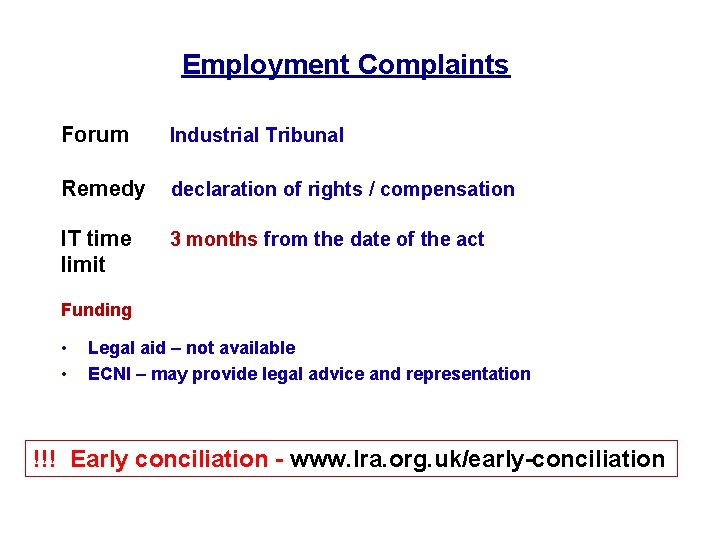
Employment Complaints Forum Industrial Tribunal Remedy declaration of rights / compensation IT time 3 months from the date of the act limit Funding • • Legal aid – not available ECNI – may provide legal advice and representation !!! Early conciliation - www. lra. org. uk/early-conciliation
- Slides: 36