
Introduction to the Compound Light Microscope Care Parts

- Slides: 15
Introduction to the Compound Light Microscope Care Parts Focusing
Objectives: 1. Students will be able to identify the parts of the microscope and each parts job. 2. Students will be able to successfully focus an image on the microscope.
Microscope Basics • • • Always carry with 2 hands Only use lens paper for cleaning Do not force knobs Always store covered Keep objects clear of desk and cords
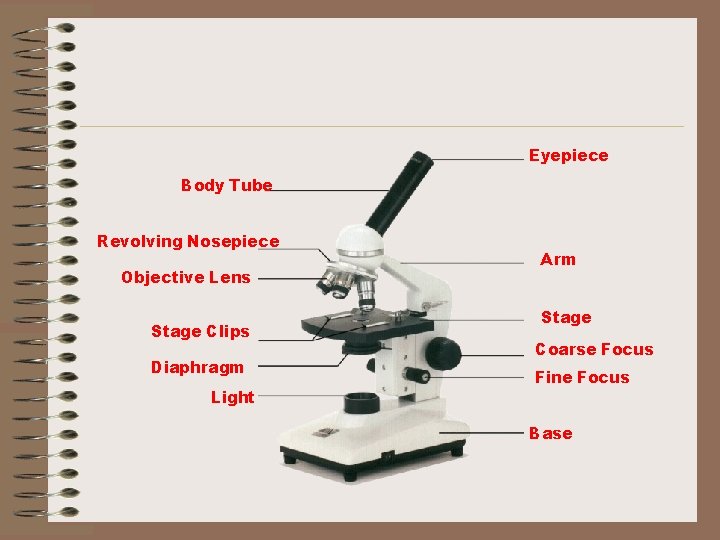
Eyepiece Body Tube Revolving Nosepiece Objective Lens Stage Clips Diaphragm Light Arm Stage Coarse Focus Fine Focus Base
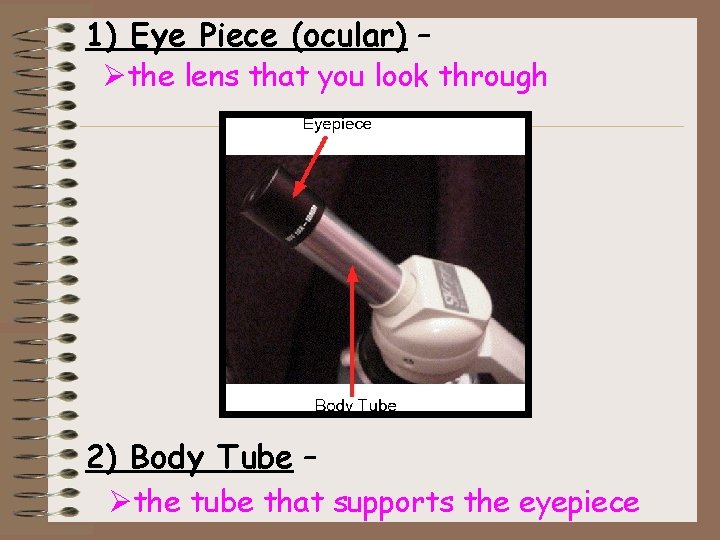
1) Eye Piece (ocular) – the lens that you look through 2) Body Tube – the tube that supports the eyepiece
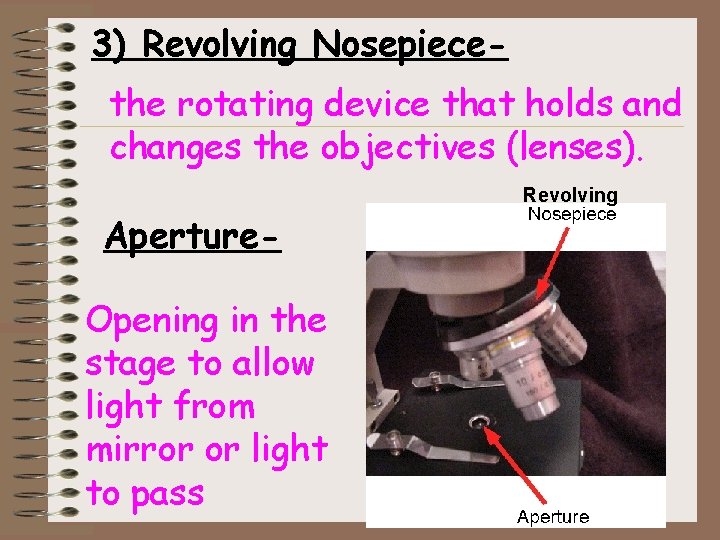
3) Revolving Nosepiecethe rotating device that holds and changes the objectives (lenses). Revolving Aperture. Opening in the stage to allow light from mirror or light to pass
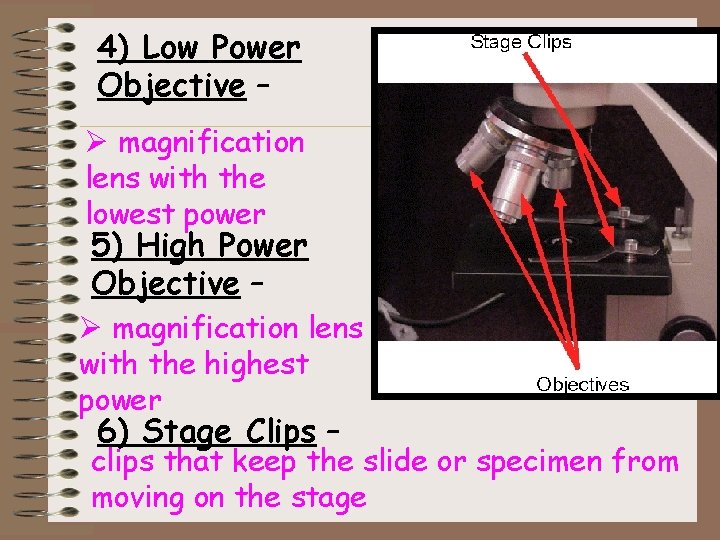
4) Low Power Objective – magnification lens with the lowest power 5) High Power Objective – magnification lens with the highest power 6) Stage Clips – clips that keep the slide or specimen from moving on the stage
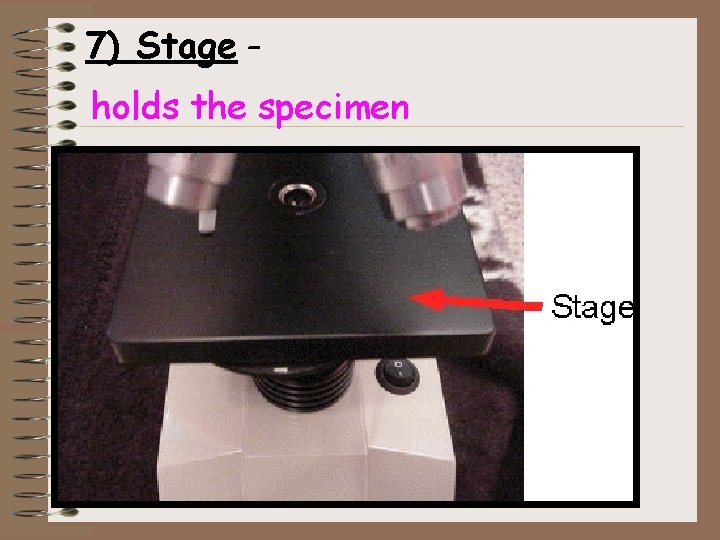
7) Stage – holds the specimen
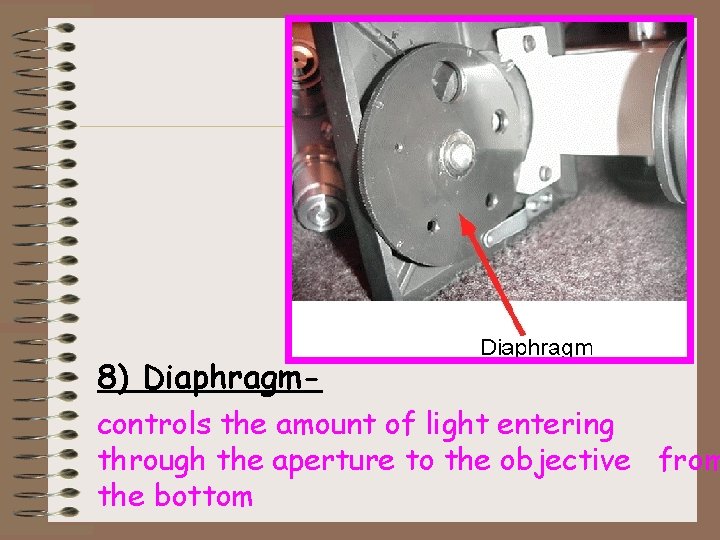
8) Diaphragm- controls the amount of light entering through the aperture to the objective from the bottom
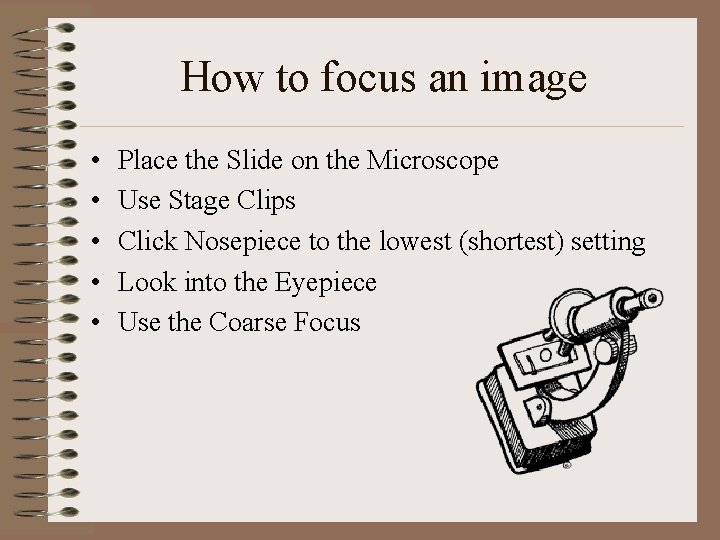
How to focus an image • • • Place the Slide on the Microscope Use Stage Clips Click Nosepiece to the lowest (shortest) setting Look into the Eyepiece Use the Coarse Focus
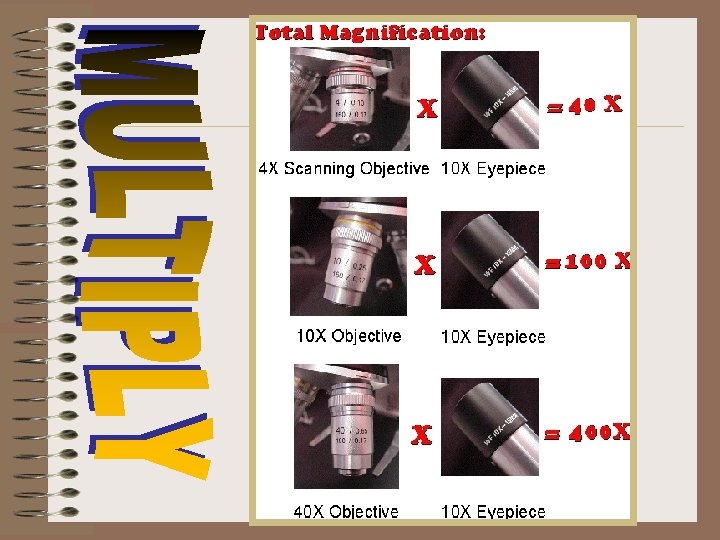
Calculate Total Magnification = ocular power x objective lens power using Ocular power is generally 10 X, meaning it has a magnification or power of 10 X
Elodea 40 x Elodea 100 x Elodea 400 x
How to focus high power • • Follow steps to focus using low power Click the nosepiece to the longest objective Do NOT use the Coarse Focusing Knob Use the Fine Focus Knob to bring the slide