
Introduction to the Cell 1 3 Parts of
- Slides: 34
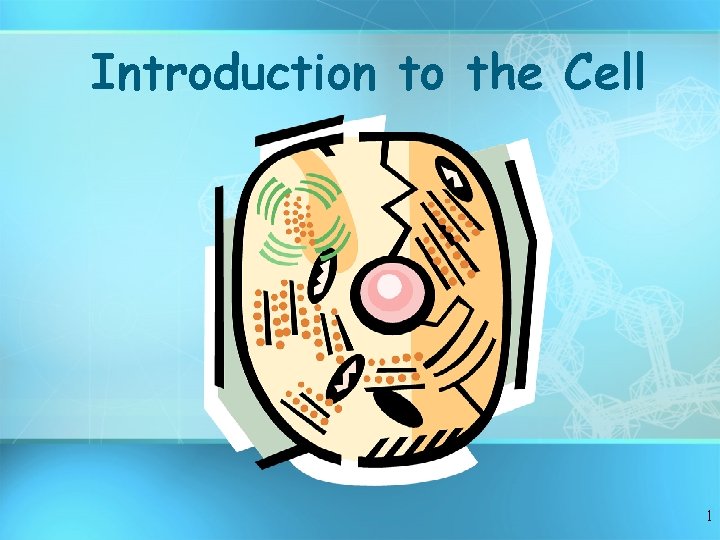
Introduction to the Cell 1
3 Parts of Cell Theory -All living things are composed of one or more cells -Cells are the basic units of structure and function in an organism -Cells come only from the reproduction of existing cells 2
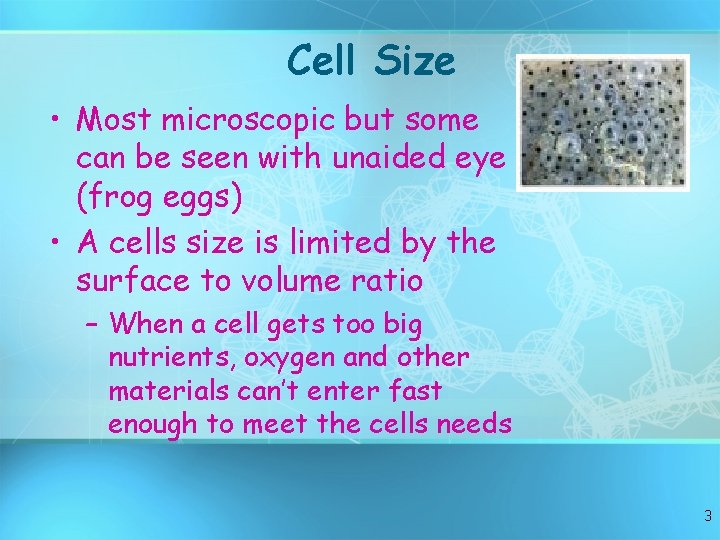
Cell Size • Most microscopic but some can be seen with unaided eye (frog eggs) • A cells size is limited by the surface to volume ratio – When a cell gets too big nutrients, oxygen and other materials can’t enter fast enough to meet the cells needs 3
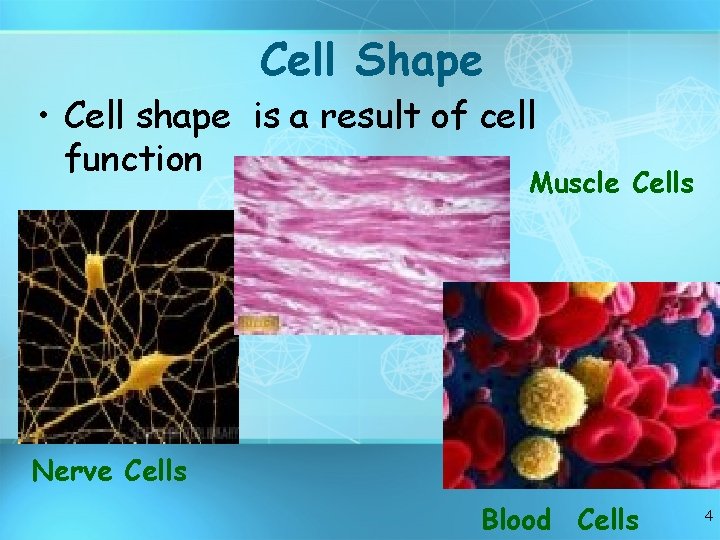
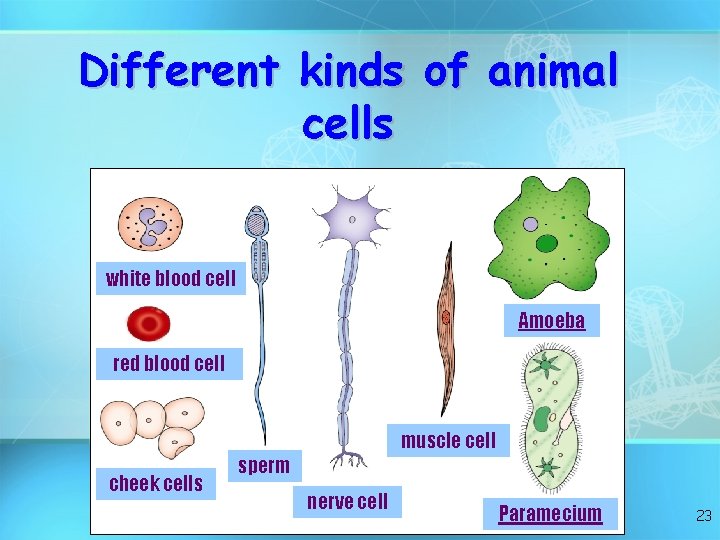
Cell Shape • Cell shape is a result of cell function Muscle Cells Nerve Cells Blood Cells 4
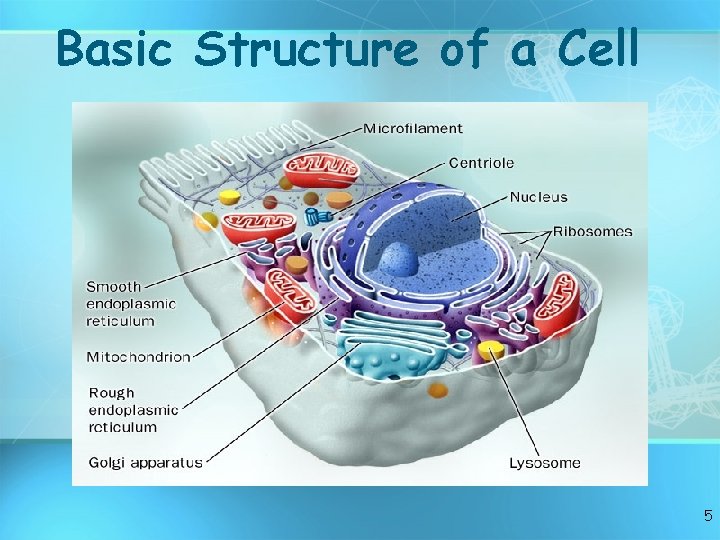
Basic Structure of a Cell 5
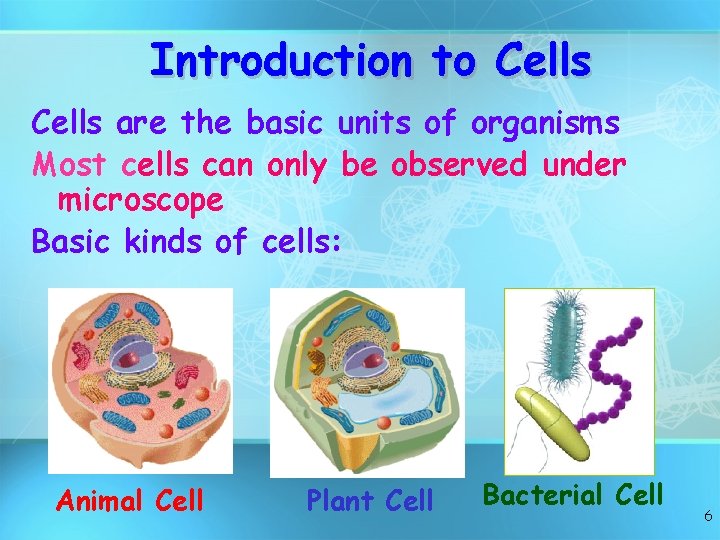
Introduction to Cells are the basic units of organisms Most cells can only be observed under microscope Basic kinds of cells: Animal Cell Plant Cell Bacterial Cell 6
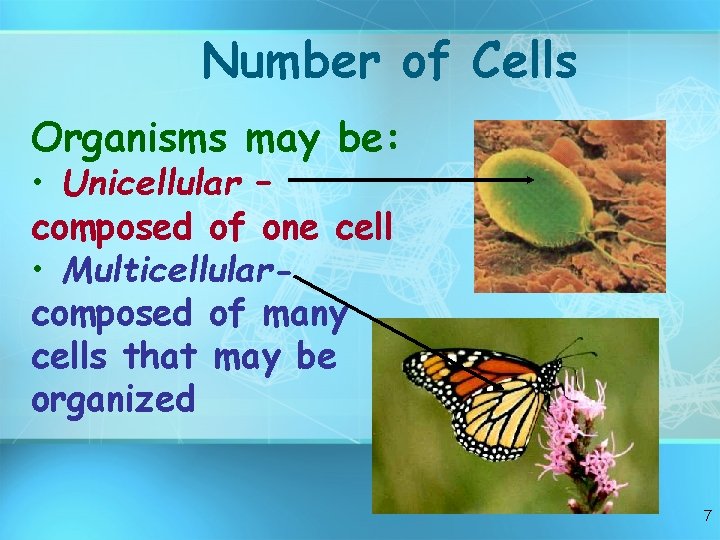
Number of Cells Organisms may be: • Unicellular – composed of one cell • Multicellularcomposed of many cells that may be organized 7
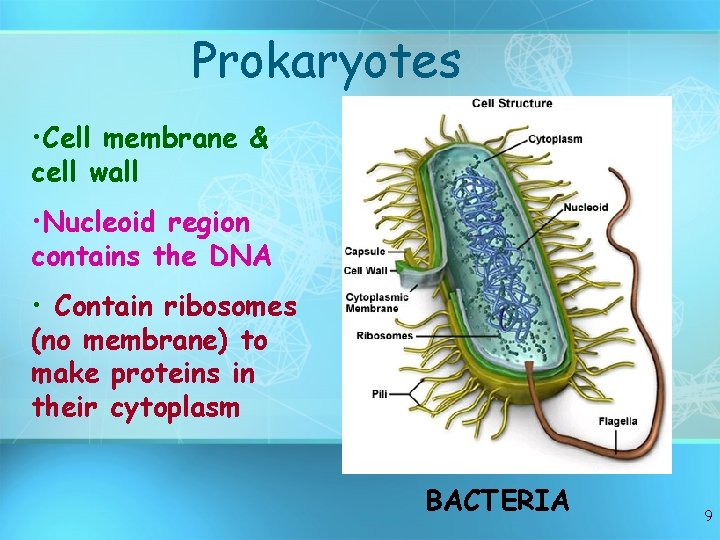
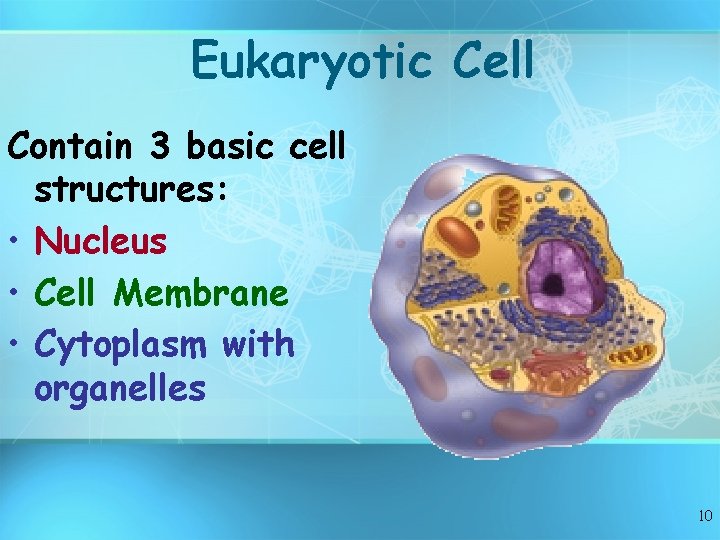
Two Types of Cells § Prokaryotes (bacteria) § lack a nucleus or membranebound structures called organelles §Eukaryotes (all other cells) § have a nucleus and membranebound organelles (protista, plants, fungi, & animals) 8
Prokaryotes • Cell membrane & cell wall • Nucleoid region contains the DNA • Contain ribosomes (no membrane) to make proteins in their cytoplasm BACTERIA 9
Eukaryotic Cell Contain 3 basic cell structures: • Nucleus • Cell Membrane • Cytoplasm with organelles 10
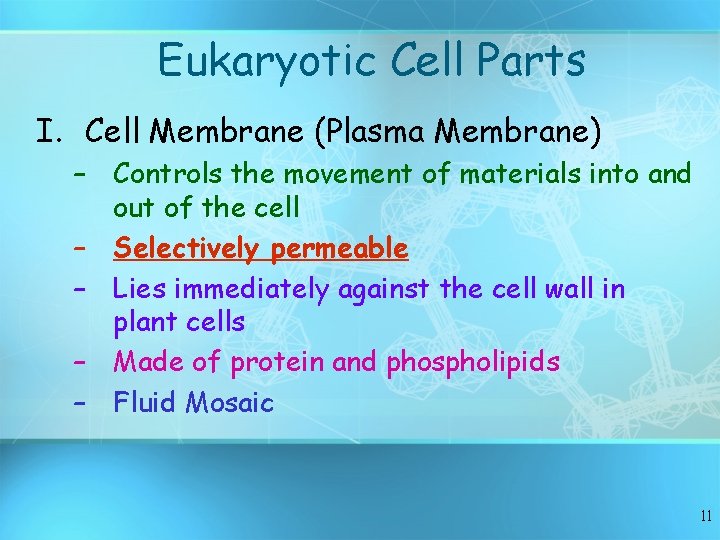
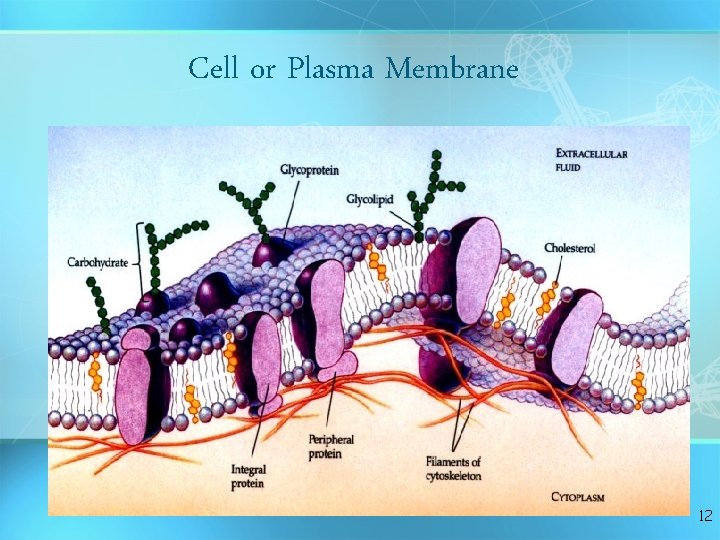
Eukaryotic Cell Parts I. Cell Membrane (Plasma Membrane) – Controls the movement of materials into and out of the cell – Selectively permeable – Lies immediately against the cell wall in plant cells – Made of protein and phospholipids – Fluid Mosaic 11
Cell or Plasma Membrane 12
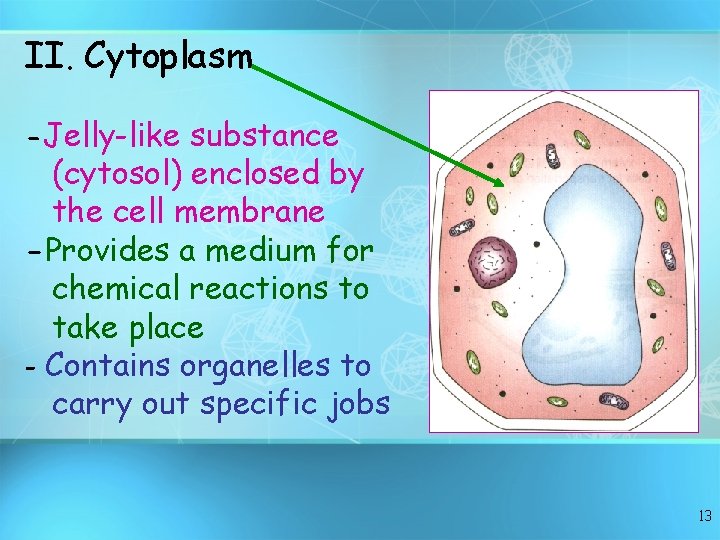
II. Cytoplasm -Jelly-like substance (cytosol) enclosed by the cell membrane -Provides a medium for chemical reactions to take place - Contains organelles to carry out specific jobs 13
Organelles Very small size Can only be observed under a microscope (usually TEM) Have specific functions Found throughout cytoplasm * Surrounded by a membrane* 14
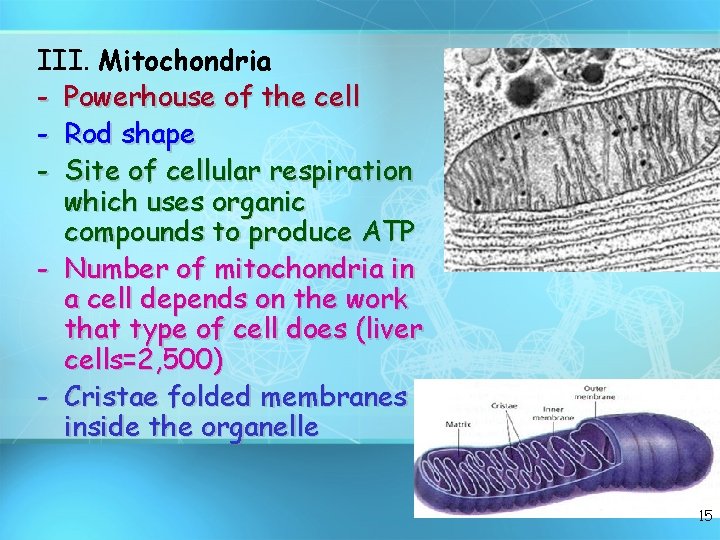
III. Mitochondria - Powerhouse of the cell - Rod shape - Site of cellular respiration which uses organic compounds to produce ATP - Number of mitochondria in a cell depends on the work that type of cell does (liver cells=2, 500) - Cristae folded membranes inside the organelle 15
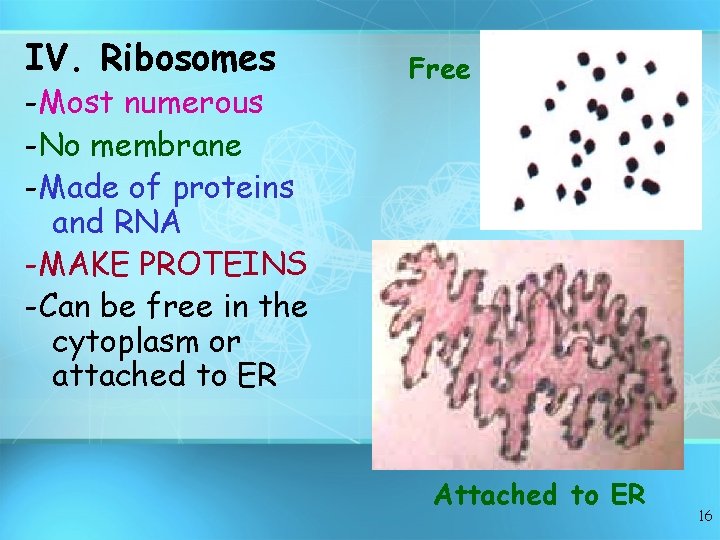
IV. Ribosomes -Most numerous -No membrane -Made of proteins and RNA -MAKE PROTEINS -Can be free in the cytoplasm or attached to ER Free Attached to ER 16
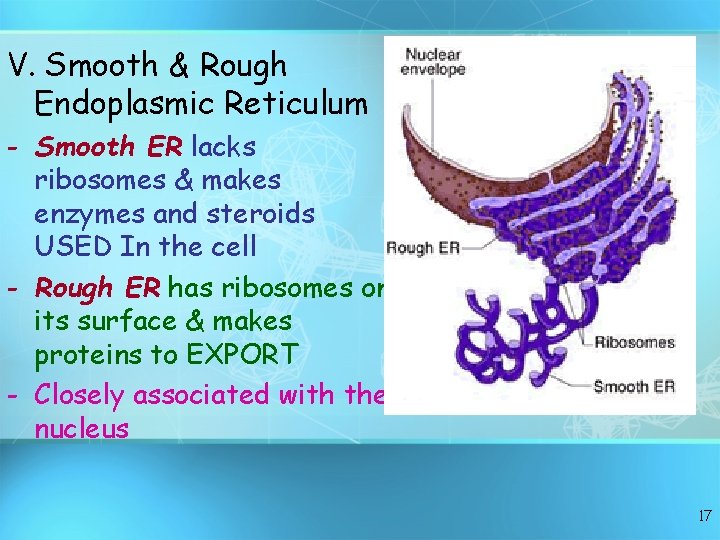
V. Smooth & Rough Endoplasmic Reticulum - Smooth ER lacks ribosomes & makes enzymes and steroids USED In the cell - Rough ER has ribosomes on its surface & makes proteins to EXPORT - Closely associated with the nucleus 17
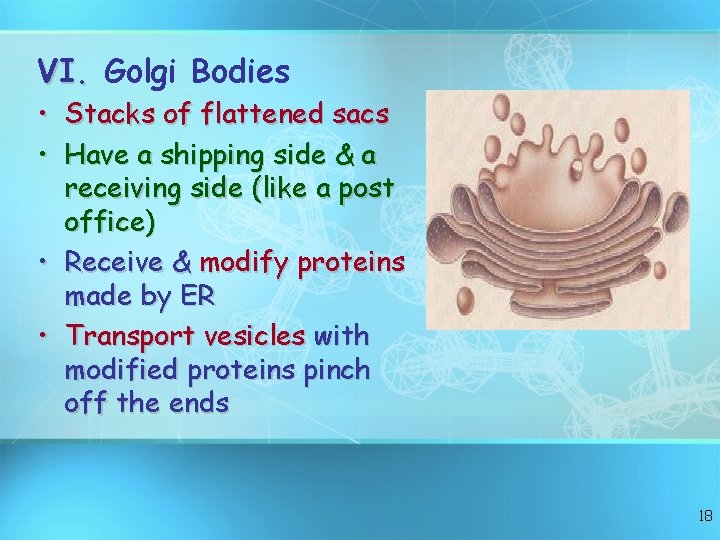
VI. Golgi Bodies • • Stacks of flattened sacs Have a shipping side & a receiving side (like a post office) • Receive & modify proteins made by ER • Transport vesicles with modified proteins pinch off the ends 18
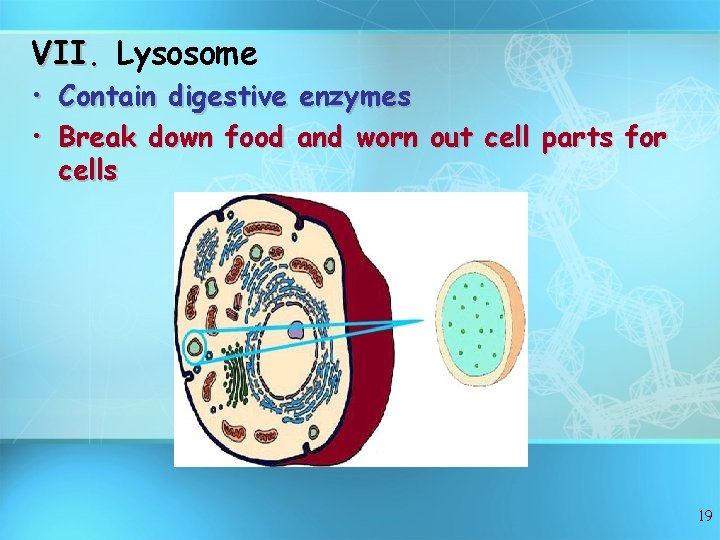
VII. Lysosome • Contain digestive enzymes • Break down food and worn out cell parts for cells 19
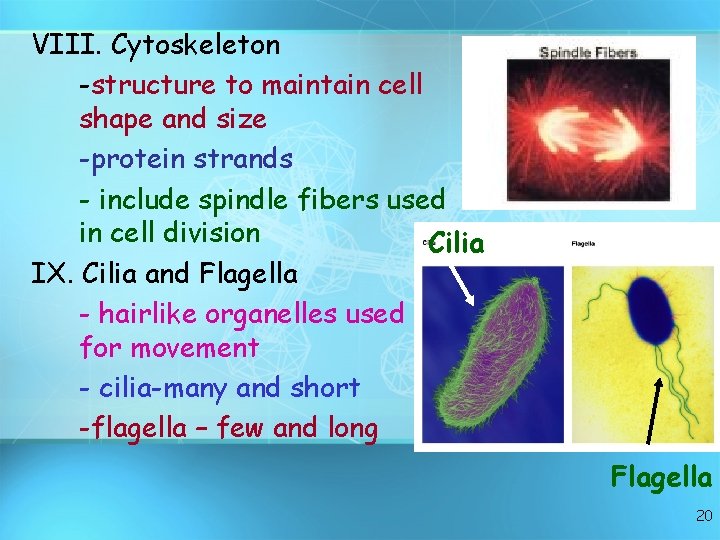
VIII. Cytoskeleton -structure to maintain cell shape and size -protein strands - include spindle fibers used in cell division Cilia IX. Cilia and Flagella - hairlike organelles used for movement - cilia-many and short -flagella – few and long Flagella 20
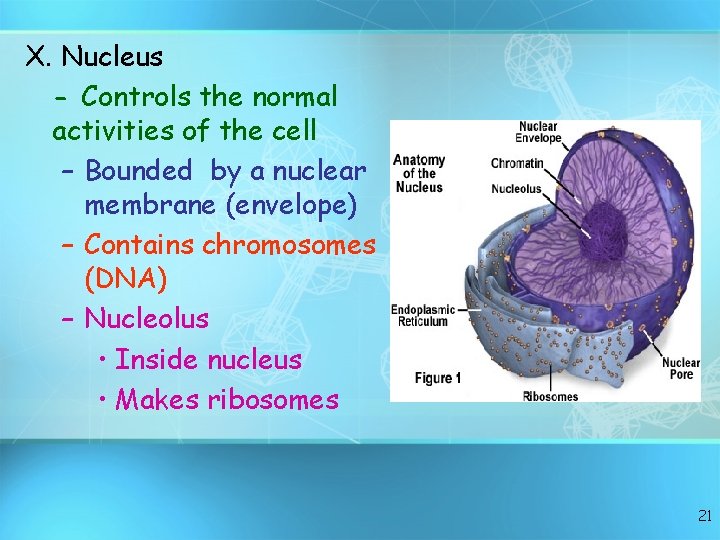
X. Nucleus - Controls the normal activities of the cell – Bounded by a nuclear membrane (envelope) – Contains chromosomes (DNA) – Nucleolus • Inside nucleus • Makes ribosomes 21
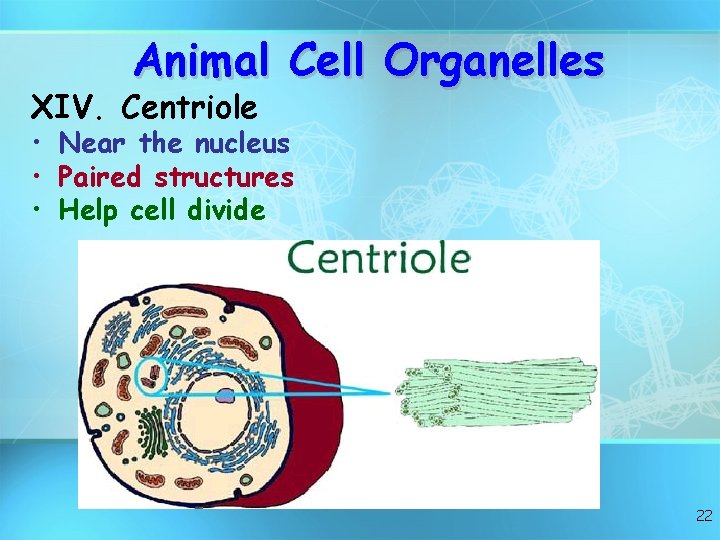
Animal Cell Organelles XIV. Centriole • Near the nucleus • Paired structures • Help cell divide 22
Different kinds of animal cells white blood cell Amoeba red blood cell muscle cell cheek cells sperm nerve cell Paramecium 23
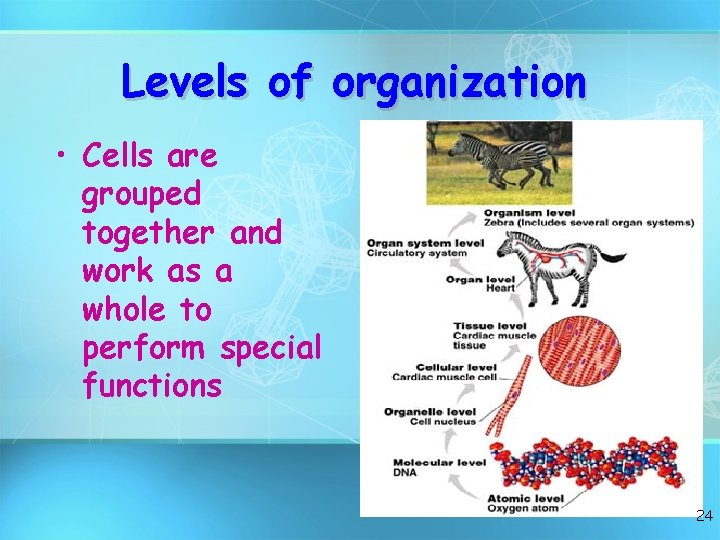
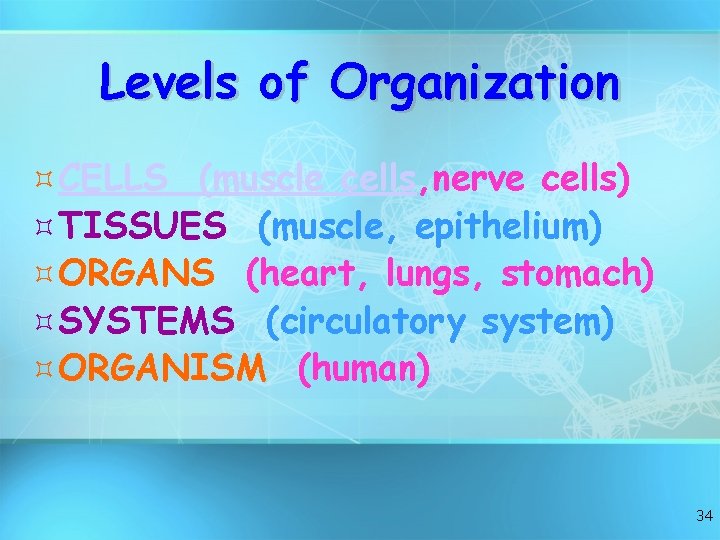
Levels of organization • Cells are grouped together and work as a whole to perform special functions 24
Tissue • A group of similar cells that perform a particular function – Animals : epithelial tissue, muscular tissue – Plants : vascular tissue, mesophyll 25
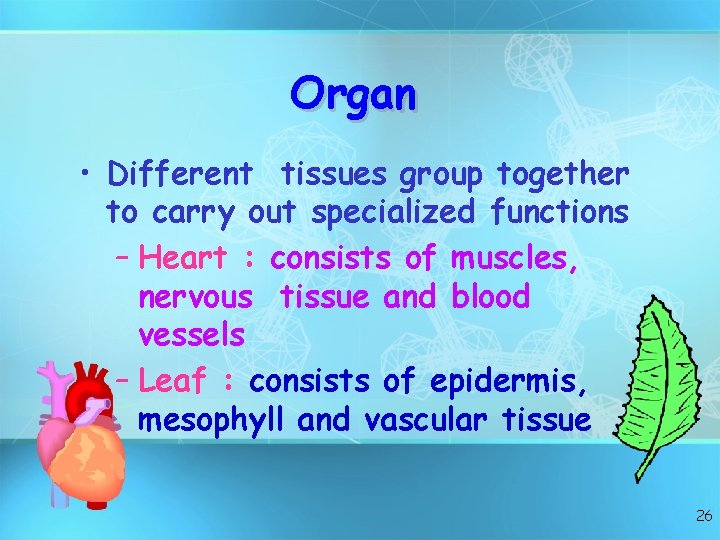
Organ • Different tissues group together to carry out specialized functions – Heart : consists of muscles, nervous tissue and blood vessels – Leaf : consists of epidermis, mesophyll and vascular tissue 26
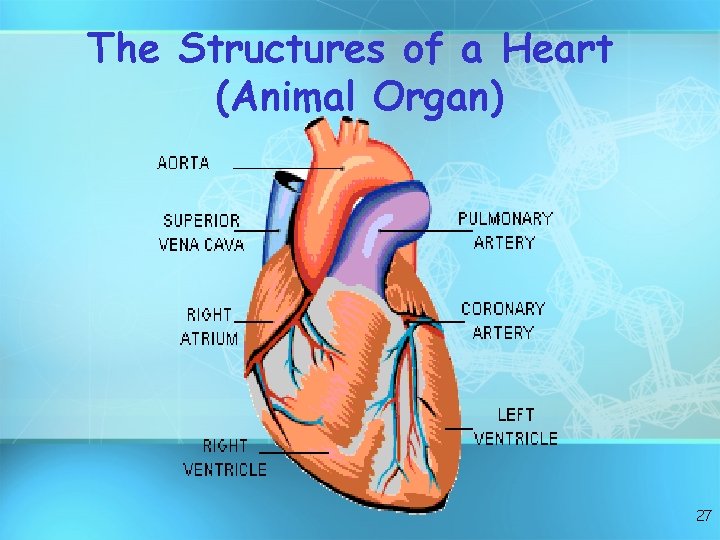
The Structures of a Heart (Animal Organ) 27
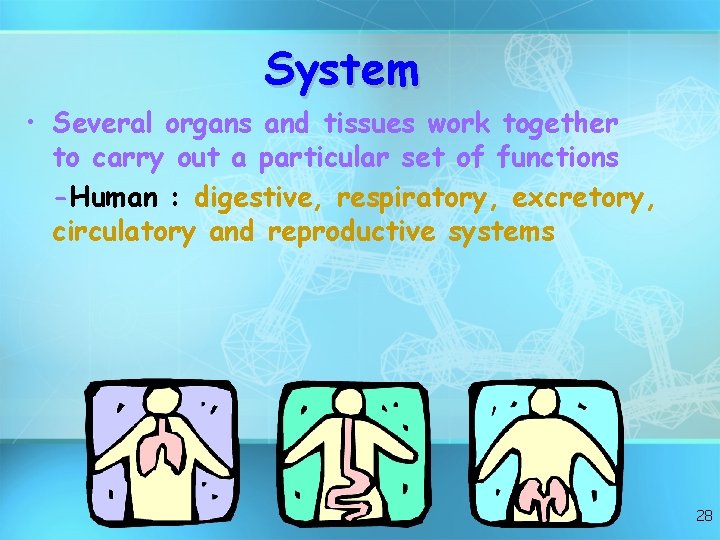
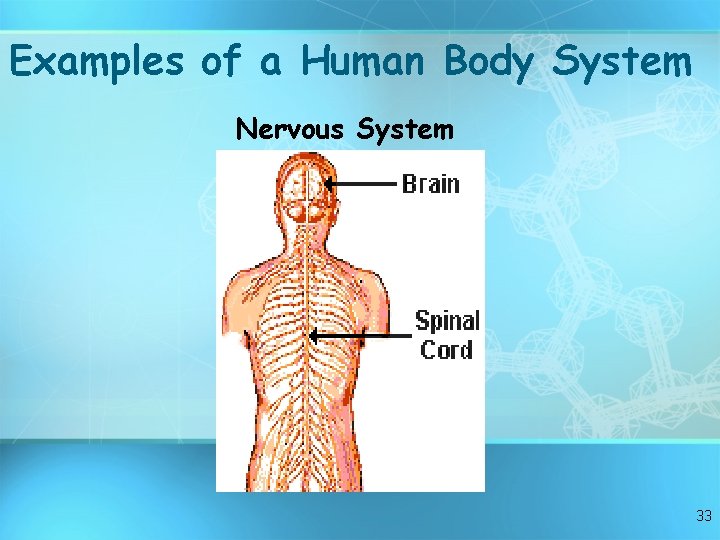
System • Several organs and tissues work together to carry out a particular set of functions -Human : digestive, respiratory, excretory, circulatory and reproductive systems 28
Human Body Systems Examples of systems : ´ Digestive System ´ Respiratory System ´ Circulatory System ´ Nervous System 29
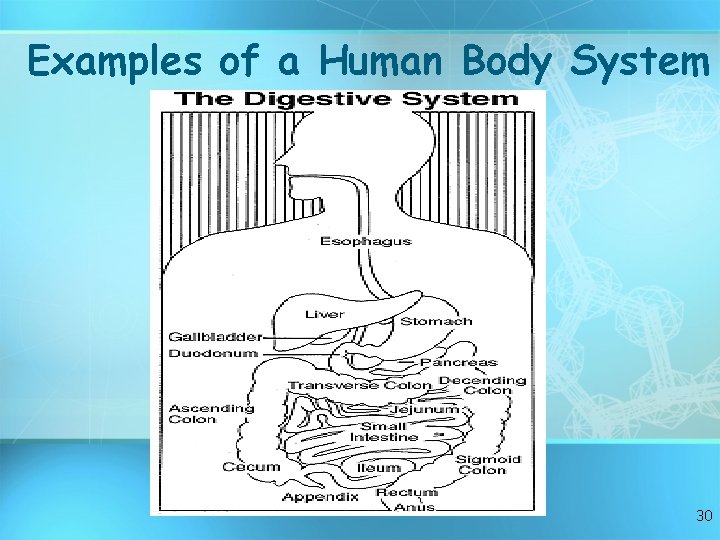
Examples of a Human Body System 30
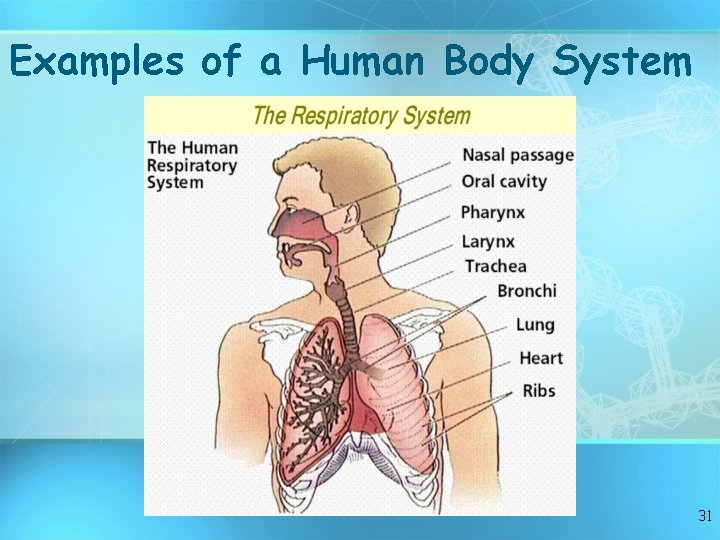
Examples of a Human Body System 31
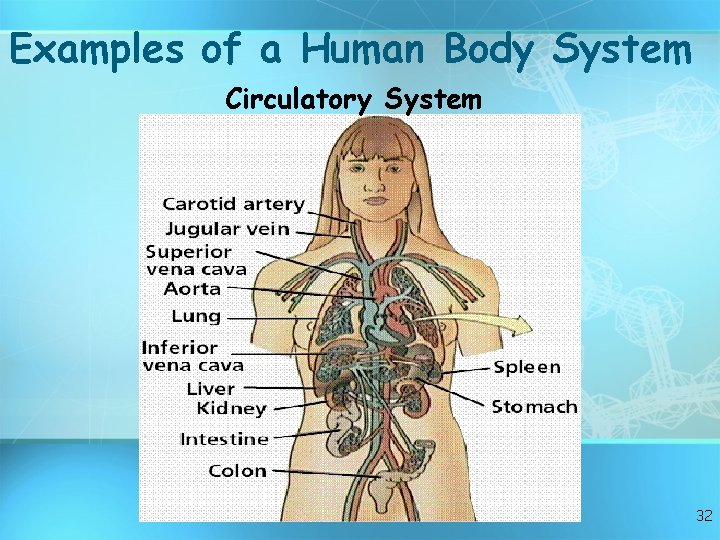
Examples of a Human Body System Circulatory System 32
Examples of a Human Body System Nervous System 33
Levels of Organization ³ CELLS (muscle cells, nerve cells) ³ TISSUES (muscle, epithelium) ³ ORGANS (heart, lungs, stomach) ³ SYSTEMS (circulatory system) ³ ORGANISM (human) 34