
Introduction to the Capacity Allocation Congestion Management Network

- Slides: 29
Introduction to the Capacity Allocation & Congestion Management Network Code 1 st Stakeholder Group Meeting Mark Copley ENTSO-E Market Advisor
Background & Context 1) ENTSO-E’s legal role 2) The importance of codes 3) Overview of the network code development process.
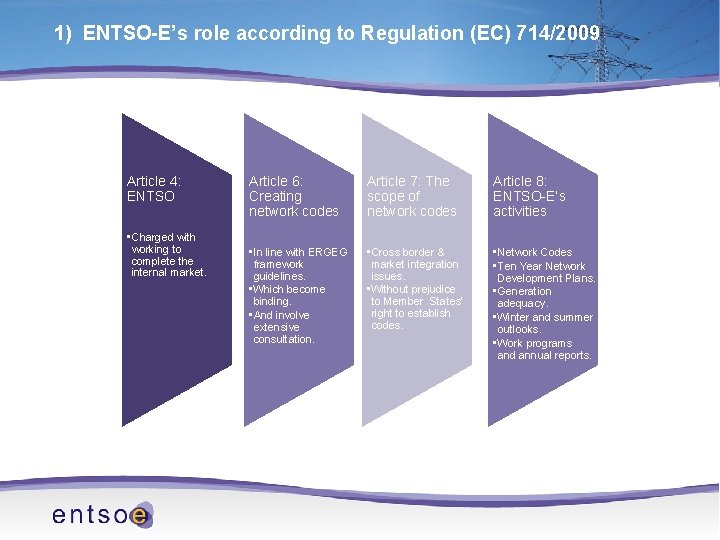
1) ENTSO-E’s role according to Regulation (EC) 714/2009 Article 4: ENTSO • Charged with working to complete the internal market. Article 6: Creating network codes Article 7: The scope of network codes Article 8: ENTSO-E’s activities • In line with ERGEG framework guidelines. • Which become binding. • And involve extensive consultation. • Cross border & market integration issues. • Without prejudice to Member States’ right to establish codes. • Network Codes • Ten Year Network Development Plans. • Generation adequacy. • Winter and summer outlooks. • Work programs and annual reports.
2) Why are network codes important? • They are legally binding. Ø Every TSO, generator and load will have to comply. Ø While they will not duplicate national regulation, national regulation has to be consistent. • Hence, creating fit-for-purpose network codes is in everyone’s interest. • A mayor challenge for drafting teams lies in ensuring that codes are accessible to all and represent a range of views.
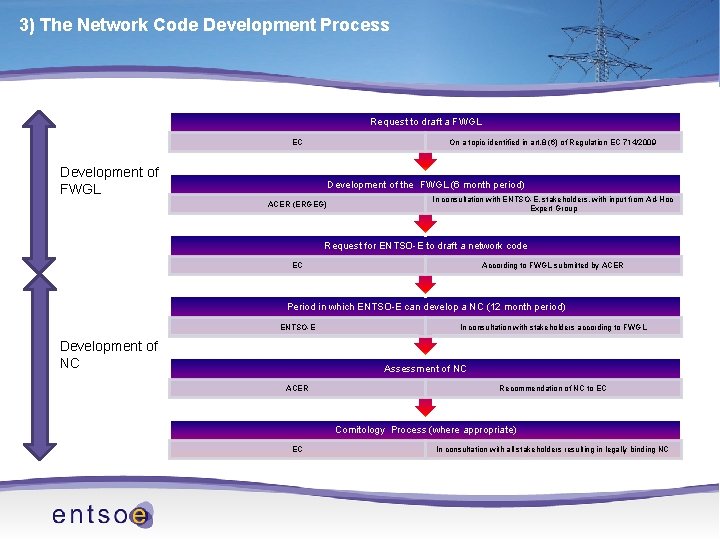
3) The Network Code Development Process Request to draft a FWGL EC On a topic identified in art. 8 (6) of Regulation EC 714/2009 Development of FWGL Development of the FWGL (6 month period) ACER (ERGEG) In consultation with ENTSO-E, stakeholders, with input from Ad-Hoc Expert Group Request for ENTSO-E to draft a network code EC According to FWGL submitted by ACER Period in which ENTSO-E can develop a NC (12 month period) ENTSO-E Development of NC In consultation with stakeholders according to FWGL Assessment of NC ACER Recommendation of NC to EC Comitology Process (where appropriate) EC In consultation with all stakeholders resulting in legally binding NC
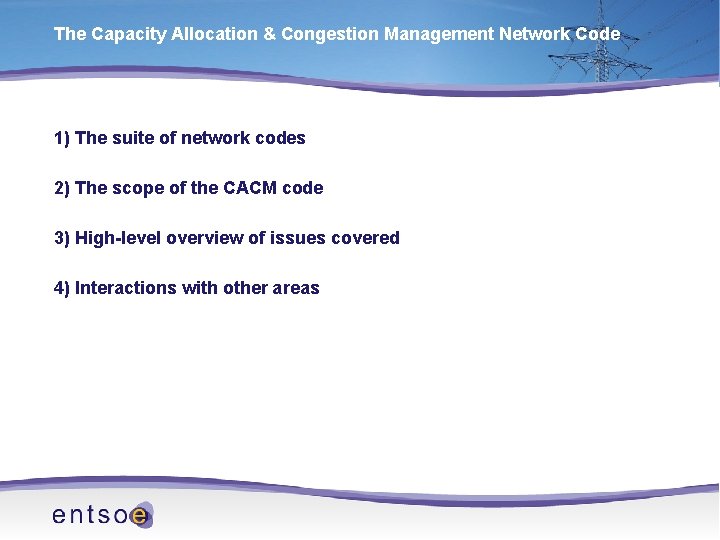
The Capacity Allocation & Congestion Management Network Code 1) The suite of network codes 2) The scope of the CACM code 3) High-level overview of issues covered 4) Interactions with other areas
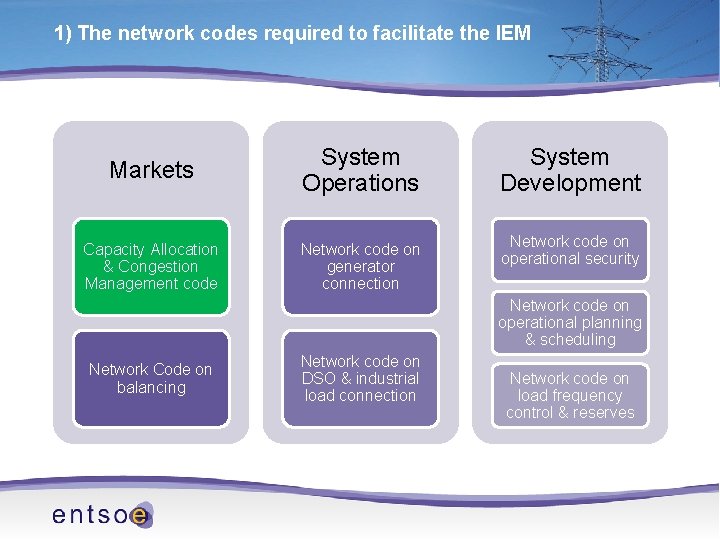
1) The network codes required to facilitate the IEM Markets System Operations Capacity Allocation & Congestion Management code Network code on generator connection System Development Network code on operational security Network code on operational planning & scheduling Network Code on balancing Network code on DSO & industrial load connection Network code on load frequency control & reserves
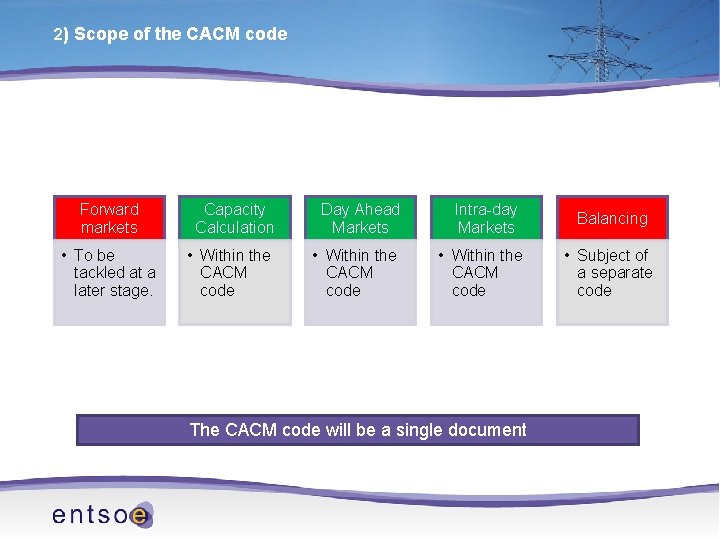
2) Scope of the CACM code Forward markets • To be tackled at a later stage. Capacity Calculation Day Ahead Markets Intra-day Markets • Within the CACM code The CACM code will be a single document Balancing • Subject of a separate code
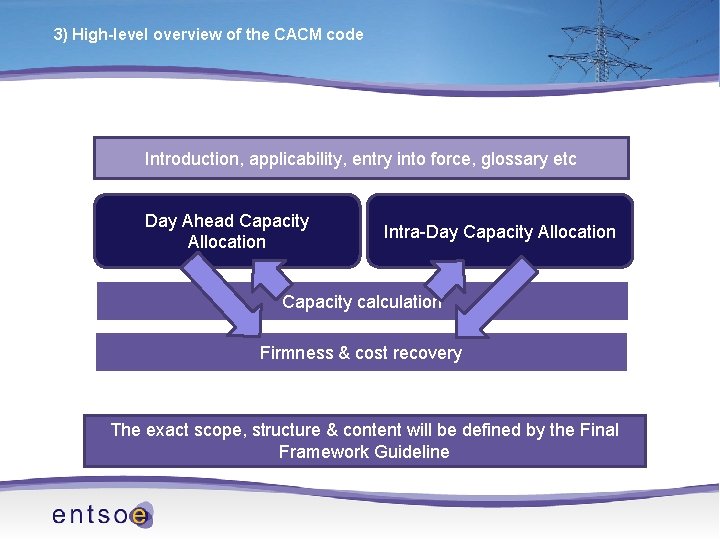
3) High-level overview of the CACM code Introduction, applicability, entry into force, glossary etc Day Ahead Capacity Allocation Intra-Day Capacity Allocation Capacity calculation Firmness & cost recovery The exact scope, structure & content will be defined by the Final Framework Guideline
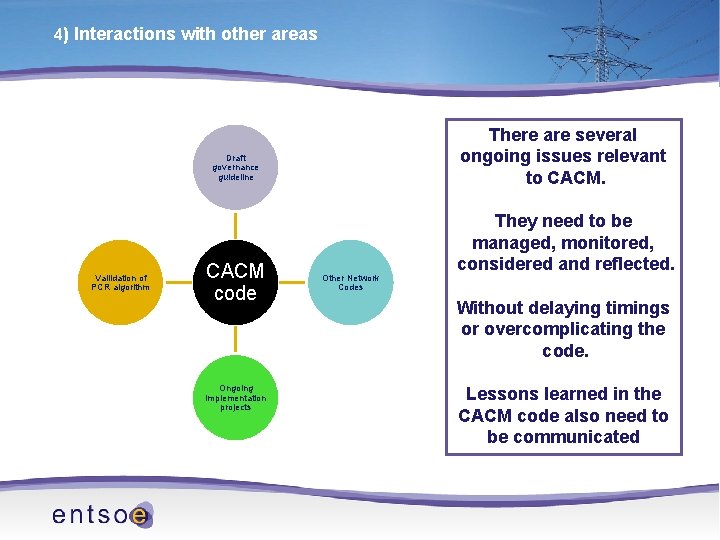
4) Interactions with other areas There are several ongoing issues relevant to CACM. Draft governance guideline Vallidation of PCR algorithm CACM code Ongoing implementation projects Other Network Codes They need to be managed, monitored, considered and reflected. Without delaying timings or overcomplicating the code. Lessons learned in the CACM code also need to be communicated
Proposed process to develop the CACM code 1 st Stakeholder Group Meeting Mark Copley ENTSO-E Market Advisor
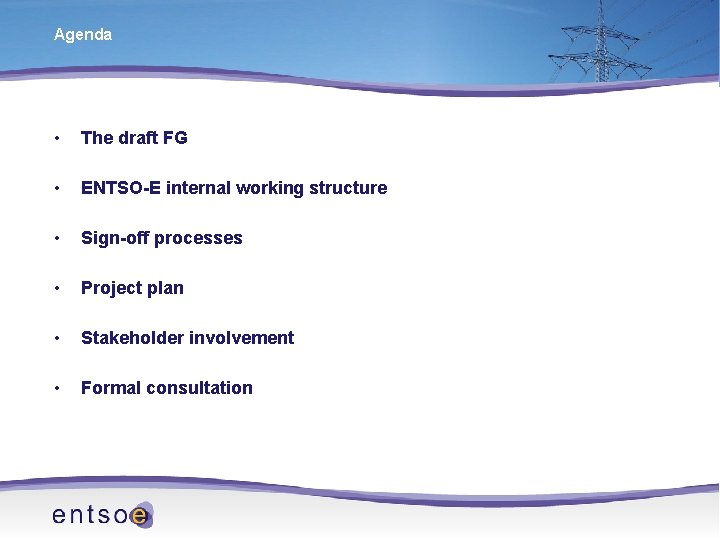
Agenda • The draft FG • ENTSO-E internal working structure • Sign-off processes • Project plan • Stakeholder involvement • Formal consultation
The draft FG and code timescales • The exact timescales for developing the CACM code will depend on when we receive an invitation letter from the Commission. • We understand ACER will submit a final FG for approval shortly. • We tentatively expect a formal invitation and “the clock to start ticking” in September 2011. • That will then give us 12 months to develop and consult on the CACM network code.
ENTSO-E Internal Working Structure • The 12 month timescale will be challenging. • So we have tried to put effective structures in place, start preparing early and use the “scoping” phase to make progress. • 3 drafting teams have been created and have started work. • Hence we are beginning to identify and tackle important issues.
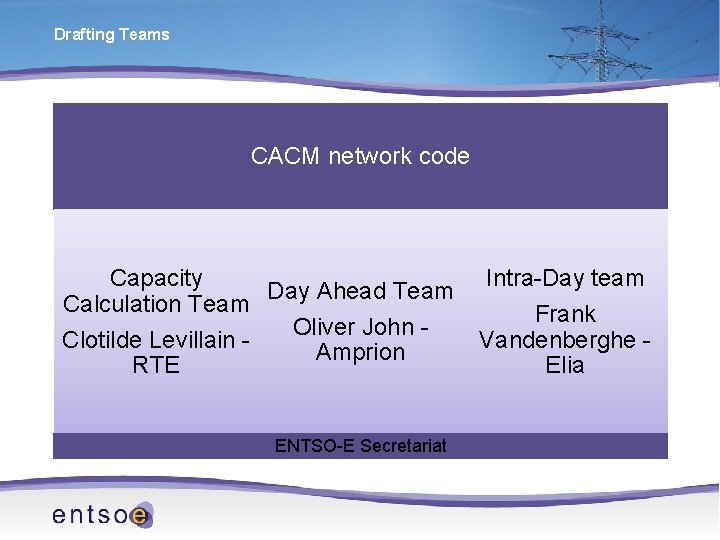
Drafting Teams CACM network code Capacity Day Ahead Team Calculation Team Oliver John Clotilde Levillain Amprion RTE ENTSO-E Secretariat Intra-Day team Frank Vandenberghe Elia
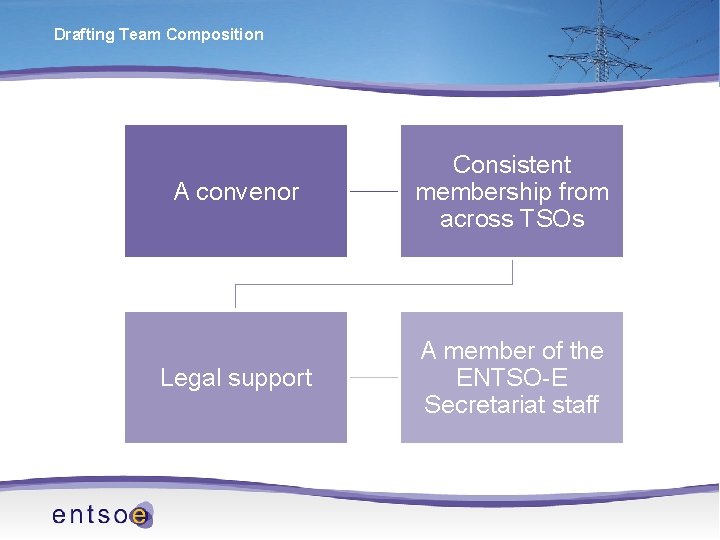
Drafting Team Composition A convenor Consistent membership from across TSOs Legal support A member of the ENTSO-E Secretariat staff
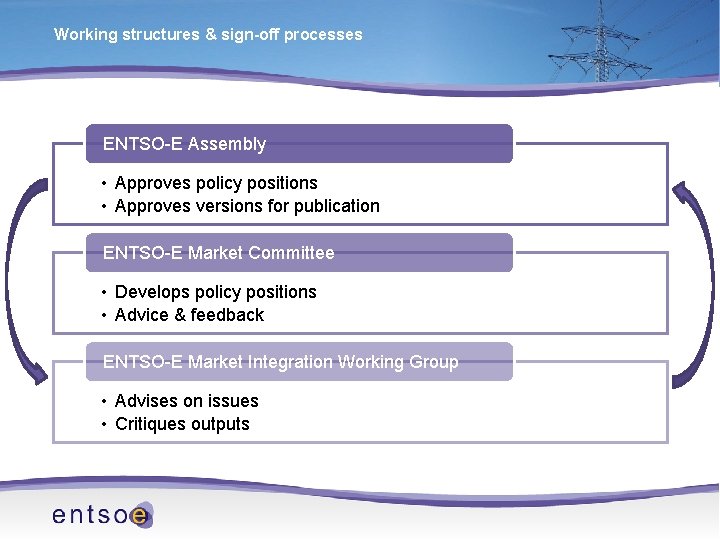
Working structures & sign-off processes ENTSO-E Assembly • Approves policy positions • Approves versions for publication ENTSO-E Market Committee • Develops policy positions • Advice & feedback ENTSO-E Market Integration Working Group • Advises on issues • Critiques outputs
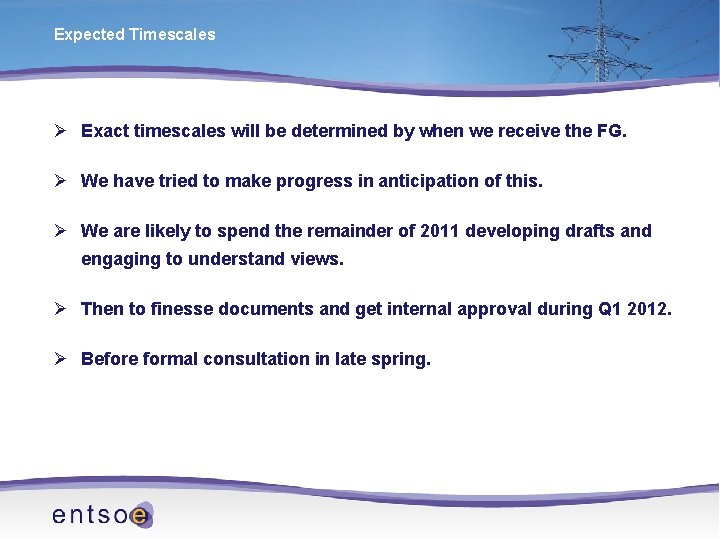
Expected Timescales Ø Exact timescales will be determined by when we receive the FG. Ø We have tried to make progress in anticipation of this. Ø We are likely to spend the remainder of 2011 developing drafts and engaging to understand views. Ø Then to finesse documents and get internal approval during Q 1 2012. Ø Before formal consultation in late spring.
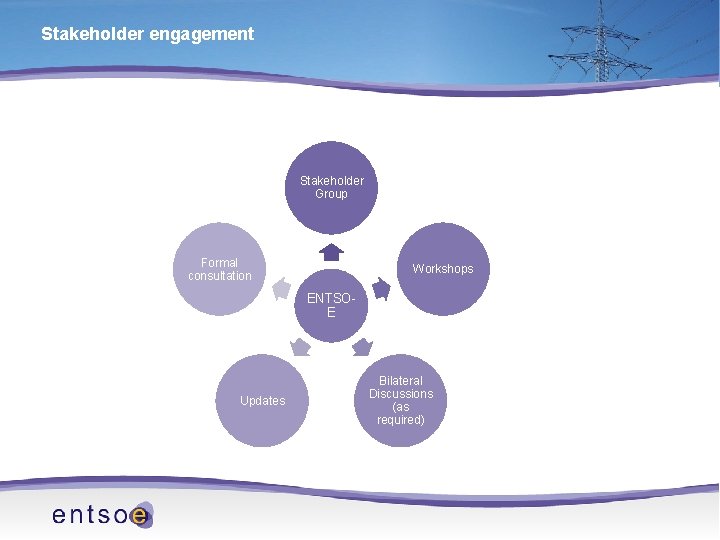
Stakeholder engagement Stakeholder Group Formal consultation Workshops ENTSOE Updates Bilateral Discussions (as required)
Formal consultation • ENTSO-E will formally consult on the CACM network code. • The code will be accompanied by a consultation document providing more detail & explanation in a less formal manner. • Two months will be provided for comments. • ENTSO-E is developing an IT tool to help facilitate consultation.
Other forms of consultation • Each code involves different issues, which need tackling in different ways. • Hence each team will decide on the forms of consultation that are needed. • This may include bilateral meetings, workshops (such as the one tomorrow)with a wider or more technical audience. • This group will be kept abreast of discussions and regular updates will appear via the website, • We are conscious of the need for openness, inclusivity and transparency. • We welcome ideas on how to achieve this.
Challenges & issues to be tackled in developing the CACM network code 1 st Stakeholder Group Meeting Mark Copley ENTSO-E Market Advisor
Purpose of this presentation • To briefly outline some challenges we have encountered to date. • To provide an opportunity to discuss these (and other) issues – and to suggest approaches and/or solutions. • To raise other questions and challenges. Ø It should be noted that work is at a very early stage and things we present are initial thoughts/ work in progress which are not approved positions.
Issue 1 – What is a cross border issue? • A fairly fundamental question but not clearly defined in the draft FG. • Is a consistent definition across all network codes required? • The decision affects the extent to which codes and national legislation overlap and impacts on the scope and complexity of the code. • Vitally important but highly contentious!
Issue 2 – How should the code be written? • Network codes need to be accessible and understandable to all market participants (who they bind). • What is the right trade-off between accessibility and detail? I. e. should the code aim at setting principles or be very prescriptive? • And how is this question influenced by the fact it is a European regulation?
Issue 3 – How can codes adapt when the market changes/ • The energy market is dynamic. • Codes have to reflect what happens in practice. • We have to avoid a scenario where a code constrains or prevents a beneficial development. • But there is no change management process and all changes (irrespective of size) have to go via Comitology. • What are the implications for resources, for the future and for the way the code is initially written?
Issue 4 – How much can feasibly go in a code? • The CACM code covers issues including the Common Grid Model, the SOBF, the CMM and the price coupling algorithm. Is it feasible to put these inside a code? • The detail needs to be available in an accessible form to interested market participants, but is the body of a European regulation the right place? • What other structures could be considered?
Issue 5 – How do we manage interactions with other areas of work? • PXs and TSOs both have important roles in the market coupling process and have to work together. • The EC governance guideline will define an appropriate division of roles and responsibilities. • But it remains under development. What are the right working assumptions to allow code drafting? • How do we interface with issues which will be in network codes in due course but haven’t been written yet?
Mark. Copley@entsoe. eu