
Introduction to the AP Style Essay English 10
- Slides: 20
Introduction to the AP Style Essay: English 10 Honors What will be covered in this Presentation: 1. How to dissect the AP essay question being asked of you 2. How to best answer the AP Style essay question 3. How to effectively brainstorm in order to write an effective, AP style essay
WRITING… For standardized tests…assigned writing prompts…and in general… “Write, write, and write some more. Think of writing as a muscle that needs a lot of exercise. ” - writer Jane Yolen “Writing is fun, and I am simply a storyteller. What I really enjoy about writing is the self-discipline that it takes to do it. To me, it is a great challenge. ” - singer and writer Jimmy Buffett
Three Elements of Good Writing… 1. Check it out (Dissect what’s being asked of you) 2. Work it out (Writing Process) 3. Look it over
Check it Out…Step 1 • • Read the prompt in its entirety!! Read it again. Read it a third time. Look for the three parts required to fully answer the AP style essay question. • 1. AP Style Questions usually… Have three parts to it: consider two separate ideas from the text and then a discussion of how each idea contributes to the work as a whole (theme). Require at least a five paragraph essay (at least three body paragraphs) 2.
Check it Out: Step 2 - Dissection Dissect what is being asked of you and how to best tackle it. Ask yourself 3 important questions…
Question #1 for Dissection: Who is the audience for your response? The group of readers to whom this piece is directed. Good writers determine who the audience is that they intend to address. It may be one person or a specific group. This choice of audience will affect how and why a particular text is written and will thus determine word choice and formality.
Question #2 for Dissection: What is the purpose of my response? The reason behind the text. Good writers consider the purpose of the text in order to develop a narrative or argument and its logic. Writers ask themselves, “What do I want my audience to think, feel, or do as a result of reading my text? ” The answer to this question will, again, determine word choice in order to establish tone and the effect of a piece.
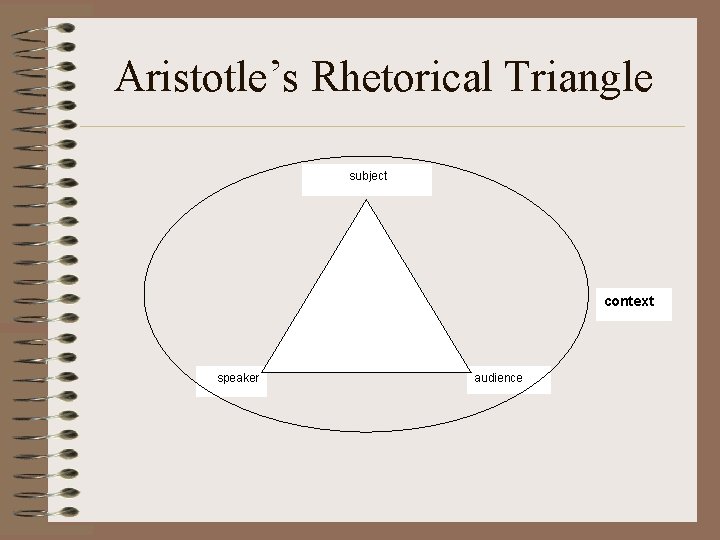
Aristotle’s Rhetorical Triangle subject context speaker audience
What Will Your Tone Be? What is the Tone? The attitude of the author. The spoken word can convey the speaker's attitude and thus help to impart meaning through tone of voice. With the written word, it is tone that extends meaning beyond the literal, and writers convey this tone in their diction (choice of words), syntax (sentence construction), and imagery (metaphors, similes, and other types of figurative language). *The ability to manage tone is one of the best indicators of a sophisticated writer.
Question #3 for Dissection: What is the format of my response? First, choose a mode of discourse from which to write your response. Secondly, decide what rhetorical strategies will work best to fit the needs of your audience and purpose.
Format: Four Modes of Discourse • • Exposition Argumentation Narration Description
Rhetorical Strategies for Writing Example • Process • Description • Cause and Effect • Narration • Compare/Contrast • Argument • Division/Classification • Definition
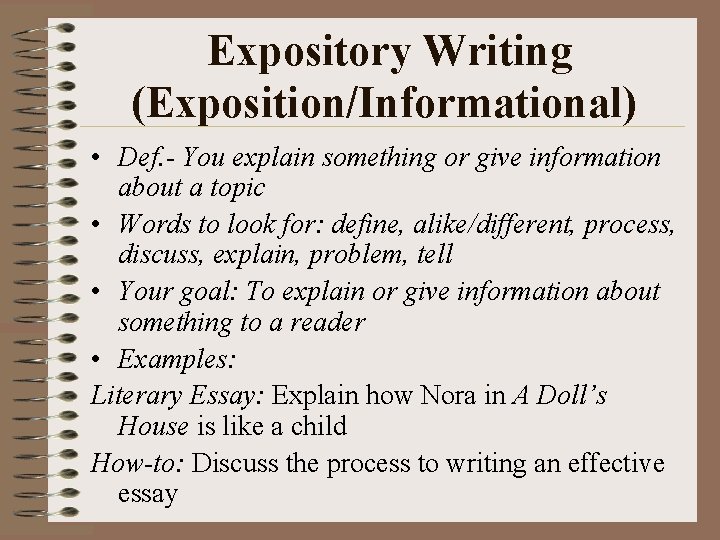
Expository Writing (Exposition/Informational) • Def. - You explain something or give information about a topic • Words to look for: define, alike/different, process, discuss, explain, problem, tell • Your goal: To explain or give information about something to a reader • Examples: Literary Essay: Explain how Nora in A Doll’s House is like a child How-to: Discuss the process to writing an effective essay
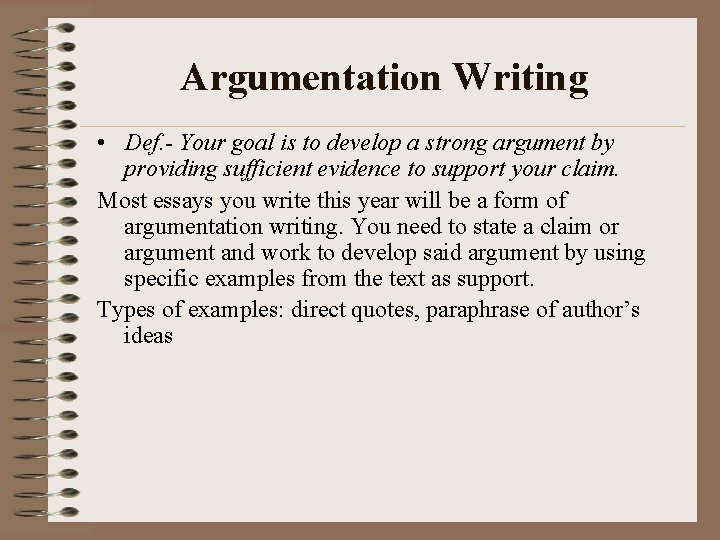
Argumentation Writing • Def. - Your goal is to develop a strong argument by providing sufficient evidence to support your claim. Most essays you write this year will be a form of argumentation writing. You need to state a claim or argument and work to develop said argument by using specific examples from the text as support. Types of examples: direct quotes, paraphrase of author’s ideas
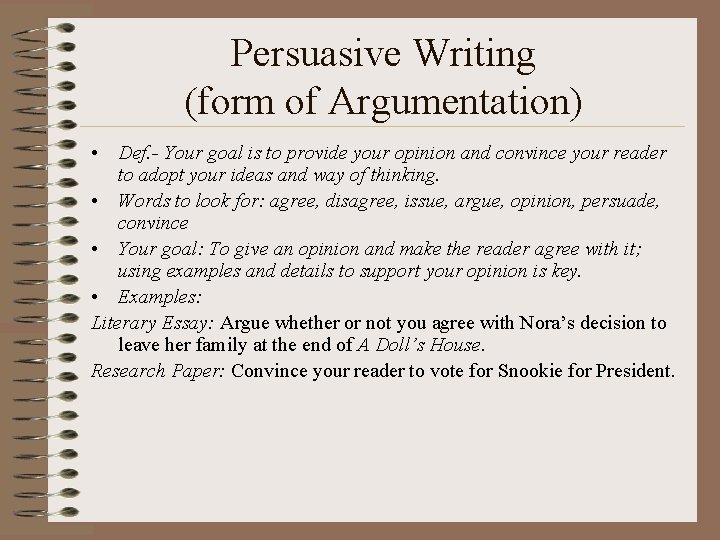
Persuasive Writing (form of Argumentation) • Def. - Your goal is to provide your opinion and convince your reader to adopt your ideas and way of thinking. • Words to look for: agree, disagree, issue, argue, opinion, persuade, convince • Your goal: To give an opinion and make the reader agree with it; using examples and details to support your opinion is key. • Examples: Literary Essay: Argue whether or not you agree with Nora’s decision to leave her family at the end of A Doll’s House. Research Paper: Convince your reader to vote for Snookie for President.
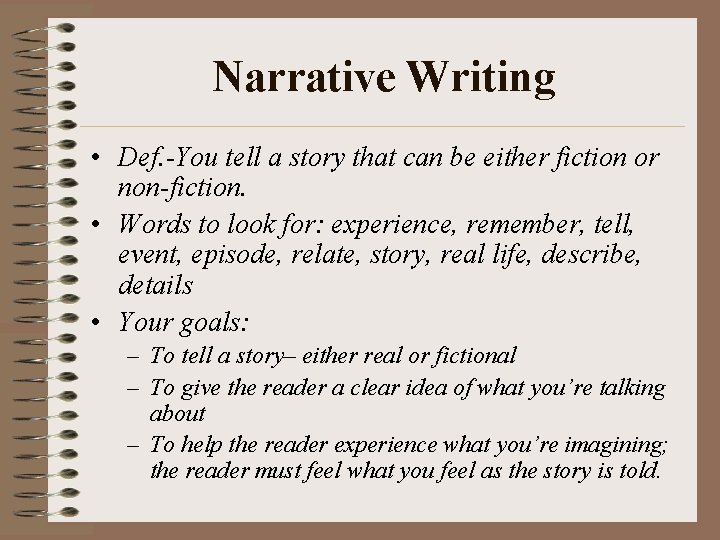
Narrative Writing • Def. -You tell a story that can be either fiction or non-fiction. • Words to look for: experience, remember, tell, event, episode, relate, story, real life, describe, details • Your goals: – To tell a story– either real or fictional – To give the reader a clear idea of what you’re talking about – To help the reader experience what you’re imagining; the reader must feel what you feel as the story is told.
Description • Def. – You provide specific details to bring your point to life. Focus on incorporating elements of style, imagery, diction, figurative language, etc. to enhance your writer’s voice and overall purpose.
2. Work it Out • The Writing Process – Prewriting – Drafting – Revising – Editing and proofreading – Publishing (submitting final draft)
3. Look it over (then submit) • Assess yourself--- Elements of good and effective writing – Meaning – Development – Organization – Language Use – Conventions
Tonight’s Homework: Prewriting • Read over the Siddhartha AP Style essay question that you’ve just been assigned. “Check it Out” and “Dissect” the question as outlined on each slide of this Power. Point: • – – • Plan how you will tackle this essay by brainstorming an argument and possible evidence from Siddhartha to support this argument. Consider what tone you should write in as well as the format you should choose for the purpose and audience of the paper. Complete this prewriting on a separate sheet of paper