
Introduction to the Animal Kingdom Which of these

- Slides: 35
Introduction to the Animal Kingdom
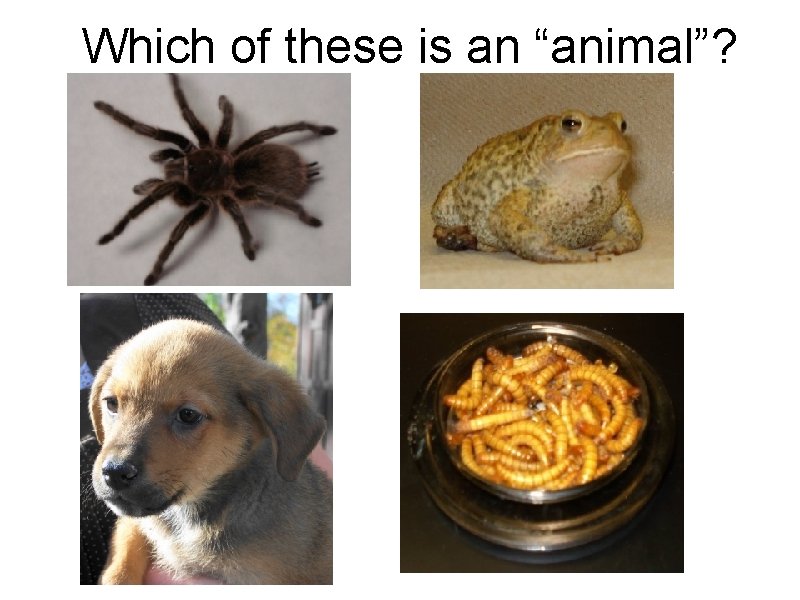
Which of these is an “animal”?
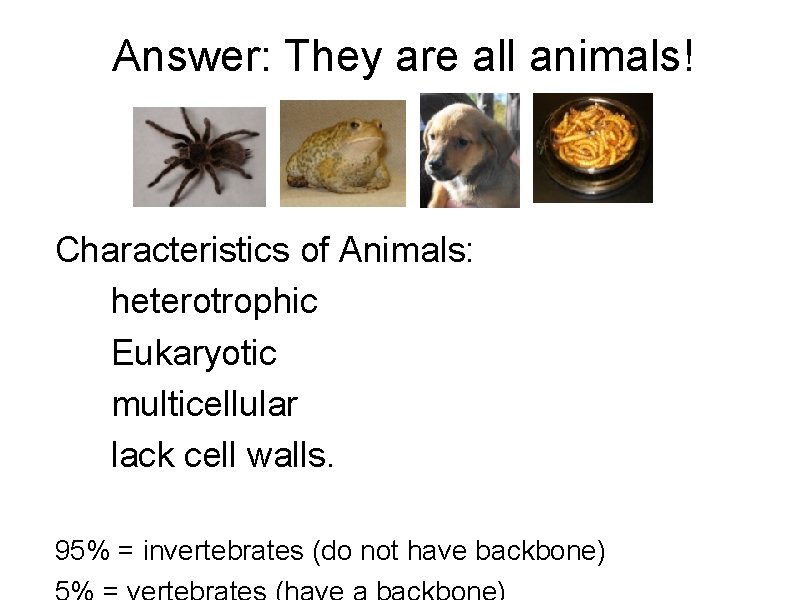
Answer: They are all animals! Characteristics of Animals: heterotrophic Eukaryotic multicellular lack cell walls. 95% = invertebrates (do not have backbone)
Biology = study of life Physiology = Study of the functions of organs Anatomy = the structure of the organism/organs Zoology = study of animals
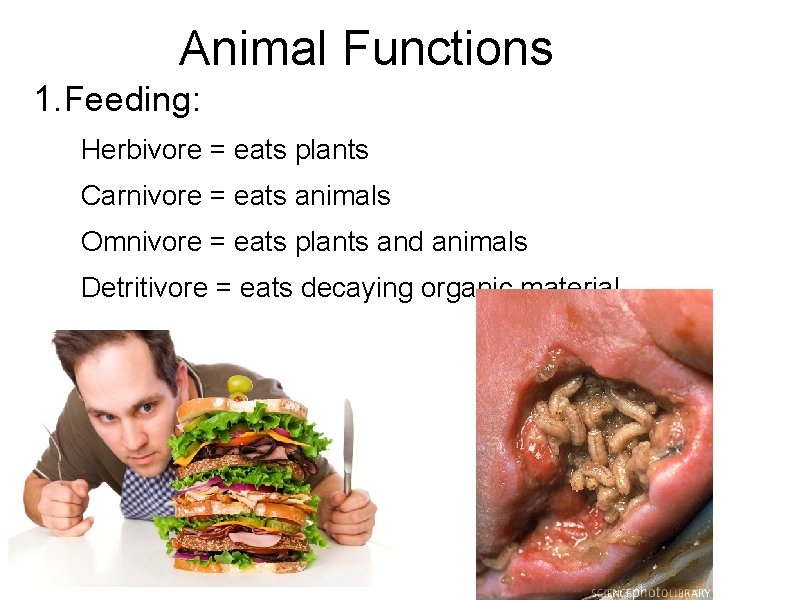
Animal Functions 1. Feeding: Herbivore = eats plants Carnivore = eats animals Omnivore = eats plants and animals Detritivore = eats decaying organic material
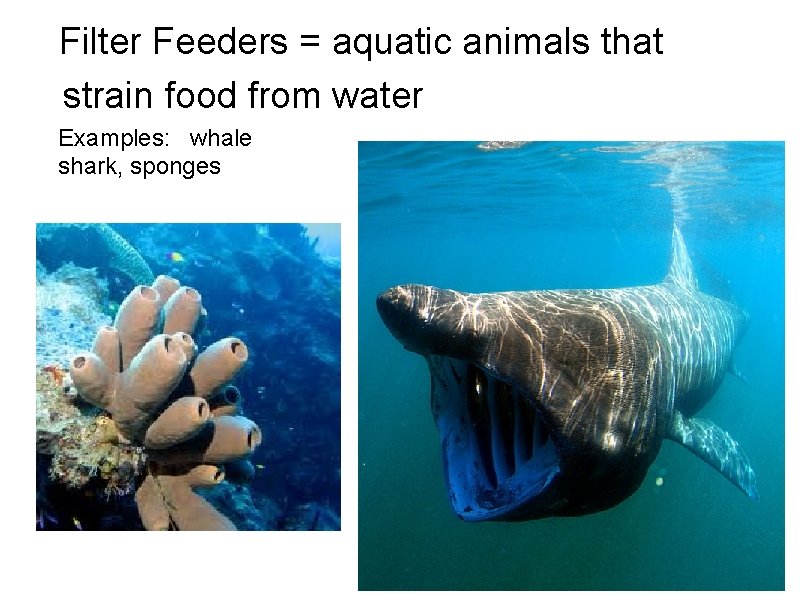
Filter Feeders = aquatic animals that strain food from water Examples: whale shark, sponges
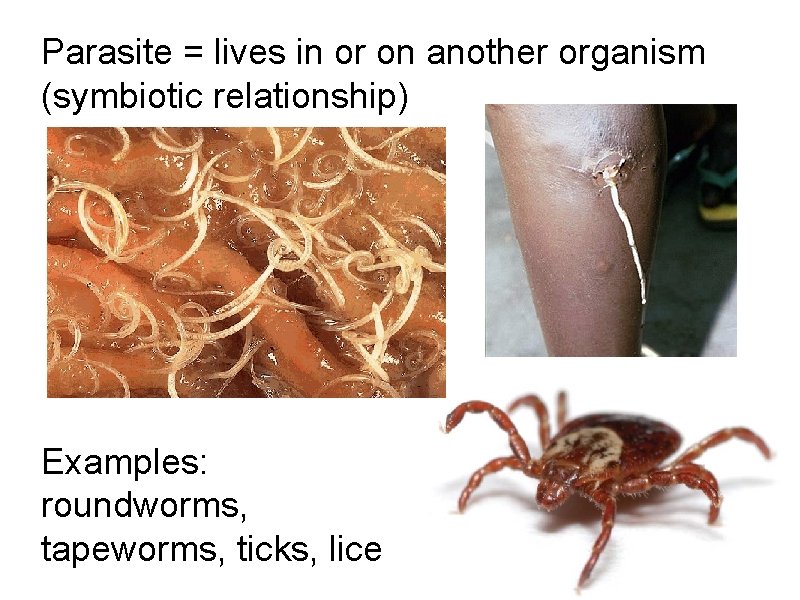
Parasite = lives in or on another organism (symbiotic relationship) Examples: roundworms, tapeworms, ticks, lice
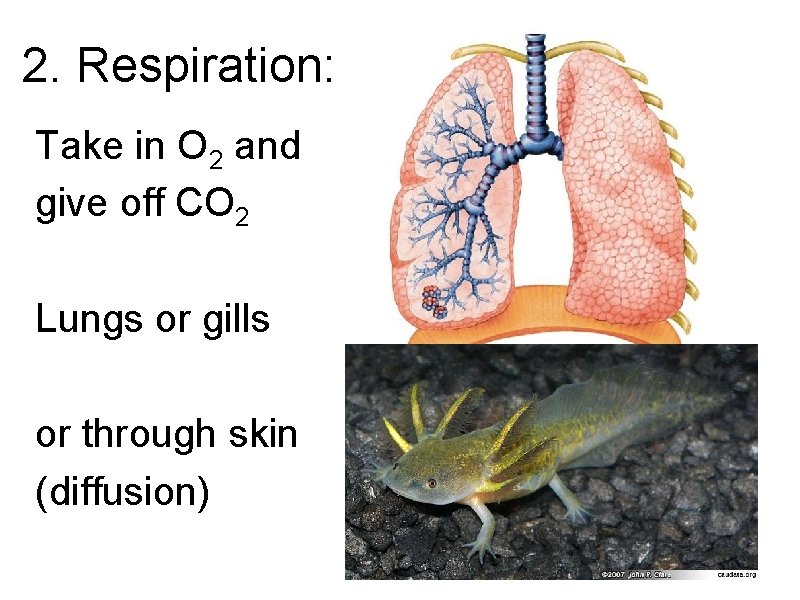
2. Respiration: Take in O 2 and give off CO 2 Lungs or gills or through skin (diffusion)
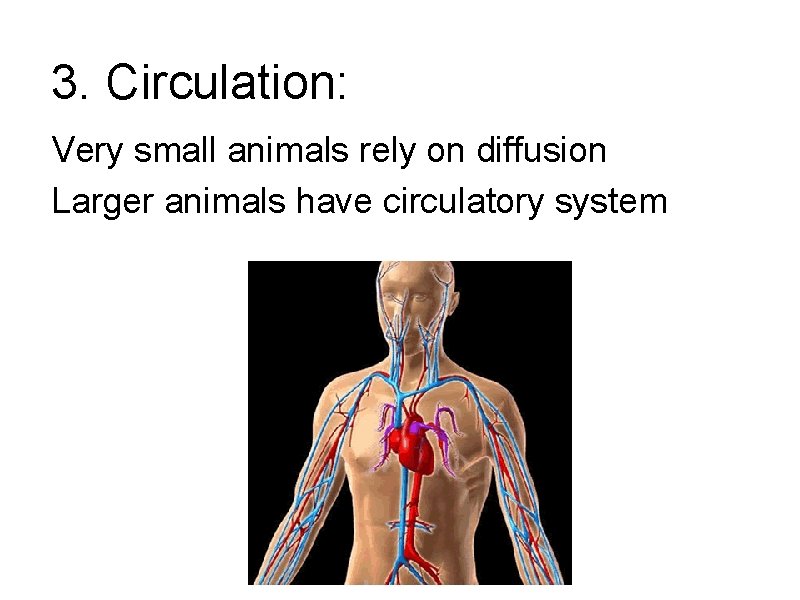
3. Circulation: Very small animals rely on diffusion Larger animals have circulatory system
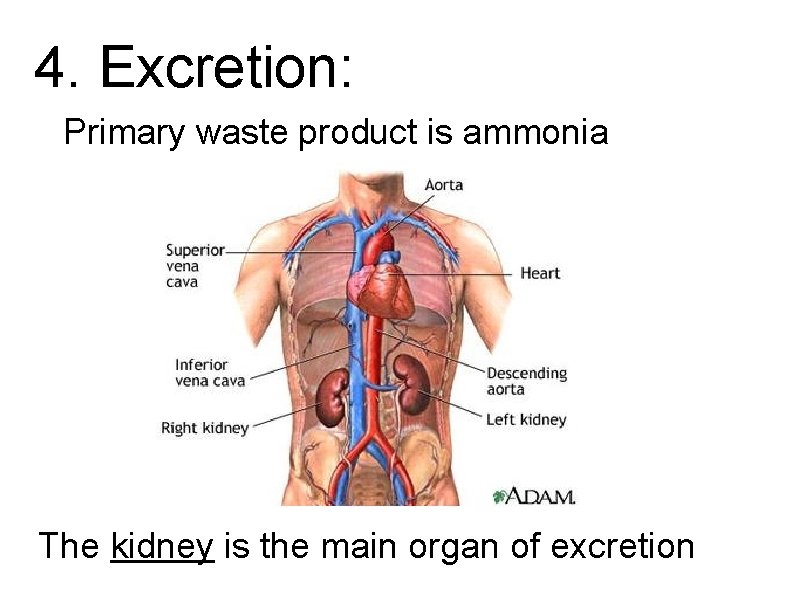
4. Excretion: Primary waste product is ammonia The kidney is the main organ of excretion
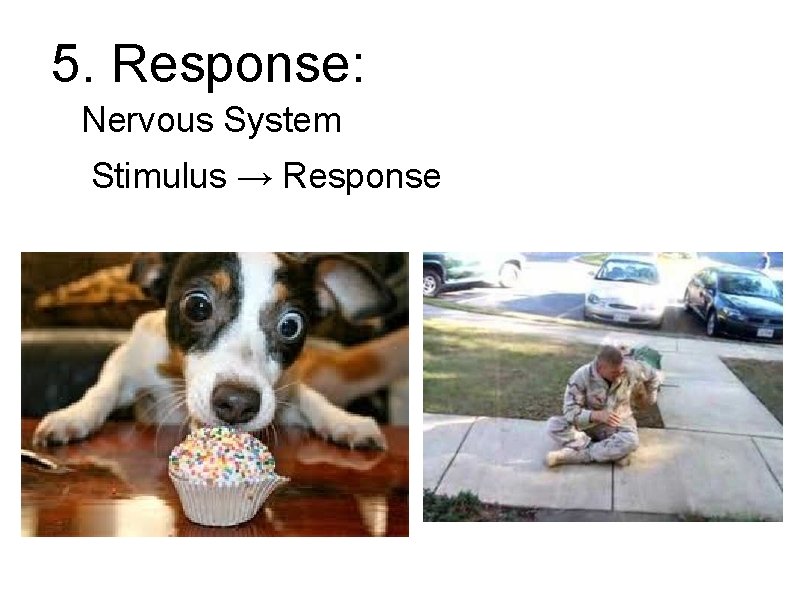
5. Response: Nervous System Stimulus → Response
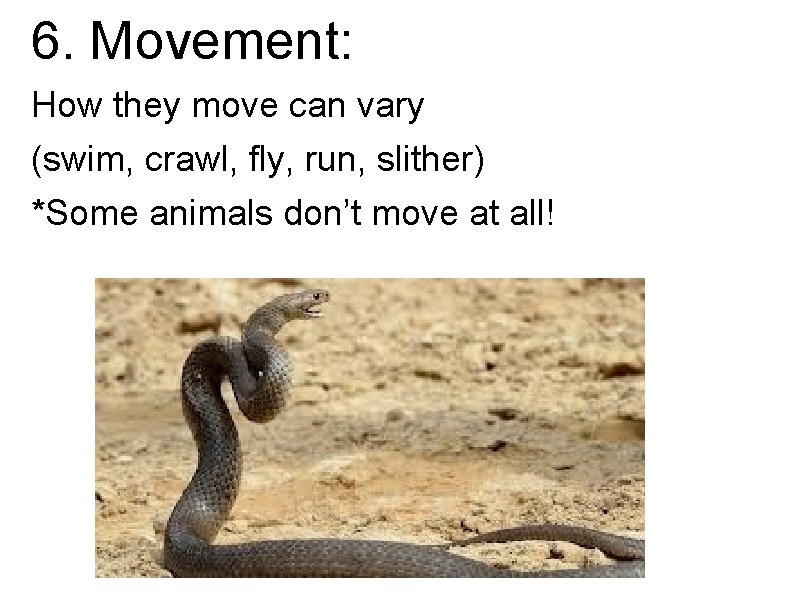
6. Movement: How they move can vary (swim, crawl, fly, run, slither) *Some animals don’t move at all!
What is the difference between: Quadrupedal & Bipedal Terrestrial & Aquatic Sessile & Motile
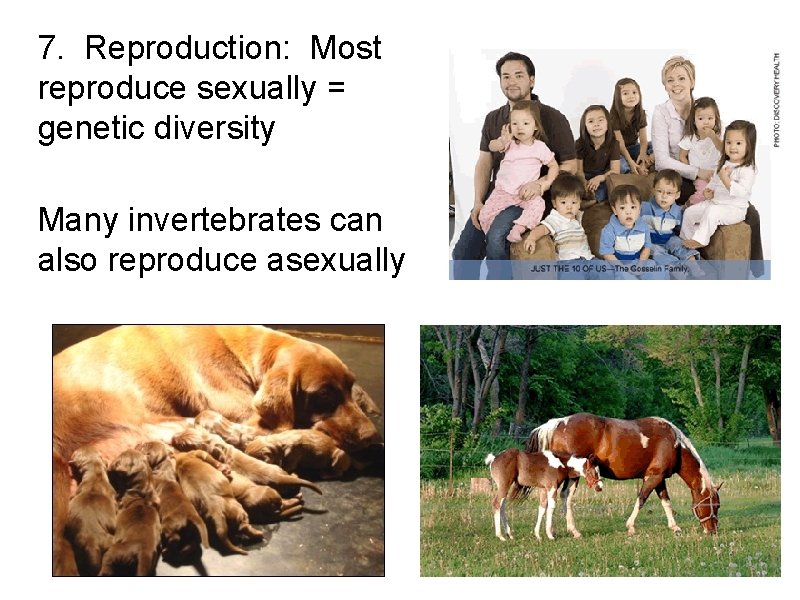
7. Reproduction: Most reproduce sexually = genetic diversity Many invertebrates can also reproduce asexually
Quick Check 1. A basking shark obtains its food by _________ 2. An animal that eats plants and other animals is called a(n) _________ 3. Any animal that lives on or in another animal and causes harm is called a _______________ 4. The study of the functions of organs is called ______ 5. An animal that feeds on dead or decaying matter is called a(n) __________ 6. Animals can respire with lungs, gills, or _________ 7. Sexual reproduction increases genetic ________ 8. What is the main organ of excretion? _______ 9. The study of animals is called _________ 10. Responses occur as a result of a(n) ________
What are the seven functions of living systems? 1. Feeding 2. ____________ 3. Circulation 4. _____________ 5. Response 6. Movement 7. _____________
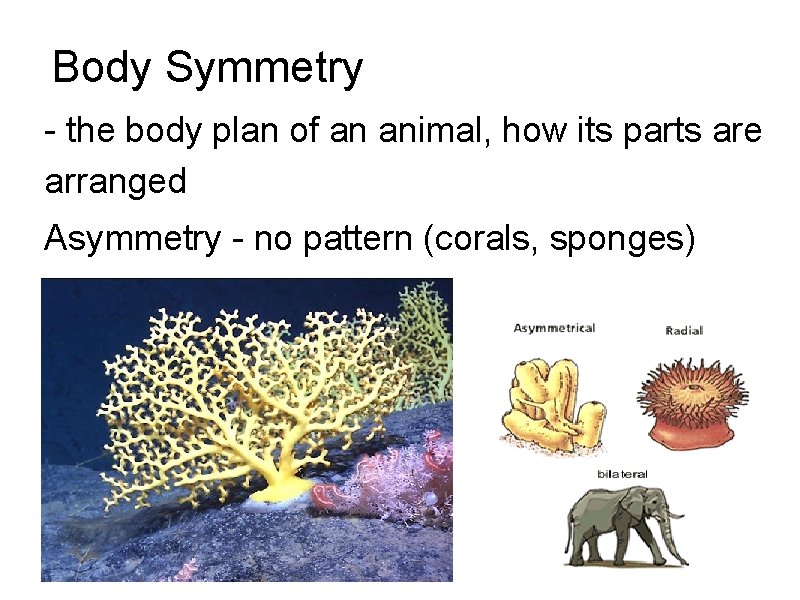
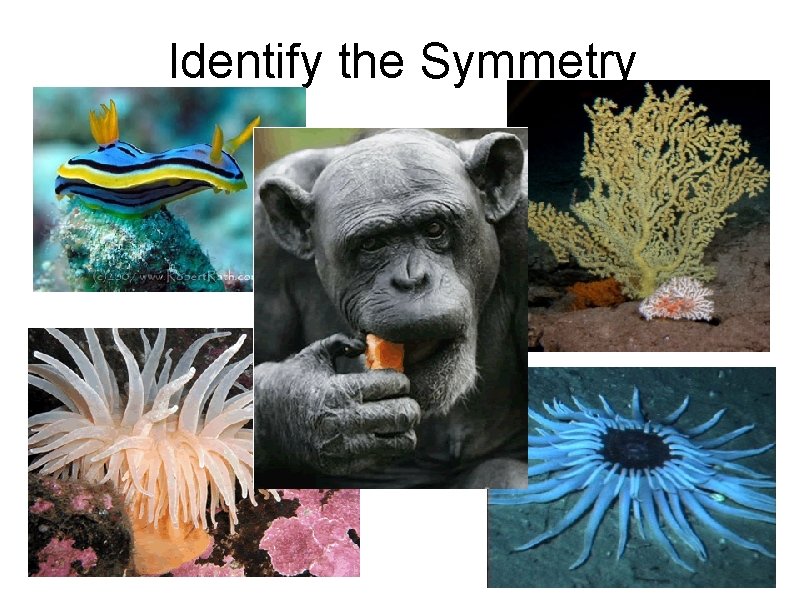
Body Symmetry - the body plan of an animal, how its parts are arranged Asymmetry - no pattern (corals, sponges)
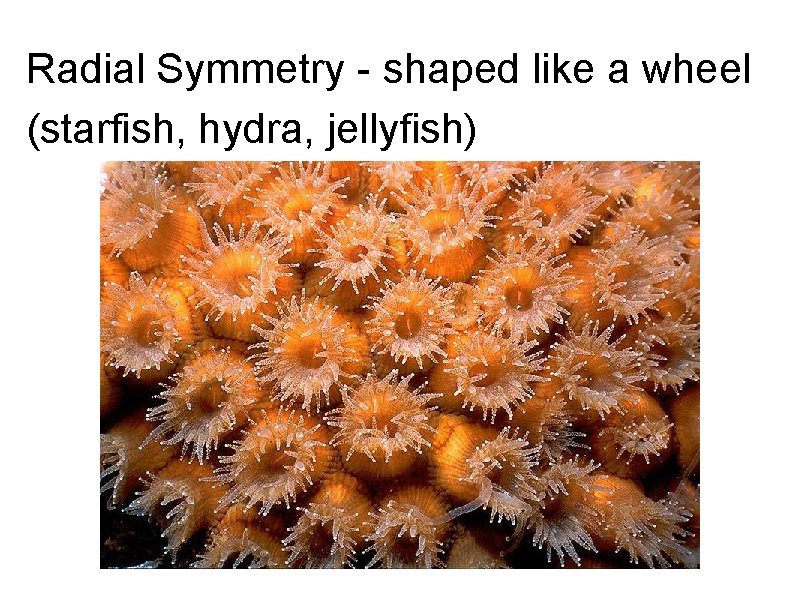
Radial Symmetry - shaped like a wheel (starfish, hydra, jellyfish)
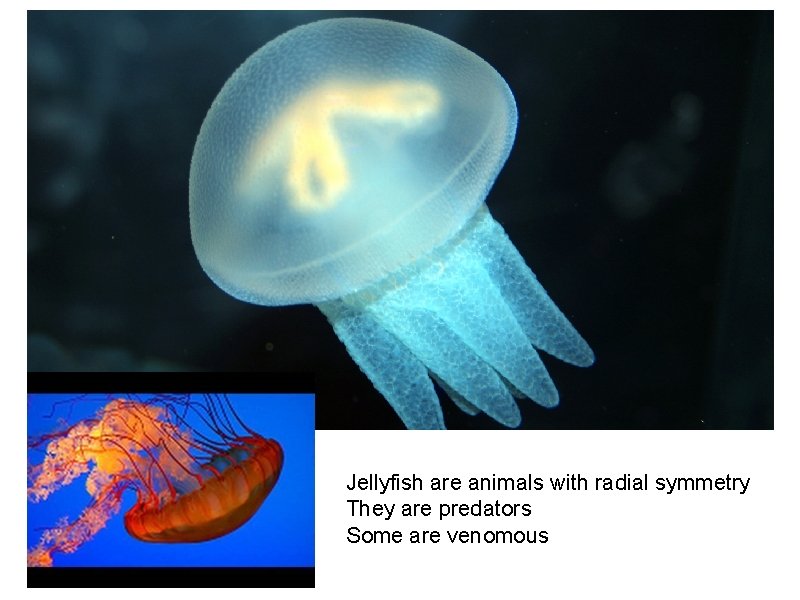
Jellyfish are animals with radial symmetry They are predators Some are venomous
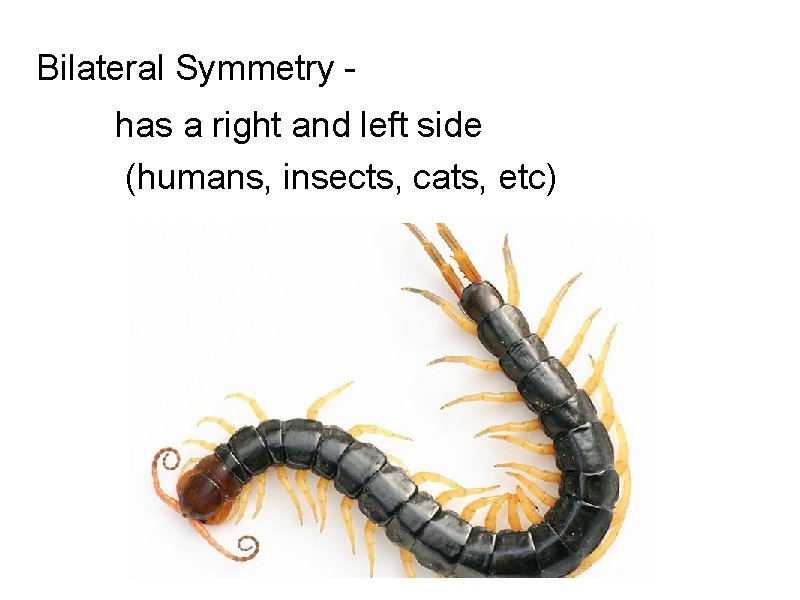
Bilateral Symmetry - has a right and left side (humans, insects, cats, etc)
Identify the Symmetry
Cephalization - an anterior concentration of sense organs (to have a head) Octopus – member of the class Cephalopoda (head-foot)
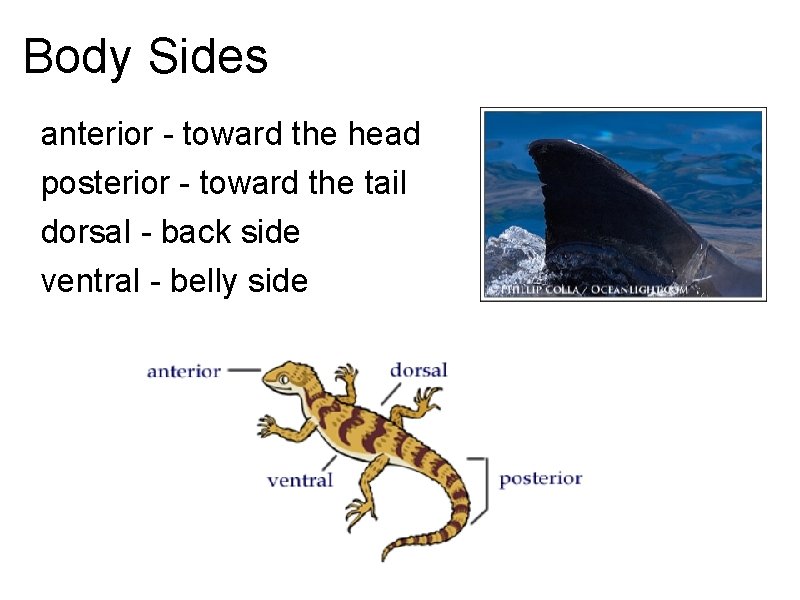
Body Sides anterior - toward the head posterior - toward the tail dorsal - back side ventral - belly side
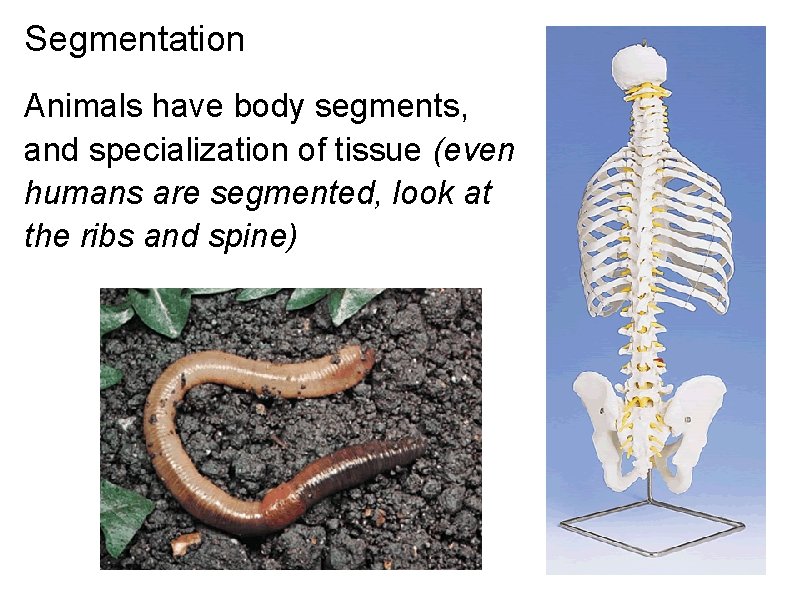
Segmentation Animals have body segments, and specialization of tissue (even humans are segmented, look at the ribs and spine)
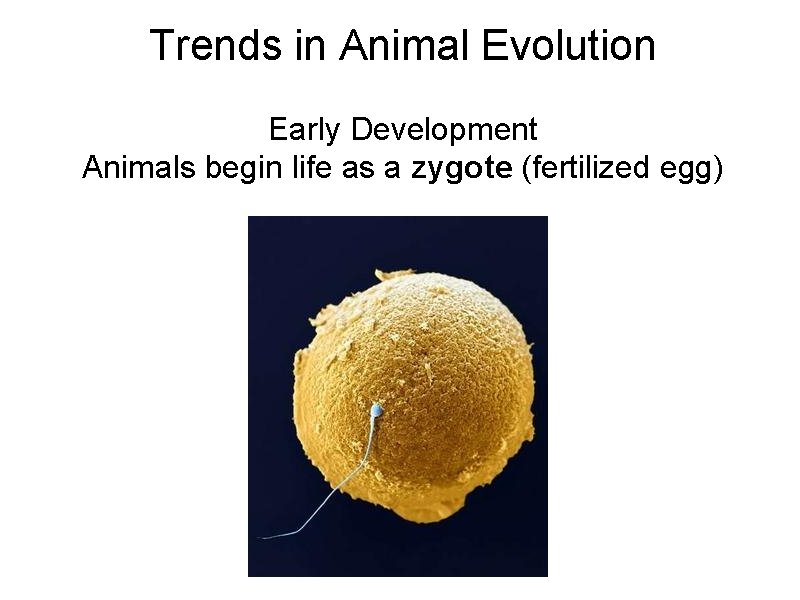
Trends in Animal Evolution Early Development Animals begin life as a zygote (fertilized egg)
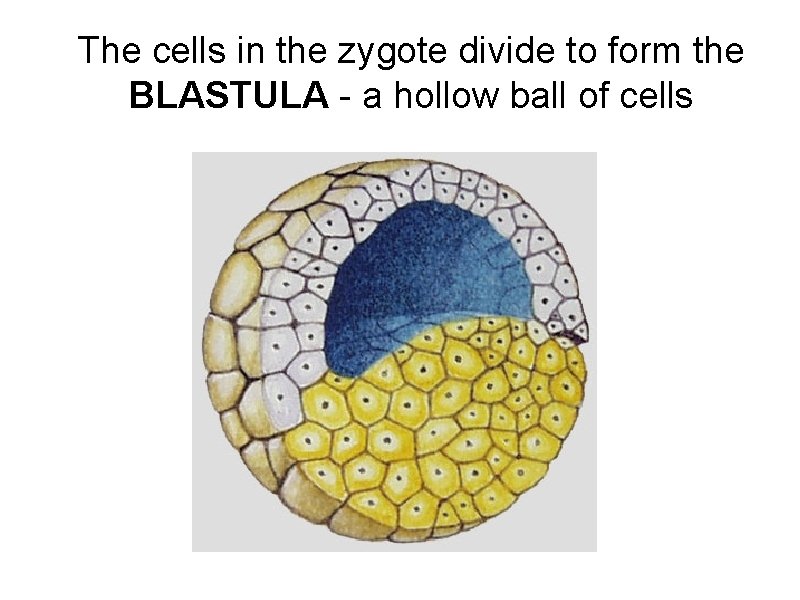
The cells in the zygote divide to form the BLASTULA - a hollow ball of cells
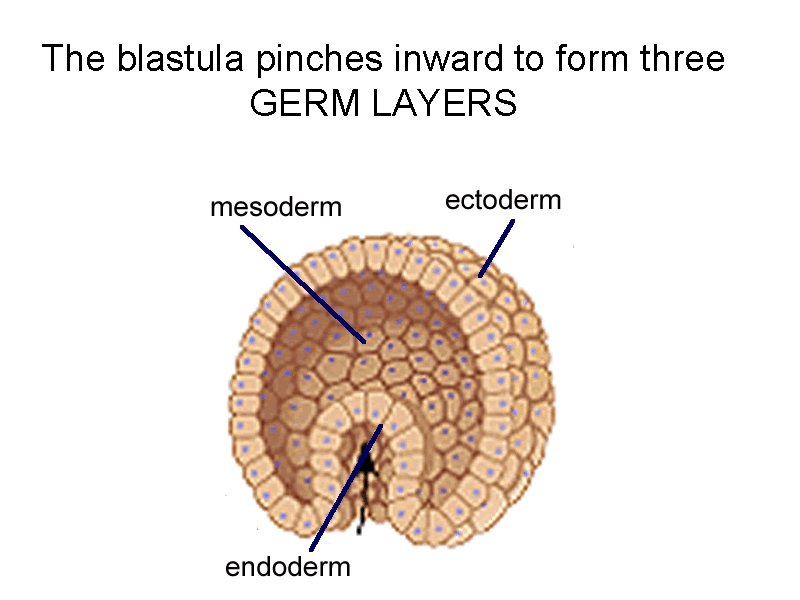
The blastula pinches inward to form three GERM LAYERS
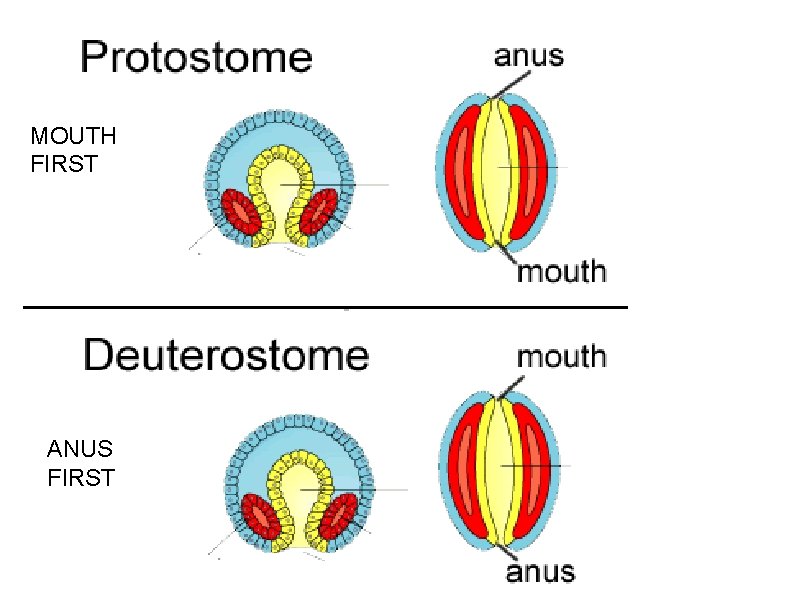
MOUTH FIRST ANUS FIRST
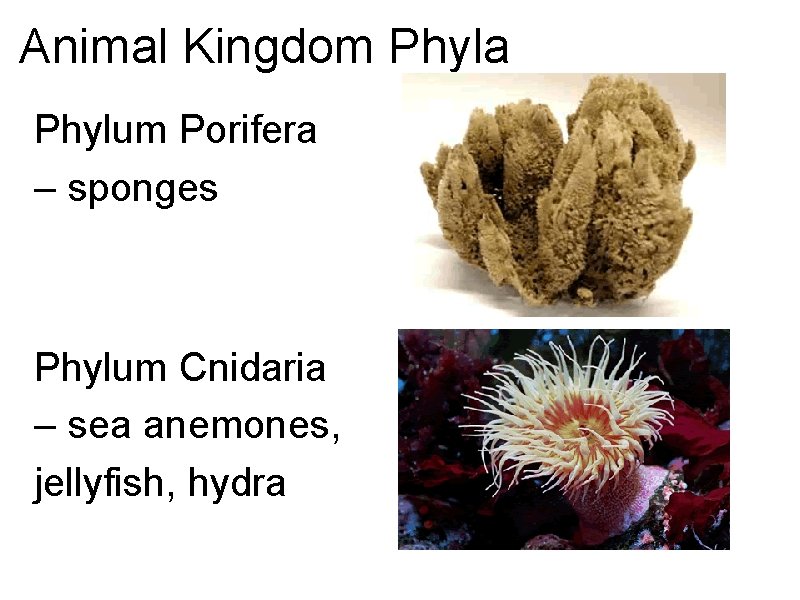
Animal Kingdom Phyla Phylum Porifera – sponges Phylum Cnidaria – sea anemones, jellyfish, hydra
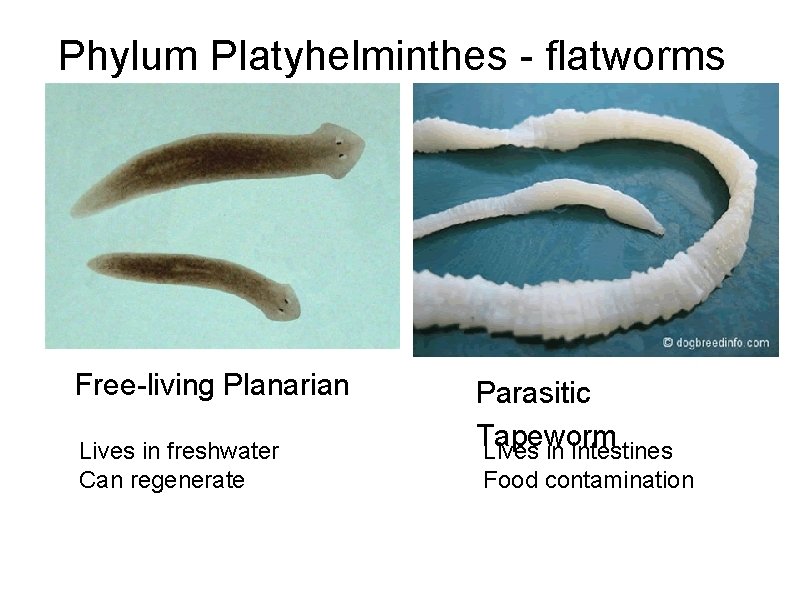
Phylum Platyhelminthes - flatworms Free-living Planarian Lives in freshwater Can regenerate Parasitic Tapeworm Lives in intestines Food contamination
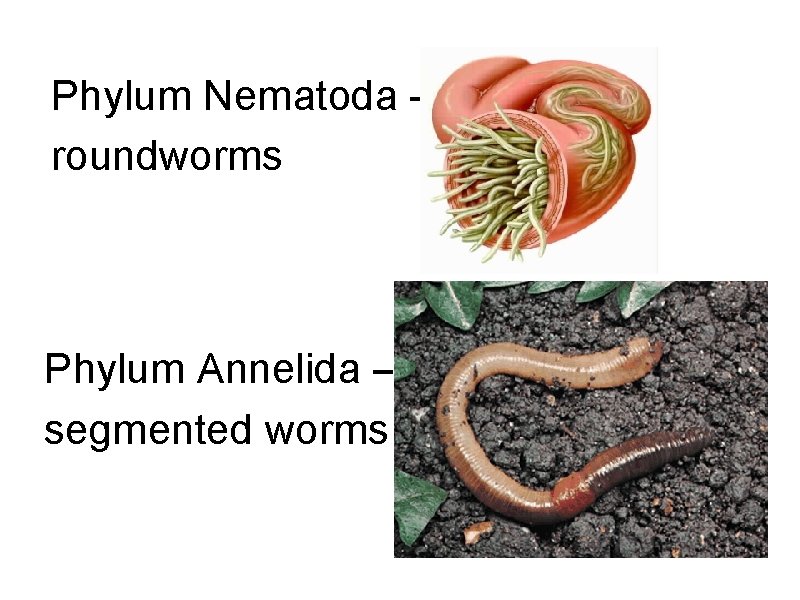
Phylum Nematoda – roundworms Phylum Annelida – segmented worms
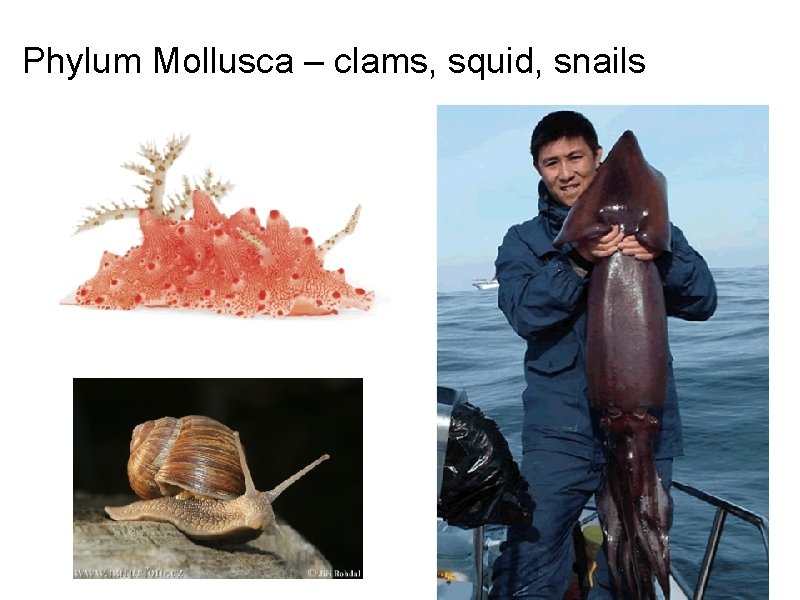
Phylum Mollusca – clams, squid, snails
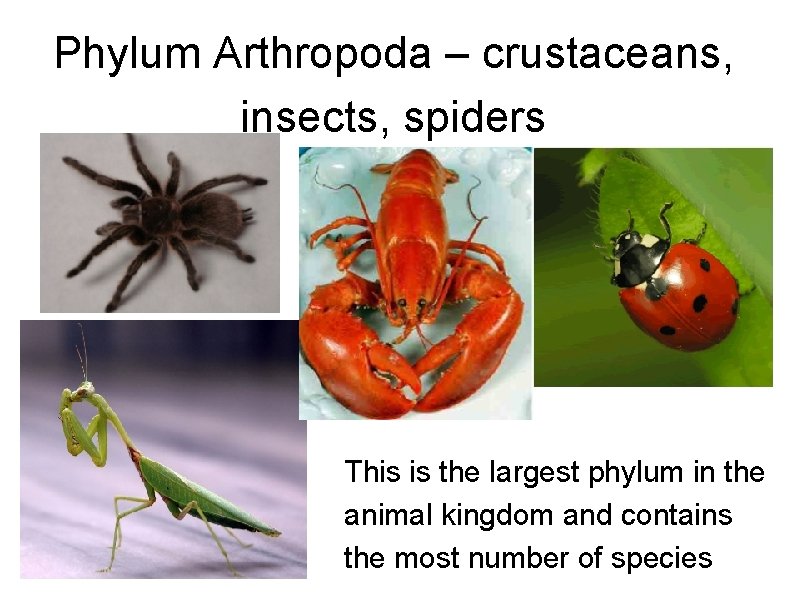
Phylum Arthropoda – crustaceans, insects, spiders This is the largest phylum in the animal kingdom and contains the most number of species
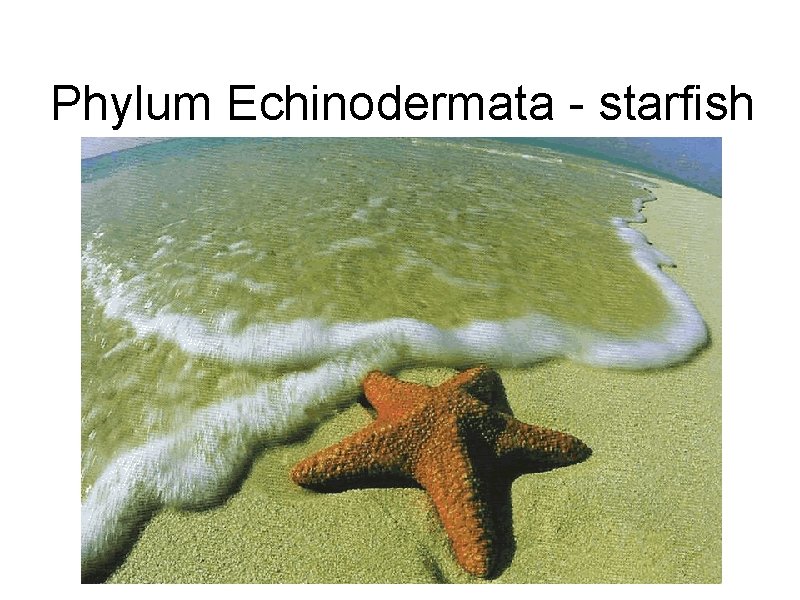
Phylum Echinodermata - starfish
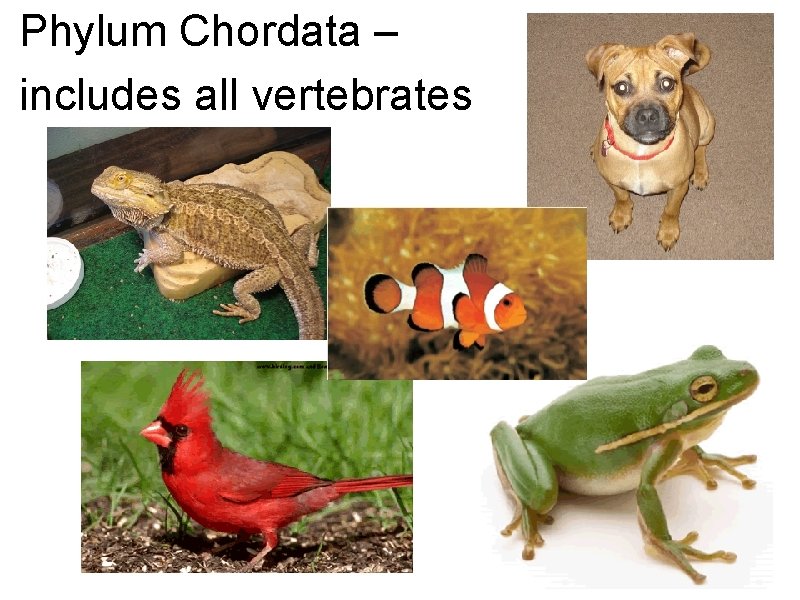
Phylum Chordata – includes all vertebrates