
INTRODUCTION TO THE 8 D PROCESS WHY USE


- Slides: 7
INTRODUCTION TO THE 8 D PROCESS
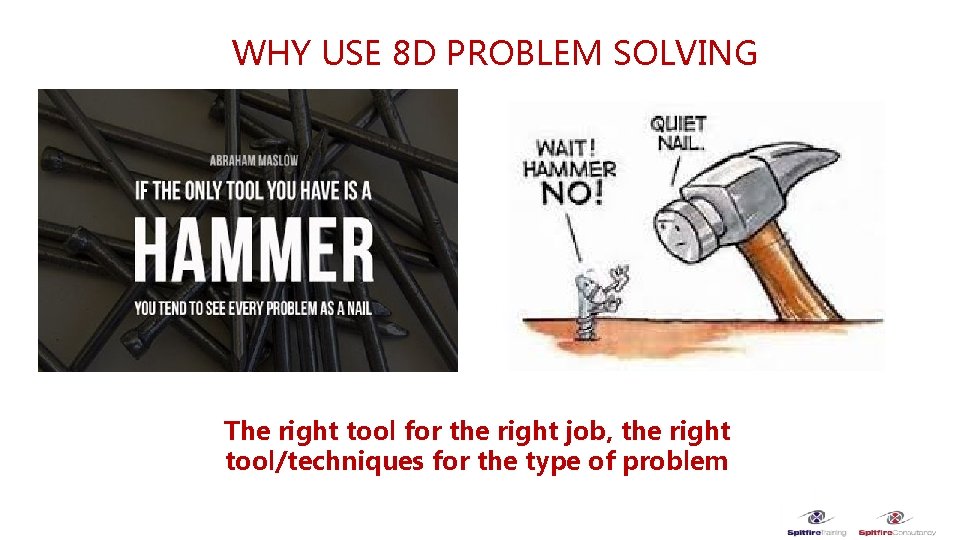
WHY USE 8 D PROBLEM SOLVING The right tool for the right job, the right tool/techniques for the type of problem
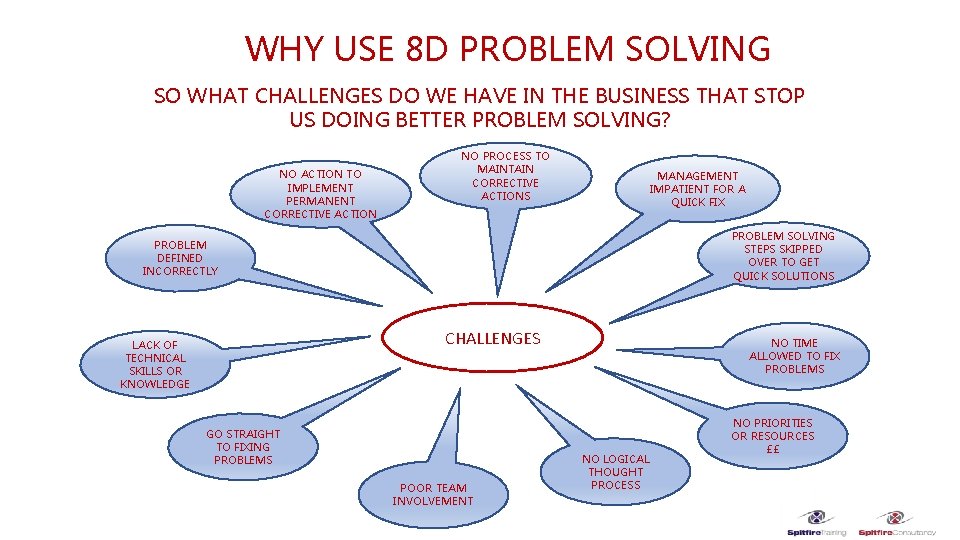
WHY USE 8 D PROBLEM SOLVING SO WHAT CHALLENGES DO WE HAVE IN THE BUSINESS THAT STOP US DOING BETTER PROBLEM SOLVING? NO ACTION TO IMPLEMENT PERMANENT CORRECTIVE ACTION NO PROCESS TO MAINTAIN CORRECTIVE ACTIONS MANAGEMENT IMPATIENT FOR A QUICK FIX PROBLEM SOLVING STEPS SKIPPED OVER TO GET QUICK SOLUTIONS PROBLEM DEFINED INCORRECTLY CHALLENGES LACK OF TECHNICAL SKILLS OR KNOWLEDGE GO STRAIGHT TO FIXING PROBLEMS POOR TEAM INVOLVEMENT NO TIME ALLOWED TO FIX PROBLEMS NO LOGICAL THOUGHT PROCESS NO PRIORITIES OR RESOURCES ££
WHY USE 8 D PROBLEM SOLVING WHEN DO WE CARRY OUT A FULL 8 D PROBLEM SOLVING ACTIVITY? For problems where our standard process has not found a root cause. When we have a repeat and / or long-term issue. When there is a large cost implication to the business. When all relevant groups have agreed a full 8 D is required and signed off for the required resource.
8 D PROBLEM SOLVING APPLICATION 8 D is a logical process for solving problems. It is a recognised methodology for addressing concerns and opportunities for improvement. It is applicable to a broad range of problems, from those which are simple, to those which are rather more challenging. Many customers require their suppliers to utilise the 8 D process for the management of concerns.
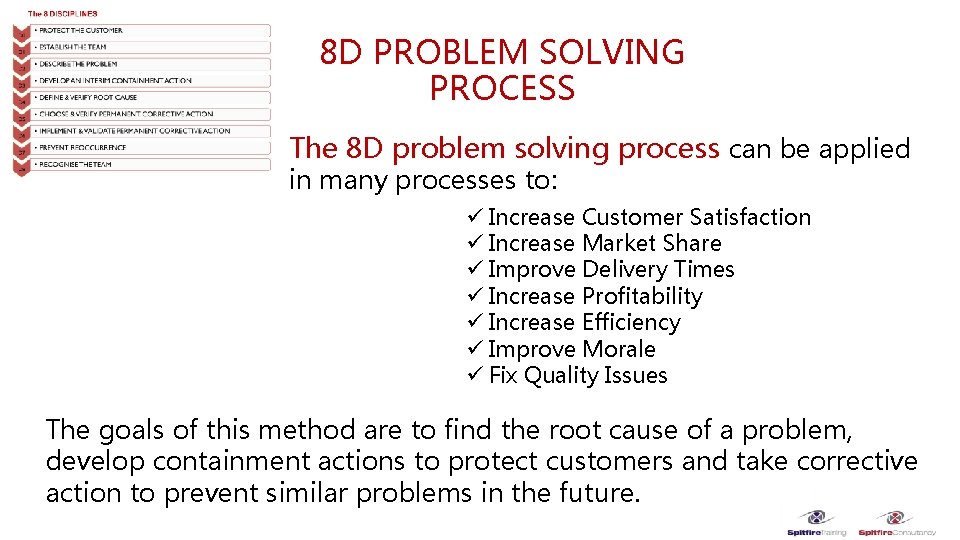
8 D PROBLEM SOLVING PROCESS The 8 D problem solving process can be applied in many processes to: ü Increase Customer Satisfaction ü Increase Market Share ü Improve Delivery Times ü Increase Profitability ü Increase Efficiency ü Improve Morale ü Fix Quality Issues The goals of this method are to find the root cause of a problem, develop containment actions to protect customers and take corrective action to prevent similar problems in the future.
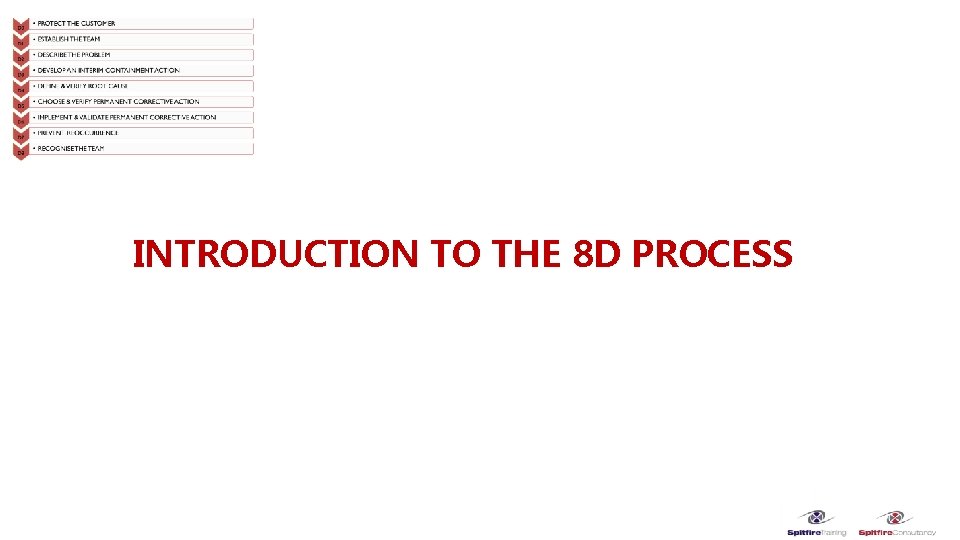
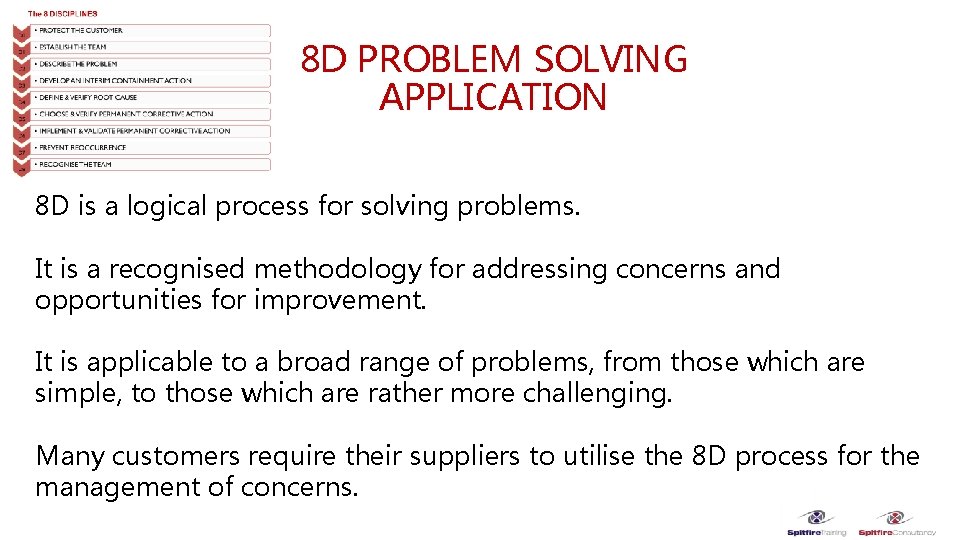
8 D PROBLEM SOLVING The 8 DISCIPLINES D 0 D 1 D 2 D 3 D 4 D 5 D 6 D 7 D 8 • PROTECT THE CUSTOMER • ESTABLISH THE TEAM • DESCRIBE THE PROBLEM • DEVELOP AN INTERIM CONTAINMENT ACTION • DEFINE & VERIFY ROOT CAUSE • CHOOSE & VERIFY PERMANENT CORRECTIVE ACTION • IMPLEMENT & VALIDATE PERMANENT CORRECTIVE ACTION • PREVENT REOCCURRENCE • RECOGNISE THE TEAM