
Introduction to Terrestrial Plants pp 449 451 Why
- Slides: 7
Introduction to Terrestrial Plants pp. 449 -451
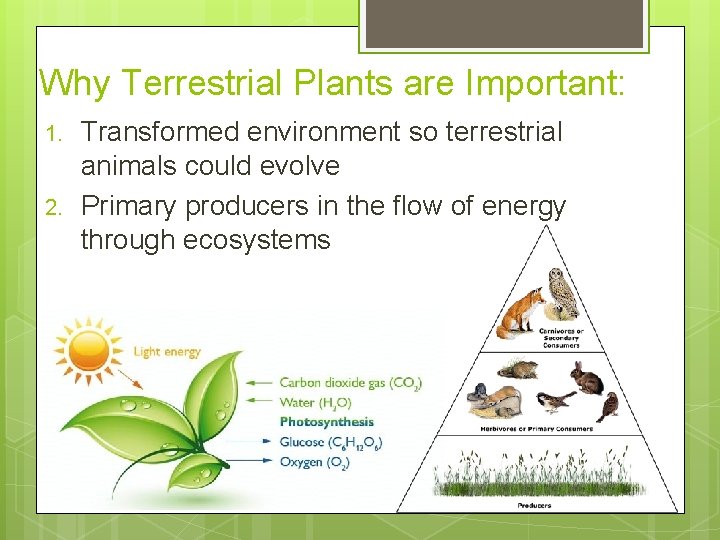
Why Terrestrial Plants are Important: 1. 2. Transformed environment so terrestrial animals could evolve Primary producers in the flow of energy through ecosystems
Challenges to Life on Land: 1. 2. 3. 4. 5. 6. 7. Need support so parts of plant that photosynthesize are exposed to sunlight Need to get water & nutrients Need to move water & nutrients throughout plant Need to avoid water loss Need to maintain a balance in gas exchange Must be able to reproduce without water Must be able to survive changing environmental conditions
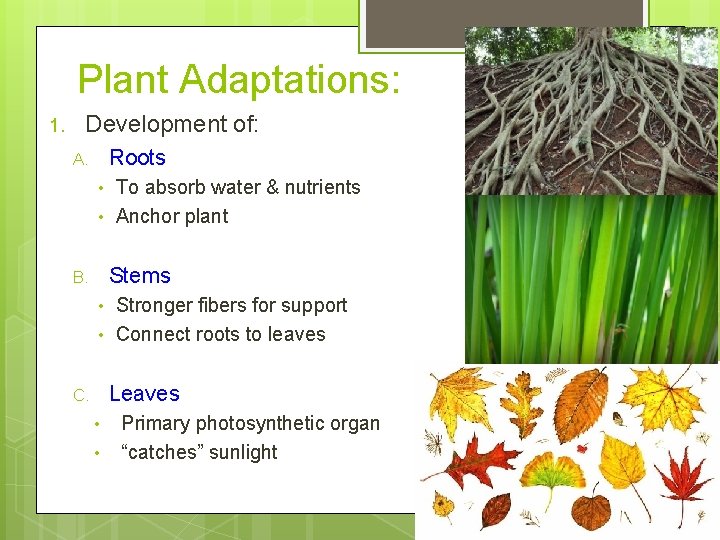
Plant Adaptations: 1. Development of: Roots A. • • To absorb water & nutrients Anchor plant Stems B. • • Stronger fibers for support Connect roots to leaves Leaves C. • • Primary photosynthetic organ “catches” sunlight
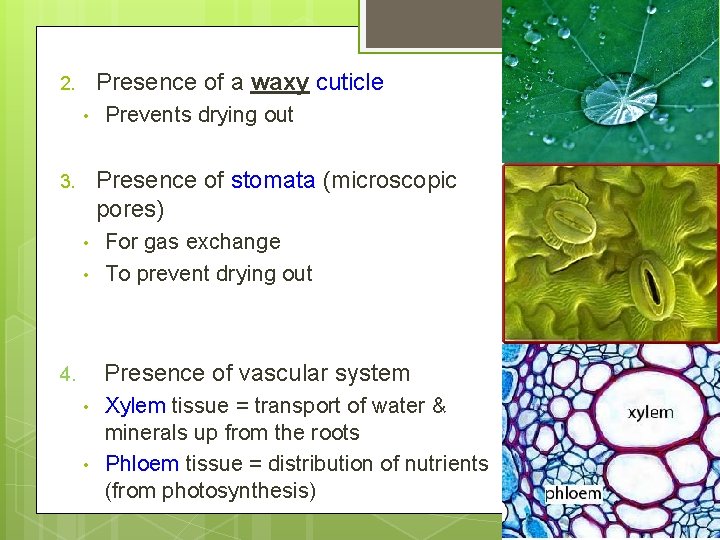
Presence of a waxy cuticle 2. • Prevents drying out Presence of stomata (microscopic pores) 3. • • For gas exchange To prevent drying out Presence of vascular system 4. • • Xylem tissue = transport of water & minerals up from the roots Phloem tissue = distribution of nutrients (from photosynthesis)
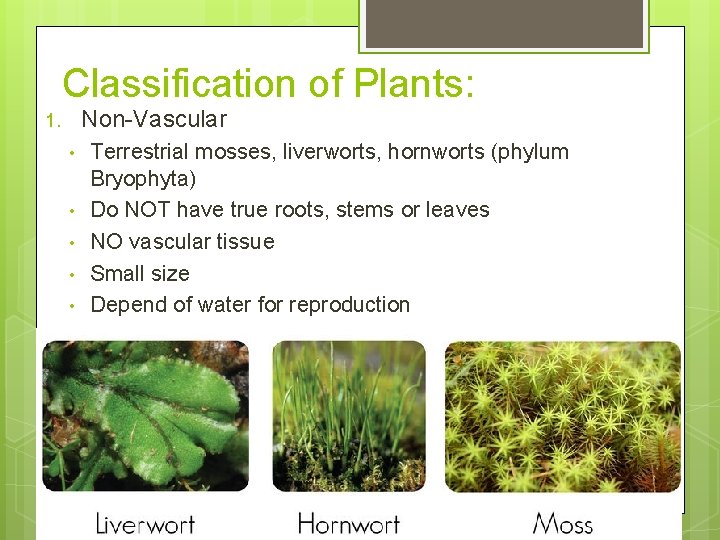
Classification of Plants: Non-Vascular 1. • • • Terrestrial mosses, liverworts, hornworts (phylum Bryophyta) Do NOT have true roots, stems or leaves NO vascular tissue Small size Depend of water for reproduction
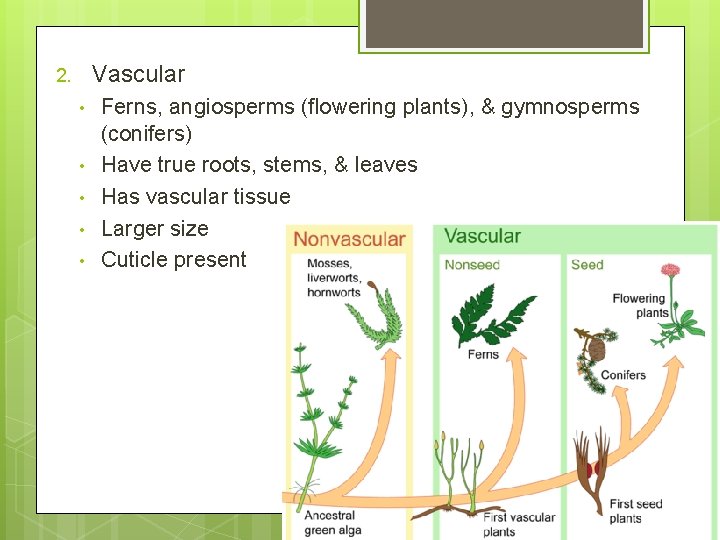
Vascular 2. • • • Ferns, angiosperms (flowering plants), & gymnosperms (conifers) Have true roots, stems, & leaves Has vascular tissue Larger size Cuticle present