
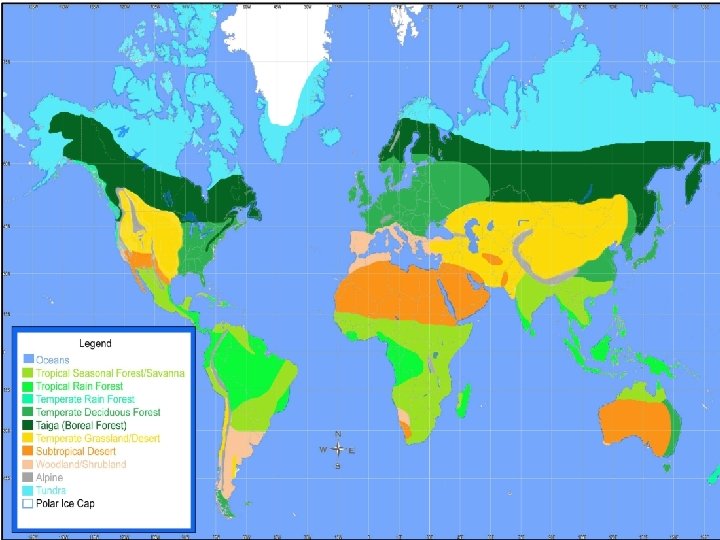
Introduction to Terrestrial Biomes Biome a large ecological

Introduction to Terrestrial Biomes
Biome= a large ecological unit recognized primarily by its dominate plant type & vegetation structure
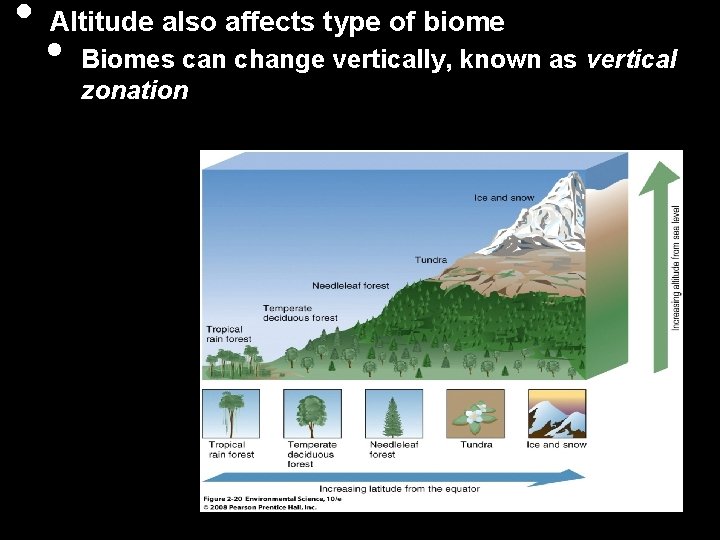
• Altitude also affects type of biome • Biomes can change vertically, known as vertical zonation
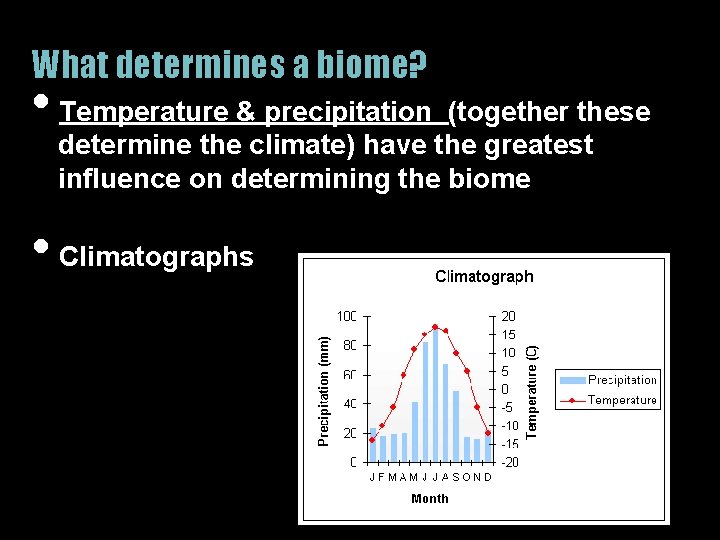
What determines a biome? • Temperature & precipitation (together these determine the climate) have the greatest influence on determining the biome • Climatographs
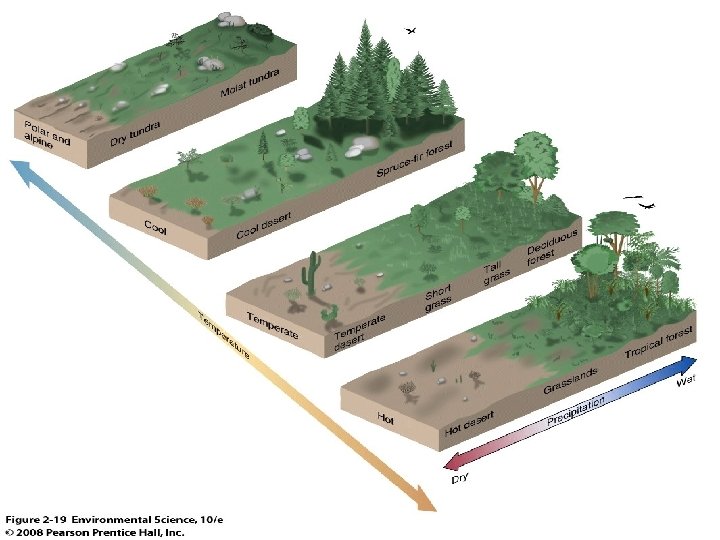
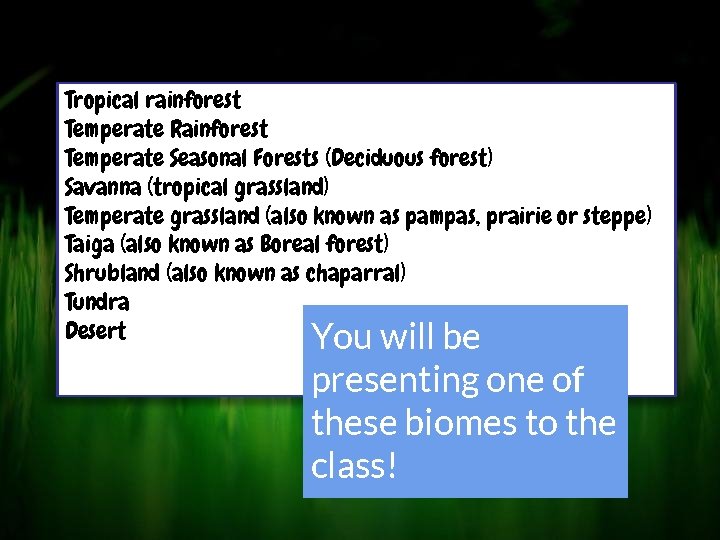
Tropical rainforest Temperate Rainforest Temperate Seasonal Forests (Deciduous forest) Savanna (tropical grassland) Temperate grassland (also known as pampas, prairie or steppe) Taiga (also known as Boreal forest) Shrubland (also known as chaparral) Tundra Desert You will be presenting one of these biomes to the class!
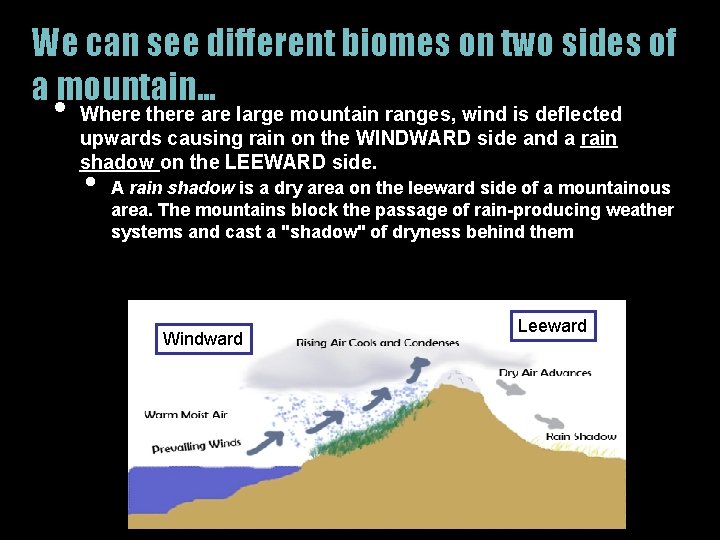
We can see different biomes on two sides of a mountain… • Where there are large mountain ranges, wind is deflected upwards causing rain on the WINDWARD side and a rain shadow on the LEEWARD side. • A rain shadow is a dry area on the leeward side of a mountainous area. The mountains block the passage of rain-producing weather systems and cast a "shadow" of dryness behind them Windward Leeward
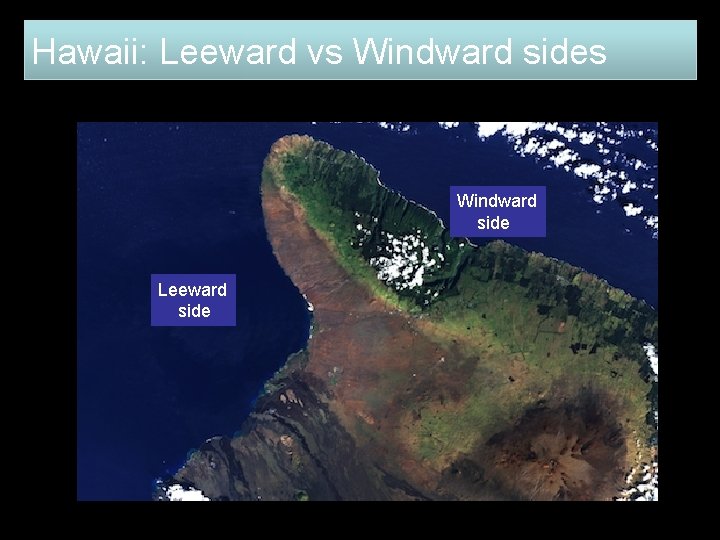
Hawaii: Leeward vs Windward side Leeward side
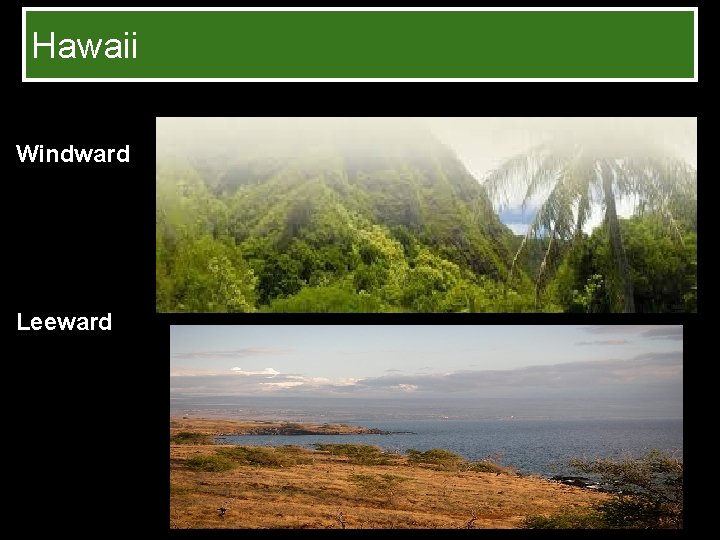
Hawaii Windward Leeward

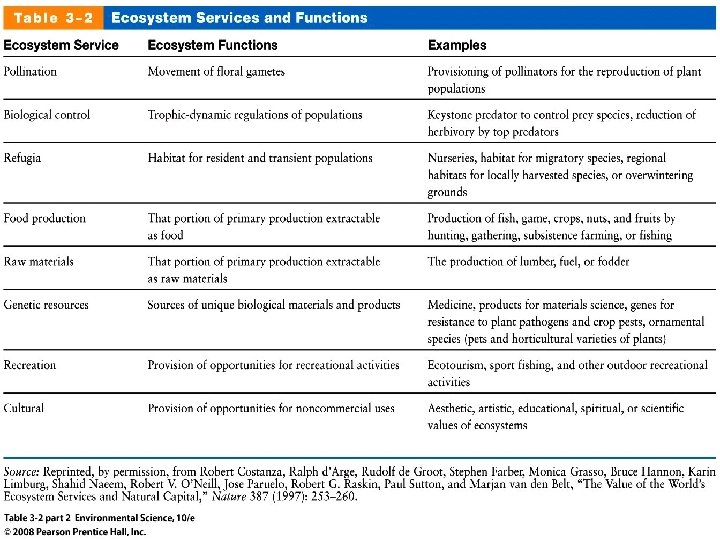
Biomes provide ecosystem services • Ecosystem service= An essential service an ecosystem provides that supports life & makes economic activity possible
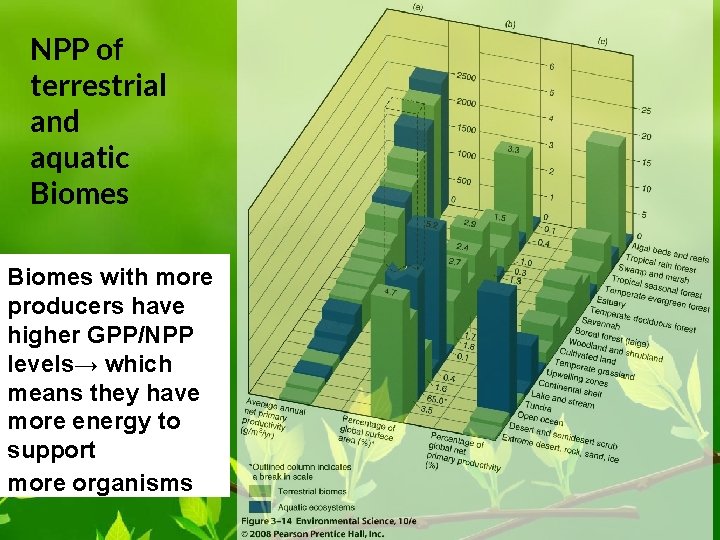
NPP of terrestrial and aquatic Biomes with more producers have higher GPP/NPP levels→ which means they have more energy to support more organisms
- Slides: 13