
Introduction to systems thinking terminology A system is

- Slides: 23
Introduction to systems thinking terminology A system is a set of connected things or parts forming a complex whole
How do you rate your knowledge of systems diagrams right now? 1. I have never heard of systems diagrams. 2. I have heard of systems diagrams, but cannot elaborate. 3. I could explain a little about systems diagrams. 4. If given a systems diagram, I could explain it. 5. I could create a systems diagram and then explain it.
Introduction to systems thinking Goals: Define systems terminology. Read and interpret simple systems diagrams. Evaluate a diagram’s fit to a description of a system.
Describe how a bathtub works (in 3 minutes) • Take out a blank sheet of paper and write 2– 4 complete sentences. (now turn over the paper and set it aside until the end of class)
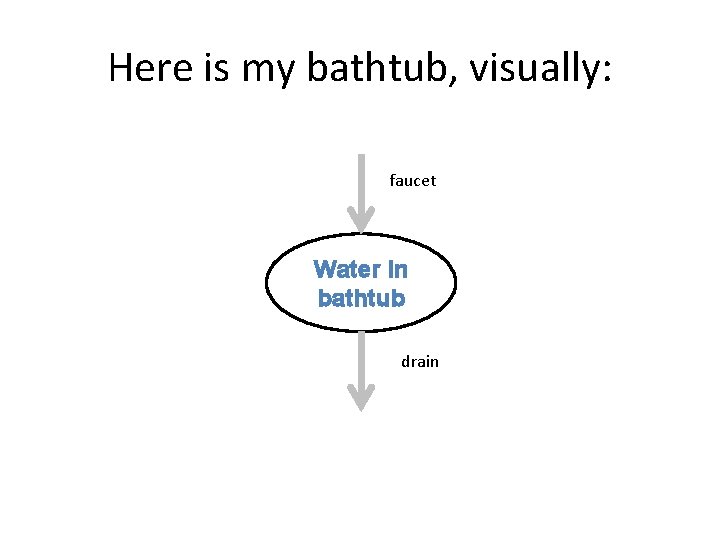
Here is my bathtub, visually: faucet Water in bathtub drain
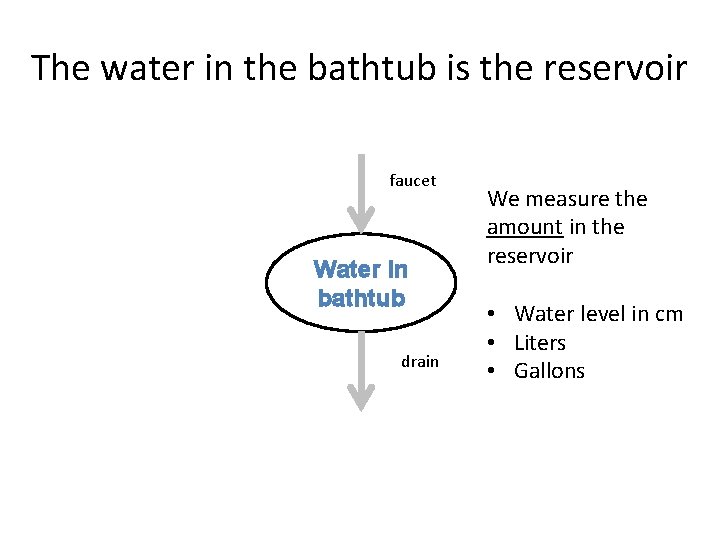
The water in the bathtub is the reservoir faucet Water in bathtub drain We measure the amount in the reservoir • Water level in cm • Liters • Gallons
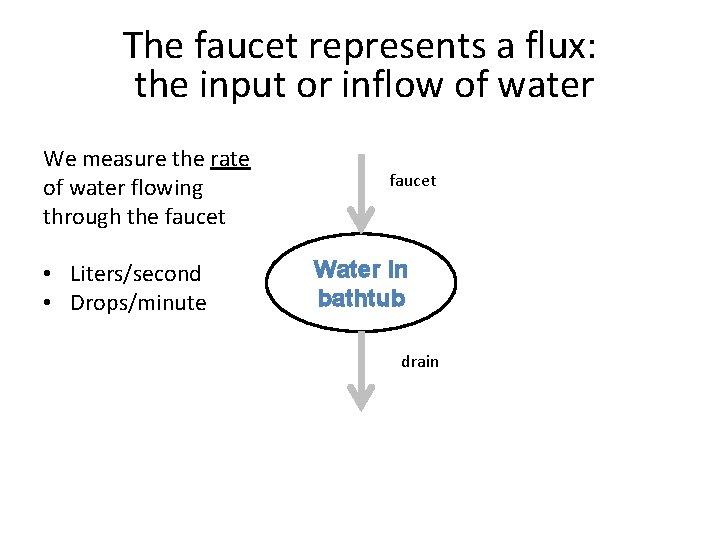
The faucet represents a flux: the input or inflow of water We measure the rate of water flowing through the faucet • Liters/second • Drops/minute faucet Water in bathtub drain
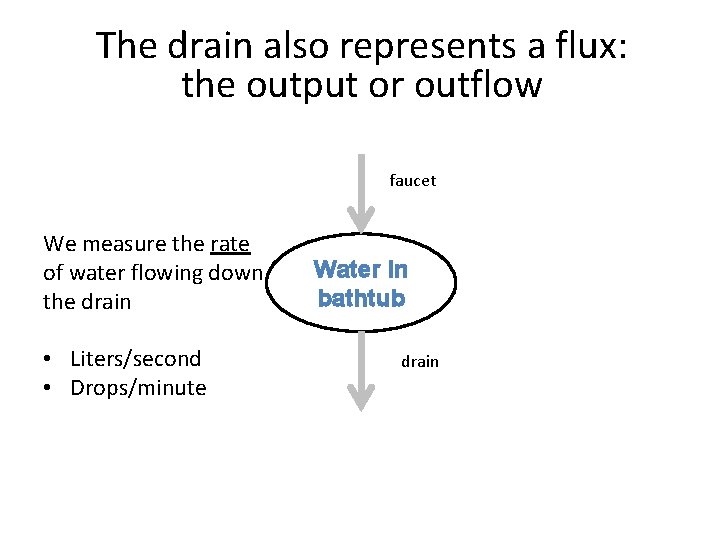
The drain also represents a flux: the output or outflow faucet We measure the rate of water flowing down the drain • Liters/second • Drops/minute Water in bathtub drain
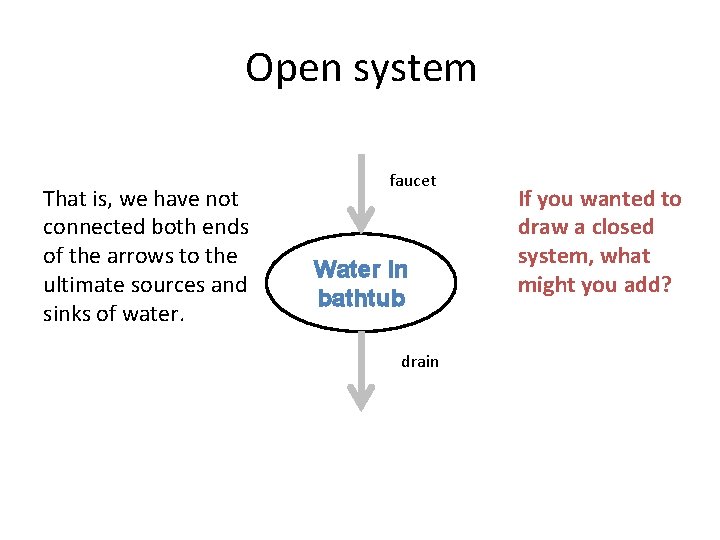
Open system That is, we have not connected both ends of the arrows to the ultimate sources and sinks of water. faucet Water in bathtub drain If you wanted to draw a closed system, what might you add?
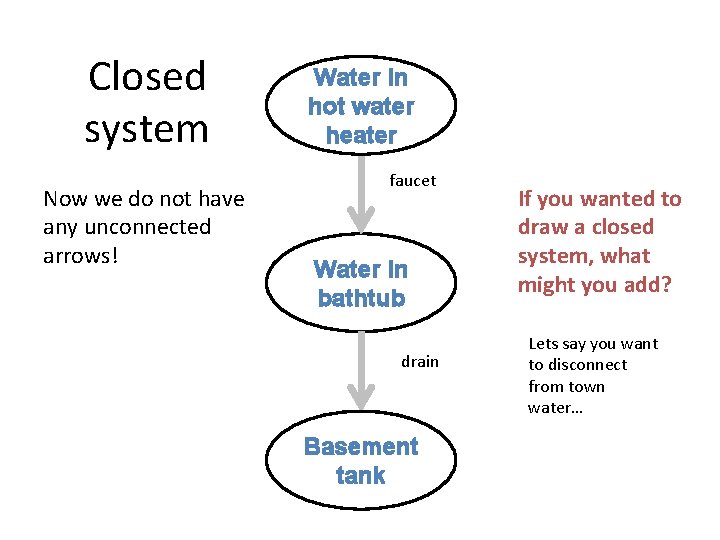
Closed system Now we do not have any unconnected arrows! Water in hot water heater faucet Water in bathtub drain Basement tank If you wanted to draw a closed system, what might you add? Lets say you want to disconnect from town water…
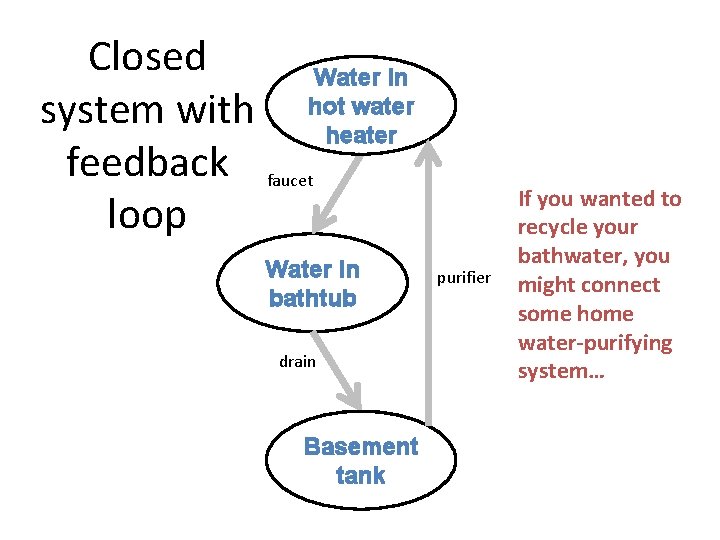
Closed Water in water system with hotheater feedback faucet loop Water in bathtub drain Basement tank purifier If you wanted to recycle your bathwater, you might connect some home water-purifying system…
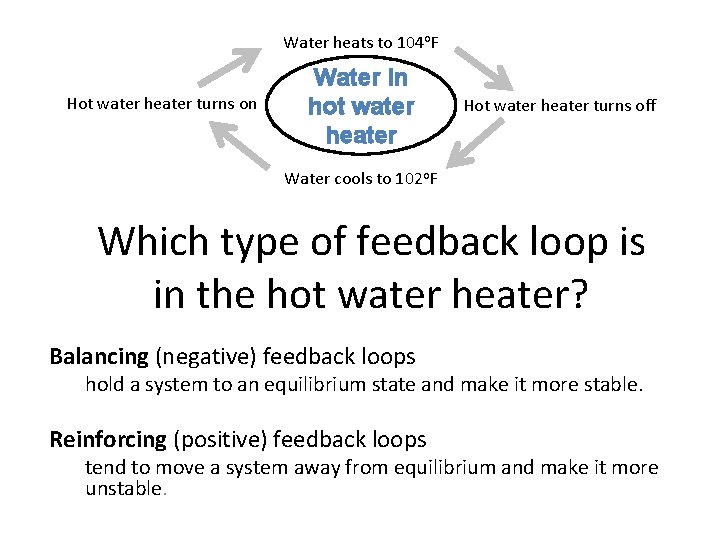
Water heats to 104 o. F Hot water heater turns on Water in hot water heater Hot water heater turns off Water cools to 102 o. F Which type of feedback loop is in the hot water heater? Balancing (negative) feedback loops hold a system to an equilibrium state and make it more stable. Reinforcing (positive) feedback loops tend to move a system away from equilibrium and make it more unstable.
Water heats to 104 o. F Hot water heater turns on Water in hot water heater Hot water heater turns off Water cools to 102 o. F Which type of feedback loop is in the hot water heater? Balancing (negative) feedback loops hold a system to an equilibrium state and make it more stable. Reinforcing (positive) feedback loops tend to move a system away from equilibrium and make it more unstable.
Reinforcing feedback loops underlies many environmental problems Recall: Reinforcing feedback loops tends to make a system more unstable. Examples: • loss of biodiversity • degradation of agricultural soils • global climate change To address these problems, we need to consider complex interactions, rather than merely one component alone or a single cause-and-effect relationship!
Systems thinking is an essential tool for addressing societal challenges Such as – – energy, food, water resources climate change poverty hazards These challenges cut across human and natural systems, involve multiple interdependent variables and feedbacks that are changing over time and space and are • critically important, yet • complex to predict
Recall today’s goals • Define systems terminology. • Read and interpret simple systems diagrams. • Evaluate a diagram’s fit to a description of a system. Now we will do this
Listen to the first 2: 00 of this news story http: //play. publicradio. org/default/d/podcast/minnesota/podcasts/climate_cast/2 015/07/millerclimatecast_20150709_64. mp 3 (until Eric S. Kasischke begins speaking) Write down anything you can identify as influencing climate.
Work with a partner to compare lists then sort into categories: - fluxes - reservoirs - feedbacks (3 minutes!)
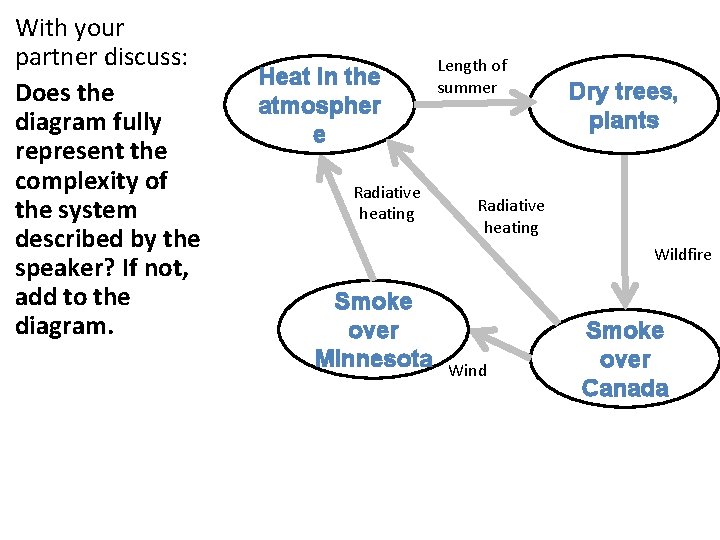
With your partner discuss: Does the diagram fully represent the complexity of the system described by the speaker? If not, add to the diagram. Heat in the atmospher e Radiative heating Length of summer Dry trees, plants Radiative heating Wildfire Smoke over Minnesota Wind Smoke over Canada
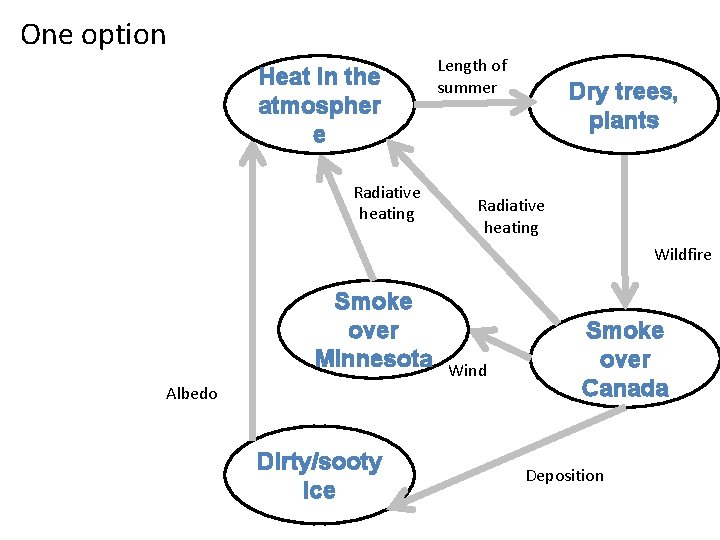
One option Heat in the atmospher e Radiative heating Length of summer Dry trees, plants Radiative heating Wildfire Smoke over Minnesota Albedo Dirty/sooty ice Wind Smoke over Canada Deposition
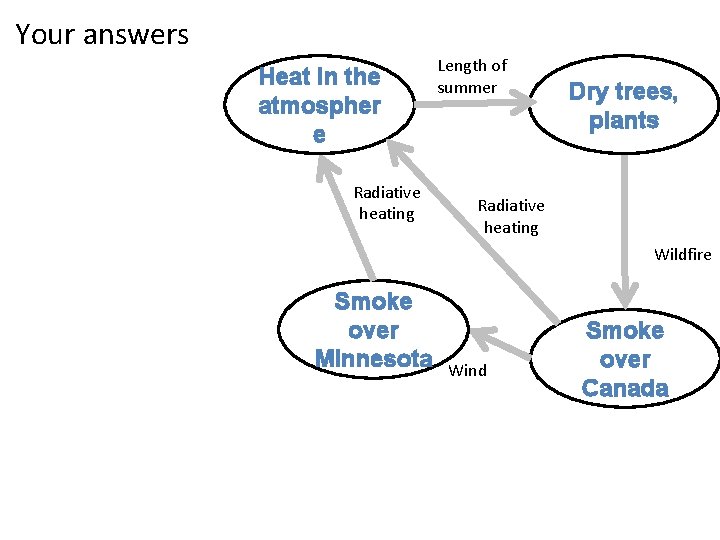
Your answers Heat in the atmospher e Radiative heating Length of summer Dry trees, plants Radiative heating Wildfire Smoke over Minnesota Wind Smoke over Canada
How is your bathtub different from the simple open system bathtub we imagined in class? 1. On the back of your bathtub description, draw a system diagram of your bathtub at home and use systems vocabulary to explain how it works in a paragraph. 2. Using systems vocabulary, write a paragraph to explain the differences. 3. What questions do you still have about your diagram?
How do you rate your knowledge of systems diagrams right now? 1. I have never heard of systems diagrams. 2. I have heard of systems diagrams, but cannot elaborate. 3. I could explain a little about systems diagrams. 4. If given a systems diagram, I could explain it. 5. I could create a systems diagram and then explain it. And, reflect briefly on your learning today: What aspect of class most helped you improve your knowledge of systems? Why?