
Introduction to Sustainable Community Development Joshua Farley CDAE
Introduction to Sustainable Community Development Joshua Farley CDAE GIEE
What is Community? • A group of people living in the same locality and under the same government? • A group of people having common interests, a common affiliation? • Society as a whole, the public?
What are the spatial boundaries of community? • Neighborhood, city, state, country? • What about global issues?
Community is context dependent • Scale of community depends on scale of the issues we’re dealing with – Climate change – National defense – Urban sprawl – Noise – Sense of kinship and scale
What is development? • What defines a developed country? • Is Kerala developed? • What do we want to develop?
Human Development Index • • GNP/capita Education (enrollment) Literacy Life expectancy
Max-Neef’s Human Needs matrix • Development as the satisfaction of human needs • Subsistence, protection, affection, understanding, participation, recreation, identity and freedom • Having (things), being (qualities), doing (actions), interacting (settings) • Needs are the same, satisfiers differ across cultures and time
What is Sustainability? • "development that meets the needs of the present without compromising the ability of future generations to meet their own needs. “ Brundtland Commission • What needs to be sustained so that future generations can meet their needs? • Strong vs. weak sustainability
Overview • How can we build communities that are ecologically, economically, socially, politically and culturally sustainable? • What is our vision of a sustainable and desirable community? • What policies are required? • How do we measure success? • Holistic, transdisciplinary approach
Course Objectives • Gain an understanding of the multidimensional nature of communities • Learn methods that will help us understand ‘solve’ complex problems like community development • Understand the role of institutions (from household to global) in building sustainable communities
Course Objectives (cont. ) • Understand our role in promoting or hindering SCD • Understand policies that promote or hinder SCD • Contribute to SCD through a service learning project
Course Format
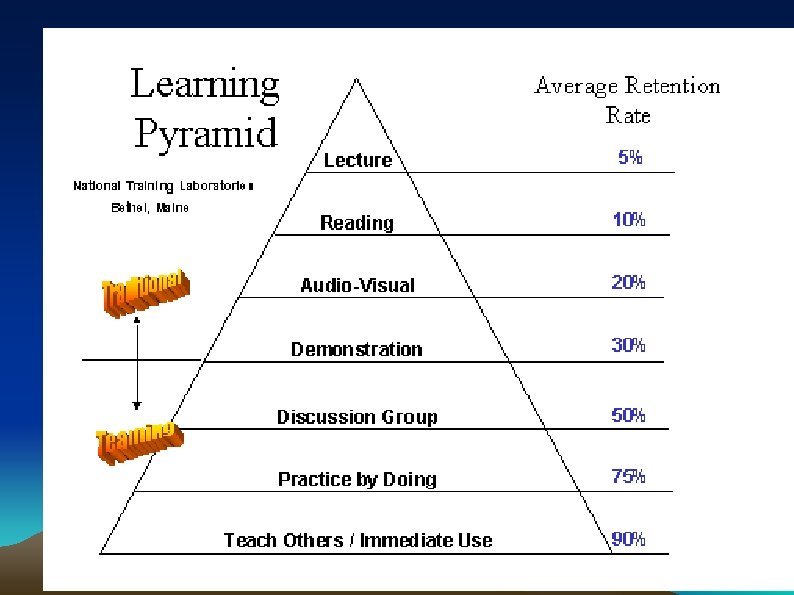
Delivery: Transdisciplinary approach • • Lectures from practitioners Lectures from faculty in other disciplines Synthesis lectures Discussions and exercises
Assignments and Grading • Service learning projects (30%) – Descriptions on Friday • Reflections (25%) – See syllabus • Participation (20%) – In class and discussion groups • Editorials and letters to politicians (15%) – See syllabus • Quizzes (10%) – Based on lectures and readings. Expect 100% if you’ve done them, 0% if you haven’t.
Web. CT and the ‘paperless’ course • Syllabus is electronic and dynamic. Please do not print. • All assignments are posted on Web. CT • All assignments should be submitted via Web. CT – Acceptable formats are RTF or MSWord • All comments/grades should be electronic
Web. CT Tools • Syllabus – You are responsible for reading and understanding the syllabus. • E-mail – E-mail sent to my UVM account MUST begin with CDAE 102 in subject line • Project assignments – I’m figuring this one out • Reflections – Must be handed in on time. 25% decrease in grade each day late.
some basic themes
Systems thinking • 4 capitals/ 4 Es • Inherent complexity – How do the pieces interact? • Study of a rapidly evolving system – What are the feedback loops driving system evolution?
Transdisciplinarity • In the university there are disciplines, in the real world there are problems • Communication and understanding across disciplines is essential • Communication with sectors outside of academia is essential
Academic Autism • What is Autism? A disorder characterized by: – abnormal subjectivity – marked deficits in communication and social interaction – marked withdrawal from reality – abnormal behavior, such as… excessive attachment to certain objects
Objective truth seeking vs. action oriented research • Traditional role is neutral scientist, unbiased objective research • Sustainability science demands solutions now. We need to do research that matters and we need to communicate and apply its results.
Focus on Synthesis… • Communication across disciplines • Integrative Methodologies – Systems thinking and modeling – Multi-criteria Analysis • Policy implications
… and Communication • Communicate to those who act on information • Format appropriate to goal
- Slides: 24