
Introduction to Structural Engineering Presentation created by David

Introduction to Structural Engineering Presentation created by David Garber (Assistant Professor, FIU) 1
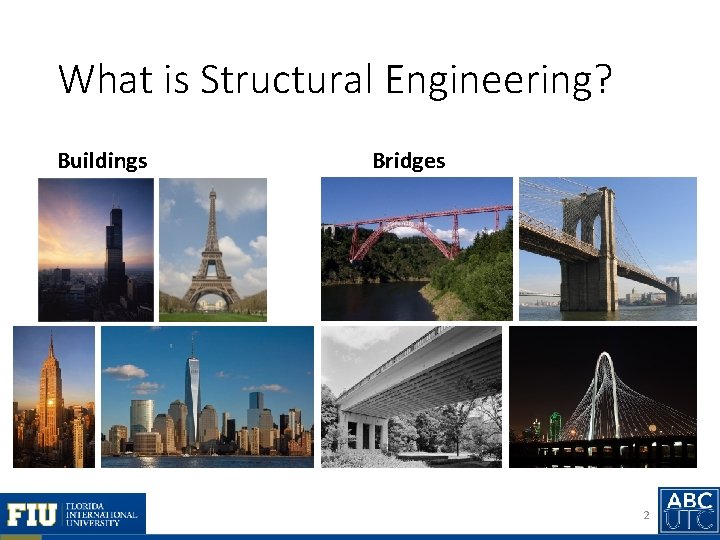
What is Structural Engineering? Buildings Bridges 2
What is Structural Engineering? • What do structural engineers need to consider? • What influences structural engineers? • How is structural engineering poorly defined? • What are proper definitions and viewpoints? • What will the role of the structural engineer be in the future? 3
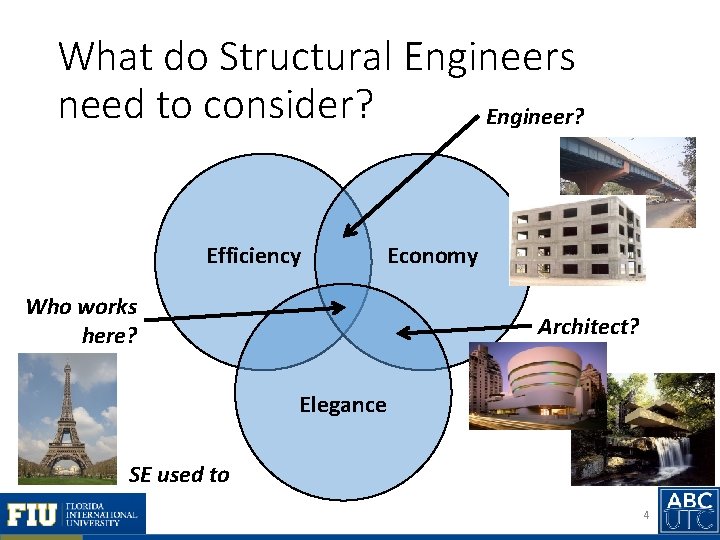
What do Structural Engineers need to consider? Engineer? Efficiency Who works here? Economy Architect? Elegance SE used to 4
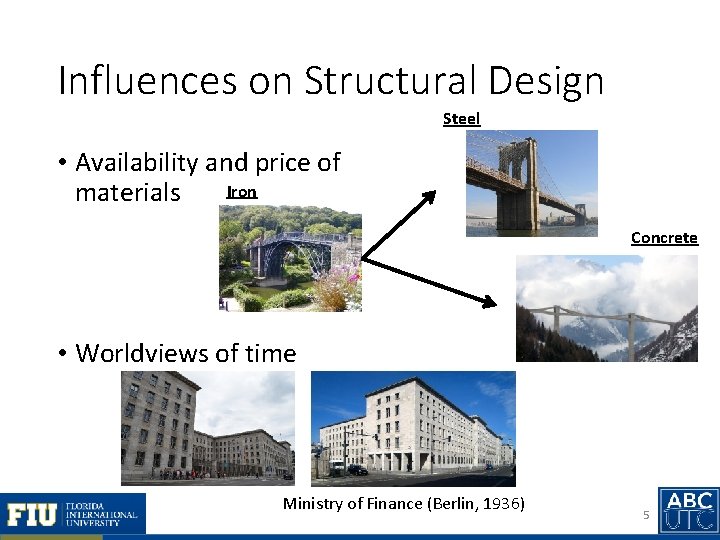
Influences on Structural Design Steel • Availability and price of Iron materials Concrete • Worldviews of time Ministry of Finance (Berlin, 1936) 5
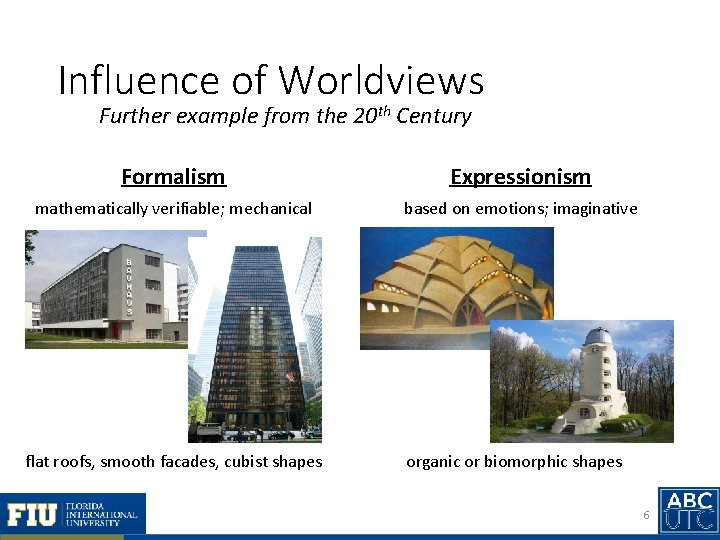
Influence of Worldviews Further example from the 20 th Century Formalism Expressionism mathematically verifiable; mechanical based on emotions; imaginative flat roofs, smooth facades, cubist shapes organic or biomorphic shapes 6
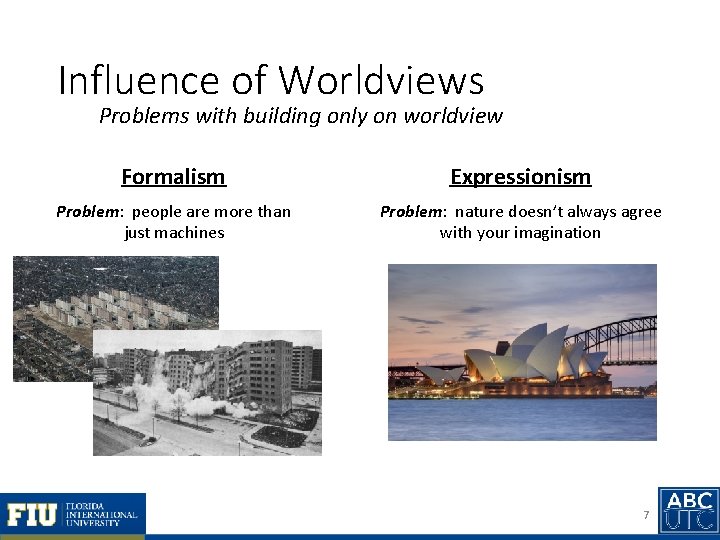
Influence of Worldviews Problems with building only on worldview Formalism Expressionism Problem: people are more than just machines Problem: nature doesn’t always agree with your imagination 7
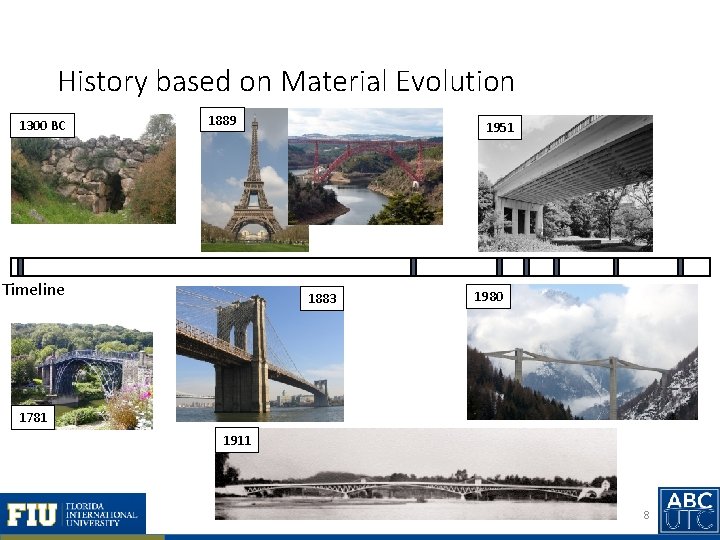
History based on Material Evolution 1300 BC 1889 Timeline 1951 1883 1980 1781 1911 8
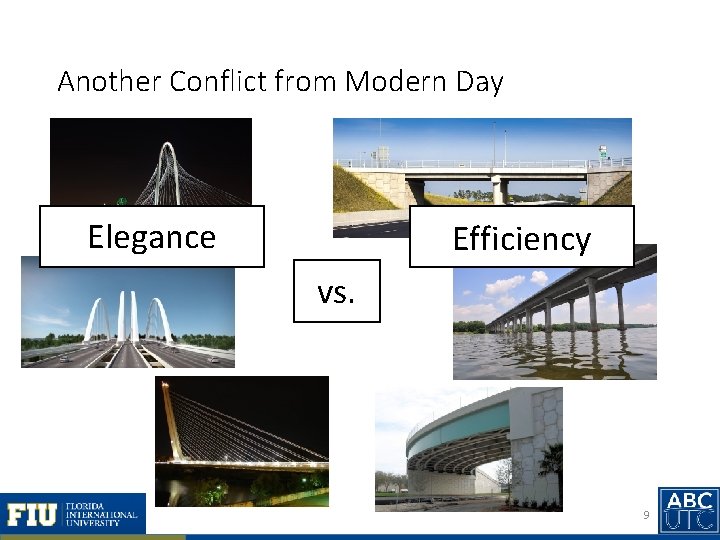
Another Conflict from Modern Day Elegance Efficiency vs. 9
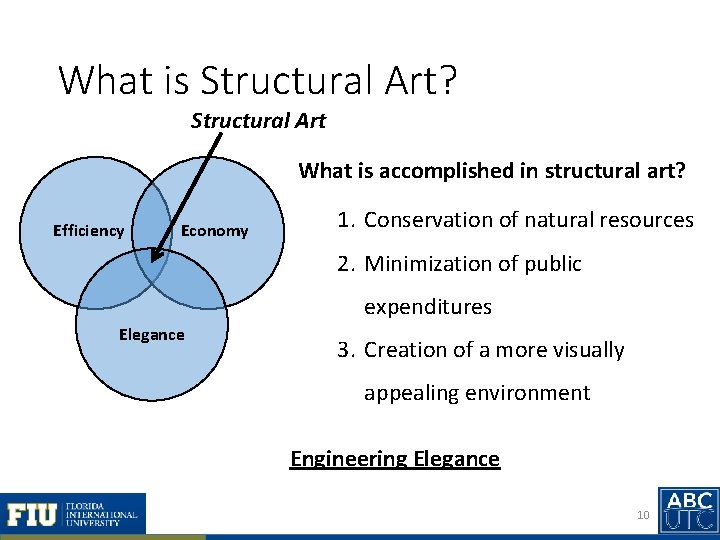
What is Structural Art? Structural Art What is accomplished in structural art? Efficiency Economy 1. Conservation of natural resources 2. Minimization of public expenditures Elegance 3. Creation of a more visually appealing environment Engineering Elegance 10
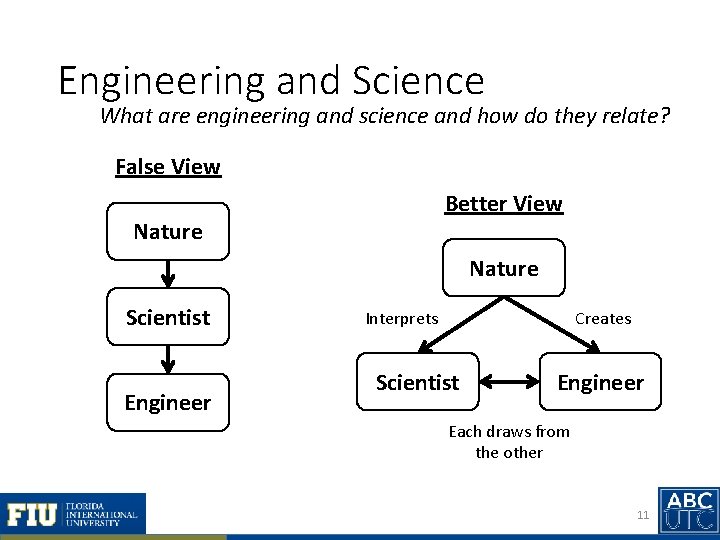
Engineering and Science What are engineering and science and how do they relate? False View Better View Nature Scientist Engineer Interprets Creates Scientist Engineer Each draws from the other 11
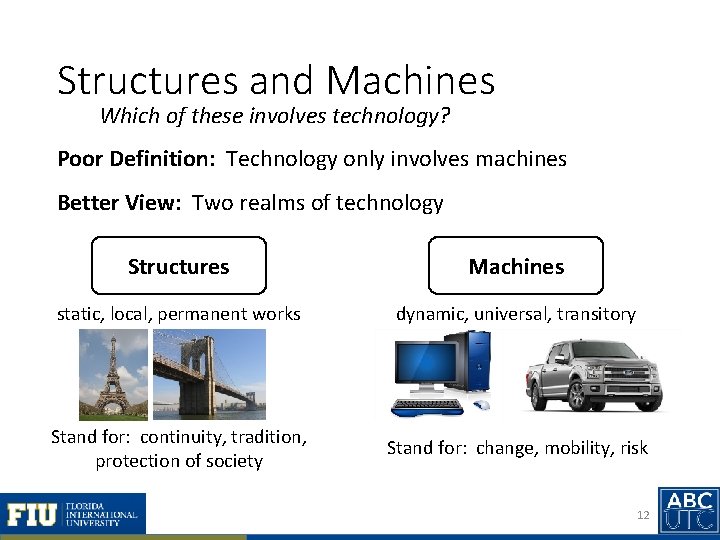
Structures and Machines Which of these involves technology? Poor Definition: Technology only involves machines Better View: Two realms of technology Structures Machines static, local, permanent works dynamic, universal, transitory Stand for: continuity, tradition, protection of society Stand for: change, mobility, risk 12
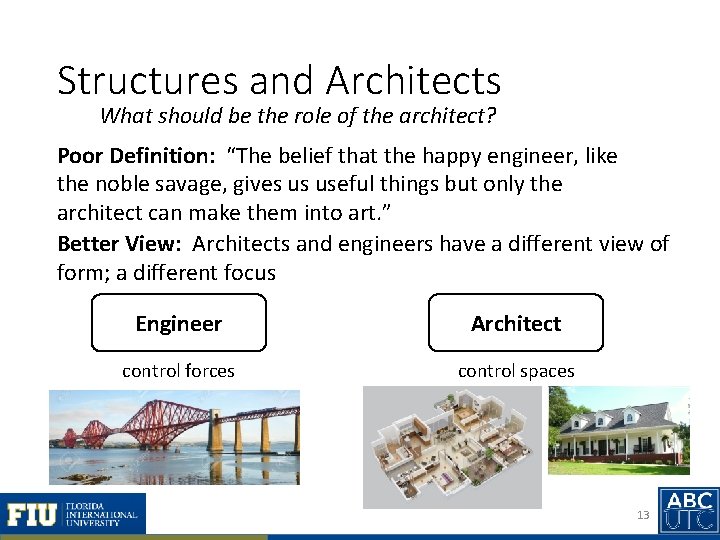
Structures and Architects What should be the role of the architect? Poor Definition: “The belief that the happy engineer, like the noble savage, gives us useful things but only the architect can make them into art. ” Better View: Architects and engineers have a different view of form; a different focus Engineer Architect control forces control spaces 13
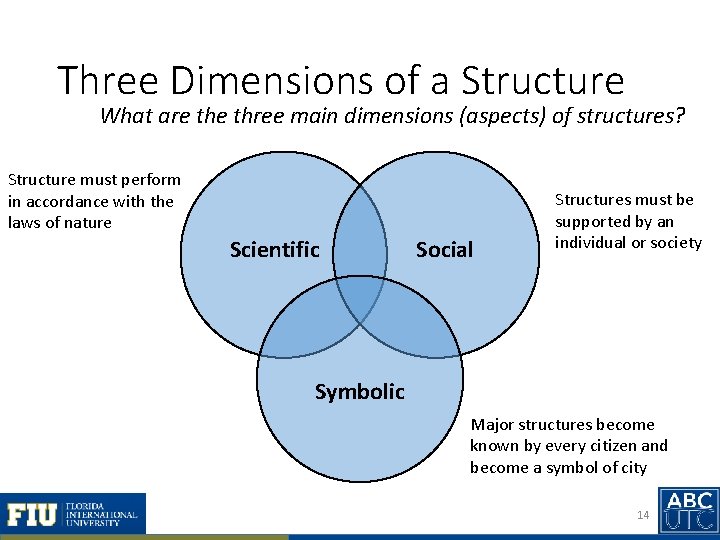
Three Dimensions of a Structure What are three main dimensions (aspects) of structures? Structure must perform in accordance with the laws of nature Scientific Social Structures must be supported by an individual or society Symbolic Major structures become known by every citizen and become a symbol of city 14
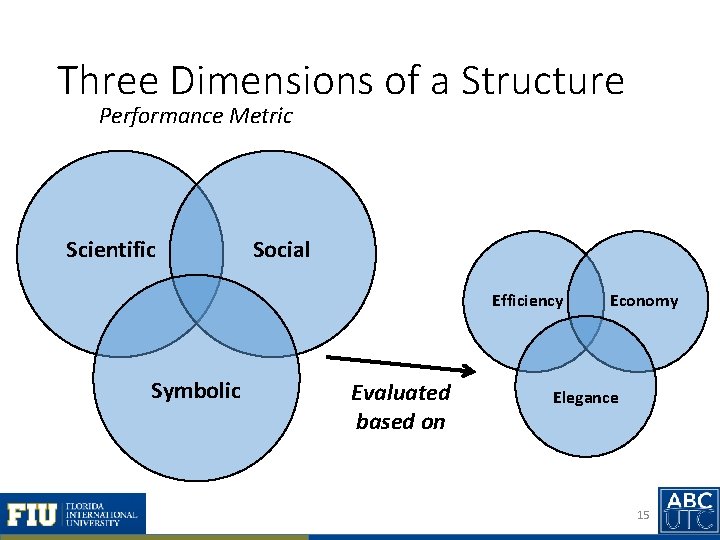
Three Dimensions of a Structure Performance Metric Scientific Social Efficiency Symbolic Evaluated based on Economy Elegance 15

Three Dimensions of a Structure What types of designers work with form in space? 1. Engineer 2. Architect 3. Sculptor 16
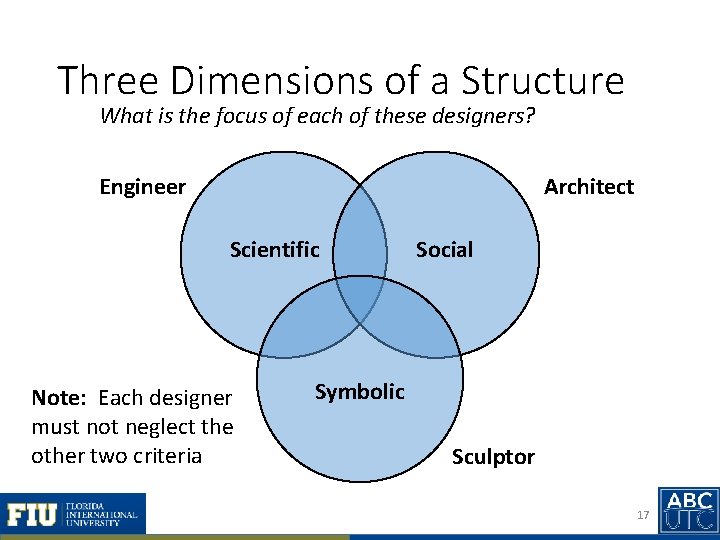
Three Dimensions of a Structure What is the focus of each of these designers? Engineer Architect Scientific Note: Each designer must not neglect the other two criteria Social Symbolic Sculptor 17
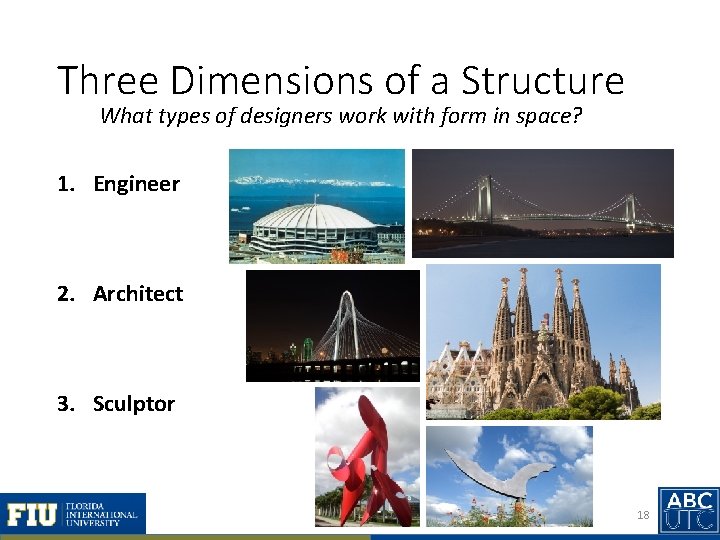
Three Dimensions of a Structure What types of designers work with form in space? 1. Engineer 2. Architect 3. Sculptor 18
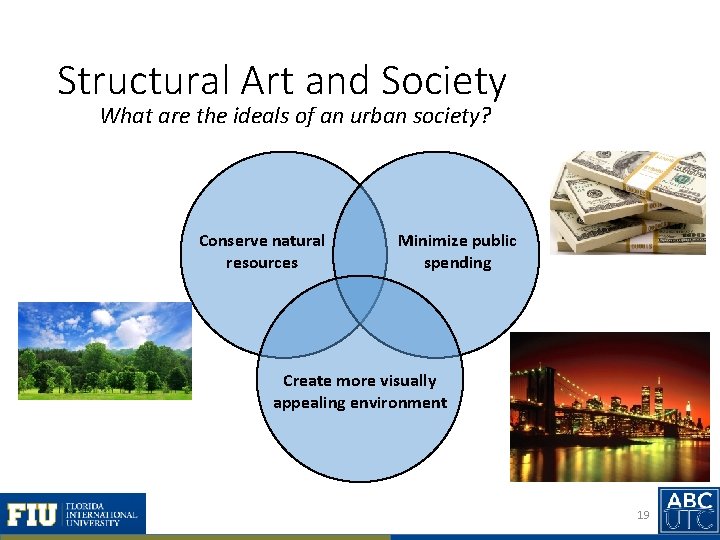
Structural Art and Society What are the ideals of an urban society? Conserve natural resources Minimize public spending Create more visually appealing environment 19
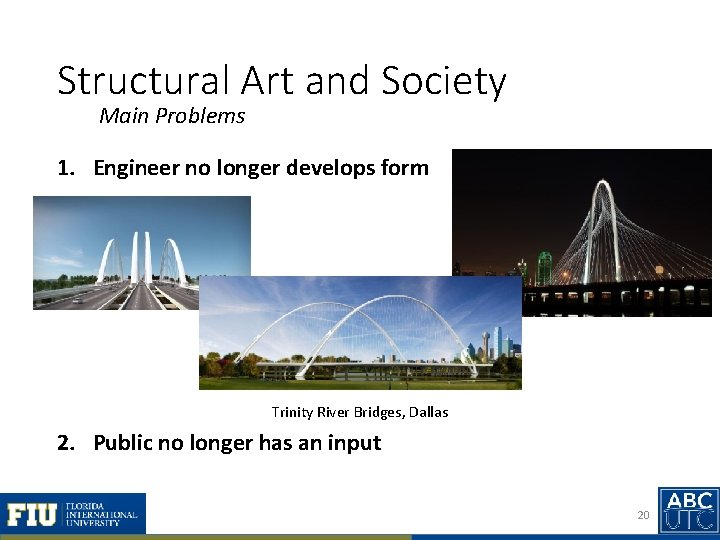
Structural Art and Society Main Problems 1. Engineer no longer develops form Trinity River Bridges, Dallas 2. Public no longer has an input 20
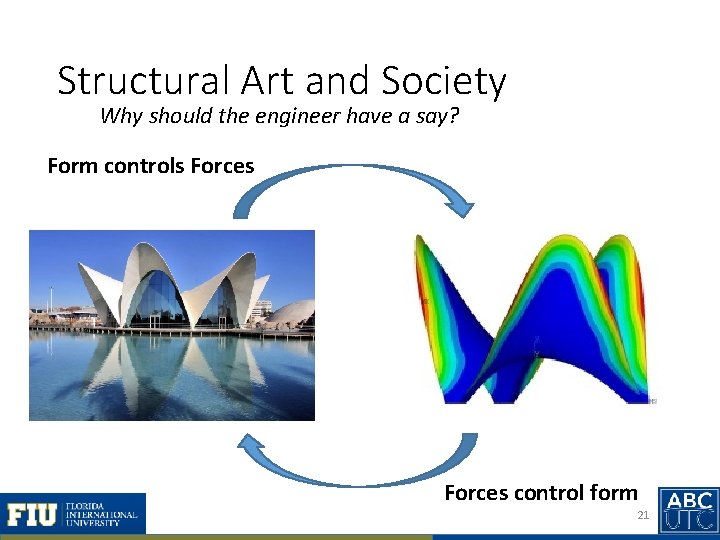
Structural Art and Society Why should the engineer have a say? Form controls Forces control form 21
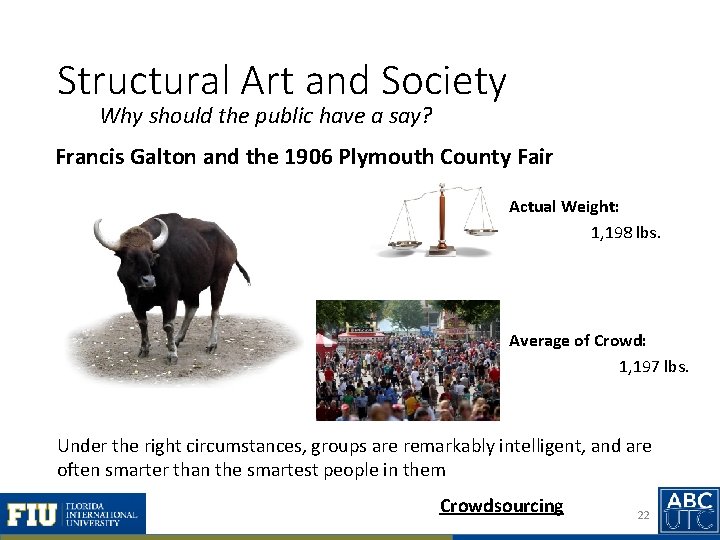
Structural Art and Society Why should the public have a say? Francis Galton and the 1906 Plymouth County Fair Actual Weight: 1, 198 lbs. Average of Crowd: 1, 197 lbs. Under the right circumstances, groups are remarkably intelligent, and are often smarter than the smartest people in them Crowdsourcing 22
Structural Art and Society What are possible solutions? Public Design Competition (Switzerland) 1. Bridge is desired, project announced 2. Engineers develop preliminary forms and prices 3. Informed public (both experts and general) decide on the project to be built 23
Structural Art and Society Tradition of Swiss Bridge Engineers Robert Maillart Othmar Ammann Christian Menn 24
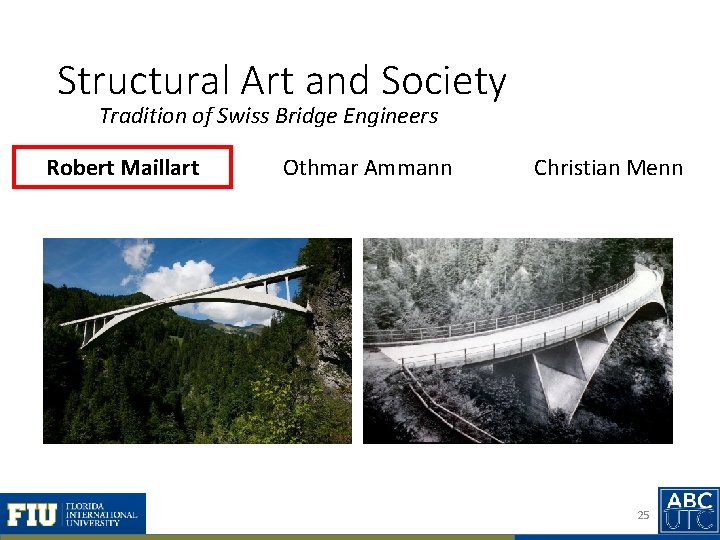
Structural Art and Society Tradition of Swiss Bridge Engineers Robert Maillart Othmar Ammann Christian Menn 25
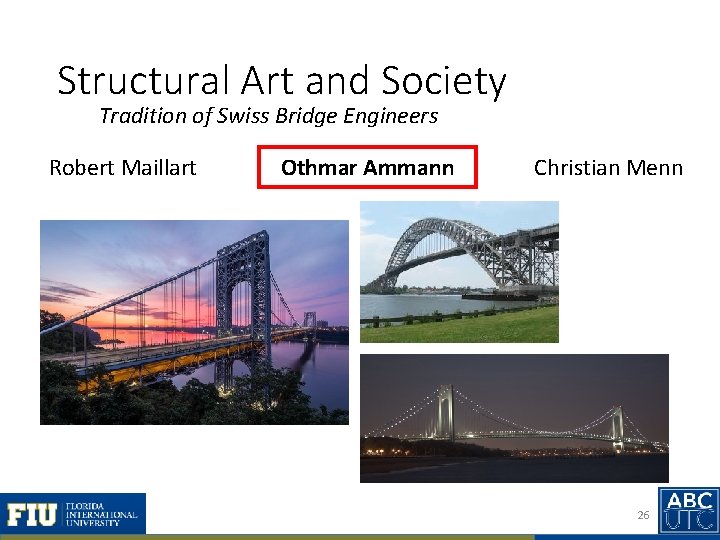
Structural Art and Society Tradition of Swiss Bridge Engineers Robert Maillart Othmar Ammann Christian Menn 26
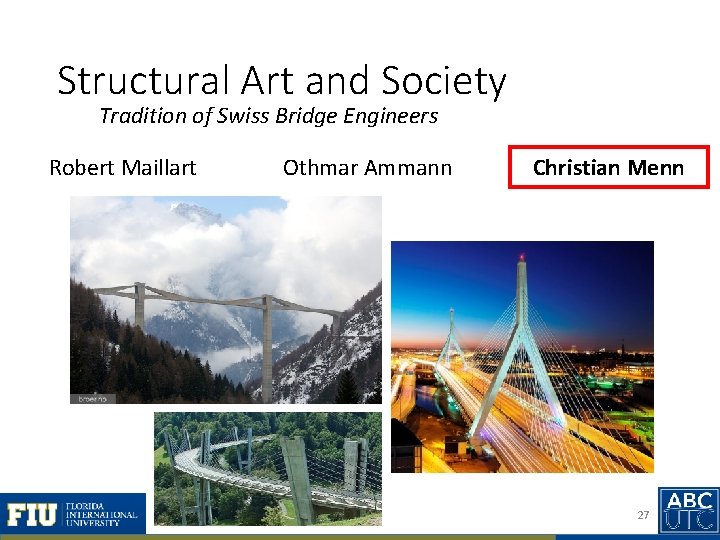
Structural Art and Society Tradition of Swiss Bridge Engineers Robert Maillart Othmar Ammann Christian Menn 27
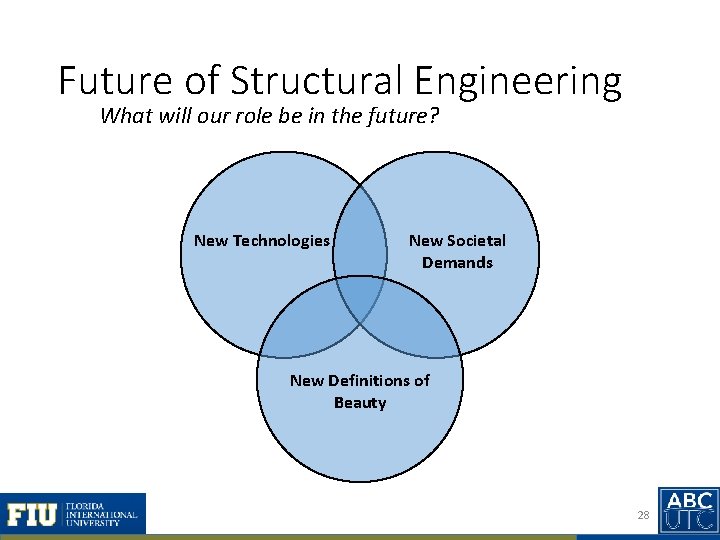
Future of Structural Engineering What will our role be in the future? New Technologies New Societal Demands New Definitions of Beauty 28
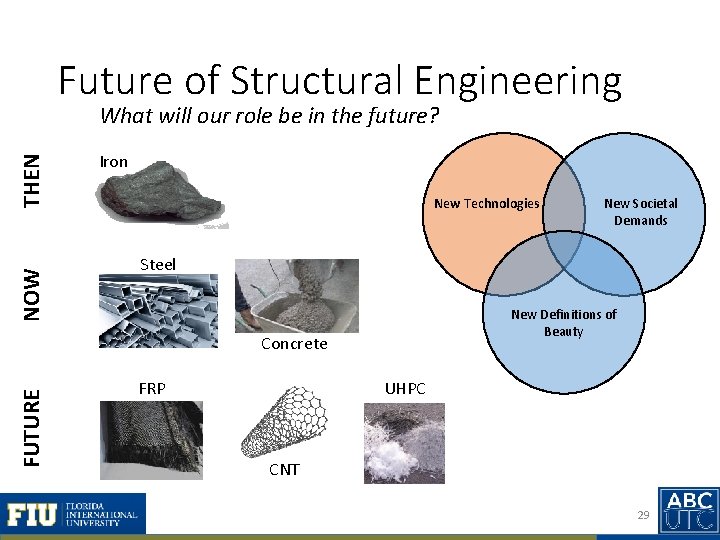
Future of Structural Engineering NOW THEN What will our role be in the future? Iron New Technologies Steel New Definitions of Beauty Concrete FUTURE New Societal Demands FRP UHPC CNT 29
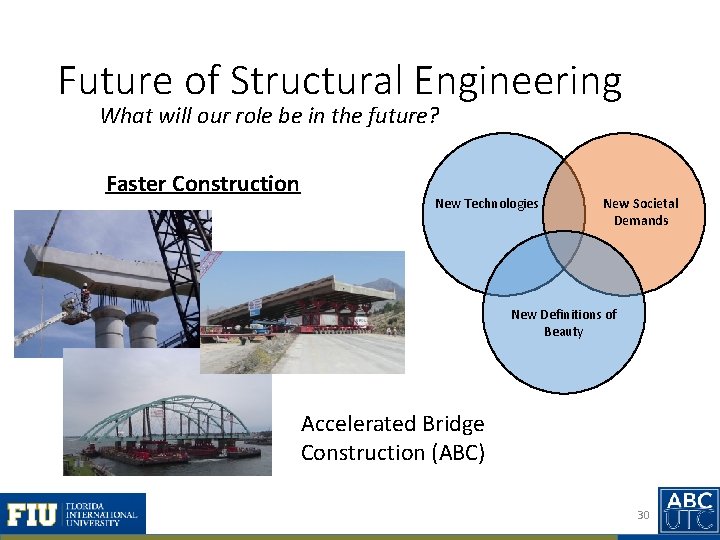
Future of Structural Engineering What will our role be in the future? Faster Construction New Technologies New Societal Demands New Definitions of Beauty Accelerated Bridge Construction (ABC) 30
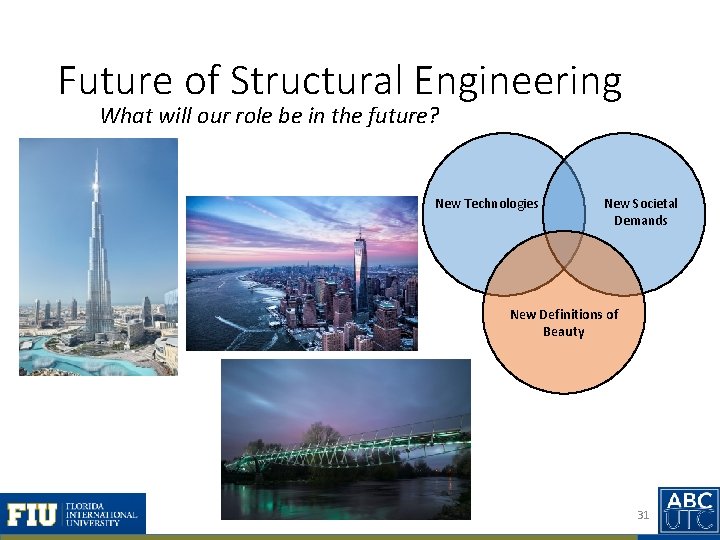
Future of Structural Engineering What will our role be in the future? New Technologies New Societal Demands New Definitions of Beauty 31
Future of Structural Engineering What will our role be in the future? 32
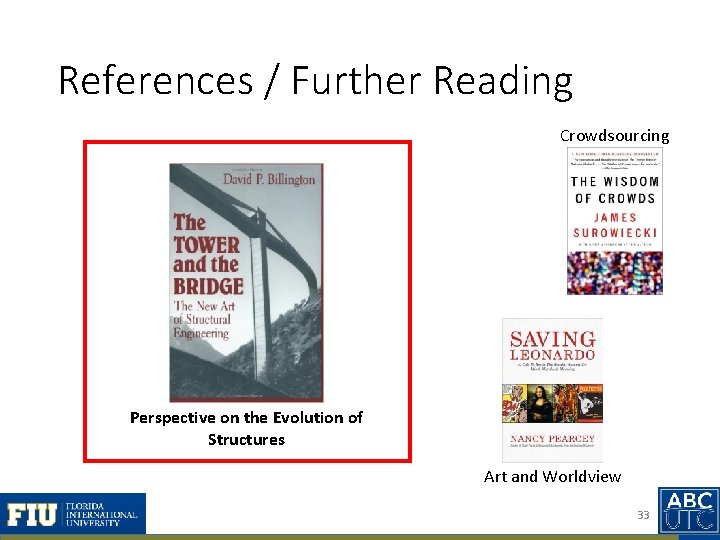
References / Further Reading Crowdsourcing Perspective on the Evolution of Structures Art and Worldview 33
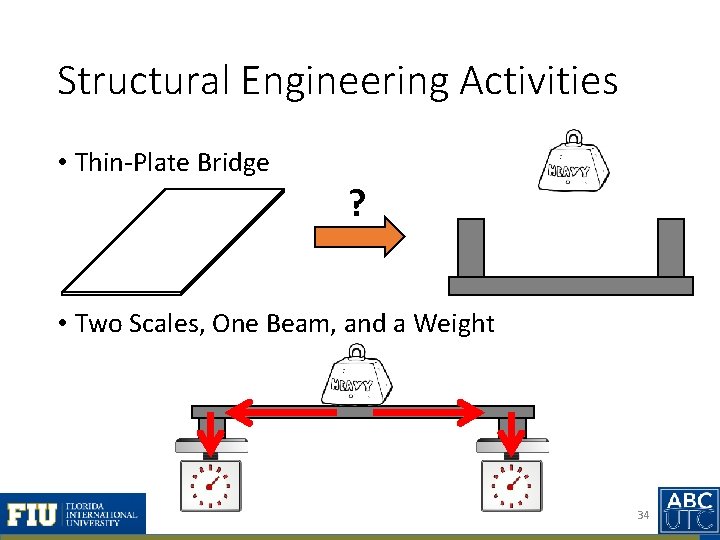
Structural Engineering Activities • Thin-Plate Bridge ? • Two Scales, One Beam, and a Weight 34

Thank You Presentation Created by: David Garber, Ph. D (dgarber@fiu. edu) Assistant Professor, Florida International University 35
- Slides: 35