
Introduction to Stage Management What does a Stage
- Slides: 21
Introduction to Stage Management
What does a Stage Manager do? - Be on top of everything – manage everyone Scheduler Conflict diffusers Delegators Answer Questions Line Notes Call Cues Facilitate Communication between the Design / Production Team Tracking for props, scenery, and costumes Provide supplies to people Rehearsal Reports, Contact Sheet, Production Meeting Report, etc. Communication and management of the cast
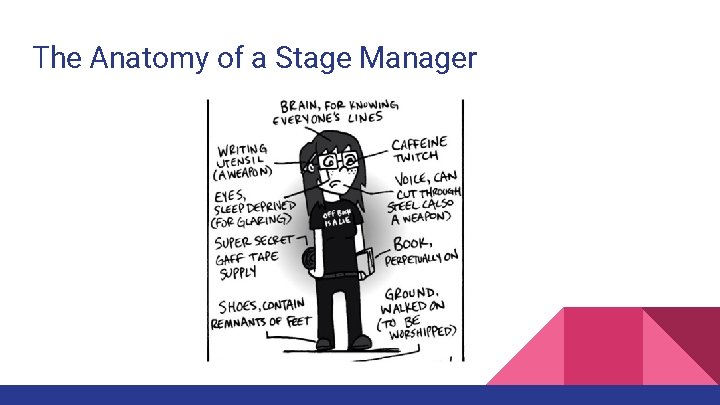
The Anatomy of a Stage Manager
What makes a “good” Stage Manager? Good = effective, successful, prolific, sustainable, respected, well-liked etc. • • • Organized Answer your questions or finds the answers Effective communicator Empathy and Compassion – UNDERSTANDING Charisma – approachability Make people heard – give others a voice Quick Decision Making under pressure Problem Solving Skills Reliable Even – non alarmist – efficient, staying calm under pressure Reasonable
Major Role of the Stage Manager • To facilitate the organization and communication necessary for the rehearsal and execution of a theatrical production.
Communication Principles • Meta Theatrical Observation Exercise • • Discuss what makes good communication Observe the communication techniques of your group As a group make a list of 5 essential qualities of “good” communication As an individual write • 3 moments of “good communication” – what worked? • 2 moments of “inferior communication” – what didn’t work?
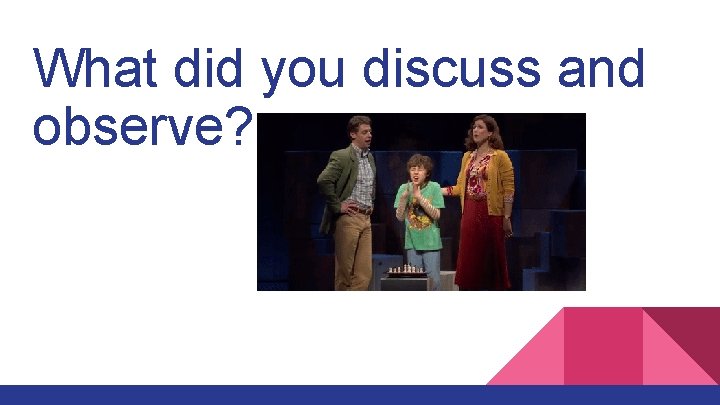
What did you discuss and observe?
It’s the Way You Say It, Carol A. Fleming • ”What is self-expression? It means that you say what you want to say in the manner that comes to you naturally. It will be your take on the matter, in the words you normally use, perhaps with the narrative flow of your experience. It’s a solo performance in front of people with 100 percent of your attention on finding and speaking your thoughts, as opposed to communication where the listener is foremost in your mind as you speak. You speak their language, you speak to their concerns, and you get to the point insofar as it concerns them. ” • How does this affect the way you think about communicating as a stage manager?
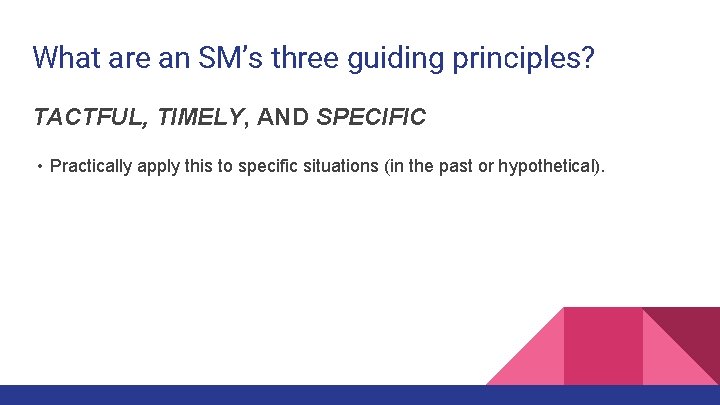
What are an SM’s three guiding principles? TACTFUL, TIMELY, AND SPECIFIC • Practically apply this to specific situations (in the past or hypothetical).
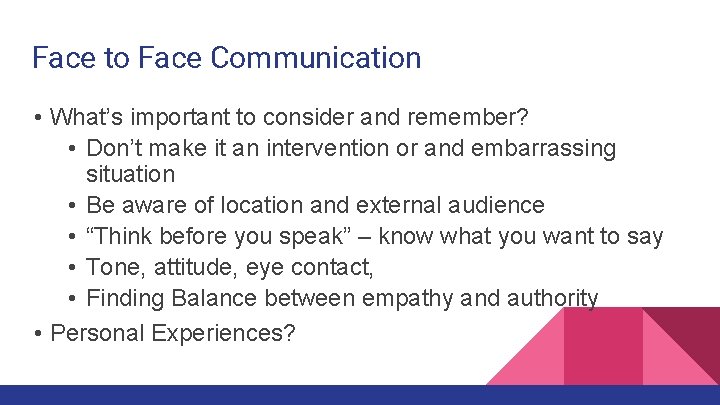
Face to Face Communication • What’s important to consider and remember? • Don’t make it an intervention or and embarrassing situation • Be aware of location and external audience • “Think before you speak” – know what you want to say • Tone, attitude, eye contact, • Finding Balance between empathy and authority • Personal Experiences?
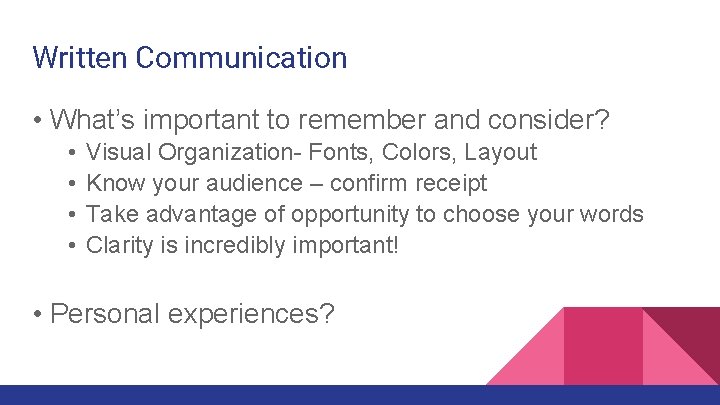
Written Communication • What’s important to remember and consider? • • Visual Organization- Fonts, Colors, Layout Know your audience – confirm receipt Take advantage of opportunity to choose your words Clarity is incredibly important! • Personal experiences?
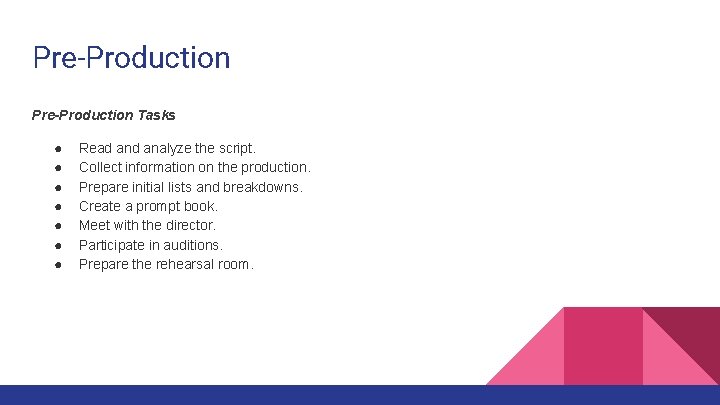
Pre-Production Tasks ● ● ● ● Read analyze the script. Collect information on the production. Prepare initial lists and breakdowns. Create a prompt book. Meet with the director. Participate in auditions. Prepare the rehearsal room.
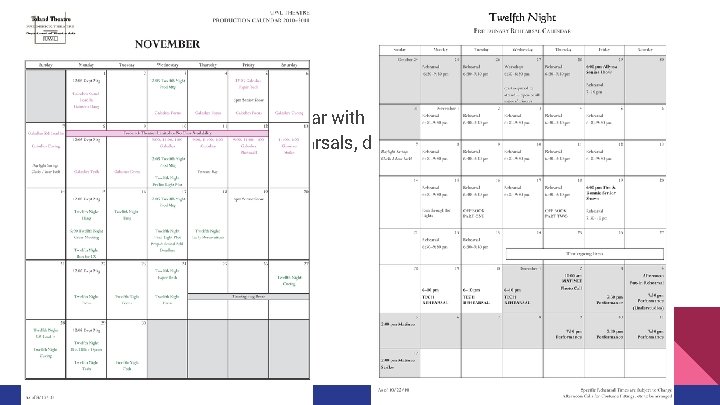
The Calendar -The Stage Manager must be familiar with both the production calendar and the actor calendar. This includes rehearsals, deadlines for cue sheets, production meetings, and more.
Analyzing the Script in 3 steps 1. Read the script 2. Read the script for the script analysis 3. Read the script for the character/scene breakdown
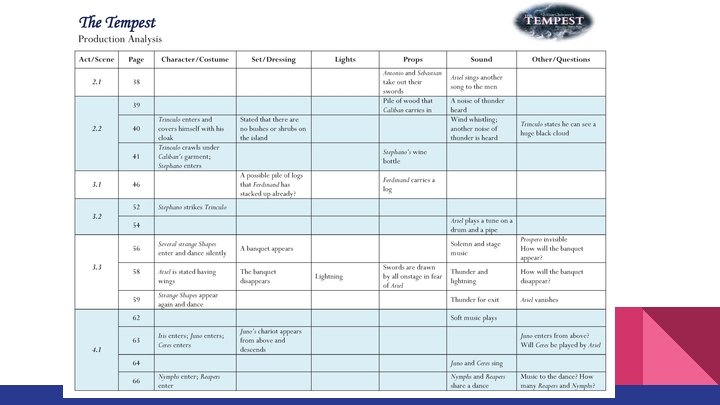
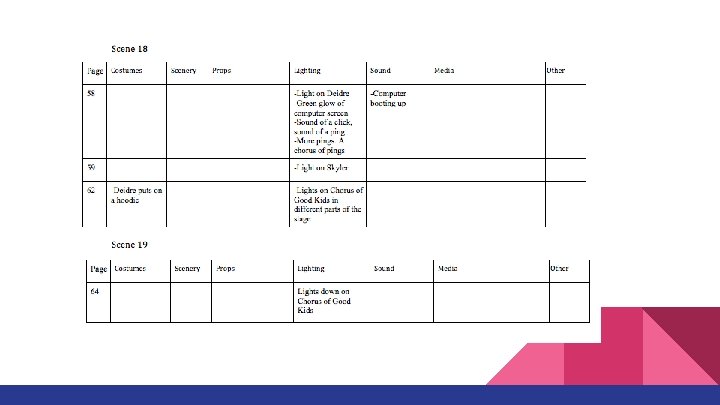
What is a Script Analysis? ● Notes on any and all technical aspects of the show (props, lighting, costumes) ● A scene-by-scene notation of specific technical details-- A stage manager can’t remember everything!
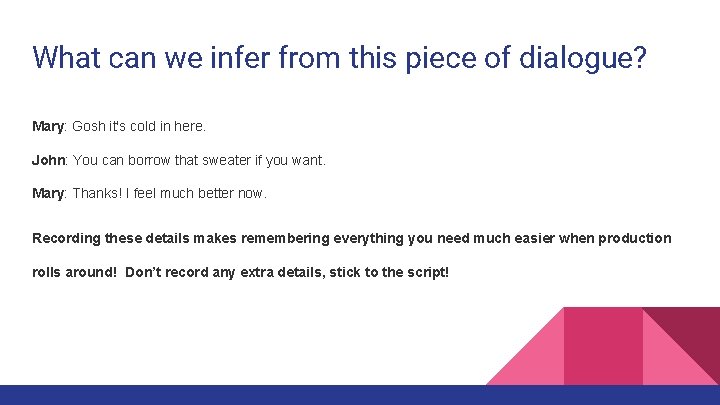
What can we infer from this piece of dialogue? Mary: Gosh it's cold in here. John: You can borrow that sweater if you want. Mary: Thanks! I feel much better now. Recording these details makes remembering everything you need much easier when production rolls around! Don’t record any extra details, stick to the script!
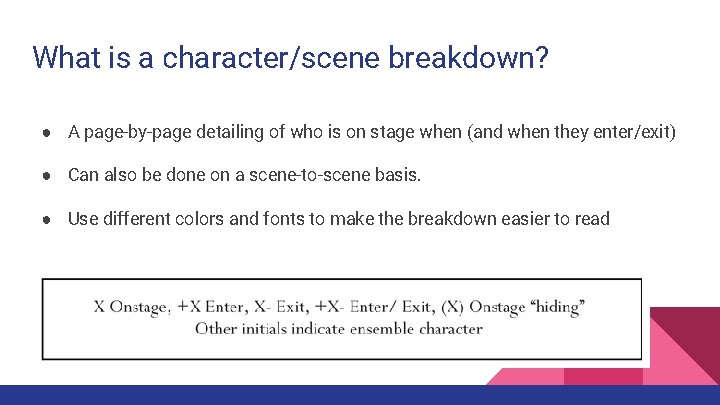
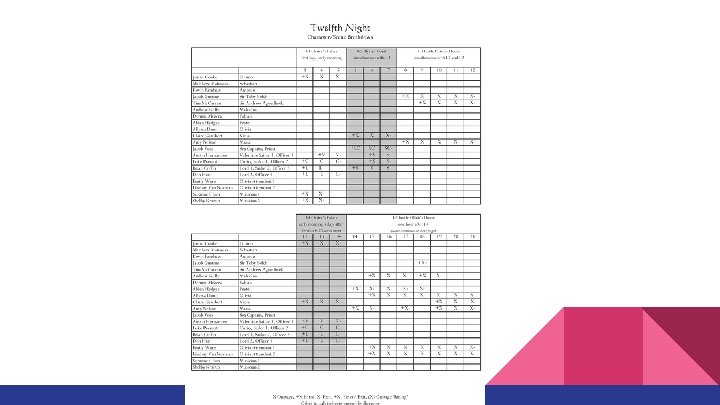
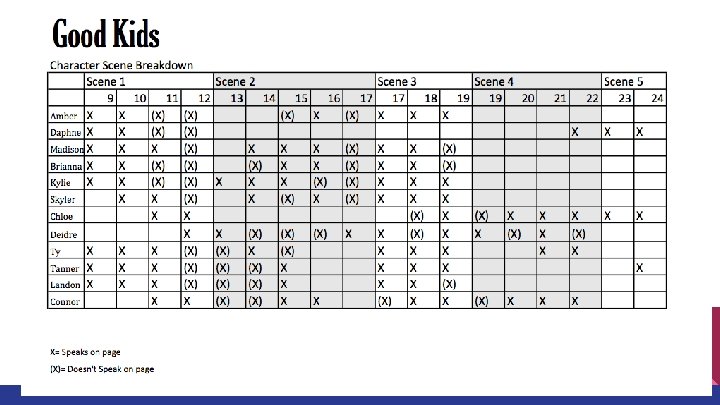
What is a character/scene breakdown? ● A page-by-page detailing of who is on stage when (and when they enter/exit) ● Can also be done on a scene-to-scene basis. ● Use different colors and fonts to make the breakdown easier to read