
Introduction to Spectroscopy Dr Fadhl Alakwaa 2011 2012
- Slides: 26
Introduction to Spectroscopy Dr Fadhl Alakwaa 2011 -2012 Third Year Biomedical engineering Department www. Fadhl-alakwa. weebly. com
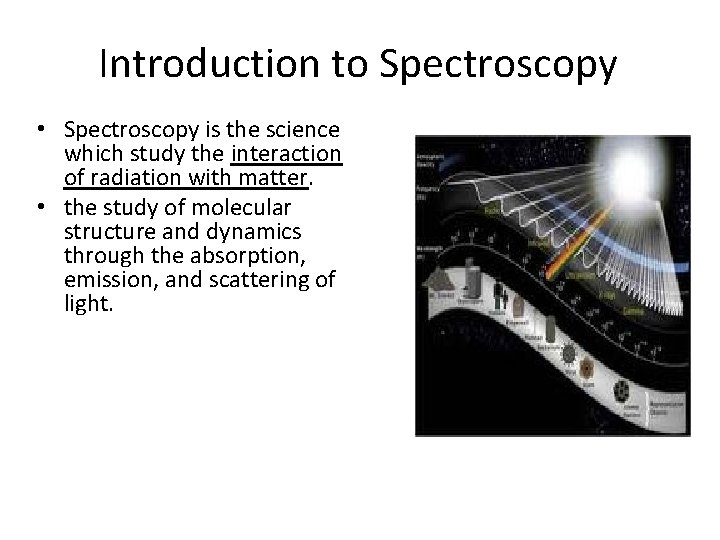
Introduction to Spectroscopy • Spectroscopy is the science which study the interaction of radiation with matter. • the study of molecular structure and dynamics through the absorption, emission, and scattering of light.
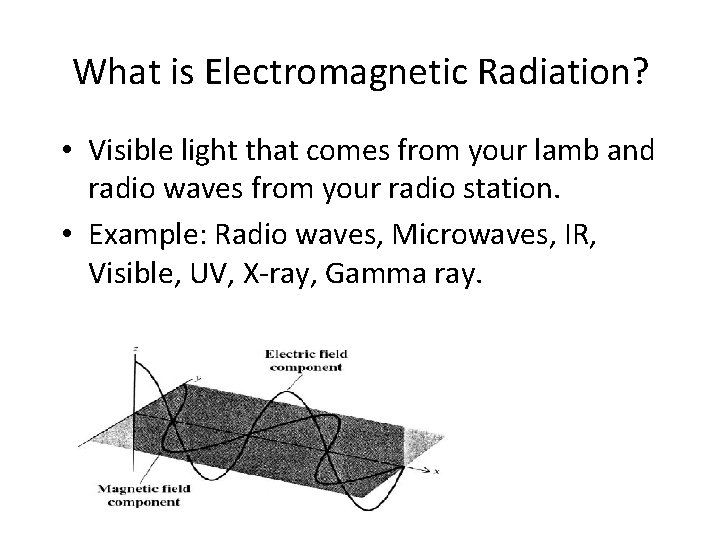
What is Electromagnetic Radiation? • Visible light that comes from your lamb and radio waves from your radio station. • Example: Radio waves, Microwaves, IR, Visible, UV, X-ray, Gamma ray.
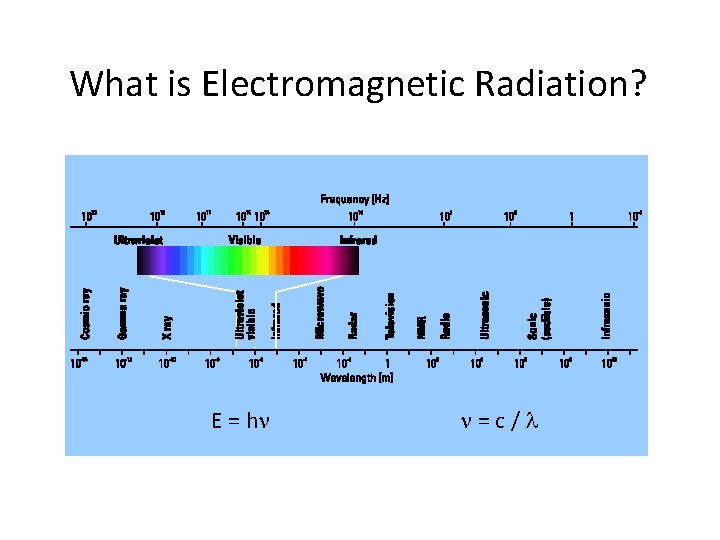
What is Electromagnetic Radiation? E = hn n=c/l
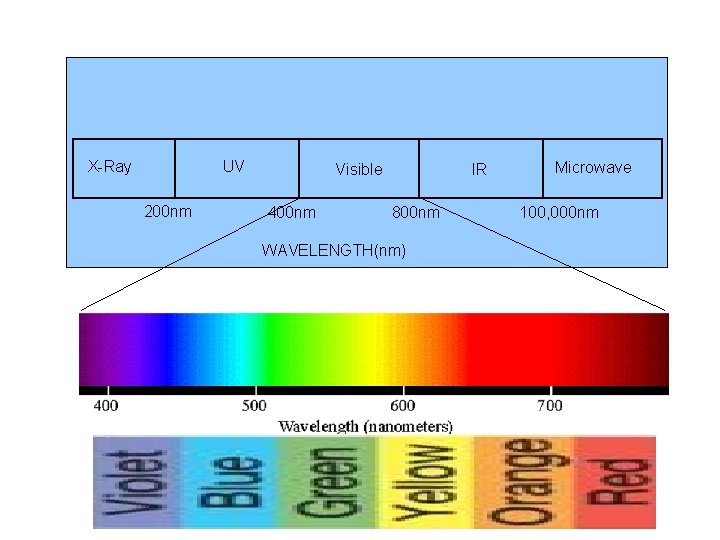
X-Ray UV 200 nm Visible 400 nm IR 800 nm WAVELENGTH(nm) Microwave 100, 000 nm
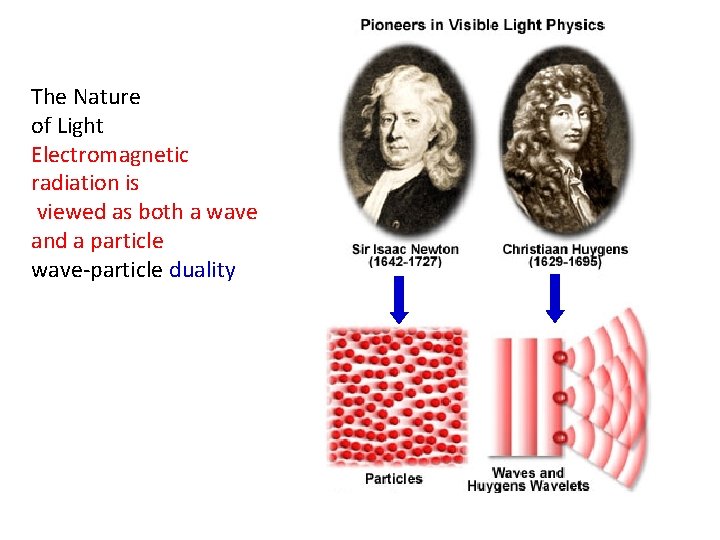
The Nature of Light Electromagnetic radiation is viewed as both a wave and a particle wave-particle duality
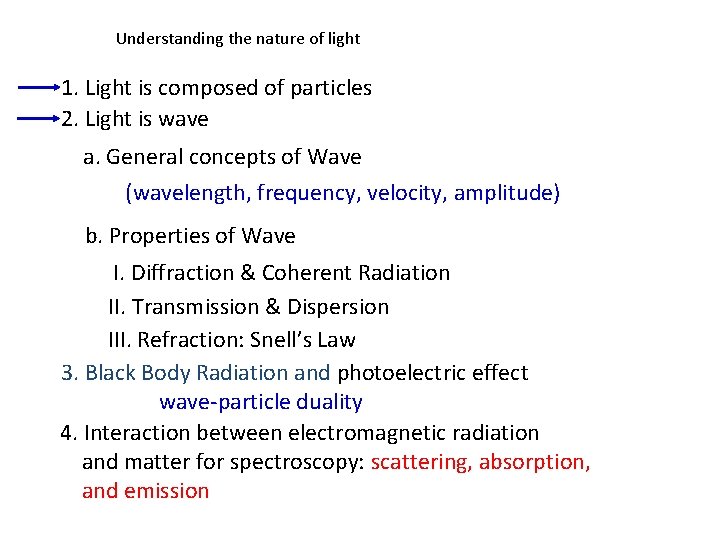
Understanding the nature of light 1. Light is composed of particles 2. Light is wave a. General concepts of Wave (wavelength, frequency, velocity, amplitude) b. Properties of Wave I. Diffraction & Coherent Radiation II. Transmission & Dispersion III. Refraction: Snell’s Law 3. Black Body Radiation and photoelectric effect wave-particle duality 4. Interaction between electromagnetic radiation and matter for spectroscopy: scattering, absorption, and emission
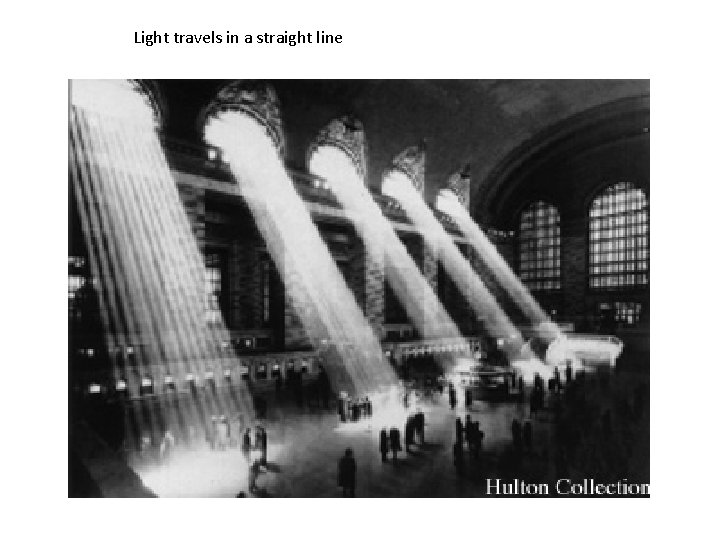
Light travels in a straight line
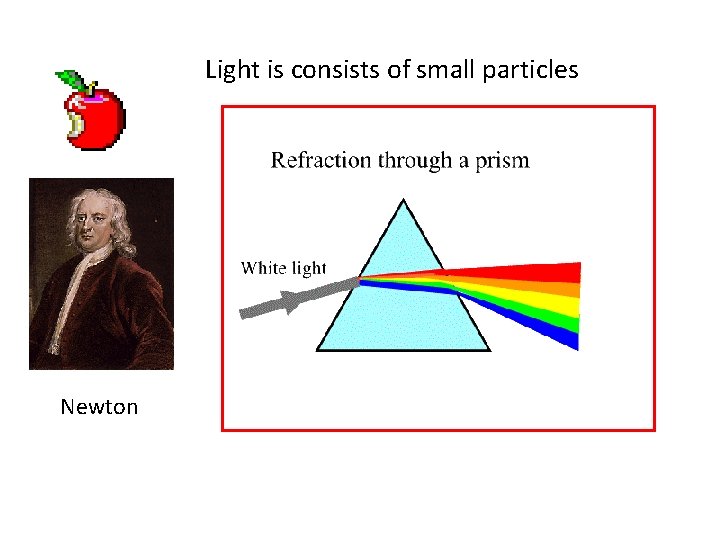
Light is consists of small particles Newton
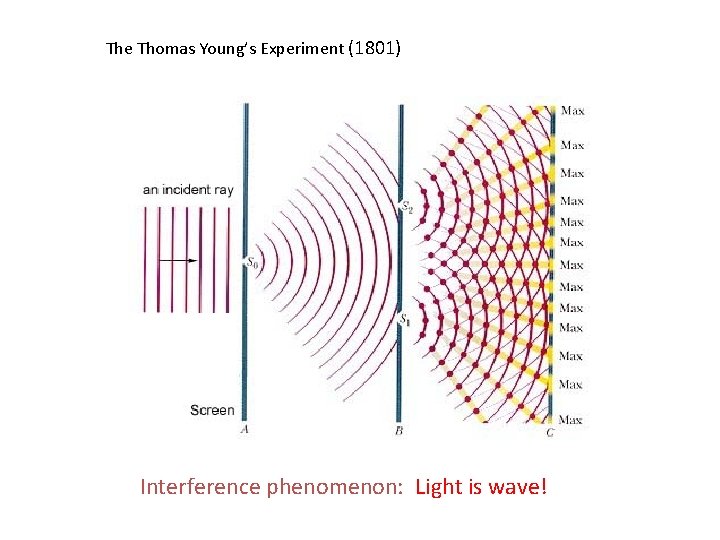
The Thomas Young’s Experiment (1801) Interference phenomenon: Light is wave!
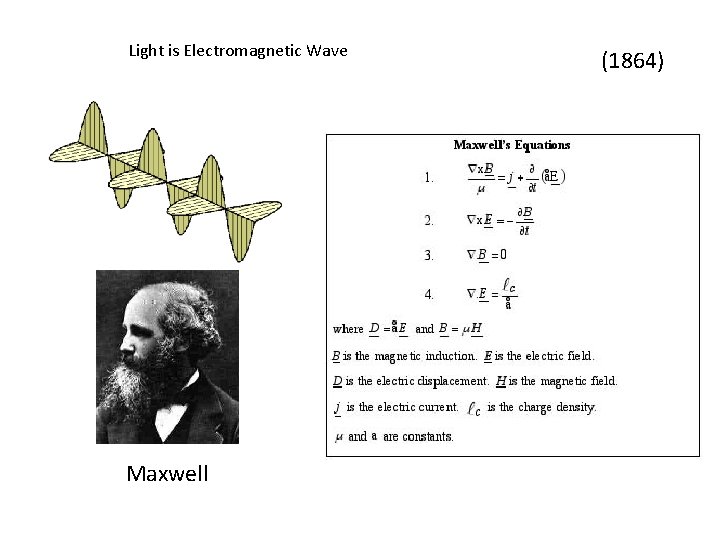
Light is Electromagnetic Wave Maxwell (1864)
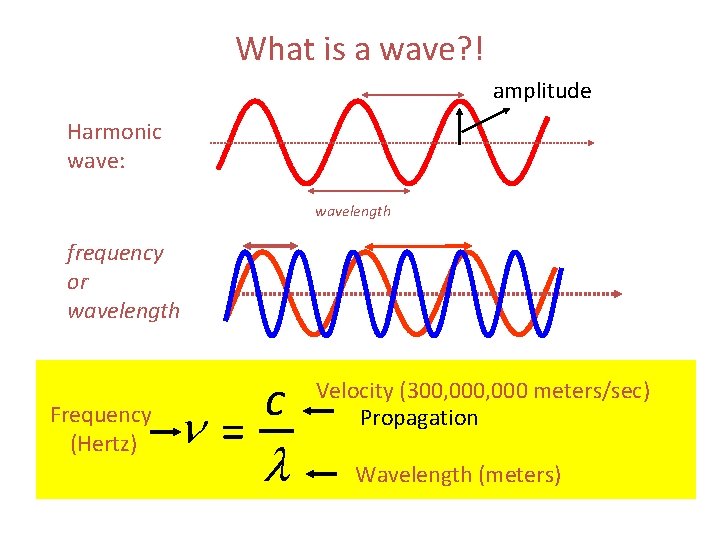
What is a wave? ! amplitude Harmonic wave: wavelength frequency or wavelength velocity = wavelength l Wavelength (meters) c Frequency frequency n= (Hertz) Velocity (300, 000 meters/sec) Propagation
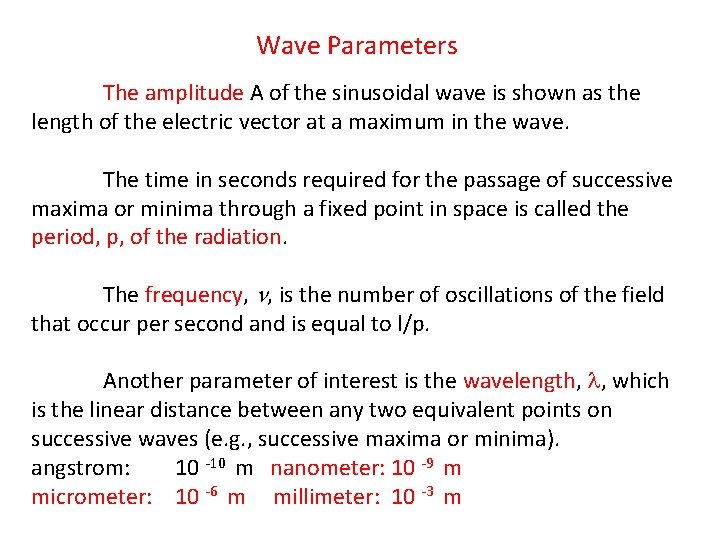
Wave Parameters The amplitude A of the sinusoidal wave is shown as the length of the electric vector at a maximum in the wave. The time in seconds required for the passage of successive maxima or minima through a fixed point in space is called the period, p, of the radiation. The frequency, n, is the number of oscillations of the field that occur per second and is equal to l/p. Another parameter of interest is the wavelength, l, which is the linear distance between any two equivalent points on successive waves (e. g. , successive maxima or minima). angstrom: 10 -10 m nanometer: 10 -9 m micrometer: 10 -6 m millimeter: 10 -3 m
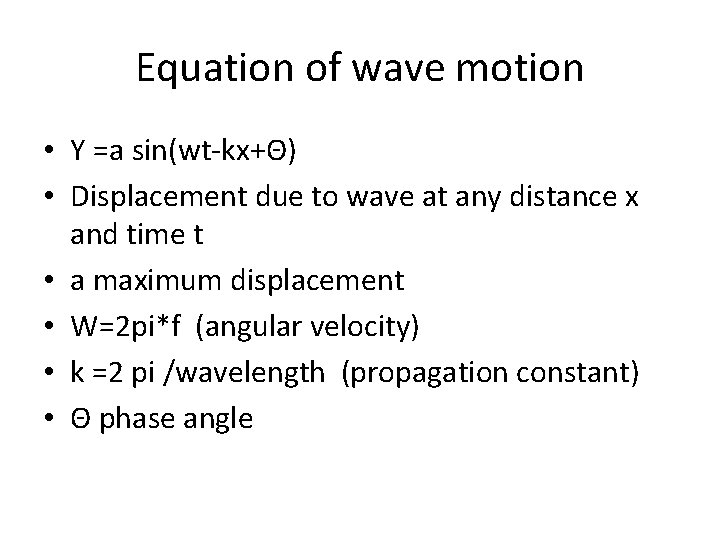
Equation of wave motion • Y =a sin(wt-kx+Θ) • Displacement due to wave at any distance x and time t • a maximum displacement • W=2 pi*f (angular velocity) • k =2 pi /wavelength (propagation constant) • Θ phase angle
Equation of wave motion • Mechanical wave • Sound wave • Electromagnetic wave
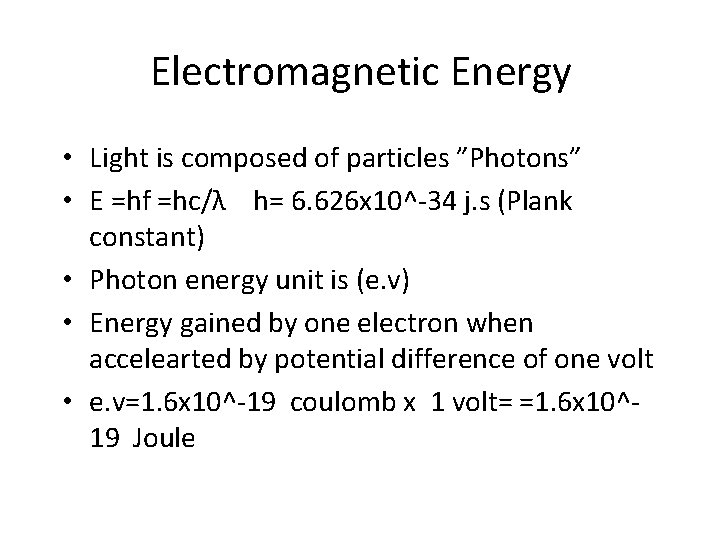
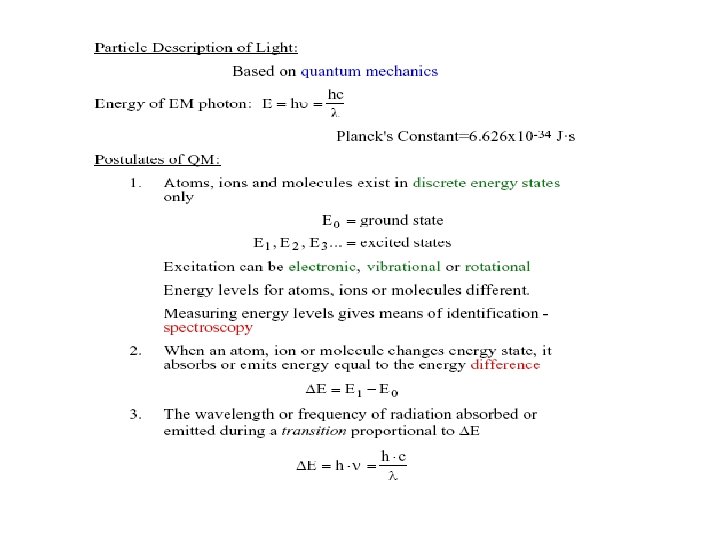
Electromagnetic Energy • Light is composed of particles ”Photons” • E =hf =hc/λ h= 6. 626 x 10^-34 j. s (Plank constant) • Photon energy unit is (e. v) • Energy gained by one electron when accelearted by potential difference of one volt • e. v=1. 6 x 10^-19 coulomb x 1 volt= =1. 6 x 10^19 Joule
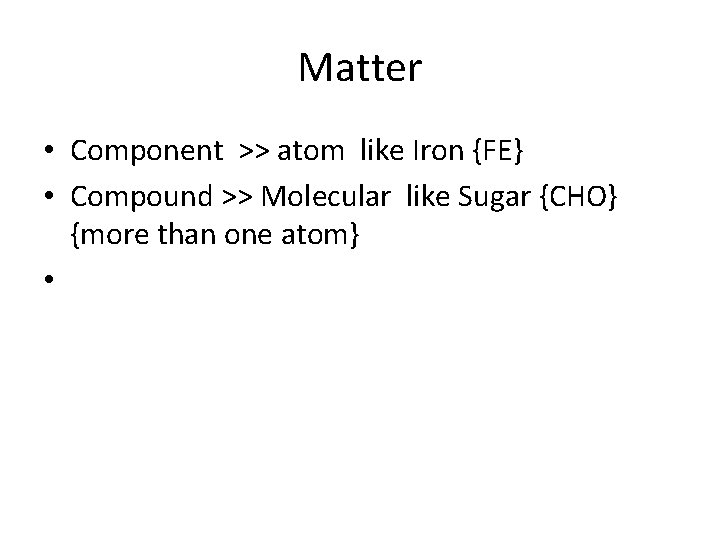
Matter • Component >> atom like Iron {FE} • Compound >> Molecular like Sugar {CHO} {more than one atom} •
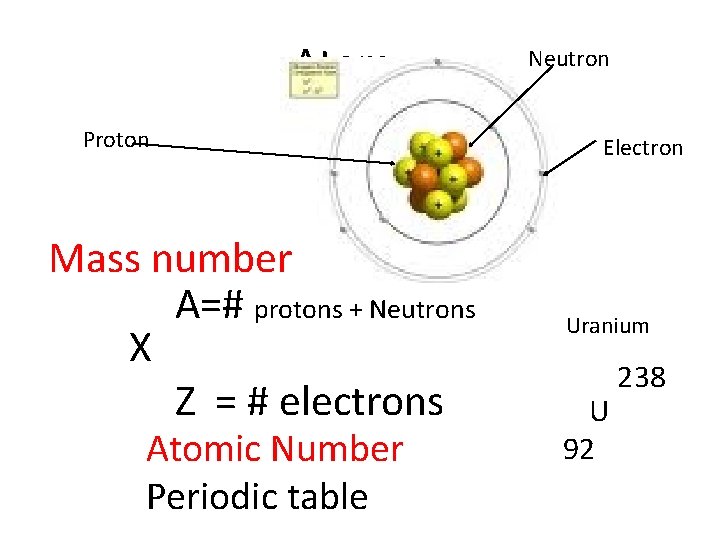
Atom Proton Mass number A=# protons + Neutrons X Z = # electrons Atomic Number Periodic table Neutron Electron Uranium U 92 238
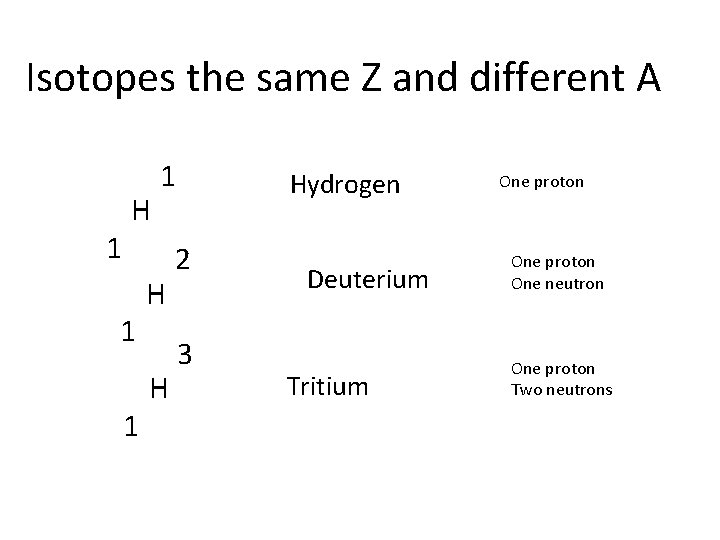
Isotopes the same Z and different A 1 H 1 1 1 H H Hydrogen 2 3 Deuterium Tritium One proton One neutron One proton Two neutrons
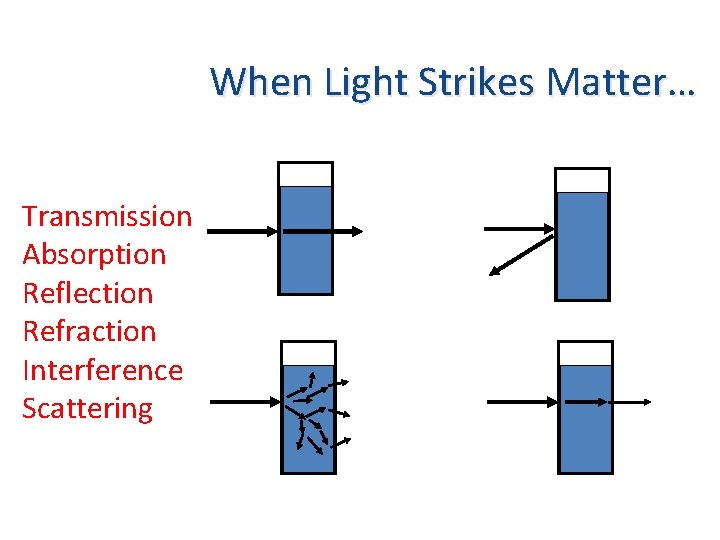
When Light Strikes Matter… Transmission Absorption Reflection Refraction Interference Scattering
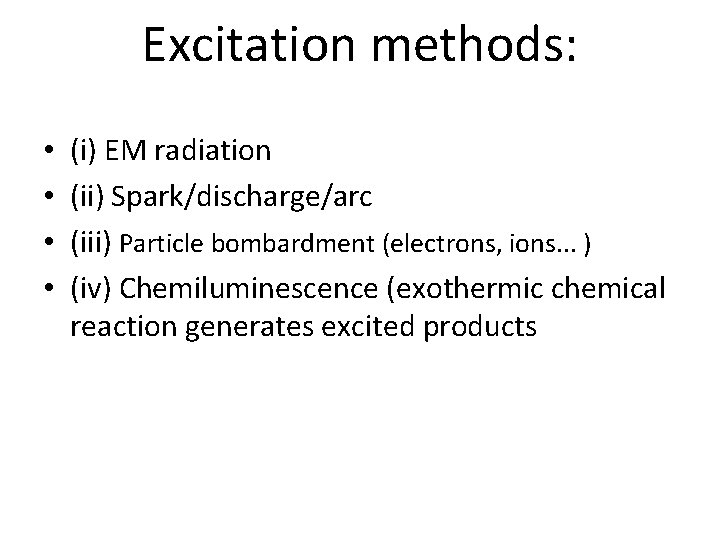
Excitation methods: • • (i) EM radiation (ii) Spark/discharge/arc (iii) Particle bombardment (electrons, ions. . . ) (iv) Chemiluminescence (exothermic chemical reaction generates excited products
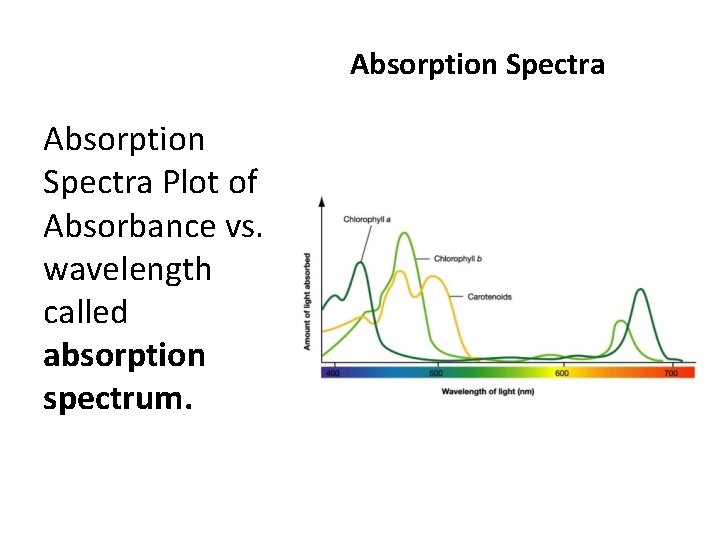
Absorption Spectra Plot of Absorbance vs. wavelength called absorption spectrum.
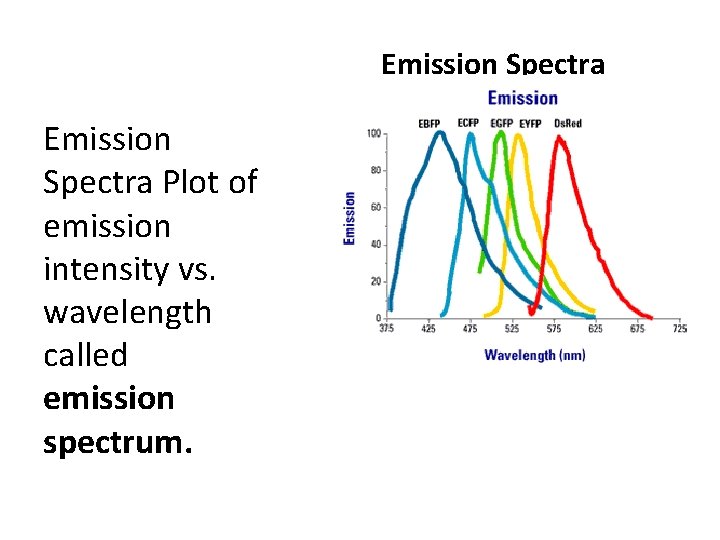
Emission Spectra Plot of emission intensity vs. wavelength called emission spectrum.
Question page 33 Example 2 • Given that the ionization potential of hydrogen atom is 13. 6 volt and the energy level of any………. . • Home work 1 , 2, 3 pages 39 and 40