
Introduction to Social Psychology What is social psychology
- Slides: 29
Introduction to Social Psychology
What is social psychology? Scientific study of the way in which people’s thoughts, feelings, and behaviour are influenced by the real or imagined presence of other people
Compared to other disciplines Sociology – looks at societies and groups Social psychology – looks at the way the environment affects the individual Personality psychology – looks at individual differences
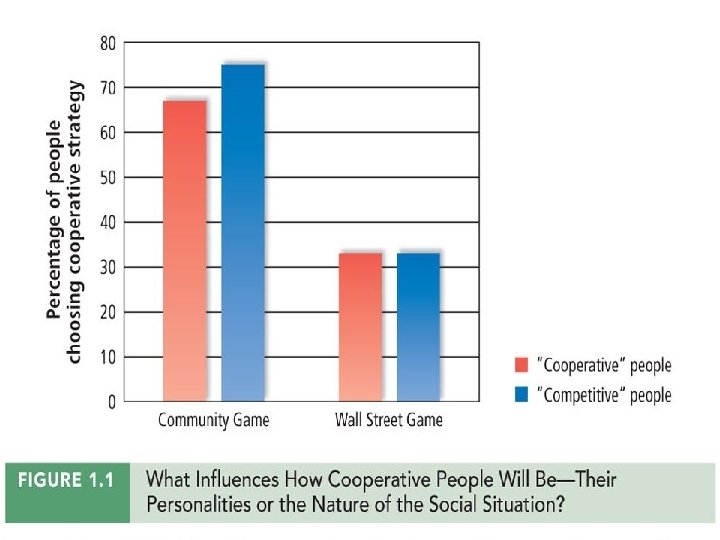
Question: How powerful is social influence? Competitive vs. cooperative
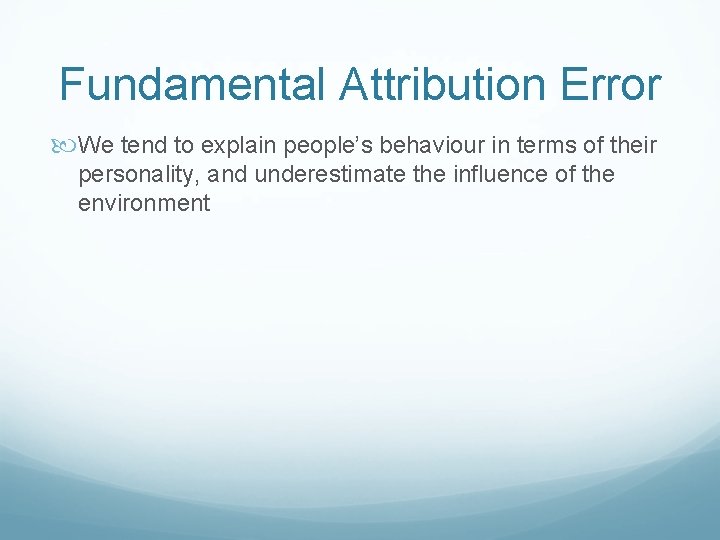
Fundamental Attribution Error We tend to explain people’s behaviour in terms of their personality, and underestimate the influence of the environment
Why do we make the fundamental attribution error? Makes us feel like we are more in control
Social Cognition
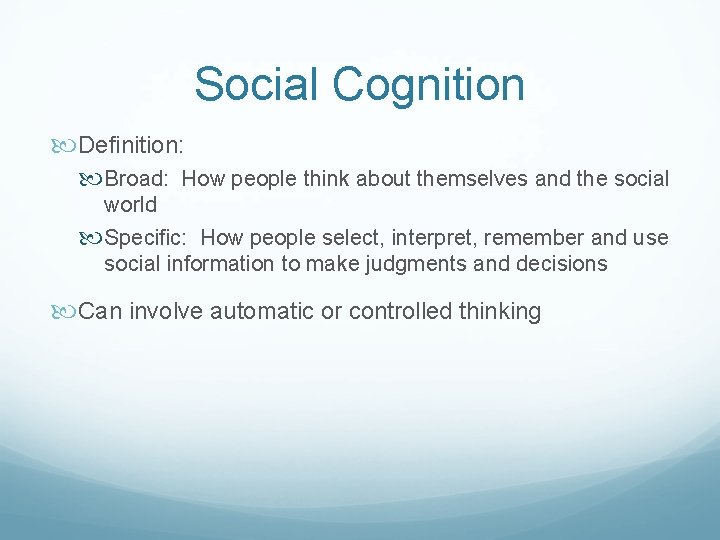
Social Cognition Definition: Broad: How people think about themselves and the social world Specific: How people select, interpret, remember and use social information to make judgments and decisions Can involve automatic or controlled thinking
Schemas Mental structures that people use to organize their knowledge about the world
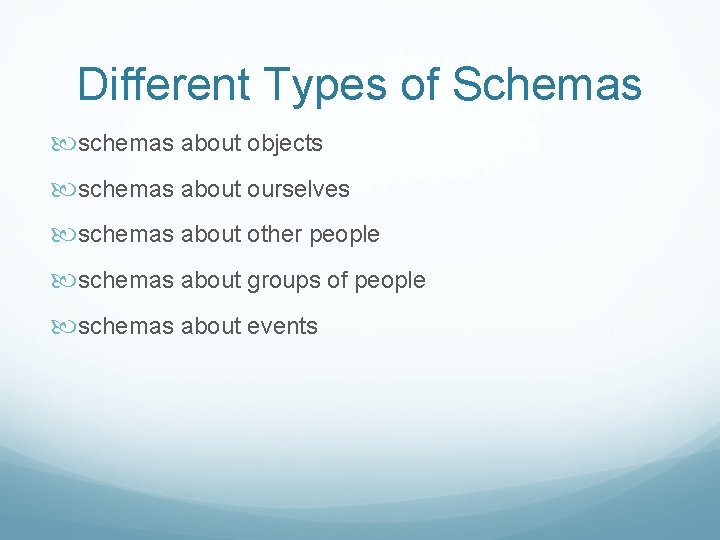
Different Types of Schemas schemas about objects schemas about ourselves schemas about other people schemas about groups of people schemas about events
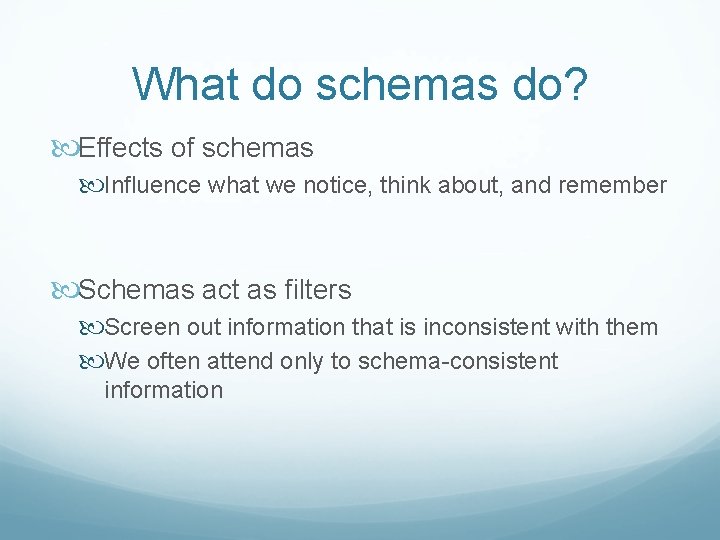
What do schemas do? Effects of schemas Influence what we notice, think about, and remember Schemas act as filters Screen out information that is inconsistent with them We often attend only to schema-consistent information
Why do we have schemas? We need to be able to relate new experiences to past ones. We need to interpret ambiguous information
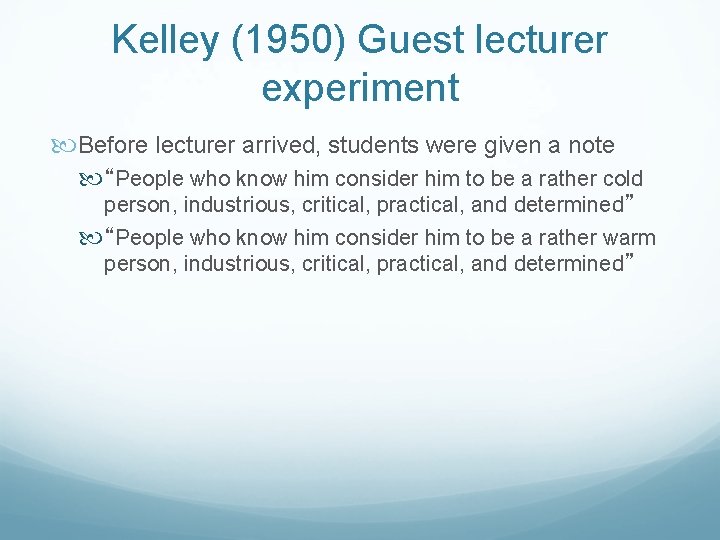
Kelley (1950) Guest lecturer experiment Before lecturer arrived, students were given a note “People who know him consider him to be a rather cold person, industrious, critical, practical, and determined” “People who know him consider him to be a rather warm person, industrious, critical, practical, and determined”
Kelley (1950) Guest lecturer experiment Asked to rate lecturer on several traits Humourous, sociable, considerate Results
Accessibility and Schemas Accessibility: the extent to which schemas and concepts are at the forefront of people’s minds The more accessible a schema is, the more likely we will be to apply that schema when making judgments
Accessibility and schemas Chronic accessibility: Due to past experience Temporary accessibility Priming: bringing a schema or concept to the forefront of people’s minds
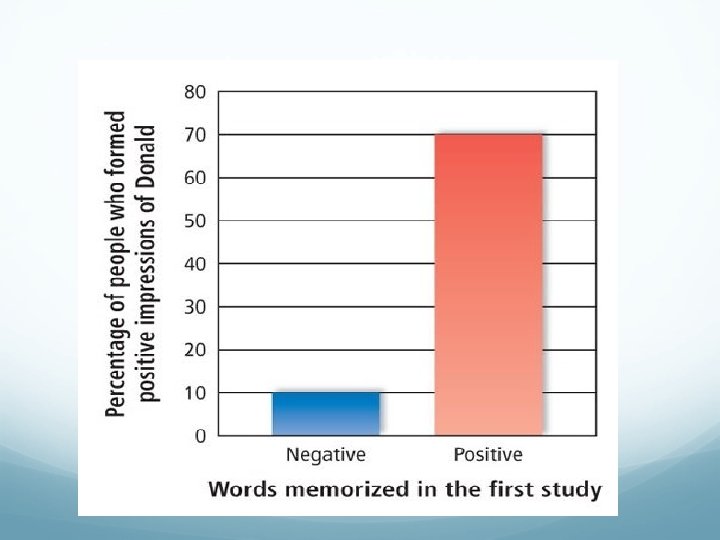
Higgins, Rholes and Jones, 1977 “Donald” experiment Cover story: participants would take part 2 studies: 1) Perception experiment - Memorize words while identifying colours 2) Reading comprehension - Read Donald passage and rated him
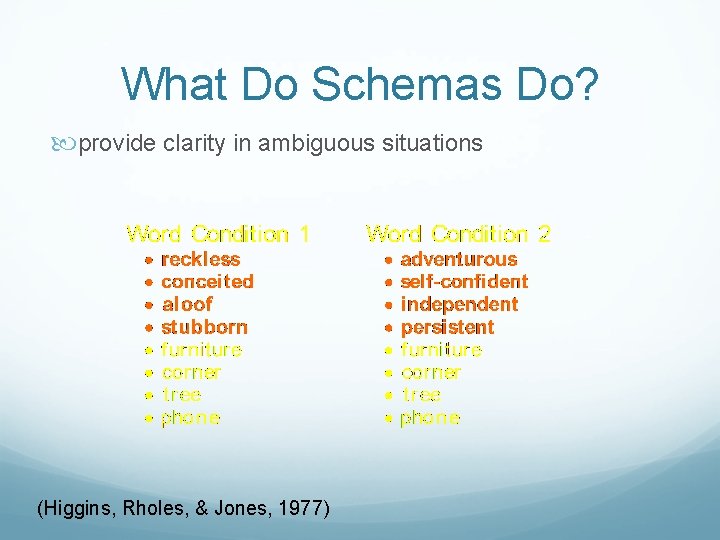
What Do Schemas Do? provide clarity in ambiguous situations (Higgins, Rholes, & Jones, 1977)
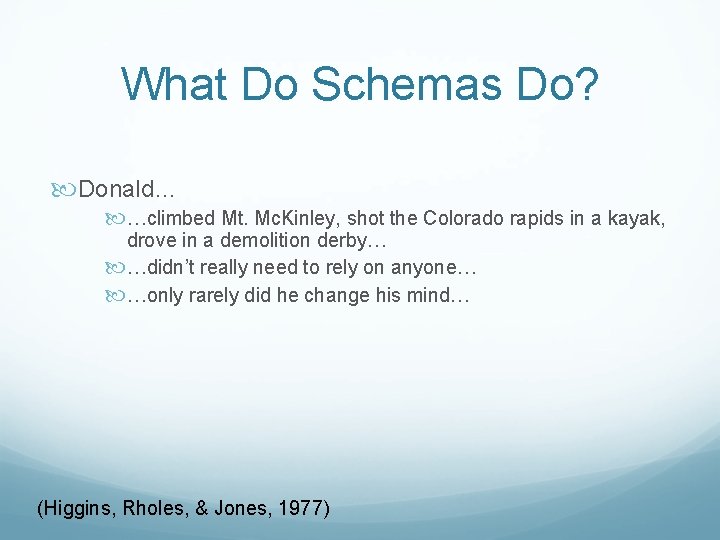
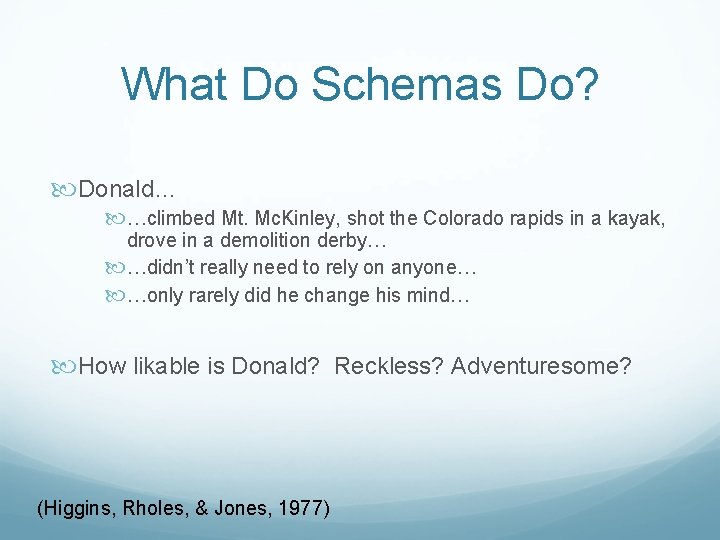
What Do Schemas Do? Donald… …climbed Mt. Mc. Kinley, shot the Colorado rapids in a kayak, drove in a demolition derby… …didn’t really need to rely on anyone… …only rarely did he change his mind… (Higgins, Rholes, & Jones, 1977)
What Do Schemas Do? Donald… …climbed Mt. Mc. Kinley, shot the Colorado rapids in a kayak, drove in a demolition derby… …didn’t really need to rely on anyone… …only rarely did he change his mind… How likable is Donald? Reckless? Adventuresome? (Higgins, Rholes, & Jones, 1977)
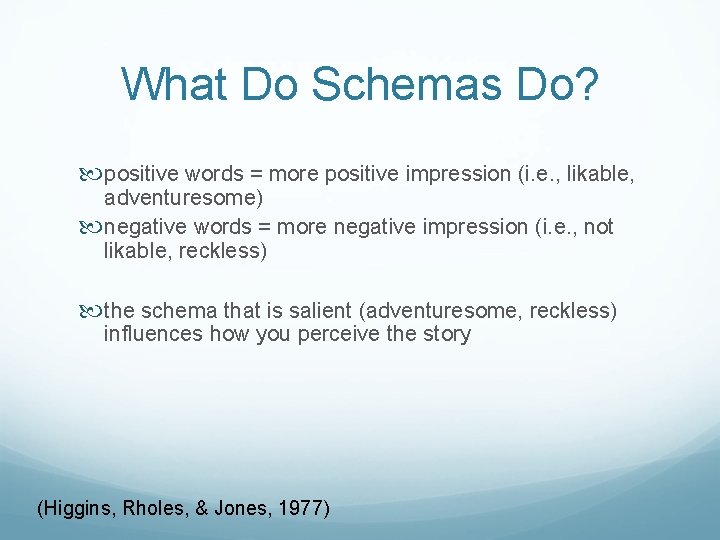
What Do Schemas Do? positive words = more positive impression (i. e. , likable, adventuresome) negative words = more negative impression (i. e. , not likable, reckless) the schema that is salient (adventuresome, reckless) influences how you perceive the story (Higgins, Rholes, & Jones, 1977)
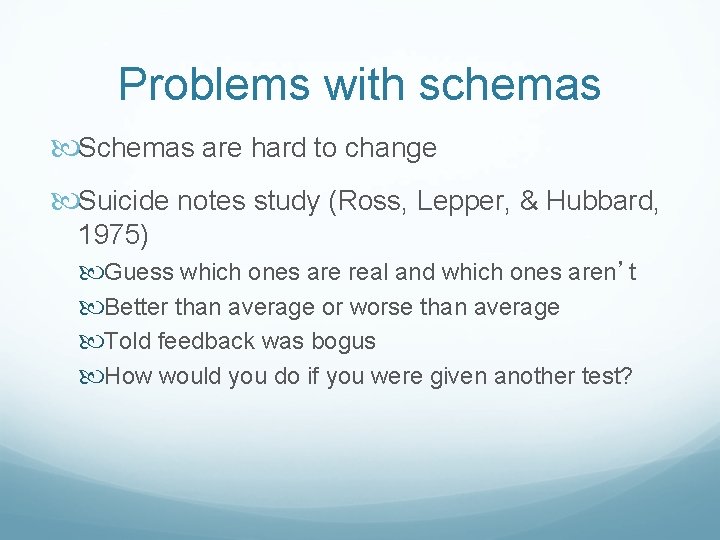
Problems with schemas Schemas are hard to change Suicide notes study (Ross, Lepper, & Hubbard, 1975) Guess which ones are real and which ones aren’t Better than average or worse than average Told feedback was bogus How would you do if you were given another test?
Perseverance effect: beliefs persist even after disconfirming evidence
Problems with Schemas schemas are resistant to change but, people were motivated to maintain the schema (Ross, Lepper, & Hubbard, 1975) participants shown research findings that either a) non-risky firefighters make the best b) risky firefighters make the best told the findings were bogus participants held on to their original beliefs (Anderson, Lepper, & Ross, 1980)
Why are schemas so hard to change? Why? Human memory is reconstructive, adding information to that which is actually noticed Reconstructions are schema-consistent, further reinforcing the schema
Self-fulfilling prophecy Jacobson (1968) Administered IQ tests Randomly assigned students to be “bloomers” Tested IQ at end of year Results?
Blog Assignment Think of a time when you used schemas or the fundamental attribution error. Blog about it! Read this article http: //online. wsj. com/news/articles/SB 100014240527487044 36004576298962165925364? mod=WSJ_Life. Style_Lifestyle _6&mg=reno 64 wsj&url=http%3 A%2 F%2 Fonline. wsj. com%2 Farticle%2 FSB 10001424052748704436004576298962165925364. html%3 Fmod%3 DWSJ_Life. Style_Lifestyle_6 Have you ever been impacted by group think?