
Introduction to Simple Machines What are simple machines

- Slides: 22
Introduction to Simple Machines
What are “simple” machines? Simple machines are machines with few or no moving parts that are used to make work easier by changing the size or the direction of a force. When you use a machine, you do the work on the machine, and the machine does the work on something else.
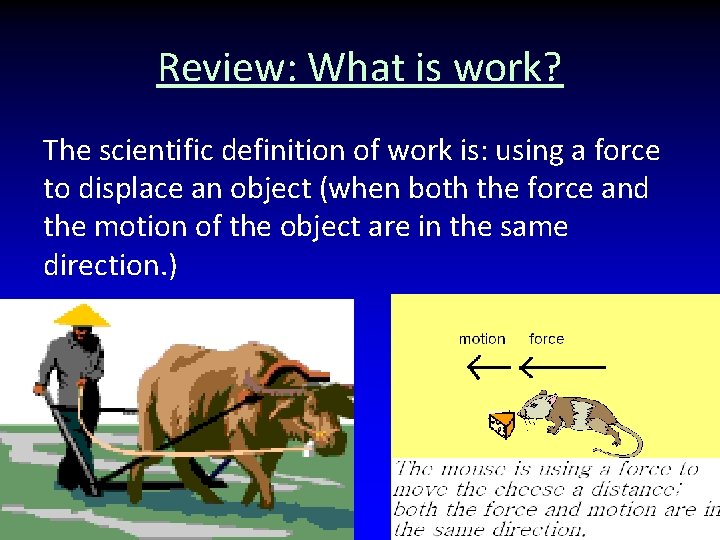
Review: What is work? The scientific definition of work is: using a force to displace an object (when both the force and the motion of the object are in the same direction. ) 3
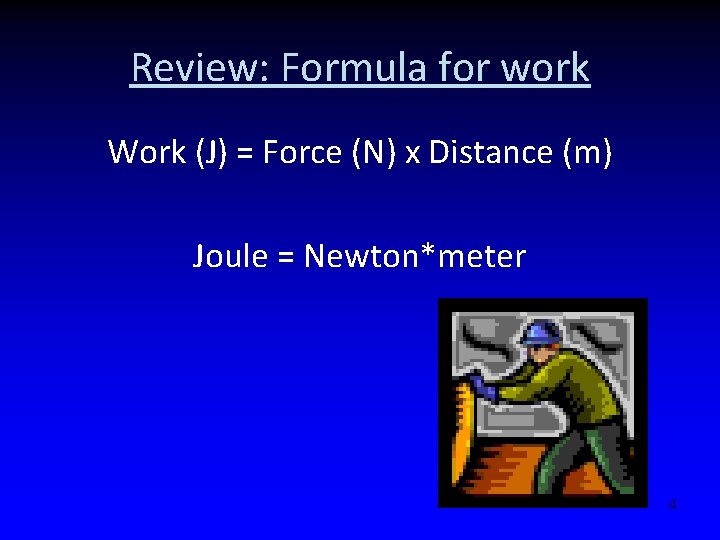
Review: Formula for work Work (J) = Force (N) x Distance (m) Joule = Newton*meter 4
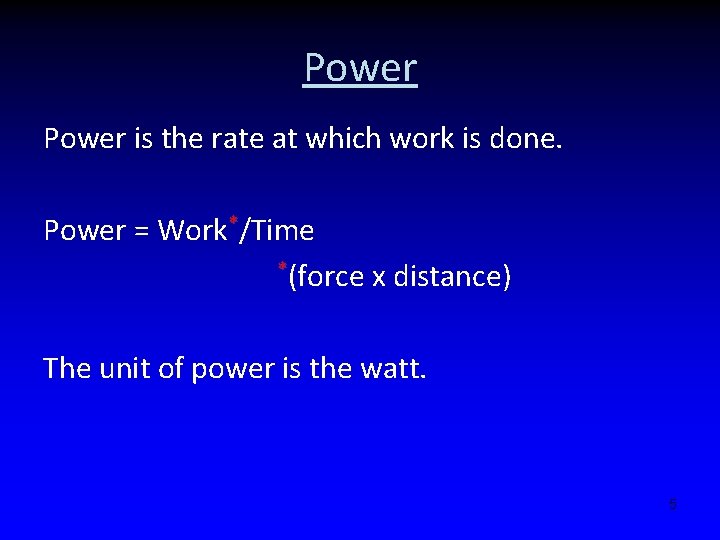
Power is the rate at which work is done. Power = Work*/Time *(force x distance) The unit of power is the watt. 5
6 Types of Simple Machines Wedge Wheel and Axle Lever Inclined Plane Screw Pulley
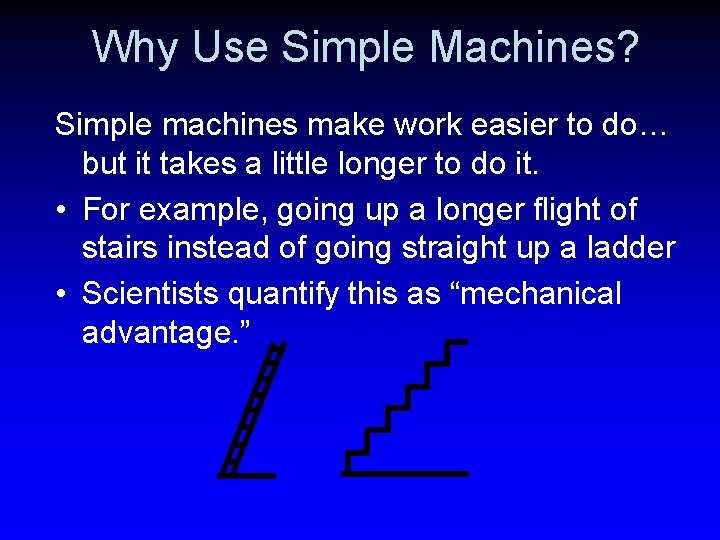
Why Use Simple Machines? Simple machines make work easier to do… but it takes a little longer to do it. • For example, going up a longer flight of stairs instead of going straight up a ladder • Scientists quantify this as “mechanical advantage. ”
Ideal vs. Actual Mechanical Advantage • Ideal Mechanical Advantage (IMA) stands for the number of times your input force is multiplied under ideal conditions (no friction). . • Actual Mechanical Advantage (AMA) stands for the number of times your input force is multiplied under real world conditions (friction is present). Mechanical Advantage Animation
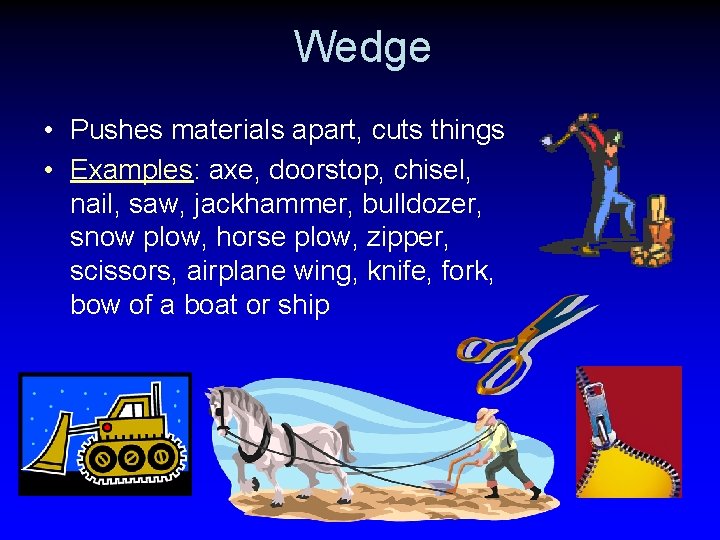
Wedge • Pushes materials apart, cuts things • Examples: axe, doorstop, chisel, nail, saw, jackhammer, bulldozer, snow plow, horse plow, zipper, scissors, airplane wing, knife, fork, bow of a boat or ship
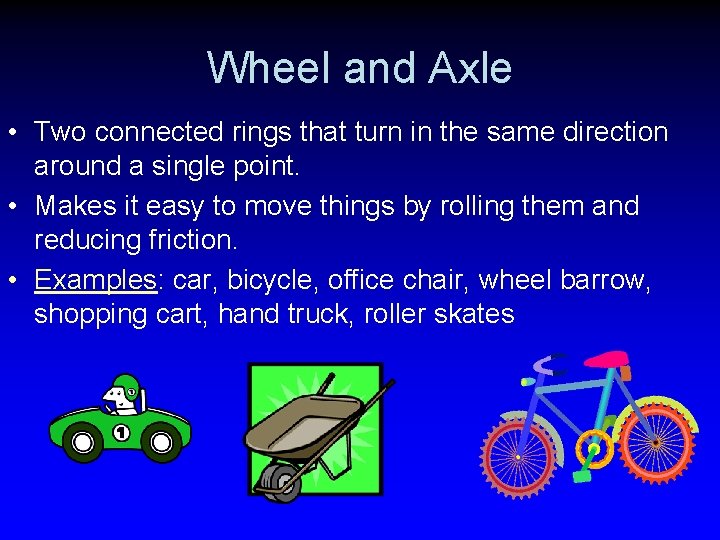
Wheel and Axle • Two connected rings that turn in the same direction around a single point. • Makes it easy to move things by rolling them and reducing friction. • Examples: car, bicycle, office chair, wheel barrow, shopping cart, hand truck, roller skates
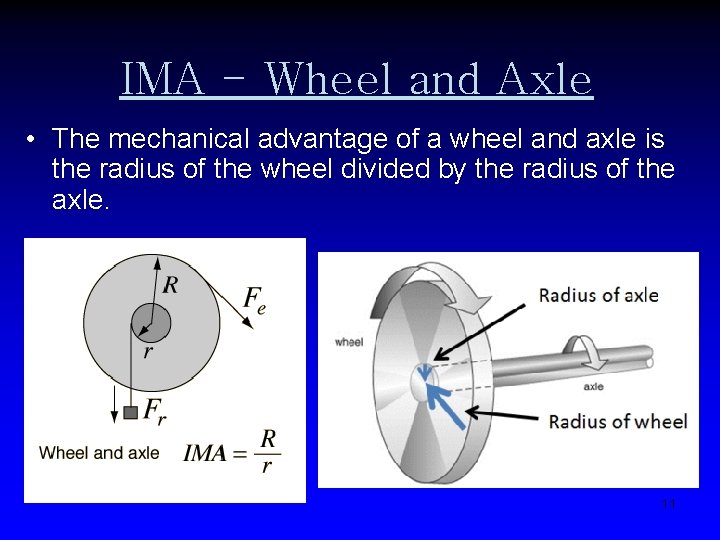
IMA - Wheel and Axle • The mechanical advantage of a wheel and axle is the radius of the wheel divided by the radius of the axle. 11
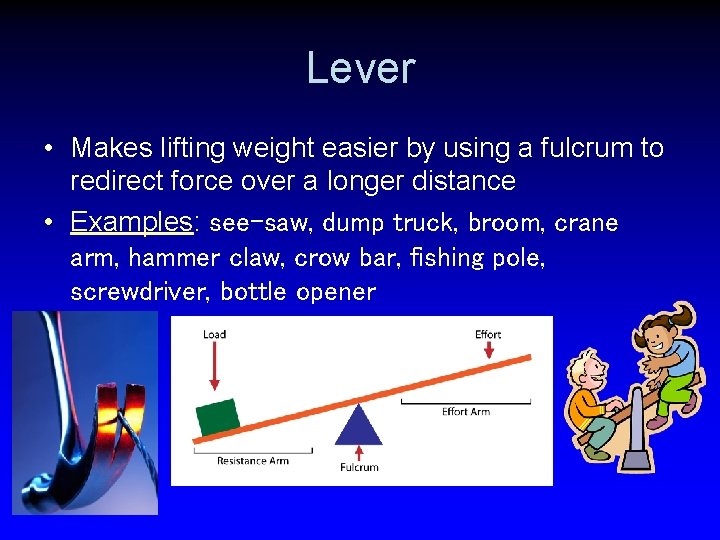
Lever • Makes lifting weight easier by using a fulcrum to redirect force over a longer distance • Examples: see-saw, dump truck, broom, crane arm, hammer claw, crow bar, fishing pole, screwdriver, bottle opener
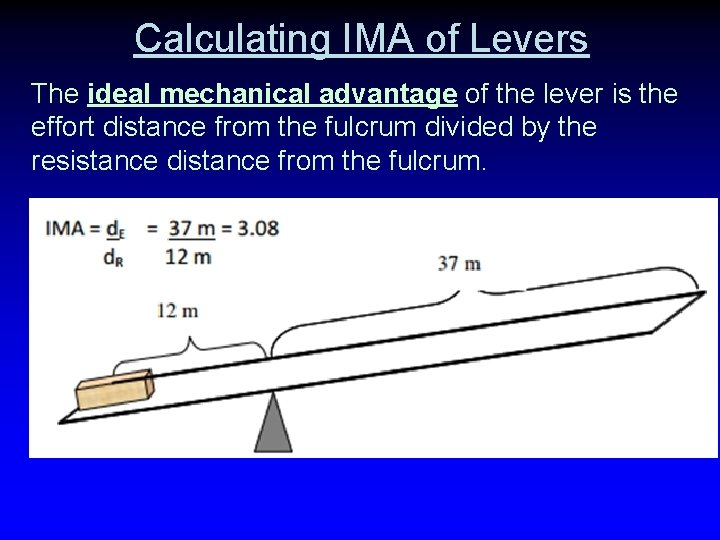
Calculating IMA of Levers The ideal mechanical advantage of the lever is the effort distance from the fulcrum divided by the resistance distance from the fulcrum.
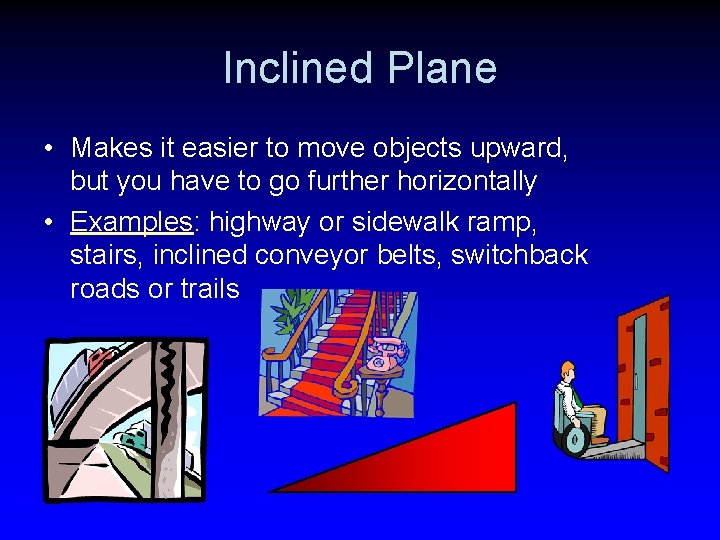
Inclined Plane • Makes it easier to move objects upward, but you have to go further horizontally • Examples: highway or sidewalk ramp, stairs, inclined conveyor belts, switchback roads or trails
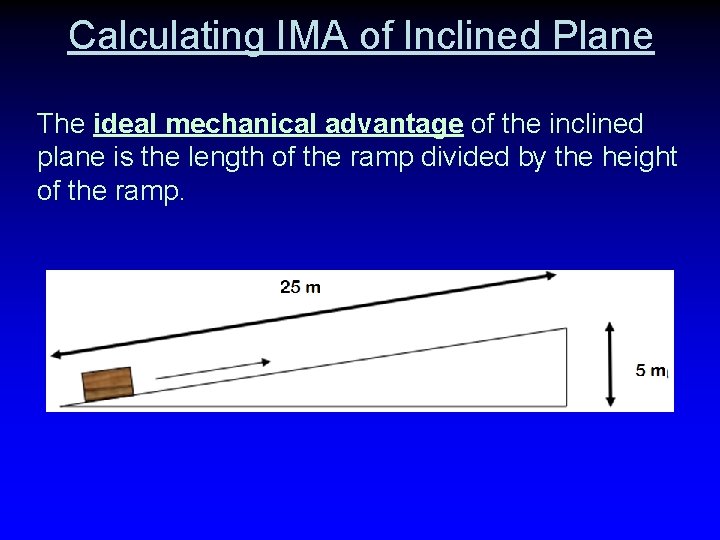
Calculating IMA of Inclined Plane The ideal mechanical advantage of the inclined plane is the length of the ramp divided by the height of the ramp.
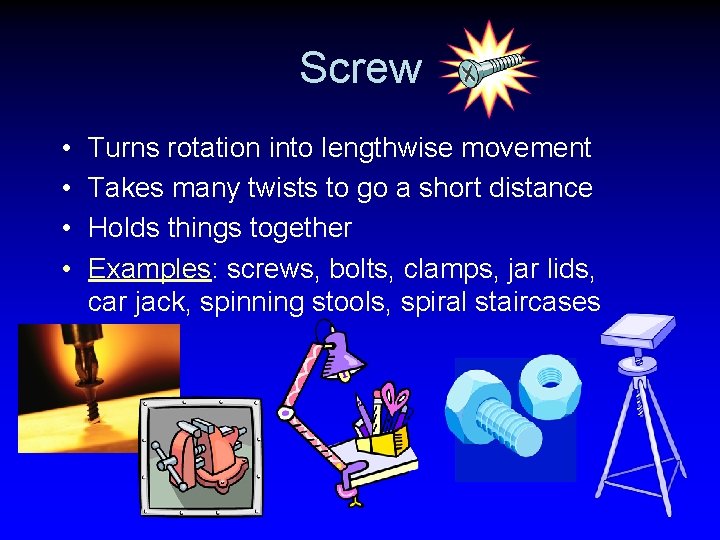
Screw • • Turns rotation into lengthwise movement Takes many twists to go a short distance Holds things together Examples: screws, bolts, clamps, jar lids, car jack, spinning stools, spiral staircases
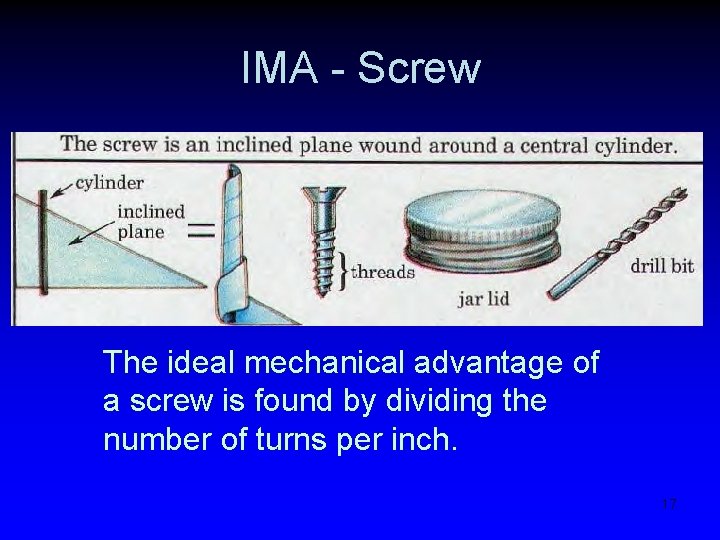
IMA - Screw The ideal mechanical advantage of a screw is found by dividing the number of turns per inch. 17
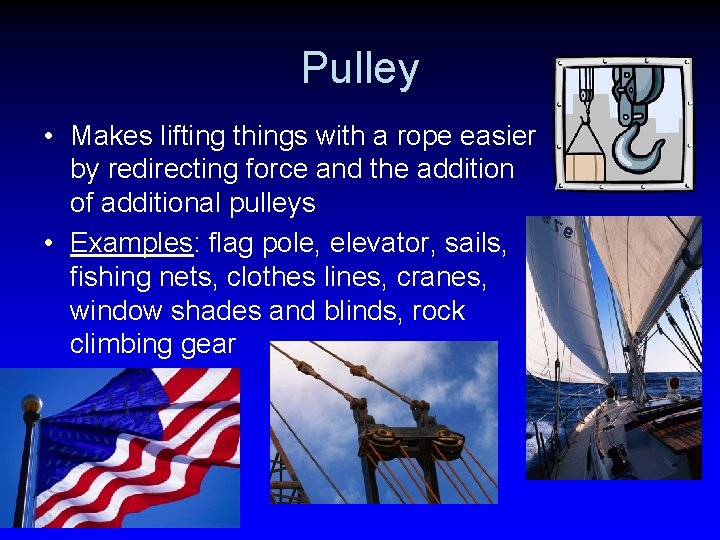
Pulley • Makes lifting things with a rope easier by redirecting force and the addition of additional pulleys • Examples: flag pole, elevator, sails, fishing nets, clothes lines, cranes, window shades and blinds, rock climbing gear
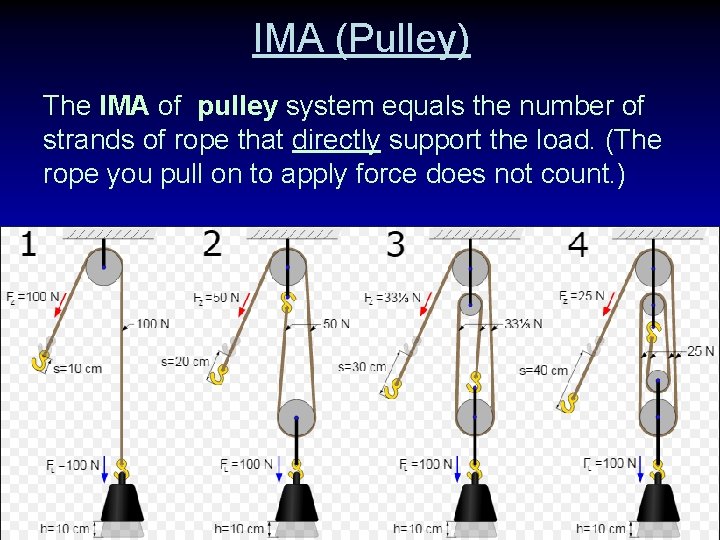
IMA (Pulley) The IMA of pulley system equals the number of strands of rope that directly support the load. (The rope you pull on to apply force does not count. )
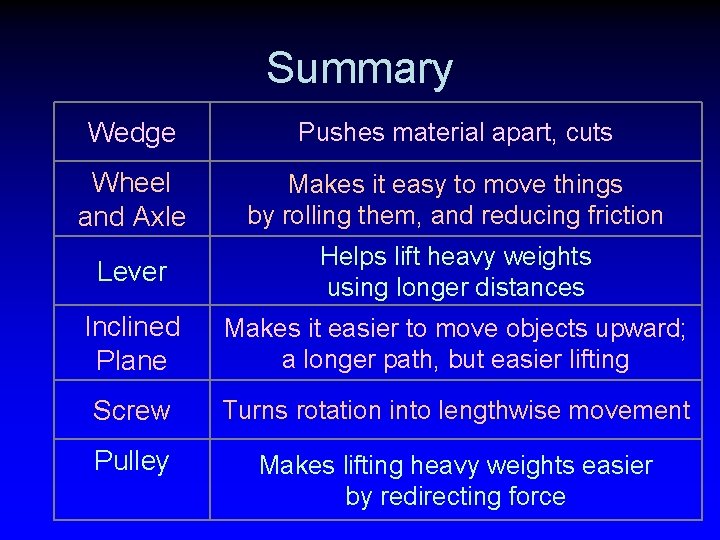
Summary Wedge Pushes material apart, cuts Wheel and Axle Makes it easy to move things by rolling them, and reducing friction Lever Helps lift heavy weights using longer distances Inclined Plane Makes it easier to move objects upward; a longer path, but easier lifting Screw Turns rotation into lengthwise movement Pulley Makes lifting heavy weights easier by redirecting force
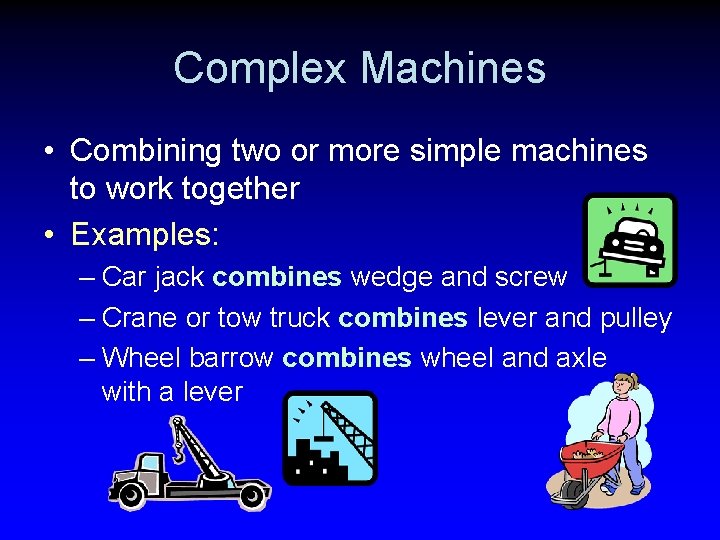
Complex Machines • Combining two or more simple machines to work together • Examples: – Car jack combines wedge and screw – Crane or tow truck combines lever and pulley – Wheel barrow combines wheel and axle with a lever
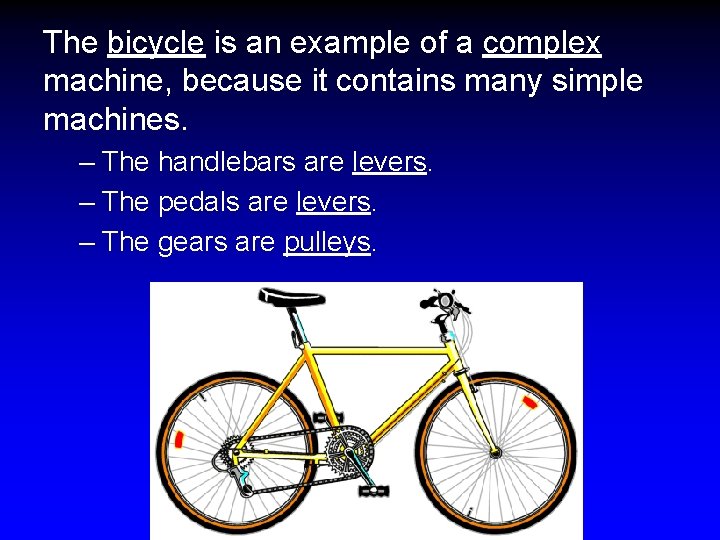
The bicycle is an example of a complex machine, because it contains many simple machines. – The handlebars are levers. – The pedals are levers. – The gears are pulleys.