
Introduction to Sensory Circuits This presentation will help
- Slides: 8
Introduction to Sensory Circuits This presentation will help: • Introduce staff to sensory circuits • Explain the benefits of sensory circuits • Direct staff to further information about sensory circuits learningthroughmovement. lgfl. net © 2019 London Grid for Learning
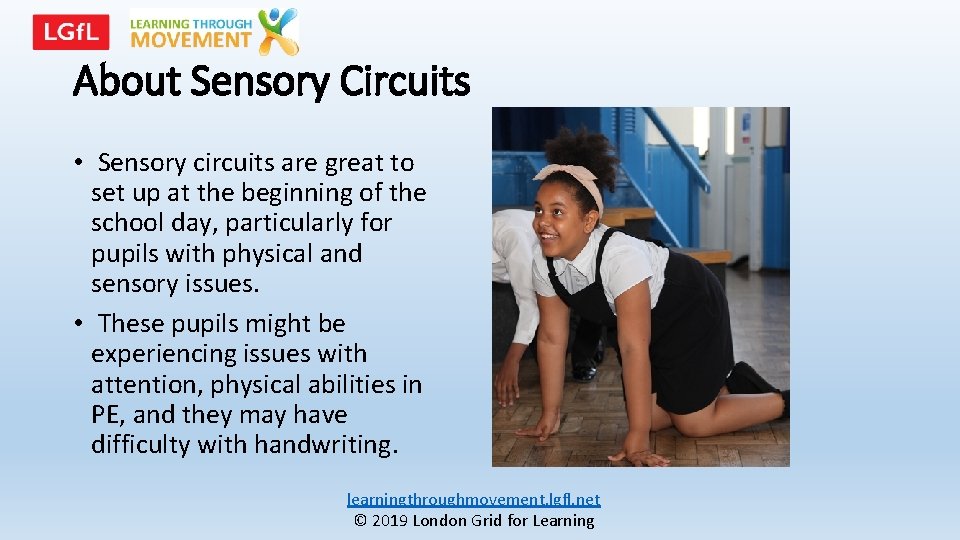
About Sensory Circuits • Sensory circuits are great to set up at the beginning of the school day, particularly for pupils with physical and sensory issues. • These pupils might be experiencing issues with attention, physical abilities in PE, and they may have difficulty with handwriting. learningthroughmovement. lgfl. net © 2019 London Grid for Learning
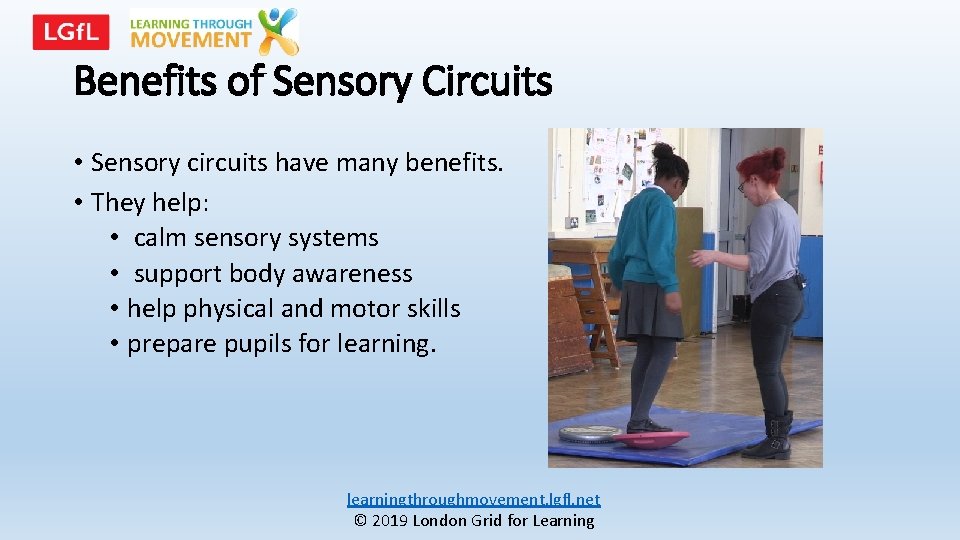
Benefits of Sensory Circuits • Sensory circuits have many benefits. • They help: • calm sensory systems • support body awareness • help physical and motor skills • prepare pupils for learningthroughmovement. lgfl. net © 2019 London Grid for Learning
Equipment for Sensory Circuits • Sensory circuits can be set up with cheap equipment, much of which you may already have, and they can be completed in a larger space, such as the school hall. • You need equipment like balance boards, exercise balls, and skipping ropes. • This equipment can be used in multiple ways, it doesn’t need to be expensive and you don’t need a lot of it. learningthroughmovement. lgfl. net © 2019 London Grid for Learning
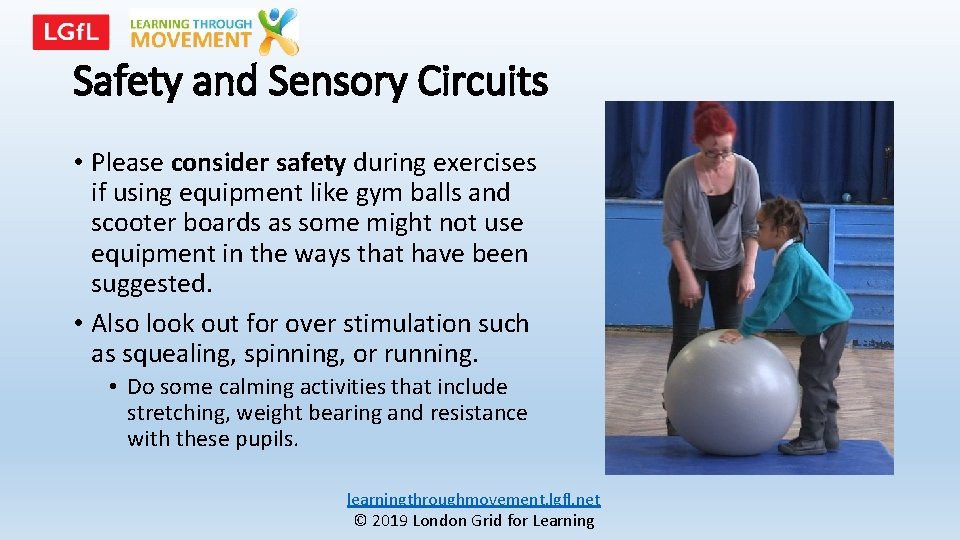
Safety and Sensory Circuits • Please consider safety during exercises if using equipment like gym balls and scooter boards as some might not use equipment in the ways that have been suggested. • Also look out for over stimulation such as squealing, spinning, or running. • Do some calming activities that include stretching, weight bearing and resistance with these pupils. learningthroughmovement. lgfl. net © 2019 London Grid for Learning
Example Sensory Circuits • An example sensory circuit might have 5 stations, each with a piece of equipment. • Children can do an exercise using a piece of equipment on every station for a short length of time until they move onto the next station. • Each piece of equipment can be used in many ways in different circuits to support different movements. learningthroughmovement. lgfl. net © 2019 London Grid for Learning
Example Sensory Circuits The equipment we might use in an example circuit includes the below, but you can use many other items: • Scooter board – a child could be on their front pulling with hands to support • Gym ball – a child could sit on a gym ball and bounce • Skipping rope – a child could lay it down and jump side to side • Balance board – a child could balance on two feet and stand • Bean bags or balls – a child could lift 2 balls or beanbags above their head 10 times learningthroughmovement. lgfl. net © 2019 London Grid for Learning
More on Sensory Circuits • We have created a resource sheet which lists equipment that can be used in sensory circuits and the many different ways each piece can be used to support a range of skills. • Sensory circuits can make such a difference to students with physical and sensory needs that we urge you to use these, alongside other quality resources, to support pupils in your school develop and learn • Sensory Circuits: A Sensory Motor Skills Programme for Children by Jane Horwood is a good investment for getting started learningthroughmovement. lgfl. net © 2019 London Grid for Learning