
Introduction to Security Chapter 4 Legal and Ethical
- Slides: 22
Introduction to Security Chapter 4 Legal and Ethical Considerations Prepared by: Matt J. Mc. Carthy 1
Law & Liability in the U. S. Criminal Law: deals with offenses against the public (crimes) and fixes punishments for them ¡ Civil Law: deals with offenses against individuals, called “torts”, and seeks restitution for the victim ¡ Prepared by: Matt J. Mc. Carthy 2
3 Categories of Civil Offenses: Strict liability – refers to instances where a person is held liable even though they not have knowingly done anything wrong ¡ Intentional Tort – an illegal act committed on purpose; may be both criminal and civil in nature ¡ Negligence – a failure to use due care to prevent foreseeable injury/ damages ¡ Prepared by: Matt J. Mc. Carthy 3
Elements of Negligent Liability o There are differences from state to state in regards to what constitutes negligent liability. o There are, however, 5 basic elements to most definitions of negligent liability… Prepared by: Matt J. Mc. Carthy 4
Elements of Negligent Liability ü Existence of some duty owed ü Foreseeable likelihood of the incident occurring ü Failure to meet a reasonable standard of care ü Proximate results – injury resulted from the failure to protect ü Damages Prepared by: Matt J. Mc. Carthy 5
Common Civil Lawsuits Brought Against Private Security: In order for private security to protect itself against lawsuits, it is imperative that they understand what lawsuits are commonly brought against them. ¡ In this way, we can structure training to those areas that we typically encounter legal problems in. ¡ Prepared by: Matt J. Mc. Carthy 6
Common Civil Lawsuits Brought Against Private Security: ü Assault & Battery ü Defamation ü False Imprisonment ü Intentional Infliction of Emotional Distress ü Invasion of Privacy ü Malicious Prosecution ü Negligence Prepared by: Matt J. Mc. Carthy 7
The Civil Rights Act - Section 1983 ¡ This act, passed in 1871, says that anyone acting under the authority of local or state law who violates another person’s constitutional rights, can be sued. Prepared by: Matt J. Mc. Carthy 8
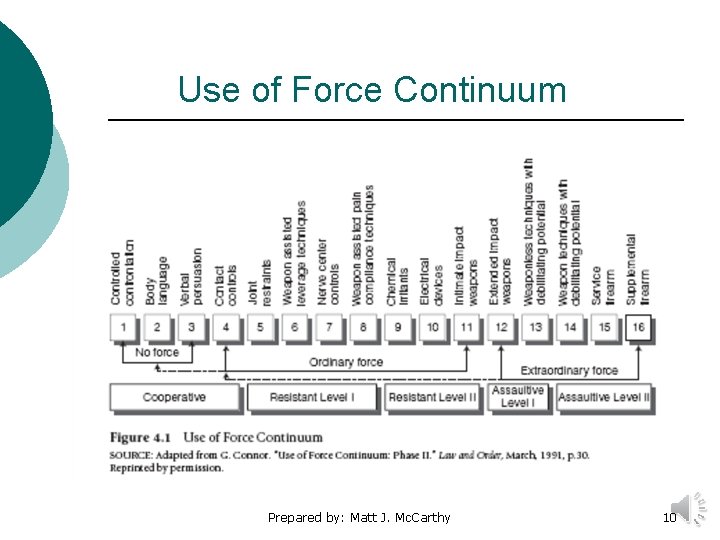
The Use of Force Security officers are sometimes required to use force to do their jobs. ¡ Anytime an officer uses force, they greatly increase their risk of being sued. ¡ Thus, it is imperative that officers follow a use of force continuum. ¡ Prepared by: Matt J. Mc. Carthy 9
Use of Force Continuum Prepared by: Matt J. Mc. Carthy 10
Liability and Armed Personnel Security officers are working, much like their law enforcement counterparts, in an increasingly violent society. ¡ This means that the likelihood of an officer having to use a firearm may be increasing. ¡ Some agencies are turning to less lethal weapons to enhance security. ¡ Prepared by: Matt J. Mc. Carthy 11
Less Lethal weapons These are weapons that are not designed to kill – however, death may result from their use if used improperly, enhancing the need for training. ü CN & CS tear gas ü OC (oleoresin capsicum) spray ü Tasers ü Projectile Launchers ü Specialty impact munitions such as bean bag rounds, flexible baton rounds Prepared by: Matt J. Mc. Carthy 12
Trends in Security Liability Lawsuits The increase in exposure and importance of security since 9/11 has had a twofold effect on the industry. ¡ Along with this gain in importance, the industry has also become a greater target for lawsuits. ¡ Prepared by: Matt J. Mc. Carthy 13
Lawsuit trends: ü Inadequate premises security – the number one cause for liabilityrelated lawsuits ü Crimes committed by employees – usually labeled as negligent hiring, retention or supervision Prepared by: Matt J. Mc. Carthy 14
Steps for Reducing Liability: ü Hiring – take care to hire trustworthy, qualified individuals. ü Setting minimum standards for job performance ü Establishing clear policies and procedures ü Training ü Insurance ü Create a liability checklist Prepared by: Matt J. Mc. Carthy 15
If you are sued… ¡ Common Defenses: l l l Did not intend to deprive the plaintiff of a constitutional right Acted in good faith Used reasonable judgment at the time and with valid authority Prepared by: Matt J. Mc. Carthy 16
Ethics “There is no right way to do a wrong thing…” ¡ Ethics refers to standards or principles of fair, honest conduct. This may include: ¡ l l l A system of moral principles or values Rules or standards governing the conduct of the profession Accepted standards of right and wrong Prepared by: Matt J. Mc. Carthy 17
Ethics Many questions of ethics include “morals”. ¡ The term “morals” is open to interpretation, and often are what people refer to as their conscience. ¡ Moral standards may be: ¡ l l l Constructed by an individual Set forth by society or culture Laid down by a religious body Prepared by: Matt J. Mc. Carthy 18
Developing Ethics ¡ 3 Personal ethics-check questions: l l l Is it legal? Is it balanced? How does it make me feel about myself? Prepared by: Matt J. Mc. Carthy 19
Developing Ethics ¡ 3 Organizational ethics-check questions: l l l Are we delivering what we promise in terms of quality and customer service? Are we selling a product or service that is harmful to society? Are we honest in the way we do business? Prepared by: Matt J. Mc. Carthy 20
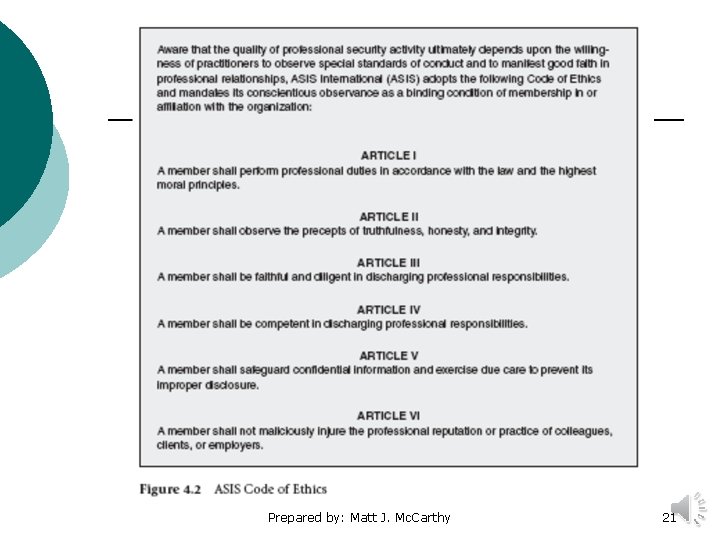
Prepared by: Matt J. Mc. Carthy 21
Ethics and decision making Pollock (pp. 21 -22) suggests five analytical steps that might be taken to clarify a dilemma. ¡ Following such a guideline can help us when dealing with these ethical issues and dilemmas. ¡ Prepared by: Matt J. Mc. Carthy 22