
Introduction to Science Notes ScienceA systematic way to





- Slides: 15
Introduction to Science
Notes • Science-A systematic way to solve problems • Physical Science-The study of matter and energy. • Matter-Anything that has mass and volume. • Energy- The ability to cause change.
Scientific Method • The scientific method is an organized plan for gathering, organizing, and communicating information. • The goal of any scientific method is to solve a problem or to better understand an observed event.
A Practical Application? • Scientific Method Monty Python • https: //www. youtube. com/watch? v=k 2 Mh. Ms Ln 9 B 0
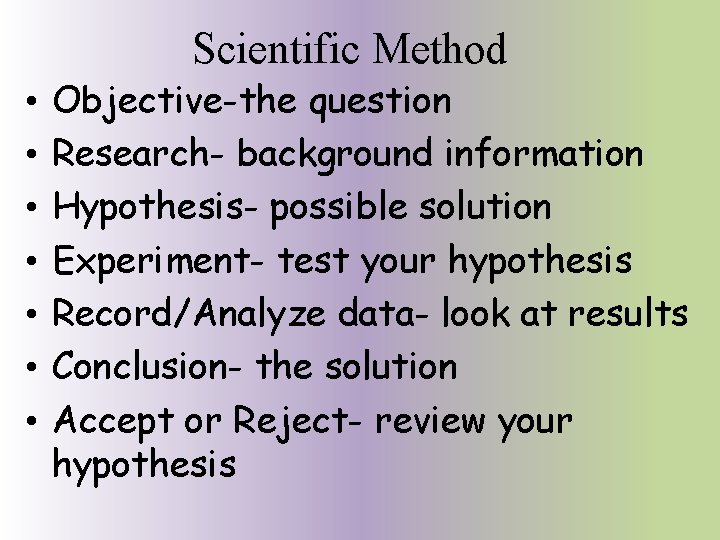
Scientific Method • • Objective-the question Research- background information Hypothesis- possible solution Experiment- test your hypothesis Record/Analyze data- look at results Conclusion- the solution Accept or Reject- review your hypothesis
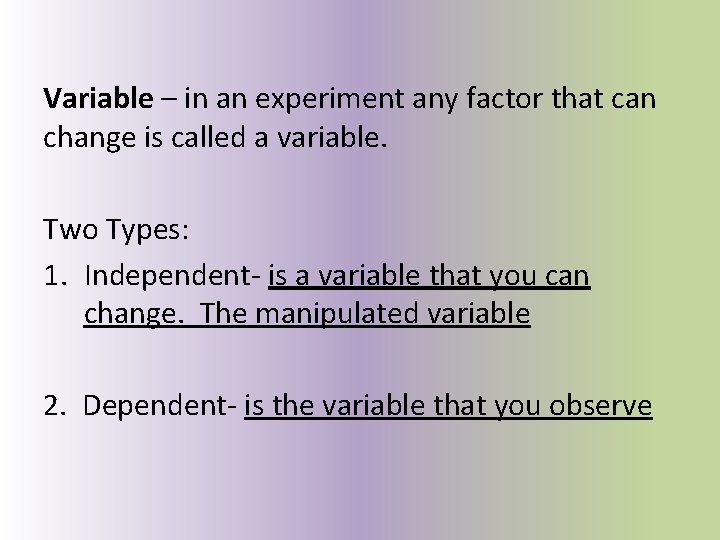
Variable – in an experiment any factor that can change is called a variable. Two Types: 1. Independent- is a variable that you can change. The manipulated variable 2. Dependent- is the variable that you observe
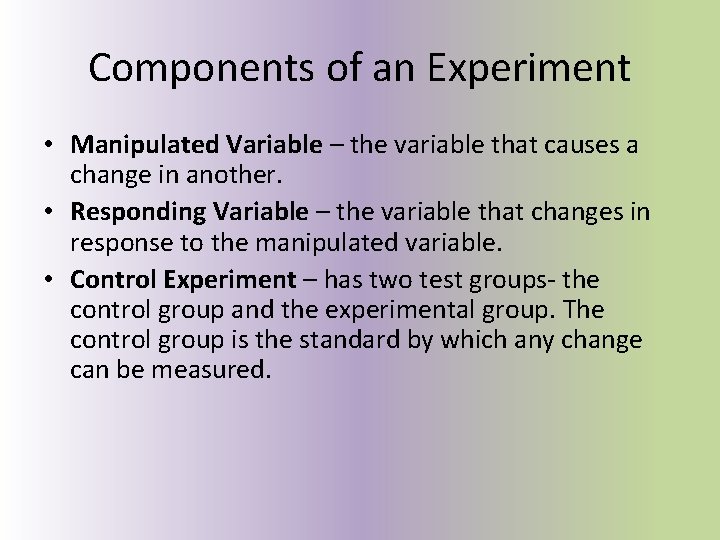
Components of an Experiment • Manipulated Variable – the variable that causes a change in another. • Responding Variable – the variable that changes in response to the manipulated variable. • Control Experiment – has two test groups- the control group and the experimental group. The control group is the standard by which any change can be measured.
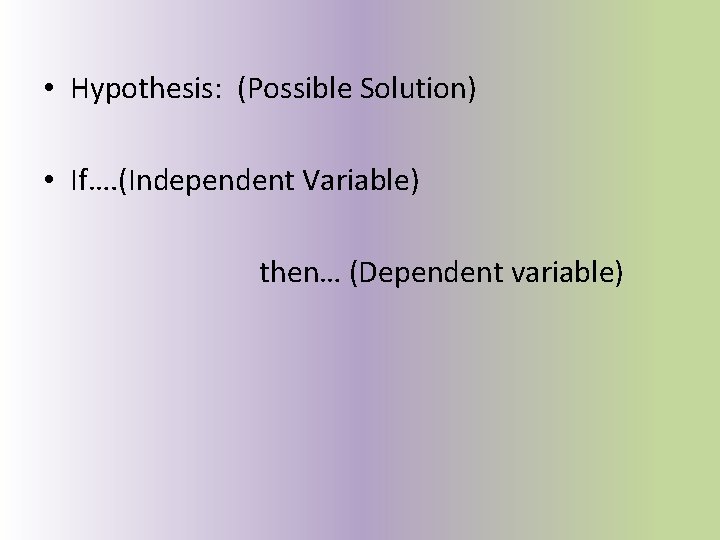
• Hypothesis: (Possible Solution) • If…. (Independent Variable) then… (Dependent variable)
How to write a good hypothesis Tell the readers what you are changing…… THEN tell them what is going to happen…
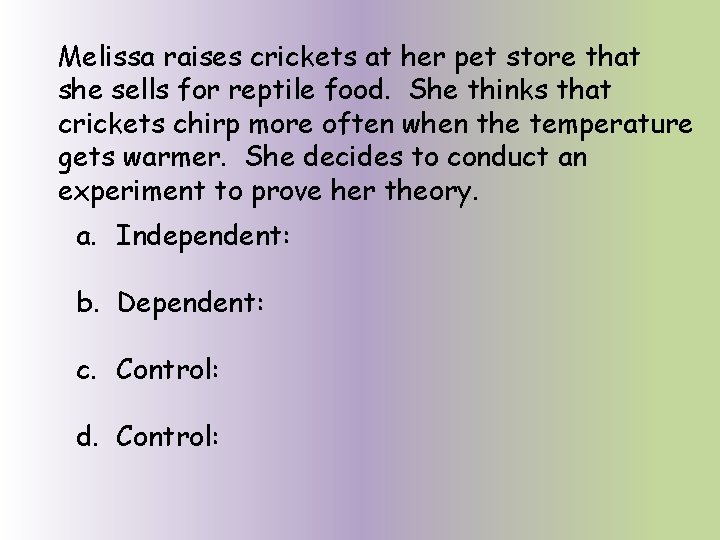
Melissa raises crickets at her pet store that she sells for reptile food. She thinks that crickets chirp more often when the temperature gets warmer. She decides to conduct an experiment to prove her theory. a. Independent: b. Dependent: c. Control: d. Control:
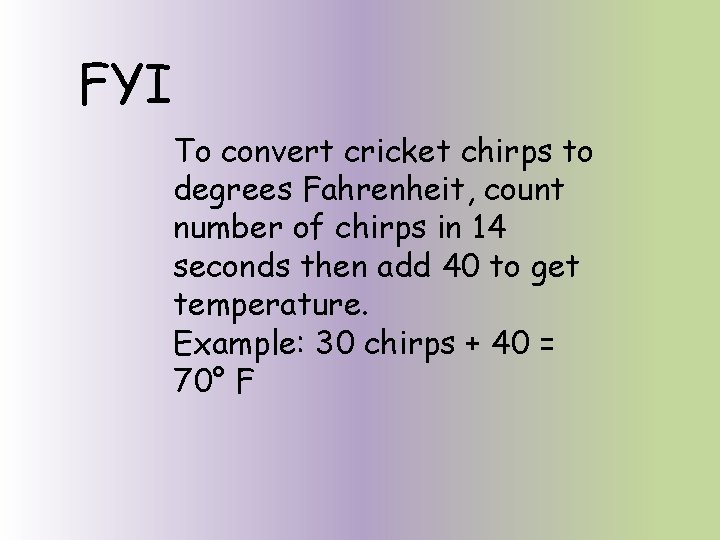
FYI To convert cricket chirps to degrees Fahrenheit, count number of chirps in 14 seconds then add 40 to get temperature. Example: 30 chirps + 40 = 70° F
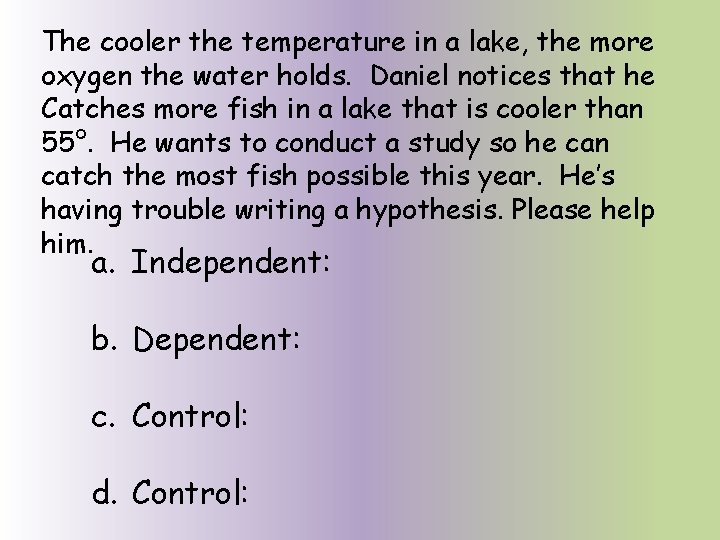
The cooler the temperature in a lake, the more oxygen the water holds. Daniel notices that he Catches more fish in a lake that is cooler than 55°. He wants to conduct a study so he can catch the most fish possible this year. He’s having trouble writing a hypothesis. Please help him. a. Independent: b. Dependent: c. Control: d. Control:
FYI The colder the water the more dissolved oxygen it holds.