
Introduction to Science Chapter 1 Ask questions Plan

- Slides: 15
Introduction to Science Chapter 1
�Ask questions �Plan experiments �Observe �Confirm results �Penicillin= “failed” experiment How Science Takes Place
�Social Science �Natural Science ◦ Biological Science ◦ Physical Science ◦ Earth Science Do the branches of science ever cross? Branches of Science
�Theories explain why something happens. ◦ Always questioned and examined ◦ Must explain observations clearly and consistently ◦ Must be repeatable ◦ Predictable results from theory �Laws describe how something works. Scientific Laws & Theories
�Qualitative- words �Quantitative- numbers; mathematical equations Words vs. Numbers
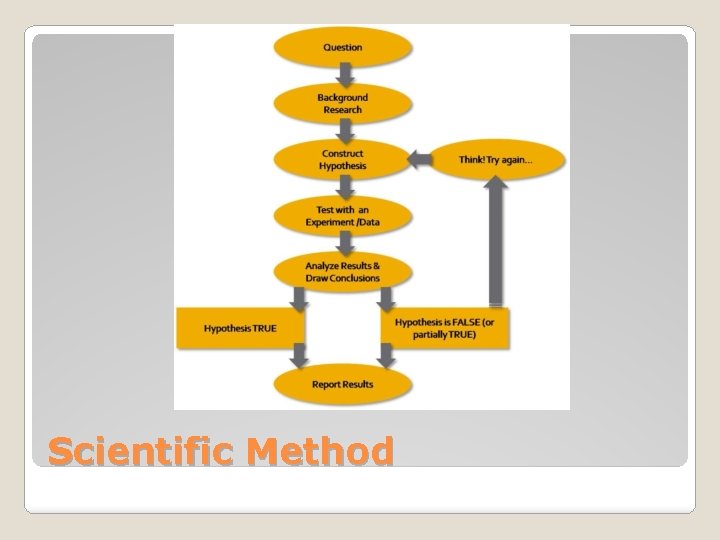
Scientific Method
�Independent variable: manipulated �Dependent variable: changes as a result of independent variable Controlled Experiment
�Consistency �Convert between larger and small numbers International System of Units or SI
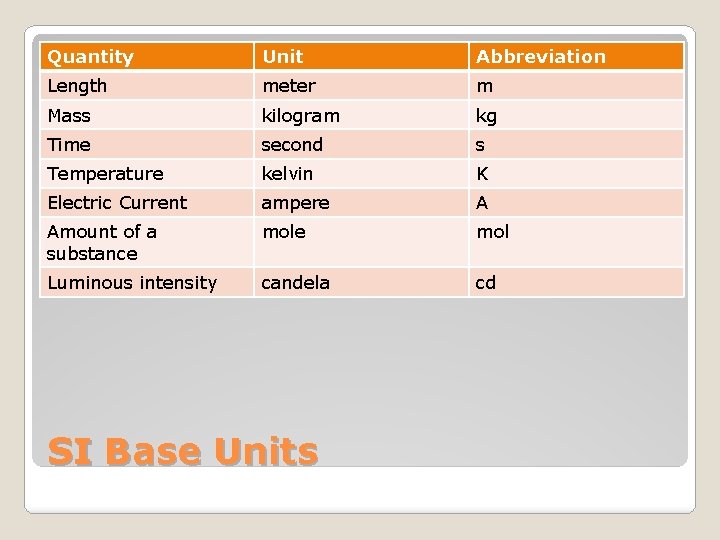
Quantity Unit Abbreviation Length meter m Mass kilogram kg Time second s Temperature kelvin K Electric Current ampere A Amount of a substance mol Luminous intensity candela cd SI Base Units
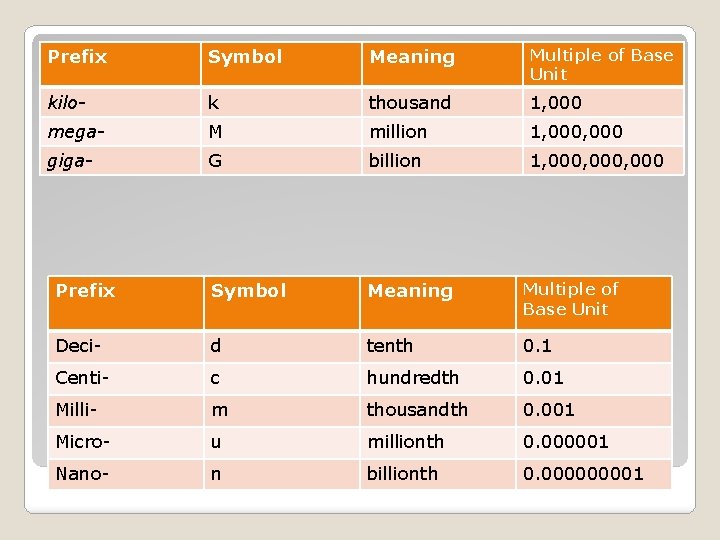
Prefix Symbol Meaning Multiple of Base Unit kilo- k thousand 1, 000 mega- M million 1, 000 giga- G billion 1, 000, 000 Prefix Symbol Meaning Multiple of Base Unit Deci- d tenth 0. 1 Centi- c hundredth 0. 01 Milli- m thousandth 0. 001 millionth 0. 000001 billionth 0. 00001 Prefixes Nanon Micro- u
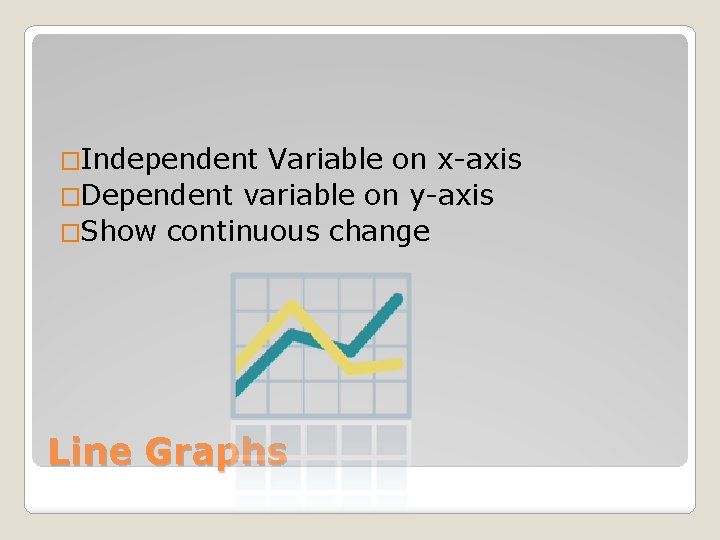
�Independent Variable on x-axis �Dependent variable on y-axis �Show continuous change Line Graphs
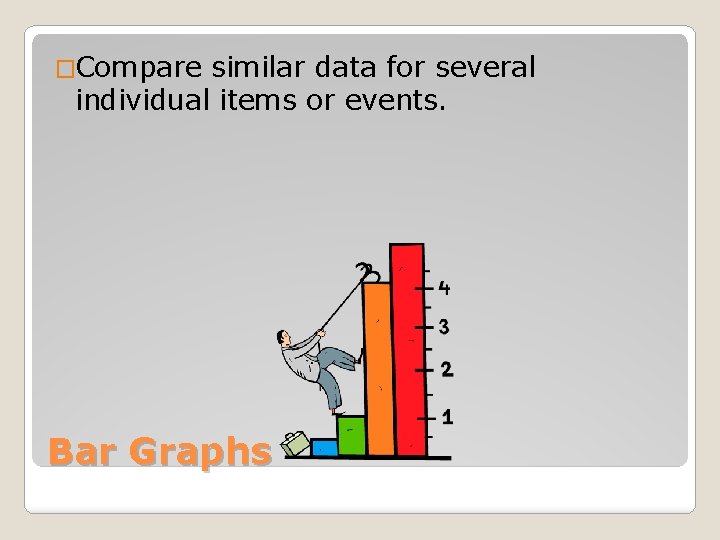
�Compare similar data for several individual items or events. Bar Graphs
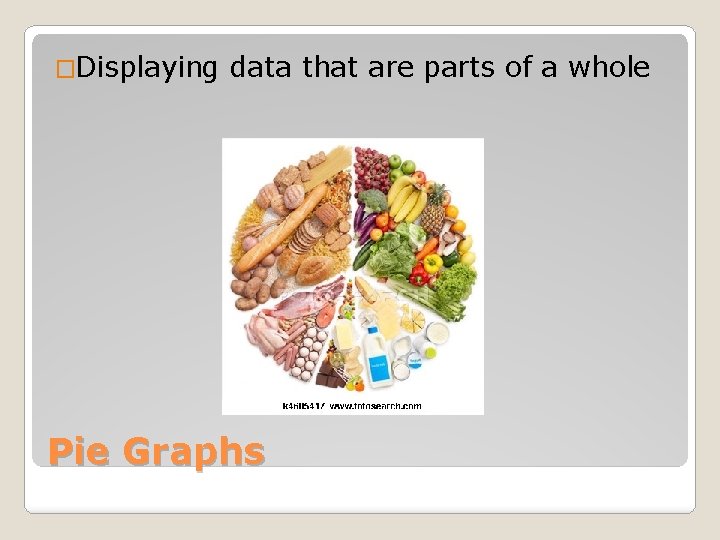
�Displaying data that are parts of a whole Pie Graphs
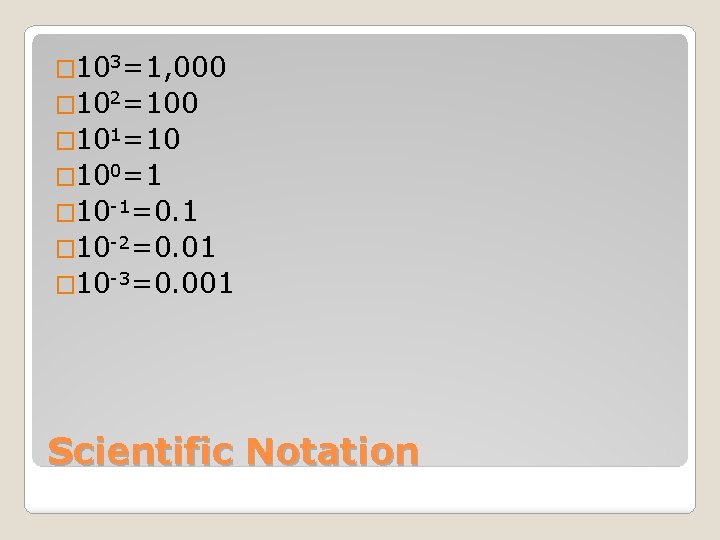
� 103=1, 000 � 102=100 � 101=10 � 100=1 � 10 -1=0. 1 � 10 -2=0. 01 � 10 -3=0. 001 Scientific Notation
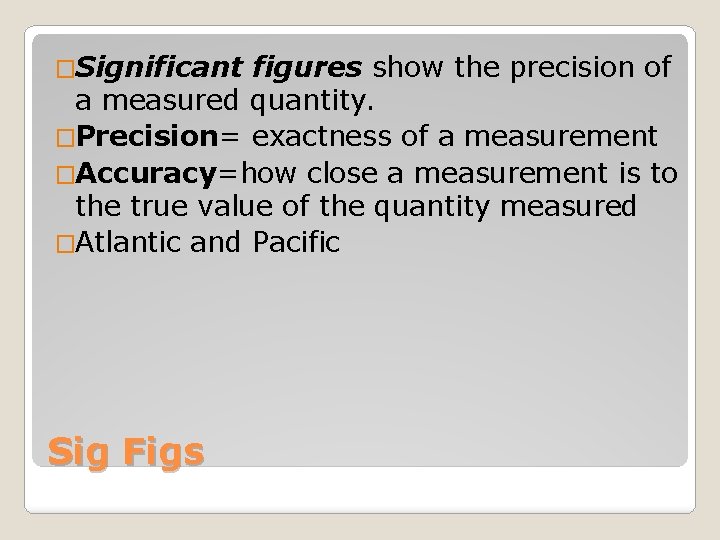
�Significant figures show the precision of a measured quantity. �Precision= exactness of a measurement �Accuracy=how close a measurement is to the true value of the quantity measured �Atlantic and Pacific Sig Figs