
Introduction to Science By Mr Kauffman Outline What
Introduction to Science By: Mr. Kauffman
Outline • • • What is science? Types of sciences Systems of measure Scientific measuring – length Scientific measuring – mass Scientific measuring – volume Scientific method Parts of a science experiment Theory vs. Law
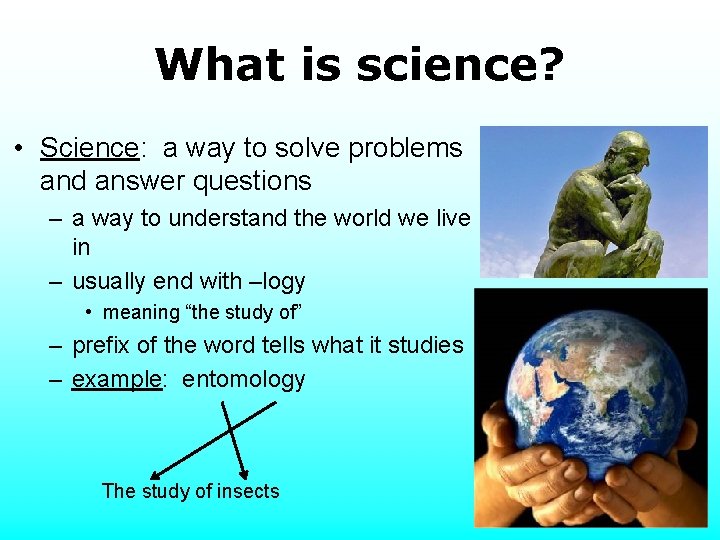
What is science? • Science: a way to solve problems and answer questions – a way to understand the world we live in – usually end with –logy • meaning “the study of” – prefix of the word tells what it studies – example: entomology The study of insects
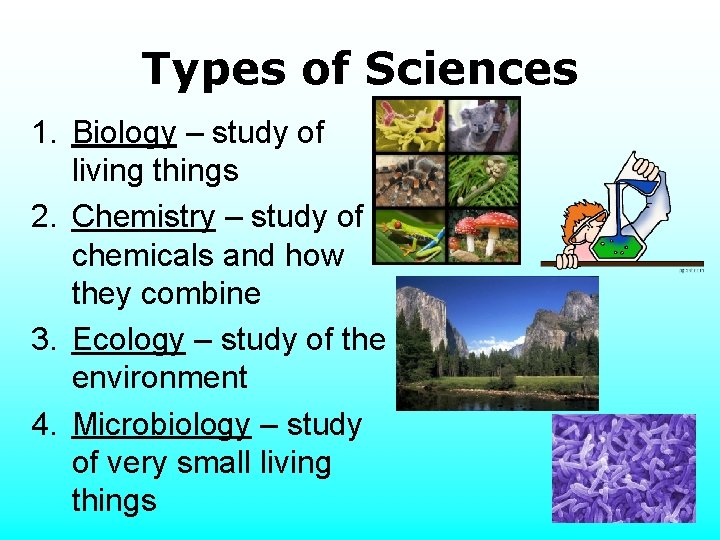
Types of Sciences 1. Biology – study of living things 2. Chemistry – study of chemicals and how they combine 3. Ecology – study of the environment 4. Microbiology – study of very small living things

Types of Sciences 5. Zoology – study of animals 6. Archaeology – study of ancient artifacts and remains 7. Astronomy – study of outer space 8. Genetics – study of genes/DNA

Systems of Measure • 2 Common Measurement Systems – American System • system we use in the USA • examples of units: feet, yards, inches, pounds, gallons – Metric System • system used in all other countries of the world • used by scientists (we will use in class) • examples of units: meter, gram, liter, milliliter
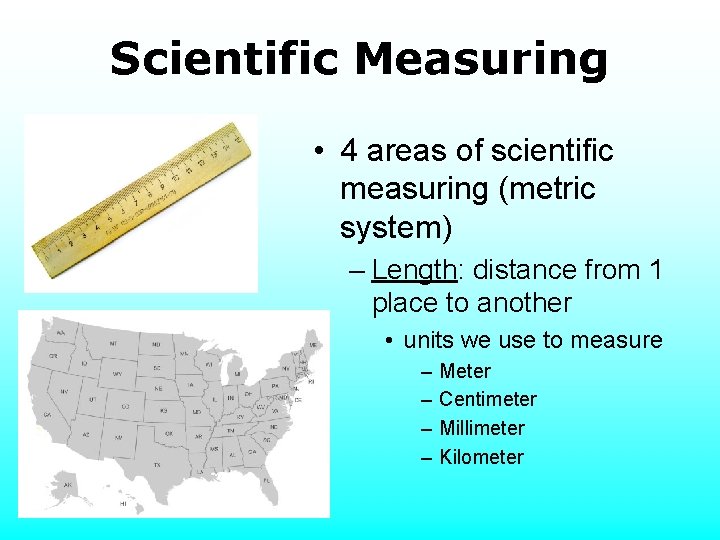
Scientific Measuring • 4 areas of scientific measuring (metric system) – Length: distance from 1 place to another • units we use to measure – – Meter Centimeter Millimeter Kilometer
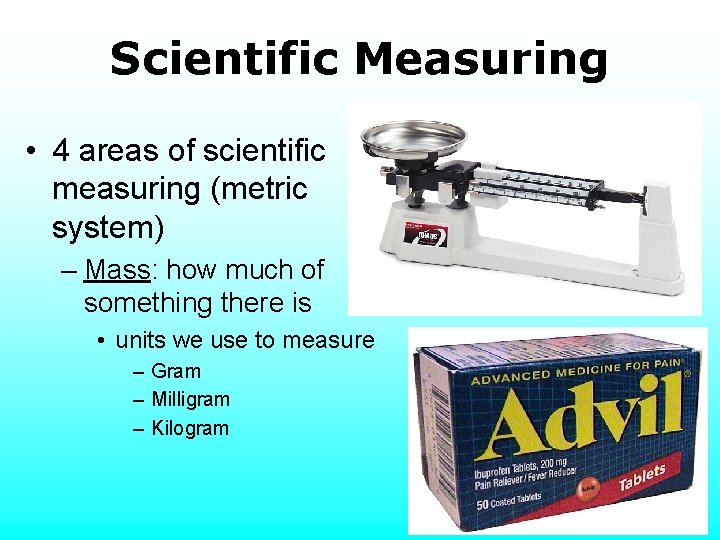
Scientific Measuring • 4 areas of scientific measuring (metric system) – Mass: how much of something there is • units we use to measure – Gram – Milligram – Kilogram
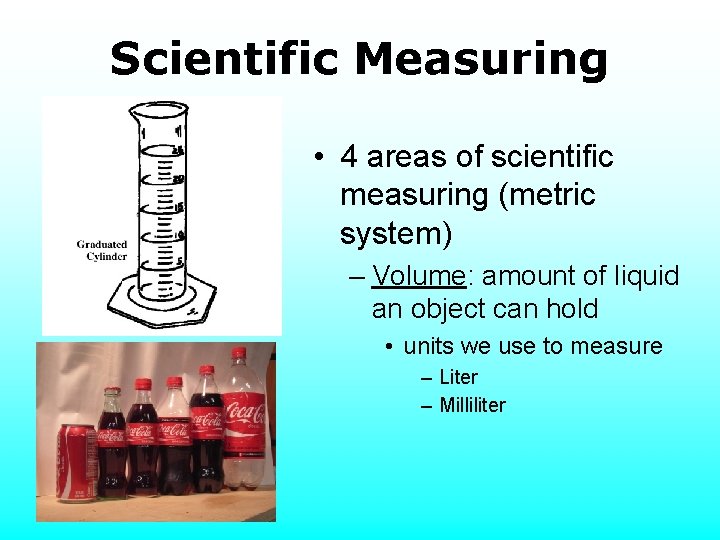
Scientific Measuring • 4 areas of scientific measuring (metric system) – Volume: amount of liquid an object can hold • units we use to measure – Liter – Milliliter
Scientific Measuring • 4 areas of scientific measuring (metric system) – Temperature: how hot or cold something is • units we use to measure – Celsius
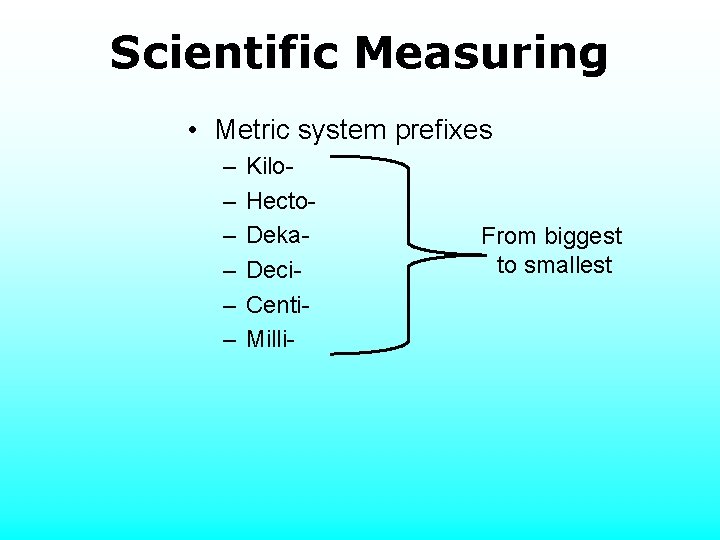
Scientific Measuring • Metric system prefixes – – – Kilo. Hecto. Deka. Deci. Centi. Milli- From biggest to smallest
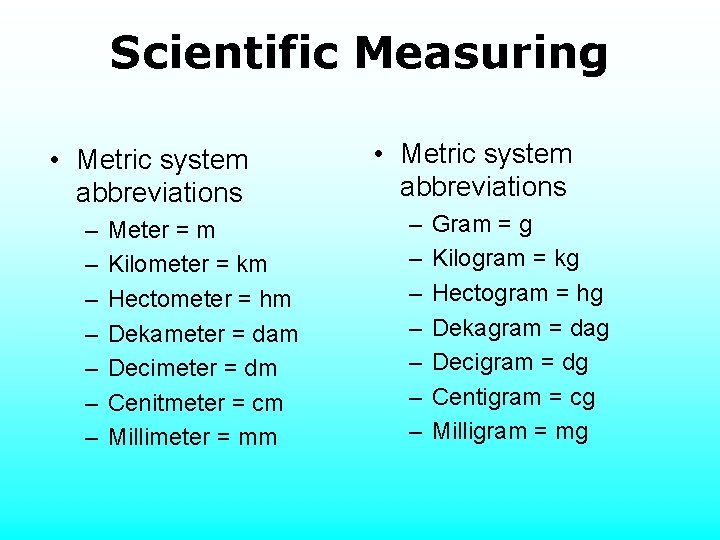
Scientific Measuring • Metric system abbreviations – – – – Meter = m Kilometer = km Hectometer = hm Dekameter = dam Decimeter = dm Cenitmeter = cm Millimeter = mm • Metric system abbreviations – – – – Gram = g Kilogram = kg Hectogram = hg Dekagram = dag Decigram = dg Centigram = cg Milligram = mg
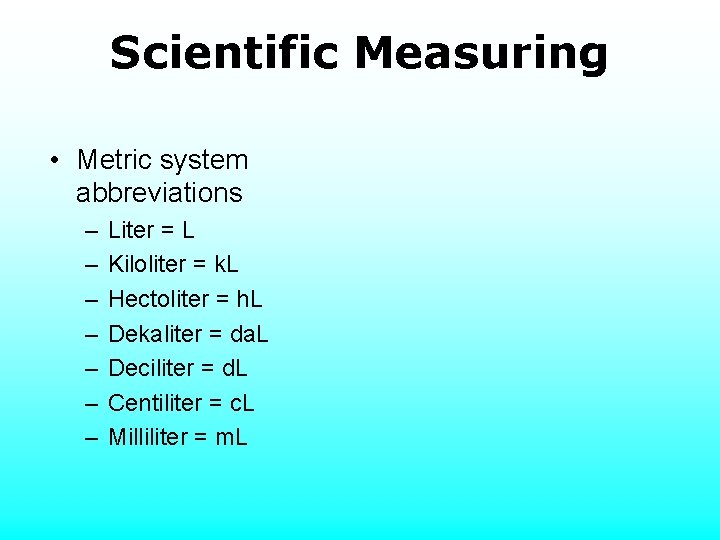
Scientific Measuring • Metric system abbreviations – – – – Liter = L Kiloliter = k. L Hectoliter = h. L Dekaliter = da. L Deciliter = d. L Centiliter = c. L Milliliter = m. L
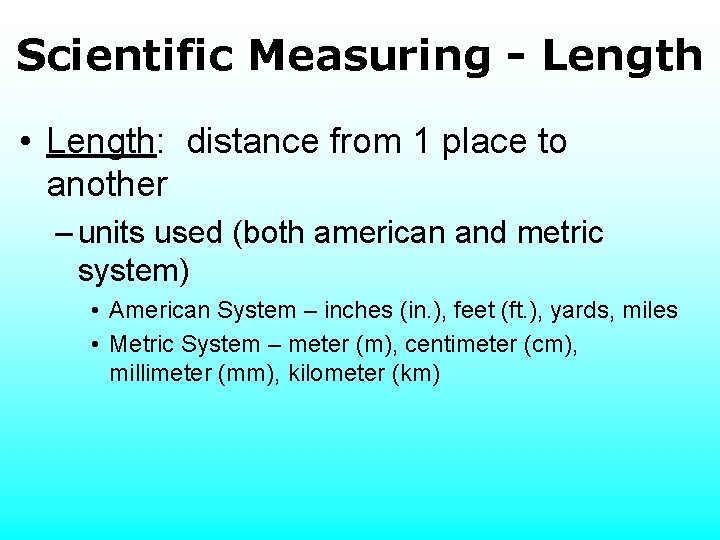
Scientific Measuring - Length • Length: distance from 1 place to another – units used (both american and metric system) • American System – inches (in. ), feet (ft. ), yards, miles • Metric System – meter (m), centimeter (cm), millimeter (mm), kilometer (km)
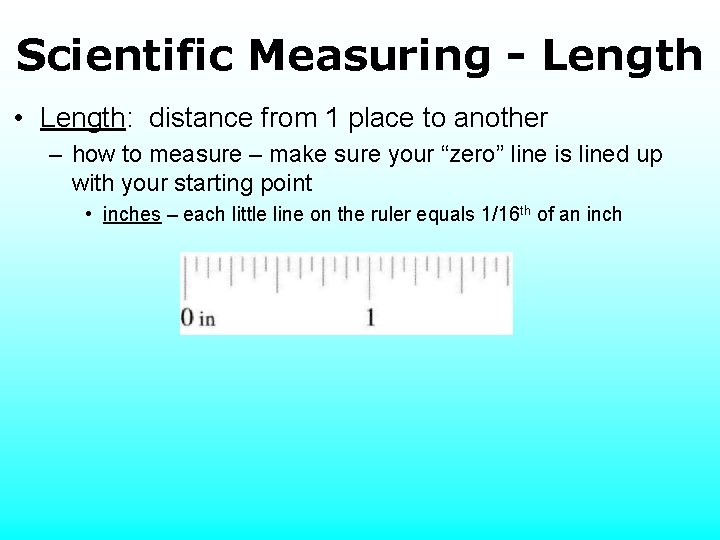
Scientific Measuring - Length • Length: distance from 1 place to another – how to measure – make sure your “zero” line is lined up with your starting point • inches – each little line on the ruler equals 1/16 th of an inch
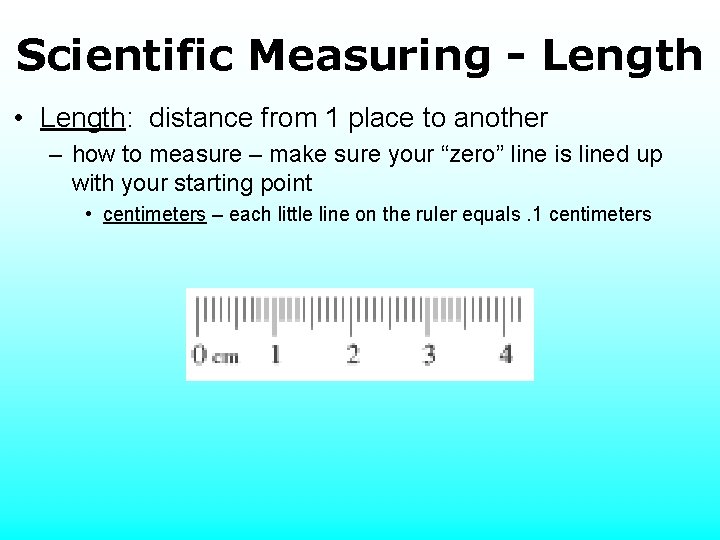
Scientific Measuring - Length • Length: distance from 1 place to another – how to measure – make sure your “zero” line is lined up with your starting point • centimeters – each little line on the ruler equals. 1 centimeters
Scientific Measuring – Mass • Mass: how much of something there is – Similar to weight – What instrument do we use to measure mass? • triple beam balance – Units used (metric system only) • Grams (g)
Scientific Measuring – Mass – Steps for using the balances 1. Place the object on the pan 2. Move the sliders to determine the mass of the object • start with the largest slider and work your way down to the smallest slider • sliders must be in the notches 3. Add up the numbers to determine the total mass
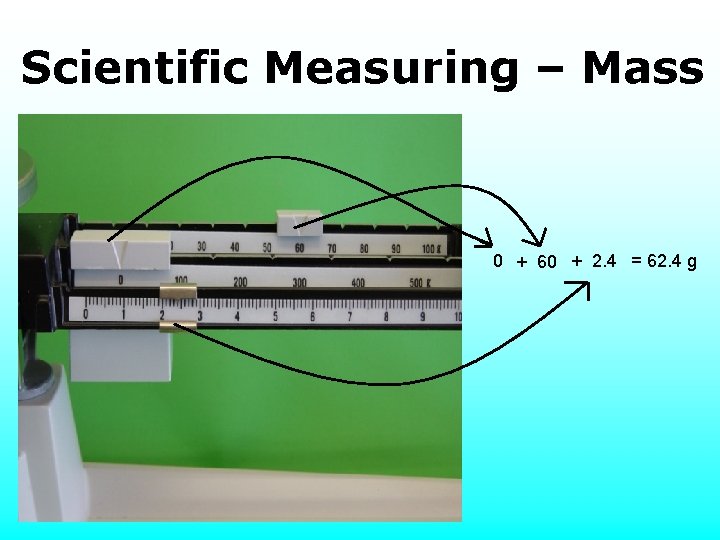
Scientific Measuring – Mass 0 + 60 + 2. 4 = 62. 4 g

Scientific Measuring – Volume • Volume: amount of liquid an object can hold – What do we use to measure volume? • Beaker • Graduated Cylinder • Erlenmeyer Flask – Units used (metric system only) • Liters (L) • Milliliters (m. L)
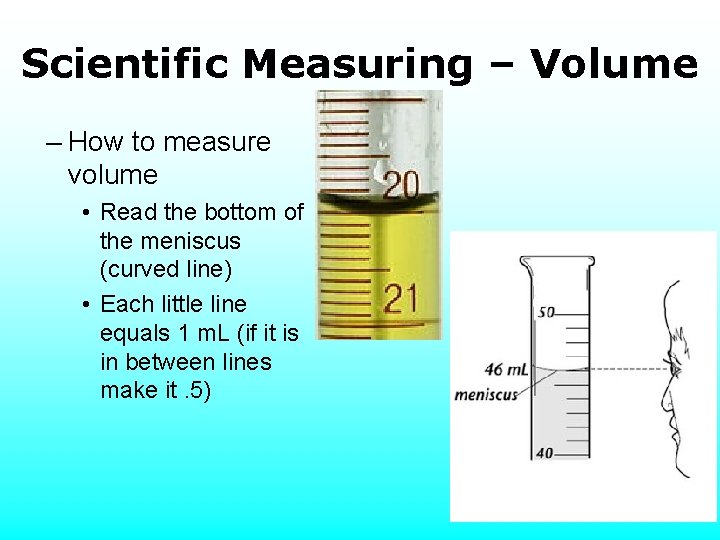
Scientific Measuring – Volume – How to measure volume • Read the bottom of the meniscus (curved line) • Each little line equals 1 m. L (if it is in between lines make it. 5)
Scientific Method • The scientific method is a way to solve problems using 6 steps – all scientists use the same process • 2 important ideas – critical thinking: use skills to solve problems • separate important information from unimportant information – organization: the 6 steps that must be followed
6 Steps of the Scientific Method 1. State the Problem – What do you want to figure out? 2. Research - Gather information about topic 3. Make a hypothesis – Hypothesis: an educated guess that can be tested – What do you think will happen?
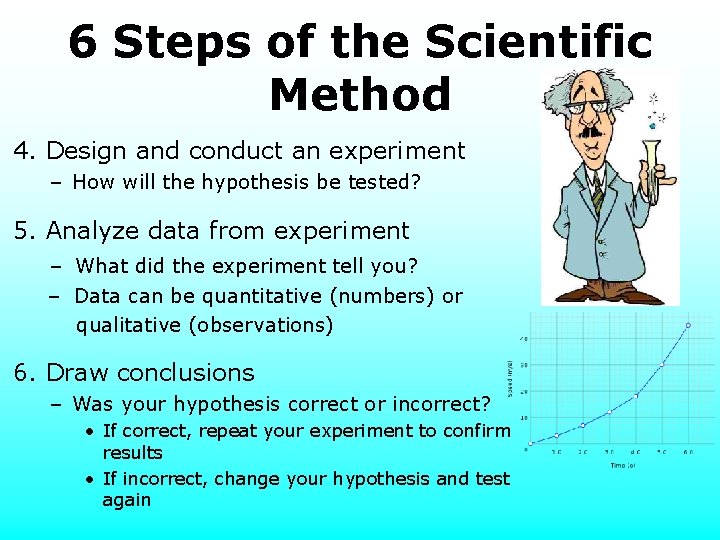
6 Steps of the Scientific Method 4. Design and conduct an experiment – How will the hypothesis be tested? 5. Analyze data from experiment – What did the experiment tell you? – Data can be quantitative (numbers) or qualitative (observations) 6. Draw conclusions – Was your hypothesis correct or incorrect? • If correct, repeat your experiment to confirm results • If incorrect, change your hypothesis and test again
Parts of a Science Experiment • Control: what you compare your results to – Part of your experiment that remains the same • Independent Variable: what you are testing in the experiment – Part of your experiment that is changed to cause some sort of effect • Dependent Variable: what you are measuring (#’s or observations) – Part of your experiment that is being affected by your change
Theory vs. Law • Scientists use experiments to develop theories and laws • Scientific Theory: an explanation of how things happen based on scientific knowledge – Based on many experiments and observations – Accepted to be true, but can be changed based on new information – Example: Theory of Evolution • Explains how living things have changed over millions of years
Theory vs. Law • Scientific Law: statement about how things work that is true all of the time – Tells what will happen – Example: Law of Gravity • Explains how objects exert a gravitational force (pull) on other objects
- Slides: 27