
INTRODUCTION TO SCIENCE AND THE SCIENTIFIC METHOD Amy
- Slides: 18
INTRODUCTION TO SCIENCE AND THE SCIENTIFIC METHOD ©Amy Brown – Science Stuff (adapted for CTA Liberty) Page 1
What is Science? The goal of science is to investigate and understand the natural world, to explain events in the natural world, and to use those explanations to make useful predictions. 1. Science deals only with the natural world. 2. Scientists: collect and organize information in a careful, orderly way, looking for patterns and connections between events. 3. Scientists propose explanations ______ that can tested be ______ by examining evidence. 4. Science is an organized way of using evidence to learn about the natural world. Page 2
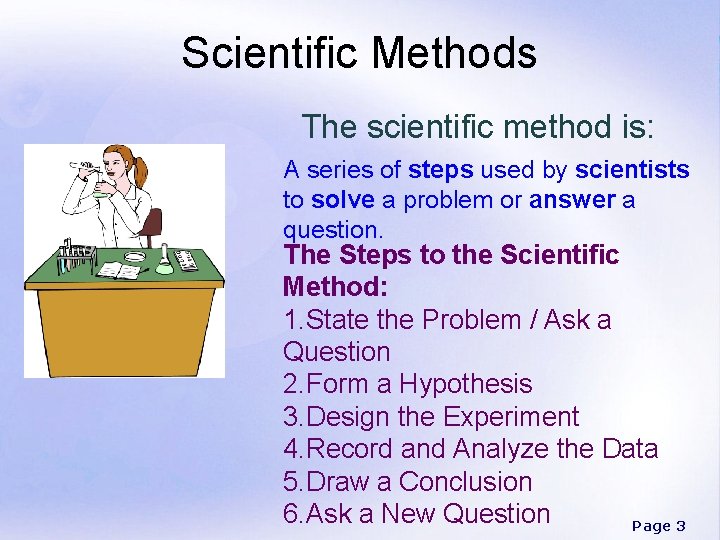
Scientific Methods The scientific method is: A series of steps used by scientists to solve a problem or answer a question. The Steps to the Scientific Method: 1. State the Problem / Ask a Question 2. Form a Hypothesis 3. Design the Experiment 4. Record and Analyze the Data 5. Draw a Conclusion 6. Ask a New Question Page 3
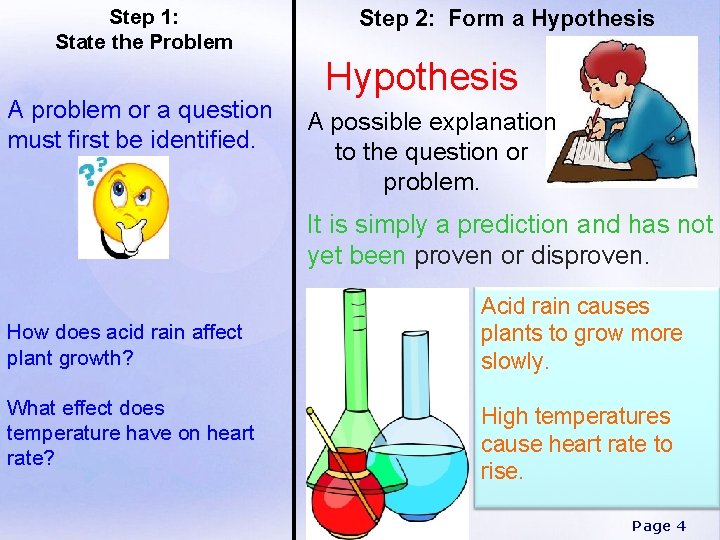
Step 1: State the Problem A problem or a question must first be identified. Step 2: Form a Hypothesis A possible explanation to the question or problem. It is simply a prediction and has not yet been proven or disproven. How does acid rain affect plant growth? What effect does temperature have on heart rate? Acid rain causes plants to grow more slowly. High temperatures cause heart rate to rise. Page 4
Step 3: Design the Experiment The factors in an experiment that can be changed are called variables. Some example of variables would be: changing The experiment works with one variable at a the temperature or the amount of water used. time. If several variables were changed at the same time, the scientist would not know which variable was responsible for the observed results. Everything else stays the same (controls). Page 5
Step 4: Record and Analyze Data 1. The data that has been collected must be organized analyzed to determine whether the data are reliable. 2. Does the data support or not support the hypothesis? Page 6
Step 5: Draw a Conclusion The evidence from the experiment is used to determine if the hypothesis is proven or disproven. The conclusion is the answer to the question. Experiments must be repeated over and over. When repeated, the results should always be the same before a valid conclusion can be reached. Page 7
Step 6: Ask a New Question Scientists continue the process by asking a new question related to the experiment. The scientific method is a process that never ends! Page 8
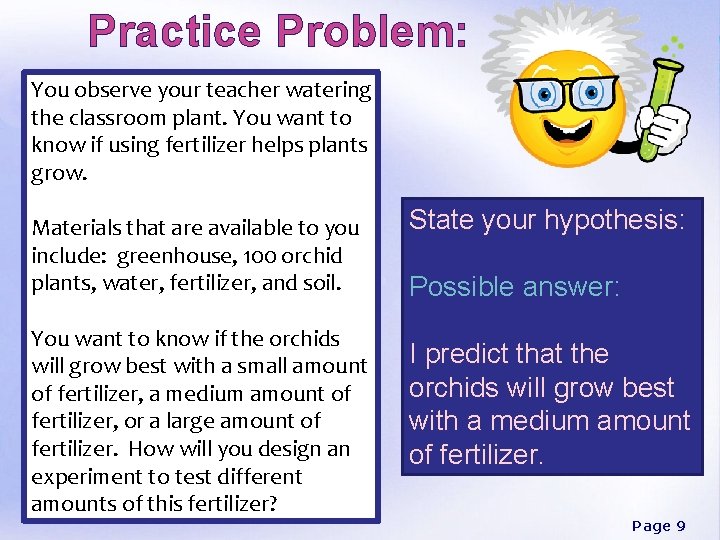
Practice Problem: You observe your teacher watering the classroom plant. You want to know if using fertilizer helps plants grow. Materials that are available to you include: greenhouse, 100 orchid plants, water, fertilizer, and soil. You want to know if the orchids will grow best with a small amount of fertilizer, a medium amount of fertilizer, or a large amount of fertilizer. How will you design an experiment to test different amounts of this fertilizer? State your hypothesis: Possible answer: I predict that the orchids will grow best with a medium amount of fertilizer. Page 9
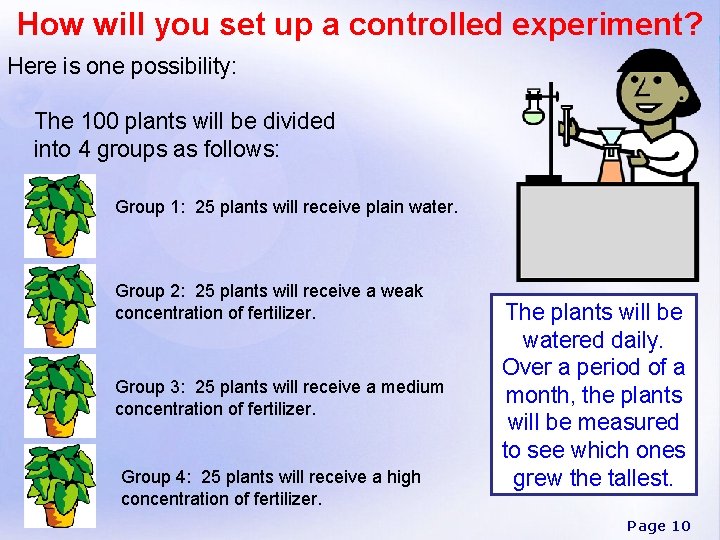
How will you set up a controlled experiment? Here is one possibility: The 100 plants will be divided into 4 groups as follows: Group 1: 25 plants will receive plain water. Group 2: 25 plants will receive a weak concentration of fertilizer. Group 3: 25 plants will receive a medium concentration of fertilizer. Group 4: 25 plants will receive a high concentration of fertilizer. The plants will be watered daily. Over a period of a month, the plants will be measured to see which ones grew the tallest. Page 10
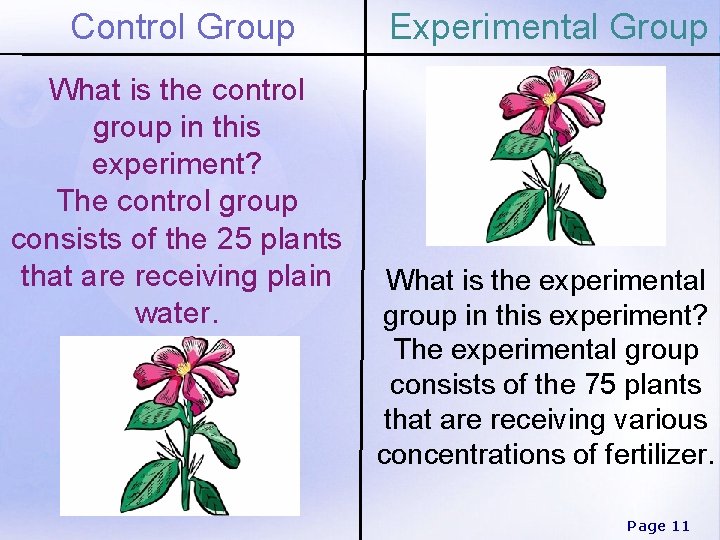
Control Group What is the control group in this experiment? The control group consists of the 25 plants that are receiving plain water. Experimental Group What is the experimental group in this experiment? The experimental group consists of the 75 plants that are receiving various concentrations of fertilizer. Page 11
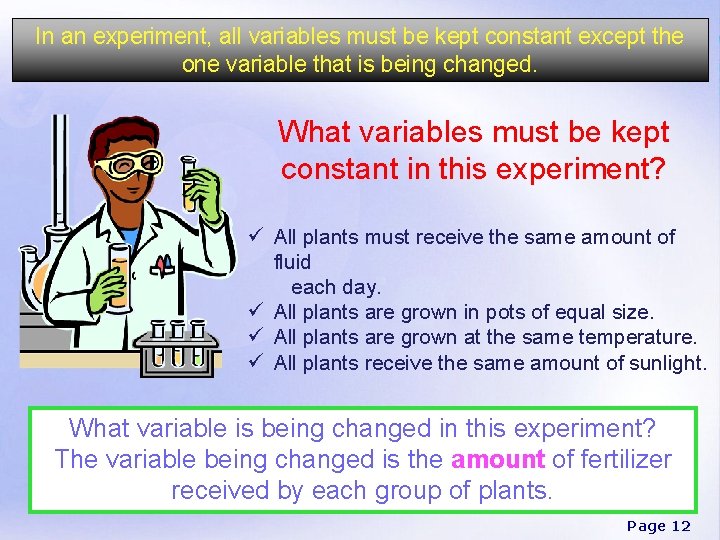
In an experiment, all variables must be kept constant except the one variable that is being changed. What variables must be kept constant in this experiment? ü All plants must receive the same amount of fluid each day. ü All plants are grown in pots of equal size. ü All plants are grown at the same temperature. ü All plants receive the same amount of sunlight. What variable is being changed in this experiment? The variable being changed is the amount of fertilizer received by each group of plants. Page 12
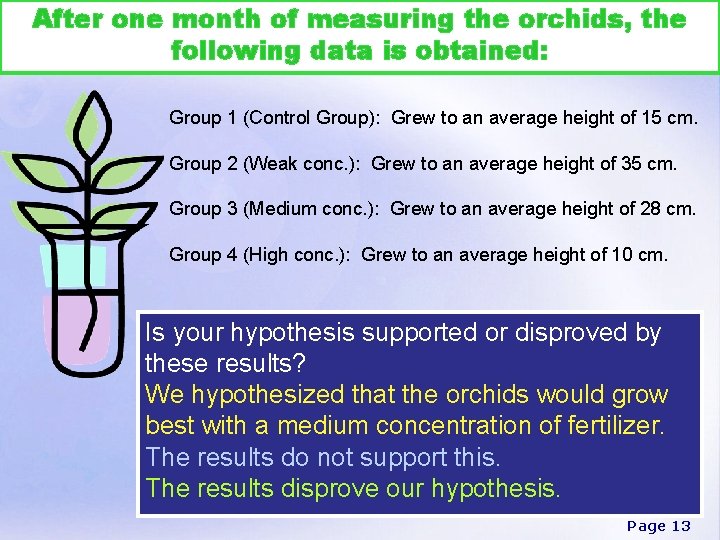
After one month of measuring the orchids, the following data is obtained: Group 1 (Control Group): Grew to an average height of 15 cm. Group 2 (Weak conc. ): Grew to an average height of 35 cm. Group 3 (Medium conc. ): Grew to an average height of 28 cm. Group 4 (High conc. ): Grew to an average height of 10 cm. Is your hypothesis supported or disproved by these results? We hypothesized that the orchids would grow best with a medium concentration of fertilizer. The results do not support this. The results disprove our hypothesis. Page 13
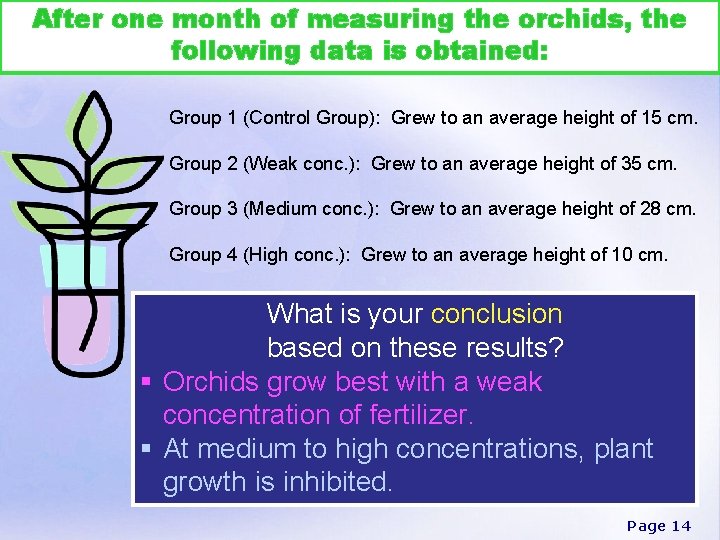
After one month of measuring the orchids, the following data is obtained: Group 1 (Control Group): Grew to an average height of 15 cm. Group 2 (Weak conc. ): Grew to an average height of 35 cm. Group 3 (Medium conc. ): Grew to an average height of 28 cm. Group 4 (High conc. ): Grew to an average height of 10 cm. What is your conclusion based on these results? § Orchids grow best with a weak concentration of fertilizer. § At medium to high concentrations, plant growth is inhibited. Page 14
Ask a New Question Does the type/amount of water affect plant growth? Does the type/amount of light affect plant growth? Page 15
Analysis Questions Why is it important to repeat the experiment many times? Experiments should be repeated to see if the same results are obtained each time. This gives validity to the test results. Page 16
Analysis Questions Why is it so important that a scientist accurately describes the procedure used in the experiment? It allows other scientists to repeat the experiment and verify the results. Page 17
Analysis Questions In an experiment, why must all of the variables, except one, be kept constant throughout the experiment? If several variables were changed at the same time, the scientist would not know which variable was responsible for the observed results. Page 18