
Introduction to Rural Marketing Session I Xavier Institute
- Slides: 23
Introduction to Rural Marketing Session – I Xavier Institute of Management, Bhubaneswar
Why should we do this course? l Agriculture’s share in GDP is going down, but, India still lives in her villages l Urban markets are crowded and saturated l The understanding of “rural” is diffused and sometimes confusing l Is “rural marketing” different from “urban marketing” ?
Session Coverage l Rural India – Some definitional issues l Phases/ stages in rural marketing l Scope of rural marketing l How is rural India changing? l Schools of thought- Approaches to Rural Markets l Strategic Issues & Directions in rural marketing
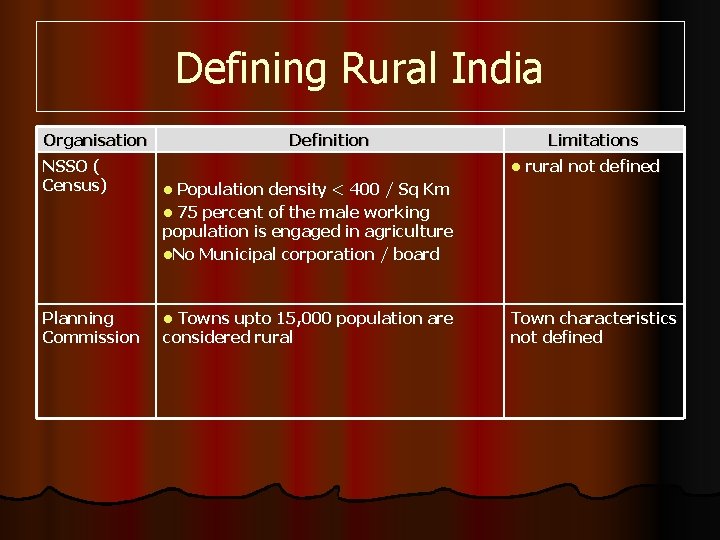
Defining Rural India Organisation NSSO ( Census) Planning Commission Definition Limitations l rural not defined Population density < 400 / Sq Km l 75 percent of the male working population is engaged in agriculture l. No Municipal corporation / board l Towns upto 15, 000 population are considered rural l Town characteristics not defined
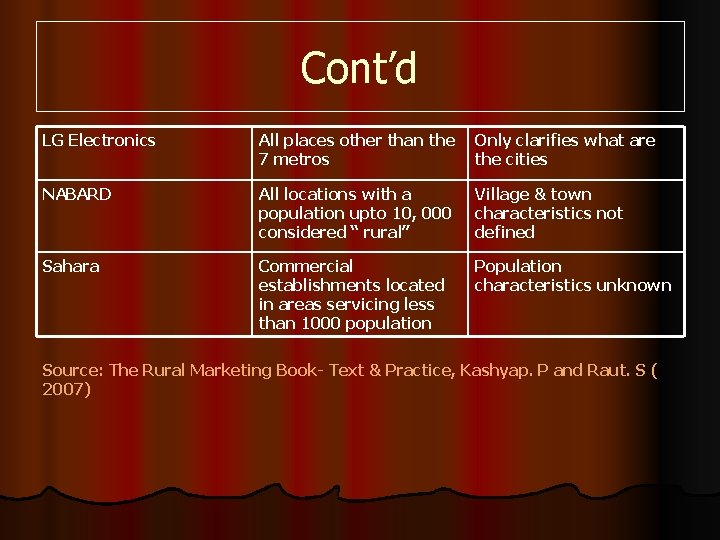
Cont’d LG Electronics All places other than the 7 metros Only clarifies what are the cities NABARD All locations with a population upto 10, 000 considered “ rural” Village & town characteristics not defined Sahara Commercial establishments located in areas servicing less than 1000 population Population characteristics unknown Source: The Rural Marketing Book- Text & Practice, Kashyap. P and Raut. S ( 2007)
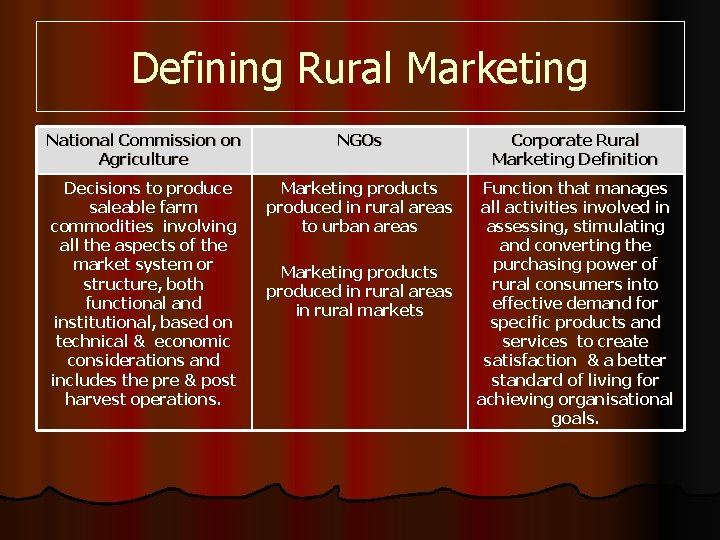
Defining Rural Marketing National Commission on Agriculture NGOs Corporate Rural Marketing Definition Decisions to produce saleable farm commodities involving all the aspects of the market system or structure, both functional and institutional, based on technical & economic considerations and includes the pre & post harvest operations. Marketing products produced in rural areas to urban areas Function that manages all activities involved in assessing, stimulating and converting the purchasing power of rural consumers into effective demand for specific products and services to create satisfaction & a better standard of living for achieving organisational goals. Marketing products produced in rural areas in rural markets
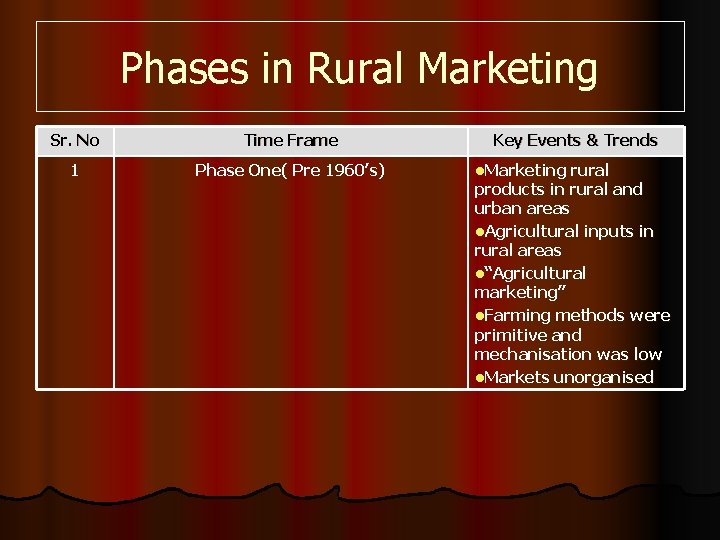
Phases in Rural Marketing Sr. No Time Frame 1 Phase One( Pre 1960’s) Key Events & Trends l. Marketing rural products in rural and urban areas l. Agricultural inputs in rural areas l“Agricultural marketing” l. Farming methods were primitive and mechanisation was low l. Markets unorganised
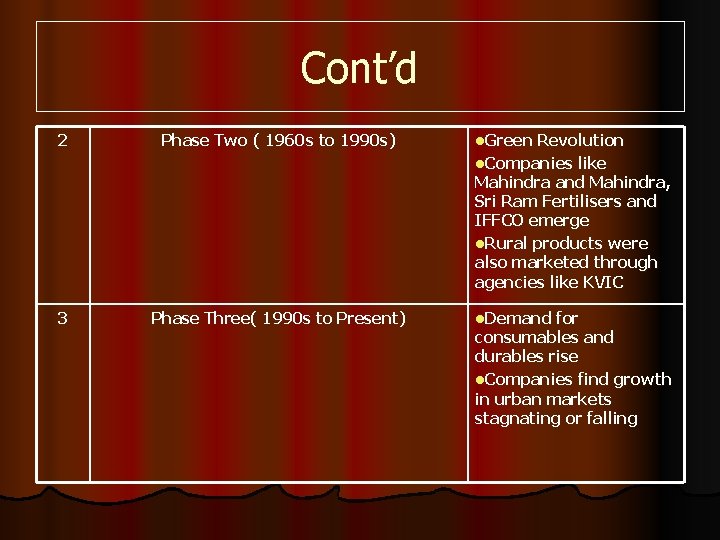
Cont’d 2 Phase Two ( 1960 s to 1990 s) l. Green Revolution l. Companies like Mahindra and Mahindra, Sri Ram Fertilisers and IFFCO emerge l. Rural products were also marketed through agencies like KVIC 3 Phase Three( 1990 s to Present) l. Demand for consumables and durables rise l. Companies find growth in urban markets stagnating or falling
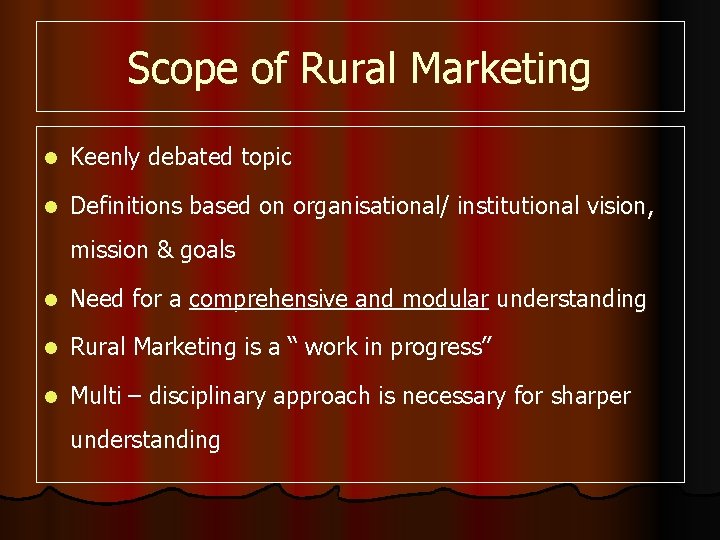
Scope of Rural Marketing l Keenly debated topic l Definitions based on organisational/ institutional vision, mission & goals l Need for a comprehensive and modular understanding l Rural Marketing is a “ work in progress” l Multi – disciplinary approach is necessary for sharper understanding
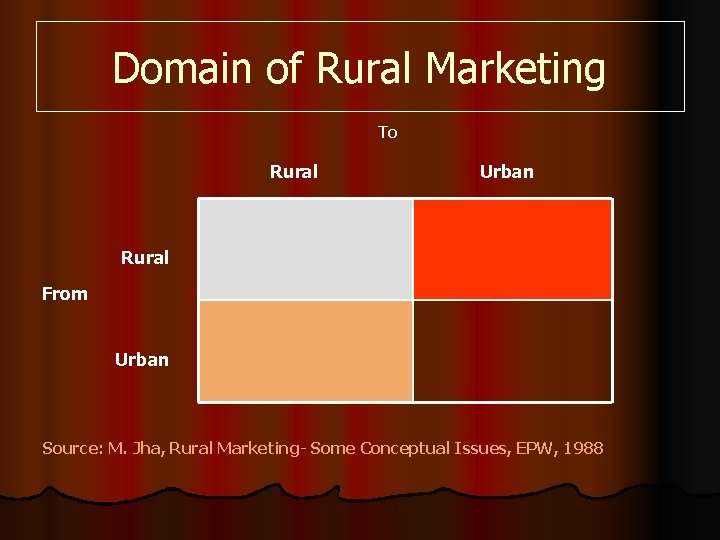
Domain of Rural Marketing To Rural Urban Rural From Urban Source: M. Jha, Rural Marketing- Some Conceptual Issues, EPW, 1988
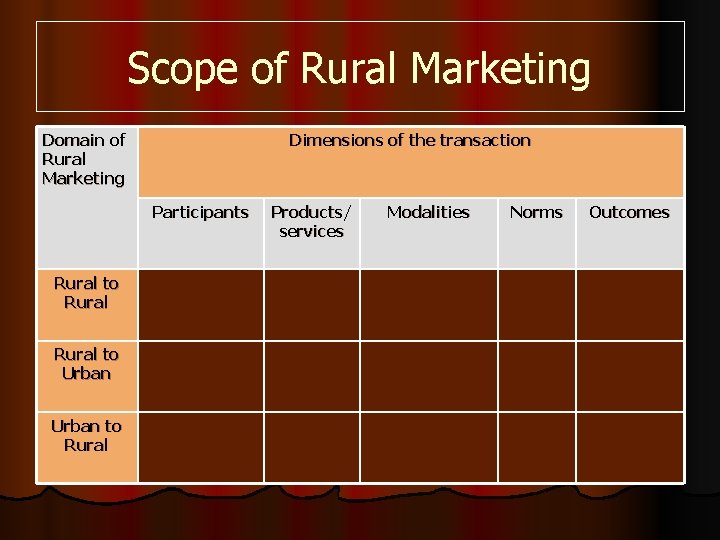
Scope of Rural Marketing Domain of Rural Marketing Dimensions of the transaction Participants Rural to Urban to Rural Products/ services Modalities Norms Outcomes
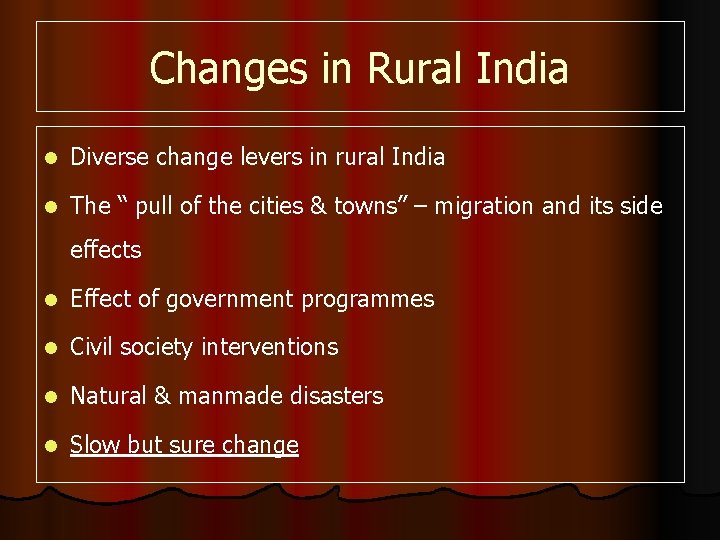
Changes in Rural India l Diverse change levers in rural India l The “ pull of the cities & towns” – migration and its side effects l Effect of government programmes l Civil society interventions l Natural & manmade disasters l Slow but sure change
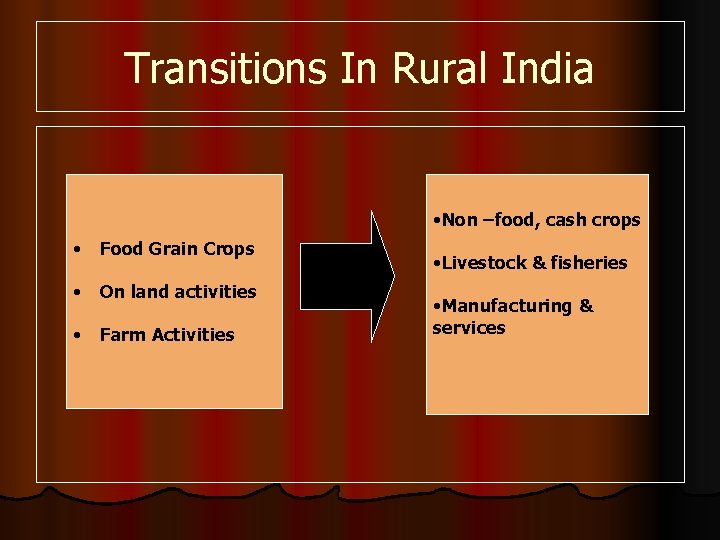
Transitions In Rural India • Non –food, cash crops • Food Grain Crops • On land activities • Farm Activities • Livestock & fisheries • Manufacturing & services
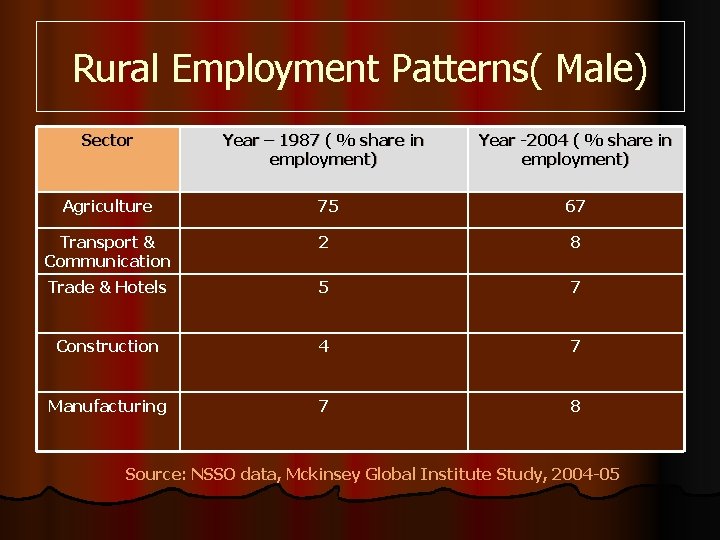
Rural Employment Patterns( Male) Sector Year – 1987 ( % share in employment) Year -2004 ( % share in employment) Agriculture 75 67 Transport & Communication 2 8 Trade & Hotels 5 7 Construction 4 7 Manufacturing 7 8 Source: NSSO data, Mckinsey Global Institute Study, 2004 -05
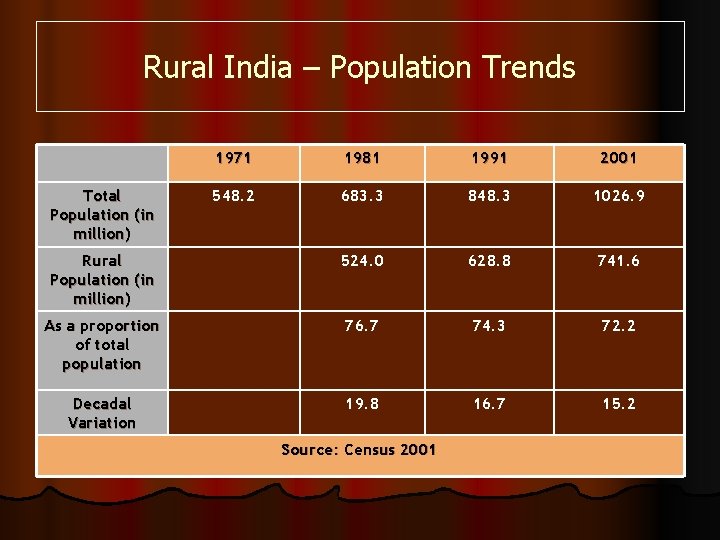
Rural India – Population Trends 1971 1981 1991 2001 548. 2 683. 3 848. 3 1026. 9 Rural Population (in million) 524. 0 628. 8 741. 6 As a proportion of total population 76. 7 74. 3 72. 2 Decadal Variation 19. 8 16. 7 15. 2 Total Population (in million) Source: Census 2001
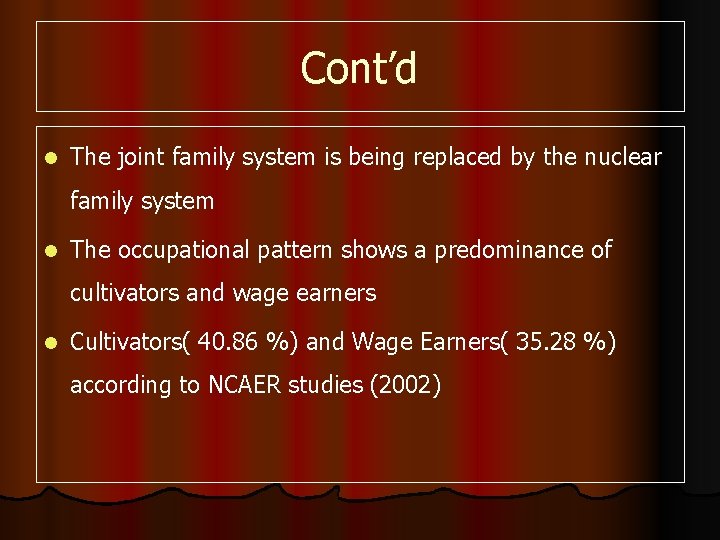
Cont’d l The joint family system is being replaced by the nuclear family system l The occupational pattern shows a predominance of cultivators and wage earners l Cultivators( 40. 86 %) and Wage Earners( 35. 28 %) according to NCAER studies (2002)
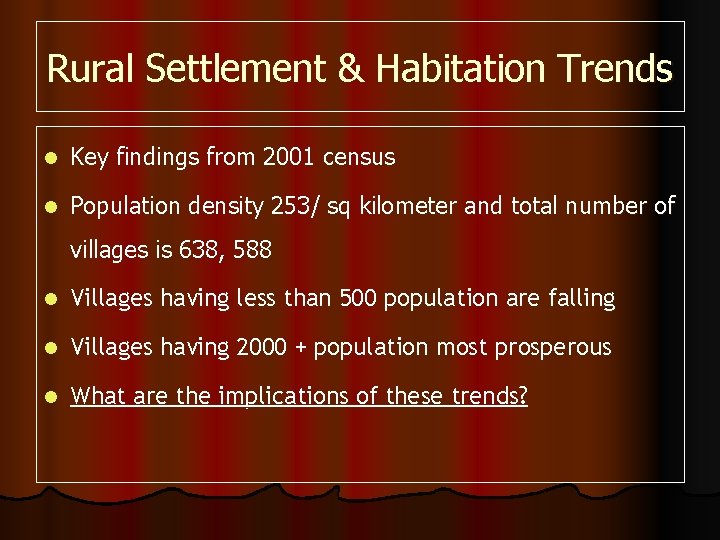
Rural Settlement & Habitation Trends l Key findings from 2001 census l Population density 253/ sq kilometer and total number of villages is 638, 588 l Villages having less than 500 population are falling l Villages having 2000 + population most prosperous l What are the implications of these trends?
Cont’d l Size of villages/ habitations are changing l Role & influence of towns is changing l Social interaction is a mix of rural and urban l Let’s look at some key trends in detail
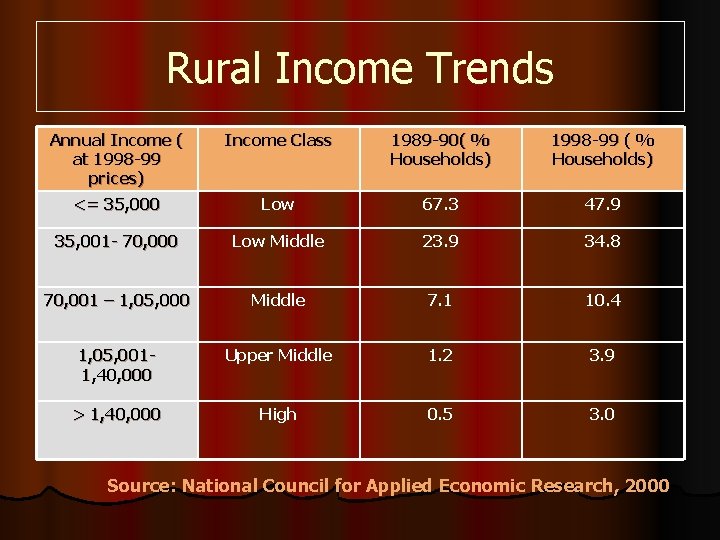
Rural Income Trends Annual Income ( at 1998 -99 prices) Income Class 1989 -90( % Households) 1998 -99 ( % Households) <= 35, 000 Low 67. 3 47. 9 35, 001 - 70, 000 Low Middle 23. 9 34. 8 70, 001 – 1, 05, 000 Middle 7. 1 10. 4 1, 05, 0011, 40, 000 Upper Middle 1. 2 3. 9 > 1, 40, 000 High 0. 5 3. 0 Source: National Council for Applied Economic Research, 2000
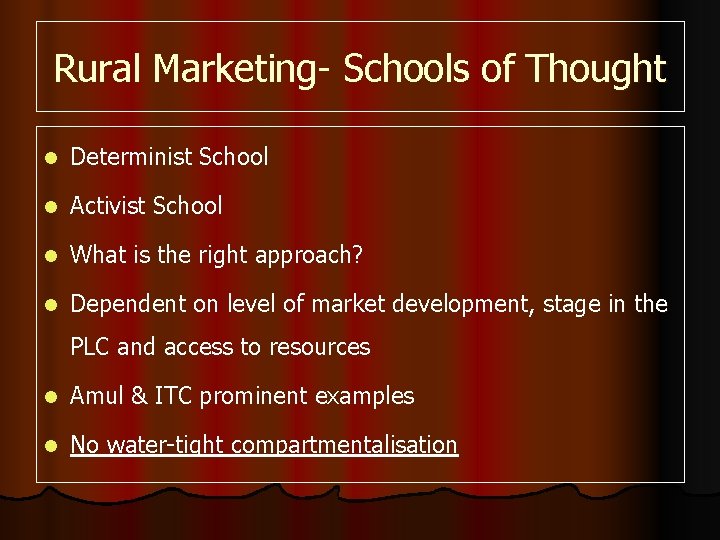
Rural Marketing- Schools of Thought l Determinist School l Activist School l What is the right approach? l Dependent on level of market development, stage in the PLC and access to resources l Amul & ITC prominent examples l No water-tight compartmentalisation
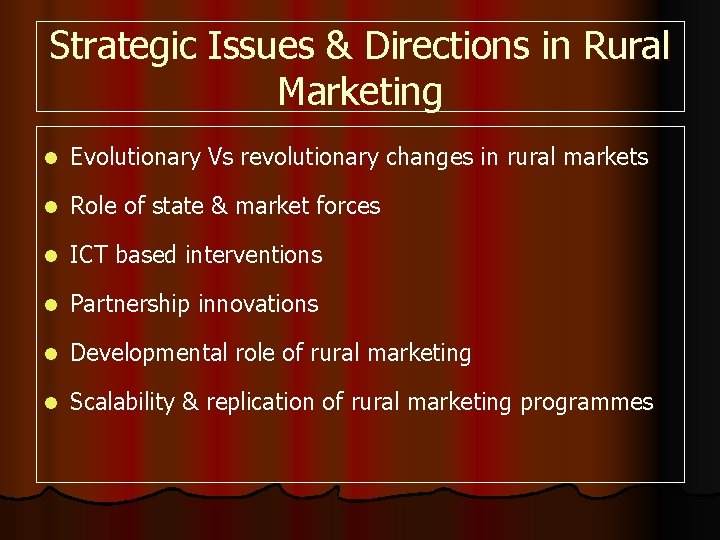
Strategic Issues & Directions in Rural Marketing l Evolutionary Vs revolutionary changes in rural markets l Role of state & market forces l ICT based interventions l Partnership innovations l Developmental role of rural marketing l Scalability & replication of rural marketing programmes
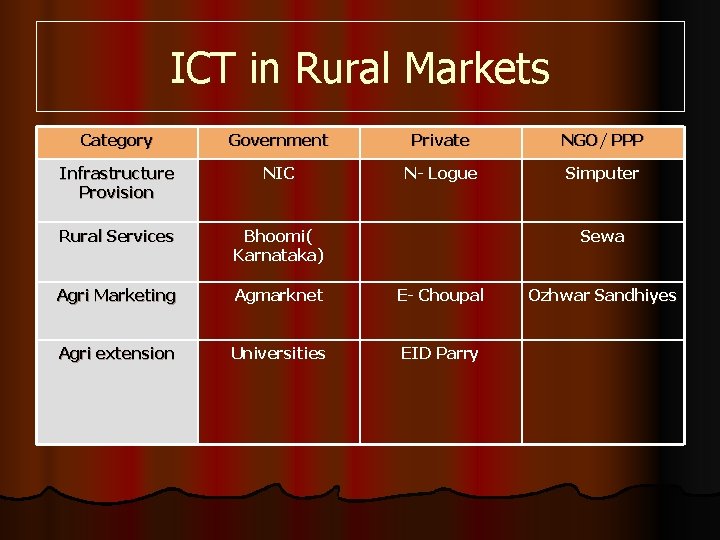
ICT in Rural Markets Category Government Private NGO/ PPP Infrastructure Provision NIC N- Logue Simputer Rural Services Bhoomi( Karnataka) Agri Marketing Agmarknet E- Choupal Agri extension Universities EID Parry Sewa Ozhwar Sandhiyes
Close of Session Thank You