
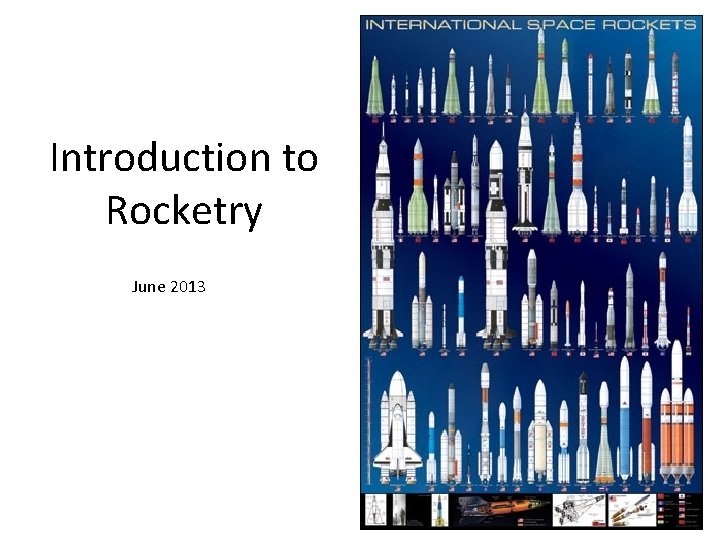
Introduction to Rocketry June 2013 1 Rocket Concepts

- Slides: 19
Introduction to Rocketry June 2013 1
Rocket Concepts • • Newton’s Laws of Motion Thrust Drag Stability Moments of Inertia Parachutes Rocket Construction Rocket Testing and Analysis 2
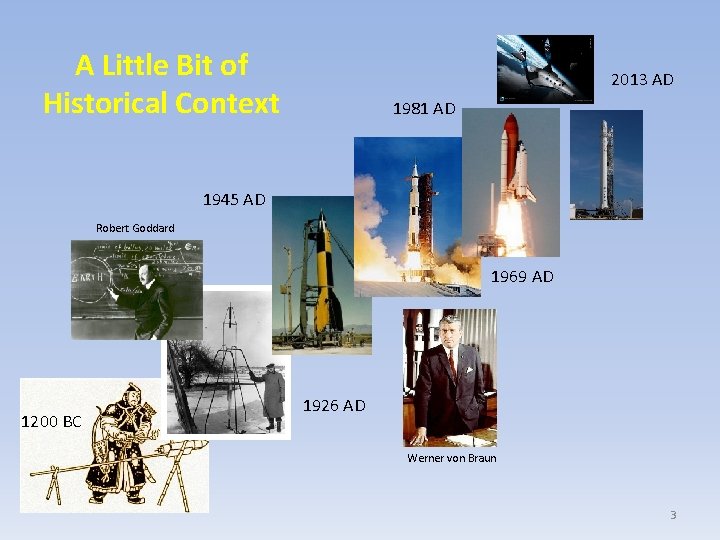
A Little Bit of Historical Context 2013 AD 1981 AD 1945 AD Robert Goddard 1969 AD 1200 BC 1926 AD Werner von Braun 3
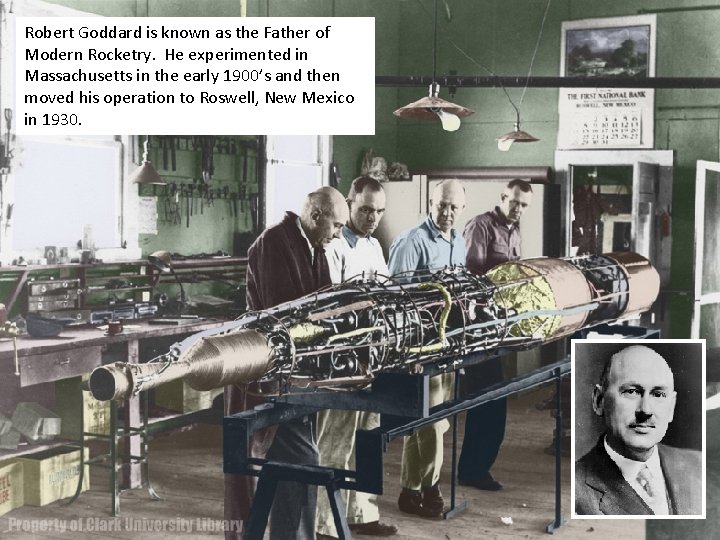
Robert Goddard is known as the Father of Modern Rocketry. He experimented in Massachusetts in the early 1900’s and then moved his operation to Roswell, New Mexico in 1930. 4
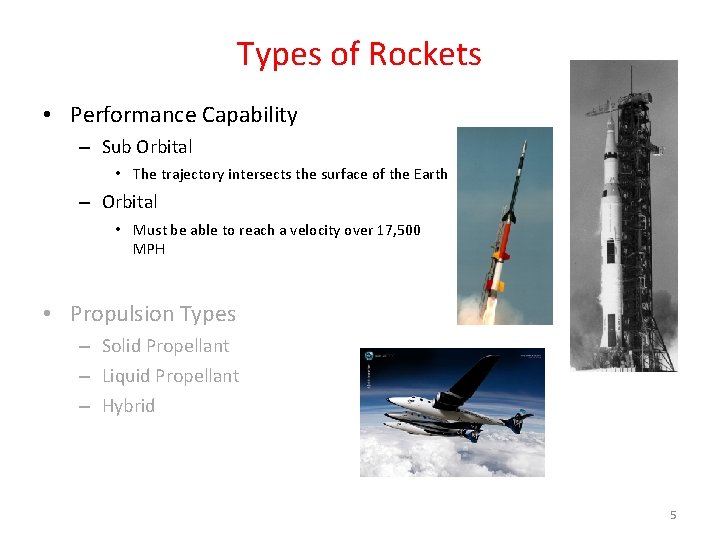
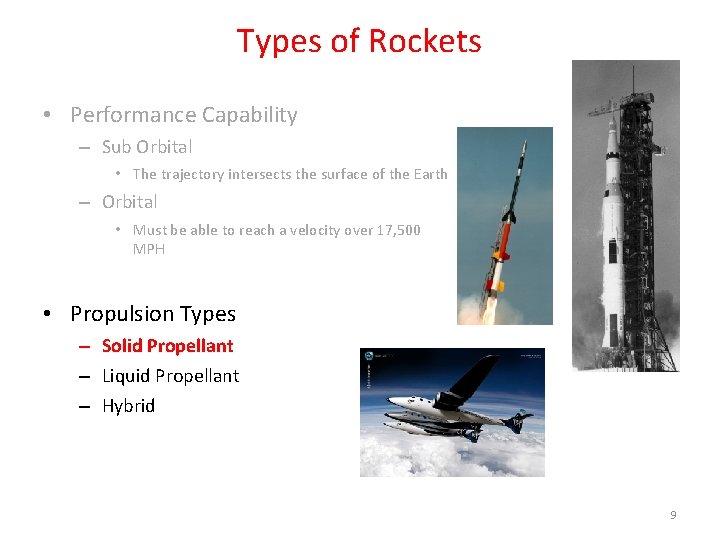
Types of Rockets • Performance Capability – Sub Orbital • The trajectory intersects the surface of the Earth – Orbital • Must be able to reach a velocity over 17, 500 MPH • Propulsion Types – Solid Propellant – Liquid Propellant – Hybrid 5
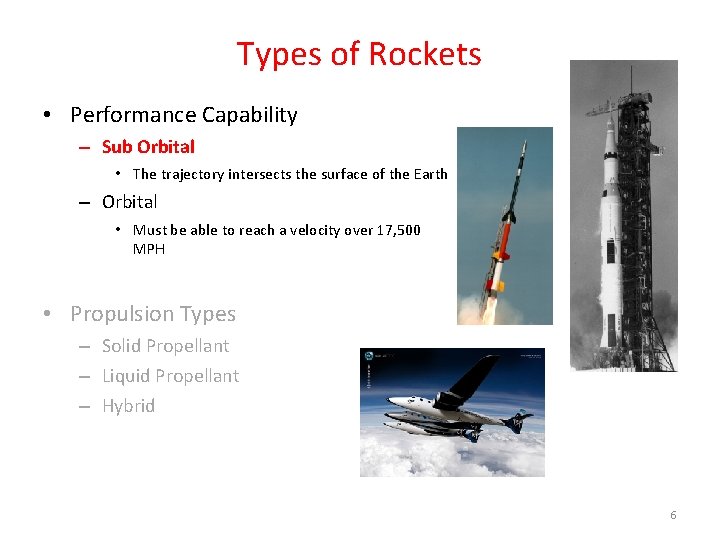
Types of Rockets • Performance Capability – Sub Orbital • The trajectory intersects the surface of the Earth – Orbital • Must be able to reach a velocity over 17, 500 MPH • Propulsion Types – Solid Propellant – Liquid Propellant – Hybrid 6
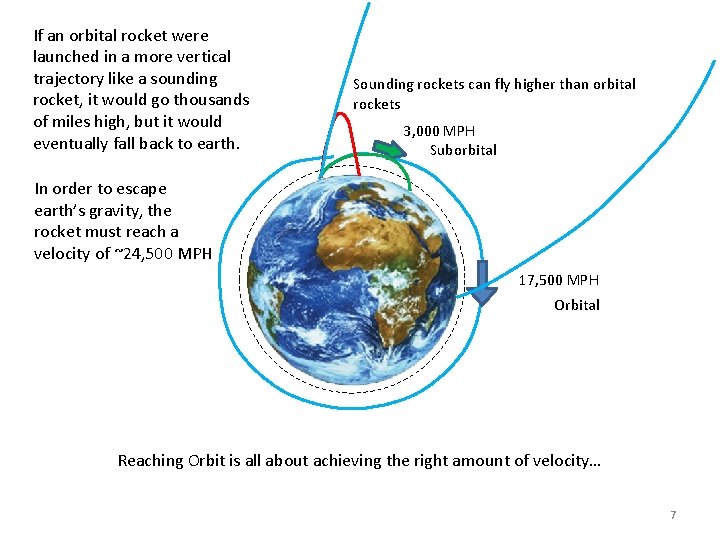
If an orbital rocket were launched in a more vertical trajectory like a sounding rocket, it would go thousands of miles high, but it would eventually fall back to earth. Sounding rockets can fly higher than orbital rockets 3, 000 MPH Suborbital In order to escape earth’s gravity, the rocket must reach a velocity of ~24, 500 MPH 17, 500 MPH Orbital Reaching Orbit is all about achieving the right amount of velocity… 7
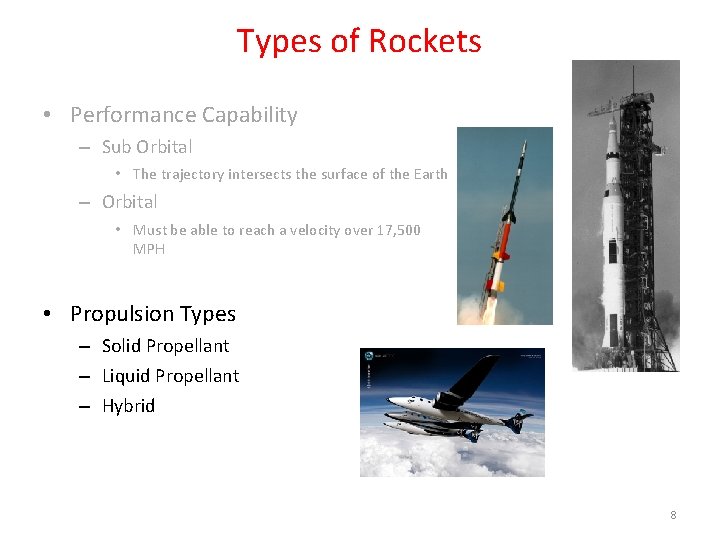
Types of Rockets • Performance Capability – Sub Orbital • The trajectory intersects the surface of the Earth – Orbital • Must be able to reach a velocity over 17, 500 MPH • Propulsion Types – Solid Propellant – Liquid Propellant – Hybrid 8
Types of Rockets • Performance Capability – Sub Orbital • The trajectory intersects the surface of the Earth – Orbital • Must be able to reach a velocity over 17, 500 MPH • Propulsion Types – Solid Propellant – Liquid Propellant – Hybrid 9
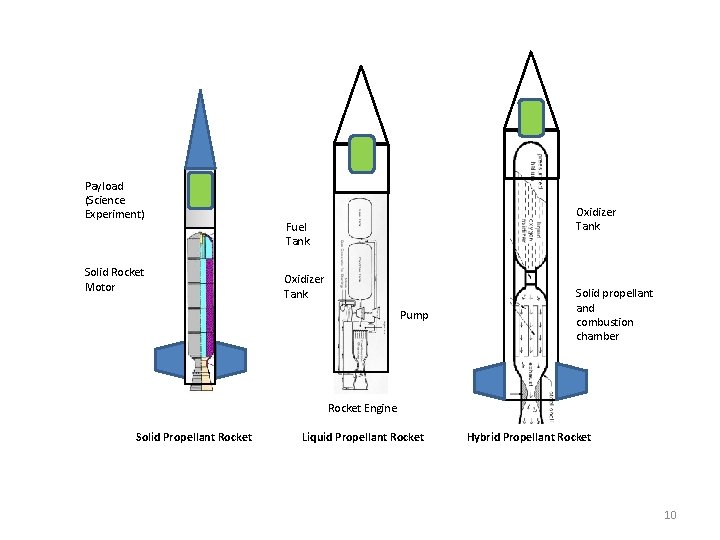
Payload (Science Experiment) Solid Rocket Motor Oxidizer Tank Fuel Tank Oxidizer Tank Pump Solid propellant and combustion chamber Rocket Engine Solid Propellant Rocket Liquid Propellant Rocket Hybrid Propellant Rocket 10
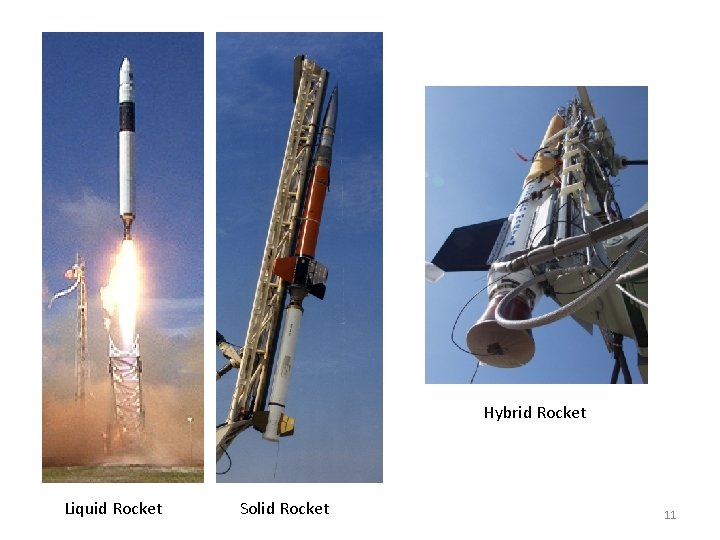
Hybrid Rocket Liquid Rocket Solid Rocket 11
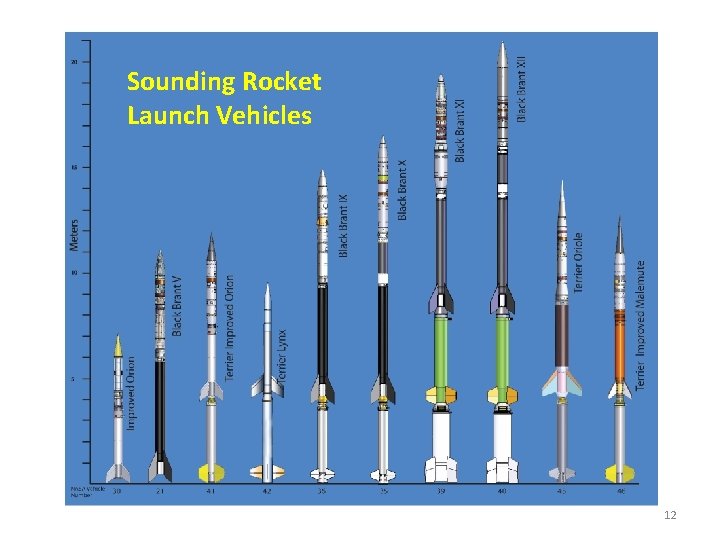
Sounding Rocket Launch Vehicles 12
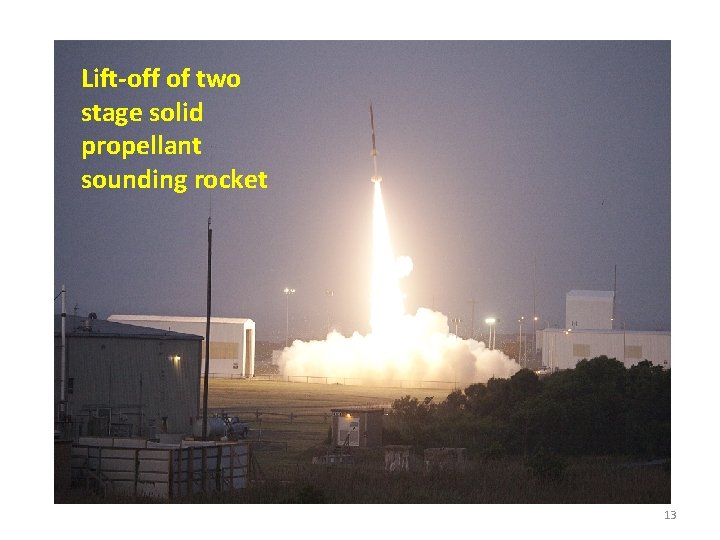
Lift-off of two stage solid propellant sounding rocket 13
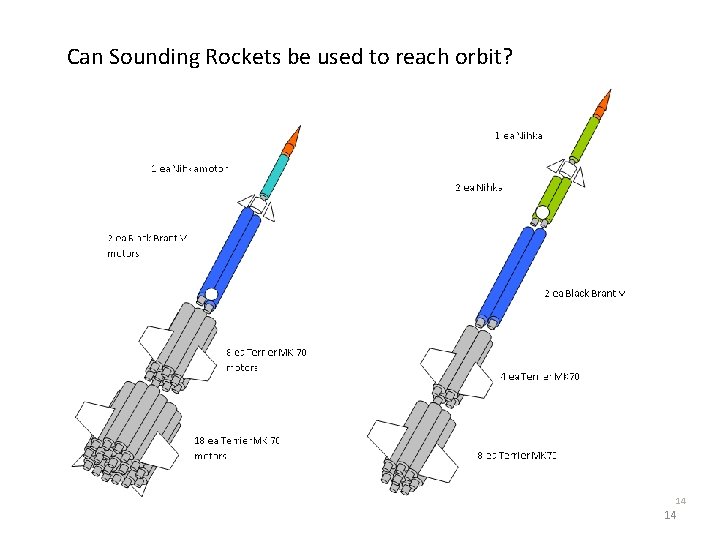
Can Sounding Rockets be used to reach orbit? 14 14
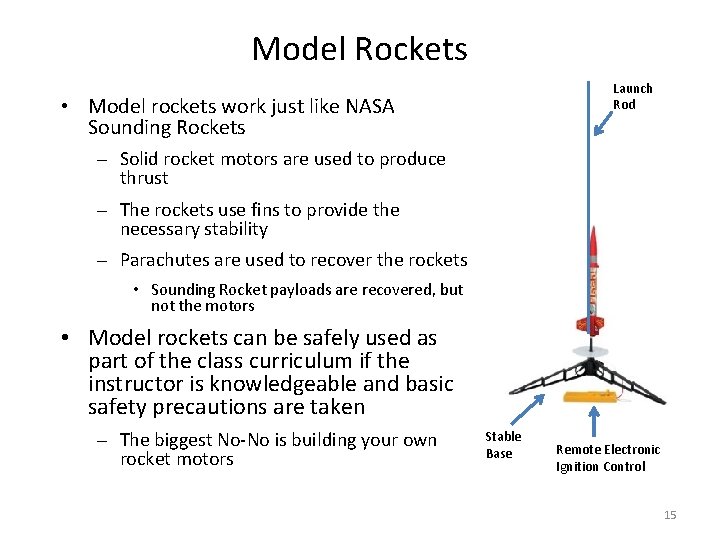
Model Rockets Launch Rod • Model rockets work just like NASA Sounding Rockets ‒ Solid rocket motors are used to produce thrust ‒ The rockets use fins to provide the necessary stability ‒ Parachutes are used to recover the rockets • Sounding Rocket payloads are recovered, but not the motors • Model rockets can be safely used as part of the class curriculum if the instructor is knowledgeable and basic safety precautions are taken ‒ The biggest No-No is building your own rocket motors Stable Base Remote Electronic Ignition Control 15
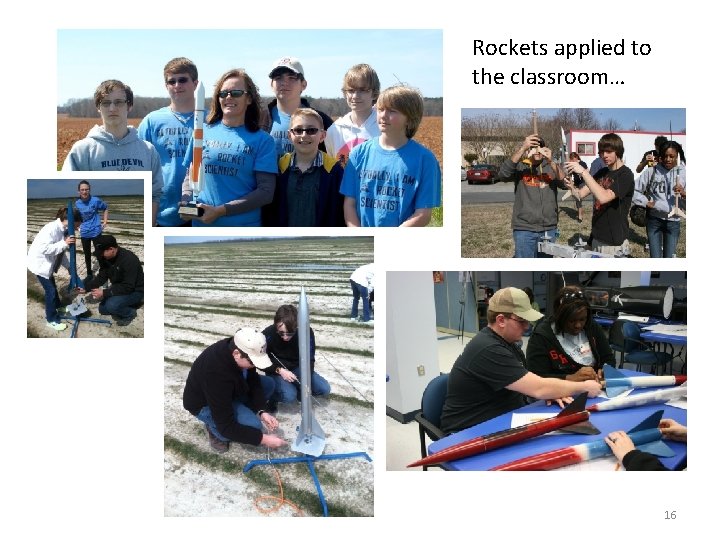
Rockets applied to the classroom… 16
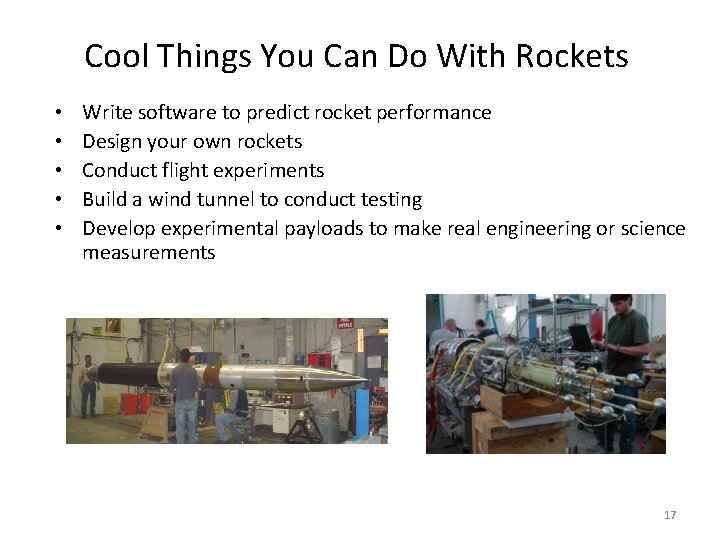
Cool Things You Can Do With Rockets • • • Write software to predict rocket performance Design your own rockets Conduct flight experiments Build a wind tunnel to conduct testing Develop experimental payloads to make real engineering or science measurements 17
What are we going to do this week? • Build a foam model rocket • Analyze and test the rocket • Learn some basic rocket physics 18
Questions? 19