
Introduction to Restorative Practices 1 Presentation Overview 1
- Slides: 7
Introduction to Restorative Practices 1
Presentation Overview 1. What is Restorative Practice? 2. How do Restorative Practices work? 3. Examples of practice in our school… … 4. Questions? 2
What is Restorative Practice? ¡ Restorative Practice (RP) is based on the philosophy and principles of restorative justice. Restorative Practice involves: l Viewing wrongdoing through a ‘relational’ lense – understanding that harm has been done to people and relationships l Understanding that when such harm is done, it creates obligations and liabilities l Focusing on repairing the harm and making things right Thorsborne, M & D. Vinegrad, Restorative Justice Pocketbook (2009, p. 10) 3
How Do Restorative Practices Work? ¡ When things go wrong you: l Involve those responsible for and those affected by the behaviour in solving the problem l Provide high levels of support for all parties, whether perpetrators or those affected l Address the needs of all those involved in harmful incidents l Provide strong messages and reminders about what behaviours are acceptable and unacceptable Thorsborne, M & D. Vinegrad, Restorative Justice Pocketbook (2009, p. 11) 4
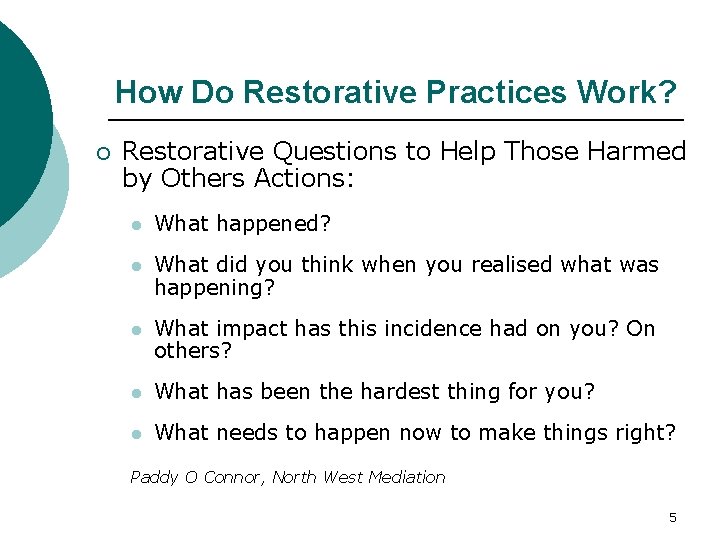
How Do Restorative Practices Work? ¡ Restorative Questions to Help Those Harmed by Others Actions: l What happened? l What did you think when you realised what was happening? l What impact has this incidence had on you? On others? l What has been the hardest thing for you? l What needs to happen now to make things right? Paddy O Connor, North West Mediation 5
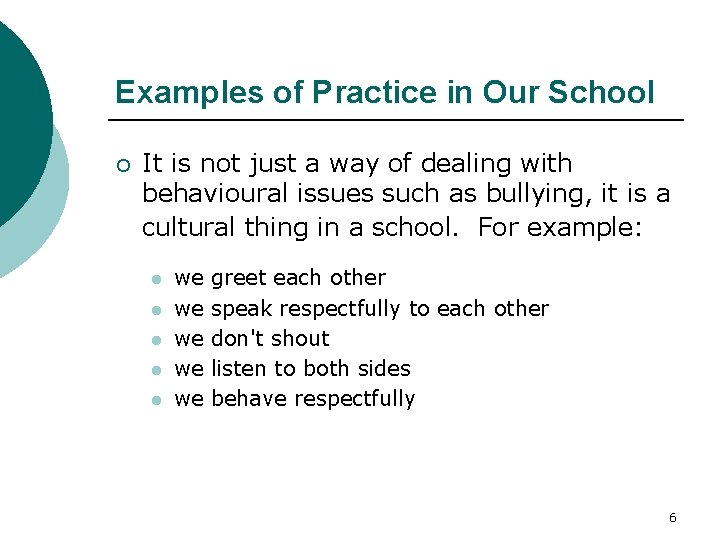
Examples of Practice in Our School ¡ It is not just a way of dealing with behavioural issues such as bullying, it is a cultural thing in a school. For example: l l l we greet each other we speak respectfully to each other we don't shout we listen to both sides we behave respectfully 6
Questions? 7