
Introduction to research data management Elin Stangeland Digital
- Slides: 23
Introduction to research data management Elin Stangeland, Digital services Annika Rockenberger, Reference and Research Section University of Oslo Library
Upcoming sessions… • • • Data management planning 30/10 - 9: 00 Data classification and storage selection 3/11 – 9: 00 Organising your research data 5/11 – 9: 00 Privacy and data protection 10/11 – 13: 00 Sharing and archiving research data 11/11 – 13: 00
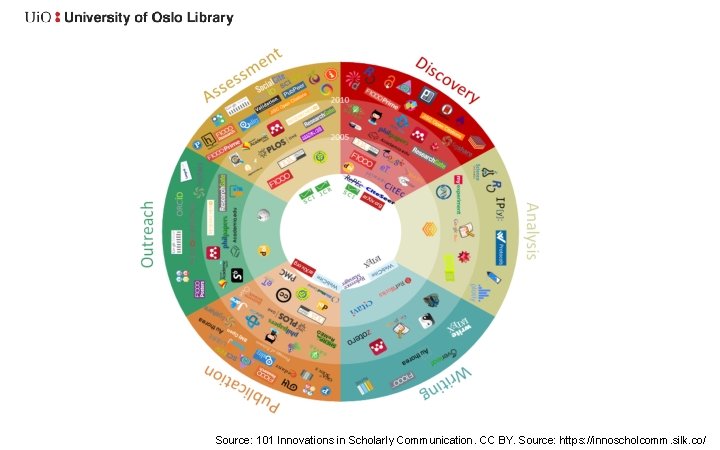
Source: 101 Innovations in Scholarly Communication. CC BY. Source: https: //innoscholcomm. silk. co/
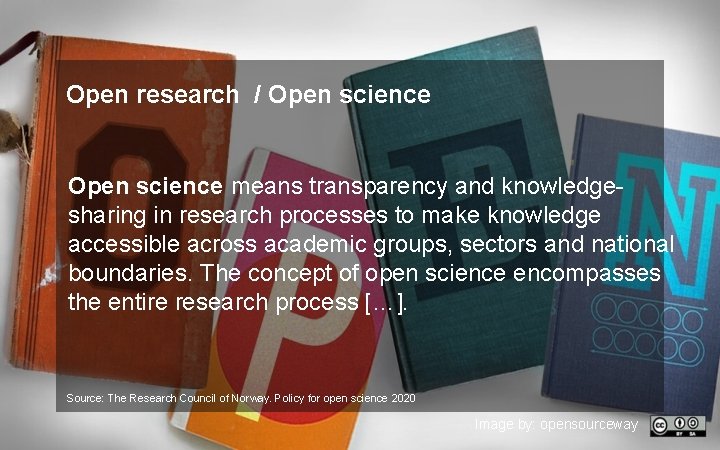
Open research / Open science means transparency and knowledgesharing in research processes to make knowledge accessible across academic groups, sectors and national boundaries. The concept of open science encompasses the entire research process […]. Source: The Research Council of Norway. Policy for open science 2020 Image by: opensourceway
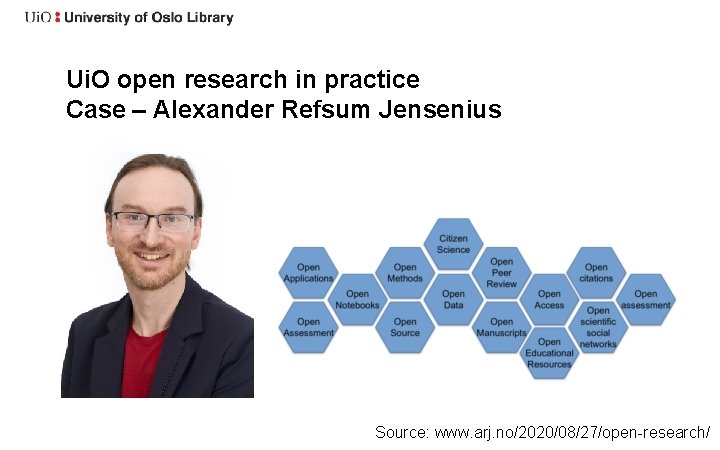
Ui. O open research in practice Case – Alexander Refsum Jensenius Source: www. arj. no/2020/08/27/open-research/
Why open research? The Research Council of Norway’s new policy for Open Research mentions three main goals • Contributing to a well functioning research system • Contribute to sustainable development • Strengthening trust in research Source: The Research Council of Norway, policy for Open Research
Why Open research? Opening the research process: – – Transparency Knowledge sharing Supports validation and reproducibility Reduces cases of academic misconduct “My main argument for opening all parts of the process is that is “sharpening” the research process. You cannot be sloppy if you know that it will be exposed”. Alexander R. Jensenius, 2020 It helps to maximize: - The quality of and impact of research Provides the foundations for others to build upon Source: FOSTER consortium CC BY 4. 0
DATA – IN THE HUMANITIES
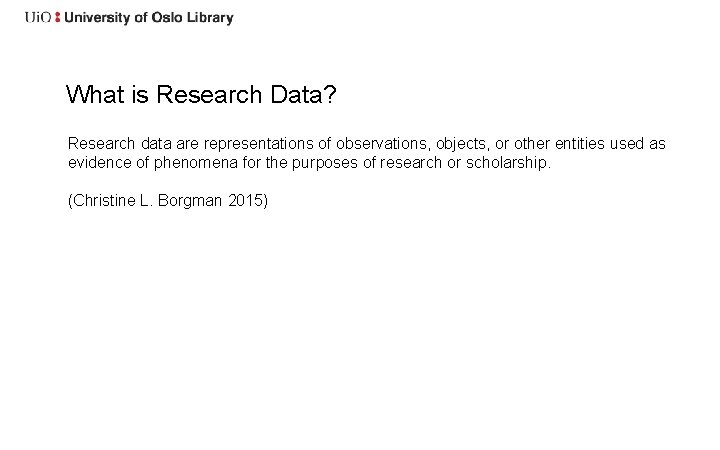
What is Research Data? Research data are representations of observations, objects, or other entities used as evidence of phenomena for the purposes of research or scholarship. (Christine L. Borgman 2015)
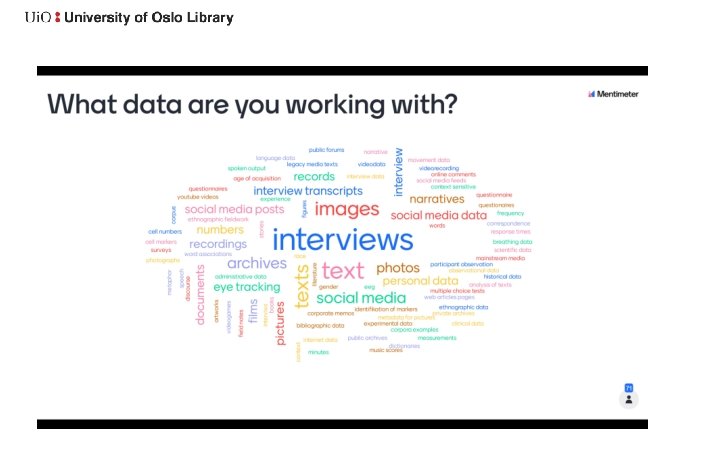
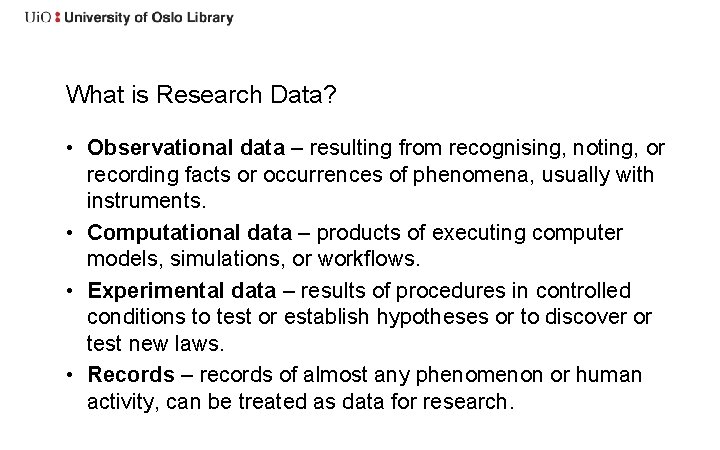
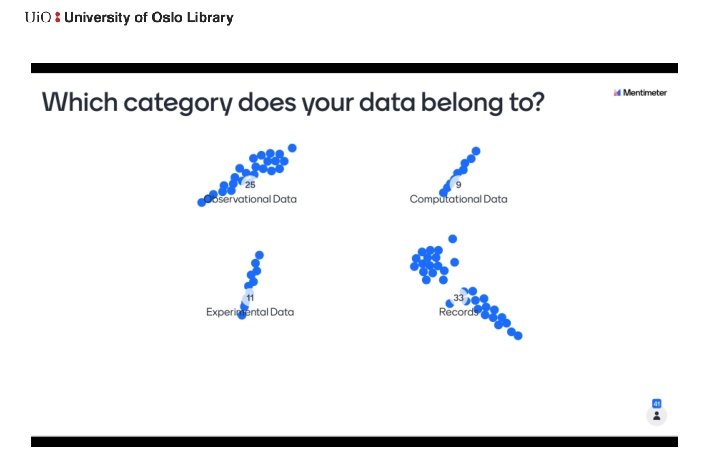
What is Research Data? • Observational data – resulting from recognising, noting, or recording facts or occurrences of phenomena, usually with instruments. • Computational data – products of executing computer models, simulations, or workflows. • Experimental data – results of procedures in controlled conditions to test or establish hypotheses or to discover or test new laws. • Records – records of almost any phenomenon or human activity, can be treated as data for research.
Data in the Humanities – Further Reading • Sustainable and FAIR data sharing in the humanities: https: //allea. org/portfolio-item/sustainableand-fair-data-sharing-in-the-humanities/ • Data management best practices bibliography: https: //www. Zotero. Org/groups/2427138/data_ management_best_practices_in_the_humanities • Big? Smart? Clean? Messy? Data in the humanities: http: //journalofdigitalhumanities. Org/2 -3/bigsmart-clean-messy-data-in-the-humanities/
Why is research data management important to you? • Enabling working with data efficiently • Being aware of important requirements, regulations and most importantly where to find support and help • Enabling delivery on funder and employer requirements easier Image by saamiblog, licensed under CC BY 2. 0
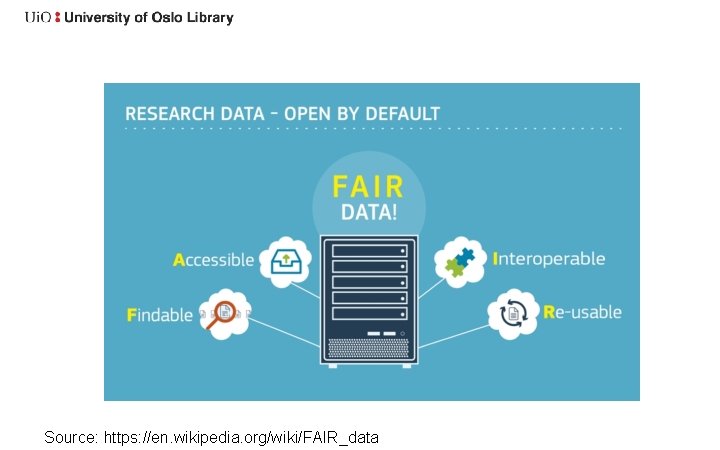
Source: https: //en. wikipedia. org/wiki/FAIR_data
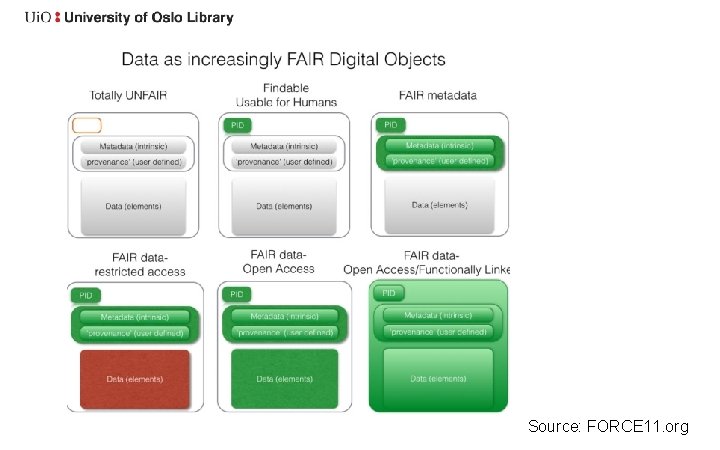
Source: FORCE 11. org
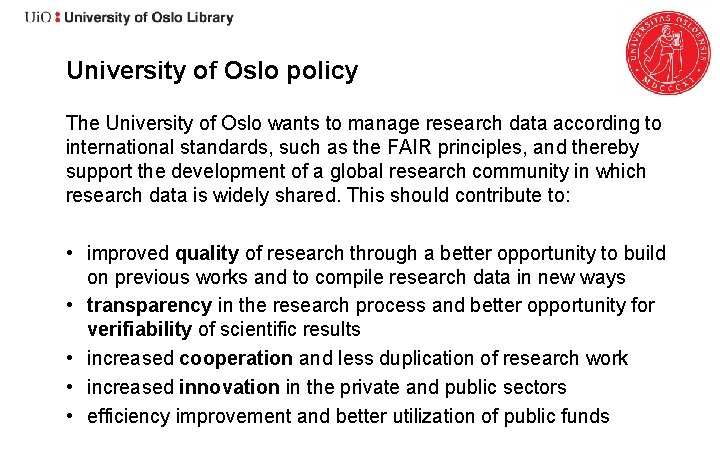
University of Oslo policy The University of Oslo wants to manage research data according to international standards, such as the FAIR principles, and thereby support the development of a global research community in which research data is widely shared. This should contribute to: • improved quality of research through a better opportunity to build on previous works and to compile research data in new ways • transparency in the research process and better opportunity for verifiability of scientific results • increased cooperation and less duplication of research work • increased innovation in the private and public sectors • efficiency improvement and better utilization of public funds
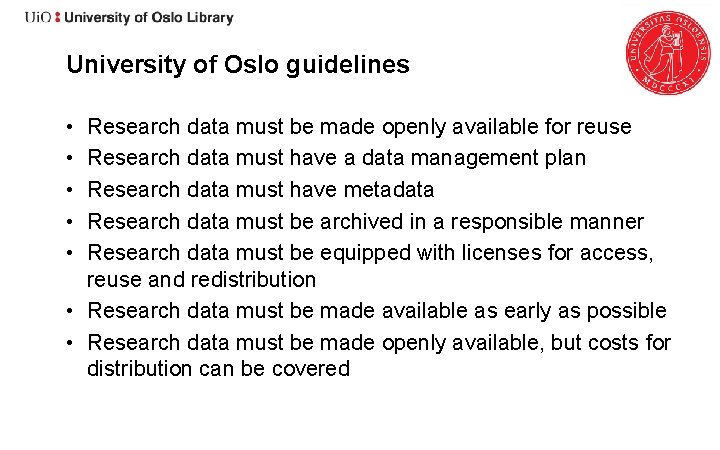
University of Oslo guidelines • • • Research data must be made openly available for reuse Research data must have a data management plan Research data must have metadata Research data must be archived in a responsible manner Research data must be equipped with licenses for access, reuse and redistribution • Research data must be made available as early as possible • Research data must be made openly available, but costs for distribution can be covered
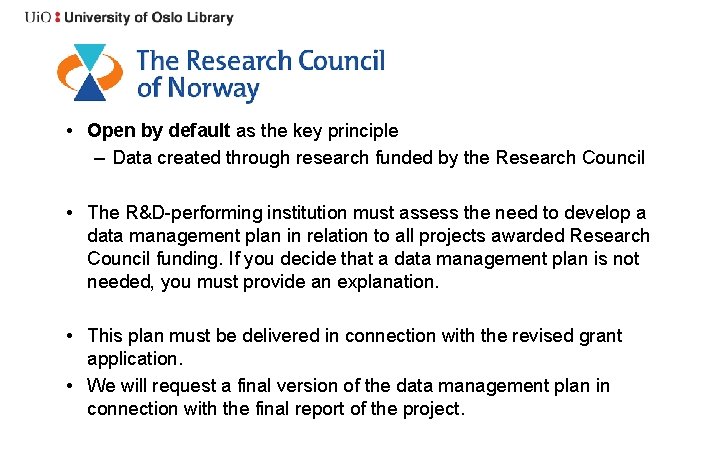
• Open by default as the key principle – Data created through research funded by the Research Council • The R&D-performing institution must assess the need to develop a data management plan in relation to all projects awarded Research Council funding. If you decide that a data management plan is not needed, you must provide an explanation. • This plan must be delivered in connection with the revised grant application. • We will request a final version of the data management plan in connection with the final report of the project.
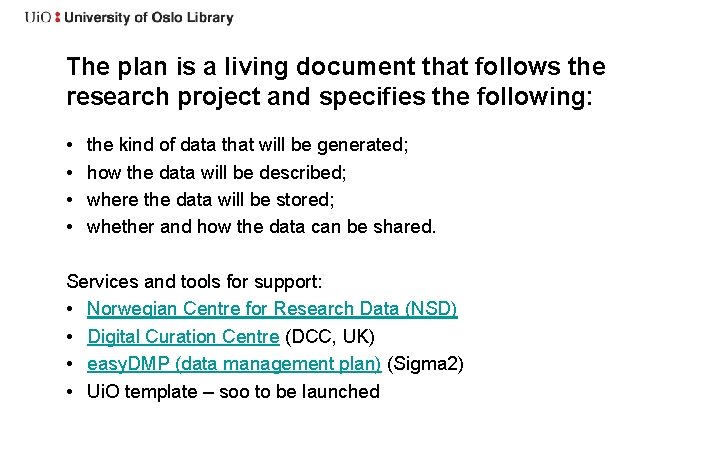
The plan is a living document that follows the research project and specifies the following: • • the kind of data that will be generated; how the data will be described; where the data will be stored; whether and how the data can be shared. Services and tools for support: • Norwegian Centre for Research Data (NSD) • Digital Curation Centre (DCC, UK) • easy. DMP (data management plan) (Sigma 2) • Ui. O template – soo to be launched
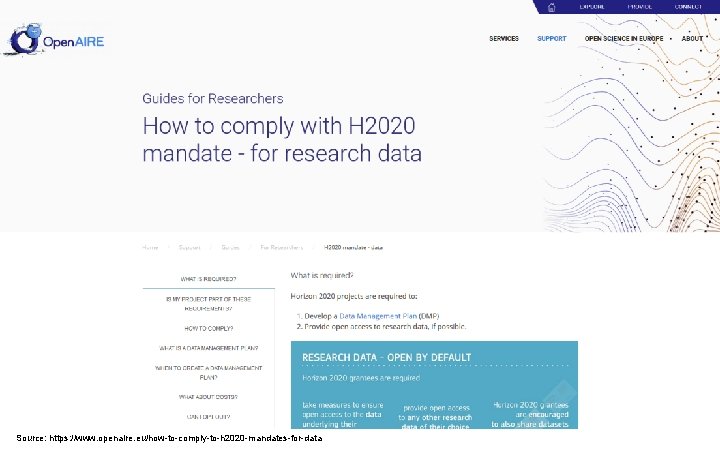
Source: https: //www. openaire. eu/how-to-comply-to-h 2020 -mandates-for-data
Sources: Anne Bergsaker og Live Håndlykken Kvale. Datahåndtering, kurs 25. 9. 2019 CESSDA. Data management expert guide. https: //www. cessda. eu/Training-Resources/Library/Data. Management-Expert-Guide Christine L. Borgman. 2015. Big Data, Little Data, No Data: Scholarship in the Networked World. The MIT Press. Forskningsrådets policy for åpen forskning https: //www. forskningsradet. no/nyheter/2020/slik-skal-forskningsradetjobbe-for-apen-forskning/ Forskningsrådets policy for åpen tilgang til forskningsdata: https: //www. forskningsradet. no/forskningspolitisk-radgivning/apen-forskning/apen-tilgang-til-forskningsdata/ Open. Aire. Guides for researchers: How to comply with h 2020 mandate – for research data. https: //www. openaire. eu/how-to-comply-to-h 2020 -mandates-for-data University of Oslo. Policies and guidelines for research data management https: //www. uio. no/english/foremployees/support/research-data-management/policies-and-guidelines/index. html