
Introduction to Referral To Treatment RTT Quality Standards
- Slides: 12
Introduction to Referral To Treatment (RTT) Quality Standards These standards are also referred to as RTT 18 Weeks: Referral to Treatment is enshrined in the NHS Constitution and provides a patient with a legal right to be seen, diagnosed and treated within 18 weeks of being referred into a Consultant Led Service, or interface service (e. g. community triage service) 1
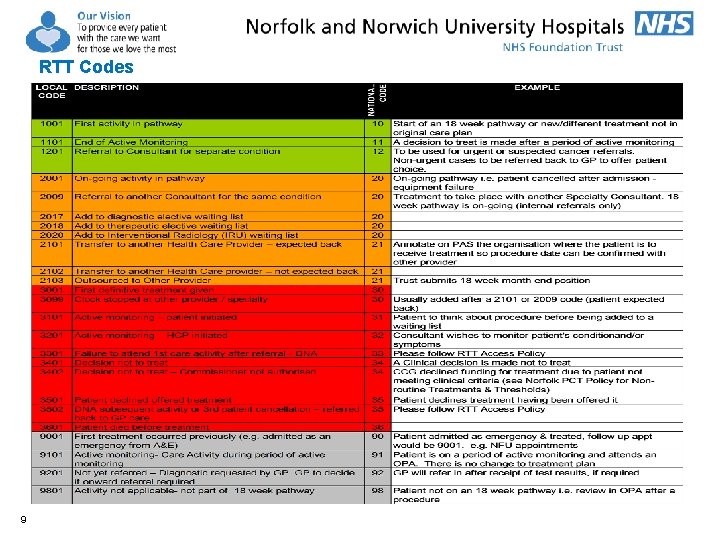
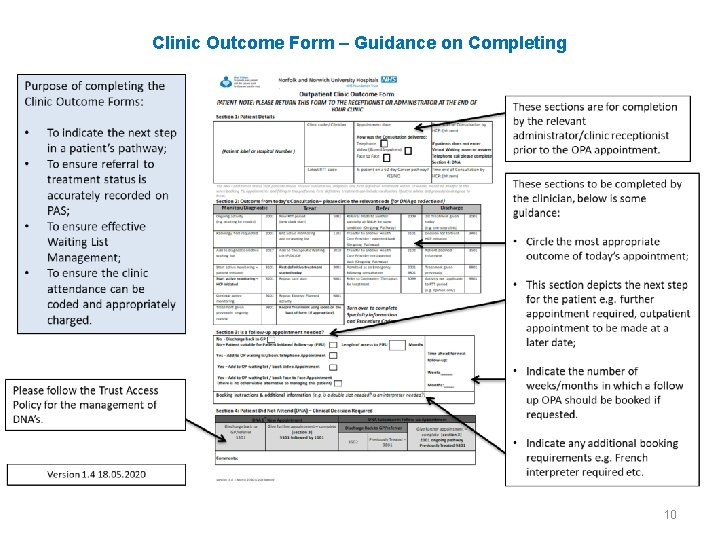
How does it work There are various stages in a pathway and each stage has been given an RTT code which is recorded onto our PAS system by the administration teams, this is based on what is indicated on completion of clinic outcome form and dictation by clinician. Why is it important • RTT is a quality standard, it is how we manage our patients, how we treat them • Clinical decisions and outcome of clinic drives the patients administrative management • The wrong clinic outcome can lead to patients being ‘lost’ in the system, added to the wrong type of waiting list, not being tracked correctly, or incorrectly discharged all of which could impact on patient care • It relates to how the Trust is paid • Patients are booked appropriately in order of urgency and then length of wait (chronological booking as per NHS Constitution). • Patients are managed on the correct waiting lists for their clinical needs • Provides accurate and valid waiting list 2
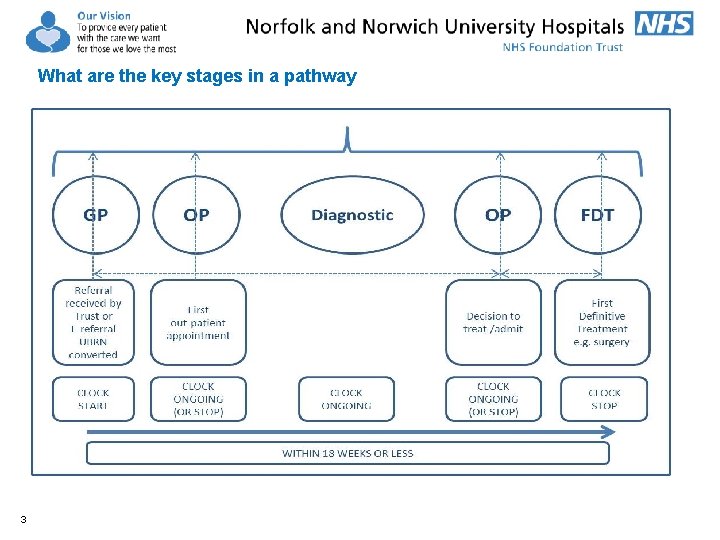
What are the key stages in a pathway 3
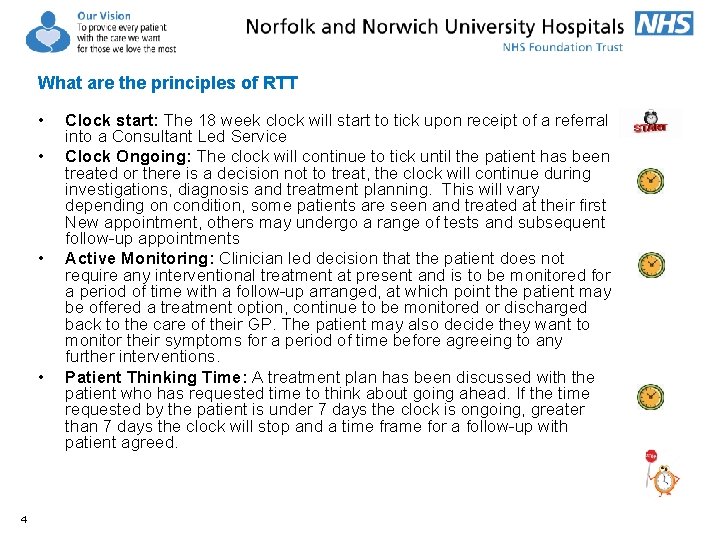
What are the principles of RTT • • 4 Clock start: The 18 week clock will start to tick upon receipt of a referral into a Consultant Led Service Clock Ongoing: The clock will continue to tick until the patient has been treated or there is a decision not to treat, the clock will continue during investigations, diagnosis and treatment planning. This will vary depending on condition, some patients are seen and treated at their first New appointment, others may undergo a range of tests and subsequent follow-up appointments Active Monitoring: Clinician led decision that the patient does not require any interventional treatment at present and is to be monitored for a period of time with a follow-up arranged, at which point the patient may be offered a treatment option, continue to be monitored or discharged back to the care of their GP. The patient may also decide they want to monitor their symptoms for a period of time before agreeing to any further interventions. Patient Thinking Time: A treatment plan has been discussed with the patient who has requested time to think about going ahead. If the time requested by the patient is under 7 days the clock is ongoing, greater than 7 days the clock will stop and a time frame for a follow-up with patient agreed.
Principle of RTT continued Clock Stop: • Patient receives first definitive treatment • It is clinically appropriate to return the patient to primary care for any non consultant-led treatment in primary care; • A clinical decision is made to start a period of active monitoring; • A patient declines treatment having been offered it; • A clinical decision is made not to treat; • A patient DNAs their first appointment following the initial referral (Nullification). • First Definitive Treatment: this is when the first clinical intervention intended to manage a patient's disease, condition or injury and avoid further clinical interventions has occurred. This could include lifestyle advice if the intention for this is to improve the symptoms for which the patient has been referred. AHP intervention provided in secondary care, if this is expected to avoid further interventions. 5
How do we manage patients who are non-compliant There is no agreed definition but it is reasonable to get a clinical review and discharge a patient if: • • The patient repeatedly delays their planned diagnosis and treatment; The patient fails to comply with required steps in the pathway, leading to sub optimal care; There is a need for a GP to engage with the patient to explore alternative options; There are concerns about the patients well being or safety that cannot be resolved due to their non engagement. DNA’s Any patient that DNA’s should have their notes reviewed by a clinician to decide on the next course of action; – Offer another appointment – Discharge back to referrer Patient should only be discharged following a clinician review and when it is in the best clinical interest of the patients. Special consideration should be given to vulnerable, cancer, urgent and clinically concerning patients 6
How do we manage planned patients • • 7 A patient is added to an Elective Planned waiting list where there is a clinical need to wait for a period of time before the procedure. This includes planned diagnostics tests or treatments or a series of procedures carried out as part of a treatment plan – which are required for clinical reasons to be carried out at a specific time, for example, where the procedure has to be performed at a set point linked to a clinical criteria (e. g. a certain age for a child before a procedure can be performed) or a procedure / test repeated at a specific frequency. Elective planned waiting list entries must include a clinically determined treat by or ‘target’ date and patients should be booked for the procedure within the timelines as requested by the clinician. When patients on planned waiting lists are clinically ready for their care to commence and reach the date for their planned appointment / admission, they should either receive that appointment or be transferred to an active waiting list and a waiting time clock should start.
What can I do to ensure correct pathway management for my patients • • 8 Always complete a clinic outcome form, for all consultations including via telephone and video Make sure forms are passed to your administrative team A clear clinic letter can make all the difference to the next steps in the pathway for the patient Clear treatment plans for patients make it easier for admin staff to understand the next steps. You may know what you are planning but your admin teams are not clinical they need your help If the patient has been given advice or medication that constitutes treatment, please annotate in letters The shorter the letter, the quicker it can be typed, reducing typing delays, please don’t add unnecessary dictation. If patient wants thinking time, agree a time frame for a follow-up, do not be open ended for example “call my secretary when you are ready” this makes it difficult to manage the patient pathway If patient is entering a period of active monitoring be clear in dictation that you are not planning any clinical intervention at this stage
RTT Codes 9
Clinic Outcome Form – Guidance on Completing 10
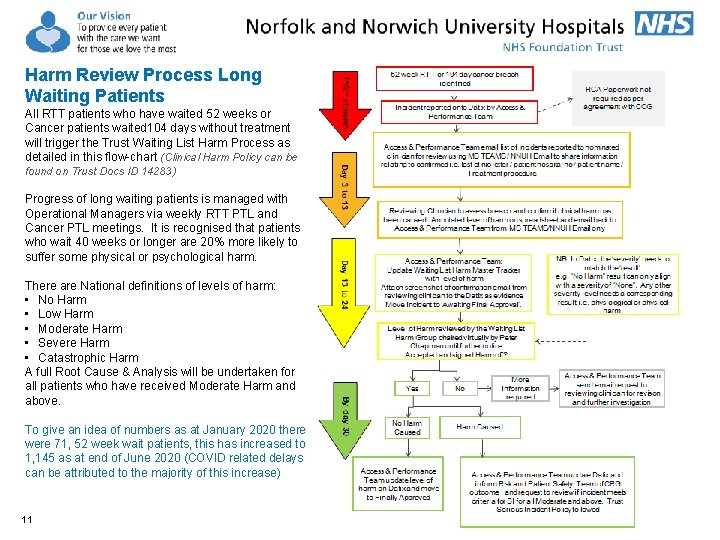
Harm Review Process Long Waiting Patients All RTT patients who have waited 52 weeks or Cancer patients waited 104 days without treatment will trigger the Trust Waiting List Harm Process as detailed in this flow-chart (Clinical Harm Policy can be found on Trust Docs ID 14283) Progress of long waiting patients is managed with Operational Managers via weekly RTT PTL and Cancer PTL meetings. It is recognised that patients who wait 40 weeks or longer are 20% more likely to suffer some physical or psychological harm. There are National definitions of levels of harm: • No Harm • Low Harm • Moderate Harm • Severe Harm • Catastrophic Harm A full Root Cause & Analysis will be undertaken for all patients who have received Moderate Harm and above. To give an idea of numbers as at January 2020 there were 71, 52 week wait patients, this has increased to 1, 145 as at end of June 2020 (COVID related delays can be attributed to the majority of this increase) 11
Other Useful Sources of Information Referral to Treatment Pathway (RTT) Access Policy and Procedure (Trust Docs ID 411) • This policy sets out the rules and definitions of the 18 week standard to ensure that each patient’s 18 week clock starts and stops fairly and consistently and in line with national rules. It does not provide detailed guidance on how the rules should apply to every situation, but provides an over-arching framework to work within to make clinically sound decisions locally, in consultation with patients, clinicians, providers and commissioners. NHS England RTT e-Learning Package: • 12 This e-learning package is free to sign up to and provides 10 short modules covering different pathway scenarios and how they should be managed from an RTT perspective. This may help you when completing the Clinic Outcome Forms https: //improvement. nhs. uk/resources/elective-care-e-learning-programme/