
Introduction to Reading Graphic Fiction As inspired by
Introduction to Reading Graphic Fiction As inspired by Understanding Comics: The Invisible Art By Scott Mc. Cloud
Defining Graphic Fiction • “Juxtaposed pictorial and other images in deliberate sequence, intended to convey information and/or to produce an aesthetic response in the viewer” (17). Source: Scott Mc. Cloud, Understanding Comics (DC Comics, 1999): 17.
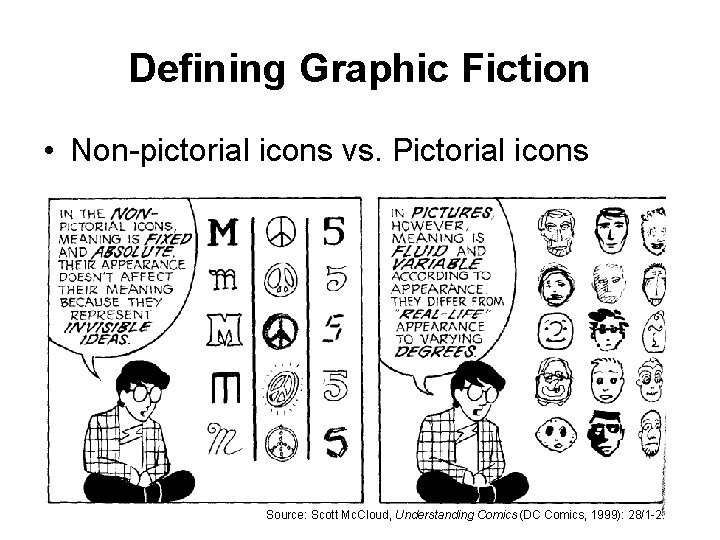
Defining Graphic Fiction • Non-pictorial icons vs. Pictorial icons Source: Scott Mc. Cloud, Understanding Comics (DC Comics, 1999): 28/1 -2.
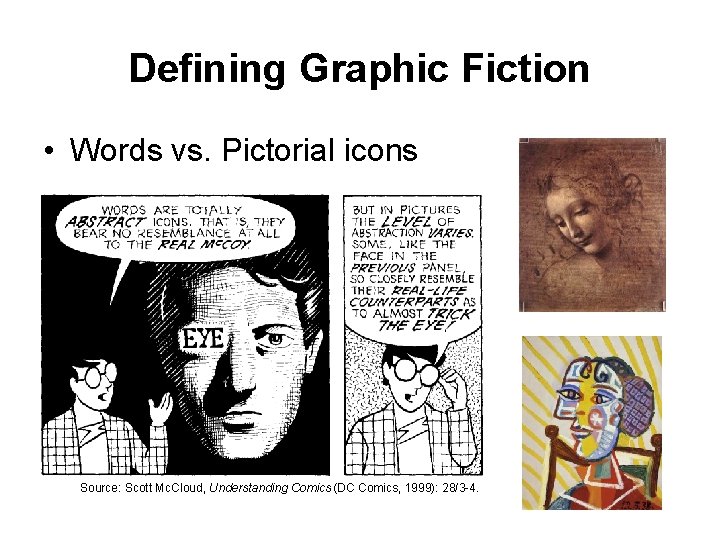
Defining Graphic Fiction • Words vs. Pictorial icons Source: Scott Mc. Cloud, Understanding Comics (DC Comics, 1999): 28/3 -4.
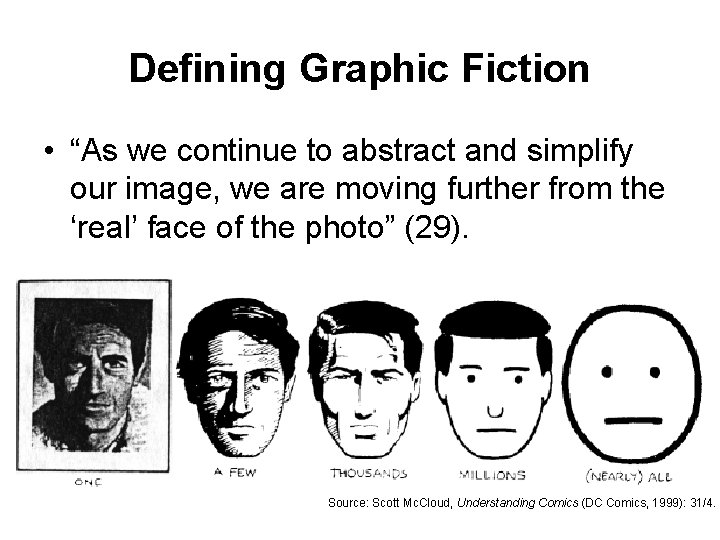
Defining Graphic Fiction • “As we continue to abstract and simplify our image, we are moving further from the ‘real’ face of the photo” (29). Source: Scott Mc. Cloud, Understanding Comics (DC Comics, 1999): 31/4.
CONSIDERATION: • Why is this continuum accepted by our eyes? • Why do human beings, young and old, respond as much to an abstract image as to a realistic one? • What is our preoccupation with simplified realities?
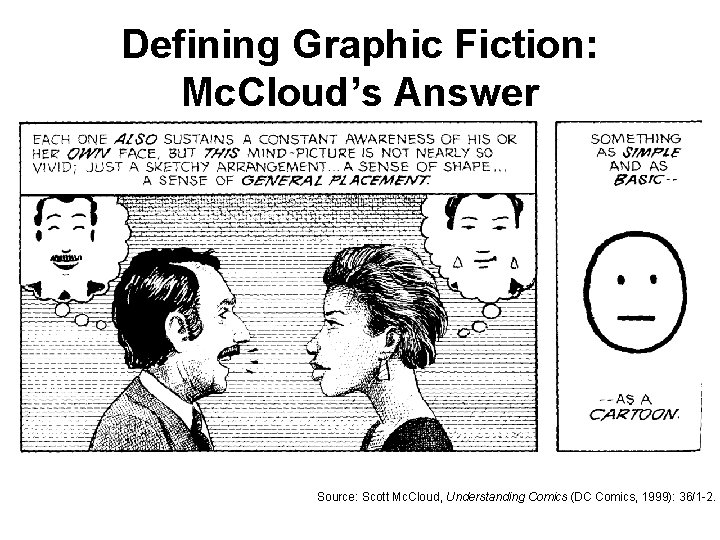
Defining Graphic Fiction: Mc. Cloud’s Answer Source: Scott Mc. Cloud, Understanding Comics (DC Comics, 1999): 36/1 -2.
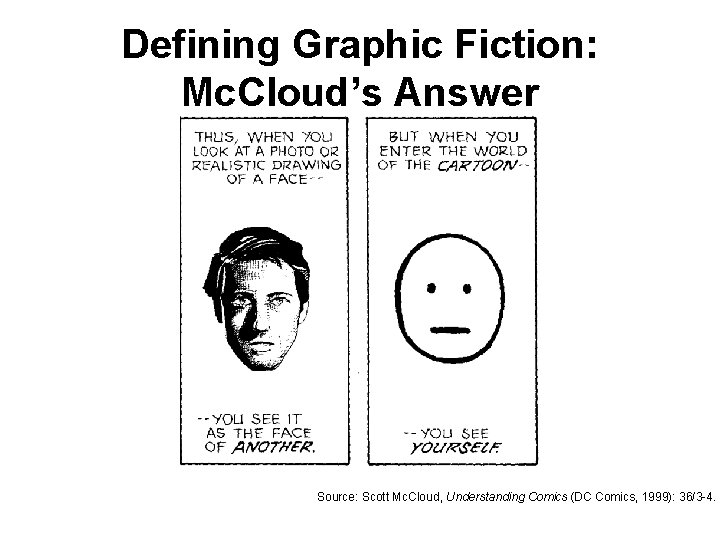
Defining Graphic Fiction: Mc. Cloud’s Answer Source: Scott Mc. Cloud, Understanding Comics (DC Comics, 1999): 36/3 -4.
Defining Graphic Fiction: Mc. Cloud’s Answer • “The cartoon is a vacuum into which our identity and awareness are pulled, an empty shell that we inhabit which enables us to travel to another realm. We don’t just observe the cartoon, we become it!” (36)

Graphic Fiction Terminology • Panel: the perimeters into which text and pictorial icons establish action • Gutter: the space between the panels • Bleed: text and pictorial icons establishing action outside of any perimeters
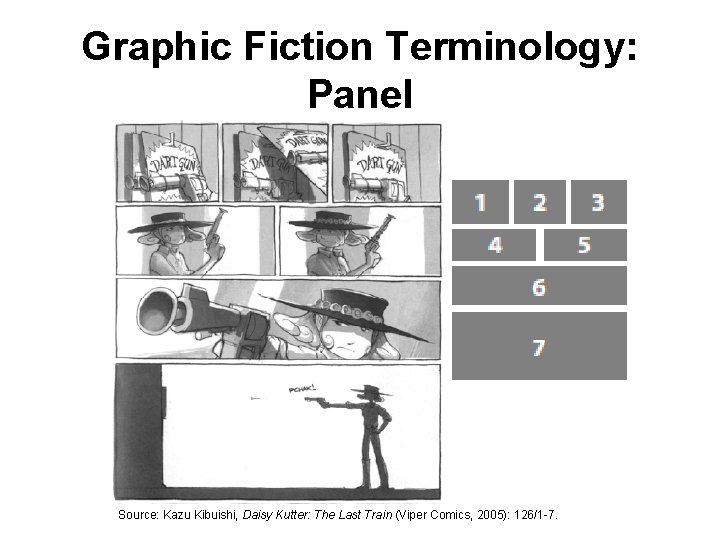
Graphic Fiction Terminology: Panel Source: Kazu Kibuishi, Daisy Kutter: The Last Train (Viper Comics, 2005): 126/1 -7.
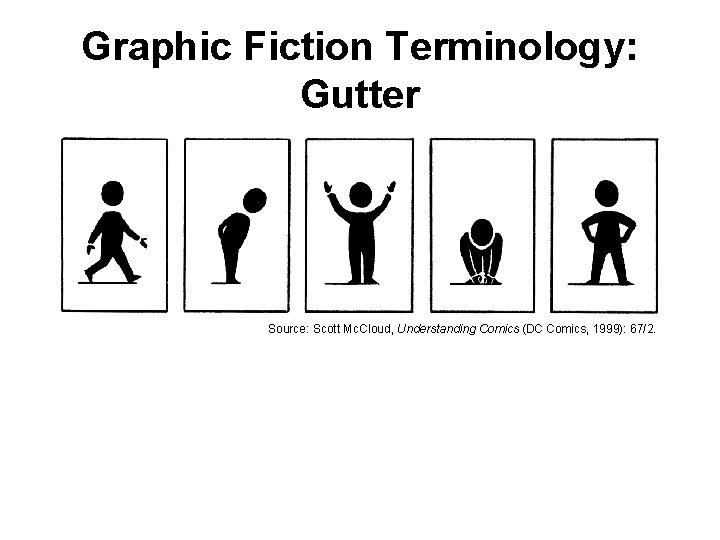
Graphic Fiction Terminology: Gutter Source: Scott Mc. Cloud, Understanding Comics (DC Comics, 1999): 67/2.
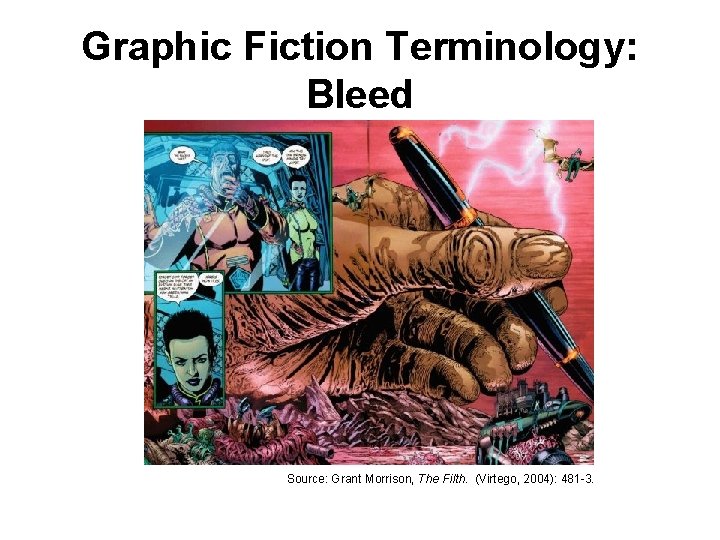
Graphic Fiction Terminology: Bleed Source: Grant Morrison, The Filth. (Virtego, 2004): 481 -3.
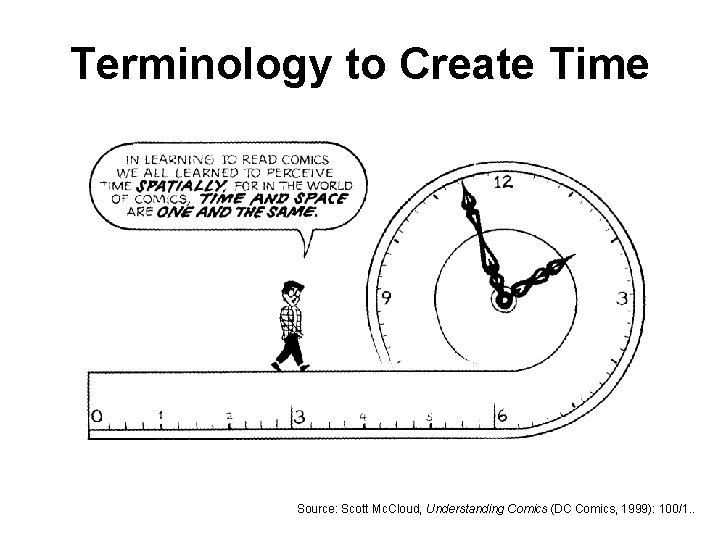
Terminology to Create Time Source: Scott Mc. Cloud, Understanding Comics (DC Comics, 1999): 100/1. .
CHALLENGE: • Examine the effect(s) of the author’s use of panels, gutter, and bleeds in the following examples:
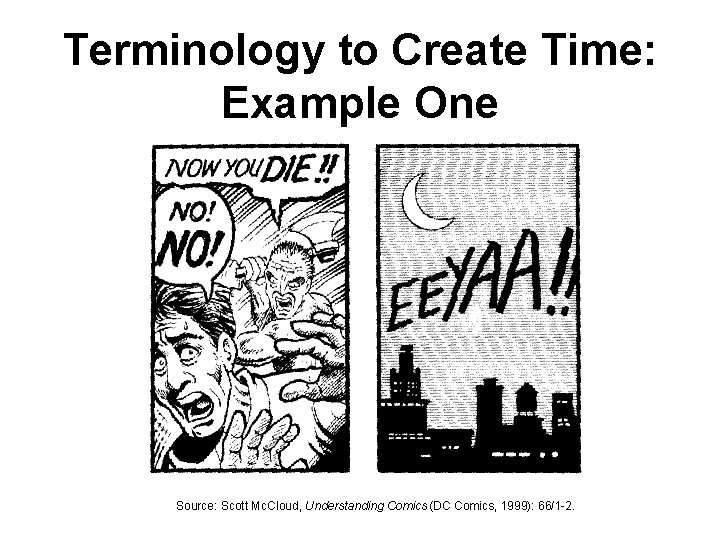
Terminology to Create Time: Example One Source: Scott Mc. Cloud, Understanding Comics (DC Comics, 1999): 66/1 -2.
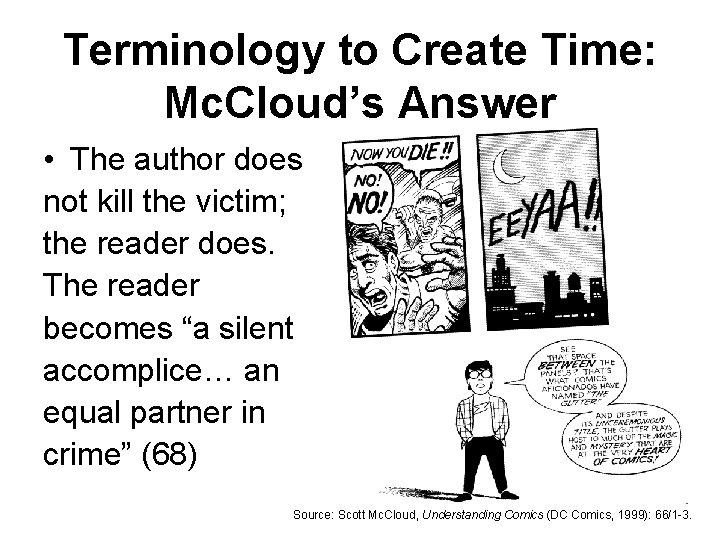
Terminology to Create Time: Mc. Cloud’s Answer • The author does not kill the victim; the reader does. The reader becomes “a silent accomplice… an equal partner in crime” (68) Source: Scott Mc. Cloud, Understanding Comics (DC Comics, 1999): 66/1 -3.
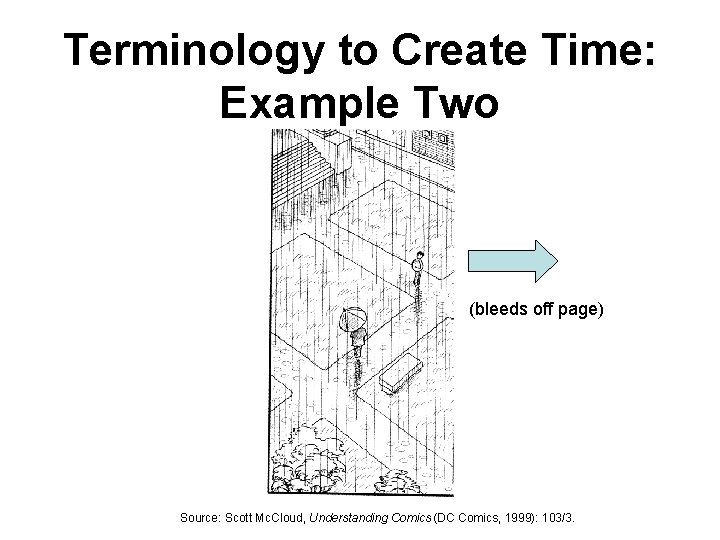
Terminology to Create Time: Example Two (bleeds off page) Source: Scott Mc. Cloud, Understanding Comics (DC Comics, 1999): 103/3.
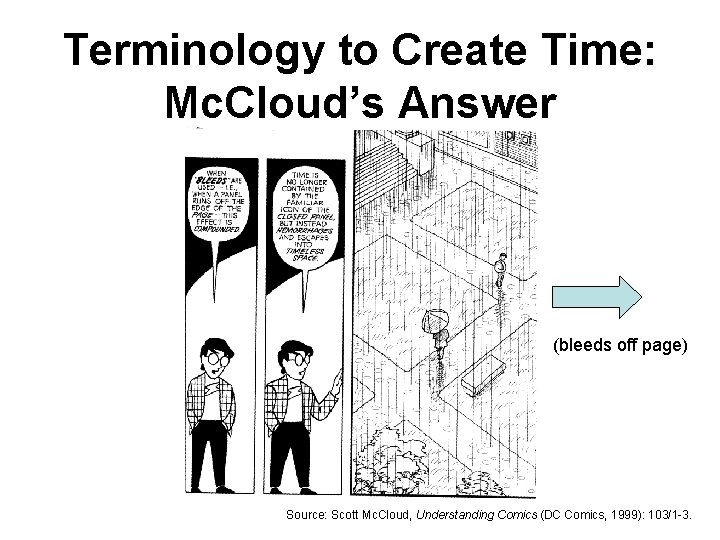
Terminology to Create Time: Mc. Cloud’s Answer (bleeds off page) Source: Scott Mc. Cloud, Understanding Comics (DC Comics, 1999): 103/1 -3.
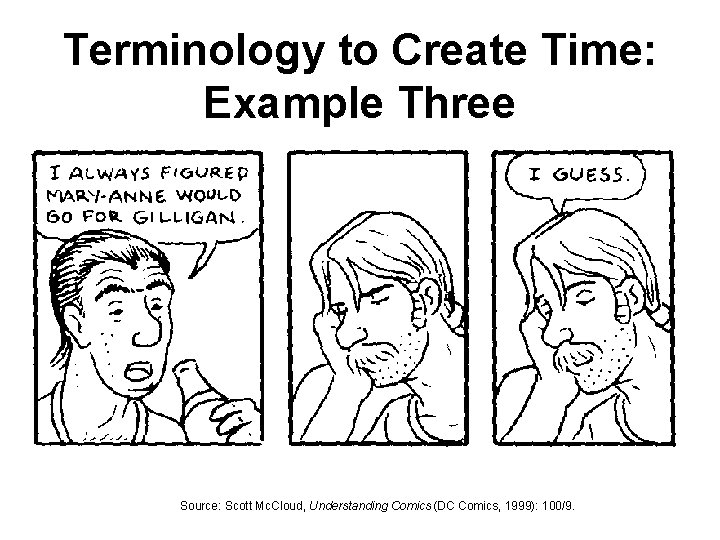
Terminology to Create Time: Example Three Source: Scott Mc. Cloud, Understanding Comics (DC Comics, 1999): 100/9.
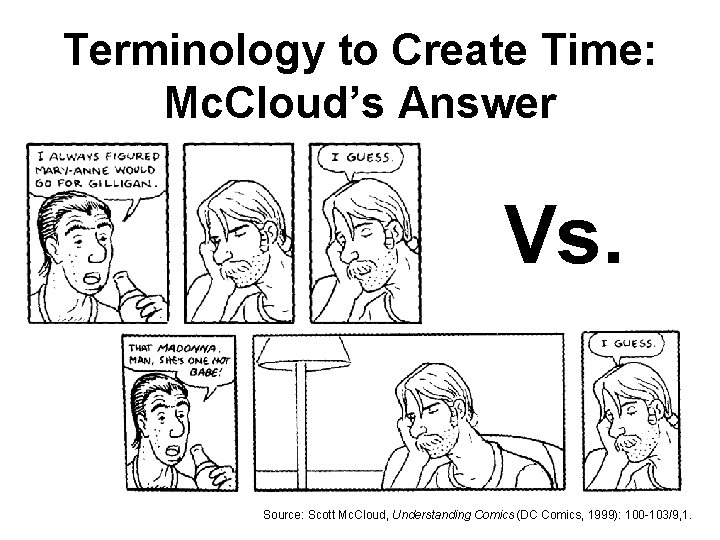
Terminology to Create Time: Mc. Cloud’s Answer Vs. Source: Scott Mc. Cloud, Understanding Comics (DC Comics, 1999): 100 -103/9, 1.

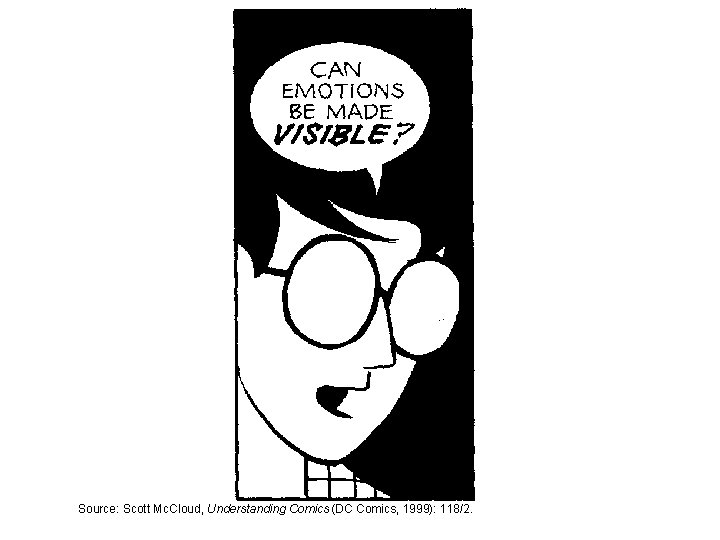
Source: Scott Mc. Cloud, Understanding Comics (DC Comics, 1999): 118/2.
Use of Line to Present Emotion • “The idea that a picture can evoke an emotional or sensual response in the viewer is vital to the art of comics” (121). • “In truth, don’t all lines carry with them an expressive potential? ” (124)
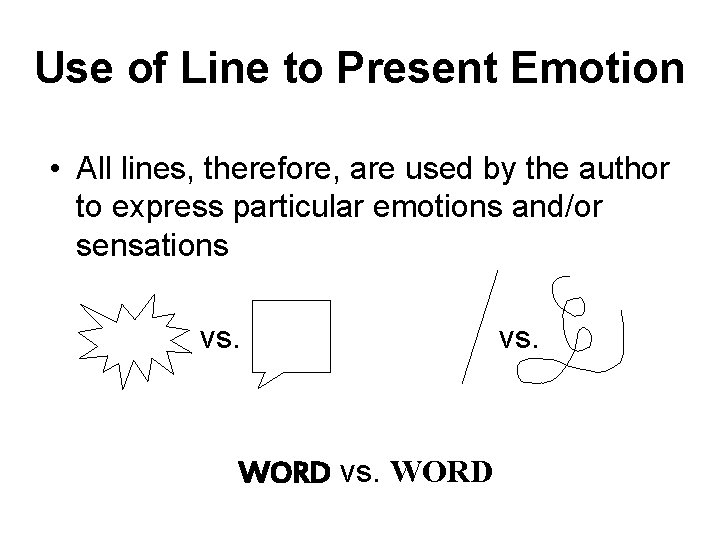
Use of Line to Present Emotion • All lines, therefore, are used by the author to express particular emotions and/or sensations vs. WORD vs.
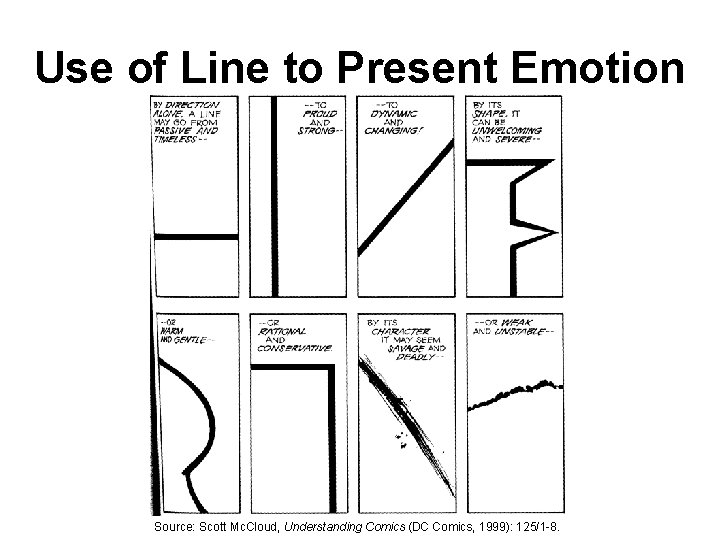
Use of Line to Present Emotion Source: Scott Mc. Cloud, Understanding Comics (DC Comics, 1999): 125/1 -8.
CHALLENGE: • Draw… – Grimness – Whimsy – Betrayal – Insanity
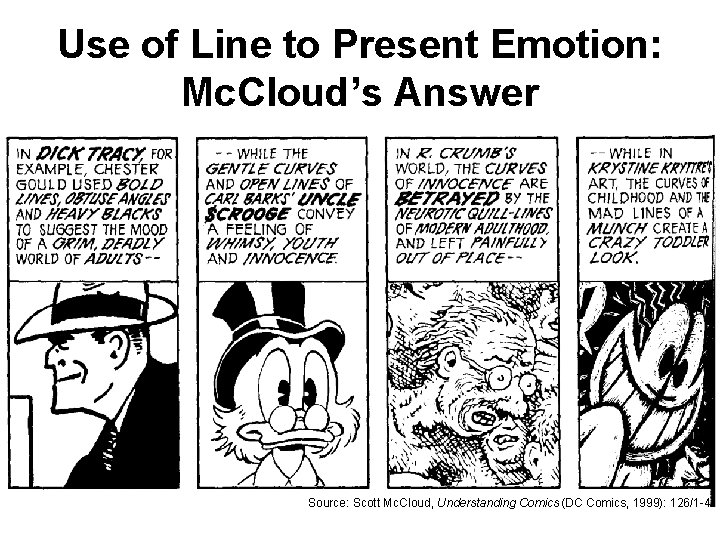
Use of Line to Present Emotion: Mc. Cloud’s Answer Source: Scott Mc. Cloud, Understanding Comics (DC Comics, 1999): 126/1 -4.

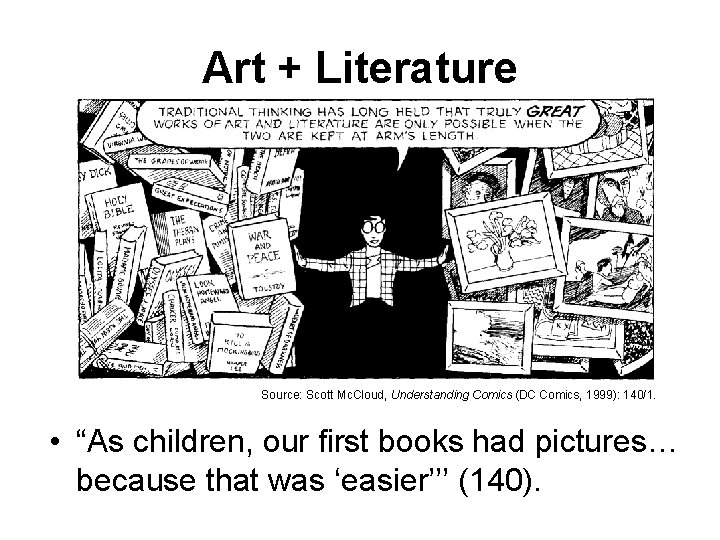
Art + Literature Source: Scott Mc. Cloud, Understanding Comics (DC Comics, 1999): 140/1. • “As children, our first books had pictures… because that was ‘easier’’’ (140).
Art + Literature • When art and literature are worked together properly, the additive combination of the two can present meaning beyond what each form could accomplish on its own. • Four main additive combinations are: * Amplify * Parallel * Montage * Interdependent
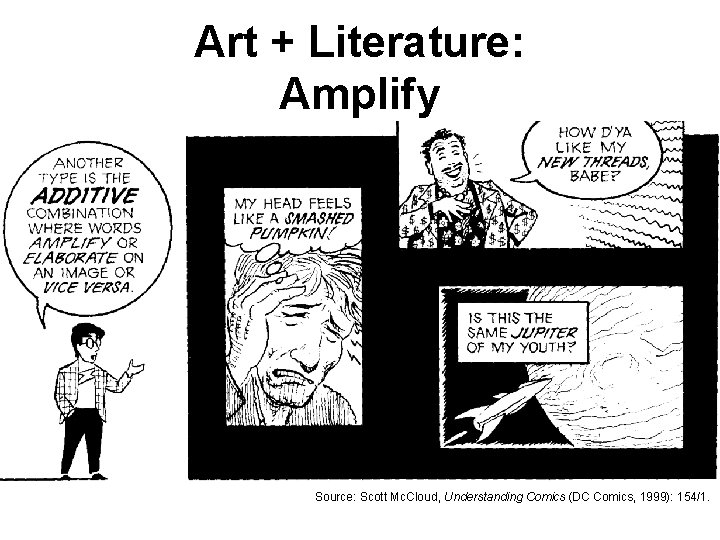
Art + Literature: Amplify Source: Scott Mc. Cloud, Understanding Comics (DC Comics, 1999): 154/1.
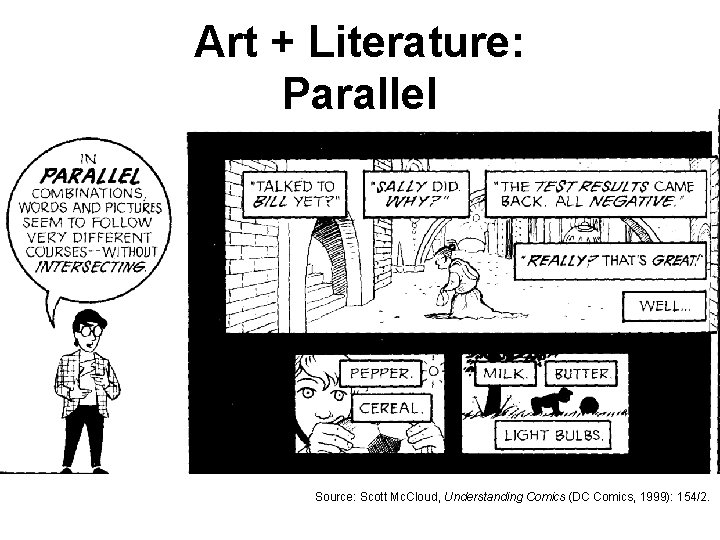
Art + Literature: Parallel Source: Scott Mc. Cloud, Understanding Comics (DC Comics, 1999): 154/2.
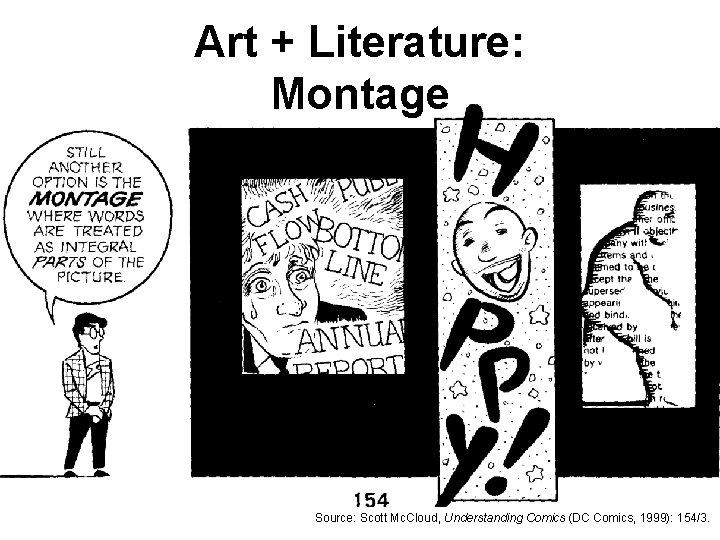
Art + Literature: Montage Source: Scott Mc. Cloud, Understanding Comics (DC Comics, 1999): 154/3.
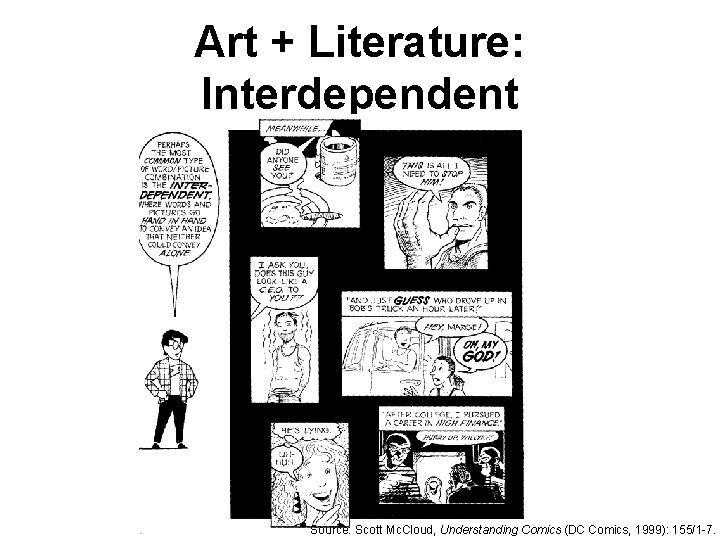
Art + Literature: Interdependent Source: Scott Mc. Cloud, Understanding Comics (DC Comics, 1999): 155/1 -7.
CHALLENGE: • In the next few minutes, write a short selection of text to amplify, parallel, and/or be interdependent to the following panels.
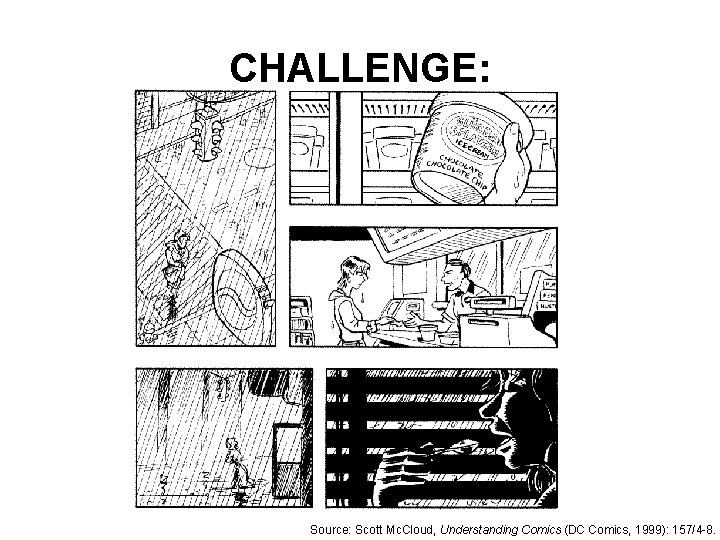
CHALLENGE: Source: Scott Mc. Cloud, Understanding Comics (DC Comics, 1999): 157/4 -8.
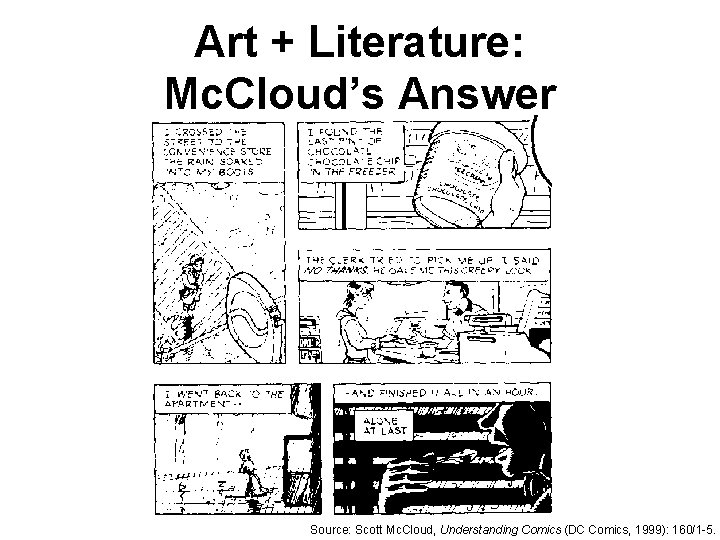
Art + Literature: Mc. Cloud’s Answer Source: Scott Mc. Cloud, Understanding Comics (DC Comics, 1999): 160/1 -5.
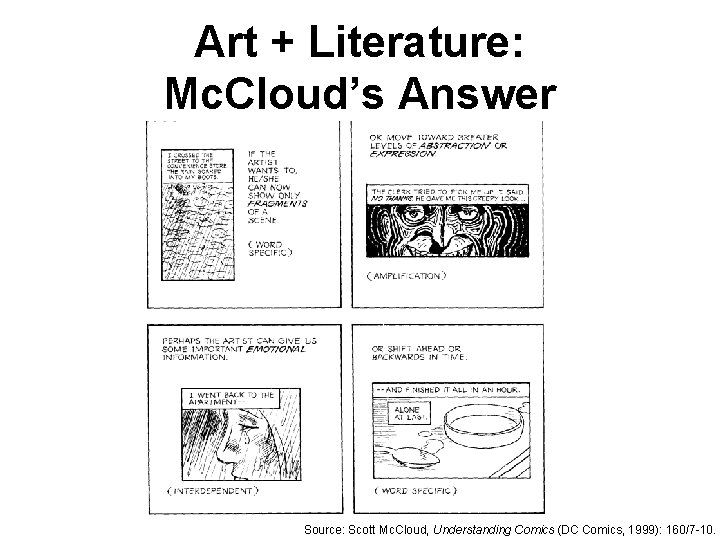
Art + Literature: Mc. Cloud’s Answer Source: Scott Mc. Cloud, Understanding Comics (DC Comics, 1999): 160/7 -10.
- Slides: 40