
Introduction to RDM benefits drivers and the role
Introduction to RDM: benefits, drivers and the role of the university University of Nottingham May 16, 2013 1
A Quick Introduction to RDM • Explain what research data management entails and why should you care about it • Review of who should be involved in managing data • Overview of DCC tools, support and guidance • Introduction to data management plans and tips on completing them 2
What is Research Data Management? • Caring for, • Facilitating access to, • Preserving and • Adding value to digital research data throughout its lifecycle. 3
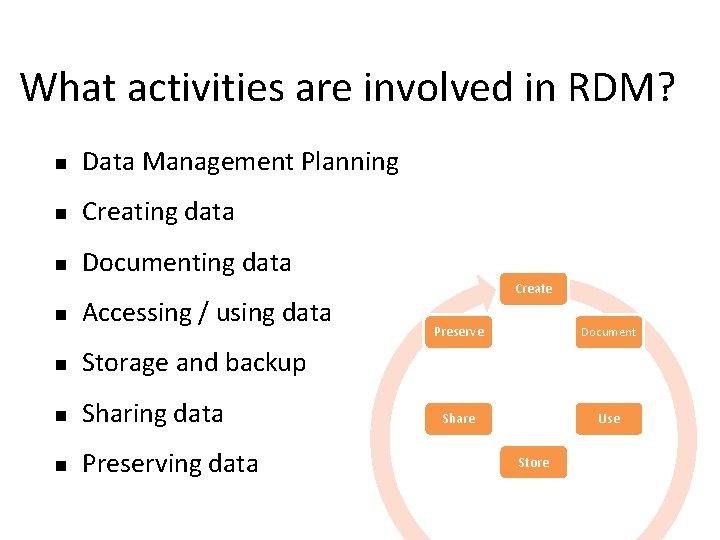
What activities are involved in RDM? Data Management Planning Creating data Documenting data Accessing / using data Storage and backup Sharing data Preserving data Create Preserve Document Share Use Store
What do we mean by ‘research data’? Research data are collected, observed or created, for the purposes of analysis to produce and validate original research results Both analogue and digital materials are 'data' Lab notebooks and software may be classed as 'data' Digital data can be: ― ― created in a digital form ('born digital') converted to a digital form (digitised)
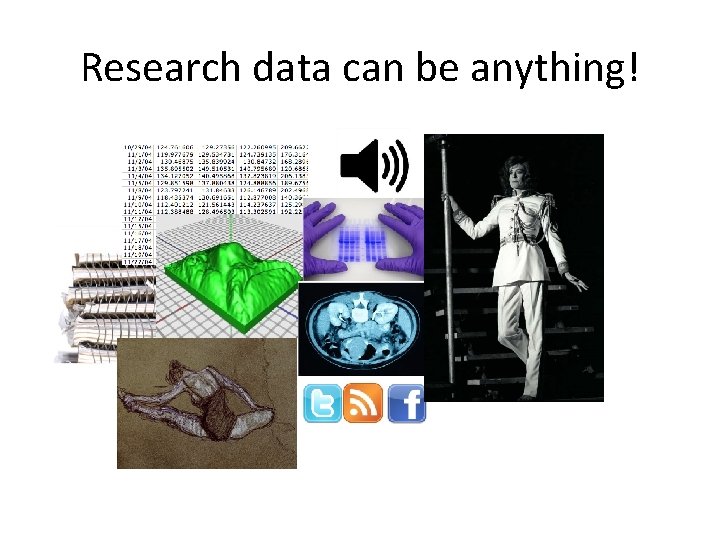
Research data can be anything!
What are the Drivers for Managing and Sharing Data? Organisation for Economic Co-operation and Development describes data as a public good that should be made available Research Councils UK in its code of good research conduct says data should be preserved and accessible for 10 years + Research Funder data policies increasingly demanding of institutional commitment and provisions. . . 7
RCUK Common Principles on Data Policy • Public good • Preservation • Discoverability • Protection • First use • Recognition • Costs
Funder Expectations • Familiarise yourselves with your funders’ demands with respect to data management • What are your sources of funding? EPSRC expected all those institutions it funds • to develop a roadmap that aligns their policies and processes with EPSRC’s expectations by 1 st May 2012; • to be fully compliant with these expectations by 1 st May 2015. • Compliance will be monitored and noncompliance investigated. • Failure to share research data could result in the imposition of sanctions. 9
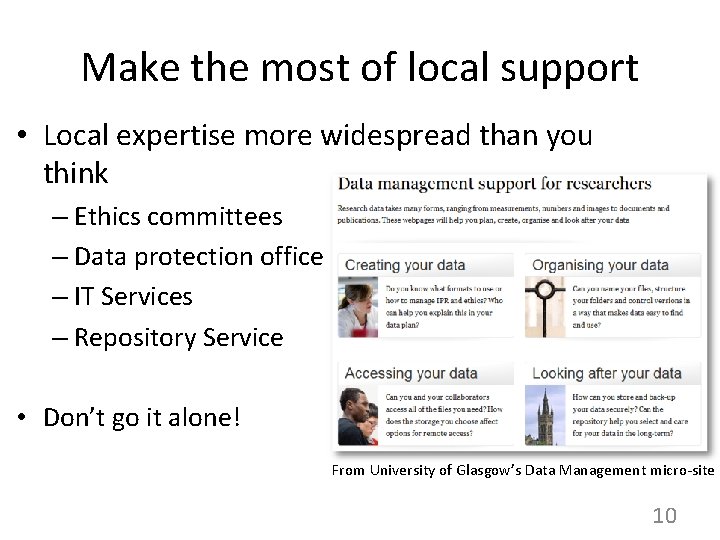
Make the most of local support • Local expertise more widespread than you think – Ethics committees – Data protection office – IT Services – Repository Service • Don’t go it alone! From University of Glasgow’s Data Management micro-site 10
Don’t forget the benefits! • Scholarly communication/access to data • Re-purposing and re-use of data • Stimulating new networks/collaborations & new research • Verification of research/research integrity • Re-purposing data for new audiences • Availability of data underpinning journal articles • Increased visibility/citation 11
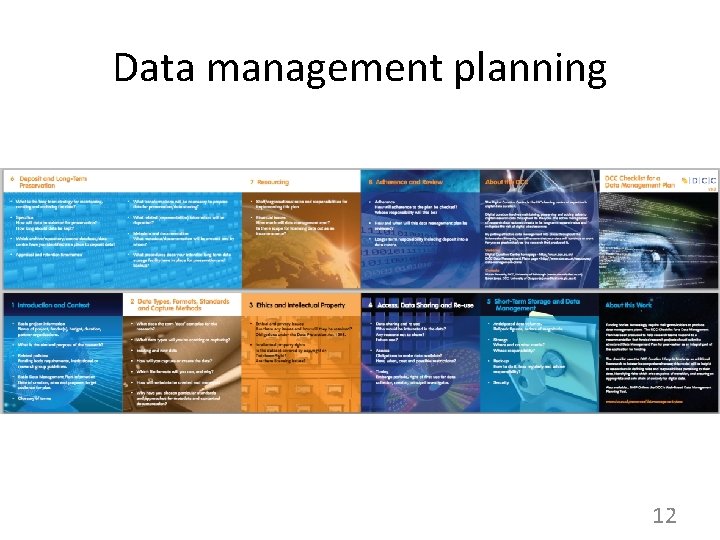
Data management planning 12
Data Management Planning DMPs are written at the start of a project to define: • What data will be collected or created? • How the data will be documented and described? • Where the data will be stored? • Who will be responsible for data security and backup? • Which data will be shared and/or preserved? • How the data will be shared and with whom?
Why develop a DMP? DMPs are often submitted with grant applications, but are useful whenever researchers are creating data. They can help researchers to: • Make informed decisions to anticipate & avoid problems • Avoid duplication, data loss and security breaches • Develop procedures early on for consistency • Ensure data are accurate, complete, reliable and secure • Plan to share data and increase impact
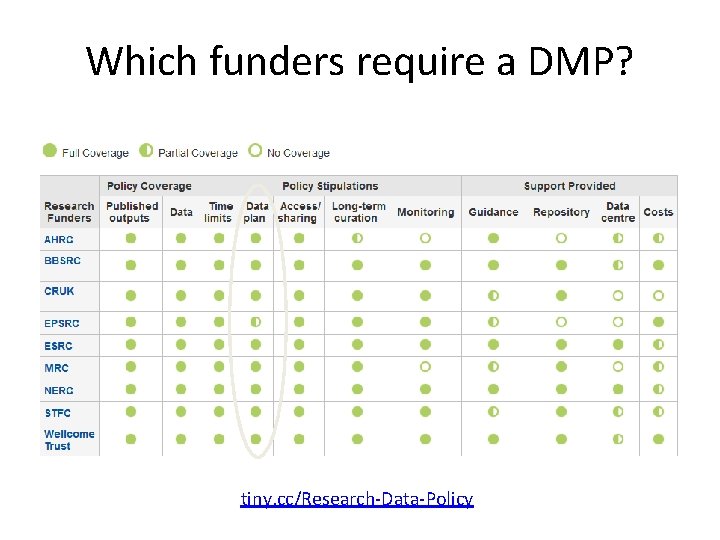
Which funders require a DMP? tiny. cc/Research-Data-Policy
Five common themes across funders Description of data to be collected / created (i. e. content, type, format, volume. . . ) Standards / methodologies for data collection & management Ethics and Intellectual Property (highlight any restrictions on data sharing e. g. embargoes, confidentiality) Plans for data sharing and access (i. e. how, when, to whom) Strategy for long-term preservation
What do research funders want? • A brief plan submitted in grant applications, and in the case of NERC, a more detailed plan once funded • 1 -3 sides of A 4 as attachment or a section in Je-S form • Typically a prose statement covering suggested themes • Outline data management and sharing plans, justifying decisions and any limitations
How to share research data • Use appropriate repositories ― • License the data so it is clear how it can be reused ― • http: //databib. org; http: //www. zenodo. org/; http: //www. re 3 data. org/ www. dcc. ac. uk/resources/how-guides/license-research-data Make sure it’s clear how to cite the data ― http: //www. dcc. ac. uk/resources/how-guides/cite-datasets
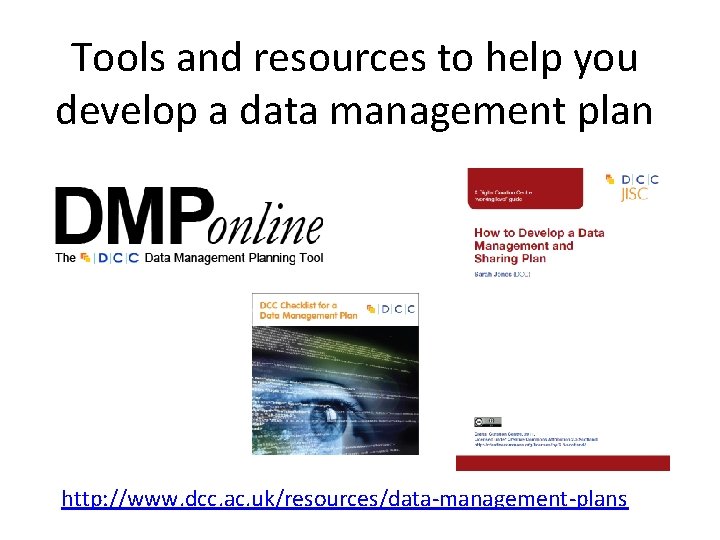
Tools and resources to help you develop a data management plan http: //www. dcc. ac. uk/resources/data-management-plans
What is DMP Online? A web-based tool to help researchers write plans It features: • Templates based on different requirements • Tailored guidance (disciplinary, funder etc) • Customised exports to a variety of formats • Ability to share DMPs with others https: //dmponline. dcc. ac. uk
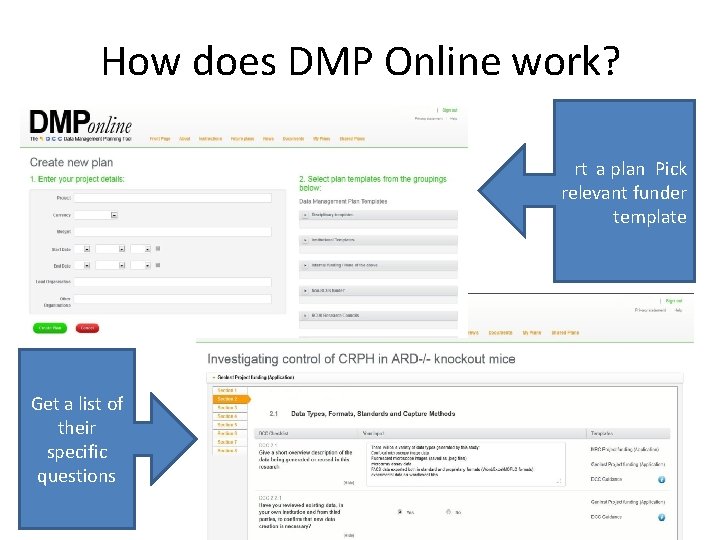
How does DMP Online work? rt a plan Pick relevant funder template Get a list of their specific questions
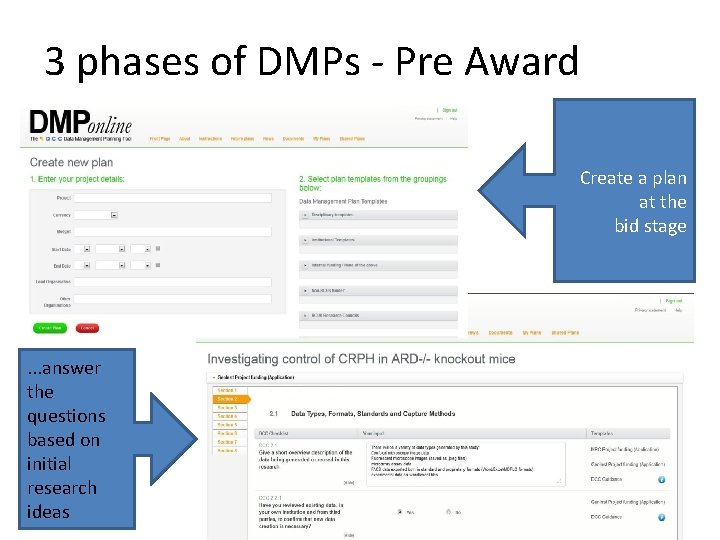
3 phases of DMPs - Pre Award Create a plan at the bid stage . . . answer the questions based on initial research ideas
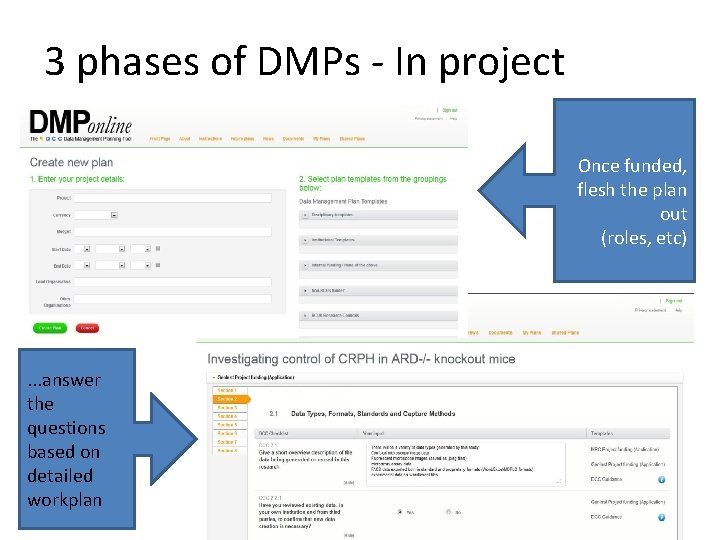
3 phases of DMPs - In project Once funded, flesh the plan out (roles, etc) . . . answer the questions based on detailed workplan
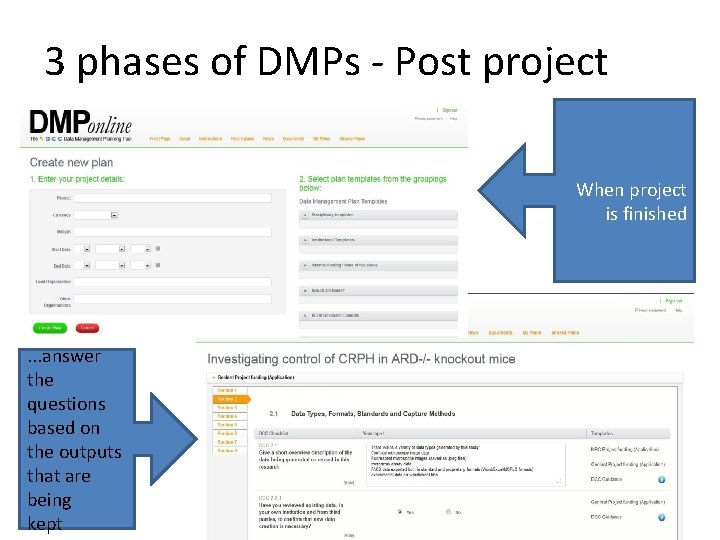
3 phases of DMPs - Post project When project is finished . . . answer the questions based on the outputs that are being kept
Tips to share: writing DMPs • Keep it simple, short and specific • Seek advice - consult and collaborate • Base plans on available skills and support • Make sure implementation is feasible • Justify any resources or restrictions needed Also see: http: //www. youtube. com/watch? v=7 OJti. A 53 -Fk
But remember… • Start early – don’t wait til the last minute! • The plan shouldn’t be written in isolation • The plan will - and should - change over life of project • Get into the habit of update the plan with regular project updates • Use plan as a communication tool - with partners, funders and yourself!
Thank you Joy Davidson, Sarah Jones, Kerry Miller Digital Curation Centre University of Edinburgh This work is licensed under a Creative Commons Attribution 2. 5 UK: Scotland License. © Digital Curation Centre 2012
- Slides: 27