
Introduction to RDM activities roles and requirements Digital

- Slides: 17
Introduction to RDM: activities, roles and requirements Digital Curation Centre Regional Roadshow – North West Day 2 - Thursday 21 st March 2012 1
A Quick Introduction • What is research data management? • Who is involved and how? • What skills and support are needed? 2
What is Research Data Management? • Caring for, • Facilitating access to, • Preserving and • Adding value to digital research data throughout its lifecycle. 3
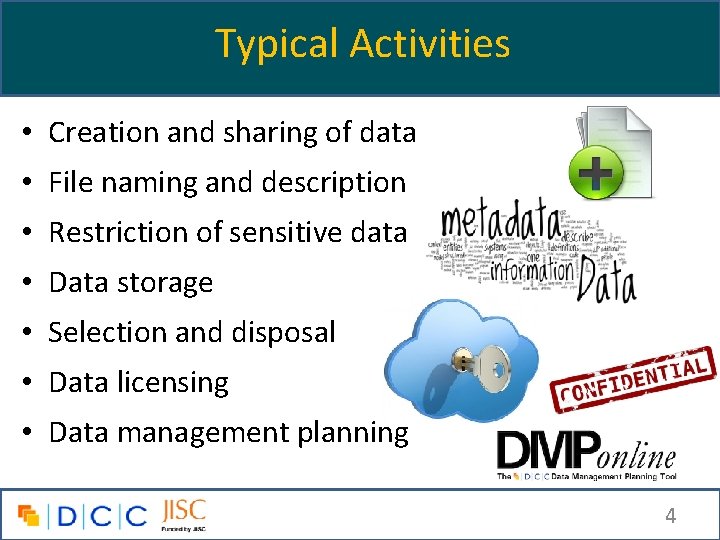
Typical Activities • Creation and sharing of data • File naming and description • Restriction of sensitive data • Data storage • Selection and disposal • Data licensing • Data management planning 4
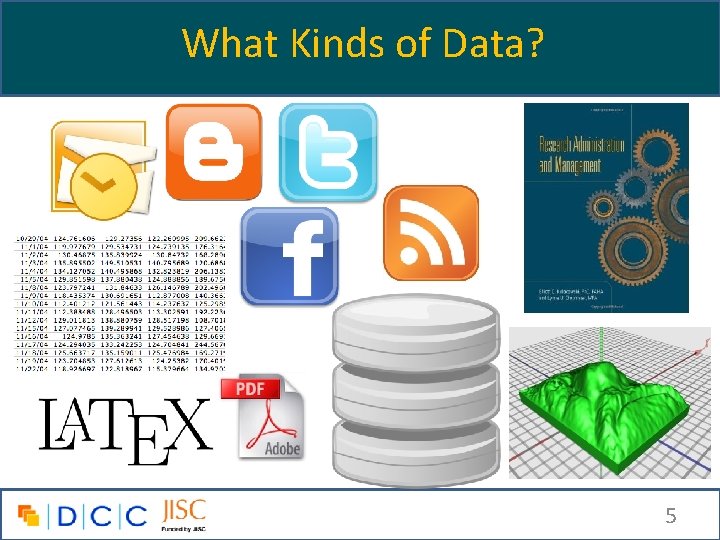
What Kinds of Data? 5
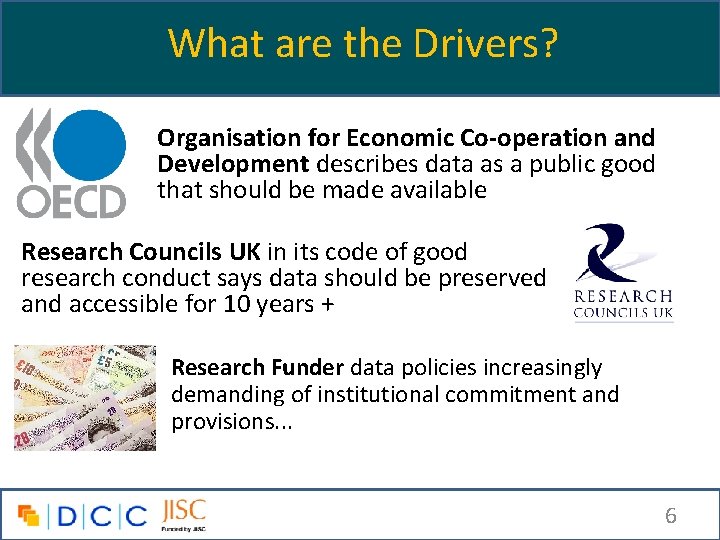
What are the Drivers? Organisation for Economic Co-operation and Development describes data as a public good that should be made available Research Councils UK in its code of good research conduct says data should be preserved and accessible for 10 years + Research Funder data policies increasingly demanding of institutional commitment and provisions. . . 6
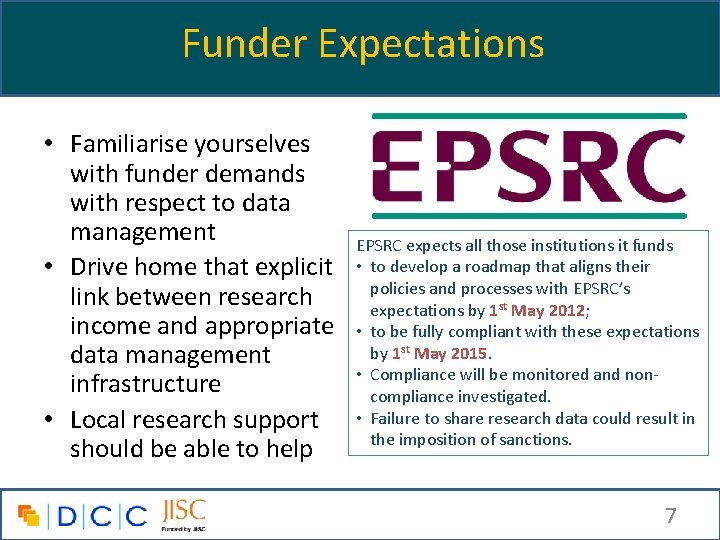
Funder Expectations • Familiarise yourselves with funder demands with respect to data management • Drive home that explicit link between research income and appropriate data management infrastructure • Local research support should be able to help EPSRC expects all those institutions it funds • to develop a roadmap that aligns their policies and processes with EPSRC’s expectations by 1 st May 2012; • to be fully compliant with these expectations by 1 st May 2015. • Compliance will be monitored and noncompliance investigated. • Failure to share research data could result in the imposition of sanctions. 7
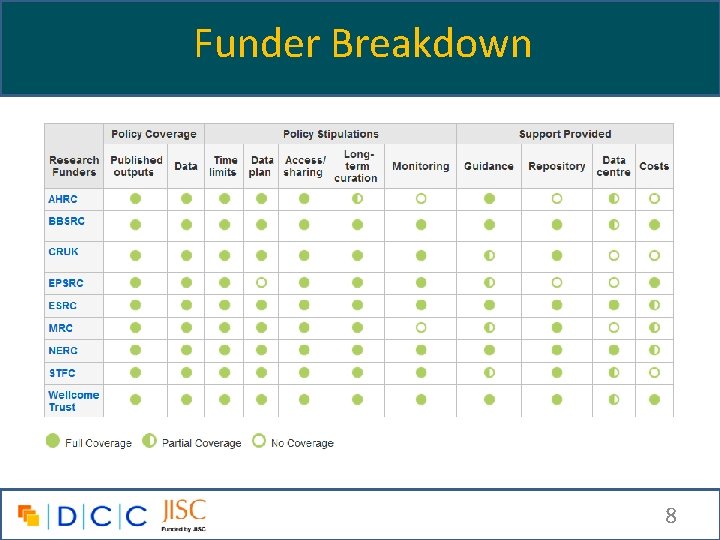
Funder Breakdown 8
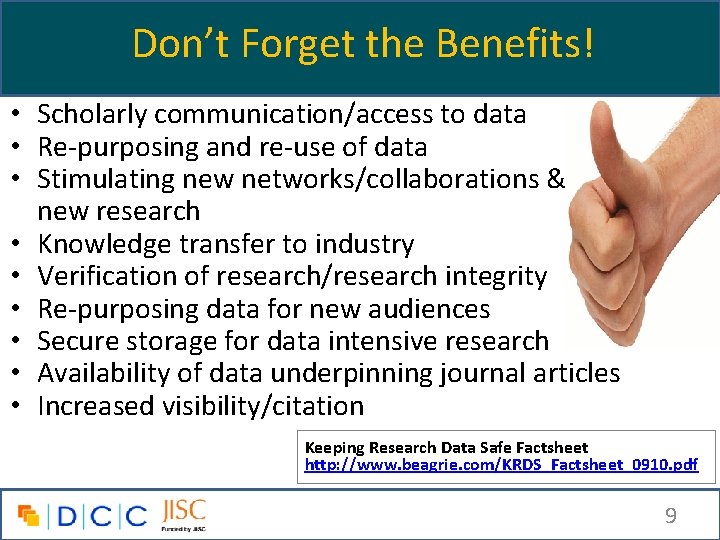
Don’t Forget the Benefits! • Scholarly communication/access to data • Re-purposing and re-use of data • Stimulating new networks/collaborations & new research • Knowledge transfer to industry • Verification of research/research integrity • Re-purposing data for new audiences • Secure storage for data intensive research • Availability of data underpinning journal articles • Increased visibility/citation Keeping Research Data Safe Factsheet http: //www. beagrie. com/KRDS_Factsheet_0910. pdf 9
Who is Involved? • Researcher(s) • Research support officers / project staff • Lab technicians • Librarians / Data Centre staff • Faculty ethics committees • Institutional legal/IP advisors • FOI officer / DPA officer / records manager • Computing support • Institutional compliance officers • Funders • Archive / long-term data repository • Senior management • Others. . . 10
Approaching the Issue • What data exist and are being created? • Where are greatest recoups on investment available? – Training? – Storage? – Policy development • What are the requirements? • Who needs to be involved? 11
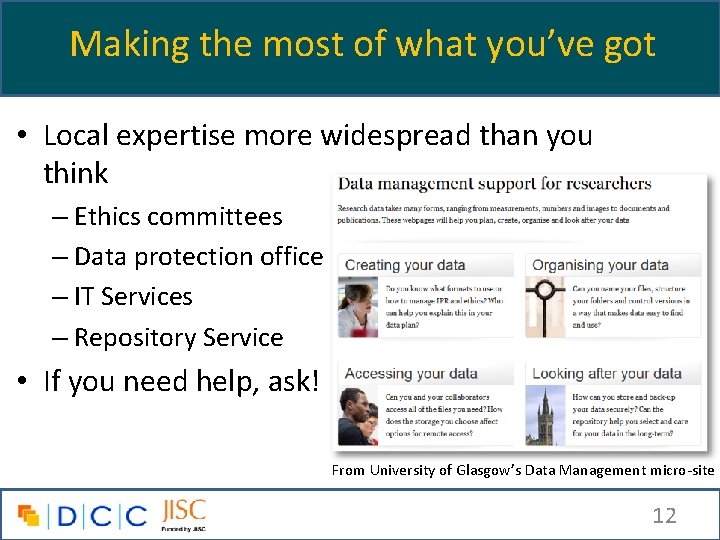
Making the most of what you’ve got • Local expertise more widespread than you think – Ethics committees – Data protection office – IT Services – Repository Service • If you need help, ask! From University of Glasgow’s Data Management micro-site 12
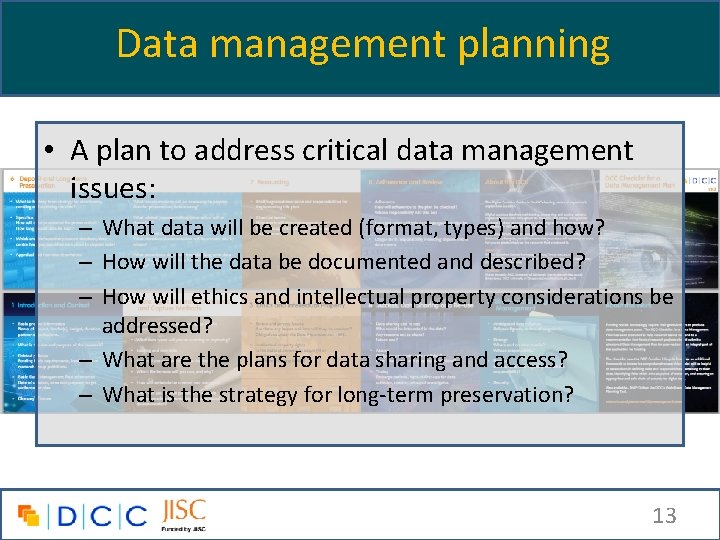
Data management planning • A plan to address critical data management issues: – What data will be created (format, types) and how? – How will the data be documented and described? – How will ethics and intellectual property considerations be addressed? – What are the plans for data sharing and access? – What is the strategy for long-term preservation? 13
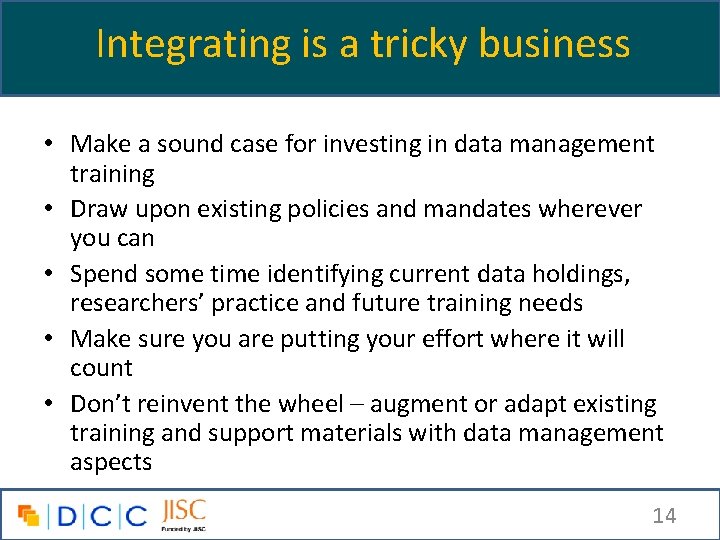
Integrating is a tricky business • Make a sound case for investing in data management training • Draw upon existing policies and mandates wherever you can • Spend some time identifying current data holdings, researchers’ practice and future training needs • Make sure you are putting your effort where it will count • Don’t reinvent the wheel – augment or adapt existing training and support materials with data management aspects 14
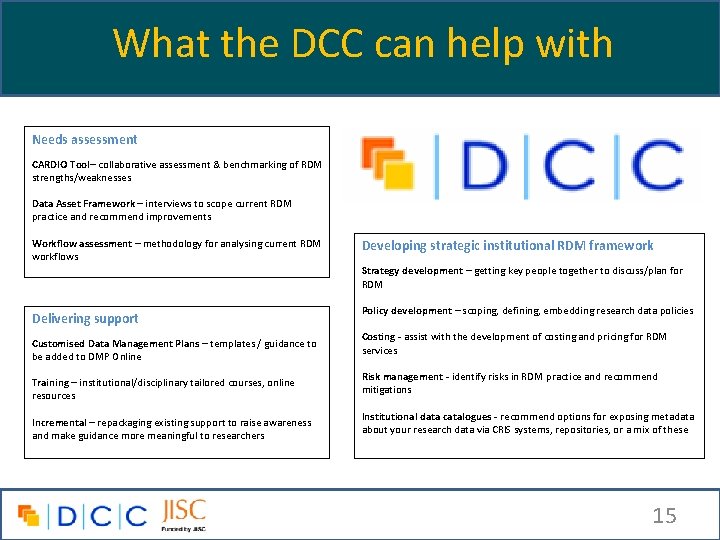
What the DCC can help with Needs assessment CARDIO Tool– collaborative assessment & benchmarking of RDM strengths/weaknesses Data Asset Framework – interviews to scope current RDM practice and recommend improvements Workflow assessment – methodology for analysing current RDM workflows Developing strategic institutional RDM framework Strategy development – getting key people together to discuss/plan for RDM Delivering support Customised Data Management Plans – templates / guidance to be added to DMP Online Training – institutional/disciplinary tailored courses, online resources Incremental – repackaging existing support to raise awareness and make guidance more meaningful to researchers Policy development – scoping, defining, embedding research data policies Costing - assist with the development of costing and pricing for RDM services Risk management - identify risks in RDM practice and recommend mitigations Institutional data catalogues - recommend options for exposing metadata about your research data via CRIS systems, repositories, or a mix of these 15
Exercise: How are you performing? • Individually, complete the quick data management quiz (5 mins) • Compare results, try to learn from those with confidence in those areas in which you consider yourself to be weaker (10 mins) • Based on your group’s discussions. . . – Write down one practical thing you can do when you return to work in order to edge towards an A. 16
Thank you Andrew Mc. Hugh Digital Curation Centre University of Glasgow This work is licensed under a Creative Commons Attribution 2. 5 UK: Scotland License. © Digital Curation Centre 2012