
Introduction to RCPCH Progress meeting name February 2018
Introduction to RCPCH Progress <<meeting name>> February 2018
The background
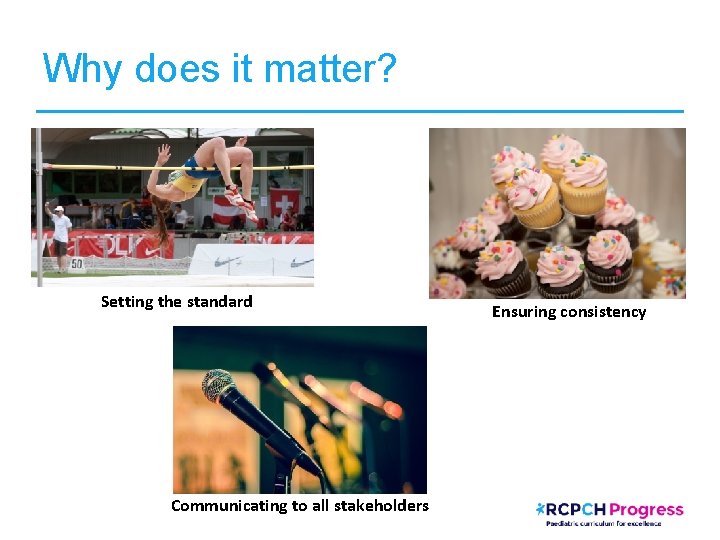
Why does it matter? Setting the standard Communicating to all stakeholders Ensuring consistency
Why progress?

The curriculum
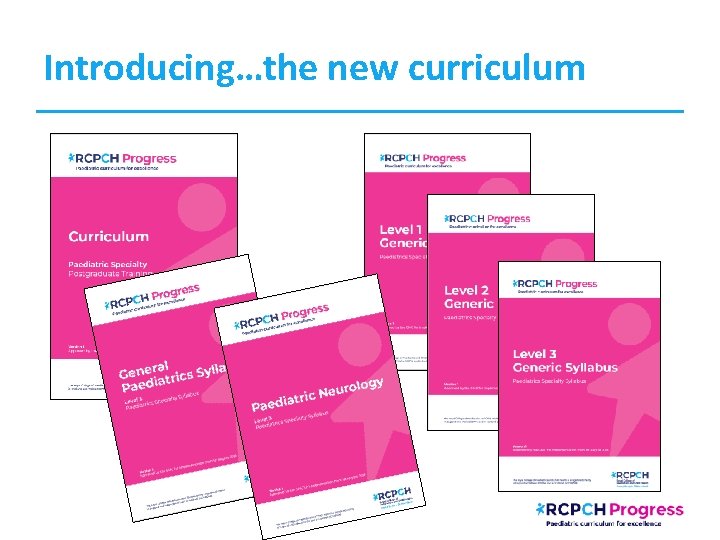
Introducing…the new curriculum
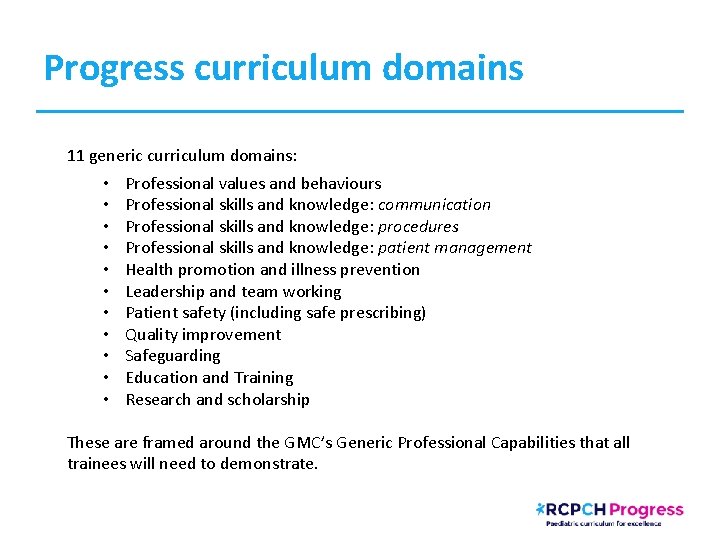
Progress curriculum domains 11 generic curriculum domains: • • • Professional values and behaviours Professional skills and knowledge: communication Professional skills and knowledge: procedures Professional skills and knowledge: patient management Health promotion and illness prevention Leadership and team working Patient safety (including safe prescribing) Quality improvement Safeguarding Education and Training Research and scholarship These are framed around the GMC’s Generic Professional Capabilities that all trainees will need to demonstrate.
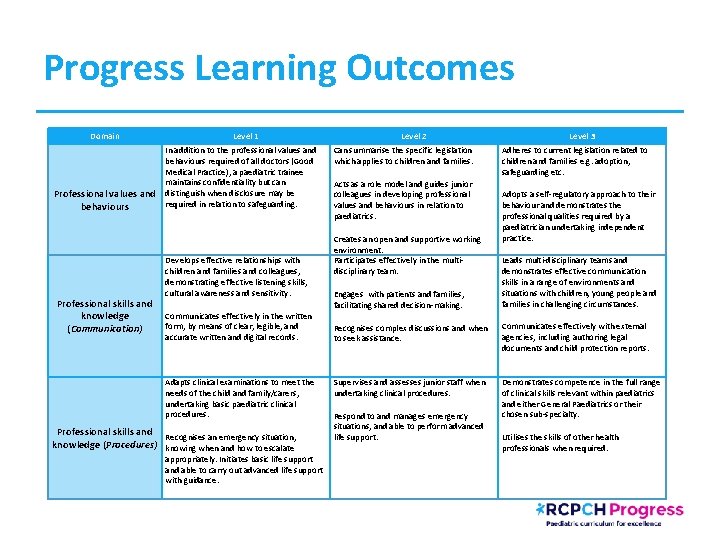
Progress Learning Outcomes Domain Professional values and behaviours Professional skills and knowledge (Communication) Level 1 In addition to the professional values and behaviours required of all doctors (Good Medical Practice), a paediatric trainee maintains confidentiality but can distinguish when disclosure may be required in relation to safeguarding. Develops effective relationships with children and families and colleagues, demonstrating effective listening skills, cultural awareness and sensitivity. Communicates effectively in the written form, by means of clear, legible, and accurate written and digital records. Adapts clinical examinations to meet the needs of the child and family/carers, undertaking basic paediatric clinical procedures. Professional skills and Recognises an emergency situation, knowledge (Procedures) knowing when and how to escalate appropriately. Initiates basic life support and able to carry out advanced life support with guidance. Level 2 Can summarise the specific legislation which applies to children and families. Acts as a role model and guides junior colleagues in developing professional values and behaviours in relation to paediatrics. Creates an open and supportive working environment. Participates effectively in the multidisciplinary team. Engages with patients and families, facilitating shared decision-making. Level 3 Adheres to current legislation related to children and families e. g. adoption, safeguarding etc. Adopts a self-regulatory approach to their behaviour and demonstrates the professional qualities required by a paediatrician undertaking independent practice. Leads multi-disciplinary teams and demonstrates effective communication skills in a range of environments and situations with children, young people and families in challenging circumstances. Recognises complex discussions and when to seek assistance. Communicates effectively with external agencies, including authoring legal documents and child protection reports. Supervises and assesses junior staff when undertaking clinical procedures. Demonstrates competence in the full range of clinical skills relevant within paediatrics and either General Paediatrics or their chosen sub-specialty. Respond to and manages emergency situations, and able to perform advanced life support. Utilises the skills of other health professionals when required.
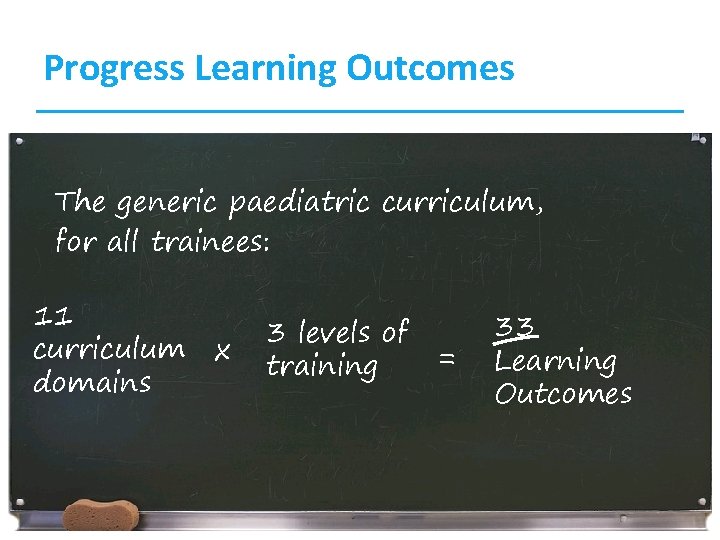
Progress Learning Outcomes The generic paediatric curriculum, for all trainees: 11 curriculum domains x 3 levels of training = 33 Learning Outcomes
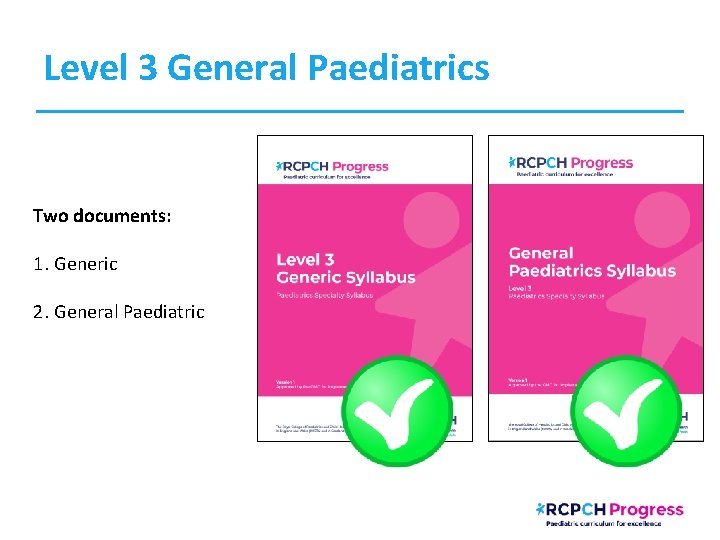
Level 3 General Paediatrics The generic paediatric curriculum, for all trainees: Two documents: 1. Generic 11 2. General Paediatric x curriculum domains 3 levels of training = 33 Learning Outcomes
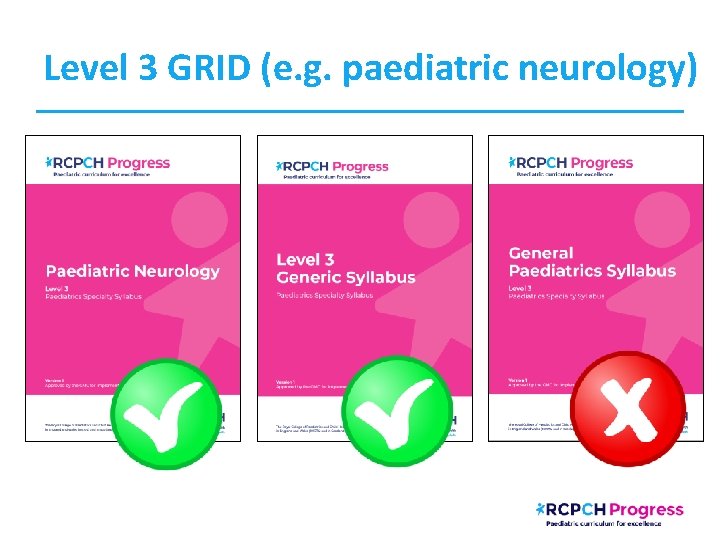
Level 3 GRID (e. g. paediatric neurology) The generic paediatric curriculum, for all trainees: 11 curriculum domains x 3 levels of training = 33 Learning Outcomes
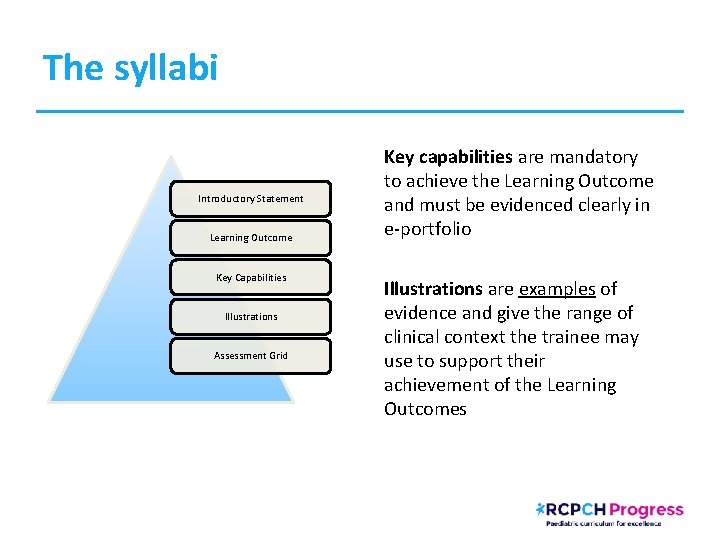
The syllabi Introductory Statement Learning Outcome Key Capabilities IIlustrations Assessment Grid Key capabilities are mandatory to achieve the Learning Outcome and must be evidenced clearly in e-portfolio Illustrations are examples of evidence and give the range of clinical context the trainee may use to support their achievement of the Learning Outcomes
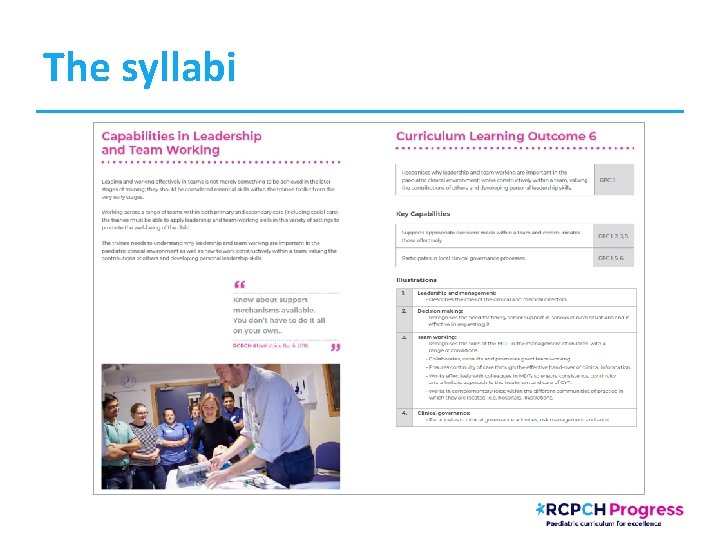
The syllabi
Flexibility and promoting excellence Trainees can: • use evidence from their sub-specialty post to demonstrate achievement of the generic Learning Outcomes, and vice-versa. • begin to log evidence against higher level domains before completing all Learning outcomes at their current training level. • use other evidence to demonstrate how they meet the Learning Outcomes – illustrations are just examples, and will be updated regularly.
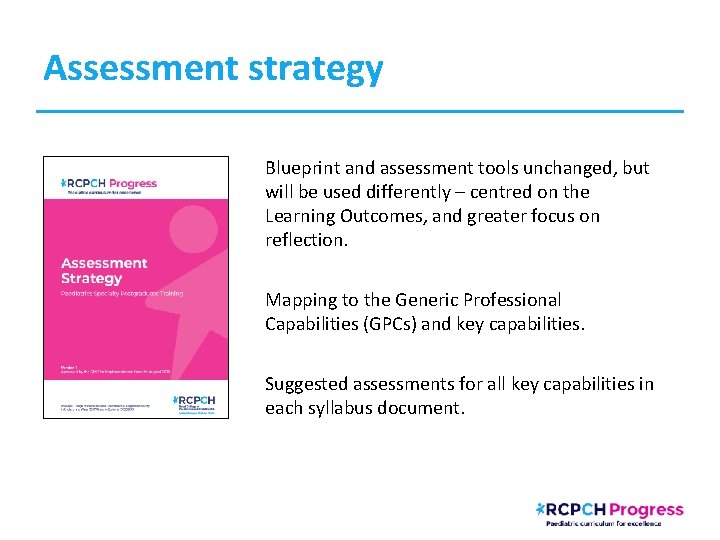
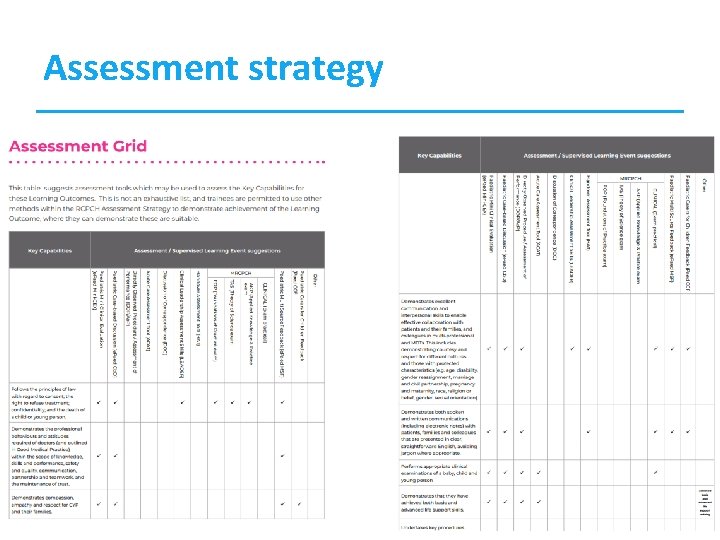
Assessment strategy Blueprint and assessment tools unchanged, but will be used differently – centred on the Learning Outcomes, and greater focus on reflection. Mapping to the Generic Professional Capabilities (GPCs) and key capabilities. Suggested assessments for all key capabilities in each syllabus document.
Assessment strategy

e. Portfolio overview
Progress and e. Portfolio
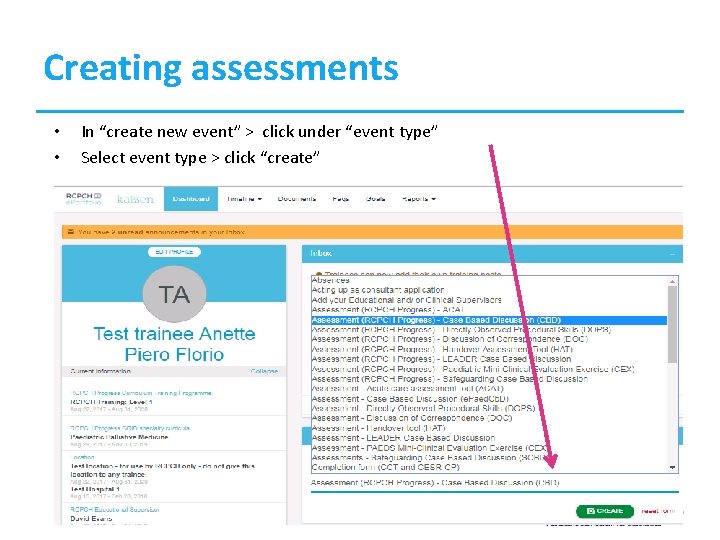
Creating assessments • • In “create new event” > click under “event type” Select event type > click “create”
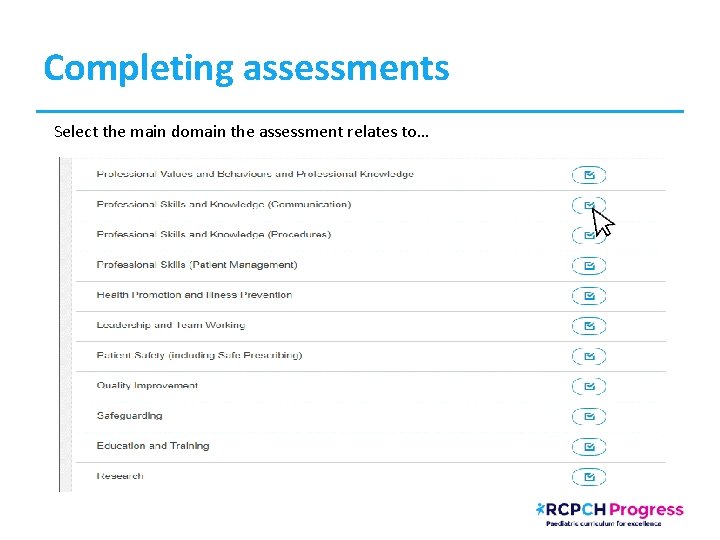
Completing assessments Select the main domain the assessment relates to…
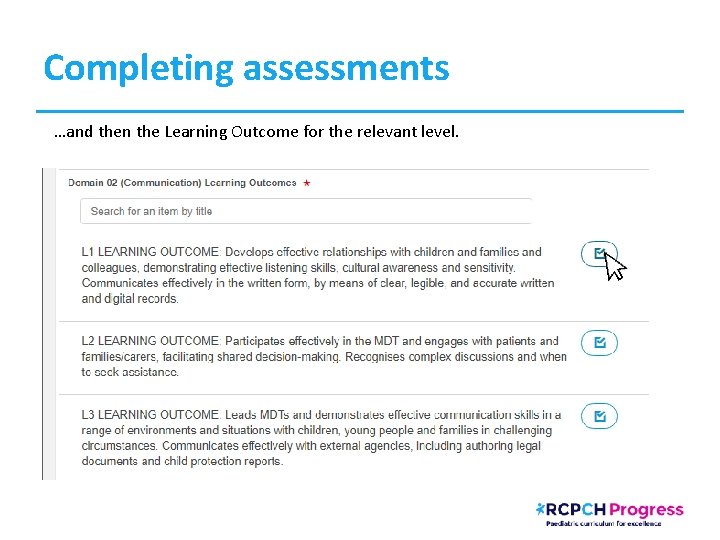
Completing assessments …and then the Learning Outcome for the relevant level.
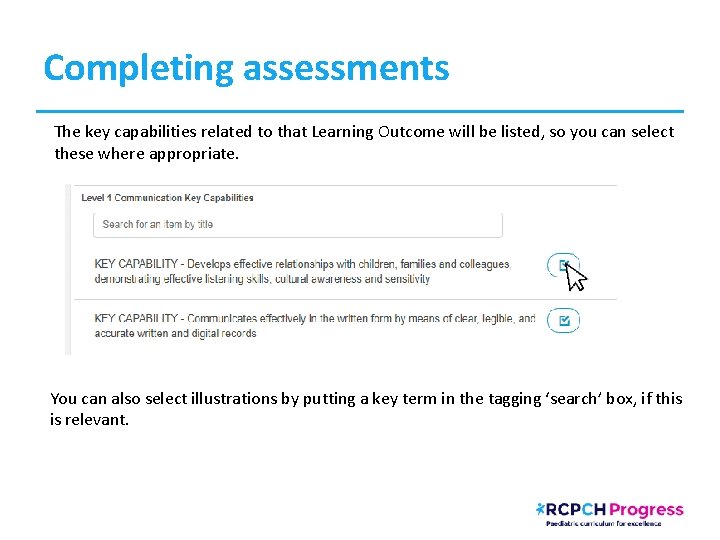
Completing assessments The key capabilities related to that Learning Outcome will be listed, so you can select these where appropriate. You can also select illustrations by putting a key term in the tagging ‘search’ box, if this is relevant.
Preparing for Progress
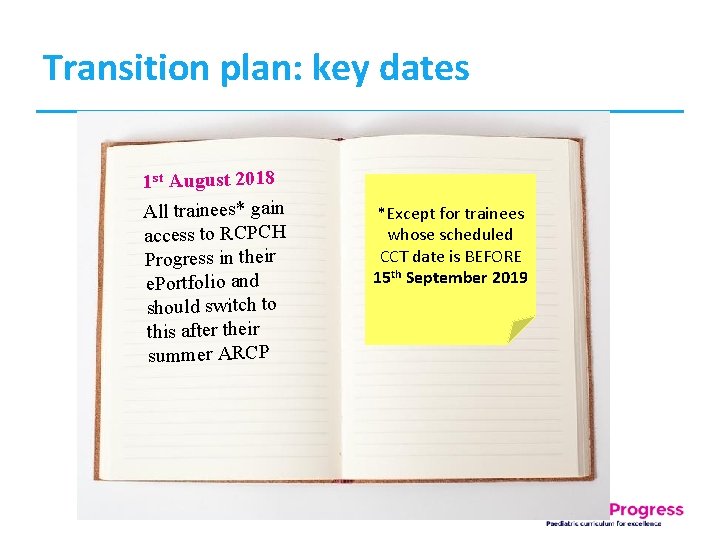
Transition plan: key dates 1 st August 2018 All trainees* gain access to RCPCH Progress in their e. Portfolio and should switch to this after their summer ARCP *Except for trainees whose scheduled CCT date is BEFORE 15 th September 2019
Transition plan RCPCH Progress goes live for all trainees in August 2018, except those CCTing before 15 th September 2019. RCPCH has mapped the old to the new curriculum. Existing evidence in e. Portfolio will be ‘re-filed’ under one of the new Learning Outcomes when Progress goes live. Levels already completed do not need to be evidenced again. Trainees should use new case notes to record any evidence they may want to use for RCPCH Progress but that doesn’t easily tag to the current curriculum.
Preparing for transition: trainers Contact those most likely to be affected: • LTFT ST 8 trainees • CCT dates on or shortly after 15 th September 2019 • OOP/maternity leave trainees Plan how you’ll reach the wider trainee/trainer population e. g. briefings, existing scheduled meetings, newsletters etc. How will you incorporate into inductions? Review your local training/teaching plans to see if there any gaps. Share it with others e. g. via the RCPCH College Tutor toolkit. Ask for help, from colleagues, trainees and the College.
Preparing for transition: trainees Consider if you are one of those most likely to be affected: • LTFT ST 8 trainees • CCT dates on or shortly after 15 th September 2019 • OOP/maternity leave trainees Review the Learning Outcomes that you will need to demonstrate in future, and what evidence you might already have or will need to try to gain before the end of your training level. Record any evidence between now and August that will be helpful in future but doesn’t tag go the old curriculum as a reflective note, saving as a draft. Ask for help, from colleagues, supervisors and the College.
Preparing for transition Resources and guidance are provided for trainees, supervisors, tutors and ARCP panels at www. rcpch. ac. uk/progress. • • Preparing for Progress: Month-by-month countdown Slide pack and speakers notes RCPCH Progress factsheet Preparing for Progress: Transition guidance Preparing for Progress: Learning Outcomes summary e. Portfolio ‘how-to’ videos Guidance on how to judge achievement of Learning Outcomes And more to come – let us know if there is anything else that would help you in your role.
Preparing for transition Resources and guidance are provided for trainees, supervisors, tutors and ARCP panels at www. rcpch. ac. uk/progress. • • Preparing for Progress: Month-by-month countdown Slide pack and speakers notes RCPCH Progress factsheet Preparing for Progress: Transition guidance Preparing for Progress: Learning Outcomes summary e. Portfolio ‘how-to’ videos Guidance on how to judge achievement of Learning Outcomes And more to come – let us know if there is anything else that would help you in your role.
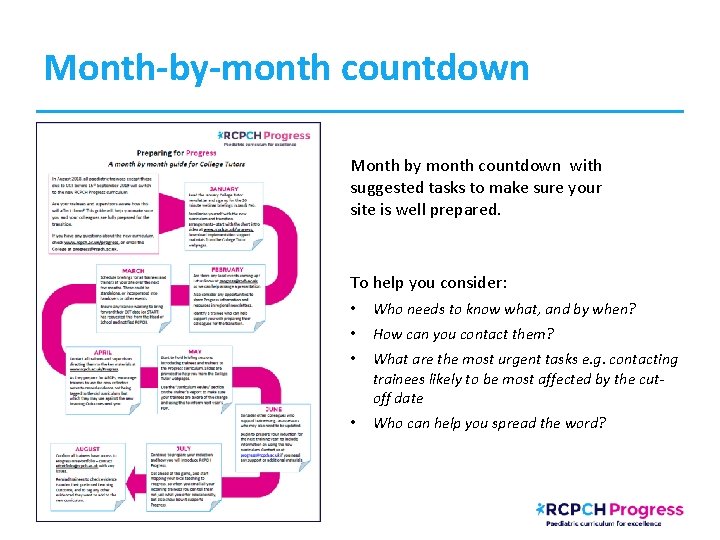
Month-by-month countdown Month by month countdown with suggested tasks to make sure your site is well prepared. To help you consider: • Who needs to know what, and by when? • How can you contact them? • What are the most urgent tasks e. g. contacting trainees likely to be most affected by the cutoff date • Who can help you spread the word?
Preparing for transition Resources and guidance are provided for trainees, supervisors, tutors and ARCP panels at www. rcpch. ac. uk/progress. • • Preparing for Progress: Month-by-month countdown Slide pack and speakers notes RCPCH Progress factsheet Preparing for Progress: Transition guidance Preparing for Progress: Learning Outcomes summary e. Portfolio ‘how-to’ videos Guidance on how to judge achievement of Learning Outcomes And more to come – let us know if there is anything else that would help you in your role.
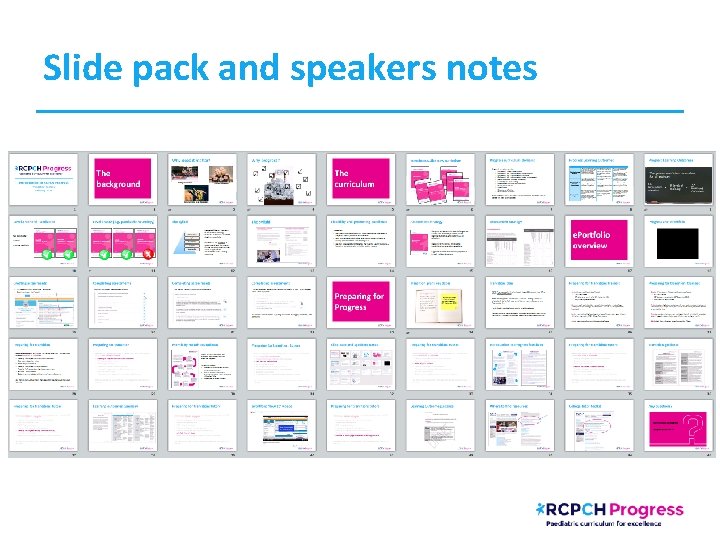
Slide pack and speakers notes
Preparing for transition Resources and guidance are provided for trainees, supervisors, tutors and ARCP panels at www. rcpch. ac. uk/progress. • • Preparing for Progress: Month-by-month countdown Slide pack and speakers notes RCPCH Progress factsheet Preparing for Progress: Transition guidance Preparing for Progress: Learning Outcomes summary e. Portfolio ‘how-to’ videos Guidance on how to judge achievement of Learning Outcomes And more to come – let us know if there is anything else that would help you in your role.
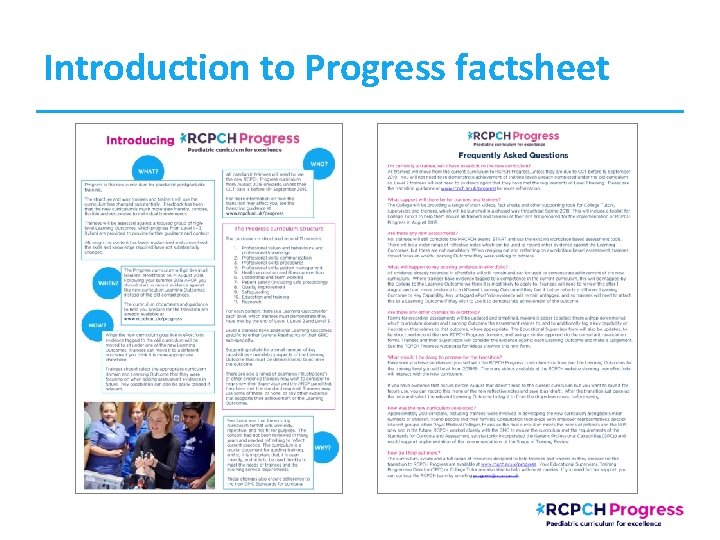
Introduction to Progress factsheet
Preparing for transition Resources and guidance are provided for trainees, supervisors, tutors and ARCP panels at www. rcpch. ac. uk/progress. • • Preparing for Progress: Month-by-month countdown Slide pack and speakers notes RCPCH Progress factsheet Preparing for Progress: Transition guidance Preparing for Progress: Learning Outcomes summary e. Portfolio ‘how-to’ videos Guidance on how to judge achievement of Learning Outcomes And more to come – let us know if there is anything else that would help you in your role.
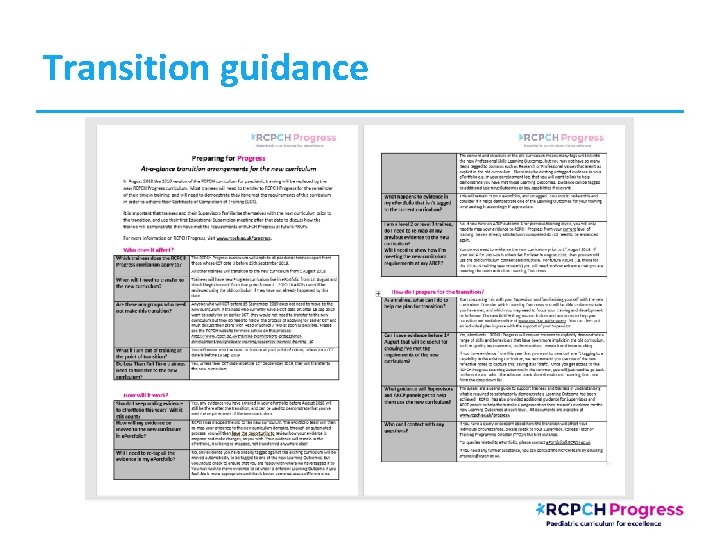
Transition guidance
Preparing for transition Resources and guidance are provided for trainees, supervisors, tutors and ARCP panels at www. rcpch. ac. uk/progress. • • Preparing for Progress: Month-by-month countdown Slide pack and speakers notes RCPCH Progress factsheet Preparing for Progress: Transition guidance Preparing for Progress: Learning Outcomes summary e. Portfolio ‘how-to’ videos Guidance on how to judge achievement of Learning Outcomes And more to come – let us know if there is anything else that would help you in your role.
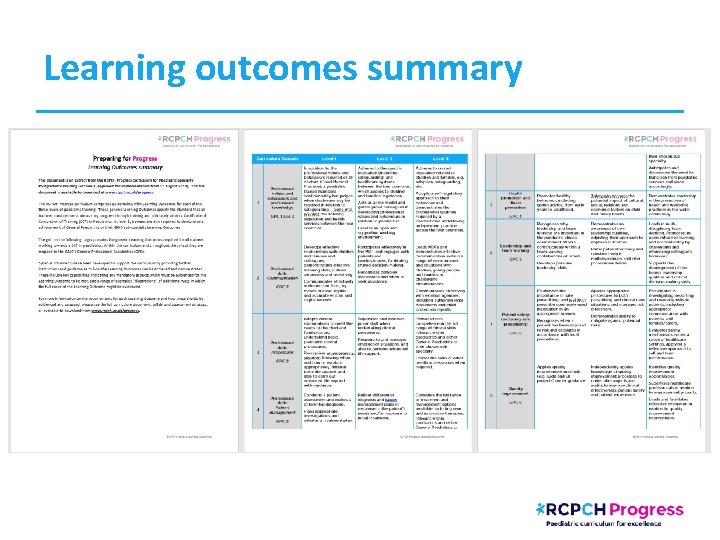
Learning outcomes summary
Preparing for transition Resources and guidance are provided for trainees, supervisors, tutors and ARCP panels at www. rcpch. ac. uk/progress. • • Preparing for Progress: Month-by-month countdown Slide pack and speakers notes RCPCH Progress factsheet Preparing for Progress: Transition guidance Preparing for Progress: Learning Outcomes summary e. Portfolio ‘how-to’ videos Guidance on how to judge achievement of Learning Outcomes And more to come – let us know if there is anything else that would help you in your role.
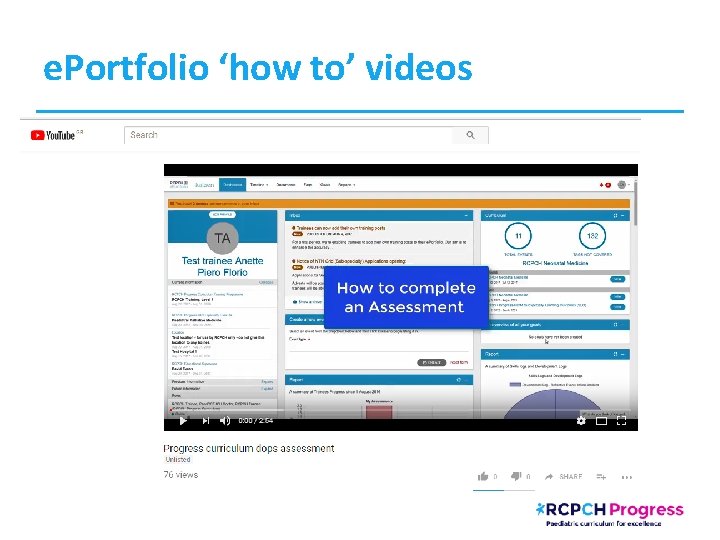
e. Portfolio ‘how to’ videos
Preparing for transition Resources and guidance are provided for trainees, supervisors, tutors and ARCP panels at www. rcpch. ac. uk/progress. • • Preparing for Progress: Month-by-month countdown Slide pack and speakers notes RCPCH Progress factsheet Preparing for Progress: Transition guidance Preparing for Progress: Learning Outcomes summary e. Portfolio ‘how-to’ videos Guidance on how to judge achievement of Learning Outcomes And more to come – let us know if there is anything else that would help you in your role.
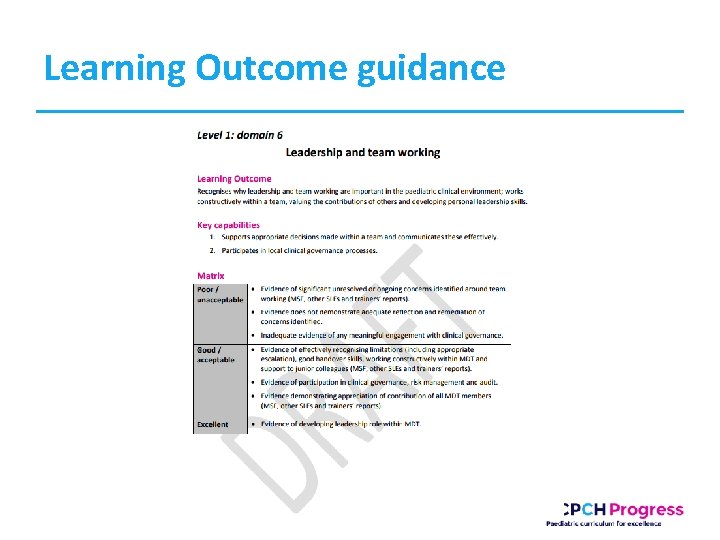
Learning Outcome guidance
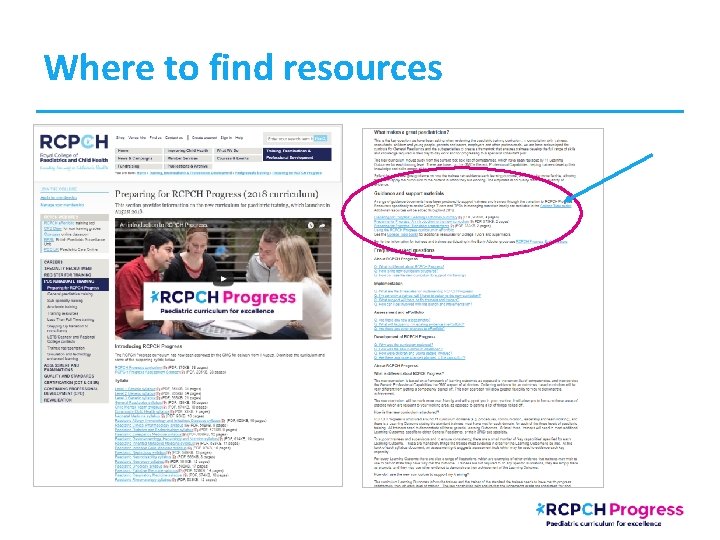
Where to find resources
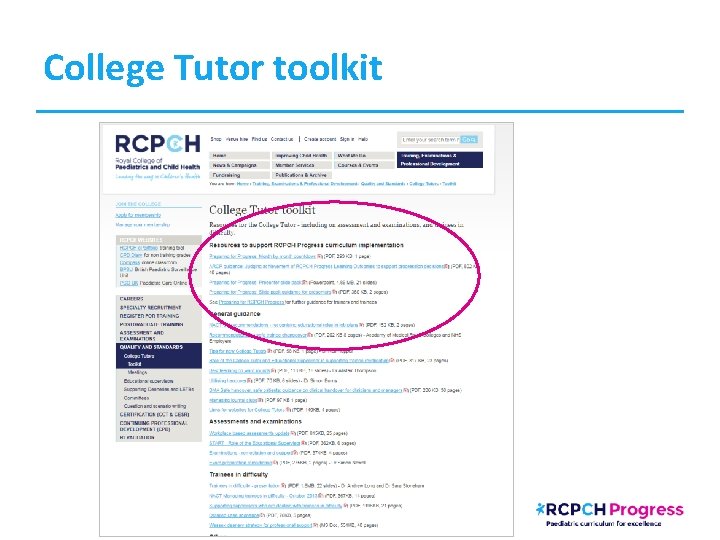
College Tutor toolkit
Any questions? www. rcpch. ac. uk/progress@rcpch. ac. uk
- Slides: 45