
Introduction to Radiographic Pathology Spring 2012 1 Pathology

- Slides: 45
Introduction to Radiographic Pathology Spring 2012 1
Pathology Pathogenesis Disease Signs vs. Symptoms Diagnosis Prognosis Acute vs. Chronic disease Sequelae Etiology Epidemiology Syndrome 2
Causes of Disease Normal agents Bacteria, viruses, trauma, and heat Adverse reactions to medical treatment Iatrogenic Poor infection control Nosocomial No known cause Idiopathic 3
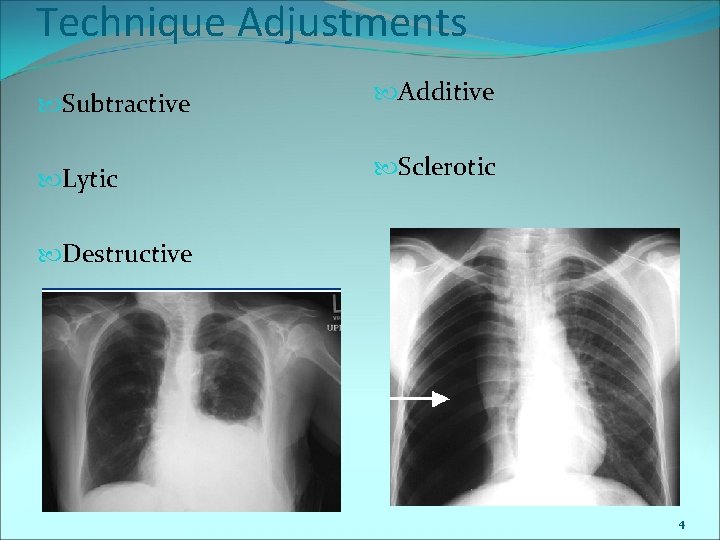
Technique Adjustments Subtractive Additive Lytic Sclerotic Destructive 4
Disease Tracking CDPH NCHS CDC Monitoring Trends Epidemics Intervention 5
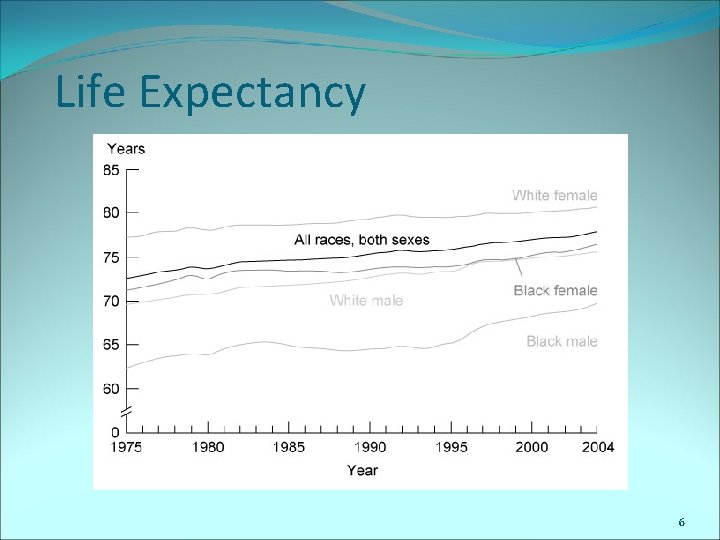
Life Expectancy 6
Health Care Costs and Changes Delivery Methods Ambulatory care Inpatient services Health care costs Increasing costs Sources of funding Medicare Medicaid Private insurance Cash 7
Disease Classifications Hereditary Congenital Inflammatory Metabolic Degenerative Traumatic Neoplastic 8
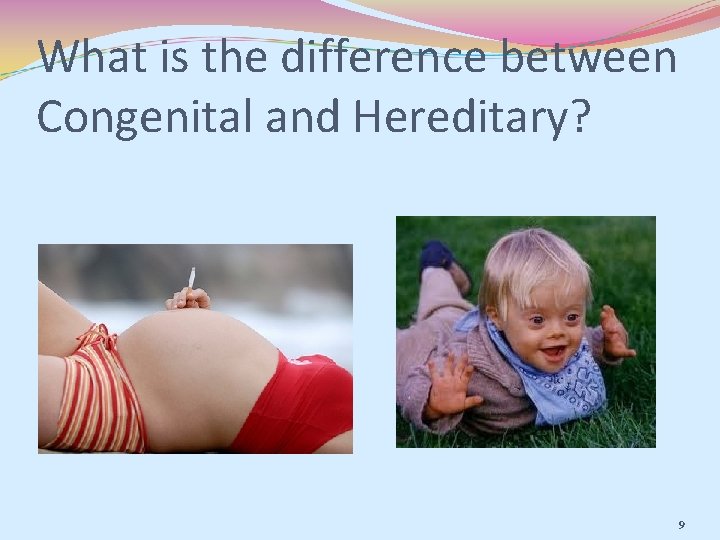
What is the difference between Congenital and Hereditary? 9
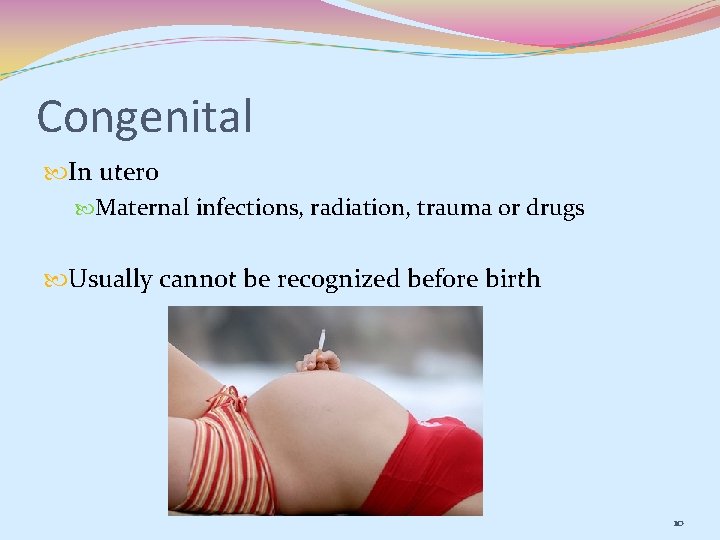
Congenital In utero Maternal infections, radiation, trauma or drugs Usually cannot be recognized before birth 10
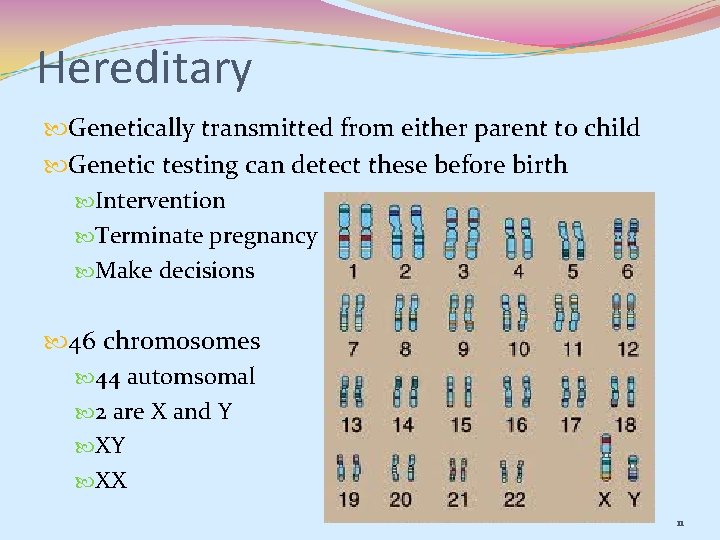
Hereditary Genetically transmitted from either parent to child Genetic testing can detect these before birth Intervention Terminate pregnancy Make decisions 46 chromosomes 44 automsomal 2 are X and Y XY XX 11
Hereditary Terms Homozygous Mutations Heterozygous Autosomal Dominant Genes Autosomal Recessive Genes Sex linked disorders Codominant Genes 12
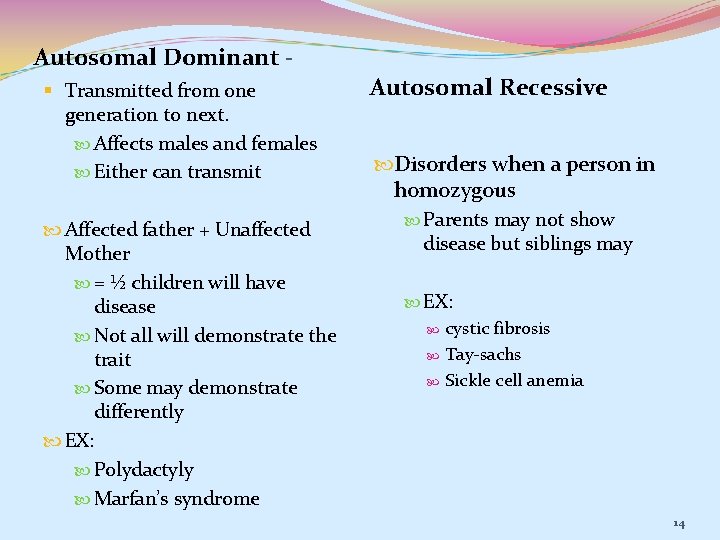
Homozygous- genes are same for a trait Blue and blue Heterozygous- genes differ from each parent Blue (recessive) and Brown (dominant) Dominant Genes-always produce effect Recessive Genes- traits manifest only if person is homozygous Codominant Genes- both traits are expressed AB blood types 13
Autosomal Dominant § Transmitted from one generation to next. Affects males and females Either can transmit Affected father + Unaffected Mother = ½ children will have disease Not all will demonstrate the trait Some may demonstrate differently EX: Polydactyly Marfan’s syndrome Autosomal Recessive Disorders when a person in homozygous Parents may not show disease but siblings may EX: cystic fibrosis Tay-sachs Sickle cell anemia 14
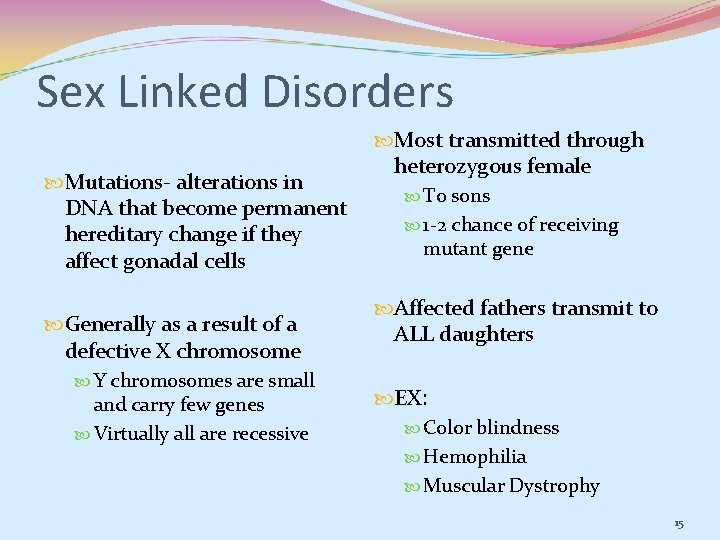
Sex Linked Disorders Mutations- alterations in DNA that become permanent hereditary change if they affect gonadal cells Generally as a result of a defective X chromosome Y chromosomes are small and carry few genes Virtually all are recessive Most transmitted through heterozygous female To sons 1 -2 chance of receiving mutant gene Affected fathers transmit to ALL daughters EX: Color blindness Hemophilia Muscular Dystrophy 15
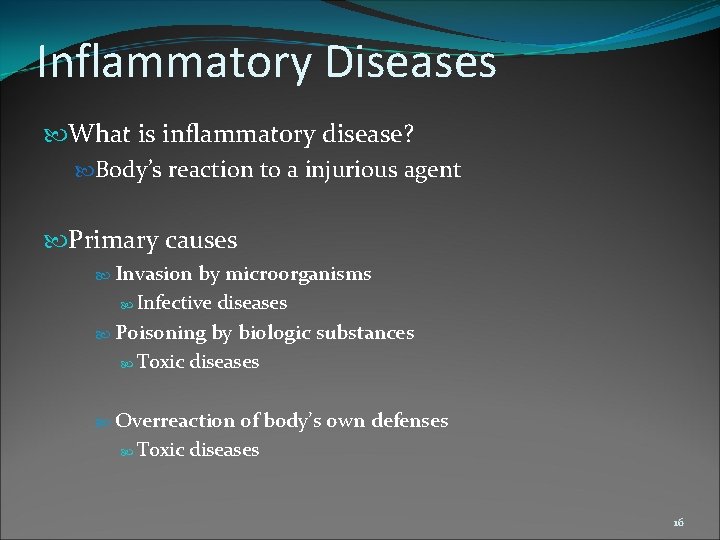
Inflammatory Diseases What is inflammatory disease? Body’s reaction to a injurious agent Primary causes Invasion by microorganisms Infective diseases Poisoning by biologic substances Toxic diseases Overreaction of body’s own defenses Toxic diseases 16
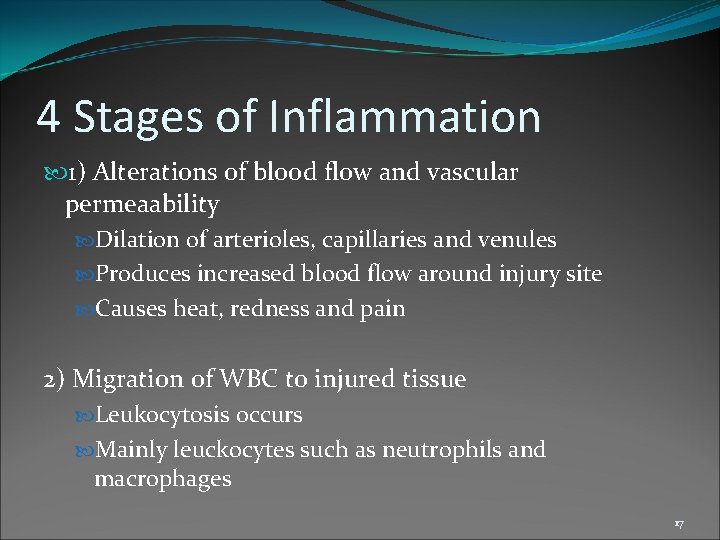
4 Stages of Inflammation 1) Alterations of blood flow and vascular permeaability Dilation of arterioles, capillaries and venules Produces increased blood flow around injury site Causes heat, redness and pain 2) Migration of WBC to injured tissue Leukocytosis occurs Mainly leuckocytes such as neutrophils and macrophages 17
4 Stages of Inflammation 3) Phagocytosis WBC engulf and digest infecting organisms 4) Repair of injury Regeneration of normal cells Granuation tissue 18
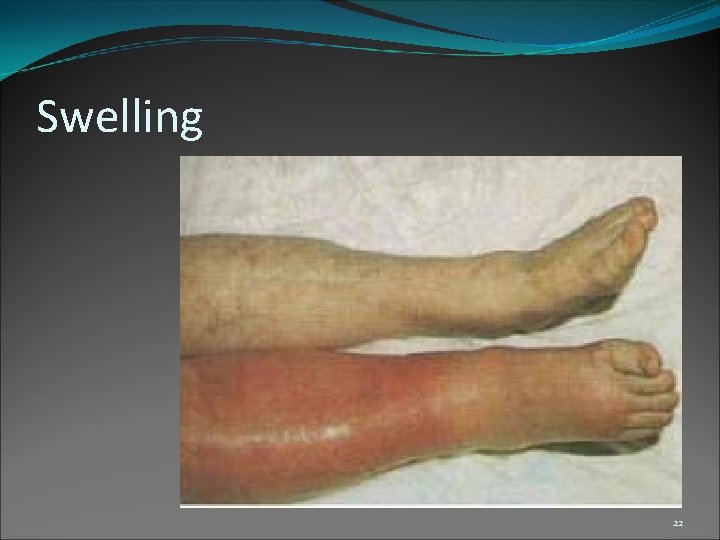
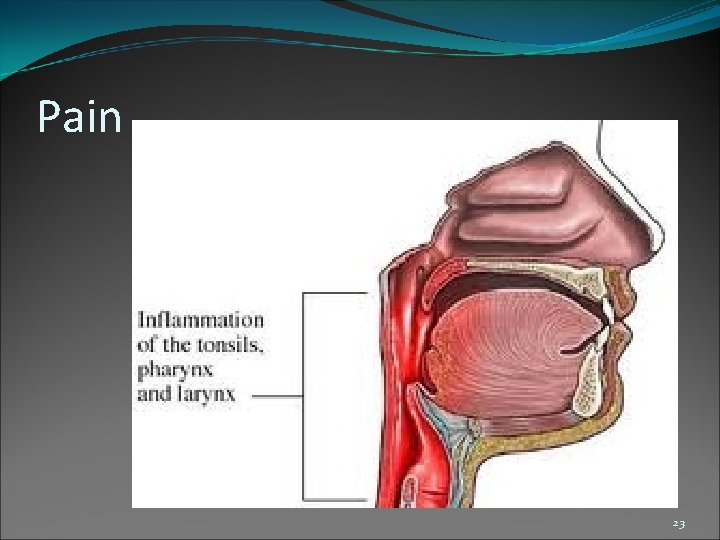
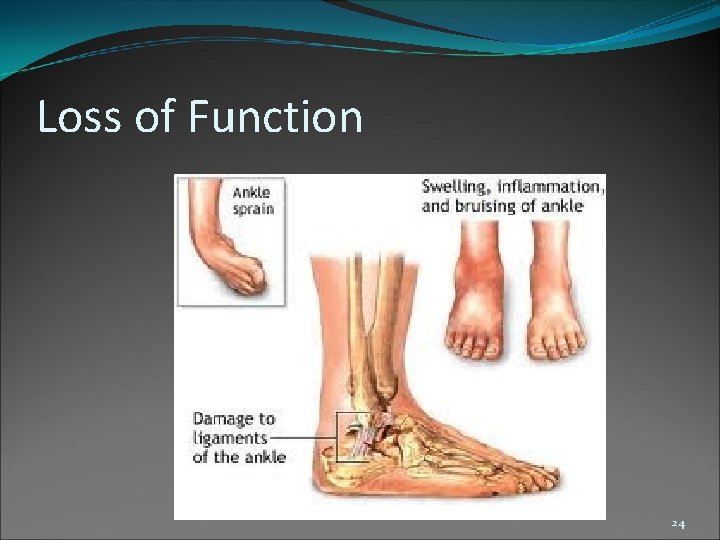
Inflammation Chronic inflammation: Damage caused by an injurious agent may not result in necrosis Longer duration of inflammation periods Acute inflammation: Heat Redness of skin Swelling Pain Loss of function Elevated body temperature 19
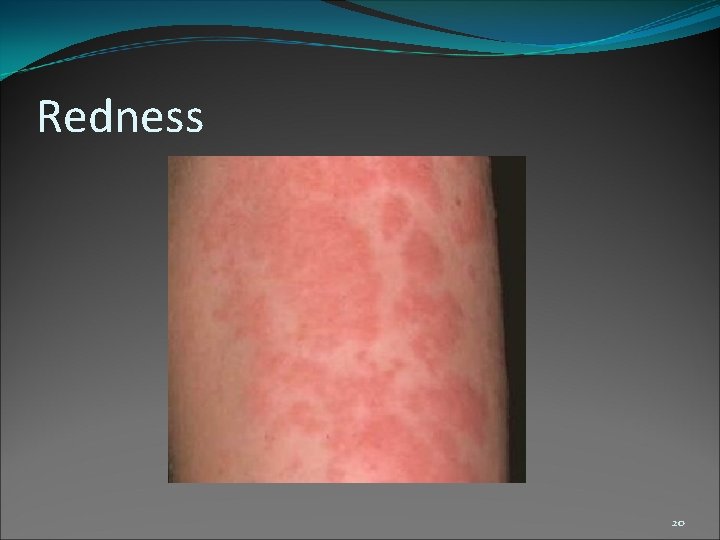
Redness 20
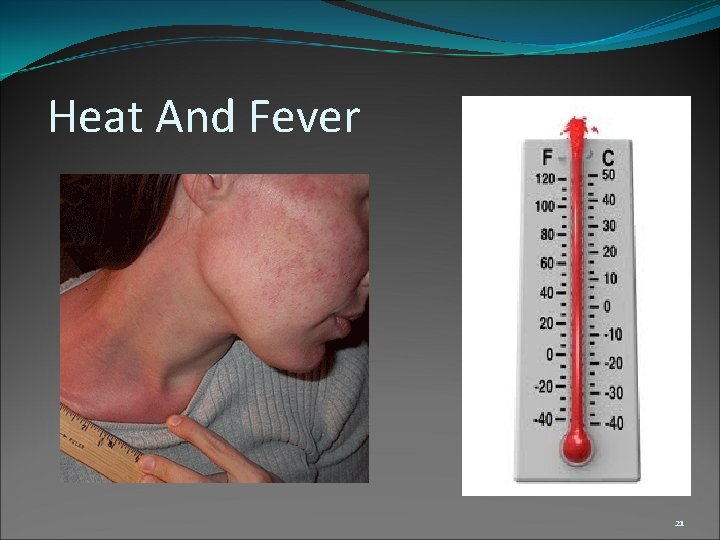
Heat And Fever 21
Swelling 22
Pain 23
Loss of Function 24
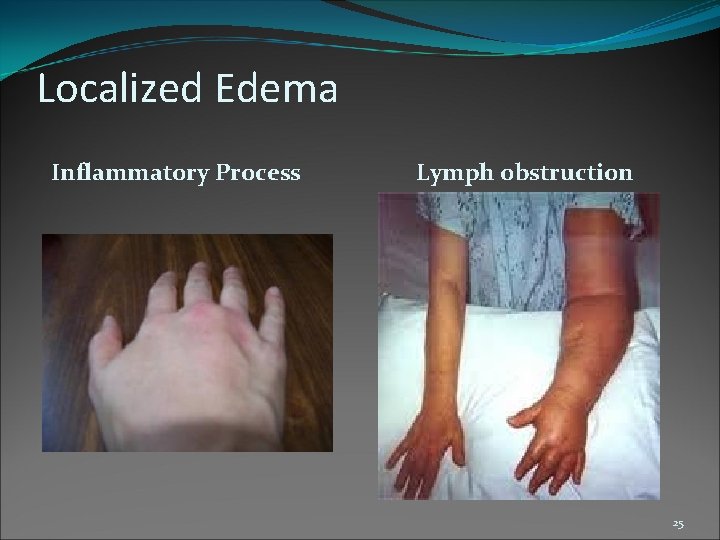
Localized Edema Inflammatory Process Lymph obstruction 25
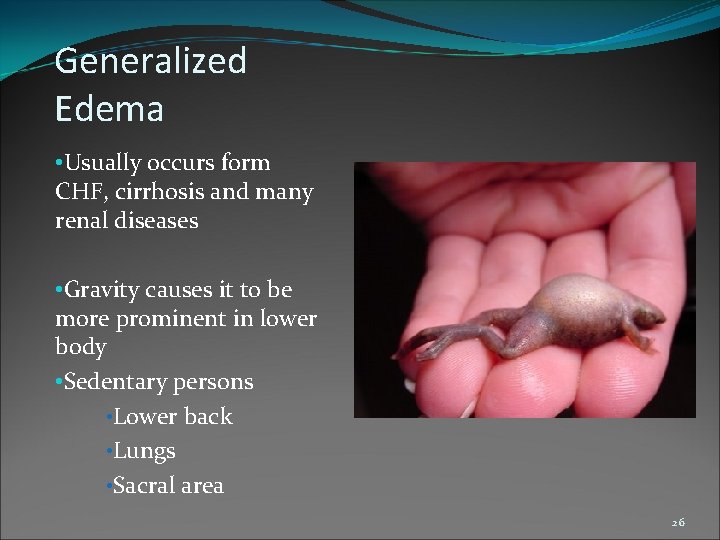
Generalized Edema • Usually occurs form CHF, cirrhosis and many renal diseases • Gravity causes it to be more prominent in lower body • Sedentary persons • Lower back • Lungs • Sacral area 26
Traumatic Disease that may result from mechanical forces such as crushing or twisting of a body part or from the effects of ionizing radiation on the body Fracture Wound Bruise/contusion
Neoplastic Defined as: new abnormal tissue growth Come from latin word “neoplasia” meaning new growth Abnormal proliferation that are not governed by laws of normal cells Cell act as parasites competing with normal cells for their metabolic needs Onocology- study of neoplasms Derived from greek word “oncos” which means tumor 28
All tumors have 2 basic components 1) The organ tissue is made up of proliferating neoplastic cells 2) The supporting tissue is made up of connective tissue, blood vessels and possibly lymphatic cells. 29
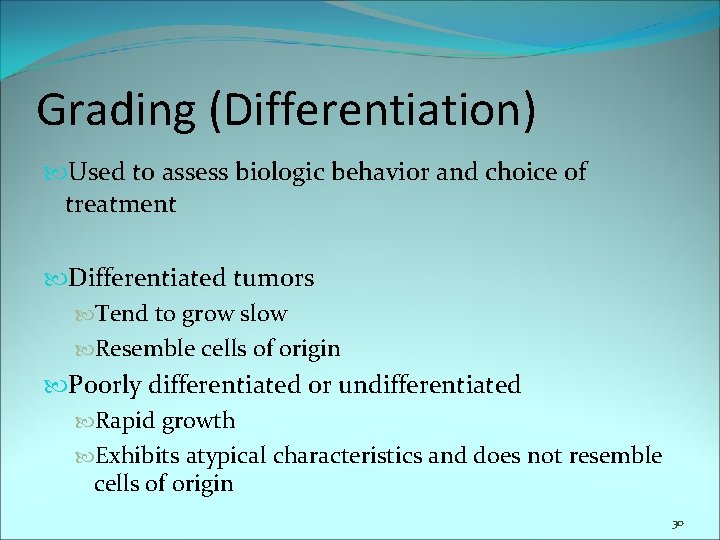
Grading (Differentiation) Used to assess biologic behavior and choice of treatment Differentiated tumors Tend to grow slow Resemble cells of origin Poorly differentiated or undifferentiated Rapid growth Exhibits atypical characteristics and does not resemble cells of origin 30
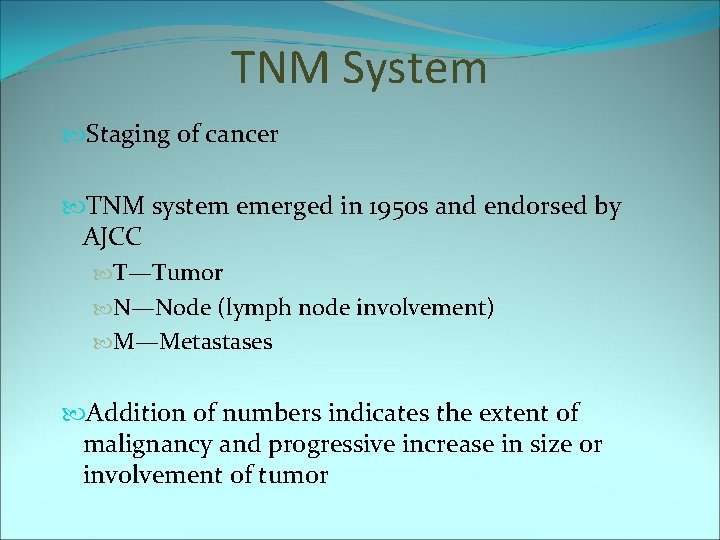
TNM System Staging of cancer TNM system emerged in 1950 s and endorsed by AJCC T—Tumor N—Node (lymph node involvement) M—Metastases Addition of numbers indicates the extent of malignancy and progressive increase in size or involvement of tumor
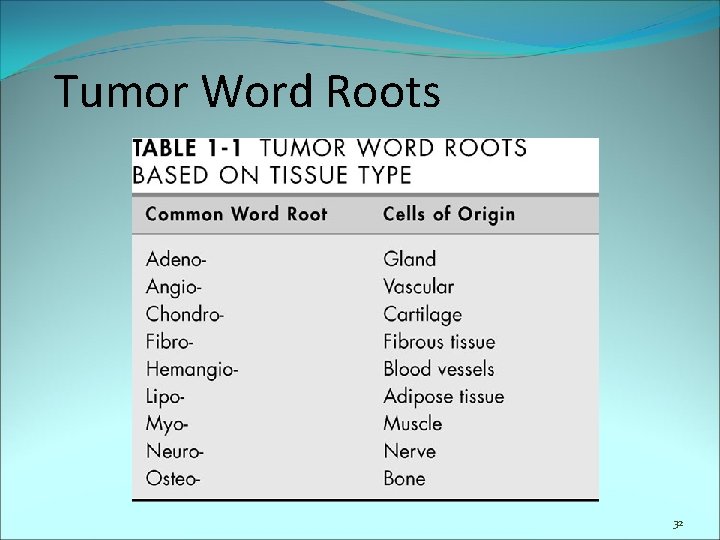
Tumor Word Roots 32
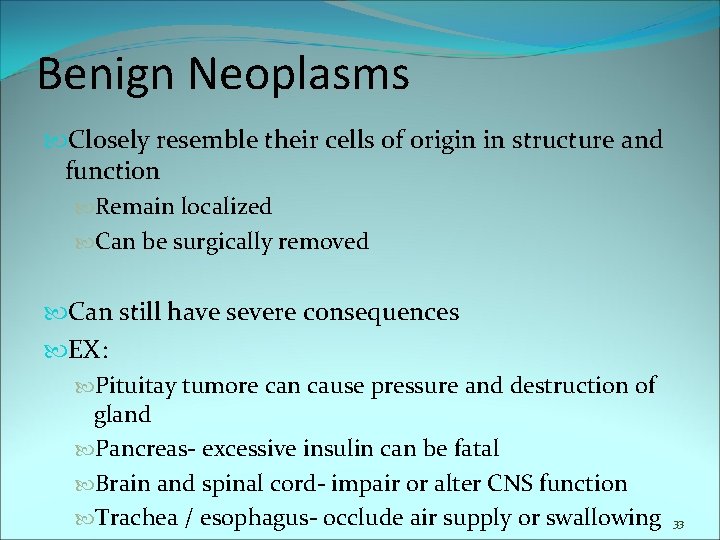
Benign Neoplasms Closely resemble their cells of origin in structure and function Remain localized Can be surgically removed Can still have severe consequences EX: Pituitay tumore can cause pressure and destruction of gland Pancreas- excessive insulin can be fatal Brain and spinal cord- impair or alter CNS function Trachea / esophagus- occlude air supply or swallowing 33
Benign Tumors Consist of differentiated cells Add suffix OMA to root word Examples: Fibromas Chondromas Adenoma Lipomas Myomas Angiomas 34
Malignant Neoplasms Invade and destroy adjacent structures Metastasize Poorly or undifferentiated so it may be impossible to determine origin Cancer comes from the latin word crab, because it has fingerlike projections that resemble crablike claws 35
Malignant Neoplasms Carcinomas- epithelial origin Affects epithelial cells, skin and mucus membranes Comes from greek word “karkinos” which means crab Adenocarcinoma- malignancies from glandular tissue breast, liver, pancreas, and cells lining the GI tract 36
Malignant Neoplasms Cont. Squamous cell carcinoma- tumors of connective tissue Resemble stratified squamous epithelia Lungs, head and neck regions Sarcomas- connective tissue Highly malignant and spread rapidly Bone, muscle, and cartilage Less common than carcinomas 37
Metastatic Methods 4 1) Seeding- travels to distant sites and organs 2) Lymphatic-Spreads through lymphatic system 1) Especially lung and breast 2) major metastatic route of carcinomas 3) Invasion 1. Spreads to other areas in close proximity 38
Metastatic Methods cont. 4) Hematogenous- spreads through circulatory system Tumor cells invade and penetrate blood vessels Travel as emboli until they get stuck Invade wall in the vessel they are stuck Infiltrate to surrounding tissue Examples Abdominal carcinomas metastasize to liver Because of flow of the portal vein blood to that organ Midline organs spread to vertebrae Neoplasms in organs that drain into inferior & superior vena cava, such as kidneys spread to lung 39
Carcinogens Chemicals that alter DNA Air and water pollution Cigarette smoke Asbestos Sun, bombs, and radiation Viruses that alter genetic material 40
Treatment Options Surgical removal Well localized tumors with no metastases Radiation Therapy Fast growing Poorly or undifferentiated tumors Chemotherapy Cytotoxic substances used to kill neoplastic cells Kills good cells to causing significant complications 41
Degenerative—Disease caused by a deterioration of the body May occur following traumatic injury, regardless of age May occur as a hereditary illness Process of aging Factors affecting the rate of aging Hereditary Diet Enviromental factors Sedentary lifestyle
Degenerative Diseases Atherosclerosis Osteoporosis Osteoarthritis 43
Metabolic Disease caused by the disturbance of the normal physiologic function of the body Metabolism is the sum of all physical & chemical processes in the body To function Maintain homeostasis
Metabolic Disease Endocrine disorders Hypersecretion Insufficient secretion Fluid and Electrolyte imbalances Dehydration Insufficient water Loss of too much water Can occur from: Vomiting Diarrhea Diuretics Athletic (very hard training) 45