
Introduction to QED Quantum Electrodynamics Part IV Applications

- Slides: 26
Introduction to QED Quantum Electrodynamics Part IV
Applications of QED • Through the use of atom smashers, over 400 particles have been discovered. • This multitude of particles has created a need to explain their number and the nature of their interactions. • QED deals specifically with electrons and photons, but its form and function can be applied to other particle interactions.
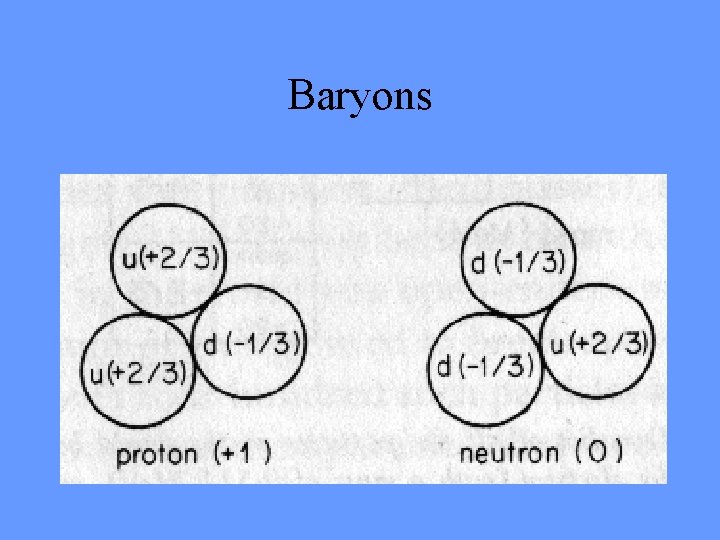
QCD • A great number of these newly-discovered particles are simply combinations of quarks. • The quantum theory of the interactions of quarks via the strong force is called Quantum Chromodynamics (QCD). • 3 make a baryon and 2 make a meson
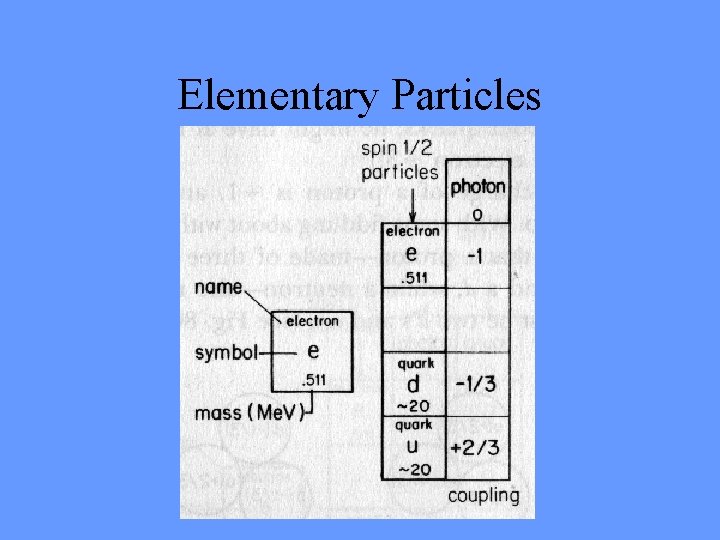
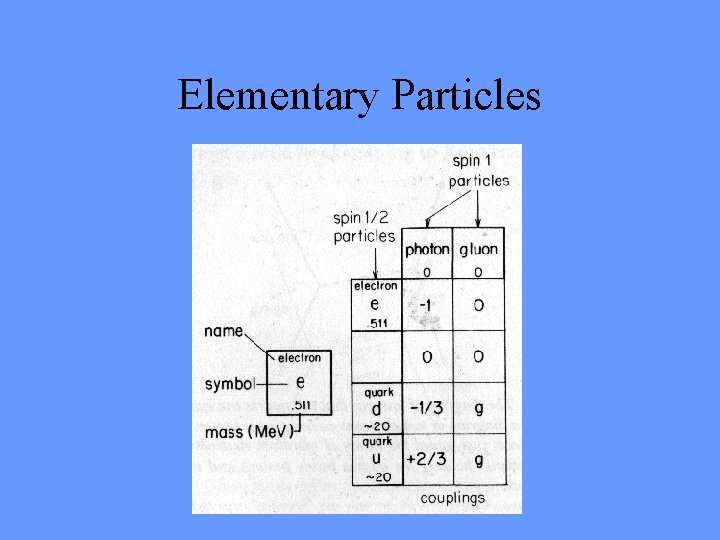
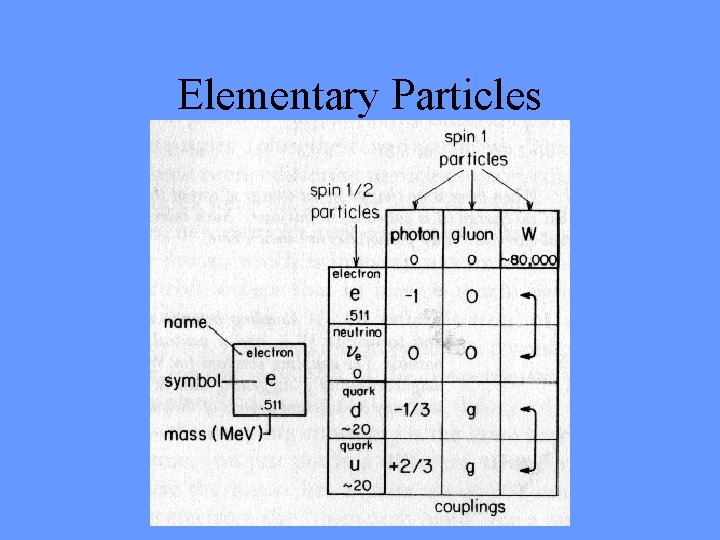
Elementary Particles
Baryons
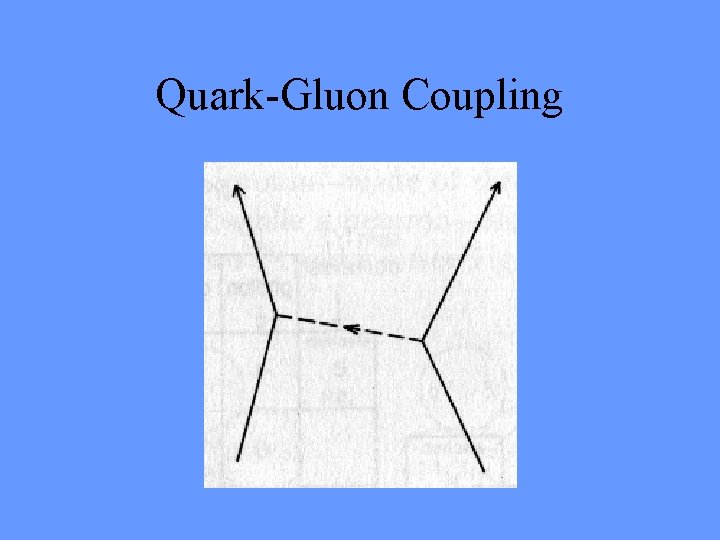
Gluons • Quarks interact via the gluon. • The gluon functions in many ways like a photon. • The probability of a coupling occurring is the constant “g” (similar in function to “j” for electrons) • Diagrams of interactions will look very similar to that of the electron and photon.
Elementary Particles
Quark-Gluon Coupling
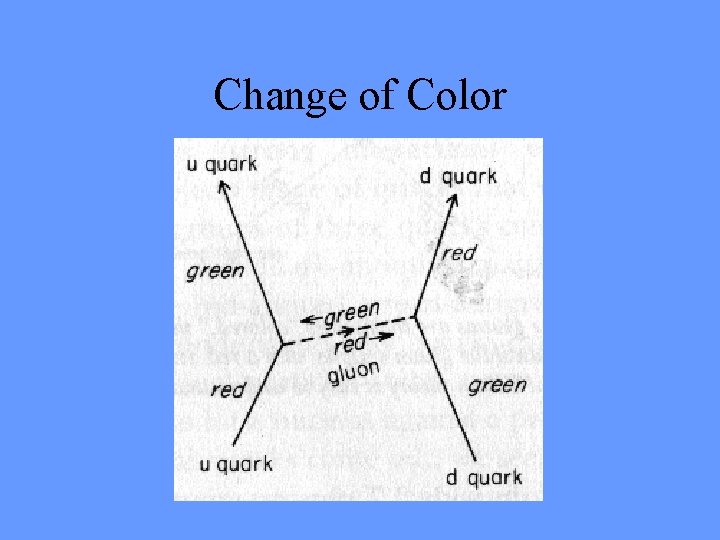
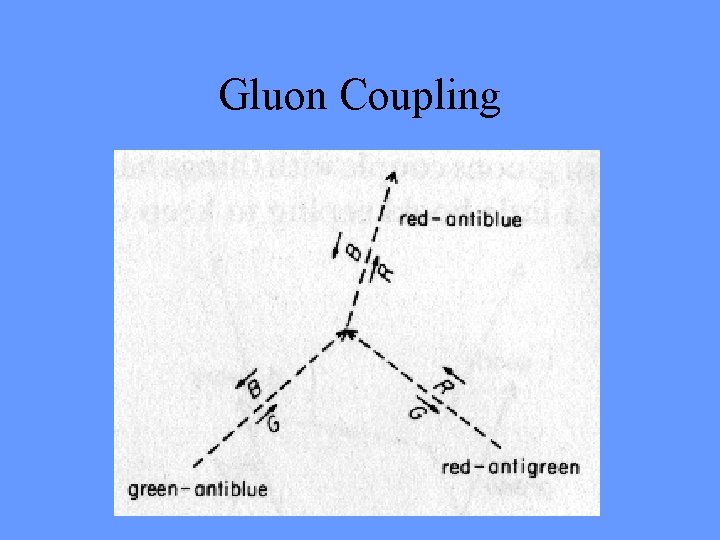
Color • Quarks and gluons have a property called “color”. • Quarks can change color by coupling with a gluon. • Colors are red, green, and blue.
Change of Color
Gluon Coupling
Rules of Color • All particles created by quarks must be colorless. • Baryons have one of each color and mesons have a quark-anti-quark pair. • Impossible to have a single quark.
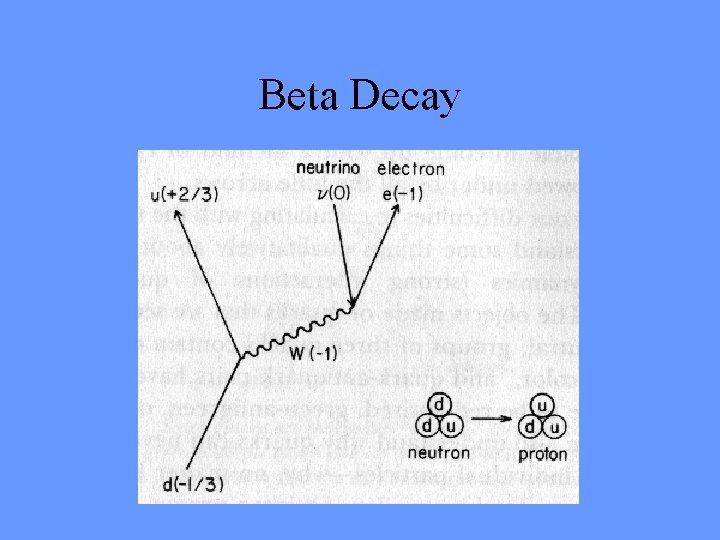
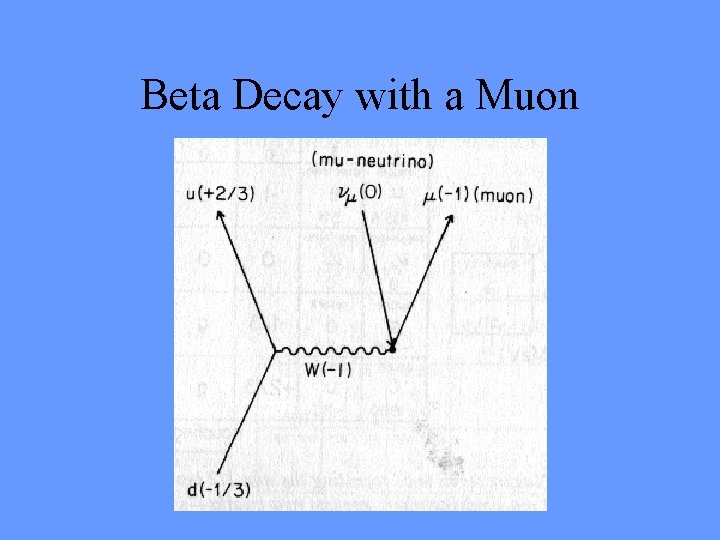
Change of Flavor • A down quark can change into an up quark. • This is done by emitting a W particle, which then decays into an electron-anti-neutrino pair. • This process is called beta decay.
Beta Decay
Elementary Particles
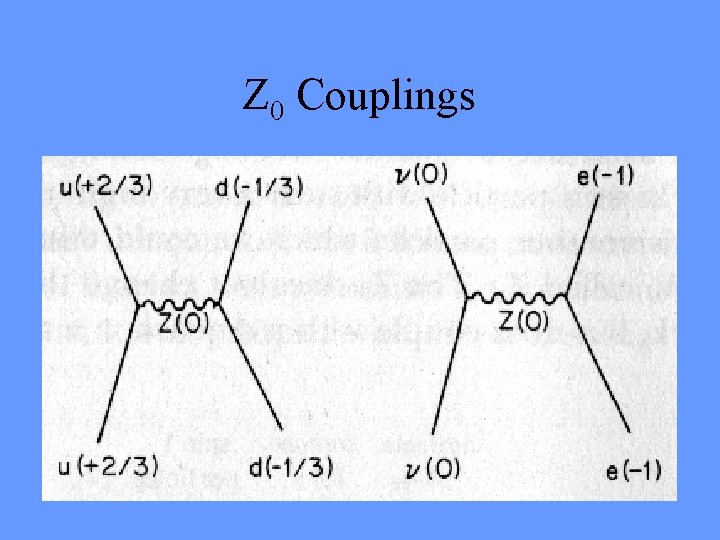
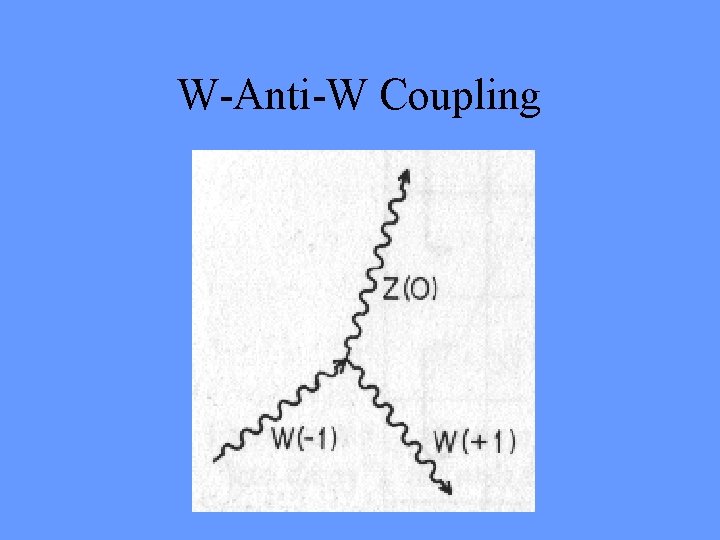
Neutral Currents • There is a particle Z 0 that is a neutral W boson. • Z 0 has no charge. • Couplings with Z 0 result in no change in a particle’s charge. (Neutral Currents)
Z 0 Couplings
W-Anti-W Coupling
Electro-Weak Force • The observed coupling constant is almost identical as that of the photon. • The three W’s and the photon would then appear to be somehow interconnected. • Electrodynamics and the weak force were successfully combined by Stephen Weinberg and Abdus Salam
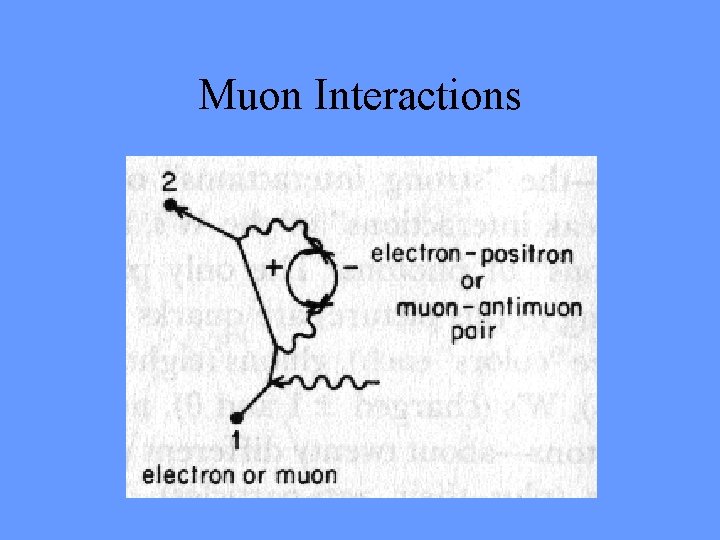
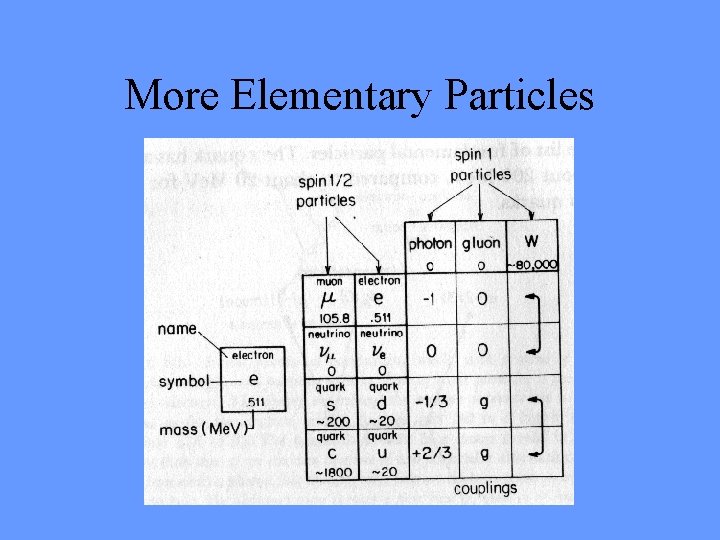
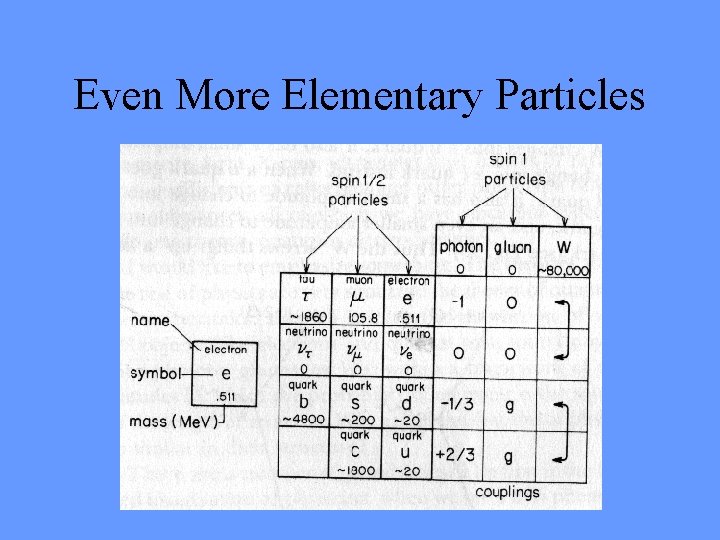
“Redundant” Particles • As nuclei have been bombarded by protons of higher and higher energy, new particles have appeared. • These particles seem to mimic lower-energy versions and differ only by their higher mass. • E. g. The Muon is identical to an electron, except it’s about 200 times heavier.
Muon Interactions
Beta Decay with a Muon
More Elementary Particles
Even More Elementary Particles
Diagrams: Feynman, Richard P. QED: The Strange Theory of Light and Matter. Princeton University Press. Princeton, NJ, 1988.
Questions?