
Introduction to Pumps Compressors Fans Blowers Zafifah Zamrud

Introduction to Pumps, Compressors, Fans & Blowers Zafifah Zamrud
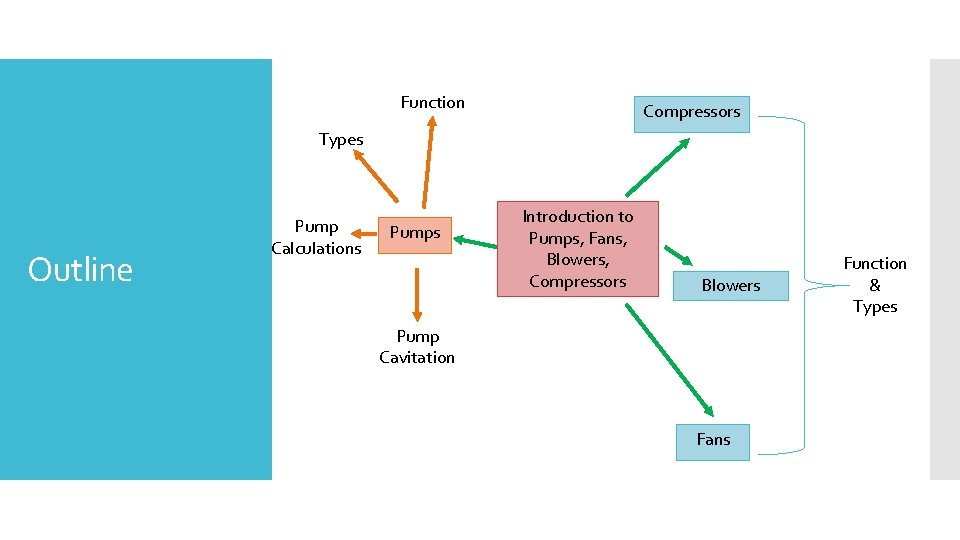
Function Compressors Types Outline Pump Calculations Pumps Introduction to Pumps, Fans, Blowers, Compressors Blowers Pump Cavitation Fans Function & Types

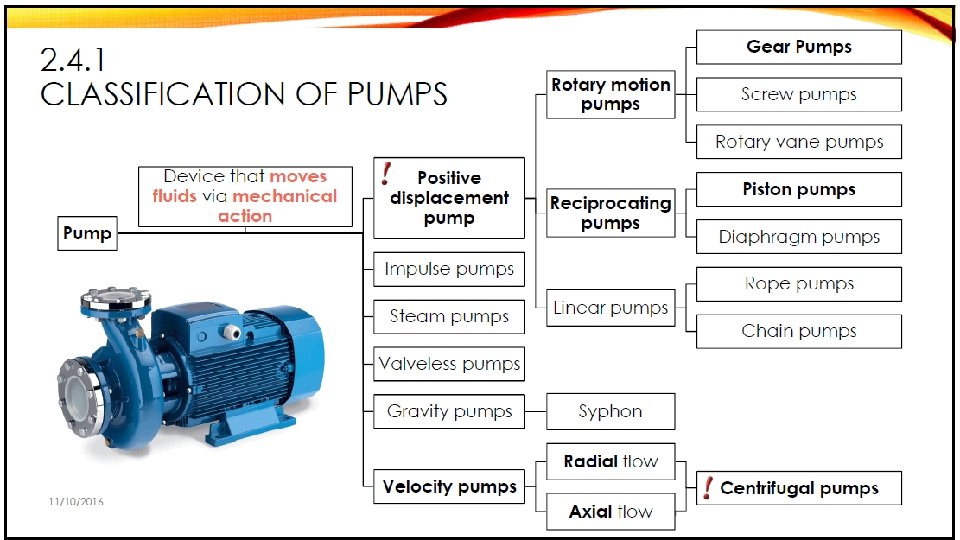

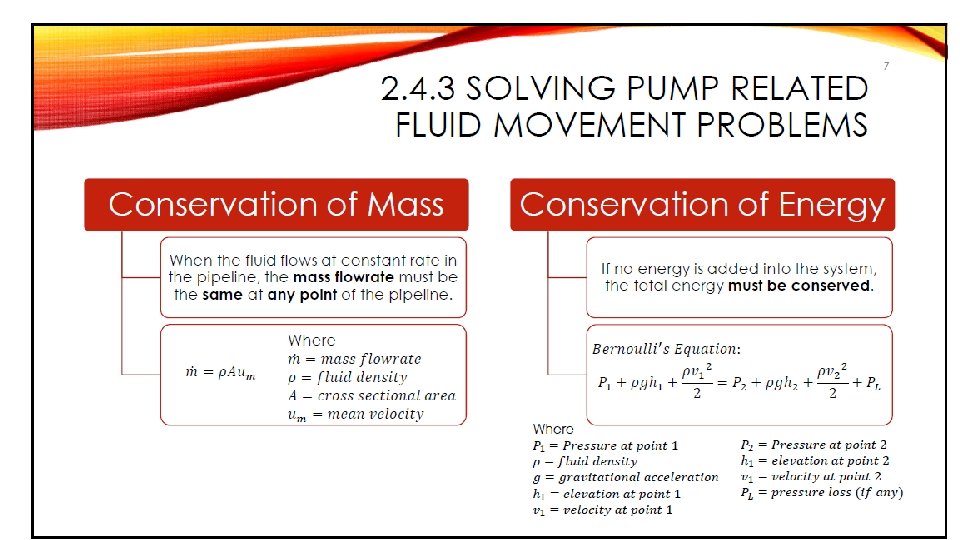
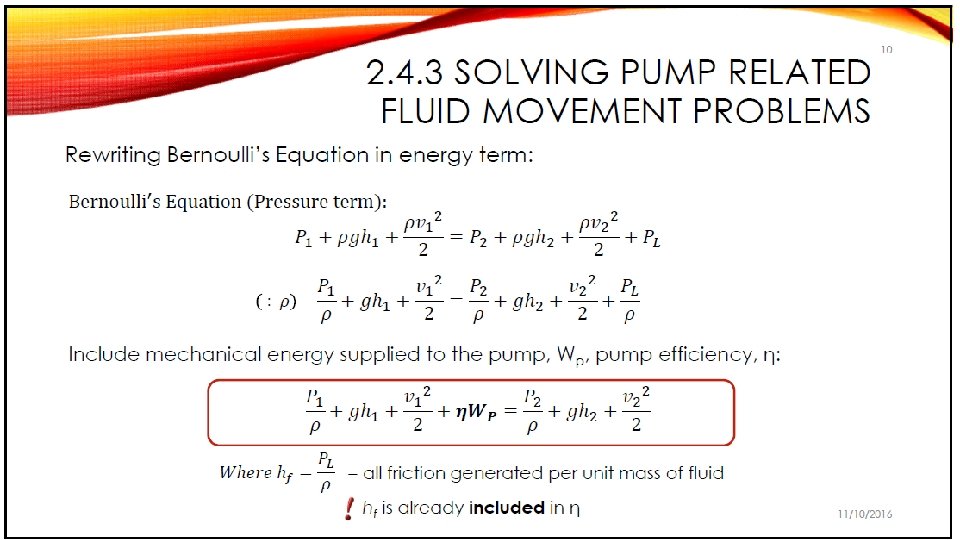
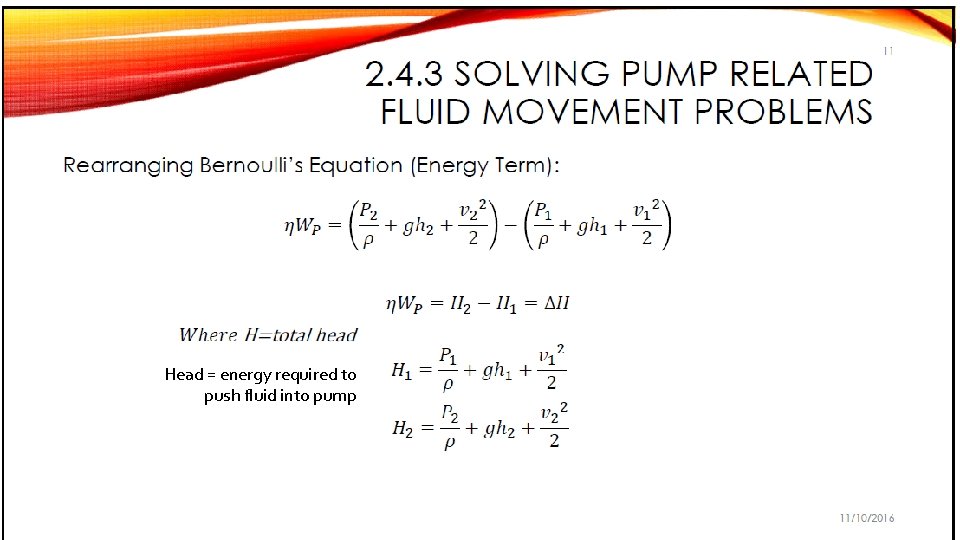
Head = energy required to push fluid into pump
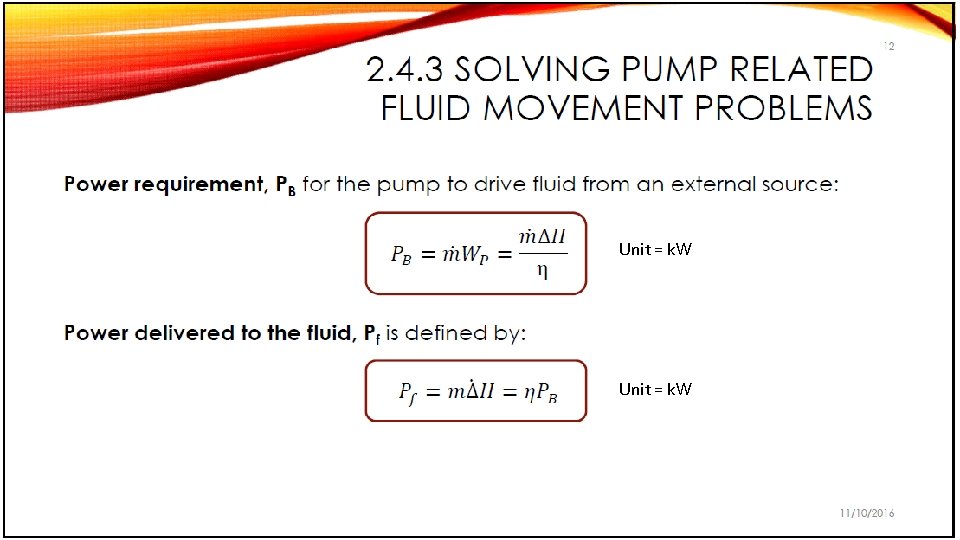
Unit = k. W
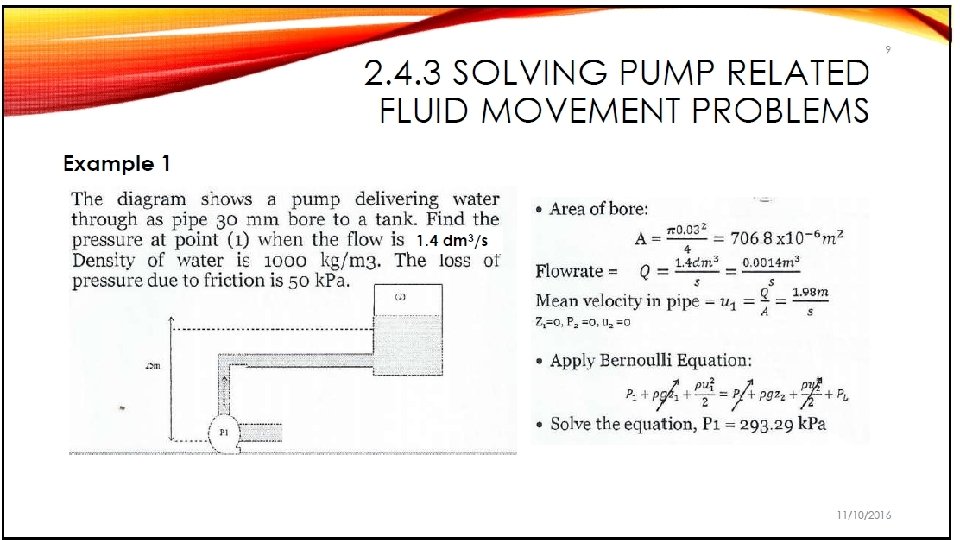

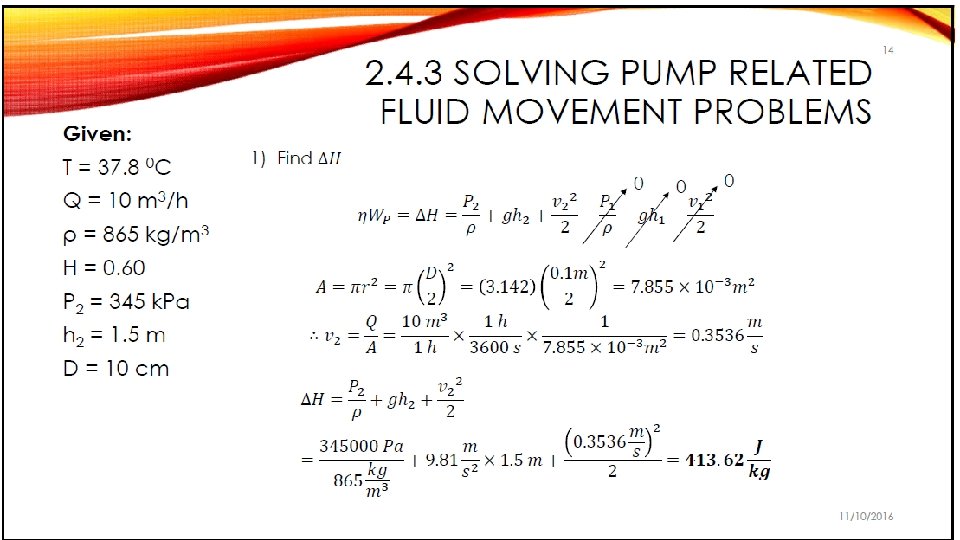
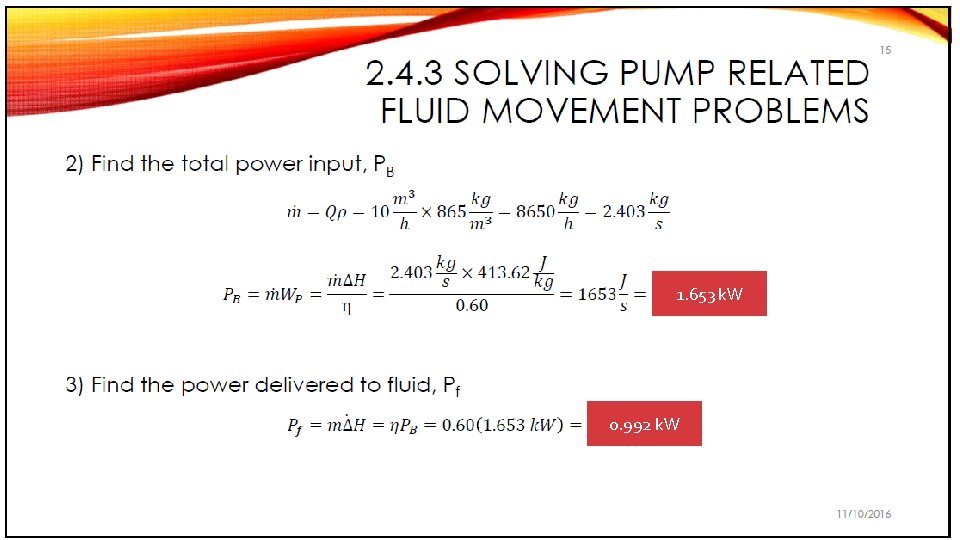
1. 653 k. W 0. 992 k. W
Pump Cavitation Similar to valve cavitation, this phenomena occurs in pumps as well. Cavitation happens when a flowing liquid falls below its vapor pressure, causing vapor bubbles to form. If the flowing liquid is then subjected to pressures above the vapor pressure, these bubbles can implode causing damage.
Cavitation is usually due to insufficient NPSH ( Net Positive Suction Head) energy on the suction side of the pump. Pump Cavitation : Causes It is the energy required to push the liquid into the pump. This can be caused by: Having the pump at too high of a distance above the fluid source Having too small of a diameter of suction pipe Having too long of a distance of suction pipe Having too many fittings on the suction pipe Handling a liquid with low vapor pressure Running the pump too fast
Pump Cavitation : End Results Energy lost due to conversion of energy to form bubbles rather than being converted to the fluid’s kinetic energy resulting in drop in pump efficiency. The collapsing of vapor bubbles can cause excessive vibration, which can cause rotating parts such as the impeller to contact nonrotating parts such as wear plates or wear rings, causing damage. These bubbles might also cause the impeller to run out of balance within the pump creating excessive vibration and noise.
Always ensure that NPSHa (Net Positive Suction Head available) is one or two feet above the NPSHr (Net Positive Suction Head required). Pump Cavitation : Prevention Measures To increase NPSHa Situate the pump at lower level (increases pressure due to height of liquid) to increase pressure at the suction line Allow the liquid to cool before the pump for easier pumping. Move the pump closer to the fluid to reduce the static height from the fluid level to the pump. Use larger pump Use pump that runs at a lower speed with lower NPSHr

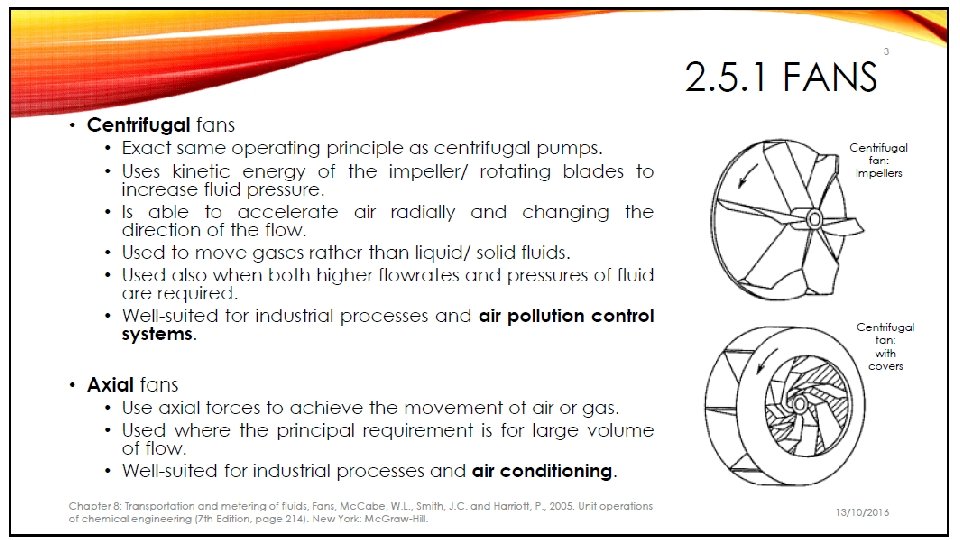
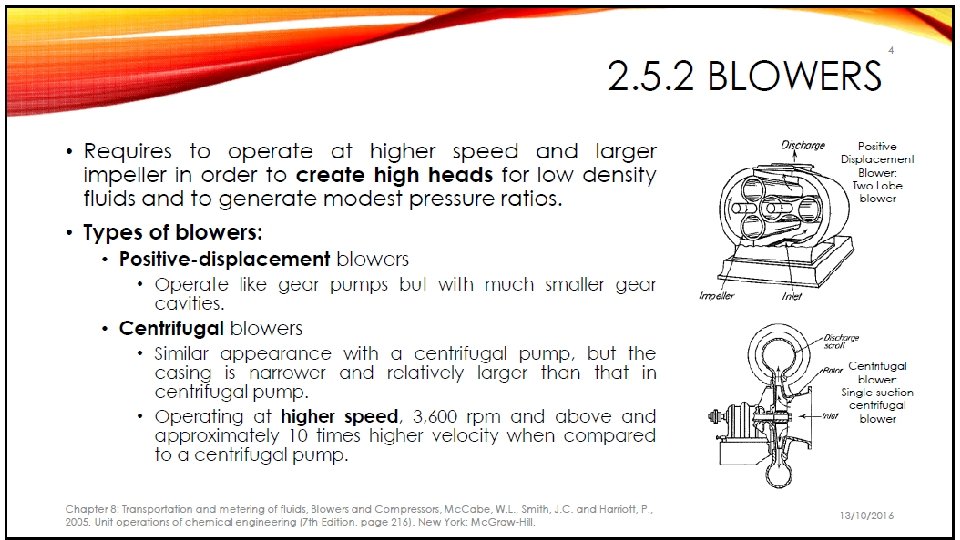


Positive-displacement blower Reciprocating positive-displacement blower Centrifugal fan, blower & compressor Discuss how each of these instruments transport gases.
- Slides: 23