
INTRODUCTION TO PUBLIC TRANSPORTATION Instructor Dr Jill Hough
INTRODUCTION TO PUBLIC TRANSPORTATION Instructor: Dr. Jill Hough Module 1 – Lesson 1
INTRODUCTION TO PUBLIC TRANSPORTATION Module 1, Lesson 1
Module 1: Introduction to Public Transportation • Lesson 1: What is Public Transportation? • Lesson 2: The History of Public Transportation • Lesson 3: The Business of Public Transportation
Learning Objectives • Describe the components of public transportation • Identify the transit options available in your community • Illustrate ways communities view public transportation • Recognize that there is no universal structure for transit
Overall Context Public transportation, and its many components and options, is at the center of a community’s ability to function, not just in recent time, but across decades.
What is Public Transportation? • In 2011 there were 7, 100 public transportation service systems that provided transportation rides in the U. S. , by various modes. • Of those, 825 were operating in Urbanized Areas and 1, 440 were in Rural. • There were 10. 7 billion public transit trips taken in 2013 • Passengers traveled 54 billion miles; average trip length was 5. 4 miles. Source: American Public Transportation Association. Public Transportation Fact Book – 2013 and www. apta. com
Transit Modes • Bus (including bus rapid transit and commuter bus) • Demand Response • Commuter Rail • Heavy Rail • Light Rail (including streetcar and hybrid rail) • High Speed Rail • Ferryboat
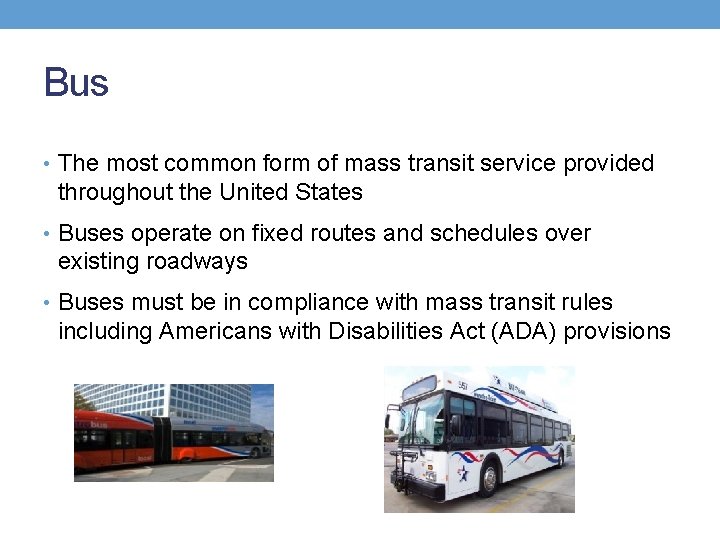
Bus • The most common form of mass transit service provided throughout the United States • Buses operate on fixed routes and schedules over existing roadways • Buses must be in compliance with mass transit rules including Americans with Disabilities Act (ADA) provisions
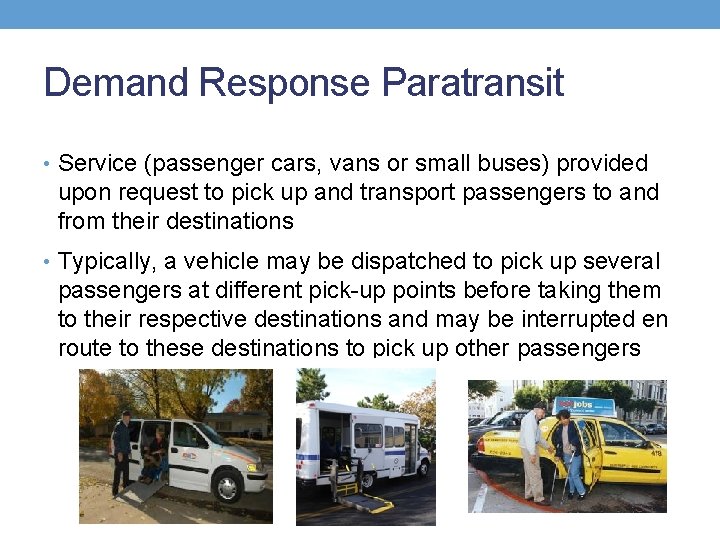
Demand Response Paratransit • Service (passenger cars, vans or small buses) provided 9 upon request to pick up and transport passengers to and from their destinations • Typically, a vehicle may be dispatched to pick up several passengers at different pick-up points before taking them to their respective destinations and may be interrupted en route to these destinations to pick up other passengers
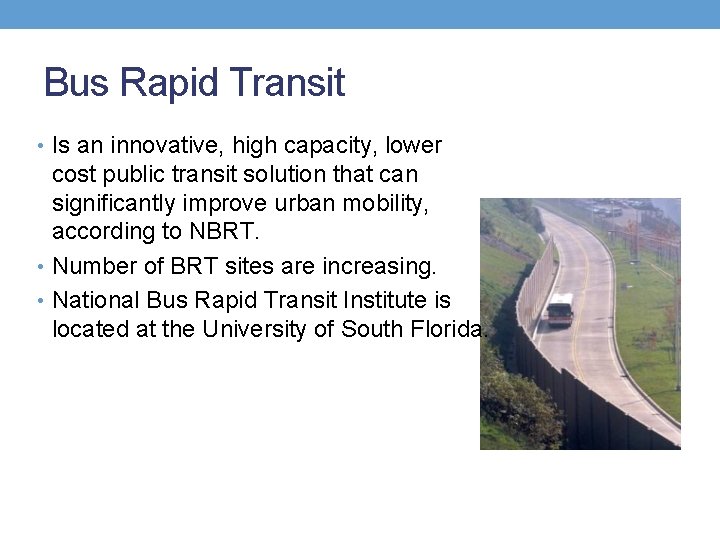
Bus Rapid Transit • Is an innovative, high capacity, lower cost public transit solution that can significantly improve urban mobility, according to NBRT. • Number of BRT sites are increasing. • National Bus Rapid Transit Institute is located at the University of South Florida.
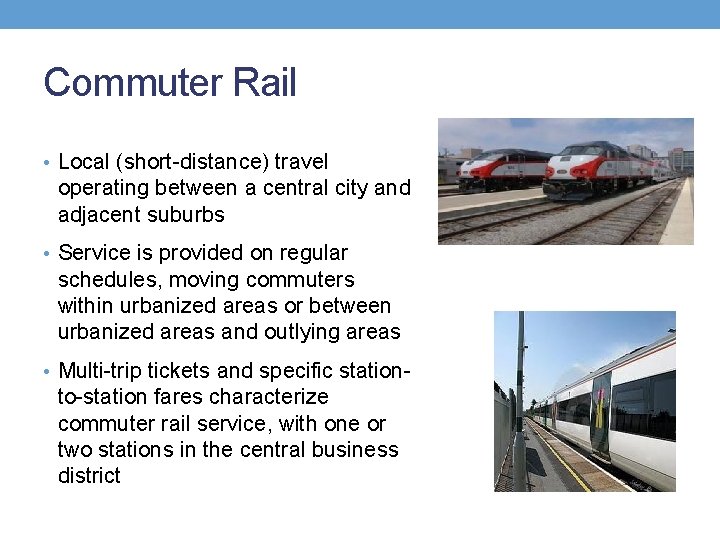
Commuter Rail • Local (short-distance) travel operating between a central city and adjacent suburbs • Service is provided on regular schedules, moving commuters within urbanized areas or between urbanized areas and outlying areas • Multi-trip tickets and specific station- to-station fares characterize commuter rail service, with one or two stations in the central business district
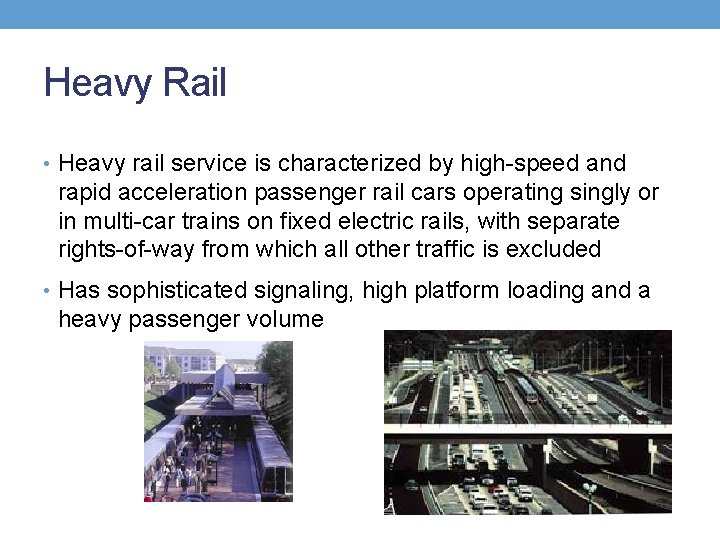
Heavy Rail • Heavy rail service is characterized by high-speed and rapid acceleration passenger rail cars operating singly or in multi-car trains on fixed electric rails, with separate rights-of-way from which all other traffic is excluded • Has sophisticated signaling, high platform loading and a heavy passenger volume
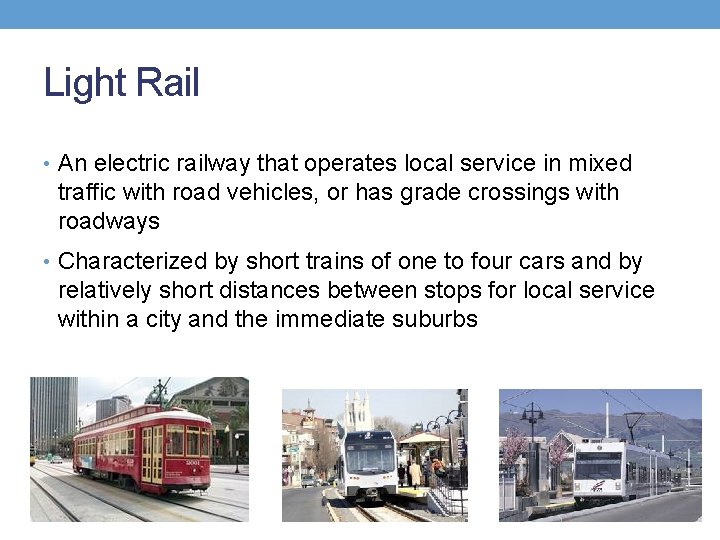
Light Rail • An electric railway that operates local service in mixed traffic with road vehicles, or has grade crossings with roadways • Characterized by short trains of one to four cars and by relatively short distances between stops for local service within a city and the immediate suburbs
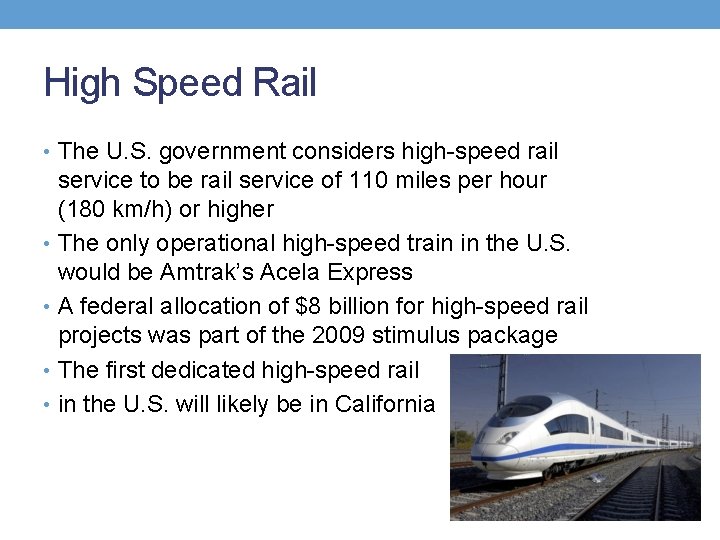
High Speed Rail • The U. S. government considers high-speed rail service to be rail service of 110 miles per hour (180 km/h) or higher • The only operational high-speed train in the U. S. would be Amtrak’s Acela Express • A federal allocation of $8 billion for high-speed rail projects was part of the 2009 stimulus package • The first dedicated high-speed rail • in the U. S. will likely be in California
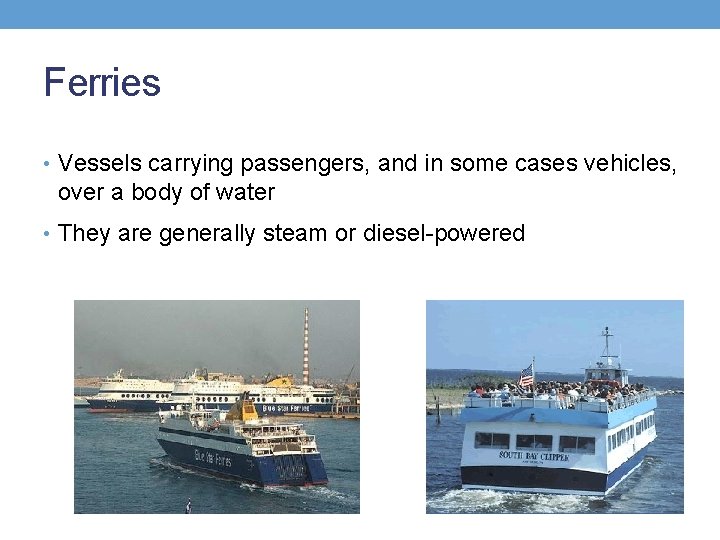
Ferries • Vessels carrying passengers, and in some cases vehicles, over a body of water • They are generally steam or diesel-powered
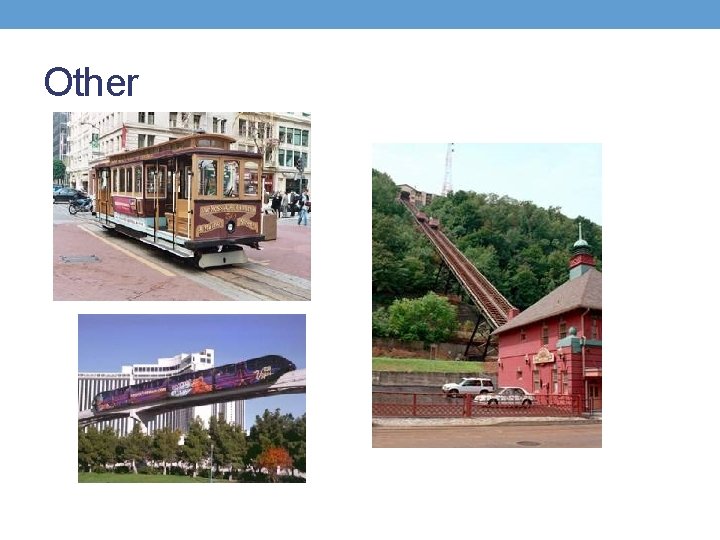
16 Other
- Slides: 16