
Introduction to Public Speaking Chapters 15 and 16

Introduction to Public Speaking Chapters 15 and 16
Persuasion l The process of creating, reinforcing or changing peoples beliefs or actions l MUCH MORE difficult than informative speaking

Mental Dialogue l Assume that the audience member is having a dialogue with you as you are speaking l Anticipate their questions
Target Audience Section of the audience that you most want to persuade

Questions of Fact l. A question about the truth or falsity of an assertion l Organized Topically l Sometimes spacially

Questions of Value l Questions about the worth, rightness, morality, etc. of an idea or action l Organized Topically

Questions of Policy l Questions about whether a specific course of action should or should not be taken

Questions of Policy l Types of speeches associated with questions of policy Those to Gain Passive Agreement l Those to Gain Immediate Action l
Questions of Policy l Analyzing Questions of Policy Need l Plan l Practicality l
Questions of Policy l. Speech Organization l Problem Solution Order l Problem-Cause-Solution Order
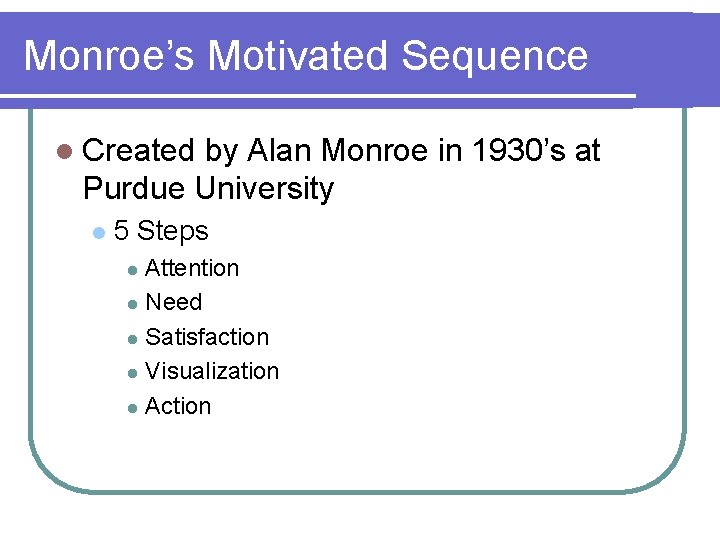
Monroe’s Motivated Sequence l Created by Alan Monroe in 1930’s at Purdue University l 5 Steps Attention l Need l Satisfaction l Visualization l Action l
Methods of Persuasion Why should I listen to you?

Credibility - Ethos l Audiences perception as to whether the speaker is qualified to speak on a given topic l 2 factors Competence l Character l
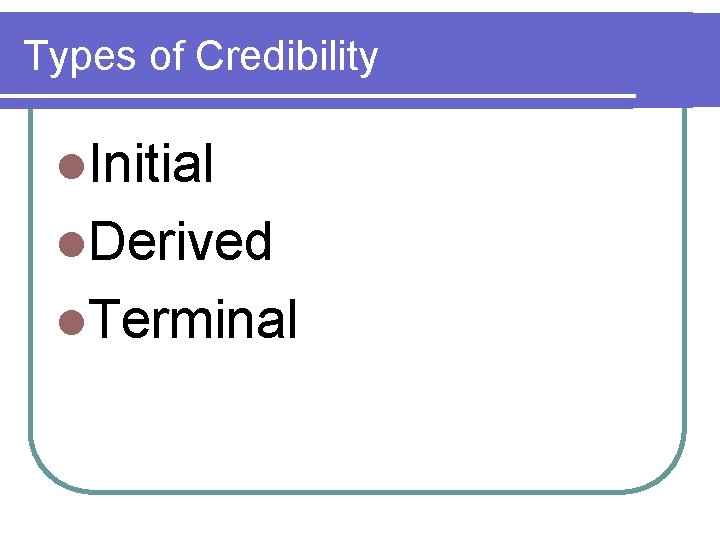
Types of Credibility l. Initial l. Derived l. Terminal
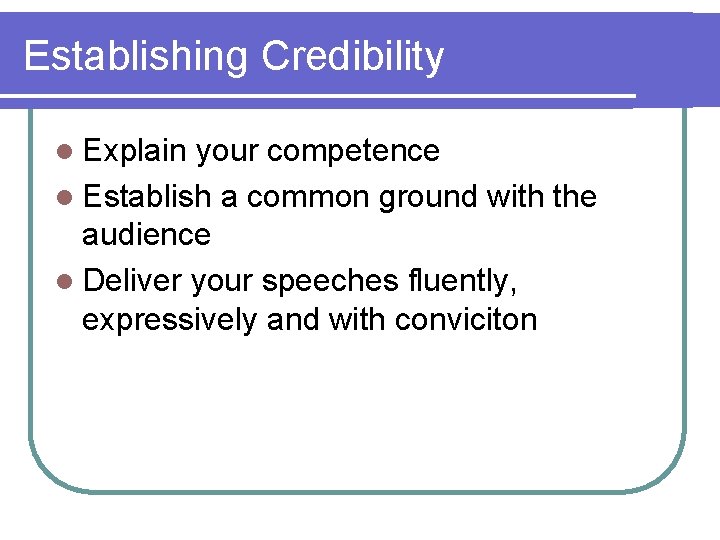
Establishing Credibility l Explain your competence l Establish a common ground with the audience l Deliver your speeches fluently, expressively and with conviciton
Evidence - Logos l People are Skeptical…back up what you say with evidence Use specific evidence l Use novel evidence l Use credible sources l Make clear point of evidence l
Reasoning - Logos l Process of drawing a conclusion on the basis of evidence l 4 Basic Types Reasoning for specific instances l Reason from principle l Causal reasoning l Analogical Reasoning l
Reasoning for specific instances l. Moves from particular facts to general conclusions
Reasoning from Principle l. Moves from general thought to specific thought
Causal Reasoning l. Establishes a relationship between causes and effects
Analogical Reasoning l Compares two similar cases and infers what is true for the first case is true for the other due to their relationship
Fallacies l Red Herring l Ad Hominem l Either-Or l Bandwagon l Slippery Slope
Appeal to Emotions l Evoking an emotional response from your audience Use emotional language l Develop vivid examples l Speak with sincerity and conviction l
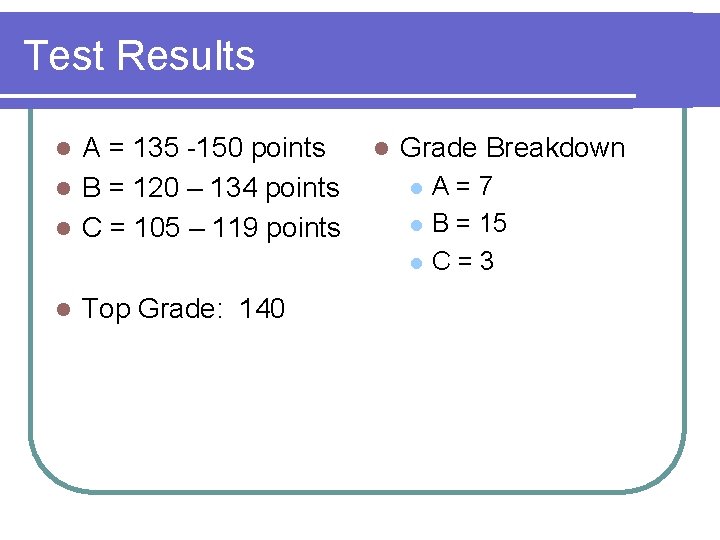
Test Results A = 135 -150 points l B = 120 – 134 points l C = 105 – 119 points l l Grade Breakdown l l Top Grade: 140 A=7 B = 15 C=3
- Slides: 24