
INTRODUCTION TO PUBLIC FINANCE MANAGEMENT Module 2 4
INTRODUCTION TO PUBLIC FINANCE MANAGEMENT Module 2. 4: Internal Control

Module outline Ø Framework of Internal Control Ø Basic Internal Controls 2
Framework of Internal Control Definition: Internal control is a process, effected by management, designed to provide assurances on: • Effectiveness and efficiency of operations; • Reliability of financial reporting; • Compliance with laws and regulations; • Safeguarding against loss, misuse and damage; 3
Framework of Internal Control and Corruption • Can help prevent corruption at officer/internal level; • Can help reduce a culture of corruption; • Has limited ability to detect corruption at political level; • Is part of the armoury against corruption. 4
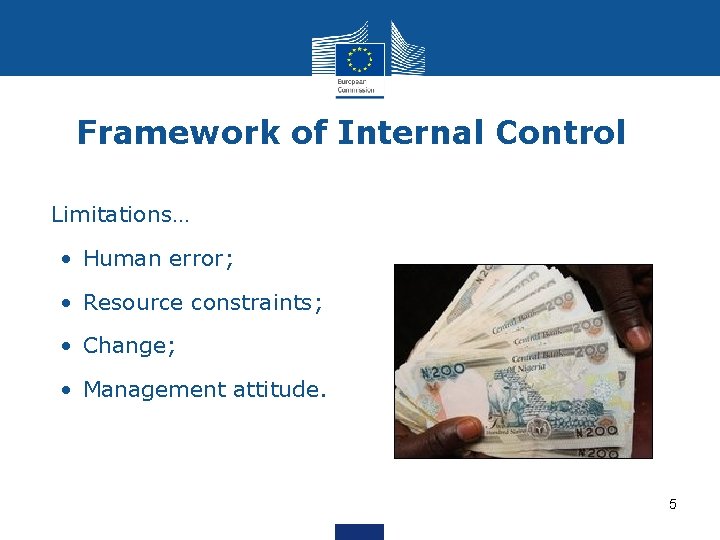
Framework of Internal Control • Limitations… • Human error; • Resource constraints; • Change; • Management attitude. 5
Framework of Internal Control Internal control consists of five interrelated components: 1. Control environment; 2. Risk assessment; 3. Control activities; 4. Information and communication; 5. Monitoring. 6
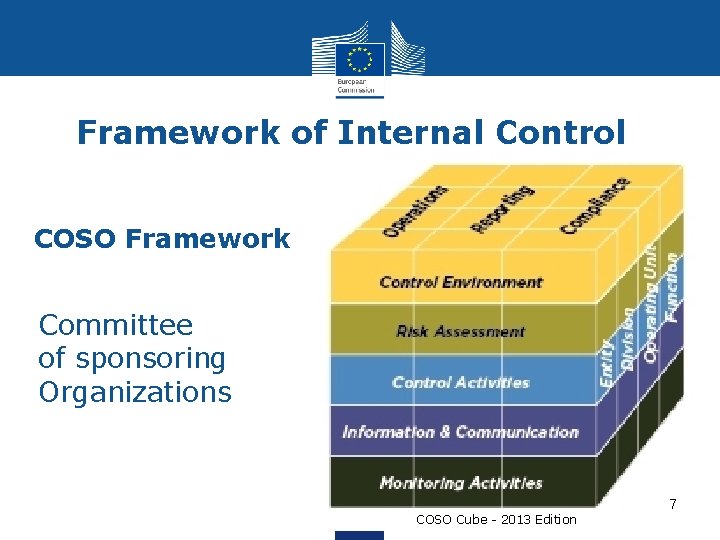
Framework of Internal Control COSO Framework Committee of sponsoring Organizations COSO Cube - 2013 Edition 7
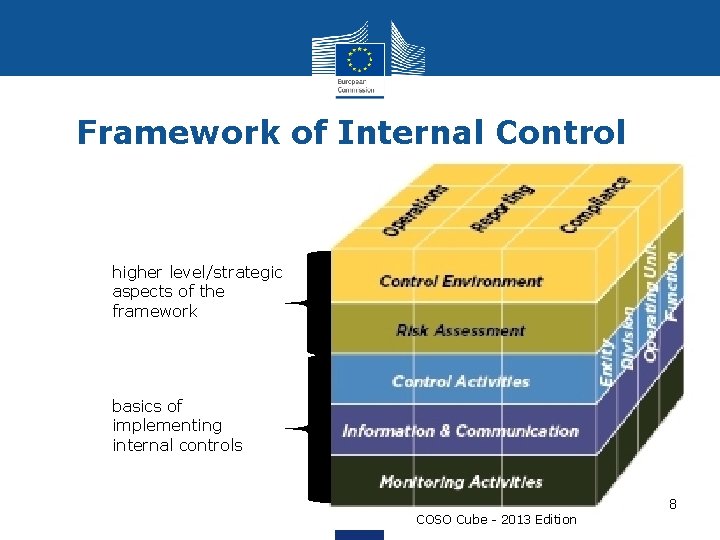
Framework of Internal Control higher level/strategic aspects of the framework basics of implementing internal controls COSO Cube - 2013 Edition 8
Framework of Internal Control Environment ● Demonstrates commitment to integrity and ethical values; ● Exercises oversight responsibility; ● Establishes structure, authority and responsibility; ● Demonstrates commitment to competence; ● Enforces accountability. 9
Framework of Internal Control 6. Specifies suitable objectives Assessment 7. Risk suitable objectives 8. Identifies and analyzes risk ● Specifies suitable objectives 9. Assesses fraud risk ● Identifies and analyzes risk 10. Identifies and suitable objectives 11. ●Identifies analyzes risk Assesses and fraud risk 12. Assesses fraud risk ● Identifies and analyzes significant change 13. Identifies and analyzes significant change 10
Module outline Ø Framework of Internal Control Ø Basic Internal Controls 11
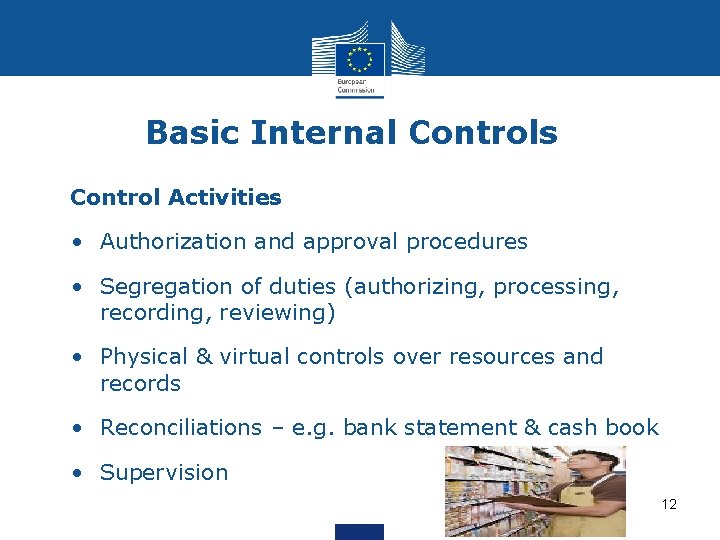
Basic Internal Controls • Control Activities • Authorization and approval procedures • Segregation of duties (authorizing, processing, recording, reviewing) • Physical & virtual controls over resources and records • Reconciliations – e. g. bank statement & cash book • Supervision 12
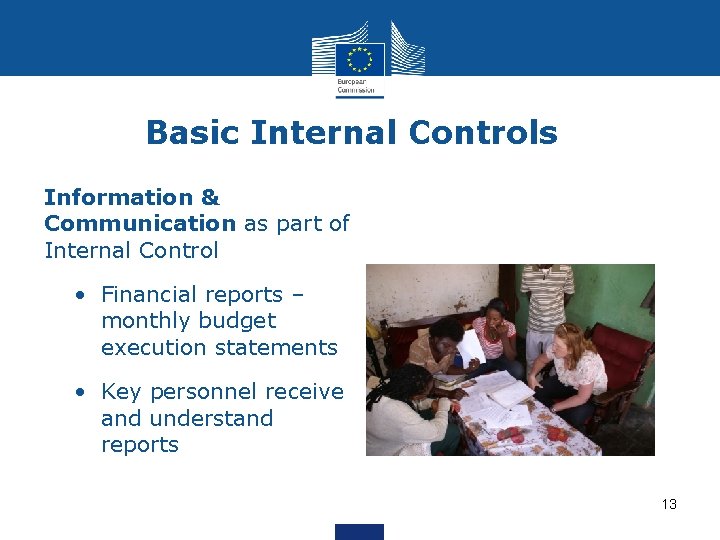
Basic Internal Controls Information & Communication as part of Internal Control • Financial reports – monthly budget execution statements • Key personnel receive and understand reports 13
Basic Internal Controls Information & Communication requires that: • Financial regulations are up to date; • Budget agreed before the start of the year; • Suitable financial coding structure is maintained. 14
Basic Internal Controls Monitoring • Ensures Internal Controls remain relevant • Ensures findings/recommendations are acted on • Covers each of the Internal Control components 15
Basic Internal Controls Key Internal Controls are discussed in later modules when we examine… • Revenue; • Expenditure controls; • Payroll; • Stock and Non Current asset records. 16
Key messages Some references… Ø COSO (private sector) Internal Control — Integrated Framework (Revised 2013). Ø Adapted for the Public Sector by the INTOSAI "Guidelines for Internal Control Standards for the Public Sector" (INTOSAI GOV 9100, revised 2004). Ø Public Expenditure & Accountability (PEFA) 2016 – annex on assessment of internal controls. 17
Key messages ü Internal Controls are an aid to management; ü They operate throughout all parts of the PFM system; ü They can not prevent errors or compensate for lax management attitudes. 18
- Slides: 18