
Introduction to Projections Four Basic Types Note An
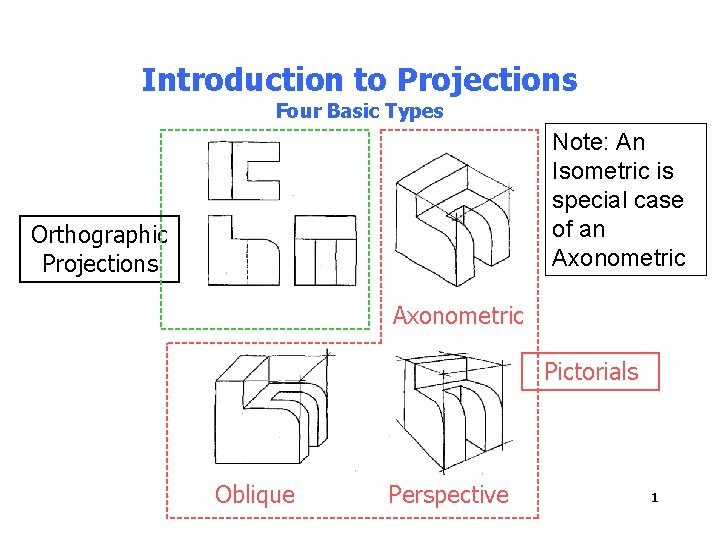
Introduction to Projections Four Basic Types Note: An Isometric is special case of an Axonometric Orthographic Projections Axonometric Pictorials Oblique Perspective 1
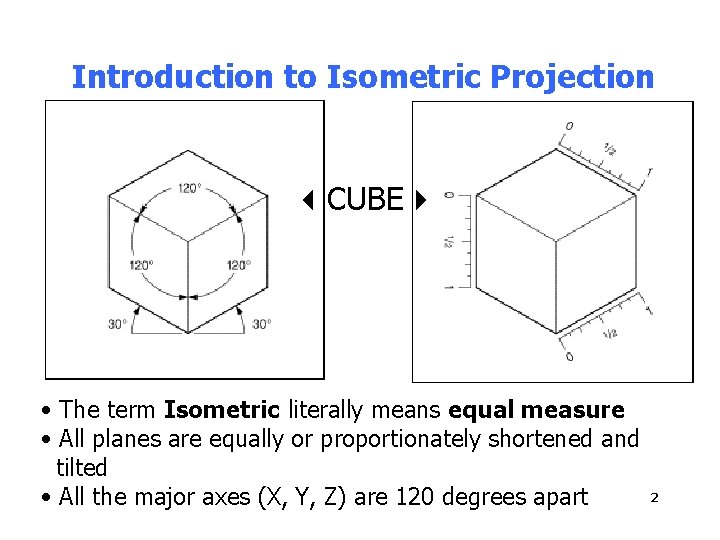
Introduction to Isometric Projection CUBE • The term Isometric literally means equal measure • All planes are equally or proportionately shortened and tilted • All the major axes (X, Y, Z) are 120 degrees apart 2
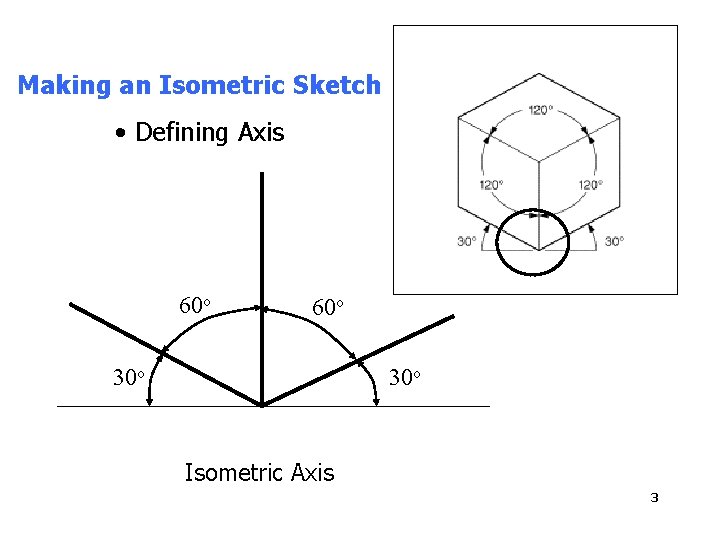
Making an Isometric Sketch • Defining Axis 60 o 30 o Isometric Axis 3
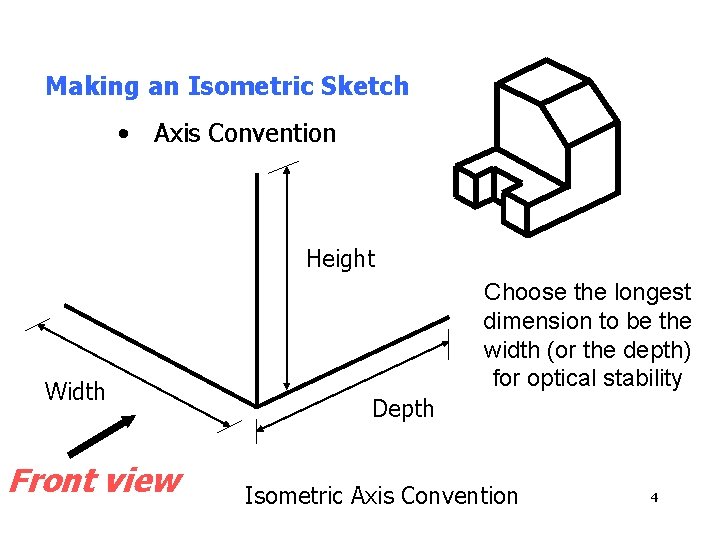
Making an Isometric Sketch • Axis Convention Height Width Front view Choose the longest dimension to be the width (or the depth) for optical stability Depth Isometric Axis Convention 4
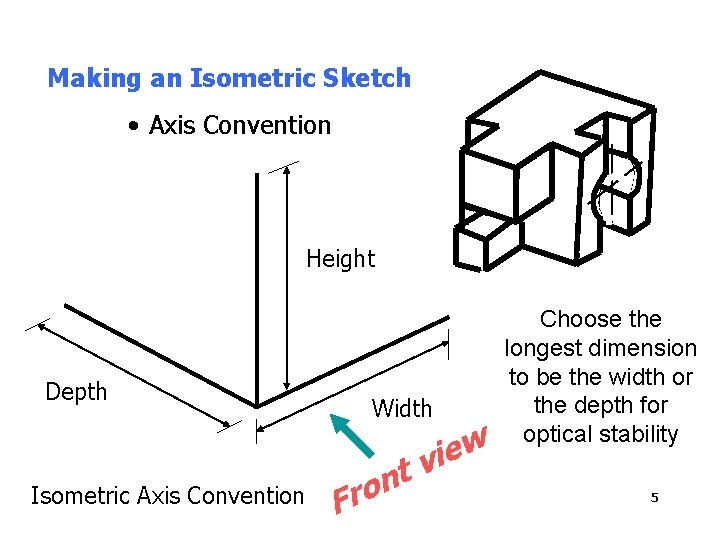
Making an Isometric Sketch • Axis Convention Height Depth Isometric Axis Convention Width F t n ro w e vi Choose the longest dimension to be the width or the depth for optical stability 5
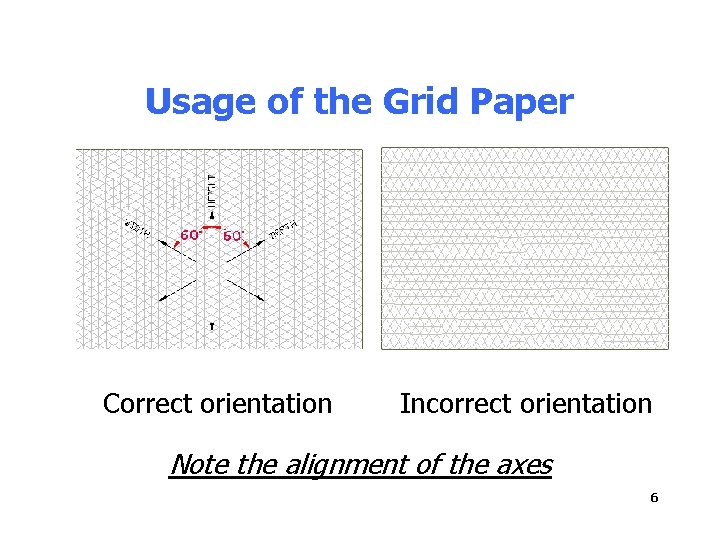
Usage of the Grid Paper Correct orientation Incorrect orientation Note the alignment of the axes 6
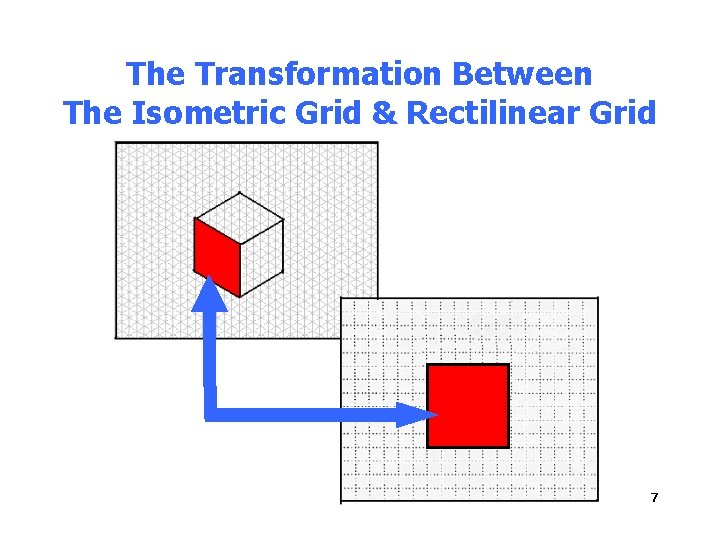
The Transformation Between The Isometric Grid & Rectilinear Grid 7
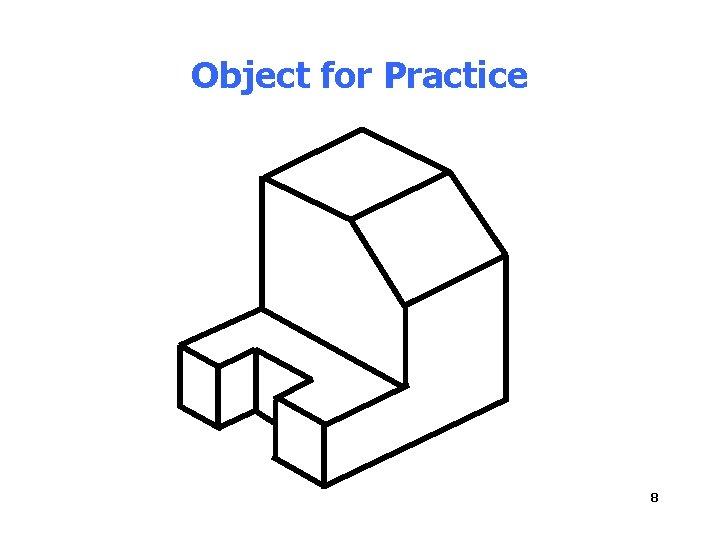
Object for Practice 8
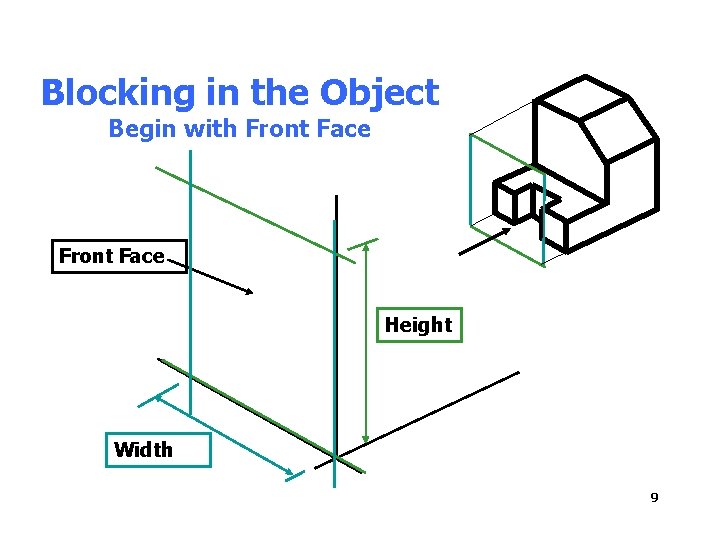
Blocking in the Object Begin with Front Face Height Width 9
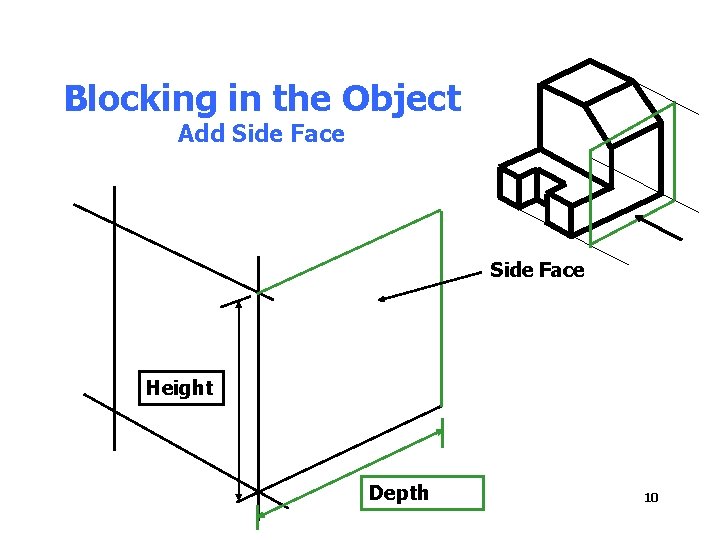
Blocking in the Object Add Side Face Height Depth 10
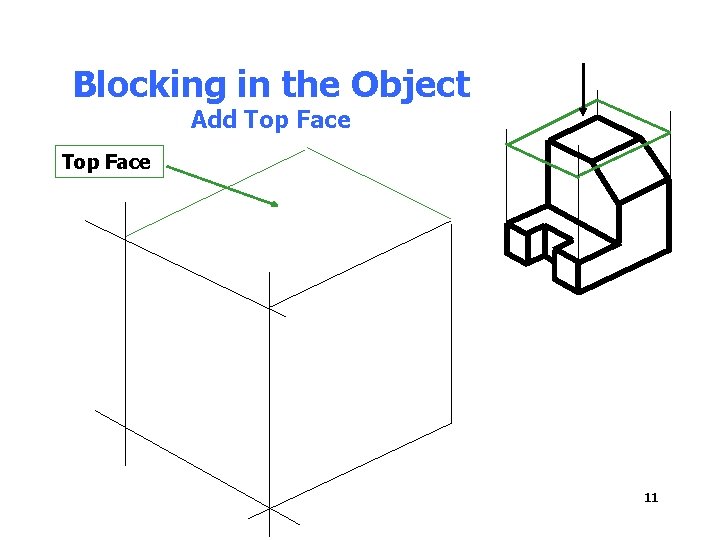
Blocking in the Object Add Top Face 11

Adding Detail Cut Outs – Part 1 12
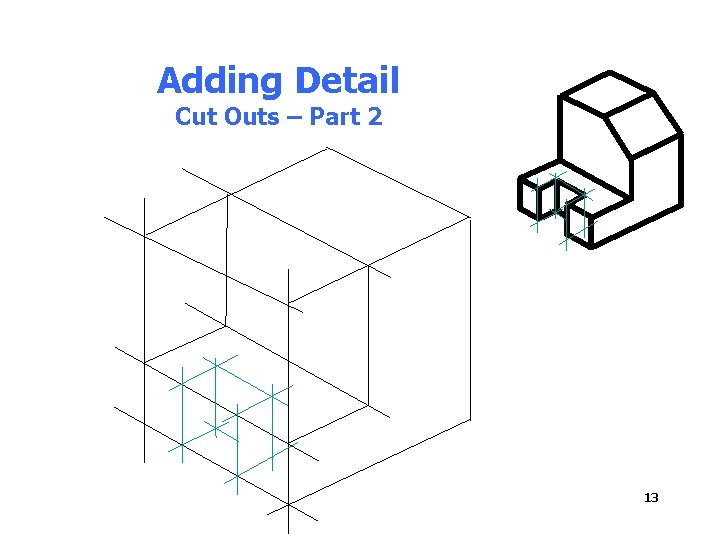
Adding Detail Cut Outs – Part 2 13
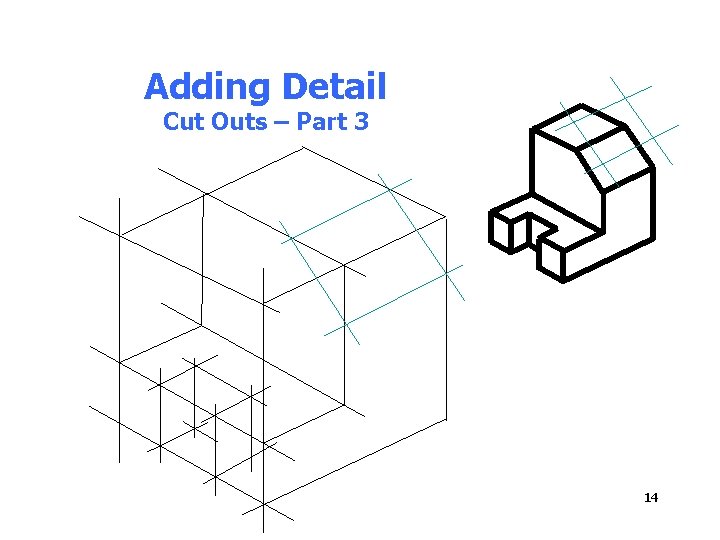
Adding Detail Cut Outs – Part 3 14
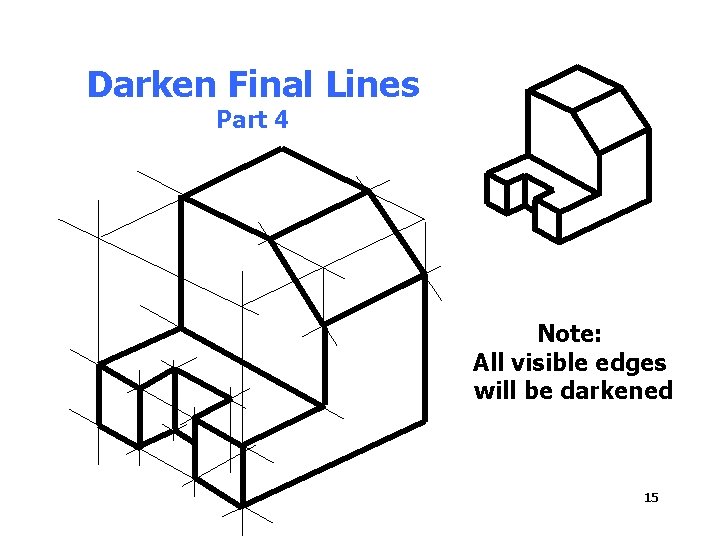
Darken Final Lines Part 4 Note: All visible edges will be darkened 15
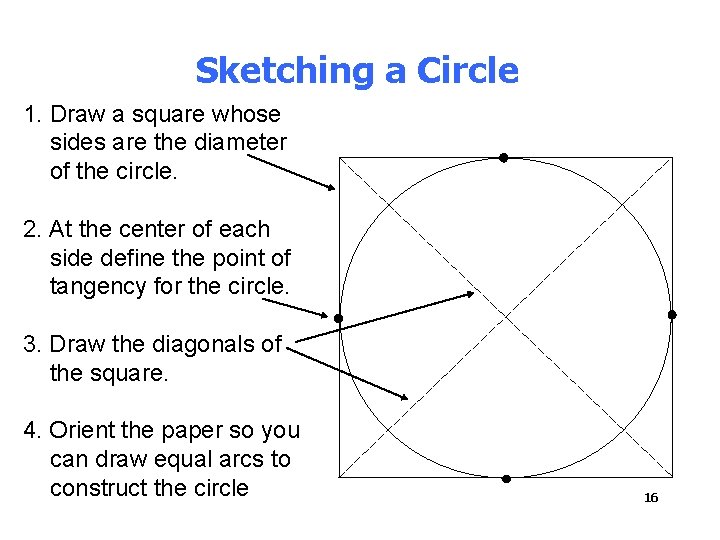
Sketching a Circle 1. Draw a square whose sides are the diameter of the circle. 2. At the center of each side define the point of tangency for the circle. 3. Draw the diagonals of the square. 4. Orient the paper so you can draw equal arcs to construct the circle 16
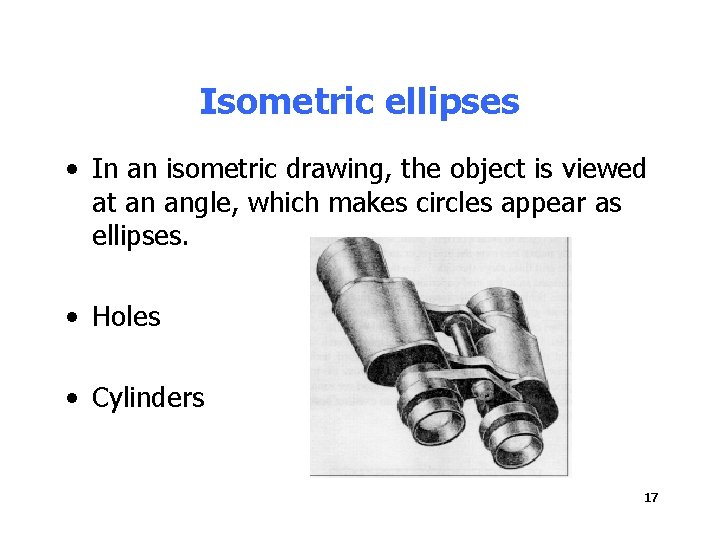
Isometric ellipses • In an isometric drawing, the object is viewed at an angle, which makes circles appear as ellipses. • Holes • Cylinders 17
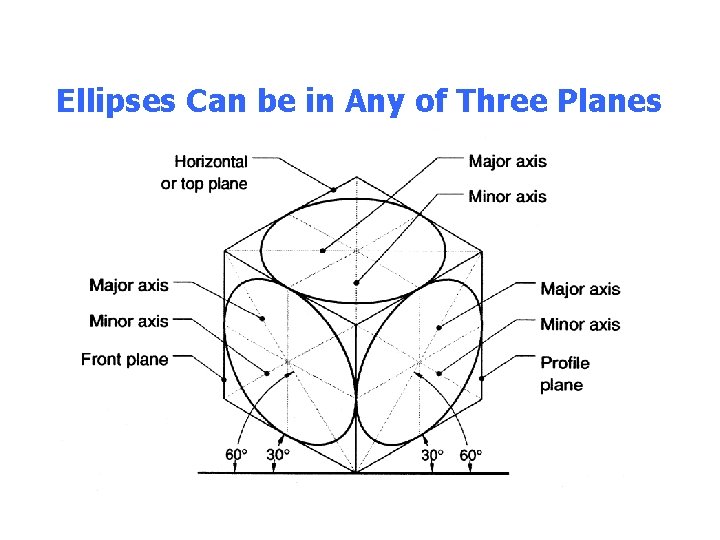
Ellipses Can be in Any of Three Planes 18
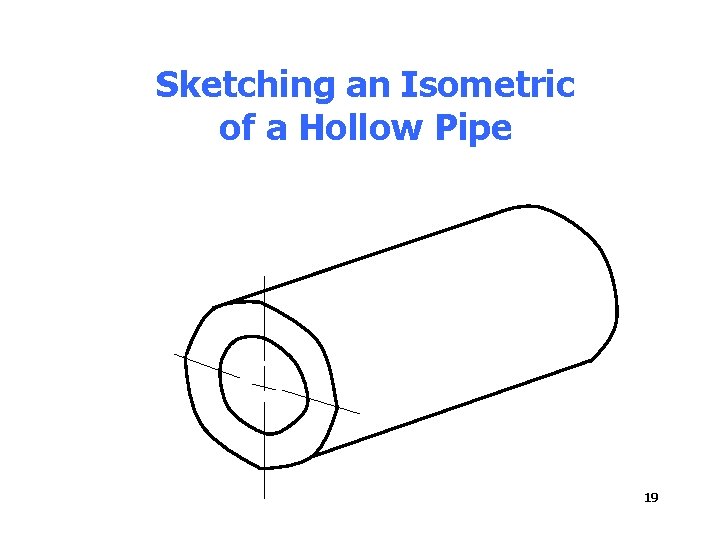
Sketching an Isometric of a Hollow Pipe 19
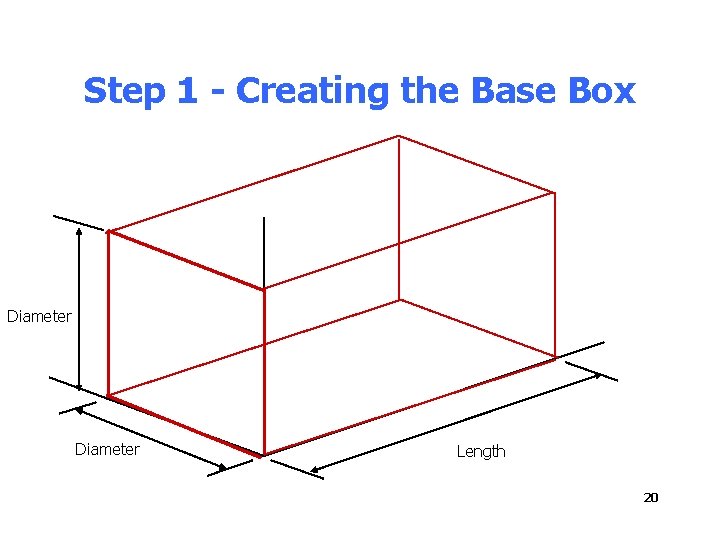
Step 1 - Creating the Base Box Diameter Length 20

Step 2 – Ellipse on Front Face (Reference Technical Graphics, Section 4. 2. 7) - Corner to corner to get center - Lines to tangent points Tangent Points Lines to Tangent Points 21
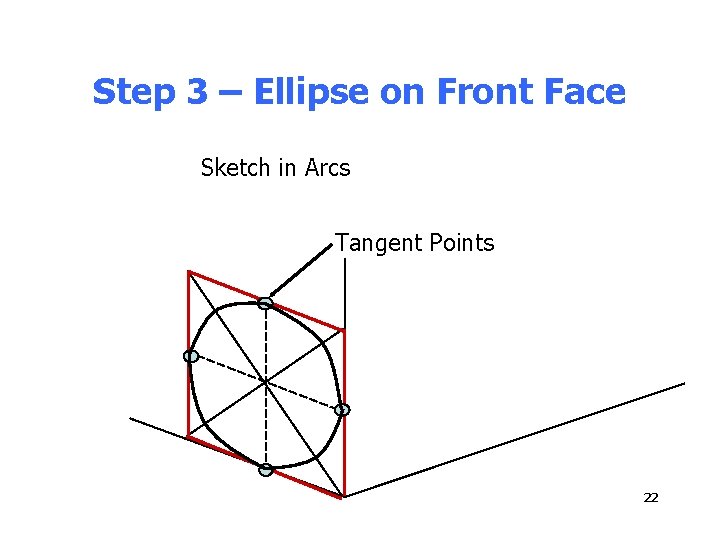
Step 3 – Ellipse on Front Face Sketch in Arcs Tangent Points 22
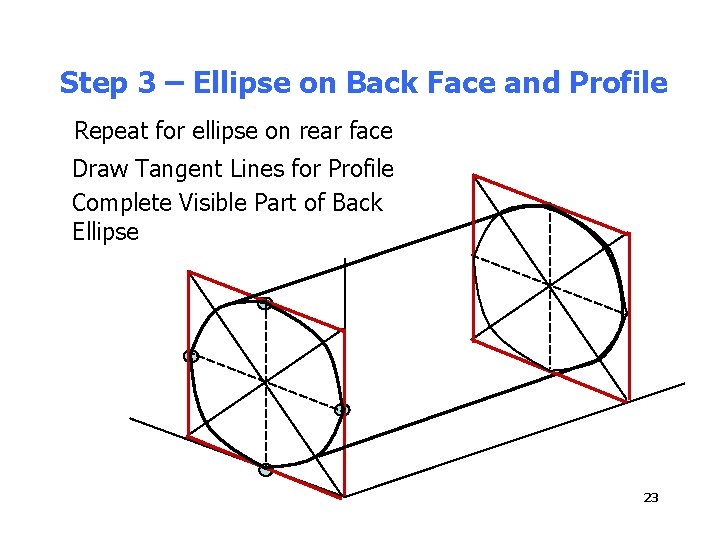
Step 3 – Ellipse on Back Face and Profile Repeat for ellipse on rear face Draw Tangent Lines for Profile Complete Visible Part of Back Ellipse 23
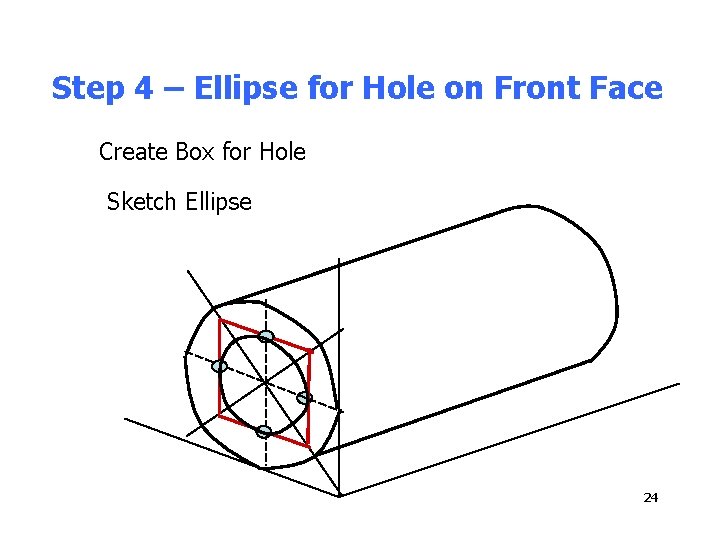
Step 4 – Ellipse for Hole on Front Face Create Box for Hole Sketch Ellipse 24

Isometric of Hollow Pipe 25
Tips for Drawing Assignments • Title Information is required. Avoid labels on the sketch. • Title block on bottom with your name • Leave the construction lines – MUCH lighter and thinner than the finished lines • Include centerlines on isometrics 26
Tips for Drawing Assignments • Do not try to shade drawing – this is not a pencil sketching class. • Use grid paper. Try to sketch along grid lines. Practice sketching straight lines and curves on a grid sheet. 27
Tips for Pictorial Views • In pictorial views, hidden lines are not shown unless absolutely required for clarity • Non-visible bottom of a blind hole • Important feature of object not in direct view • In pictorial views, holes or notches without bottom/end visible should be assumed to go completely through the object. • Centerlines are to be shown on all isometric pictorials. 28
- Slides: 28