
Introduction to Project Management Project Management Q What
- Slides: 34
Introduction to Project Management
Project Management Q: What is a project?
What is Project? A project is a temporary endeavor undertaken to create a unique product or service. q Temporary: Every project has a definite beginning and a definite end. q Unique: The product or service is different in some distinguishing way from all similar products or services. Page 3
Definition of Project �A project is a group of unique, inter-related activities that are planned and executed in a certain sequence to create a unique product or service, within a specific time frame, budget and the clients specifications. � According to Project Management Institute’s a Project is defined as “A temporary endeavor undertaken to create a unique product or service” � The British standard defines a project as “ A unique set of coordinated activities, with definite starting and finishing points, undertaken by an individual or organization to meet specific objectives within defined schedule, cost and performance parameters”.
Project Failure �Identify 4 reasons why you think project fail
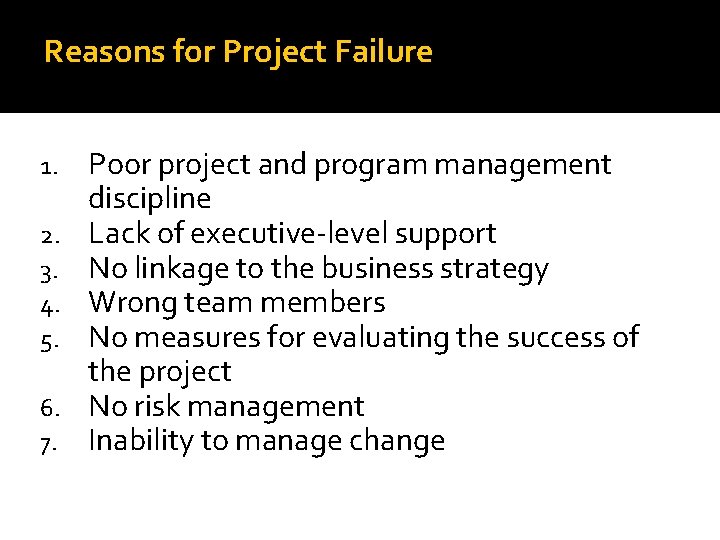
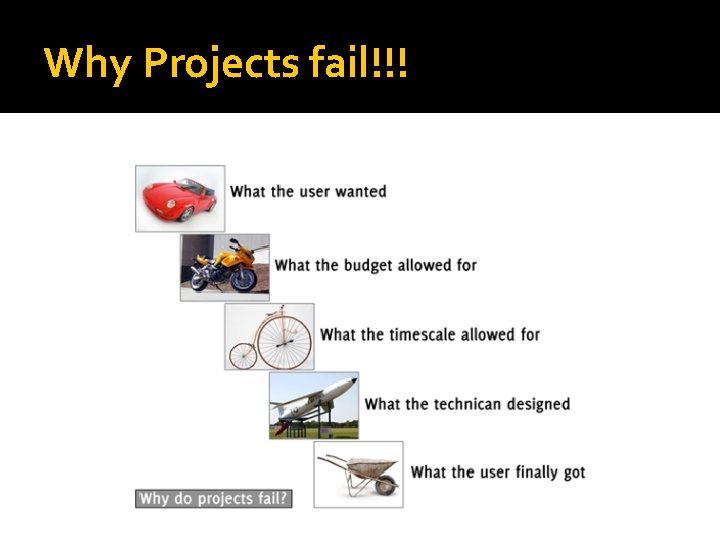
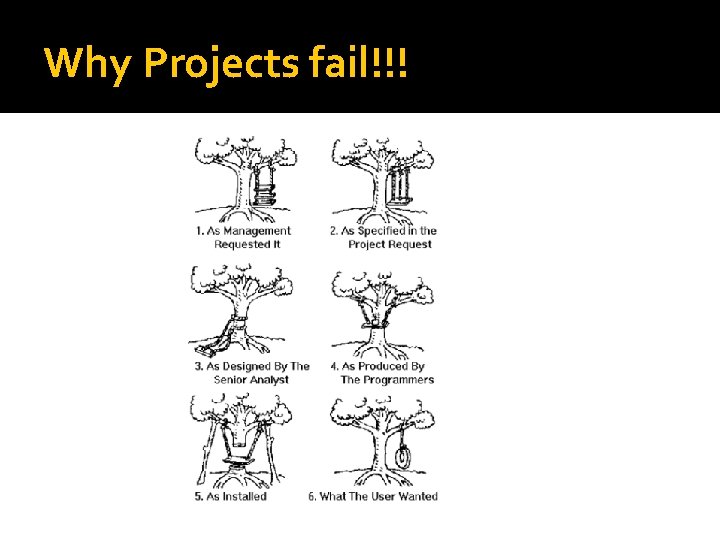
Reasons for Project Failure 1. 2. 3. 4. 5. 6. 7. Poor project and program management discipline Lack of executive-level support No linkage to the business strategy Wrong team members No measures for evaluating the success of the project No risk management Inability to manage change
Project Success Criteria �On time �On budget �Meeting the goals that have been agreed upon
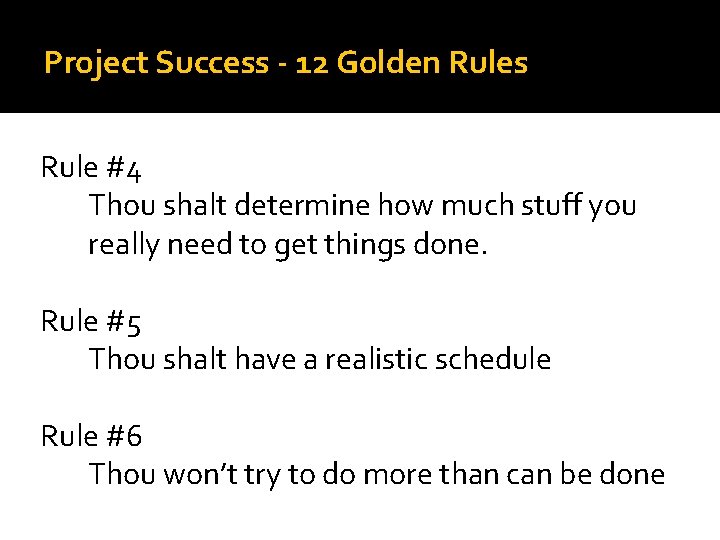
Project Success - 12 Golden Rules Rule #1 Thou shalt gain consensus on project outcome. Rule #2 Thou shalt build the best team possible Rule #3 Thou shalt develop a comprehensive, viable plan and keep it up-to-date.
Project Success - 12 Golden Rules Rule #4 Thou shalt determine how much stuff you really need to get things done. Rule #5 Thou shalt have a realistic schedule Rule #6 Thou won’t try to do more than can be done
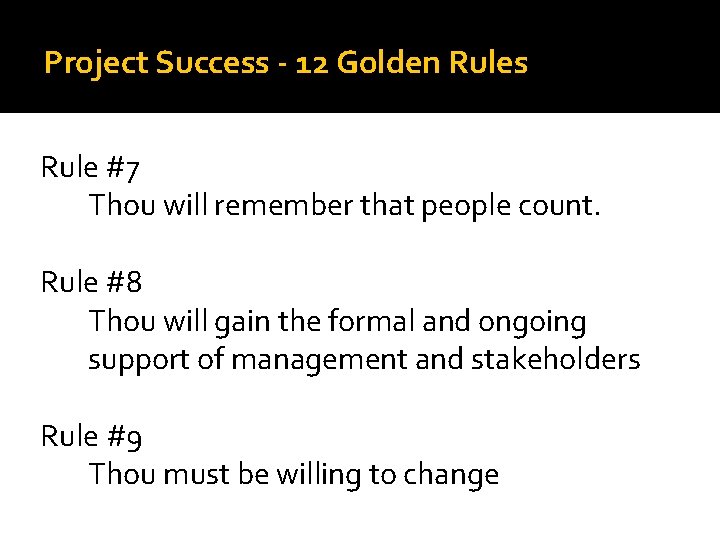
Project Success - 12 Golden Rules Rule #7 Thou will remember that people count. Rule #8 Thou will gain the formal and ongoing support of management and stakeholders Rule #9 Thou must be willing to change
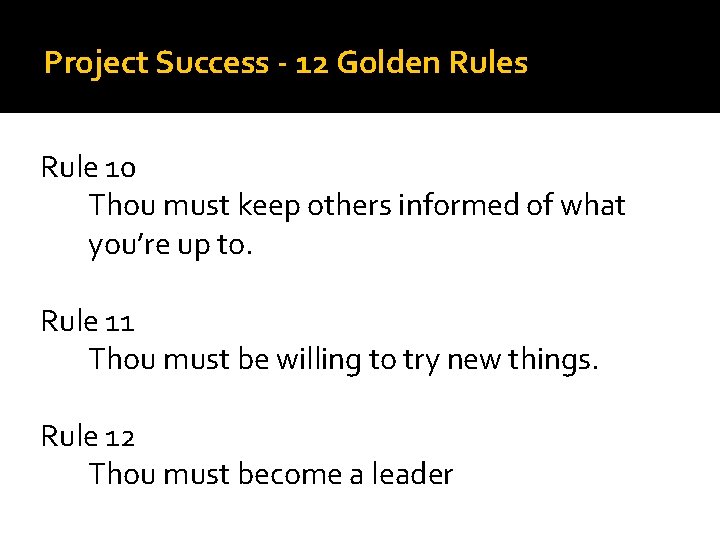
Project Success - 12 Golden Rules Rule 10 Thou must keep others informed of what you’re up to. Rule 11 Thou must be willing to try new things. Rule 12 Thou must become a leader
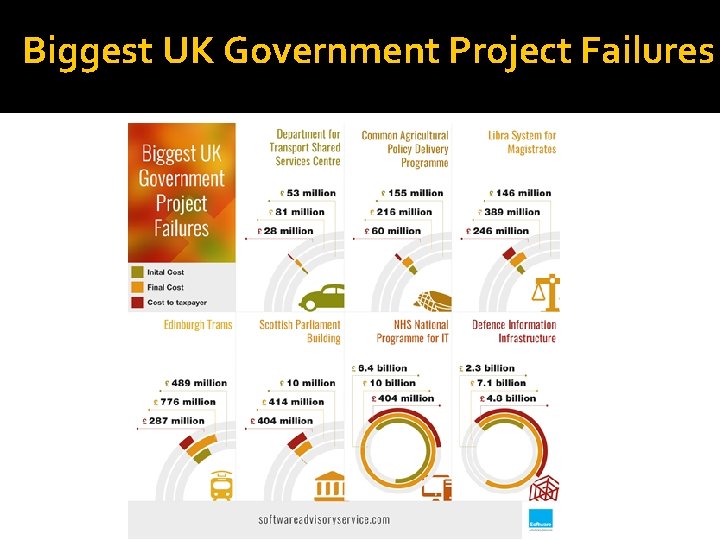
Biggest UK Government Project Failures
Department for Transport Shared Services Centre � � � � � An IT scheme designed to integrate the Department for Transport’s human resources and financial services, and also save the taxpayer £ 57 million? If this sounds too good to be true, it’s because that’s what it turned out to be. Far from saving money, the scheme ended up costing £ 81 million due to management ineptitude described by the Public Accounts Committee as an exhibition of “stupendous incompetence”. The plan was to cut administration expenses by basing payroll, finance and personal services in a single site in Swansea. However, the Commons Public Accounts Committee found that the project had been rushed and was doomed to make losses. The department tried to rush things through in order to adhere to overly optimistic deadlines, and was criticised for lack of opposition to such actions. As a result, the computer system was insufficiently tested, resulting in a dubious set-up when it was switched on. DVLA workers were even greeted by messages from the computer system in German. Eight months after the deadline, only two of its seven agencies were using the new system. Despite this, no one involved has yet to be dismissed or property held to account
Common Agricultural Policy Delivery Programme � An IT scheme designed to allocate subsidies to farms was originally forecast to cost £ 155 million � But the programme has ended up costing more like £ 215 million. � The scheme has delayed payments to farmers and incurred increasing penalties from the European Commission. � According to a Public Accounts Committee report, the three key bodies trusted to deliver the programme could not work together effectively. � It found that there was a lack of consistent priorities and changes in leadership, which caused havoc and delay. � Its focus on developing a digital front-end was “inappropriate for farmers” due to the frequently poor broadband in rural areas.
Libra System for Magistrates � � � � � The initial bid for the Libra project to provide a national system for 385 magistrates was £ 146 million from Fujitsu. However, before a final deal was even signed, Fujitsu raised the price to £ 184 million after the company’s board said it wasn’t able to support the charging basis on which the bid was submitted. They had not taken all the costs into account and “made some inappropriate… revenue assumptions”, according to the National Audit Office. Ten months later, Fujitsu asked for a higher price yet again, as their forecasts showed a deficit of £ 39 million over the life of the deal. Ernst and Young advised the Lord Chancellor’s Department that Fujitsu’s financial model was unreliable. However, at this point the project was too important to let the supplier default. 18 months into the contract, the deal was renegotiated, increasing payments to Fujitsu to £ 319 million. Even so, Fujitsu still faced losses of up to £ 200 million. The next quote proposed by Fujitsu for £ 389 million was rejected by the department. The department ended up signing a contract with STL instead to provide Libra’s core software. However, Fujitsu still received most of the money, gaining tens of million pounds, despite not being contracted to deliver the software.
Edinburgh Trams As any taxi driver in Edinburgh can and will tell you, the Edinburgh trams project was a complete mess. � The system eventually cost more than £ 776 million, nearly double the initial estimated cost, plus more than £ 200 million in interest on a 30 -year loan taken out by the council to cover the funding shortfall. � The project ended up taking 7 years from initial construction to completion, twice as long as expected. � The project was halted repeatedly by internal squabbles. � In 2007, the SNP attempted to ditch the project, a decision that was overturned by the other parties in Scottish parliament. In 2010, an argument between the project’s arms-length company and its main contractor nearly caused it to be cancelled indefinitely. Meanwhile, the interferences caused by construction not only made the once beautiful streets of Edinburgh an eyesore, but produced disruption and financial ruin to local businesses. � But hey, at least now you can get around Edinburgh slightly slower than if you took the bus. �
Scottish Parliament Building � � � The Scottish Parliament Building has been controversial for a host of things, including its location, architect and design – it’s described by one particularly glorious Trip. Advisor review as a “grotesque brutalist mess” – but the reason a public enquiry was made into its construction was because of constant delays and its escalating cost. Initially scheduled to inaugurate in 2001, its doors finally opened three years later with an estimated cost of £ 414 million, much higher than its original estimate of £ 10 -40 million. The inquiry found incompetence in the management of the entire project, including fulfilment of cost and the way major design changes were added. The cost hasn’t stopped there. Figures have revealed that the building’s average repair bill has reached £ 141, 000 per month, five times the figure during the building’s first year. This means that since 2004, maintenance costs have set taxpayers back by £ 11 million, which of course is higher than some of the initial estimates for the cost of constructing the building itself
NHS National Program for IT � � � � In September 2013, an NHS patient record system that would have been the world’s largest non-military IT system was abandoned, in what could be the most catastrophic IT failure ever seen by the government. The failed centralised e-record system cost the taxpayer over £ 10 billion, £ 3. 6 billion more than ministers had anticipated. From the outset, the project was plagued by delays. The delivery of core systems was stalled due to fears that some software was not fit for purpose. After seven years, only 13 acute trusts out of 169 received the full patient administration systems they were agreed under the National Programme. The new systems also caused chaos for many users; a newly-installed IT system lost Barts NHS Trust thousands of patient records, delaying the treatment of urgent cases, costing millions in additional staff and warranting an internal investigation. The Milton Keynes Foundation Trust wrote a cautionary letter to the times about the inefficacy of their system, and warning others not to use it.
Defence Information Infrastructure � � � The Ministry of Defence’s secure military network was built to help British troops operate more effectively around the world. The Mo. D gave parliament a figure of £ 2. 3 billion, but a report by MPs has shown that they knew that the project would cost at least £ 5. 8 billion. The true figure has since risen to at least £ 7. 1 billion. By 2008, the programme was running at least 18 months late, had provided only 29, 000 of a contracted 63, 000 terminals, and had supplied none of the contracted Secret capability. According to then chairman of the PAC, Edward Leigh, there was no suitable pilot carried out for such a multifaceted programme. The condition of the Department’s buildings where the system was to be installed was badly miscalculated due to insufficient research.
Activity 1 Read the two articles on Moodle: • • The London Ambulance Service Command & Control System The National Health Service IT System Q. For each article, explain why you believe these projects failed
Activity 2 �Research sustainability and green drivers for project success. (See BCS guidelines on Green and Sustainable IT)
Why Projects fail!!!
Why Projects fail!!!
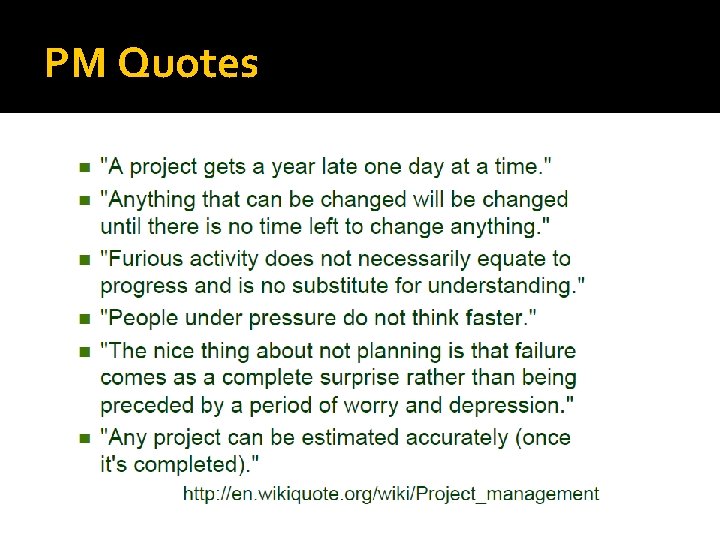
PM Quotes
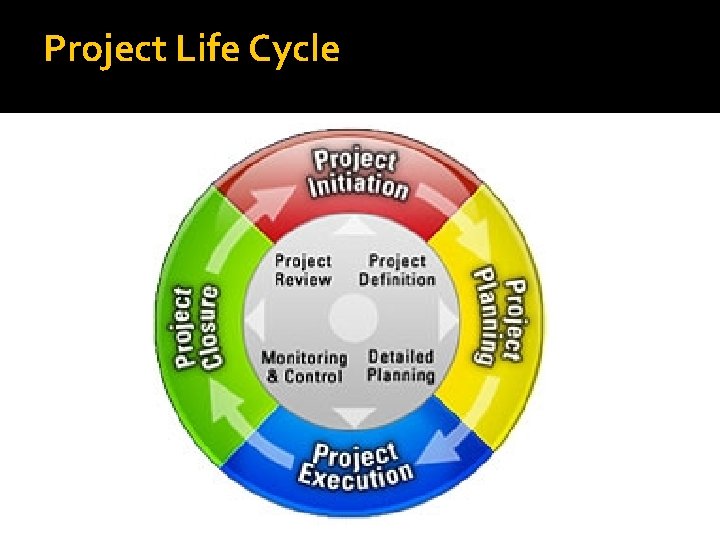
What is Project Management Q. What is Project Management? �Definition �What tasks does it involve? �What are the four stages (with descriptions)
What is Project Management? � The discipline of managing a series of tasks within a given amount of time and within a budget � The art of organising, leading, reporting and completing a project through people � The “application of knowledge, skills, tools and techniques to project activities to meet project requirements. ” � The discipline of defining and achieving targets while optimizing the use of resources (time, money, people, materials, energy, space, etc) over the course of a project (a set of activities of finite duration).
Project Management �Many software development projects fail because of problems with their management rather than technical problems
What Does Management Involve? �Planning �Organising �Scheduling �Estimating �Monitoring �Controlling
Project Life Cycle
Project Initiation �The first phase of Project Management �It establishes the foundations for the project and can make the difference between a successful and unsuccessful project. �The Project Manager will write a Project Definition document but will need information from stakeholders to do this.
Project Planning �The biggest single problem that afflicts software developing is that of underestimating resources required for a project. � Developing a realistic project plan is essential to gain an understanding of the resources required, and how these should be applied.
Project Execution � � � This is the third stage in the project life cycle. In this phase, you will build the physical project deliverables and deliver them to your customer This is usually the longest stage in the project life cycle and it typically consumes the most energy and the most resources. During this stage, the team utilises the schedule produced in the Project Planning Stage To enable you to monitor and control the project during this stage, you will need to implement a range of management processes to help you to manage time, cost, quality, change, risks and issues. The key elements of project execution is the ability of working effectively in the team and the ability of remaining faithful to project scope while facing unpredicted events and difficulties
Project Closure � Many seem to think that project closing is not an important process in project management � However, project closing is as important as other processes in project management. � Until and unless your project has been closed with the planned procedures, it values null and void. � You might have delivered the deliverables, but this does not mean your project is complete. � Ignoring this process results incomplete project management at the project manager’s end 33
Project Closure �Project Closure involves: Releasing the deliverables and handing over project documentation to the customer (formal sign-off) Terminating supplier contracts Releasing staff and equipment Informing all stakeholders of the closure of the project. Post Implementation Review / Evaluation - This completed to determine the projects success and identify the lessons learned for future projects. Party!!!!!! 34