
Introduction to Programming Lecture 17 String Handling String


![atoi ( ) Function char str [ ] ; int age ; age =](https://slidetodoc.com/presentation_image/45ba2cb740d42674ae7f89282da50a24/image-20.jpg "atoi ( ) Function char str [ ] ; int age ; age =")
![atof ( ) Function char str [ ] ; double d. Var ; d.](https://slidetodoc.com/presentation_image/45ba2cb740d42674ae7f89282da50a24/image-22.jpg "atof ( ) Function char str [ ] ; double d. Var ; d.")

- Slides: 33
Introduction to Programming Lecture 17
String Handling
String Manipulation Functions
Character
ASCII
1 byte = 8 bits
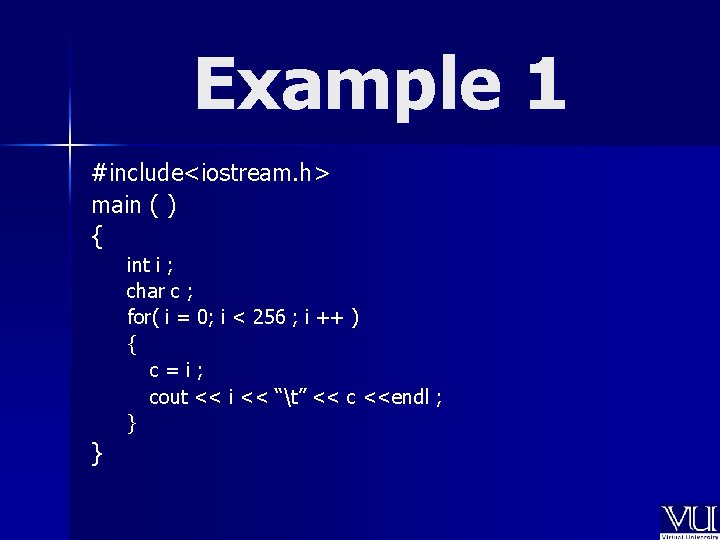
Example 1 #include<iostream. h> main ( ) { int i ; char c ; for( i = 0; i < 256 ; i ++ ) { c=i; cout << i << “t” << c <<endl ; } }
Header File ctype. h #include<ctype. h>
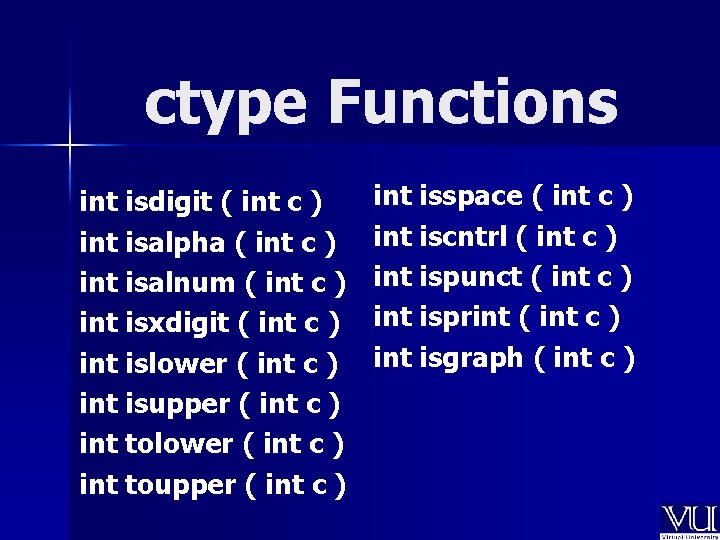
ctype Functions int isdigit ( int c ) int isalpha ( int c ) int isalnum ( int c ) int isxdigit ( int c ) int islower ( int c ) int isupper ( int c ) int tolower ( int c ) int toupper ( int c ) int isspace ( int c ) int iscntrl ( int c ) int ispunct ( int c ) int isprint ( int c ) int isgraph ( int c )
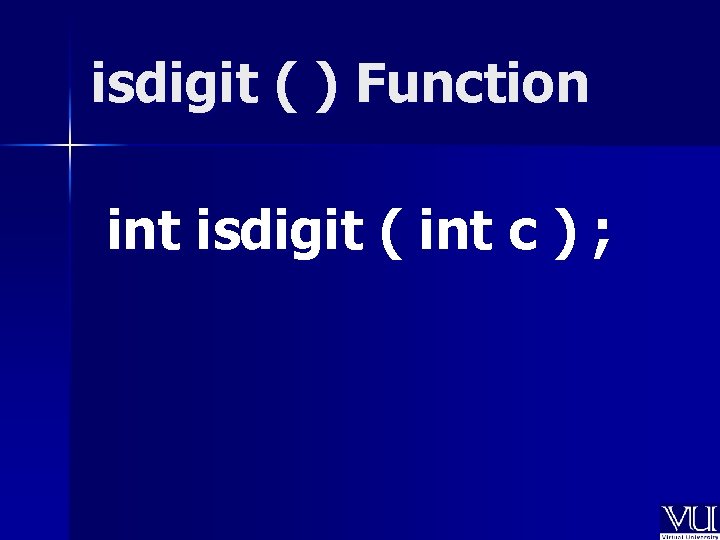
isdigit ( ) Function int isdigit ( int c ) ;
isalpha ( ) Function int isalpha ( int c ) ;
isalnum ( ) Function int isalnum ( int c ) ;
islower ( ) Function int islower ( int c ) ;
isupper ( ) Function int isupper ( int c ) ;
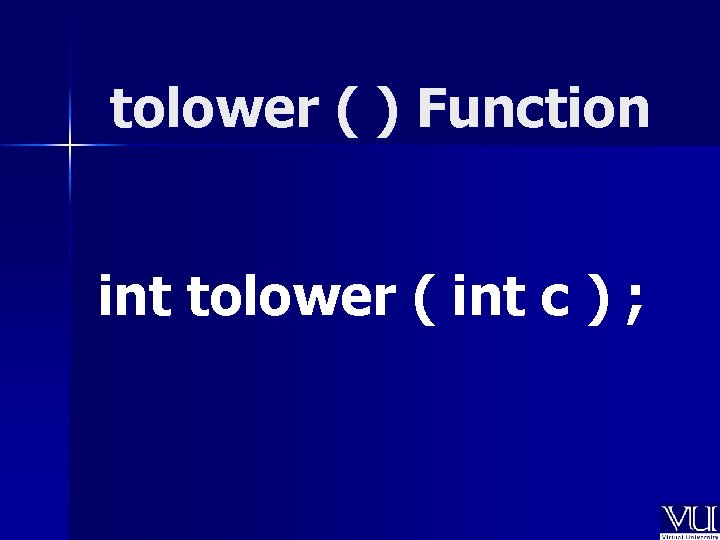
tolower ( ) Function int tolower ( int c ) ;
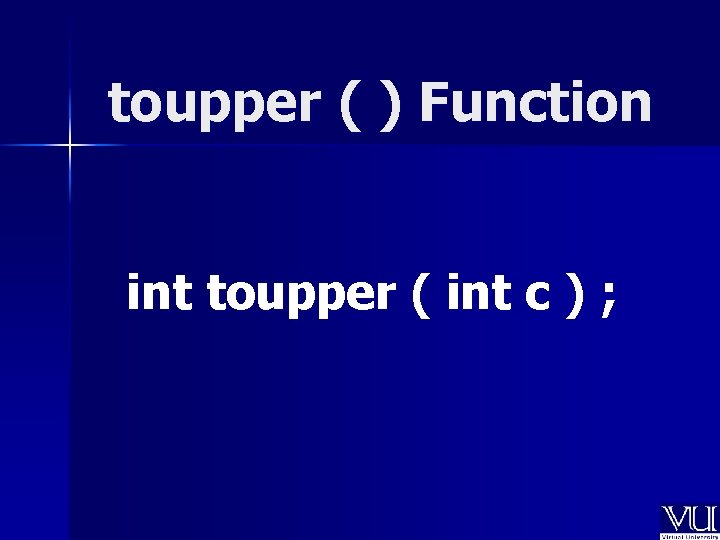
toupper ( ) Function int toupper ( int c ) ;
getchar ( ) ;
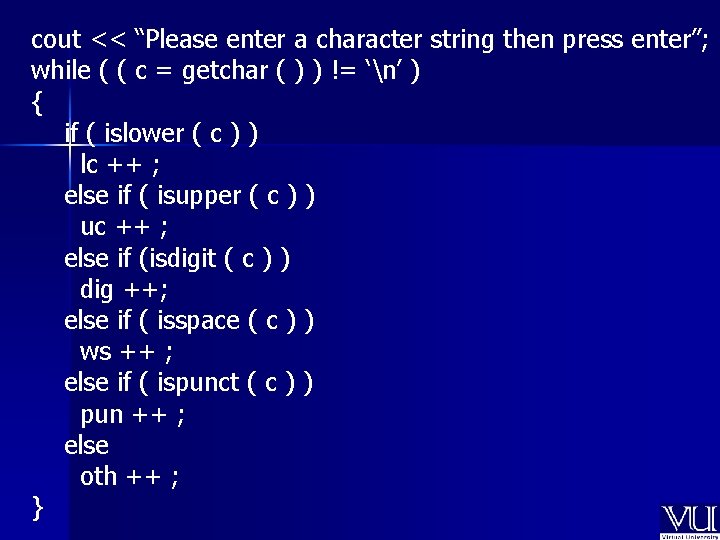
cout << “Please enter a character string then press enter”; while ( ( c = getchar ( ) ) != ‘n’ ) { if ( islower ( c ) ) lc ++ ; else if ( isupper ( c ) ) uc ++ ; else if (isdigit ( c ) ) dig ++; else if ( isspace ( c ) ) ws ++ ; else if ( ispunct ( c ) ) pun ++ ; else oth ++ ; }
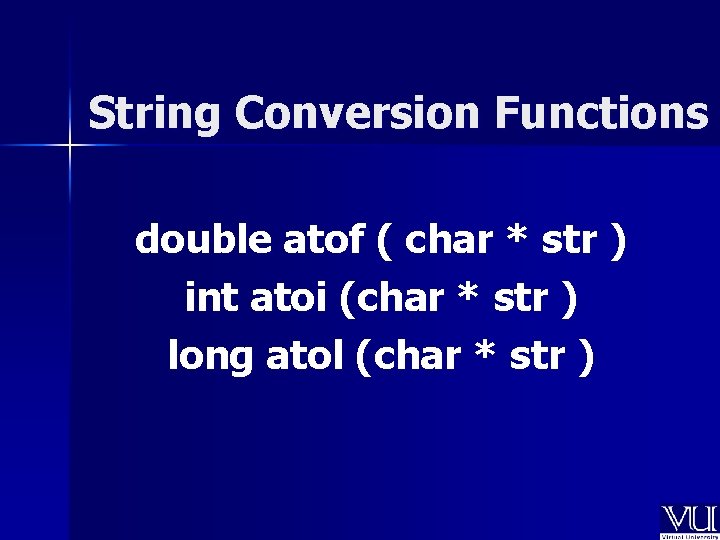
String Conversion Functions double atof ( char * str ) int atoi (char * str ) long atol (char * str )
atoi ( ) Function char str [ ] ; int age ; age = atoi ( str ) ;
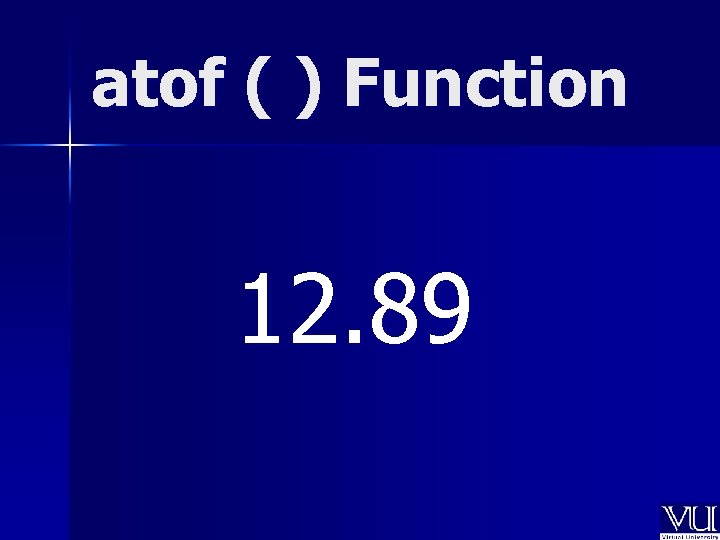
atof ( ) Function 12. 89
atof ( ) Function char str [ ] ; double d. Var ; d. Var = atof ( str ) ;
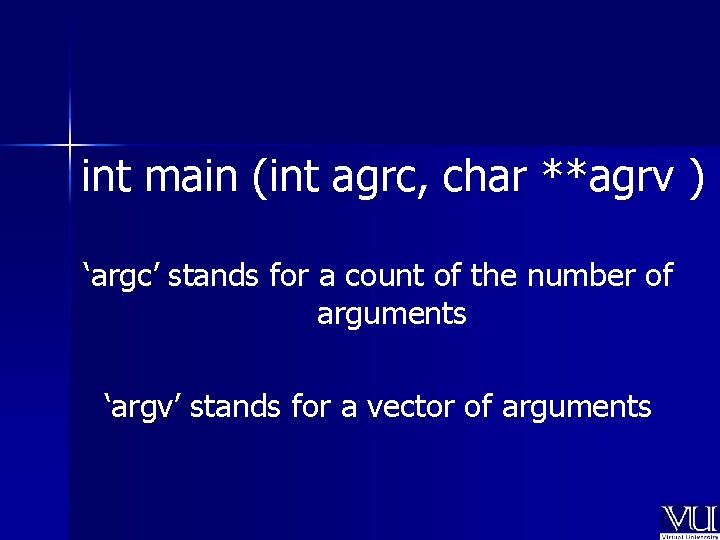
int main (int agrc, char **agrv ) ‘argc’ stands for a count of the number of arguments ‘argv’ stands for a vector of arguments
String Functions
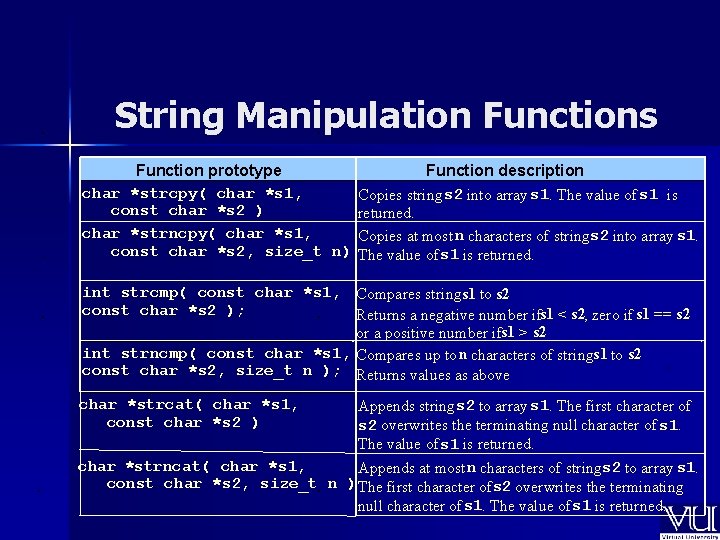
String Manipulation Functions Function prototype char *strcpy( char *s 1, const char *s 2 ) char *strncpy( char *s 1, const char *s 2, size_t n) Function description Copies string s 2 into array s 1. The value of s 1 is returned. Copies at most n characters of strings 2 into array s 1. The value of s 1 is returned. int strcmp( const char *s 1, Compares string s 1 to s 2 const char *s 2 ); Returns a negative number ifs 1 < s 2, zero if s 1 == s 2 or a positive number ifs 1 > s 2 int strncmp( const char *s 1, Compares up to n characters of strings 1 to s 2 const char *s 2, size_t n ); Returns values as above char *strcat( char *s 1, const char *s 2 ) Appends string s 2 to array s 1. The first character of s 2 overwrites the terminating null character of s 1. The value of s 1 is returned. char *strncat( char *s 1, Appends at most n characters of strings 2 to array s 1. const char *s 2, size_t n ) The first character ofs 2 overwrites the terminating null character of s 1. The value of s 1 is returned.
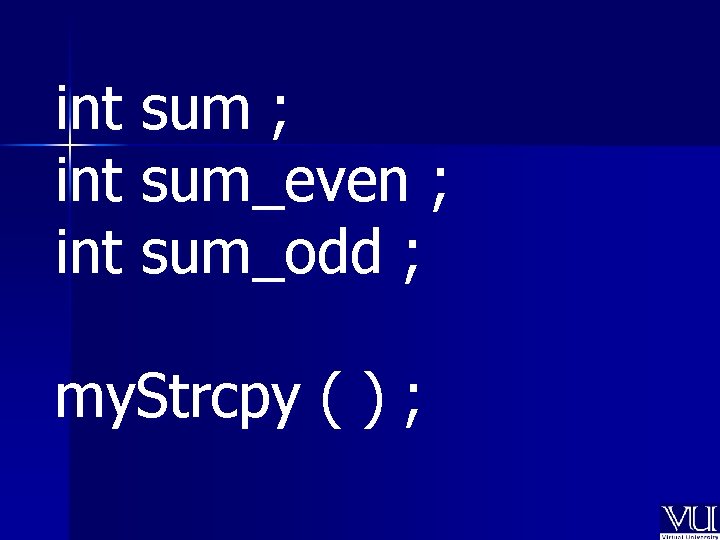
int sum ; int sum_even ; int sum_odd ; my. Strcpy ( ) ;
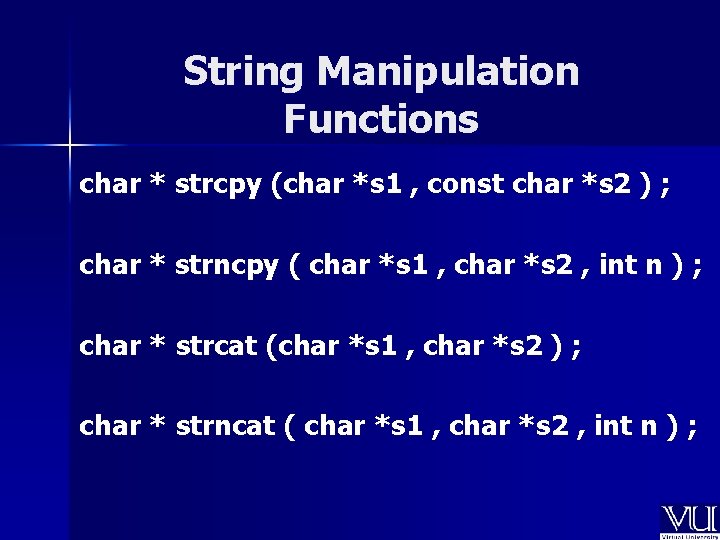
String Manipulation Functions char * strcpy (char *s 1 , const char *s 2 ) ; char * strncpy ( char *s 1 , char *s 2 , int n ) ; char * strcat (char *s 1 , char *s 2 ) ; char * strncat ( char *s 1 , char *s 2 , int n ) ;
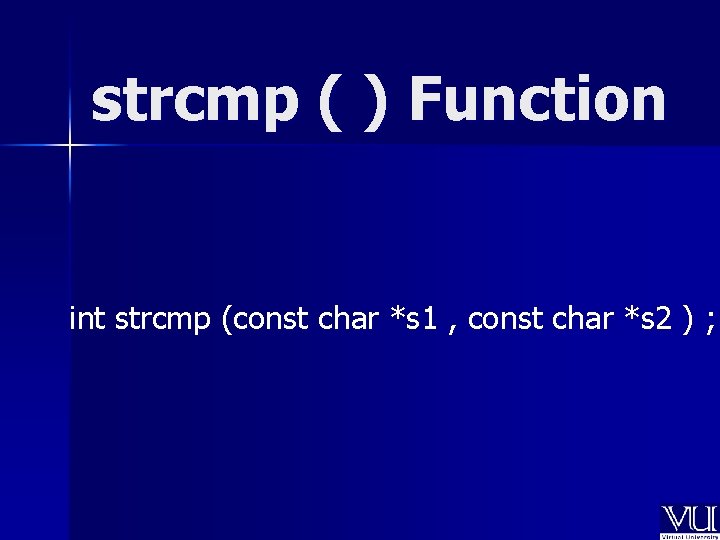
strcmp ( ) Function int strcmp (const char *s 1 , const char *s 2 ) ;
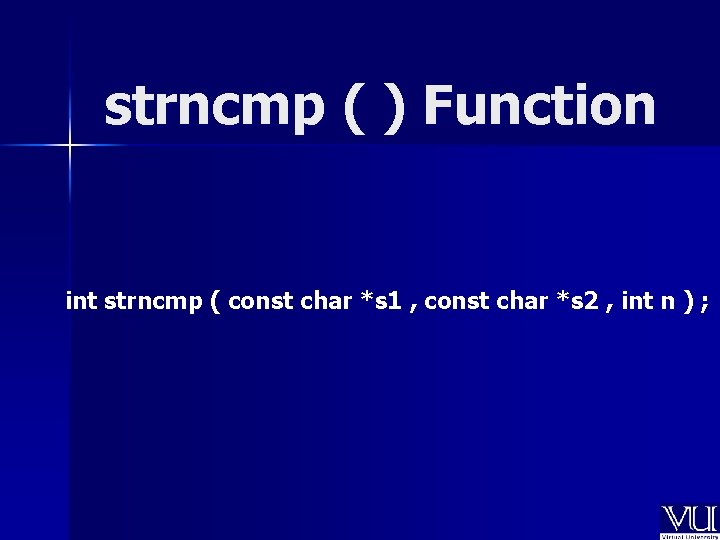
strncmp ( ) Function int strncmp ( const char *s 1 , const char *s 2 , int n ) ;
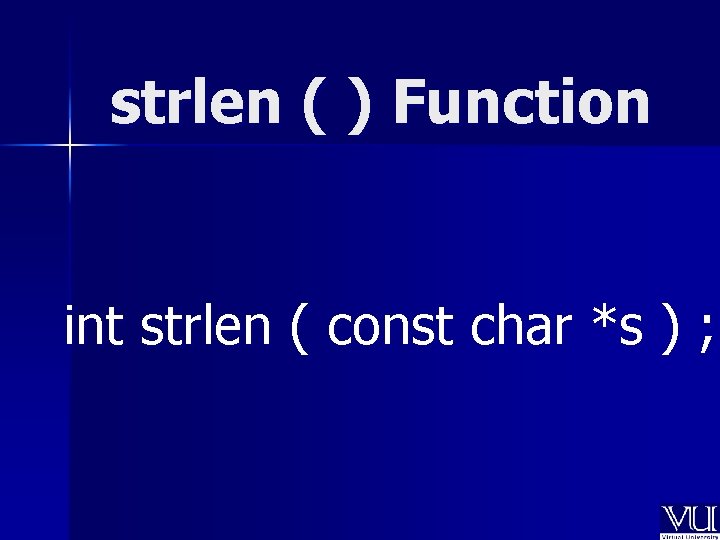
strlen ( ) Function int strlen ( const char *s ) ;
Search Functions
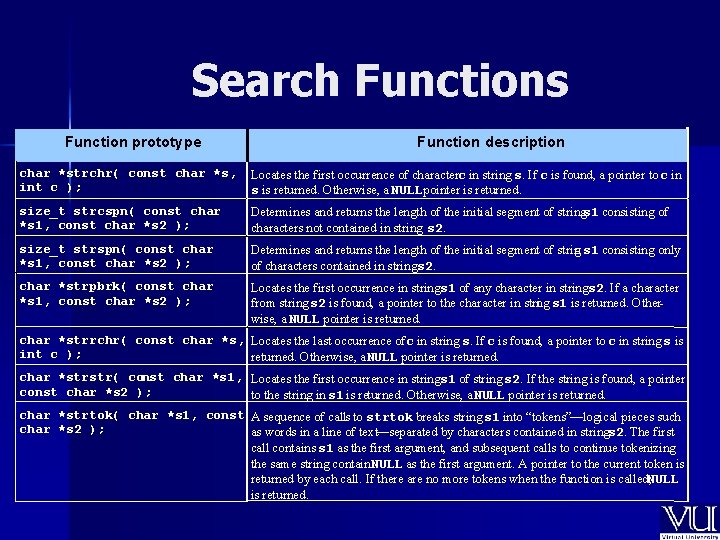
Search Functions Function prototype Function description char *strchr( const char *s, int c ); Locates the first occurrence of characterc in string s. If c is found, a pointer to c in s is returned. Otherwise, a NULL pointer is returned. size_t strcspn( const char *s 1, const char *s 2 ); Determines and returns the length of the initial segment of strings 1 consisting of characters not contained in string s 2. size_t strspn( const char *s 1, const char *s 2 ); Determines and returns the length of the initial segment of strin g s 1 consisting only of characters contained in strings 2. char *strpbrk( const char *s 1, const char *s 2 ); Locates the first occurrence in strings 1 of any character in strings 2. If a character from string s 2 is found, a pointer to the character in string s 1 is returned. Otherwise, a NULL pointer is returned. char *strrchr( const char *s, Locates the last occurrence ofc in string s. If c is found, a pointer to c in string s is int c ); returned. Otherwise, a NULL pointer is returned. char *strstr( const char *s 1, Locates the first occurrence in strings 1 of string s 2. If the string is found, a pointer const char *s 2 ); to the string in s 1 is returned. Otherwise, a NULL pointer is returned. char *strtok( char *s 1, const A sequence of calls to strtok breaks string s 1 into “tokens”—logical pieces such char *s 2 ); as words in a line of text—separated by characters contained in strings 2. The first call contains s 1 as the first argument, and subsequent calls to continue tokenizing the same string contain NULL as the first argument. A pointer to the current token is returned by each call. If there are no more tokens when the function is called, NULL is returned.
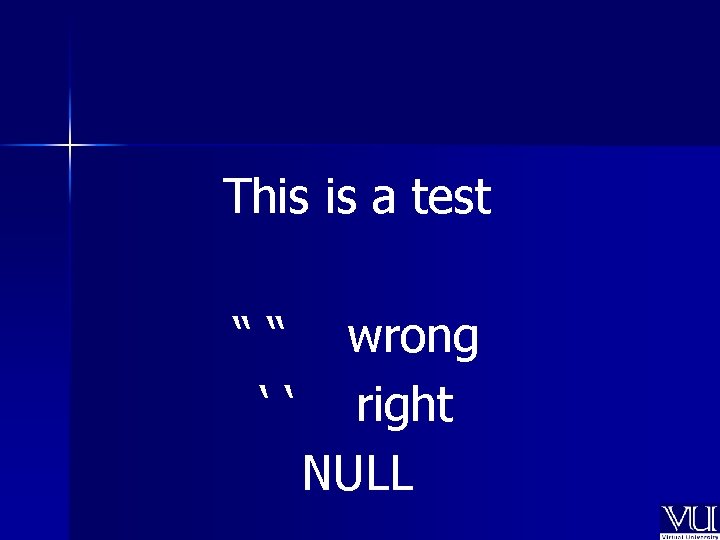
This is a test ““ ‘‘ wrong right NULL