
Introduction to Process Safety Management PSM of Highly



- Slides: 20
Introduction to Process Safety Management (PSM) of Highly Hazardous Chemicals
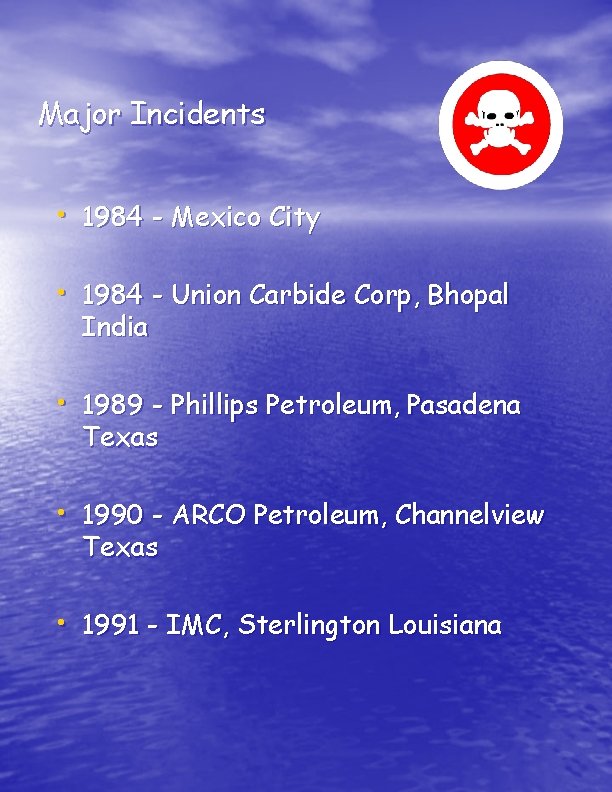
Major Incidents • 1984 - Mexico City • 1984 - Union Carbide Corp, Bhopal India • 1989 - Phillips Petroleum, Pasadena Texas • 1990 - ARCO Petroleum, Channelview Texas • 1991 - IMC, Sterlington Louisiana
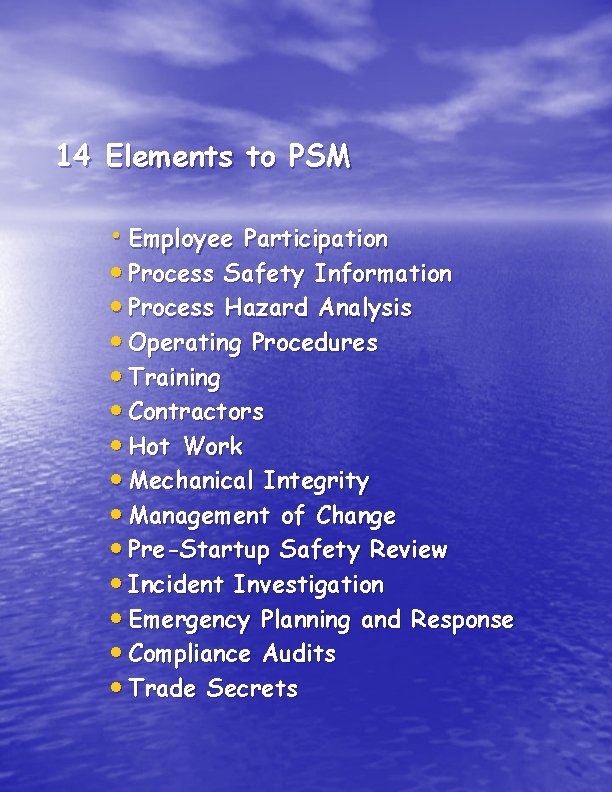
14 Elements to PSM • Employee Participation · Process Safety Information · Process Hazard Analysis · Operating Procedures · Training · Contractors · Hot Work · Mechanical Integrity · Management of Change · Pre-Startup Safety Review · Incident Investigation · Emergency Planning and Response · Compliance Audits · Trade Secrets
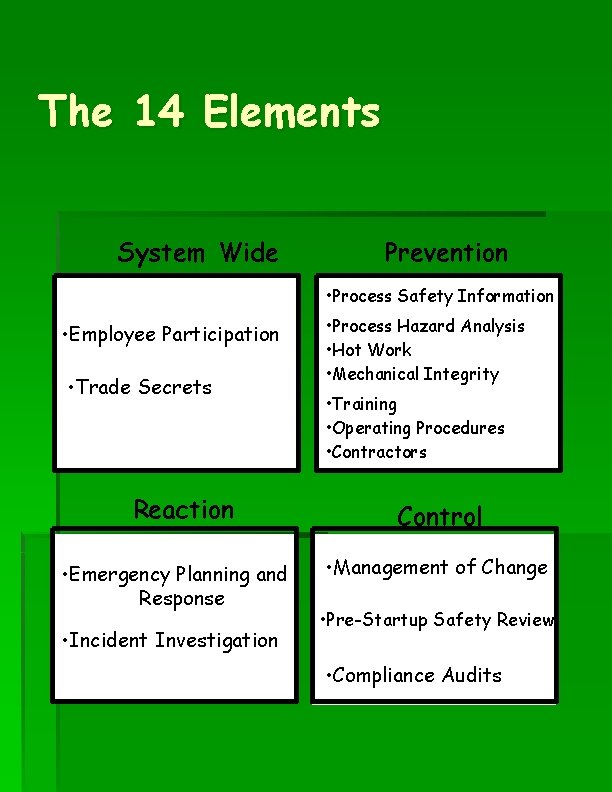
The 14 Elements System Wide Prevention • Process Safety Information • Employee Participation • Trade Secrets Reaction • Emergency Planning and Response • Incident Investigation • Process Hazard Analysis • Hot Work • Mechanical Integrity • Training • Operating Procedures • Contractors Control • Management of Change • Pre-Startup Safety Review • Compliance Audits
Employee Participation Everyone plays a part
You Make the Difference Your Participation is a critical part of PSM Nothing happens unless we pull together
Process Safety Information Provides the foundation for understanding the chemical, technical, and equipment hazards associated with the processes Retains basic research and development information to guide future efforts
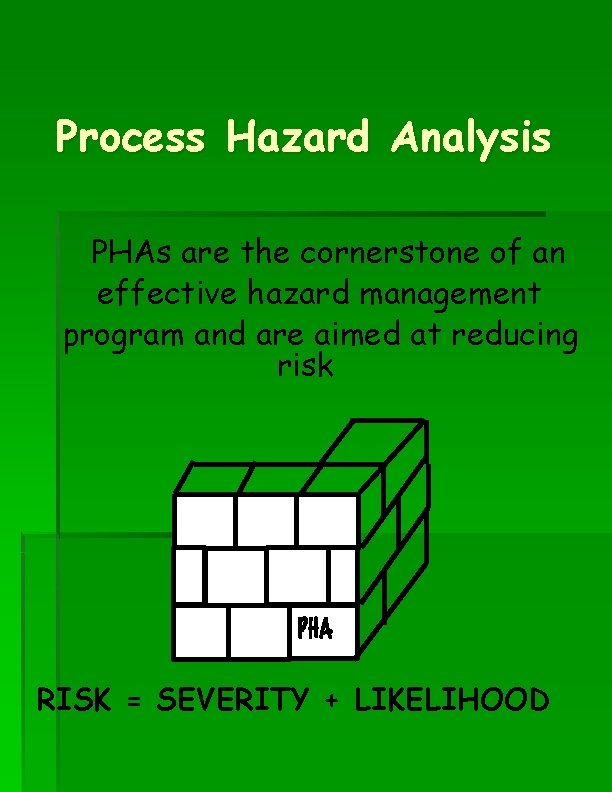
Process Hazard Analysis PHAs are the cornerstone of an effective hazard management program and are aimed at reducing risk RISK = SEVERITY + LIKELIHOOD
Operating Procedures Ensures that all individuals are doing their job, the same way and in the safest manner possible
Training Awareness causes Action
Contractors Chemical 1 (ABC) Chemical 2 (123) Review (Hazards) Contractors need to be informed of the potential hazards related to the Process
Hot Work This element establishes the criteria to ensure any work that may cause a source of ignition is done safely. This includes open flame, running combustible engines, running electronics and test equipment that is not intrinsically safe, grinding, drilling, or any other possible source of ignition. A Hot Work Permit is Required.
Mechanical Integrity Critical equipment is identified, designed, installed, and properly maintained Employees maintaining equipment are trained to do so Defects are resolved before continued use of equipment
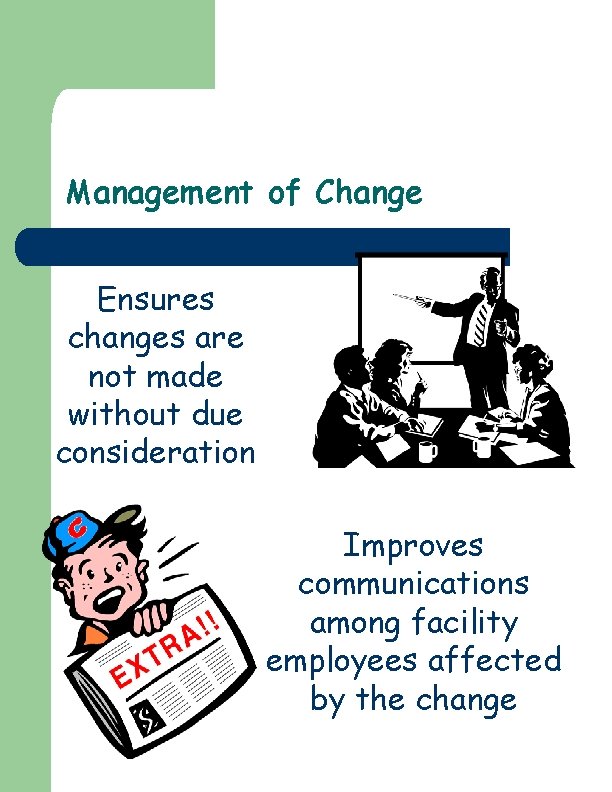
Management of Change Ensures changes are not made without due consideration Improves communications among facility employees affected by the change
Pre-Startup Safety Review The final "thought stop" to make sure a new or changed facility doesn't contain any surprises
Incident Investigation Spotlights the chain of events leading to an incident, to avoid a future occurrence Near-misses also require an investigation. They are not minor incidents, they are free spins on the wheel
Emergency Planning and Response Small problems can become major if not handled properly Written plans allow everyone to know what to do in the event of an emergency
Compliance Audits can verify if programs are in place and measure their effectiveness Increases the awareness of process safety throughout a facility, by reviewing documentation, inspecting facilities and interviewing employees
Trade Secrets Pssst! p t o T re c e S Any information needed to comply with PSM must be available "Sensitive" material may require the signing of a confidentiality agreement before it is provided
Benefits of PSM For the Employee reduces chances of being injured by catastrophic releases For the Environment reduces chances of loss of containment of Highly Hazardous Chemicals For the Community Creates a sense of security For the Facility and Equipment. . . Increases reliability and reduces unscheduled downtime For the Customer. . . Provides a reliable, steady flow of product from a responsible supplier For the Industry. . . Contributes to overall reduction in catastrophic incidents