
Introduction to Prehistoric Art What does PREHISTORIC mean




- Slides: 24
Introduction to Prehistoric Art
What does PREHISTORIC mean? Pre: Before Historic: Written History Prehistoric: Before written history Prehistory is defined as the time before writing, and without written records, we have only the works themselves and archeological evidence to help us interpret them.
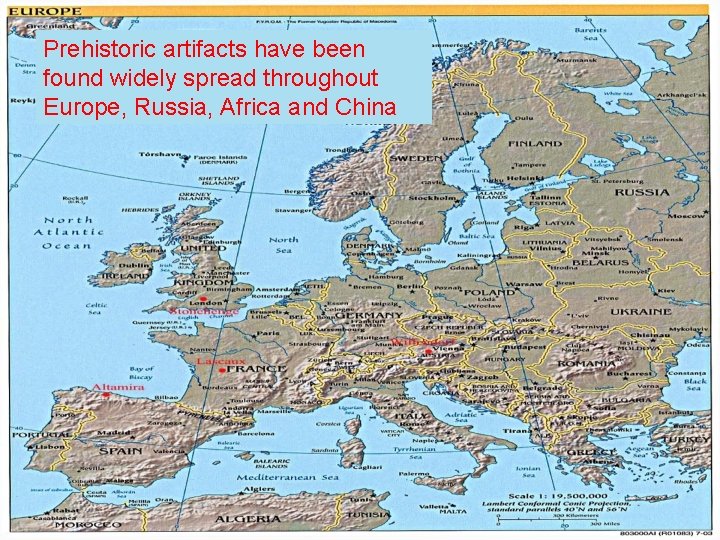
Prehistoric artifacts have been found widely spread throughout Europe, Russia, Africa and China
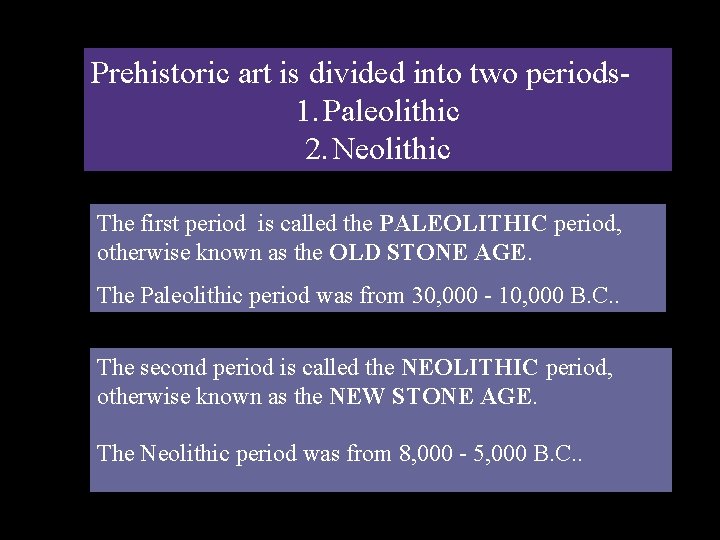
Prehistoric art is divided into two periods 1. Paleolithic 2. Neolithic The first period is called the PALEOLITHIC period, otherwise known as the OLD STONE AGE. The Paleolithic period was from 30, 000 - 10, 000 B. C. . The second period is called the NEOLITHIC period, otherwise known as the NEW STONE AGE. The Neolithic period was from 8, 000 - 5, 000 B. C. .
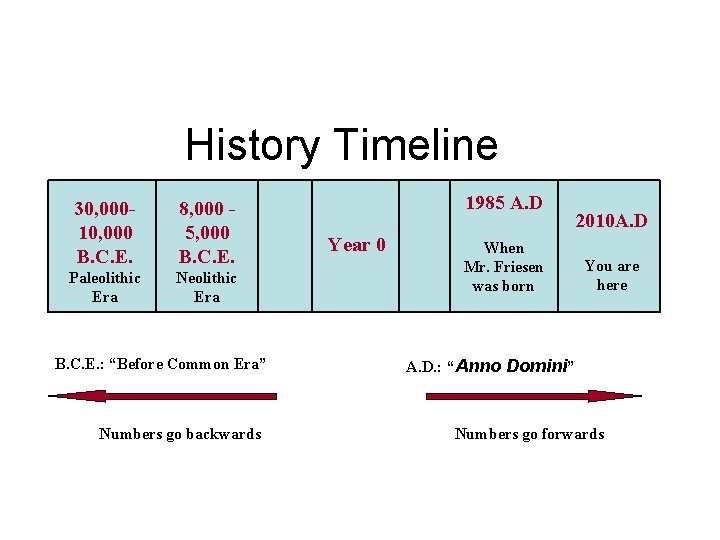
History Timeline 30, 00010, 000 B. C. E. 8, 000 5, 000 B. C. E. Paleolithic Era Neolithic Era B. C. E. : “Before Common Era” Numbers go backwards 1985 A. D Year 0 When Mr. Friesen was born 2010 A. D You are here A. D. : “Anno Domini” Numbers go forwards
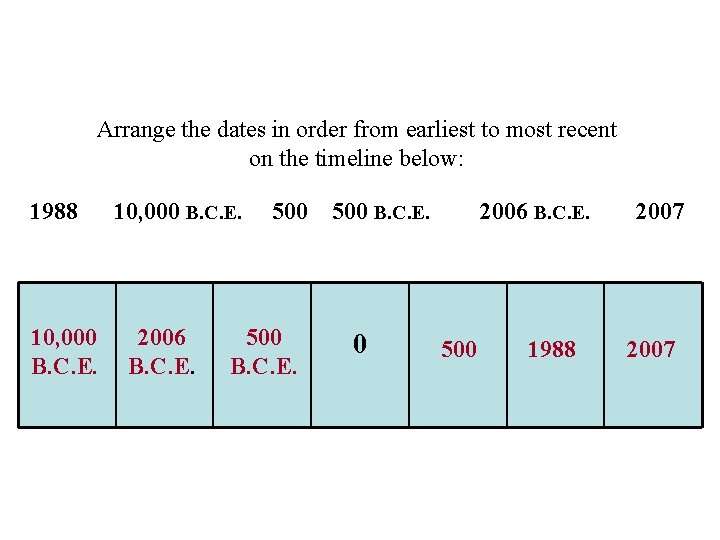
Arrange the dates in order from earliest to most recent on the timeline below: 1988 10, 000 B. C. E. 2006 B. C. E. 500 B. C. E. 0 2006 B. C. E. 500 1988 2007
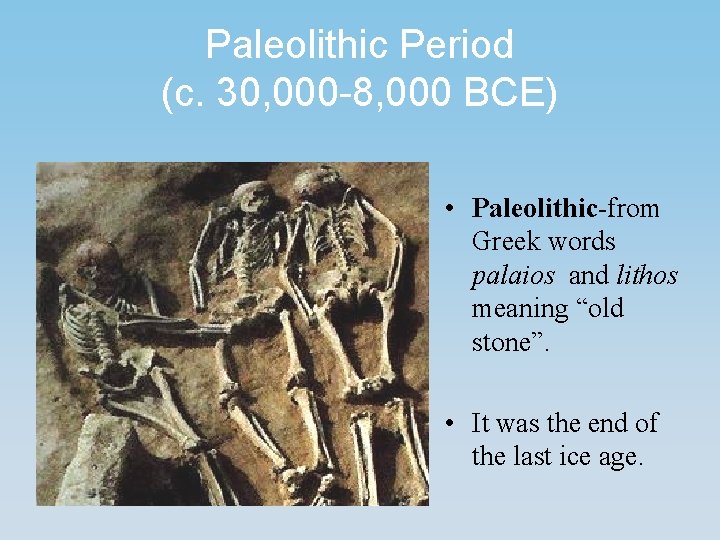
Paleolithic Period (c. 30, 000 -8, 000 BCE) • Paleolithic-from Greek words palaios and lithos meaning “old stone”. • It was the end of the last ice age.
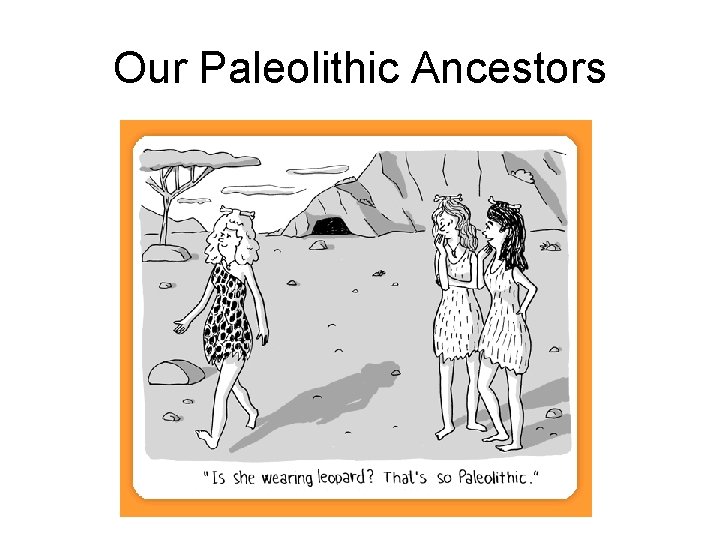
Our Paleolithic Ancestors
What was life like for our prehistoric ancestors? In groups, discuss the everyday activities of a cave man or woman and write your ideas in the chart provided.
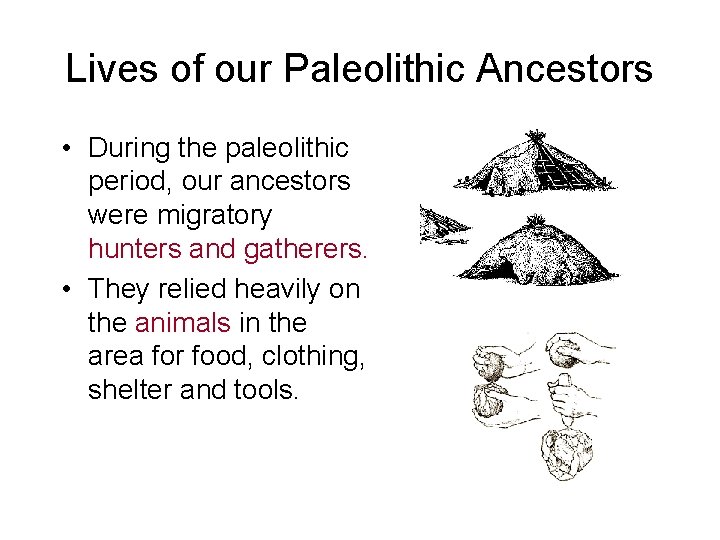
Lives of our Paleolithic Ancestors • During the paleolithic period, our ancestors were migratory hunters and gatherers. • They relied heavily on the animals in the area for food, clothing, shelter and tools.
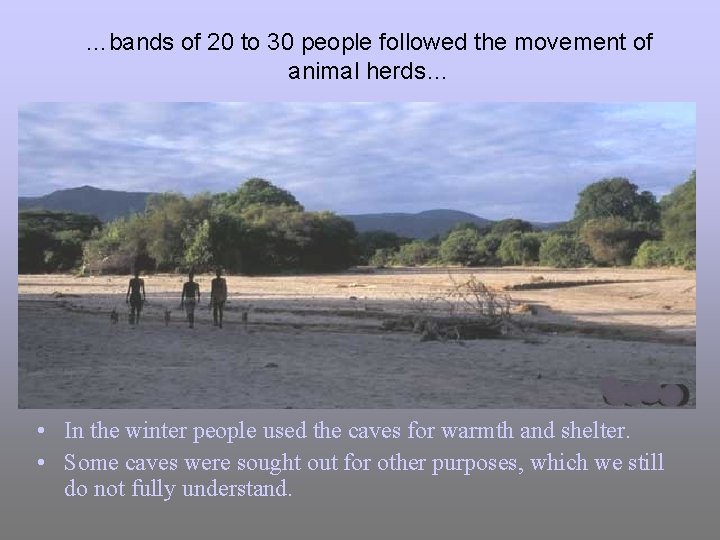
…bands of 20 to 30 people followed the movement of animal herds… • In the winter people used the caves for warmth and shelter. • Some caves were sought out for other purposes, which we still do not fully understand.
Language • Prehistoric people didn’t have a written language. Instead they used PICTOGRAPHS or pictures as symbols to communicate. • Even today we use different pictures to communicate to people who speak different languages.
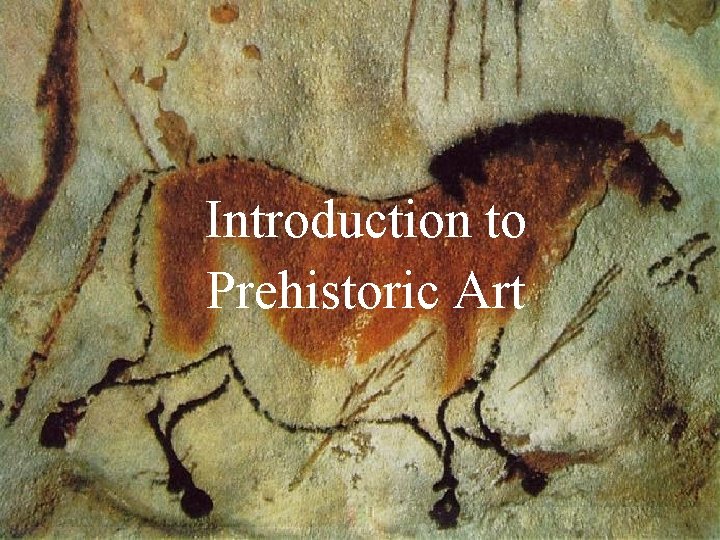
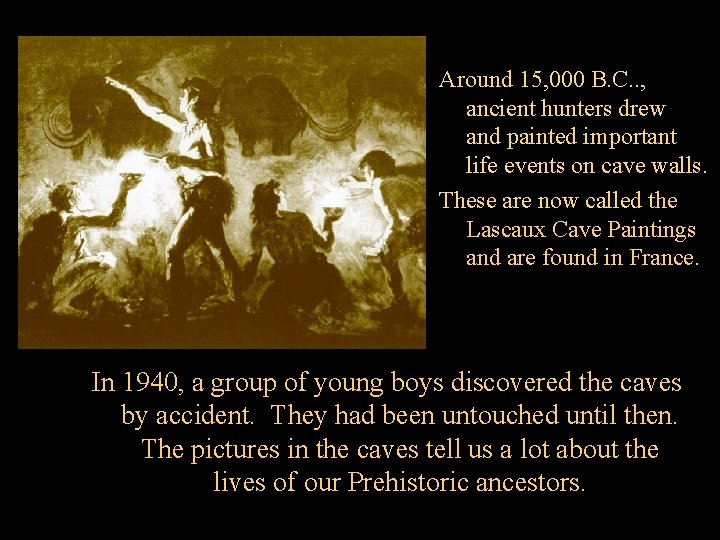
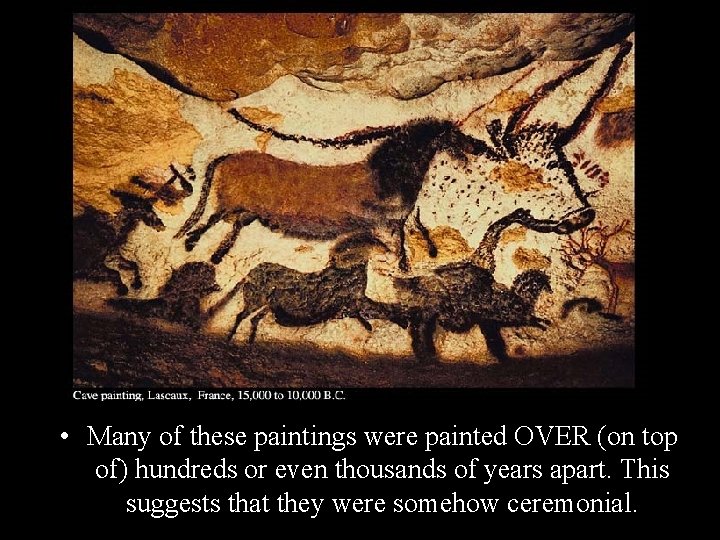
Around 15, 000 B. C. . , ancient hunters drew and painted important life events on cave walls. These are now called the Lascaux Cave Paintings and are found in France. In 1940, a group of young boys discovered the caves by accident. They had been untouched until then. The pictures in the caves tell us a lot about the lives of our Prehistoric ancestors.
Lascaux Caves, France 15, 000 -13, 0000 B. C.
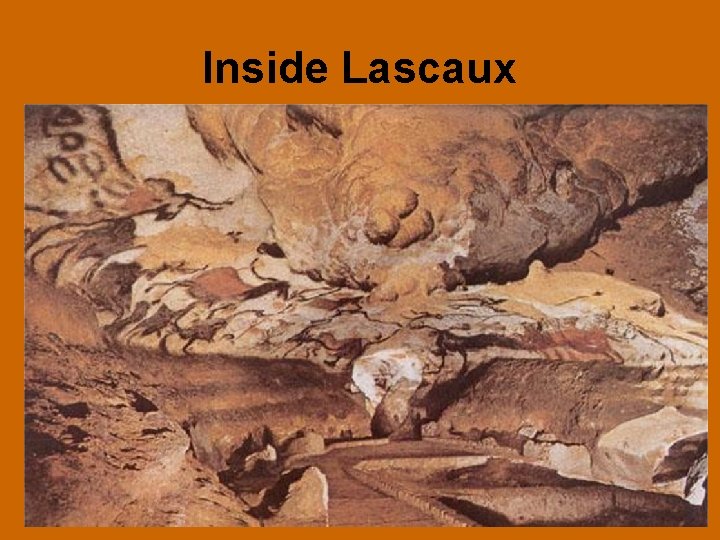
Inside Lascaux
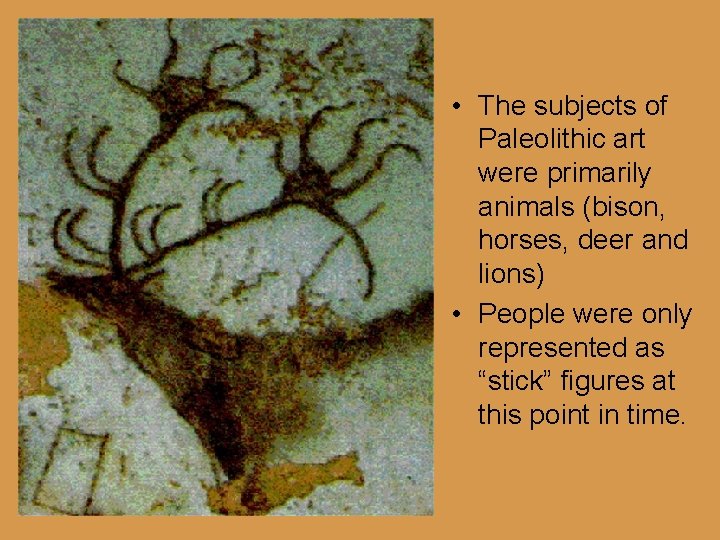
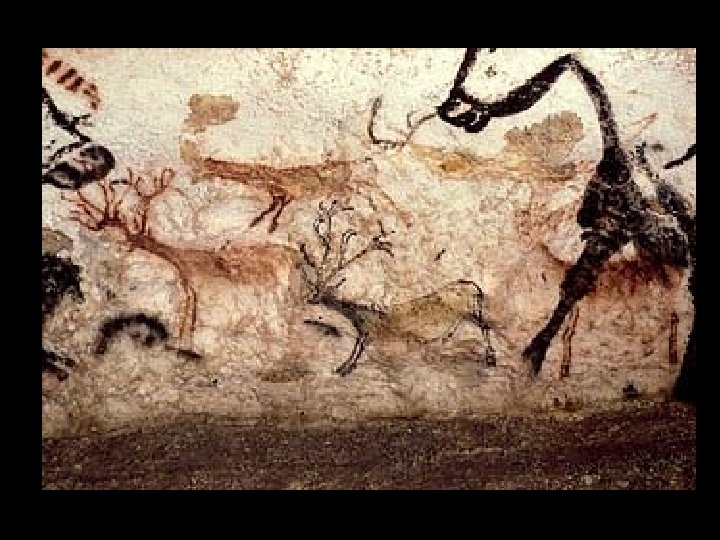
• The subjects of Paleolithic art were primarily animals (bison, horses, deer and lions) • People were only represented as “stick” figures at this point in time.
The most famous part of the caves at Lascaux is “The Hall of Bulls”, because most of the animals depicted are of bulls.
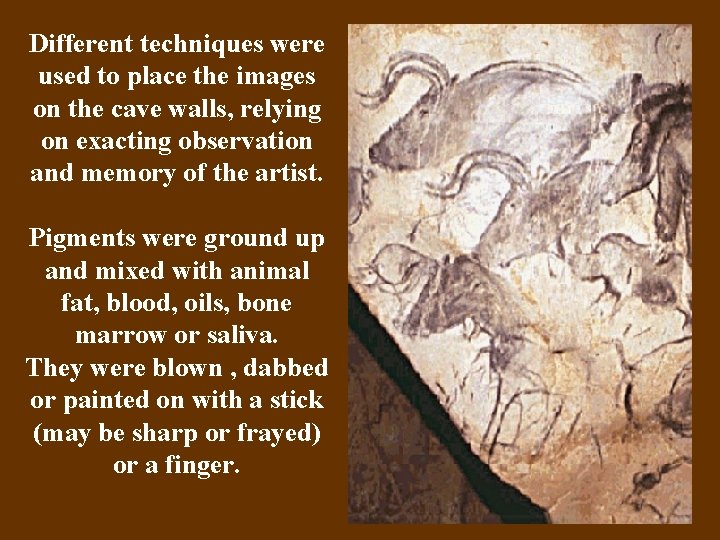
Different techniques were used to place the images on the cave walls, relying on exacting observation and memory of the artist. Pigments were ground up and mixed with animal fat, blood, oils, bone marrow or saliva. They were blown , dabbed or painted on with a stick (may be sharp or frayed) or a finger.
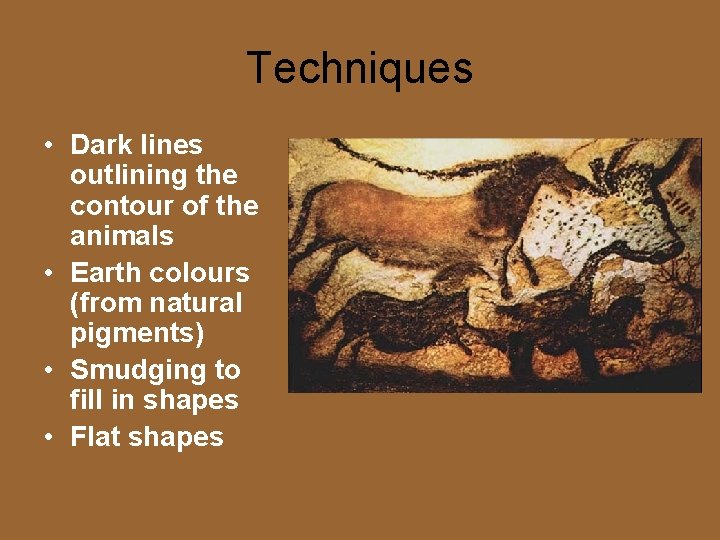
Techniques • Dark lines outlining the contour of the animals • Earth colours (from natural pigments) • Smudging to fill in shapes • Flat shapes
• Many of these paintings were painted OVER (on top of) hundreds or even thousands of years apart. This suggests that they were somehow ceremonial.
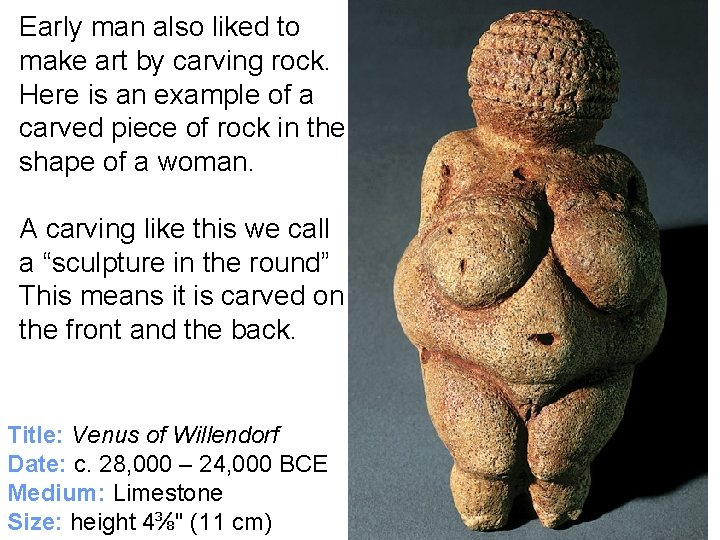
Early man also liked to make art by carving rock. Here is an example of a carved piece of rock in the shape of a woman. A carving like this we call a “sculpture in the round” This means it is carved on the front and the back. Title: Venus of Willendorf Date: c. 28, 000 – 24, 000 BCE Medium: Limestone Size: height 4⅜" (11 cm)
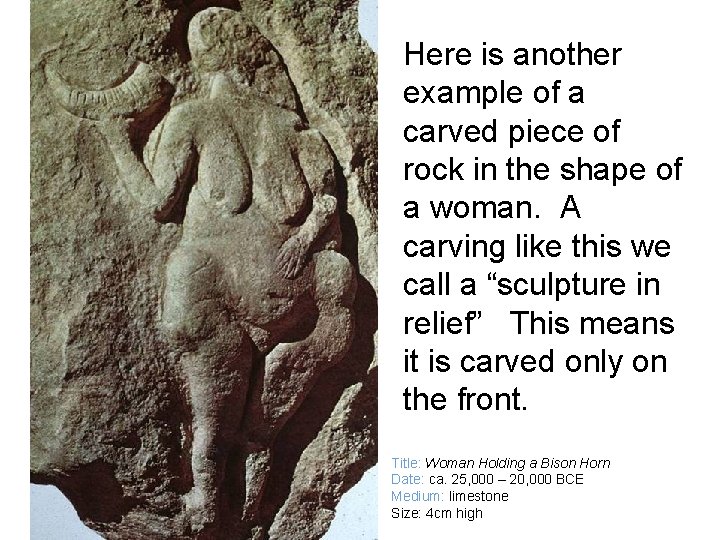
Here is another example of a carved piece of rock in the shape of a woman. A carving like this we call a “sculpture in relief” This means it is carved only on the front. Title: Woman Holding a Bison Horn Date: ca. 25, 000 – 20, 000 BCE Medium: limestone Size: 4 cm high
Why did early humans make art? • No one really knows for sure, but we do know that animals played a very important role in the lives of the Paleolithic people. • • • There are many theories: The animals that were around at that time. Instructions on how to hunt or not to hunt. Art was used for religious ceremonies. Creating art caused good luck in hunting.