
Introduction to PortBased Network Access Control EAP 802
Introduction to Port-Based Network Access Control EAP, 802. 1 X, and RADIUS Anthony Critelli Introduction to Port-Based Network Access Control
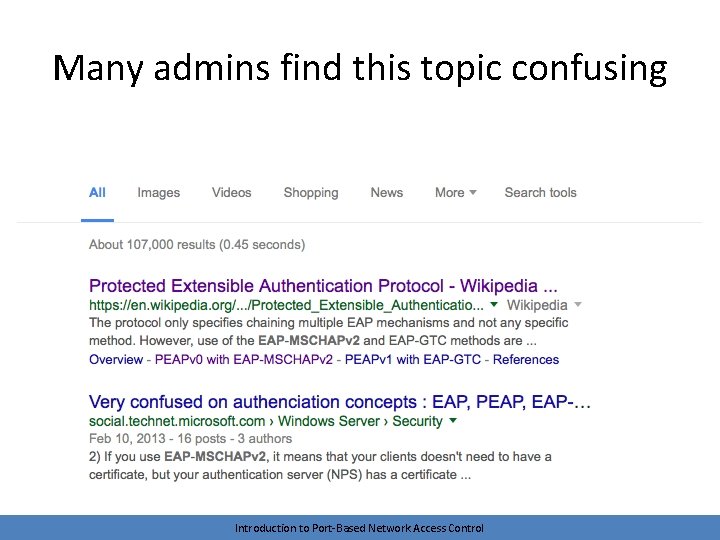
Many admins find this topic confusing Introduction to Port-Based Network Access Control

And implementers… Introduction to Port-Based Network Access Control

Introduction to Port-Based Network Access Control

High Level Goals Introduction to Port-Based Network Access Control
Encapsulation • Let’s quickly recap (heh) encapsulation • Example: DNS – DNS Data encapsulated inside UDP datagram – UDP datagram encapsulated inside IP packet – IP packet encapsulated inside Ethernet frame • We’re just adding headers to data – Like placing a letter in an envelope Introduction to Port-Based Network Access Control
What are we trying to do? • Permit or deny network access to devices – Not necessarily users – Wired and wireless • Make this work across the network – Wired switches – Wireless access points – Ability to abstract some of this functionality from the devices themselves Introduction to Port-Based Network Access Control

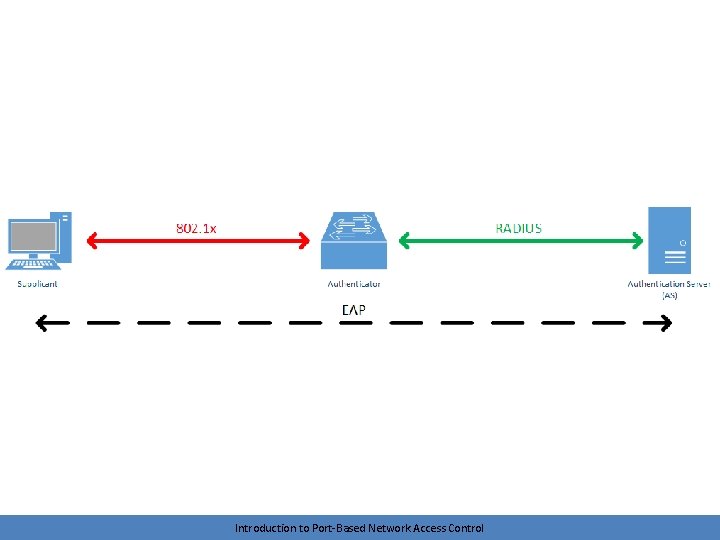
1000 foot view • A node (supplicant) connects to a network device (authenticator) • The authenticator tunnels traffic between the node (supplicant) and an authentication server (AS) • The authentication server decides if network access will be granted • The network device (authenticator) permits or denies network access Introduction to Port-Based Network Access Control
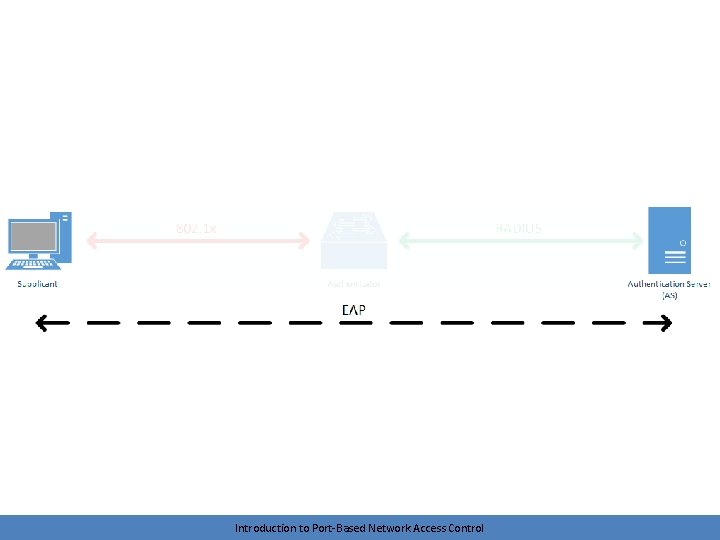
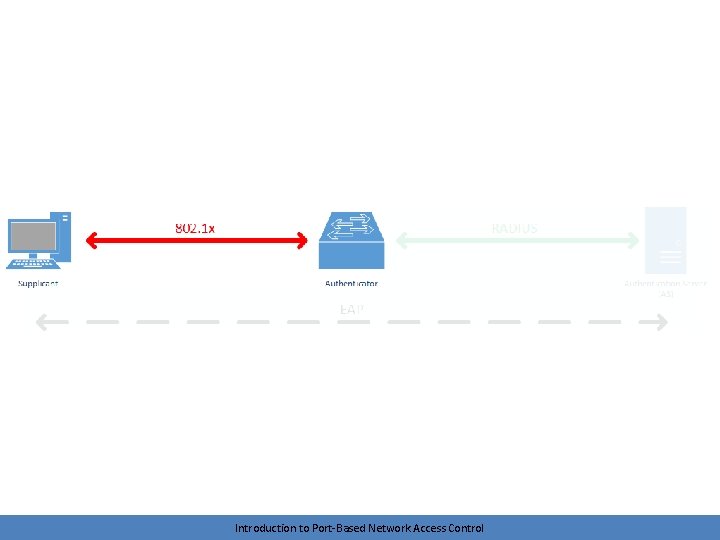
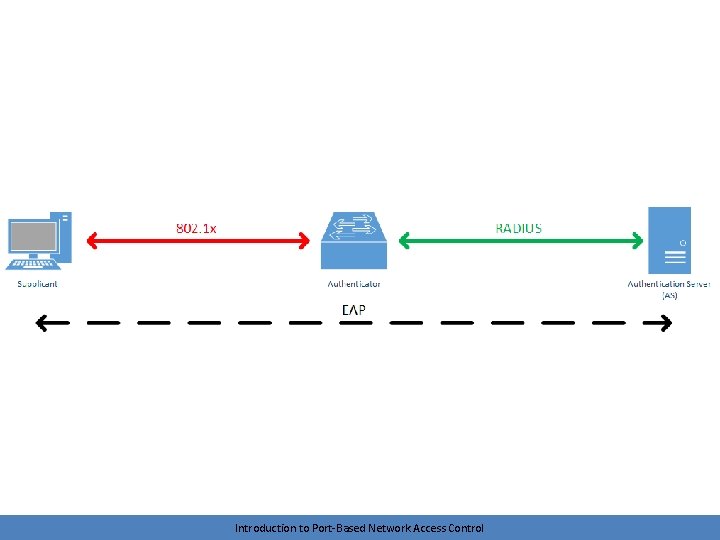
Brief look at protocols • IEEE 802. 1 X – between supplicant and authenticator • RADIUS – between authenticator and authentication server – Remote Authentication Dial-In User Service • EAP – logical conversation between supplicant and authentication server – Extensible authentication protocol – Tunneled by authenticator Introduction to Port-Based Network Access Control
Introduction to Port-Based Network Access Control
Introduction to Port-Based Network Access Control
Housekeeping Introduction to Port-Based Network Access Control

Lab Topology Introduction to Port-Based Network Access Control
Housekeeping • Windows client with wired 802. 1 x for packet captures in this presentation • Windows is annoying to set up in a lab environment – Need to manually enable the Wired Auto. Config service – Need to allow ignore self-signed certificate on AS • Only do this in a lab environment. – Need to dig into 4 million nested menus to specify credentials – Probably some other stuff that I’m forgetting • Not hard, just annoying (for labs) Introduction to Port-Based Network Access Control
EAP Let’s get logical Introduction to Port-Based Network Access Control
Introduction to Port-Based Network Access Control
Extensible Authentication Protocol • RFC 3748 • Provides an authentication framework – Multiple authentication methods are supported and defined, typically under additional RFCs • Extensible – vendors can pick and choose the protocols that they support • Defines message formats, not specific authentication protocols – Hence, an authentication framework Introduction to Port-Based Network Access Control

The logical conversation • A logical conversation takes place between the supplicant and the authentication server (AS) – The supplicant and AS don’t talk directly. The authenticator handles the communication • Again, allows for the protocol to be fairly lightweight – Switches and APs (expensive) don’t need to relearn a new protocol every time a shiny new authentication method is introduced or an old method is deprecated • Vendors can even introduce their own methods – Cisco’s Lightweight EAP (LEAP) Introduction to Port-Based Network Access Control

Introduction to Port-Based Network Access Control
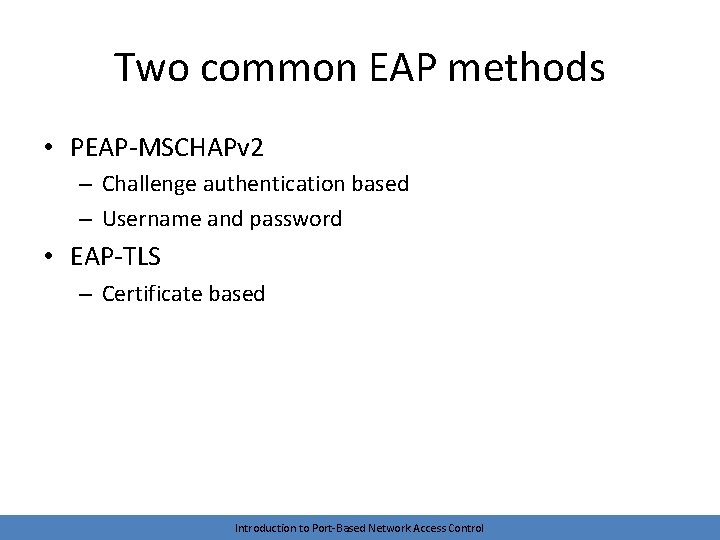
Two common EAP methods • PEAP-MSCHAPv 2 – Challenge authentication based – Username and password • EAP-TLS – Certificate based Introduction to Port-Based Network Access Control

EAP-MSCHAPv 2 • Older Microsoft authentication method • Generally, MSCHAPv 2 not considered secure – Multiple weaknesses have been found • Encapsulate it within PEAP (PEAP-MSCHAPv 2) – – Protected EAP encapsulated within TLS Weaknesses inherent in MSCHAPv 2 are less problematic Server needs a certificate • Typically the method you’ll see when authenticating with AD credentials Introduction to Port-Based Network Access Control
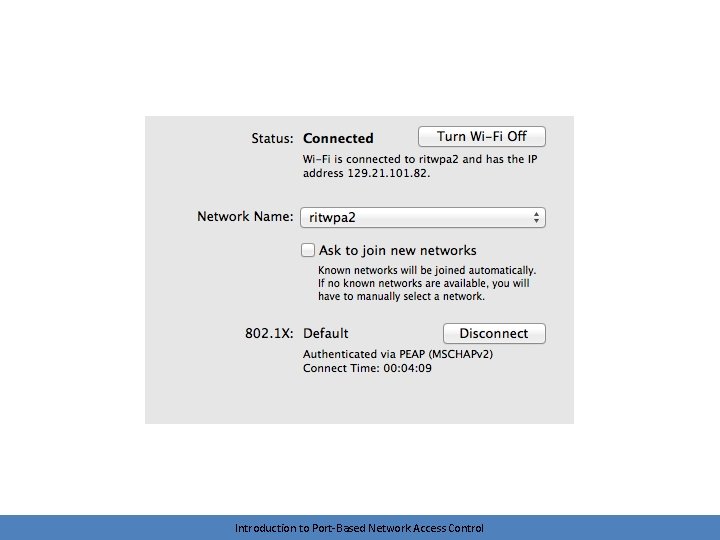
Introduction to Port-Based Network Access Control
EAP-TLS • Uses certificates • The device requesting network access presents its certificate to the AS • Most implementations require network devices (PCs, mobile devices, etc. ) to have certificates – Not an actual requirement of the RFC, but typical – Presents challenges for BYOD • Common in wireless environments Introduction to Port-Based Network Access Control

802. 1 X Introduction to Port-Based Network Access Control
Introduction to Port-Based Network Access Control

Overview • IEEE standard for encapsulating EAP over LAN – EAPo. L – We’re encapsulating our EAP messages for transport over a LAN medium (Ethernet, 802. 11) • The 802. 1 X conversation is between the supplicant and the authenticator – Example: Your PC and the switch that you plug into Introduction to Port-Based Network Access Control
Port States • Uncontrolled – Port begins in this state – Only 802. 1 x traffic is allowed • Remember, communication at IP layer is unnecessary right now • We don’t even need to allow DHCP • Controlled – Full access to network services – Controlled traffic is allowed once the port is authorized • These states work both ways – A client may want the network to authenticate itself also before transmitting data Introduction to Port-Based Network Access Control
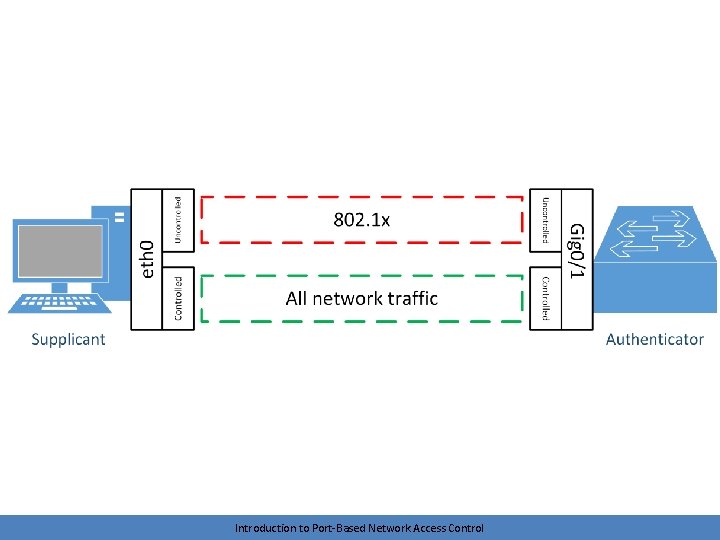
Introduction to Port-Based Network Access Control
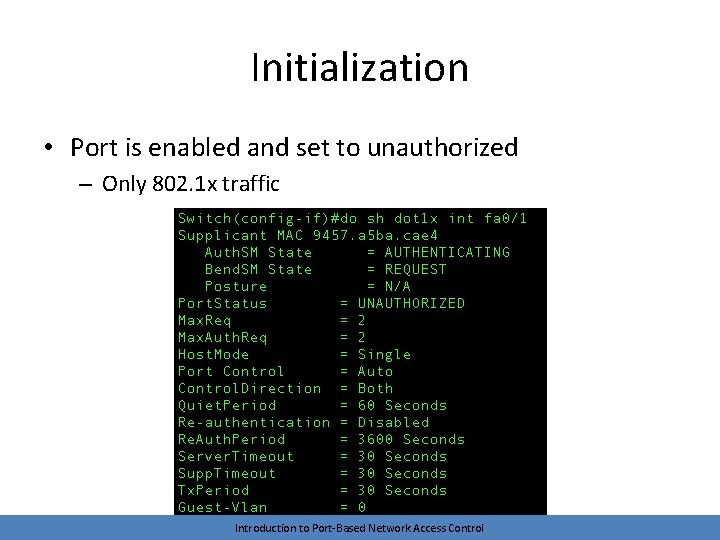
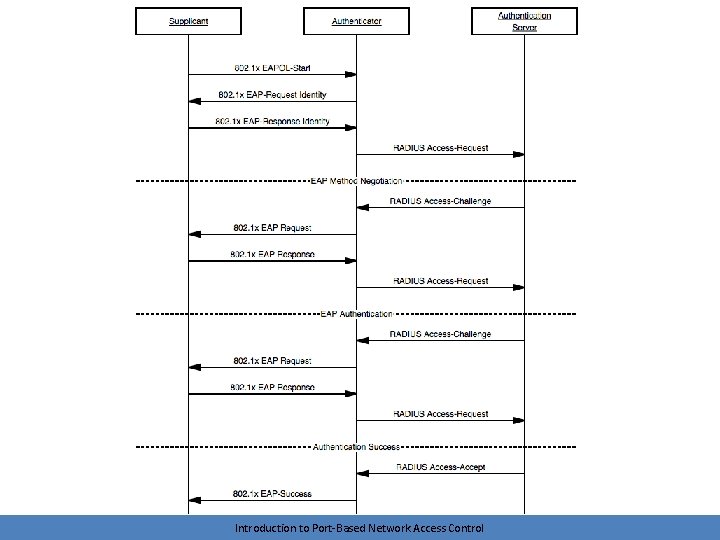
Initialization • Port is enabled and set to unauthorized – Only 802. 1 x traffic Introduction to Port-Based Network Access Control
Initiation • One of two things happens: – Supplicant sends EAPOL-Start or – Authenticator sends EAP-Request Identity – Sent to 01: 80: c 2: 00: 03 • Nearest non-TPMR Bridge Group address Introduction to Port-Based Network Access Control

EAPOL-Start Introduction to Port-Based Network Access Control

EAP-Request Identity Introduction to Port-Based Network Access Control
Initiation continued • Supplicant sends EAP-Response Identity – The authenticator encapsulates and sends to AS Introduction to Port-Based Network Access Control
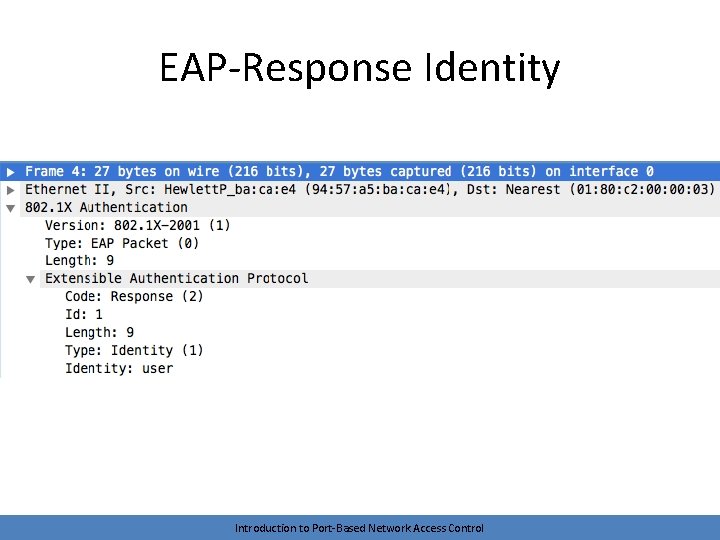
EAP-Response Identity Introduction to Port-Based Network Access Control
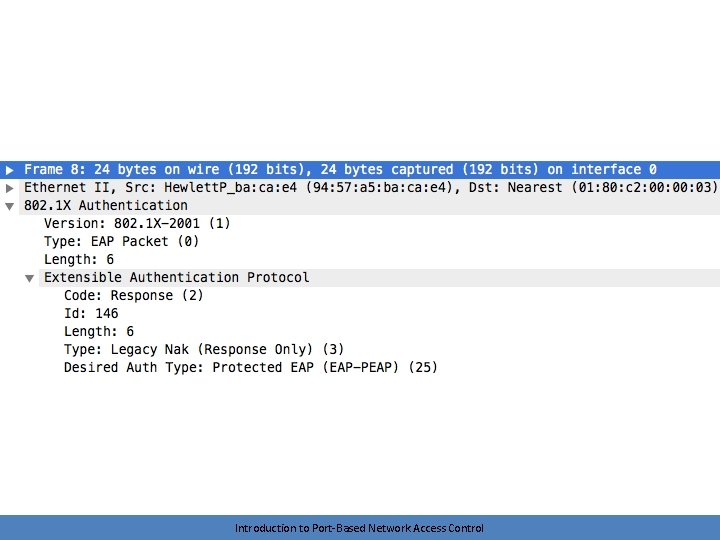
EAP Negotiation • The AS and the supplicant negotiate an EAP method using Requests and Responses – Remember, this conversation is logical – The requests and responses are encapsulated • The supplicant/authenticator conversation uses 802. 1 x • The authenticator/AS conversation uses RADIUS • The server may request a method that the client doesn’t support – The client can suggest an alternative method Introduction to Port-Based Network Access Control
Introduction to Port-Based Network Access Control

Introduction to Port-Based Network Access Control
Introduction to Port-Based Network Access Control
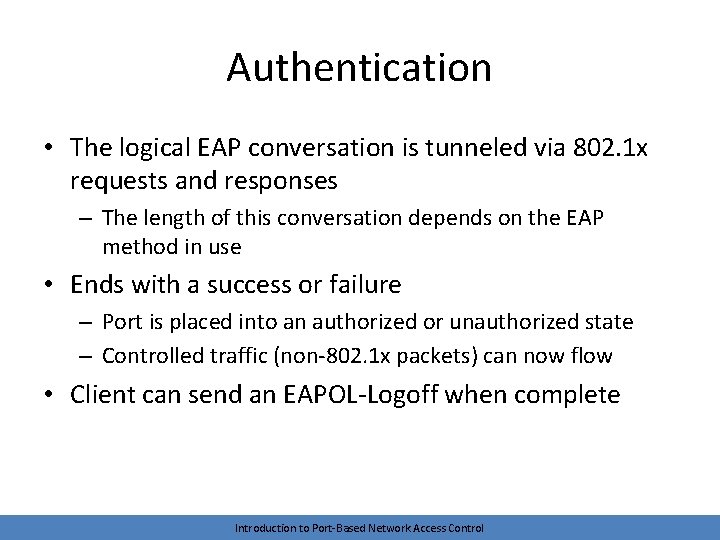
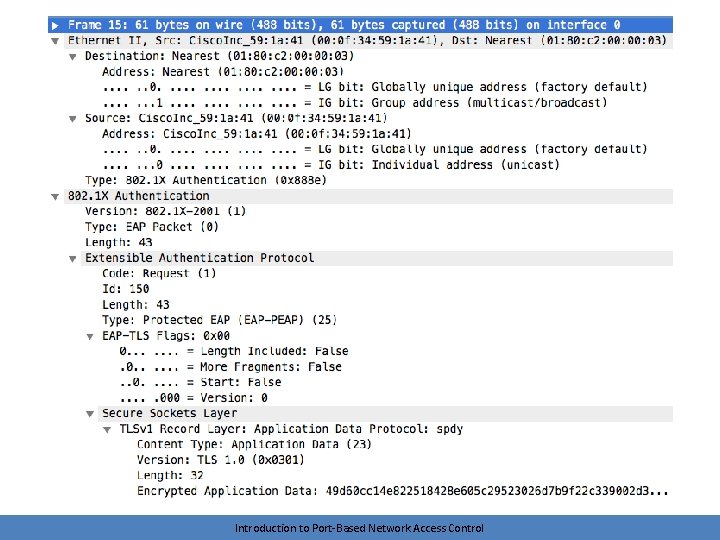
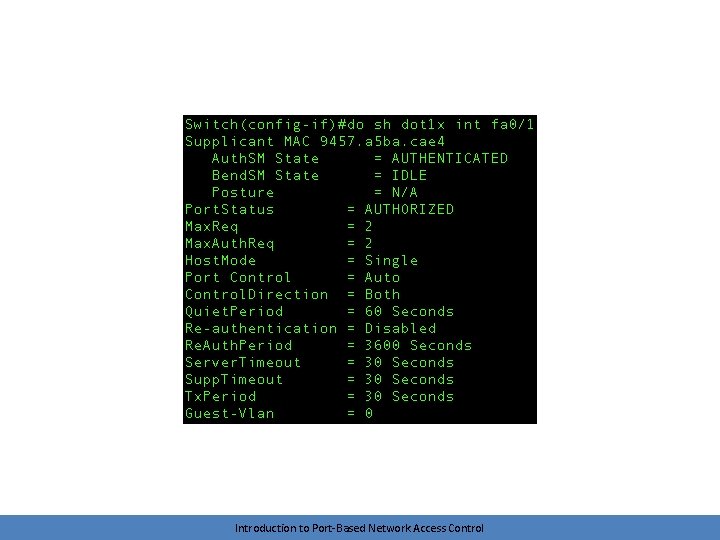
Authentication • The logical EAP conversation is tunneled via 802. 1 x requests and responses – The length of this conversation depends on the EAP method in use • Ends with a success or failure – Port is placed into an authorized or unauthorized state – Controlled traffic (non-802. 1 x packets) can now flow • Client can send an EAPOL-Logoff when complete Introduction to Port-Based Network Access Control
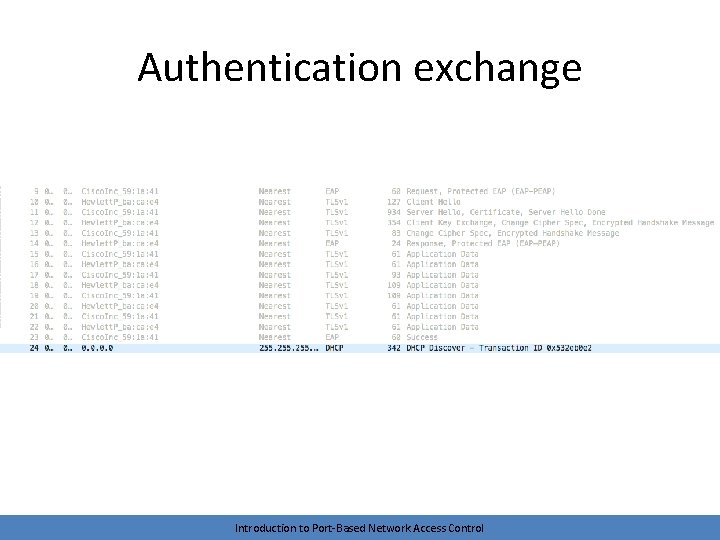
Authentication exchange Introduction to Port-Based Network Access Control
Introduction to Port-Based Network Access Control
Introduction to Port-Based Network Access Control
RADIUS Introduction to Port-Based Network Access Control

Introduction to Port-Based Network Access Control
Overview • Remote Authentication Dial-in User Service • Provides AAA services – Authentication, authorization, accounting • RFC 2865 and RFC 2866 – RFC 2865 – authentication (Authc) and authorization (Authz) – RFC 2866 – accounting • We’ll focus on authentication – Confirming that someone is who they say they are • UDP port 1812 Introduction to Port-Based Network Access Control
Protocol Operation • Logical EAP conversation is tunneled between the authenticator and AS using RADIUS Access-Request and Access-Challenge methods • Looking at the packets, we see the same EAP traffic as before – Just encapsulated inside RADIUS instead of 802. 1 x • Process ends with an Access-Accept or Access-Reject Introduction to Port-Based Network Access Control
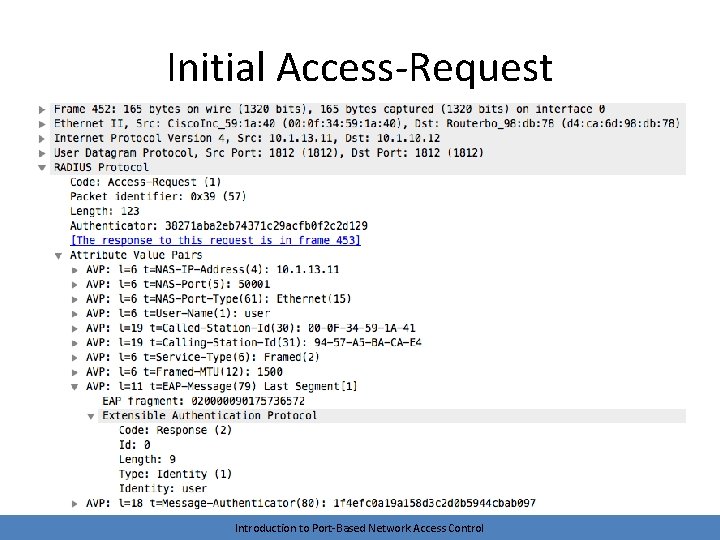
Initial Access-Request Introduction to Port-Based Network Access Control
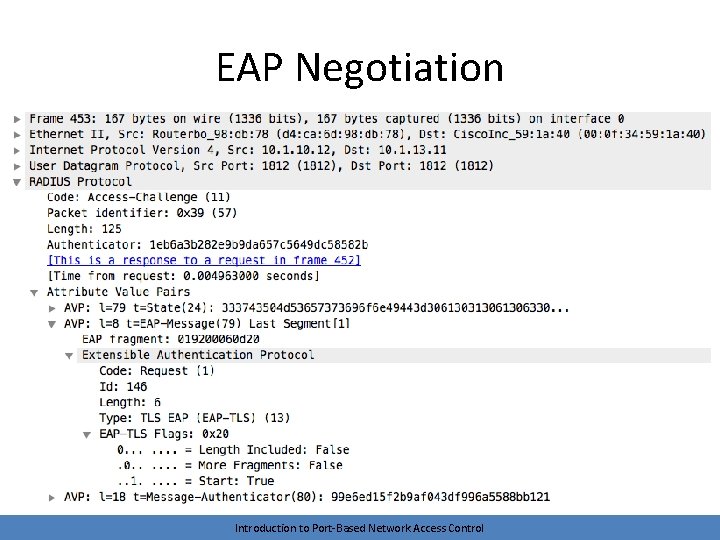
EAP Negotiation Introduction to Port-Based Network Access Control
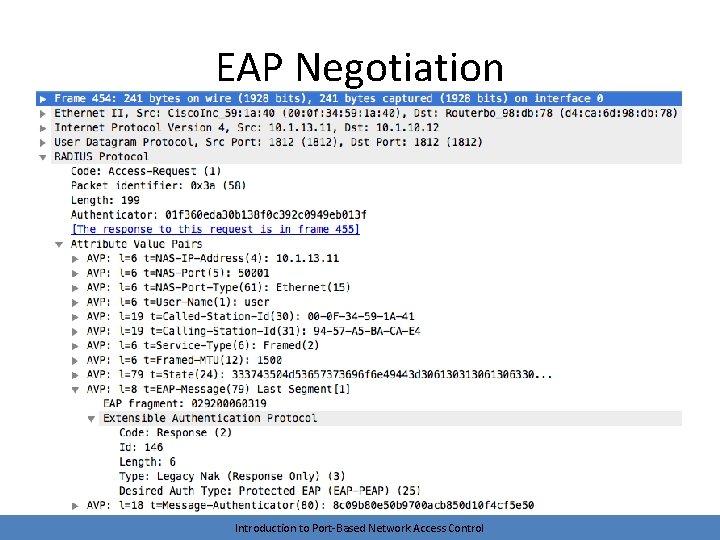
EAP Negotiation Introduction to Port-Based Network Access Control
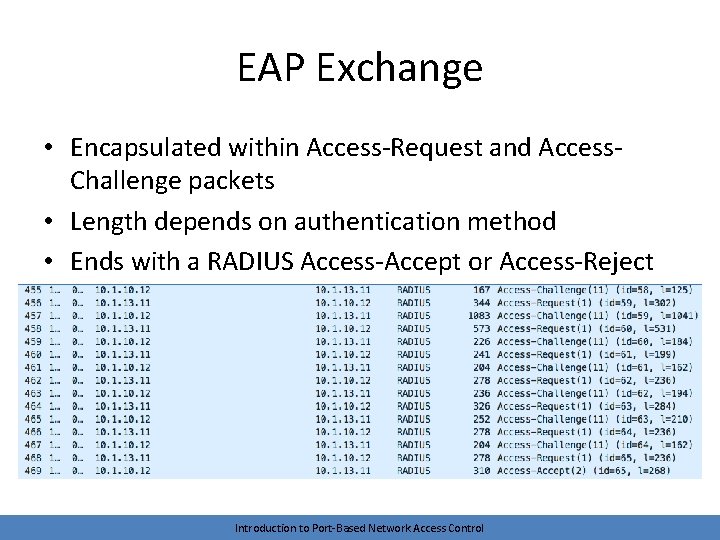
EAP Exchange • Encapsulated within Access-Request and Access. Challenge packets • Length depends on authentication method • Ends with a RADIUS Access-Accept or Access-Reject Introduction to Port-Based Network Access Control
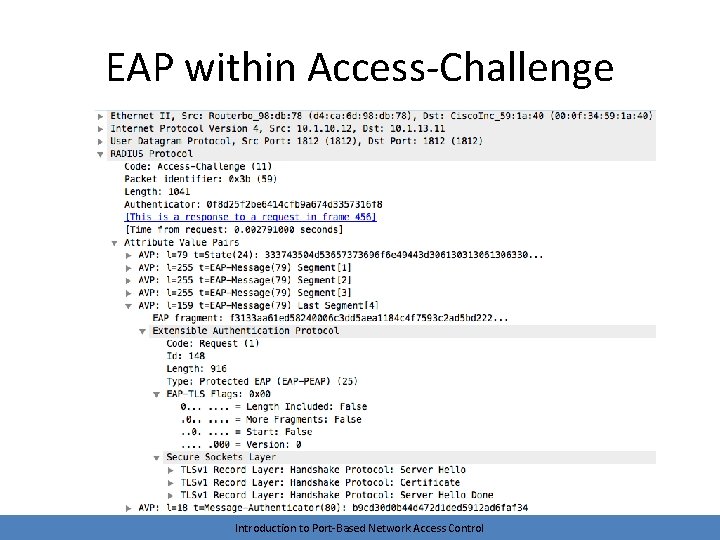
EAP within Access-Challenge Introduction to Port-Based Network Access Control
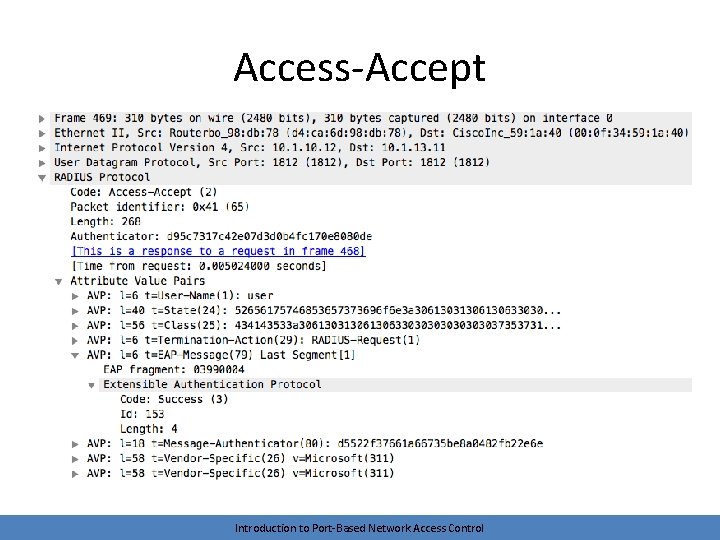
Access-Accept Introduction to Port-Based Network Access Control
Tying it all together Introduction to Port-Based Network Access Control
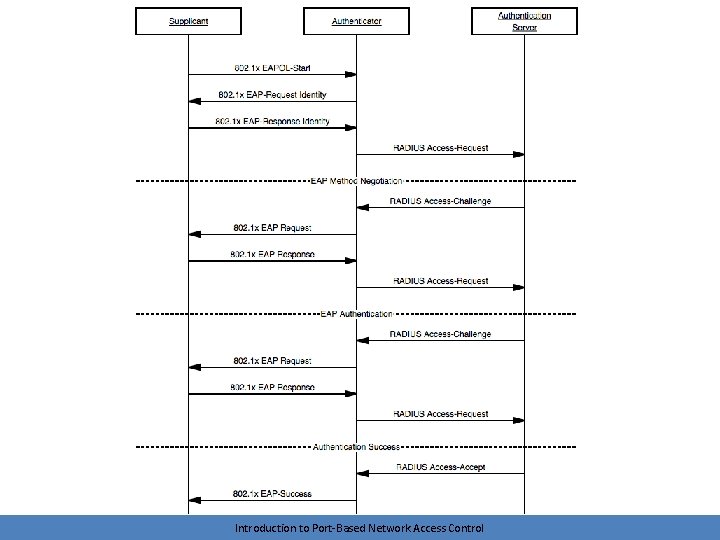
Introduction to Port-Based Network Access Control
Conclusion • Port-Based NAC provides (or denies) network access to devices • Uses a combination of EAP, 802. 1 x, and RADIUS – Lots of encapsulation • EAP provides a framework – Authentication methods are built on top of it • Most importantly: it’s not that confusing once you understand the packet and protocol flow Introduction to Port-Based Network Access Control

Questions? Comments? www. acritelli. com critellia@gmail. com Introduction to Port-Based Network Access Control
- Slides: 56