
Introduction to Population Studies Population Definition Total number
Introduction to Population Studies

Population Definition: ü Total number of human beings who live in a particular place at a specific time is called population. ü All the people who live in a particular area, city or country; the total number of people who live there

Population Definition: ü Total number of individuals in a territory or a locality living at a specified moment of time with an agreed definition of residence. ü All the person falling within the scope of a census or their inquiry.
Human Population History
How many years were taken to increase per billions World Population ?

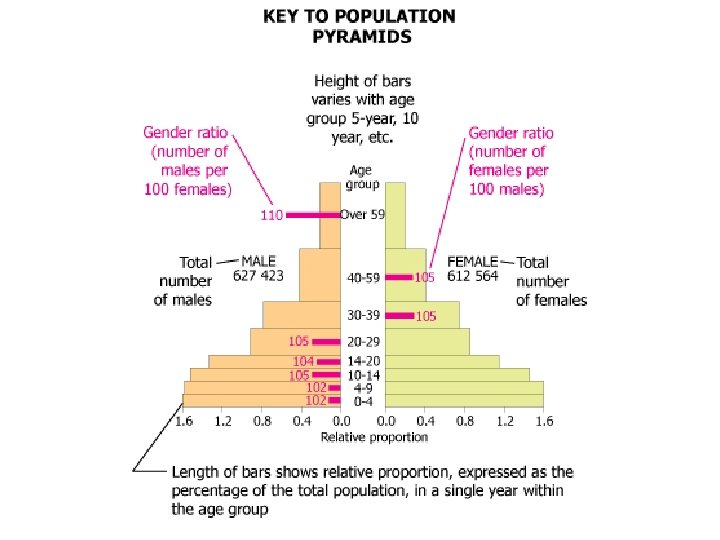
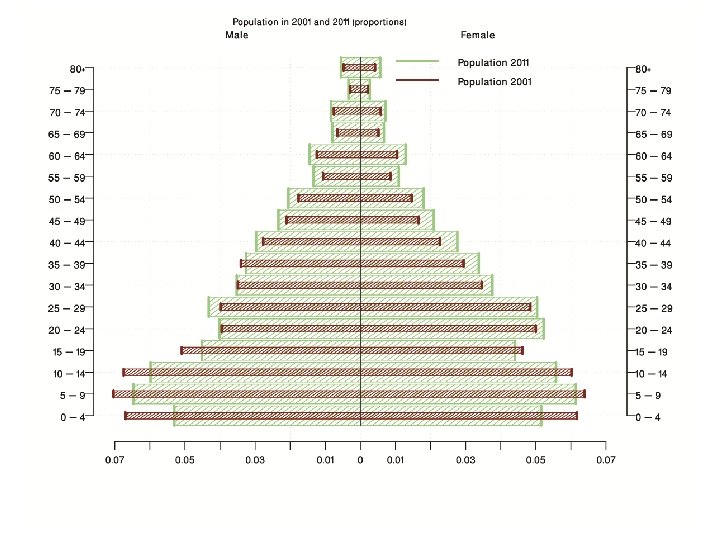
Population pyramid
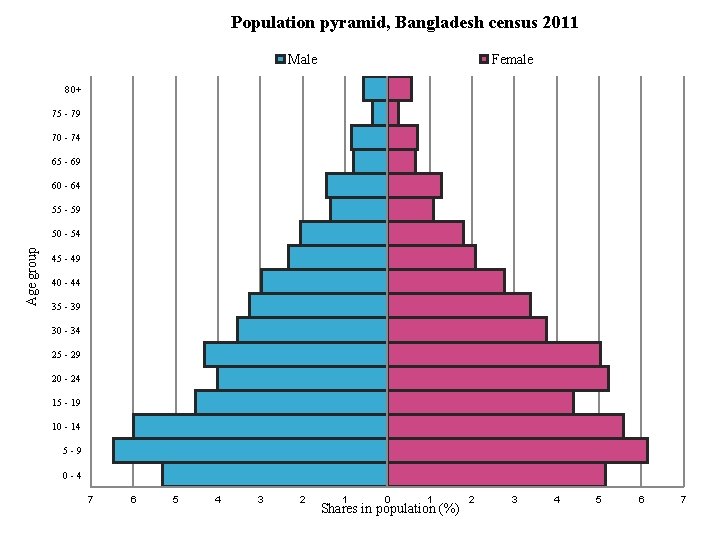
Population pyramid, Bangladesh census 2011 Male Female 80+ 75 - 79 70 - 74 65 - 69 60 - 64 55 - 59 Age group 50 - 54 45 - 49 40 - 44 35 - 39 30 - 34 25 - 29 20 - 24 15 - 19 10 - 14 5 -9 0 -4 7 6 5 4 3 2 1 0 1 Shares in population (%) 2 3 4 5 6 7
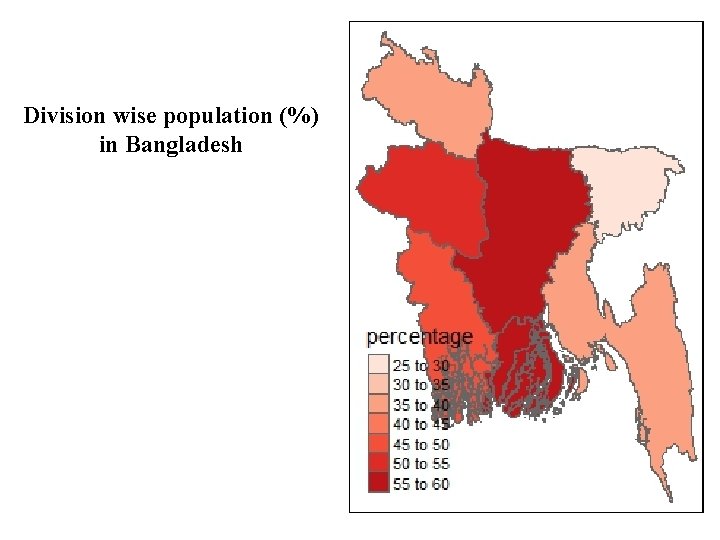
Division wise population (%) in Bangladesh
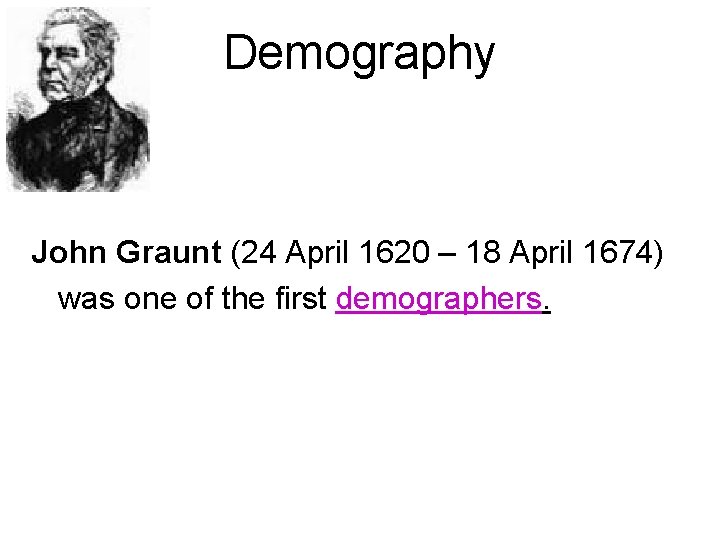
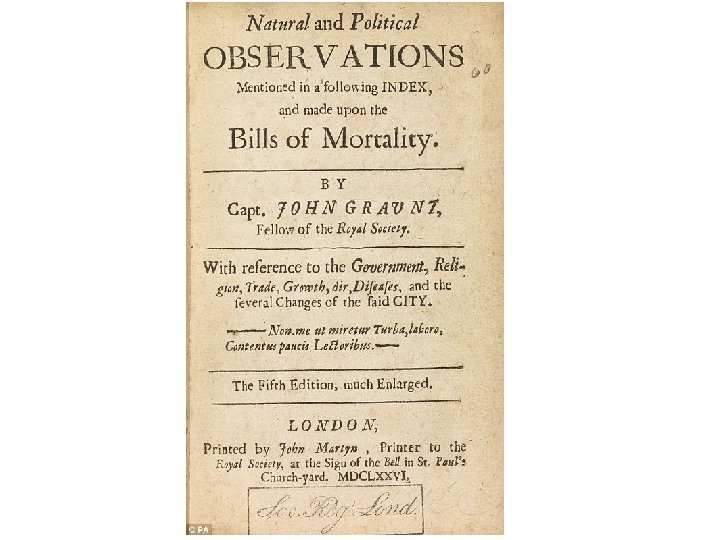
Demography John Graunt (24 April 1620 – 18 April 1674) was one of the first demographers.
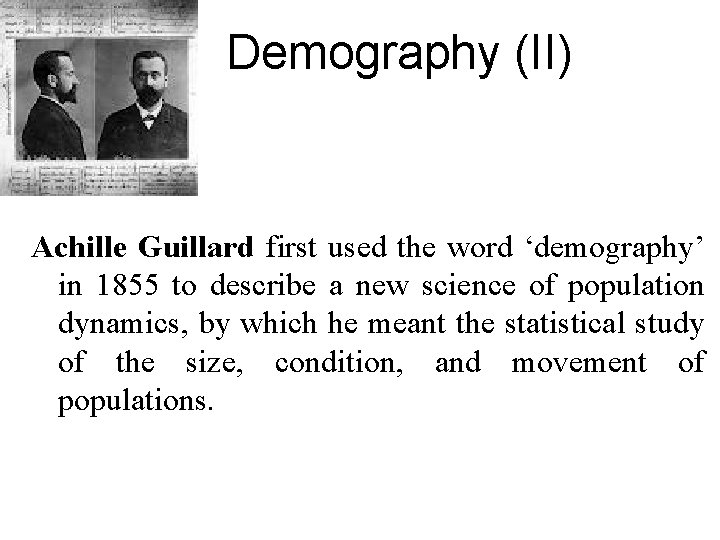
Demography (II) Achille Guillard first used the word ‘demography’ in 1855 to describe a new science of population dynamics, by which he meant the statistical study of the size, condition, and movement of populations.
Demography (III) • • Demography is the scientific study of human populations. Demography is the statistical study of human populations and sub-populations. “…the study of the size, territorial distribution, and composition of population, changes therein, and the components of such changes. ” (Hauser and Duncan 1959, p. 2) “Discipline, interdiscipline, subdiscipline” (Mc. Falls, Jr. 2003)
What Is Demography? Demography is the scientific study of human populations. The term itself was coined in 1855 by Achille Guillard, who used it in the title of his book Éléments de Statis-tique Humaine ou Démographie Comparée. The word he invented is a combination of two Greek words: demos, which means people, and graphein, which means to write about a particular subject (in this instance, population). Guillard defined demography as “the mathematical knowledge of populations, their general movements, and their physical, civil, intellectual and moral state” (Guillard 1855: xxvi). This is generally in tune with how we use the term today in that modern demography is the study of the determinants and consequences of population change and is concerned with virtually everything that influences or can be influenced by
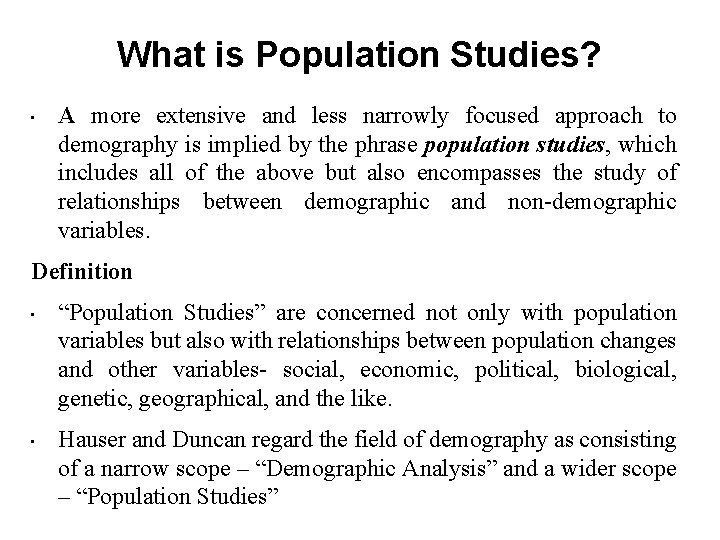
What is Population Studies? • A more extensive and less narrowly focused approach to demography is implied by the phrase population studies, which includes all of the above but also encompasses the study of relationships between demographic and non-demographic variables. Definition • • “Population Studies” are concerned not only with population variables but also with relationships between population changes and other variables- social, economic, political, biological, genetic, geographical, and the like. Hauser and Duncan regard the field of demography as consisting of a narrow scope – “Demographic Analysis” and a wider scope – “Population Studies”
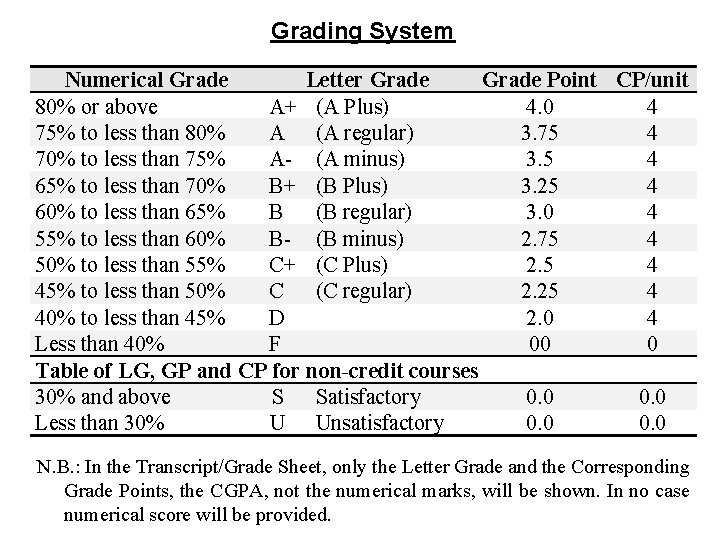
Grading System Numerical Grade Letter Grade Point CP/unit 80% or above A+ (A Plus) 4. 0 4 75% to less than 80% A (A regular) 3. 75 4 70% to less than 75% A- (A minus) 3. 5 4 65% to less than 70% B+ (B Plus) 3. 25 4 60% to less than 65% B (B regular) 3. 0 4 55% to less than 60% B- (B minus) 2. 75 4 50% to less than 55% C+ (C Plus) 2. 5 4 45% to less than 50% C (C regular) 2. 25 4 40% to less than 45% D 2. 0 4 Less than 40% F 00 0 Table of LG, GP and CP for non-credit courses 30% and above S Satisfactory 0. 0 Less than 30% U Unsatisfactory 0. 0 N. B. : In the Transcript/Grade Sheet, only the Letter Grade and the Corresponding Grade Points, the CGPA, not the numerical marks, will be shown. In no case numerical score will be provided.
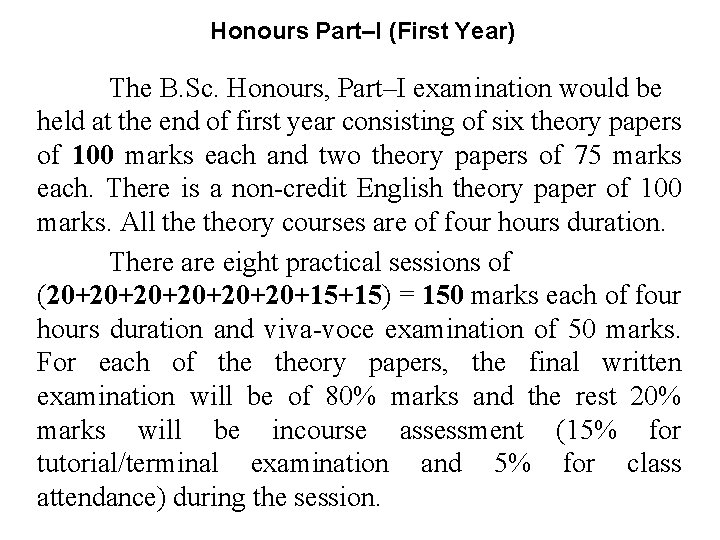
Honours Part–I (First Year) The B. Sc. Honours, Part–I examination would be held at the end of first year consisting of six theory papers of 100 marks each and two theory papers of 75 marks each. There is a non-credit English theory paper of 100 marks. All theory courses are of four hours duration. There are eight practical sessions of (20+20+20+15+15) = 150 marks each of four hours duration and viva-voce examination of 50 marks. For each of theory papers, the final written examination will be of 80% marks and the rest 20% marks will be incourse assessment (15% for tutorial/terminal examination and 5% for class attendance) during the session.
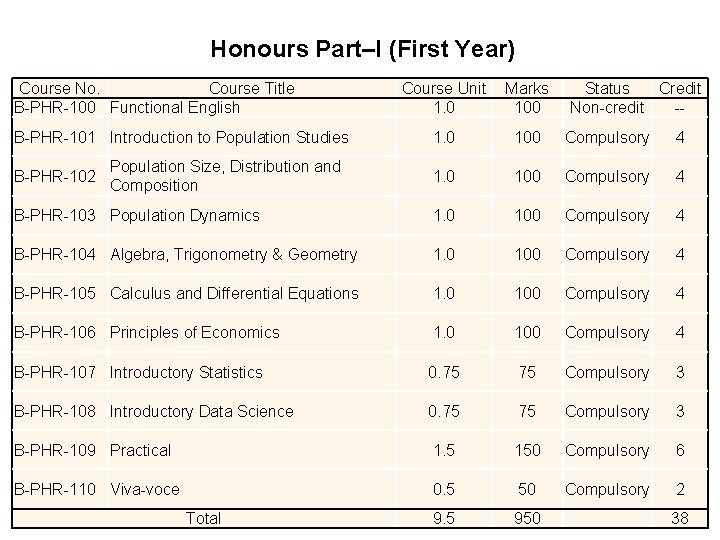
Honours Part–I (First Year) Course No. Course Title B-PHR-100 Functional English Course Unit 1. 0 Marks 100 1. 0 100 Compulsory 4 B-PHR-103 Population Dynamics 1. 0 100 Compulsory 4 B-PHR-104 Algebra, Trigonometry & Geometry 1. 0 100 Compulsory 4 B-PHR-105 Calculus and Differential Equations 1. 0 100 Compulsory 4 B-PHR-106 Principles of Economics 1. 0 100 Compulsory 4 B-PHR-107 Introductory Statistics 0. 75 75 Compulsory 3 B-PHR-108 Introductory Data Science 0. 75 75 Compulsory 3 B-PHR-109 Practical 1. 5 150 Compulsory 6 B-PHR-110 Viva-voce 0. 5 50 Compulsory 2 9. 5 950 B-PHR-101 Introduction to Population Studies B-PHR-102 Population Size, Distribution and Composition Total Status Credit Non-credit -- 38
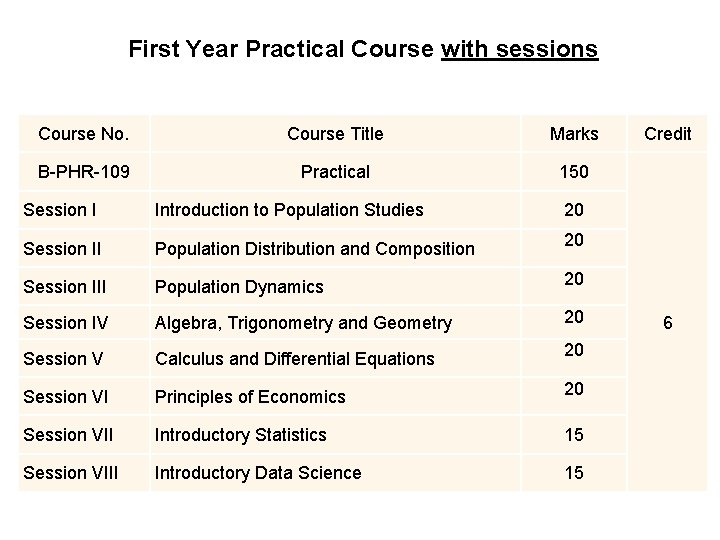
First Year Practical Course with sessions Course No. Course Title Marks B-PHR-109 Practical 150 Session I Introduction to Population Studies 20 Session II Population Distribution and Composition 20 Session III Population Dynamics 20 Session IV Algebra, Trigonometry and Geometry 20 Session V Calculus and Differential Equations 20 Session VI Principles of Economics 20 Session VII Introductory Statistics 15 Session VIII Introductory Data Science 15 Credit 6

- Slides: 21