
Introduction to Population Genetics Population Genetics connects concepts


- Slides: 29
Introduction to Population Genetics
Population Genetics connects concepts from genetics and population ecology
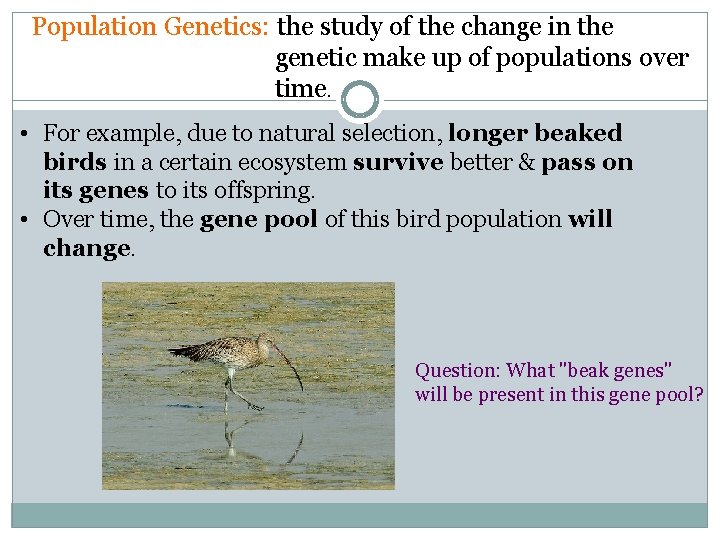
Population Genetics: the study of the change in the genetic make up of populations over time. • For example, due to natural selection, longer beaked birds in a certain ecosystem survive better & pass on its genes to its offspring. • Over time, the gene pool of this bird population will change. Question: What "beak genes" will be present in this gene pool?
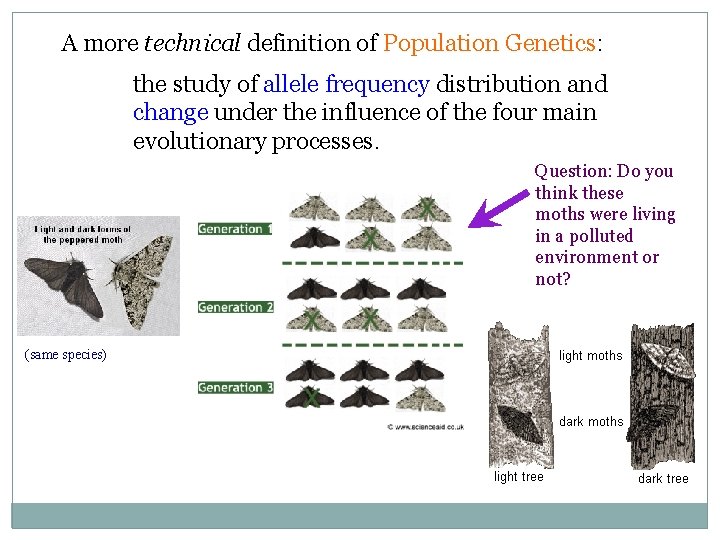
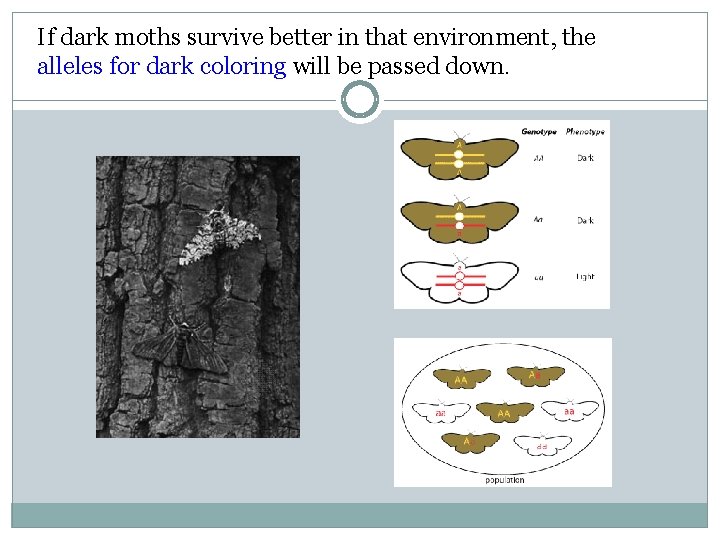
A more technical definition of Population Genetics: the study of allele frequency distribution and change under the influence of the four main evolutionary processes. Question: Do you think these moths were living in a polluted environment or not? (same species)
If dark moths survive better in that environment, the alleles for dark coloring will be passed down.
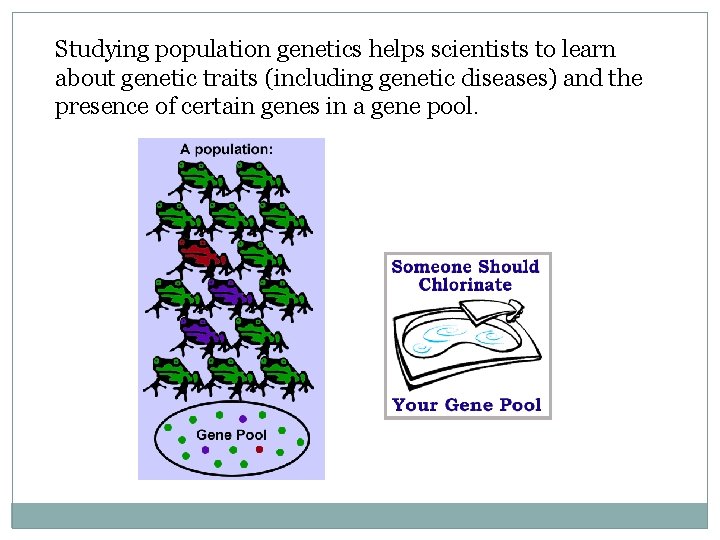
Studying population genetics helps scientists to learn about genetic traits (including genetic diseases) and the presence of certain genes in a gene pool.
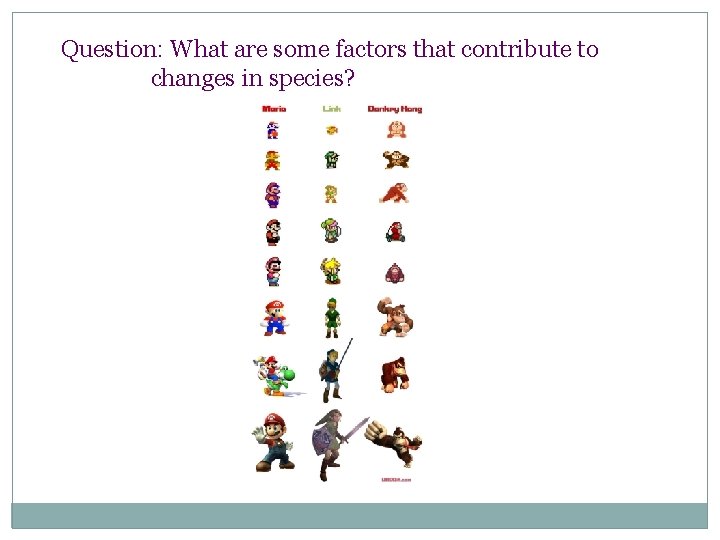
Question: What are some factors that contribute to changes in species?
Terms to know ● Population – group of individuals of the same species living in the same geographic area ● Population density can increase exponentially until a limiting factor slows its growth as it reaches carrying capacity
Populations and Evolution ● A population is the smallest level at which evolution can occur ○ Natural selection acts on INDIVIDUALS • More on this next week ○ Inherited characteristics do affect the reproductive success of INDIVIDUALS ○ However, these changes can only be tracked over time in the actual POPULATION
Populations and Their Gene Pools ● The gene pool consists of all of the alleles in all individuals that make up a population ● Acts as a reservoir for the genes of the next generation ○ Thanks to meiosis and fertilization, these genes are often shuffled to produce new combinations, thus increasing genetic diversity
Gene Pools and Variation ● Mutations and sexual recombination (crossing over during meiosis) are RANDOM ● Natural selection is NOT random ○ The environment clearly favors those individuals that can survive better and reproduce more ● Those alleles that are favored become more common in the population ○ Some alleles are more frequent than others (frequency of alleles)
Microevolution ● The smallest scale of evolution ● A generation-to-generation change in the frequency of alleles in a population
What Changes a Gene Pool? ● Mutations ● Natural Selection ● Genetic Drift ○ Founder Effect ○ Bottleneck Effect ● Gene Flow ● Inbreeding Depression
Mutations ● A change in an organism’s DNA ● If this mutation is carried by a gamete, it can enter into a gene pool ● Frequency influenced by both genetic drift and natural selection ● Often plays a key role as a new source of variation within a population
Natural Selection ● Genetic drift, gene flow, and mutation cause microevolution (changes in allele frequencies). ● But they do not necessarily lead to adaptation. ● Only natural selection usually leads to adaptation.
Genetic Drift ● Change in the gene pool of a population due to chance ● Usually occurs more often in small populations because the allele frequencies can vary so much from generation to generation ○ ○ Bottleneck Effect Founder Effect
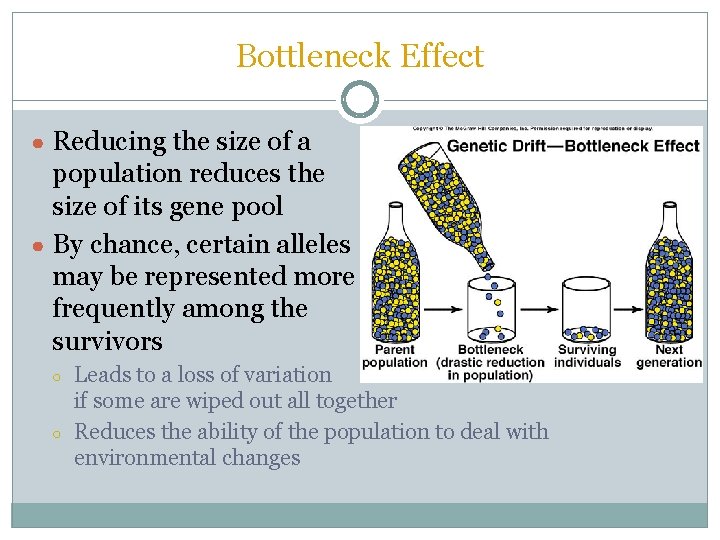
Bottleneck Effect ● Reducing the size of a population reduces the size of its gene pool ● By chance, certain alleles may be represented more frequently among the survivors ○ ○ Leads to a loss of variation if some are wiped out all together Reduces the ability of the population to deal with environmental changes
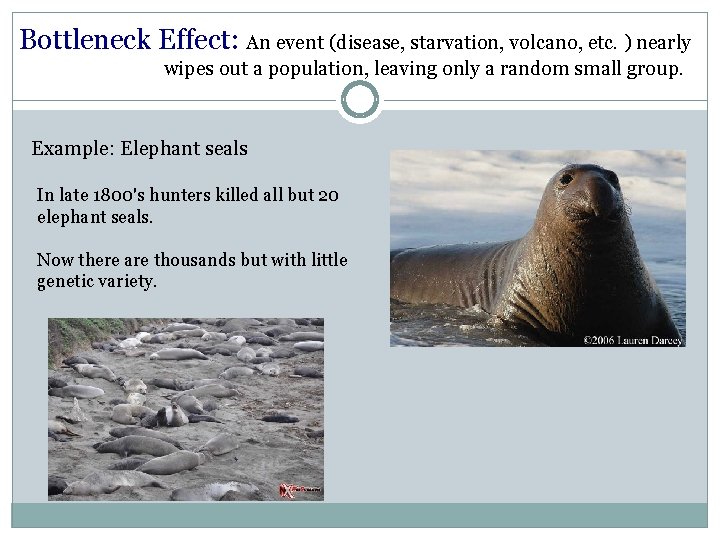
Bottleneck Effect: An event (disease, starvation, volcano, etc. ) nearly wipes out a population, leaving only a random small group. Example: Elephant seals In late 1800's hunters killed all but 20 elephant seals. Now there are thousands but with little genetic variety.
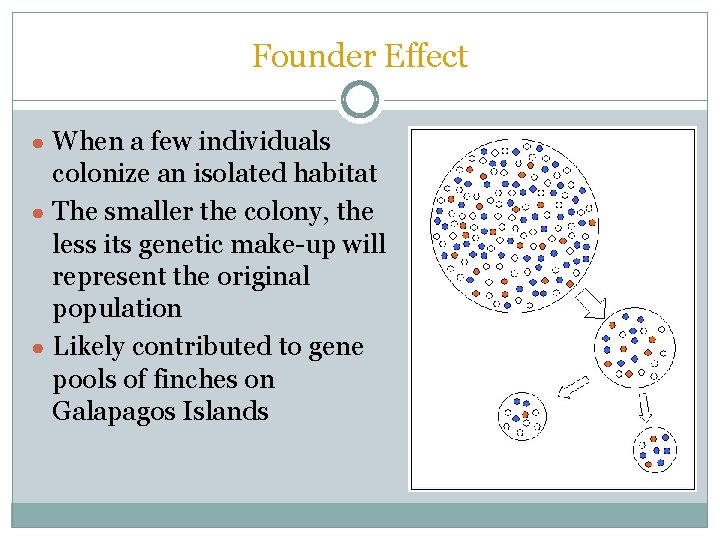
Founder Effect ● When a few individuals colonize an isolated habitat ● The smaller the colony, the less its genetic make-up will represent the original population ● Likely contributed to gene pools of finches on Galapagos Islands
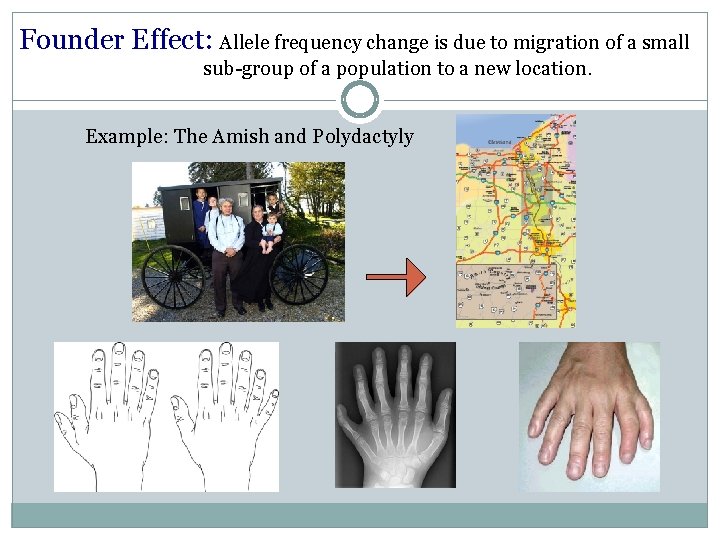
Founder Effect: Allele frequency change is due to migration of a small sub-group of a population to a new location. Example: The Amish and Polydactyly
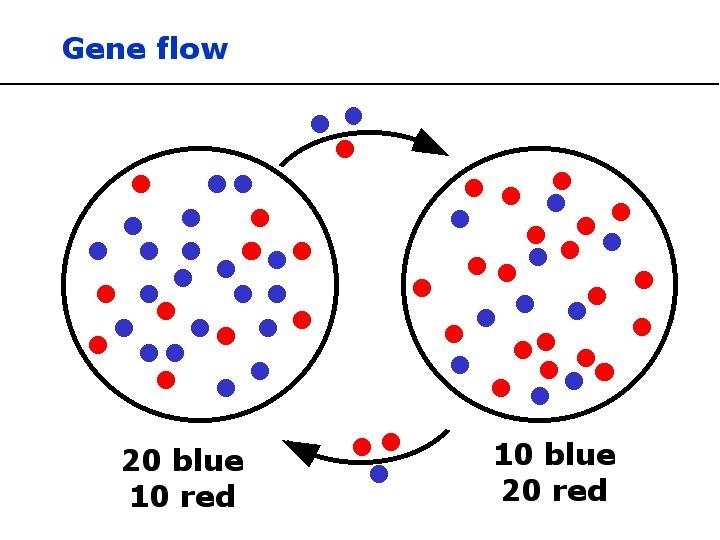
Gene Flow ● The exchange of genes with another population ● Occurs when fertile individuals migrate to another population ● Tends to reduce genetic differences between populations ● If extensive enough, it can actually mix neighboring populations into a single population with a common gene pool
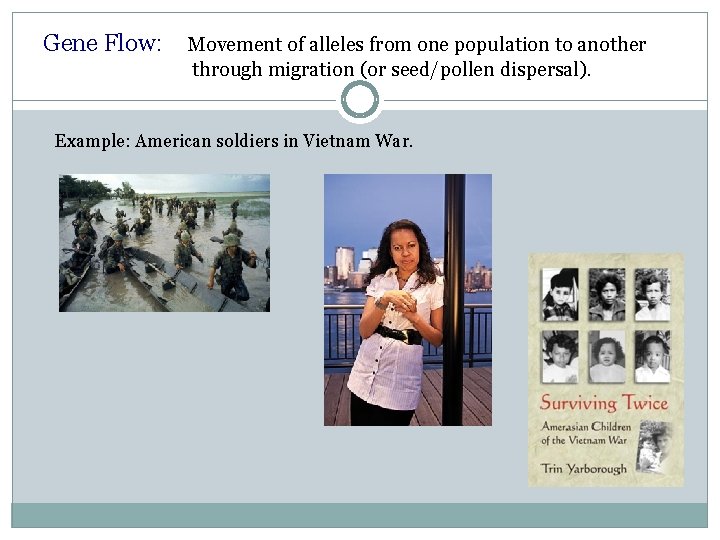
Gene Flow: Movement of alleles from one population to another through migration (or seed/pollen dispersal). Example: American soldiers in Vietnam War.
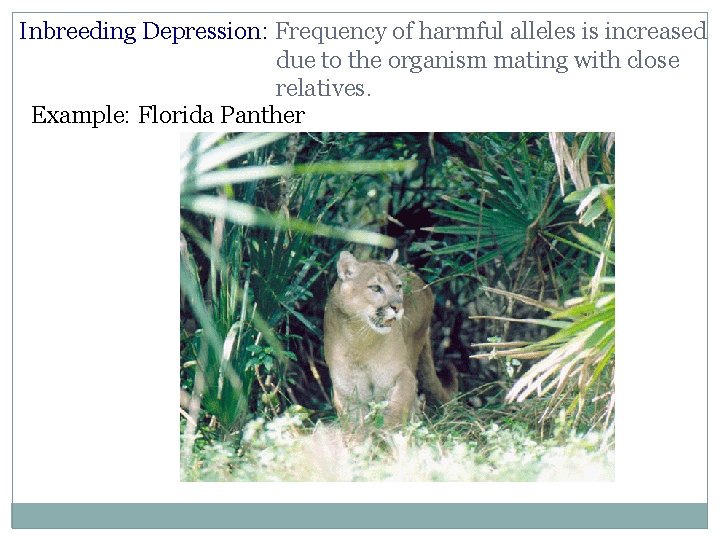
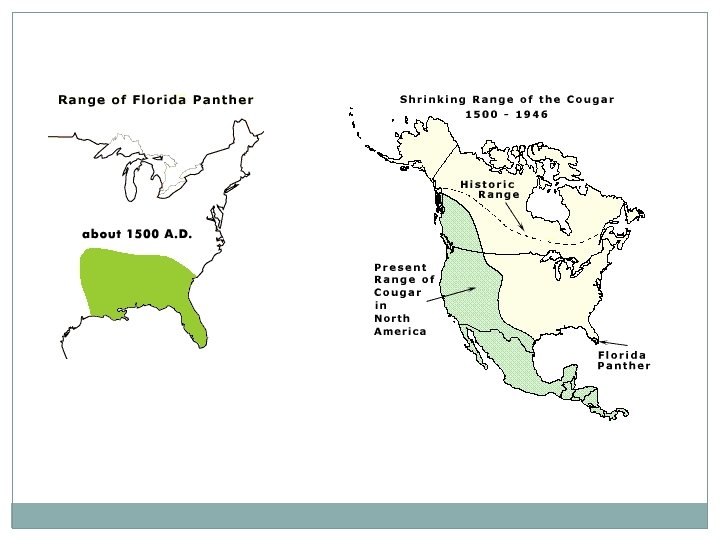
Inbreeding Depression: Frequency of harmful alleles is increased due to the organism mating with close relatives. Example: Florida Panther
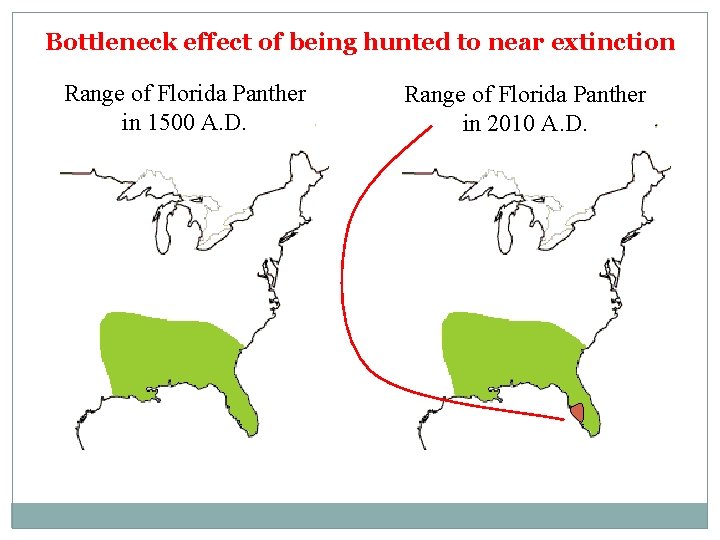
Bottleneck effect of being hunted to near extinction Range of Florida Panther in 1500 A. D. Range of Florida Panther in 2010 A. D.
The Florida Panther suffers from inbreeding depression.
How do you know when a gene pool is changing? ● Hardy-Weinberg equilibrium ○ ○ “control” or “baseline” population Means that the frequency of alleles is NOT changing over time Usually does not occur for very long in nature It’s nice because it gives us something to compare other populations to so we can see whether or not they are changing
Online Activities ● Activity 14. 4: Alter a Gene Pool ● We will cover more about Hardy-Weinberg Equilibrium later