
Introduction to Poetry Definition of A type of
- Slides: 12
Introduction to Poetry
Definition of A type of literary work in which the expression of feelings and ideas is given intensity using distinctive style and rhythm. Poetry evokes a specific emotional response (often a focused and creative awareness of experience) through language that is chosen and arranged for its meaning, sound, and rhythm.
What makes a poem… A poem? Stop Share Screen/Mute Computer. Start Video. Restart Share Screen/Unmute Computer https: //www. youtube. com/watch? v=Jwhou. CNq-Fc
Key Points to Remember • Poetry highlights the musical qualities of language through rhyme, rhythm, & meter • Poems use condensed language – fewer words to convey the same point as prose • Poems convey more intense feelings (related to idea of fewer words. All your words must “pack a punch”) • Poems can have a visual nature to them. The line breaks and word/line arrangement can be as important as the words themselves
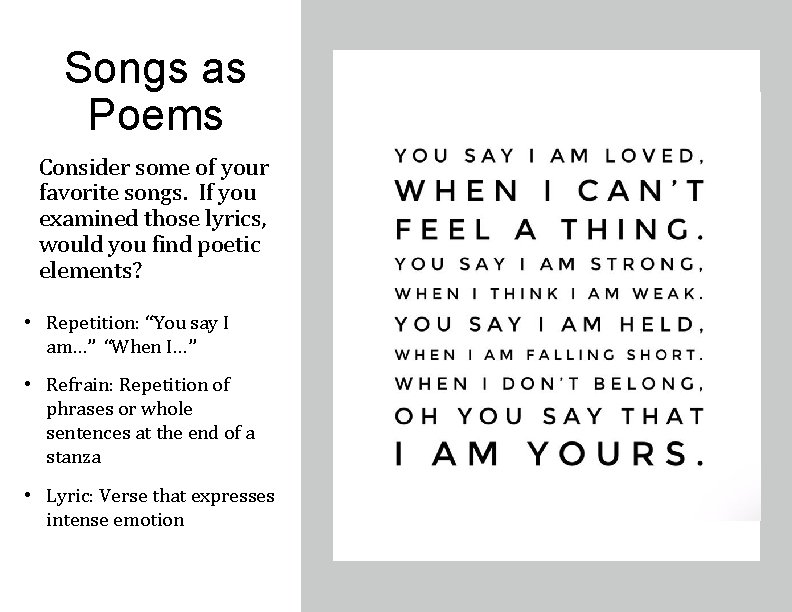
Songs as Poems Consider some of your favorite songs. If you examined those lyrics, would you find poetic elements? • Repetition: “You say I am…” “When I…” • Refrain: Repetition of phrases or whole sentences at the end of a stanza • Lyric: Verse that expresses intense emotion
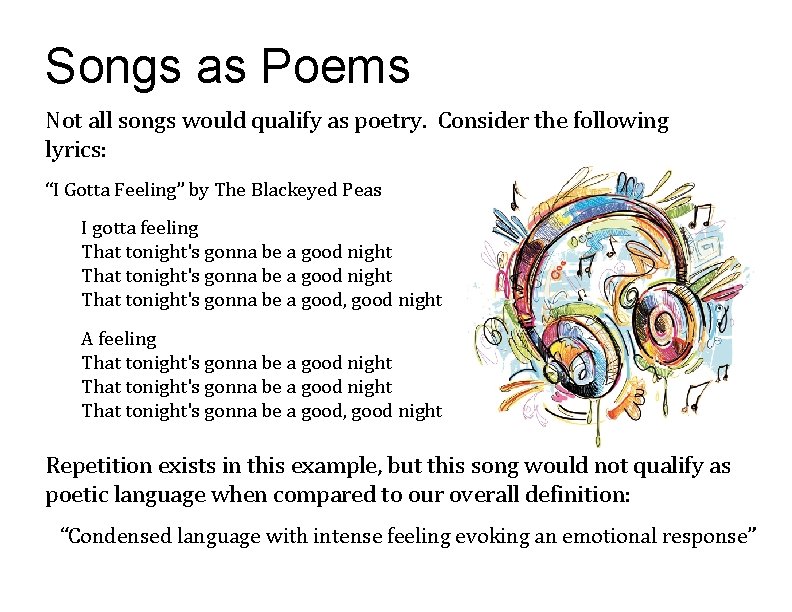
Songs as Poems Not all songs would qualify as poetry. Consider the following lyrics: “I Gotta Feeling” by The Blackeyed Peas I gotta feeling That tonight's gonna be a good night That tonight's gonna be a good, good night A feeling That tonight's gonna be a good night That tonight's gonna be a good, good night Repetition exists in this example, but this song would not qualify as poetic language when compared to our overall definition: “Condensed language with intense feeling evoking an emotional response”
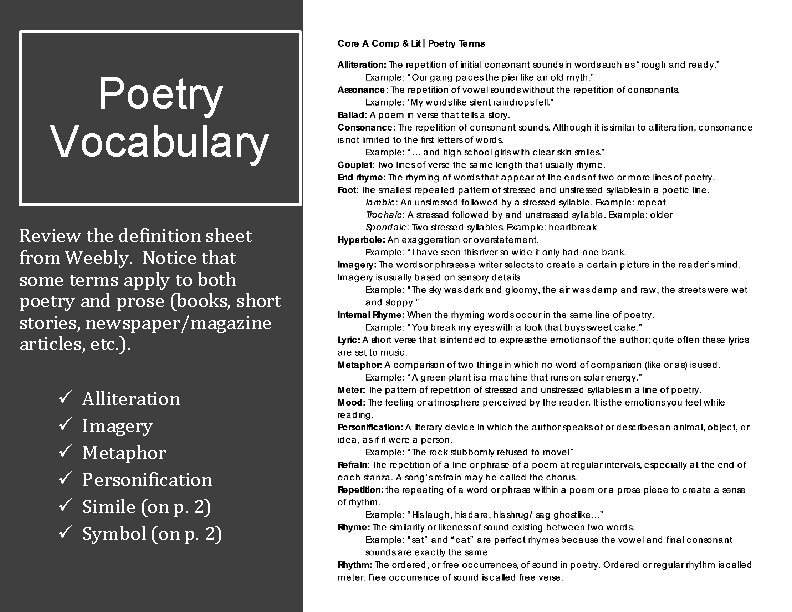
Poetry Vocabulary Review the definition sheet from Weebly. Notice that some terms apply to both poetry and prose (books, short stories, newspaper/magazine articles, etc. ). ü ü ü Alliteration Imagery Metaphor Personification Simile (on p. 2) Symbol (on p. 2)
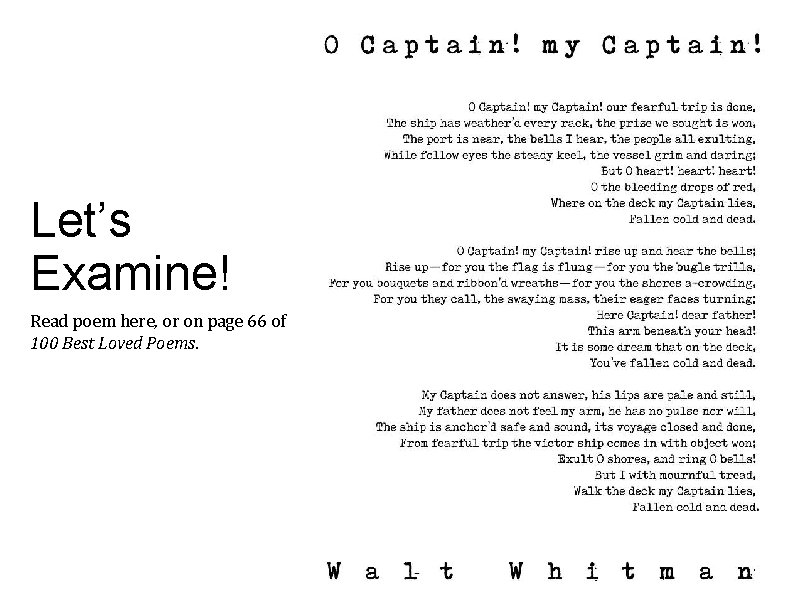
Let’s Examine! Read poem here, or on page 66 of 100 Best Loved Poems.
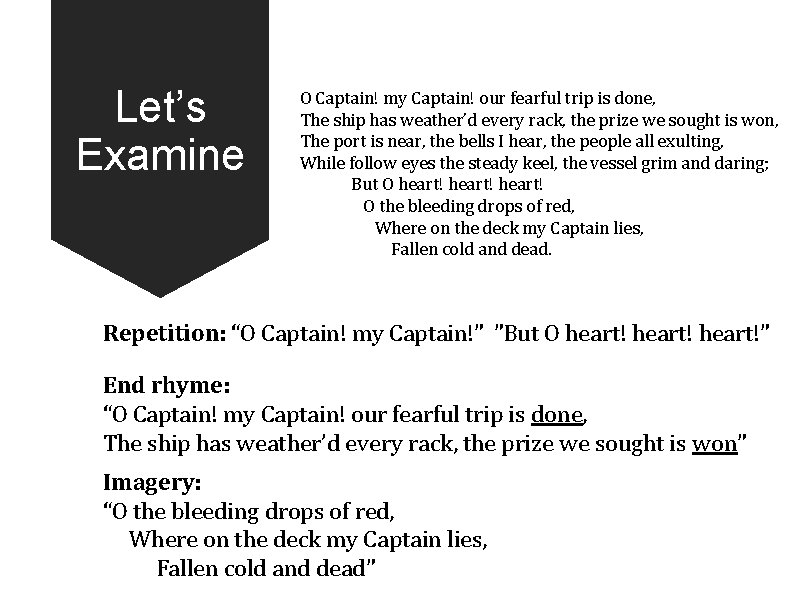
Let’s Examine O Captain! my Captain! our fearful trip is done, The ship has weather’d every rack, the prize we sought is won, The port is near, the bells I hear, the people all exulting, While follow eyes the steady keel, the vessel grim and daring; But O heart! O the bleeding drops of red, Where on the deck my Captain lies, Fallen cold and dead. Repetition: “O Captain! my Captain!” ”But O heart!” End rhyme: “O Captain! my Captain! our fearful trip is done, The ship has weather’d every rack, the prize we sought is won” Imagery: “O the bleeding drops of red, Where on the deck my Captain lies, Fallen cold and dead”
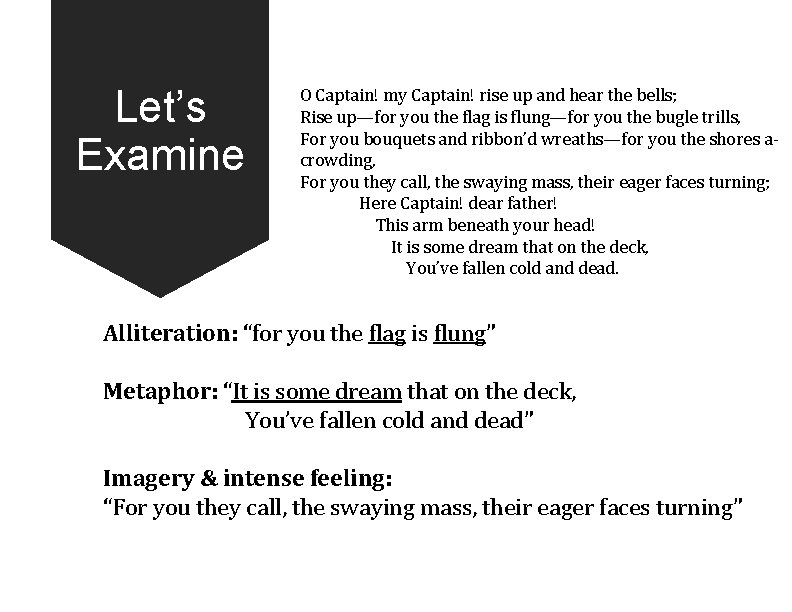
Let’s Examine O Captain! my Captain! rise up and hear the bells; Rise up—for you the flag is flung—for you the bugle trills, For you bouquets and ribbon’d wreaths—for you the shores acrowding, For you they call, the swaying mass, their eager faces turning; Here Captain! dear father! This arm beneath your head! It is some dream that on the deck, You’ve fallen cold and dead. Alliteration: “for you the flag is flung” Metaphor: “It is some dream that on the deck, You’ve fallen cold and dead” Imagery & intense feeling: “For you they call, the swaying mass, their eager faces turning”
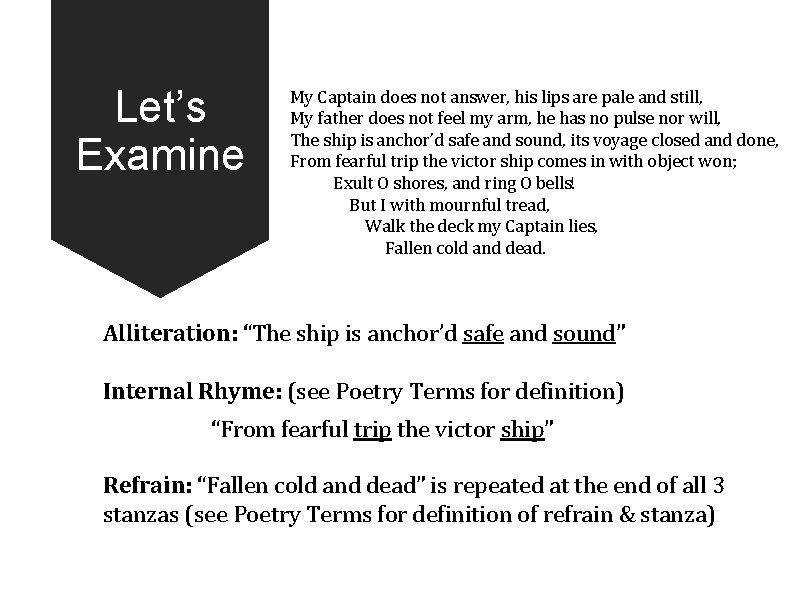
Let’s Examine My Captain does not answer, his lips are pale and still, My father does not feel my arm, he has no pulse nor will, The ship is anchor’d safe and sound, its voyage closed and done, From fearful trip the victor ship comes in with object won; Exult O shores, and ring O bells! But I with mournful tread, Walk the deck my Captain lies, Fallen cold and dead. Alliteration: “The ship is anchor’d safe and sound” Internal Rhyme: (see Poetry Terms for definition) “From fearful trip the victor ship” Refrain: “Fallen cold and dead” is repeated at the end of all 3 stanzas (see Poetry Terms for definition of refrain & stanza)
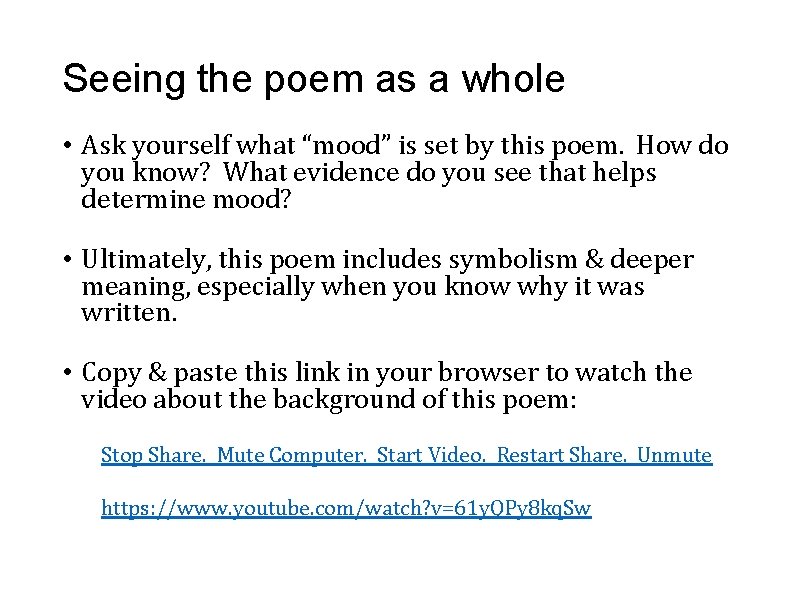
Seeing the poem as a whole • Ask yourself what “mood” is set by this poem. How do you know? What evidence do you see that helps determine mood? • Ultimately, this poem includes symbolism & deeper meaning, especially when you know why it was written. • Copy & paste this link in your browser to watch the video about the background of this poem: Stop Share. Mute Computer. Start Video. Restart Share. Unmute https: //www. youtube. com/watch? v=61 y. QPy 8 kq. Sw