
INTRODUCTION TO PNEUMATICS Thanks to Ian Mackenzie AGENDA




- Slides: 23
INTRODUCTION TO PNEUMATICS Thanks to Ian Mackenzie
AGENDA � Introduction to Pneumatics � Pneumatic Components � Pneumatic Mechanisms � Resources
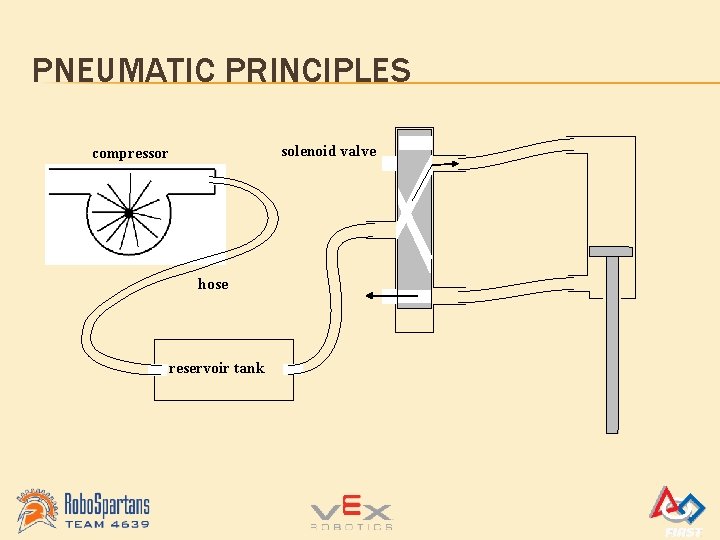
PNEUMATIC PRINCIPLES solenoid valve compressor hose reservoir tank
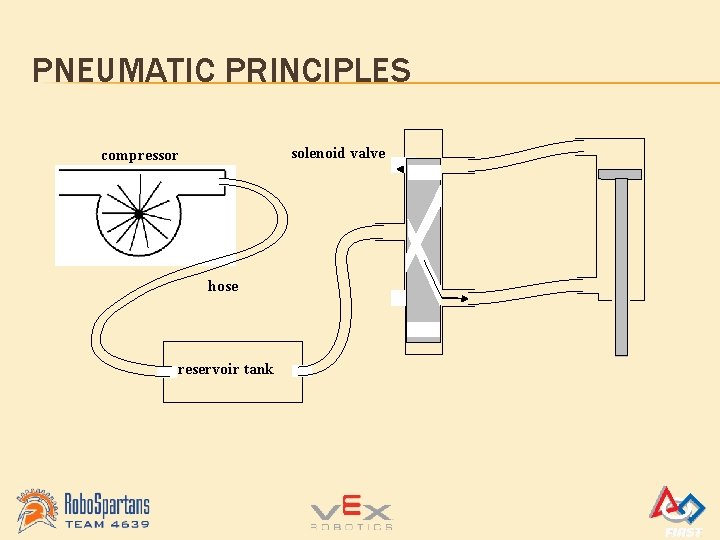
PNEUMATIC PRINCIPLES solenoid valve compressor hose reservoir tank
PNEUMATIC PRINCIPLES
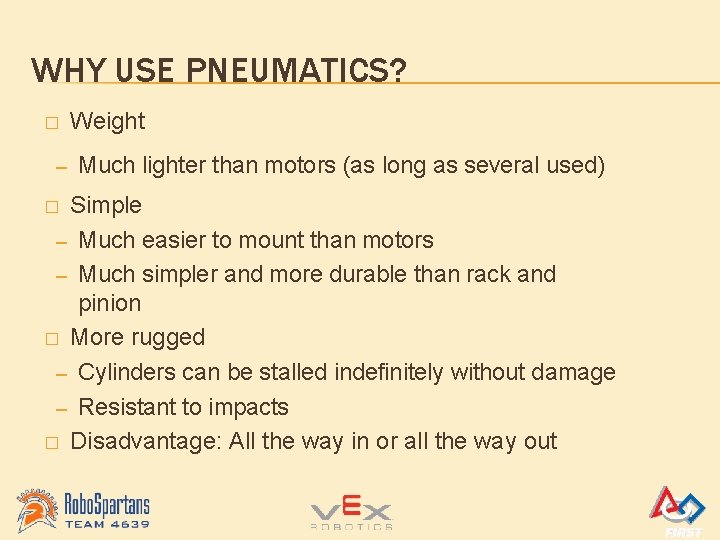
WHY USE PNEUMATICS? � – Weight Much lighter than motors (as long as several used) Simple – Much easier to mount than motors – Much simpler and more durable than rack and pinion � More rugged – Cylinders can be stalled indefinitely without damage – Resistant to impacts � Disadvantage: All the way in or all the way out �
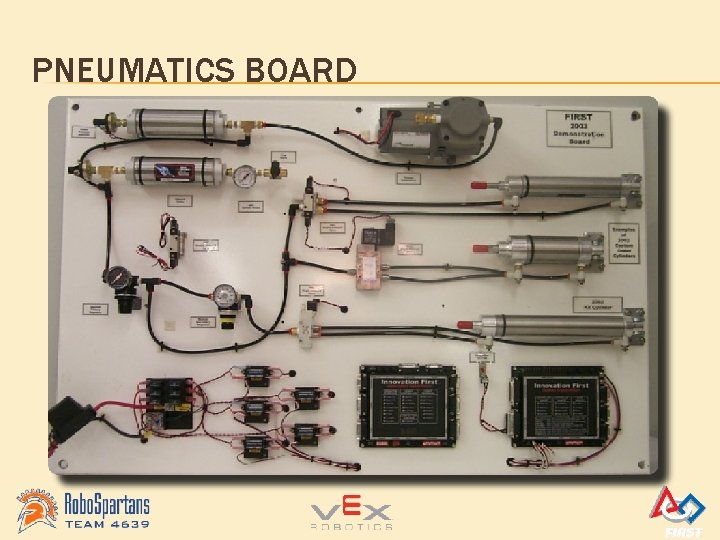
PNEUMATICS BOARD
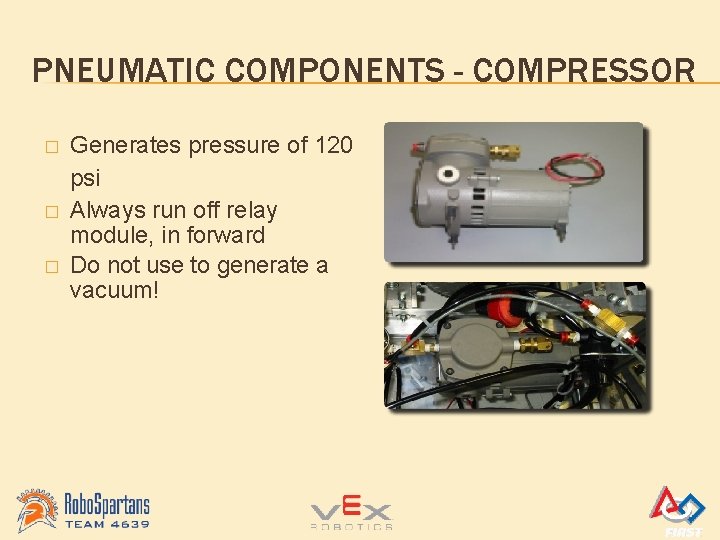
PNEUMATIC COMPONENTS - COMPRESSOR � � � Generates pressure of 120 psi Always run off relay module, in forward Do not use to generate a vacuum!
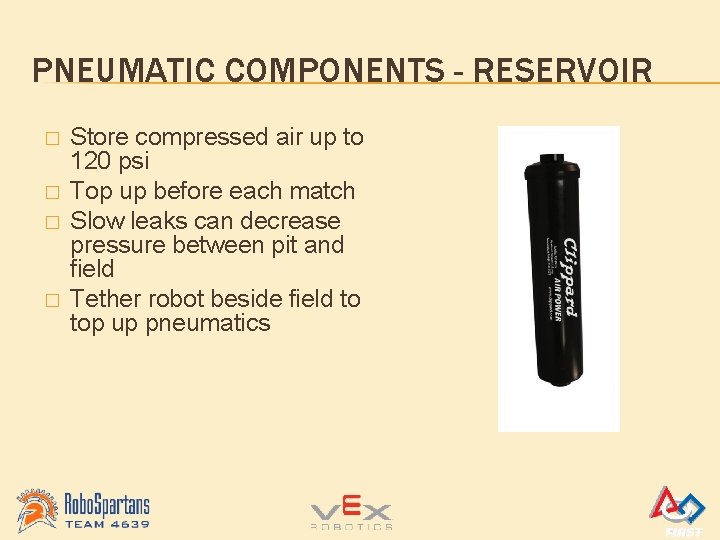
PNEUMATIC COMPONENTS - RESERVOIR � � Store compressed air up to 120 psi Top up before each match Slow leaks can decrease pressure between pit and field Tether robot beside field to top up pneumatics
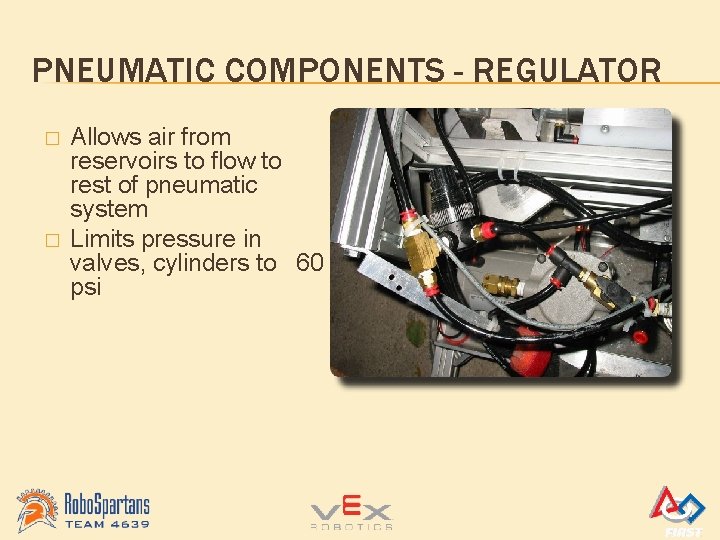
PNEUMATIC COMPONENTS - REGULATOR � � Allows air from reservoirs to flow to rest of pneumatic system Limits pressure in valves, cylinders to 60 psi
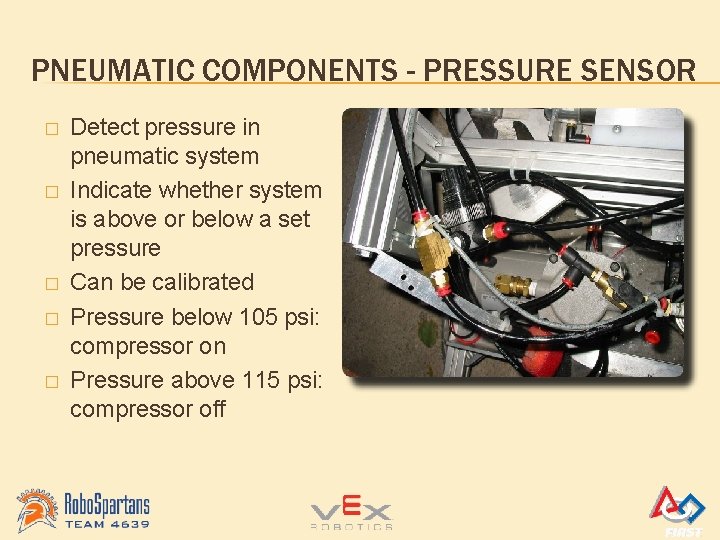
PNEUMATIC COMPONENTS - PRESSURE SENSOR � � � Detect pressure in pneumatic system Indicate whether system is above or below a set pressure Can be calibrated Pressure below 105 psi: compressor on Pressure above 115 psi: compressor off
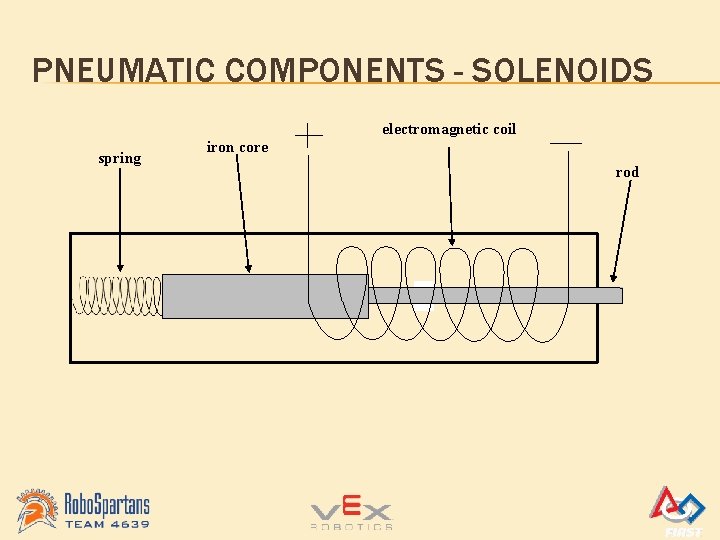
PNEUMATIC COMPONENTS - SOLENOIDS spring iron core electromagnetic coil rod
PNEUMATIC COMPONENTS - SINGLE SOLENOID � � When energized, cylinder goes to one state When de-energized, cylinder always returns to rest state When power is cut at the end of the match, cylinder will return to rest state Each valve powered by one relay module (only in forward)
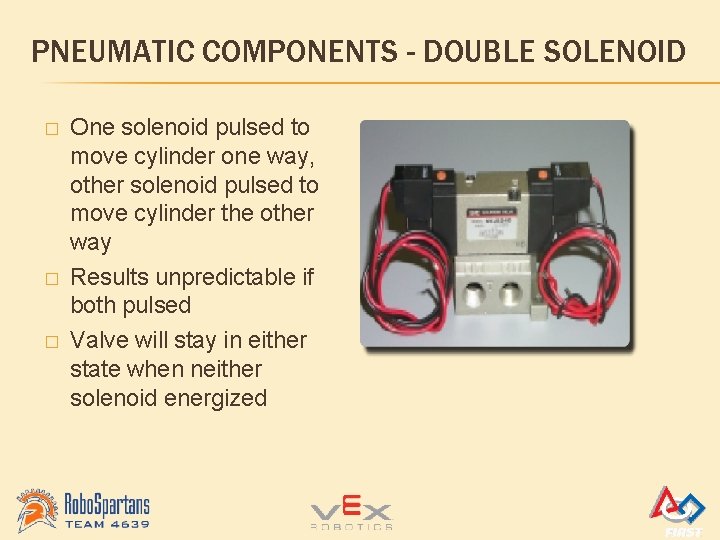
PNEUMATIC COMPONENTS - DOUBLE SOLENOID � � � One solenoid pulsed to move cylinder one way, other solenoid pulsed to move cylinder the other way Results unpredictable if both pulsed Valve will stay in either state when neither solenoid energized
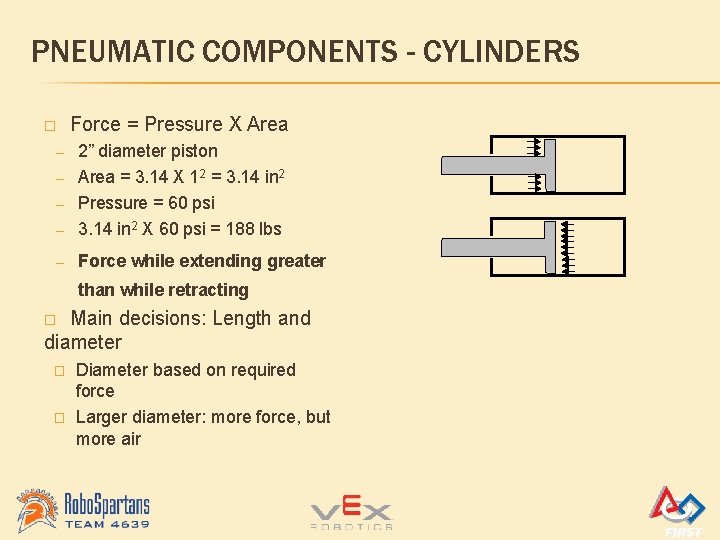
PNEUMATIC COMPONENTS - CYLINDERS � Force = Pressure X Area – 2” diameter piston Area = 3. 14 X 12 = 3. 14 in 2 Pressure = 60 psi 3. 14 in 2 X 60 psi = 188 lbs – Force while extending greater – – – than while retracting Main decisions: Length and diameter � � � Diameter based on required force Larger diameter: more force, but more air
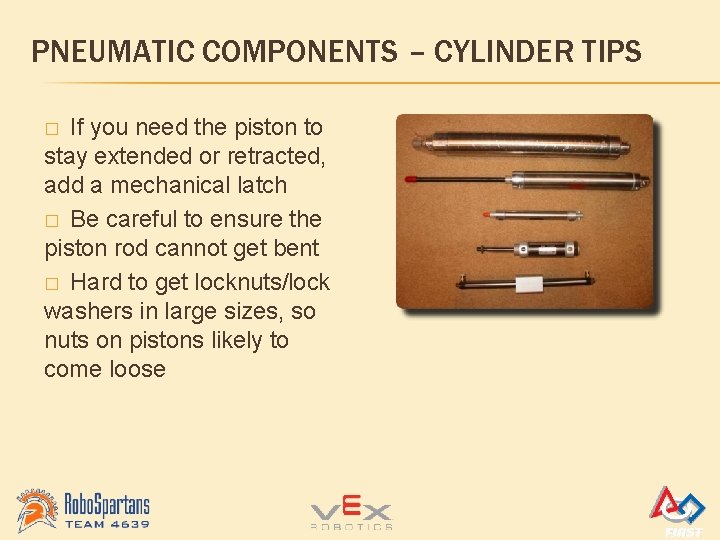
PNEUMATIC COMPONENTS – CYLINDER TIPS If you need the piston to stay extended or retracted, add a mechanical latch � Be careful to ensure the piston rod cannot get bent � Hard to get locknuts/lock washers in large sizes, so nuts on pistons likely to come loose �
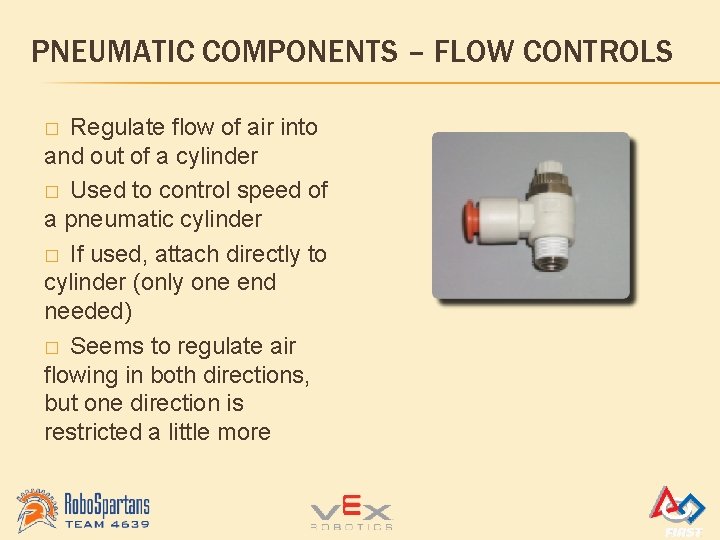
PNEUMATIC COMPONENTS – FLOW CONTROLS Regulate flow of air into and out of a cylinder � Used to control speed of a pneumatic cylinder � If used, attach directly to cylinder (only one end needed) � Seems to regulate air flowing in both directions, but one direction is restricted a little more �
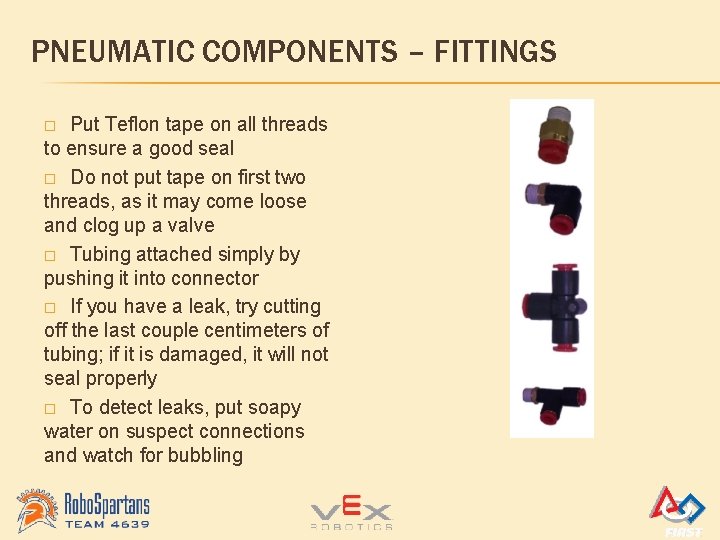
PNEUMATIC COMPONENTS – FITTINGS Put Teflon tape on all threads to ensure a good seal � Do not put tape on first two threads, as it may come loose and clog up a valve � Tubing attached simply by pushing it into connector � If you have a leak, try cutting off the last couple centimeters of tubing; if it is damaged, it will not seal properly � To detect leaks, put soapy water on suspect connections and watch for bubbling �
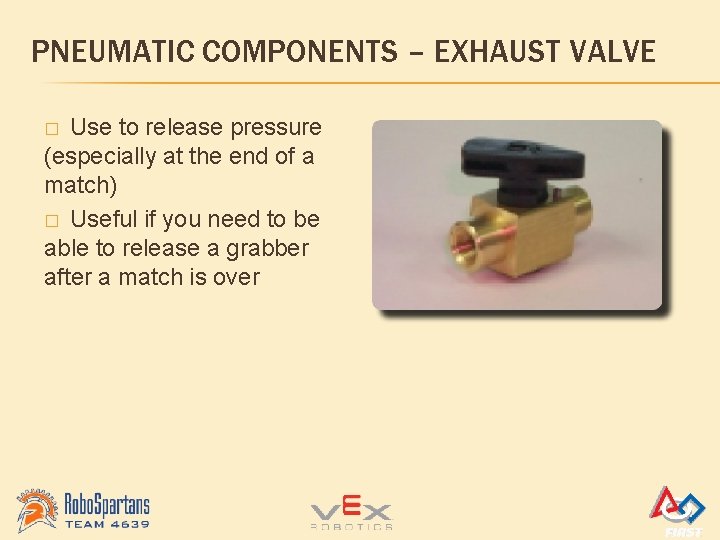
PNEUMATIC COMPONENTS – EXHAUST VALVE Use to release pressure (especially at the end of a match) � Useful if you need to be able to release a grabber after a match is over �
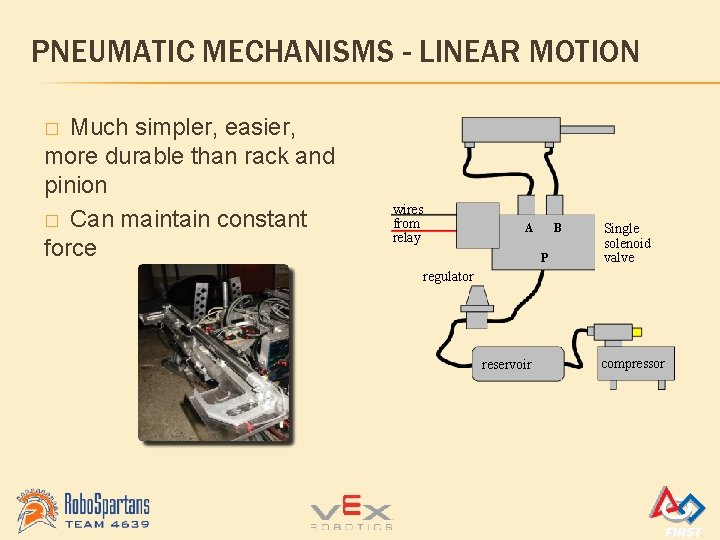
PNEUMATIC MECHANISMS - LINEAR MOTION Much simpler, easier, more durable than rack and pinion � Can maintain constant force � wires from relay A B P Single solenoid valve regulator reservoir compressor
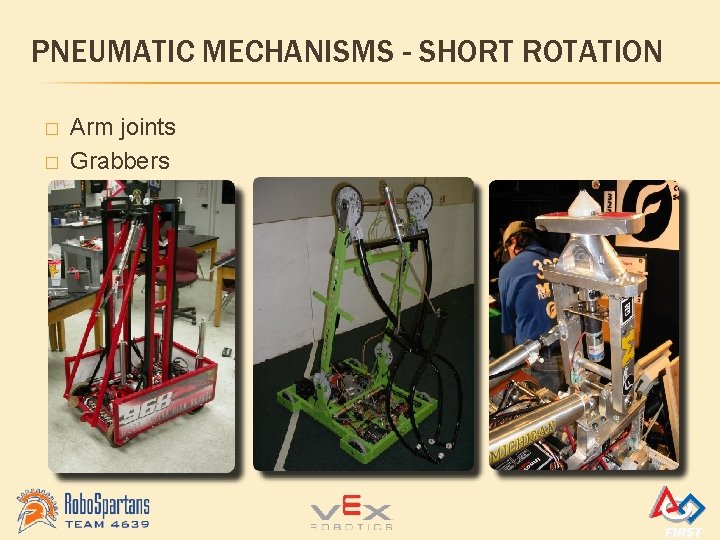
PNEUMATIC MECHANISMS - SHORT ROTATION � � Arm joints Grabbers
PNEUMATIC MECHANISMS - CONSTANT FORCE � � Gear shift Brake double solenoid valve Non-critical piston Critical piston A A B single solenoid valve P P tee fitting A regulator B P B double solenoid valve pressure sensors reservoir compressor
PNEUMATIC RESOURCES � – www. chiefdelphi. com/forums/papers. php White papers on many topics www. chiefdelphi. com Very active and helpful FIRST forums